AUGUST 27–GOVERNOR HOCHUL SIGNS ANTI DISCRIMINATION LAW

Hits: 844

GOVERNOR HOCHUL SIGNS LANDMARK LEGISLATION TO PROTECT STUDENTS AGAINST DISCRIMINATION AND BOLSTER CAMPUS SAFETY

Title VI Coordinators Mandated on All New York College Campuses

In Coordination With New York State Anti-Hate in Education Center Launched in 2023

Governor Hochul WEDNESDAY signed landmark legislation to require Title VI anti-discrimination coordinators on every New York college campus.

Coordinators will work hand-in-hand with students, faculty, and staff to confront discrimination on campus as part of the Governor’s longstanding commitment to promote a safe learning environment for all students in New York’s higher education institutions. This important step forward continues the Governor’s ongoing efforts to combat racial bias, antisemitism and any form of bigotry on college campuses throughout New York.

“By placing Title VI coordinators on all college campuses, New York is combating antisemitism and all forms of discrimination head-on,” Governor Hochul said. “No one should fear for their safety while trying to get an education. It’s my top priority to ensure every New York student feels safe at school, and I will continue to take action against campus discrimination and use every tool at my disposal to eliminate hate and bias from our school communities.”

By mandating Title VI coordinators on all New York college campuses, Governor Hochul is leading the nation in protecting students. The New York State Division of Human Rights will develop training to ensure colleges and universities have the tools they need to uphold the protections of Title VI of the Civil Rights Act of 1964. Title VI prohibits discrimination on the basis of race, color, or national origin, including shared ancestry or ethnic characteristics.

The Governor’s Title VI legislation is the latest in a string of actions she’s taken to foster an inclusive learning environment on campus. In 2023, she established the New York State Anti-Hate in Education Center to study, address, and eradicate all forms of campus discrimination. She also directed the state to bolster its hate crime data collection process, made record investments in physical security at vulnerable sites, established a domestic terrorism prevention unit, and conducted a thorough review of state-funded universities’ policies related to discrimination.

State Senator Toby Ann Stavisky said, “I am delighted that the Governor is signing landmark legislation that we have passed to protect students from discrimination on our campuses. At a time when we see a troubling rise in hate crimes, New York is taking a clear stand. Too many students’ experiencing discrimination do not know where to go for help or what protections they are entitled to, and everyone has a right to feel safe when they step onto college campuses. Dignity, safety and equal opportunity are not negotiable. I thank Governor Hochul and her staff, Assemblywoman Nily Rozic, and advocates and student leaders for making an idea into a reality.”

State Senator Shelley B. Mayer said, “Every student, regardless of gender, race, sexual orientation, religion or any other characteristic, deserves a fair chance to succeed and to receive higher education without fear and intimidation. As our country faces increased instances of hate, particularly antisemitism, our colleges must take proactive measures to ensure everyone feels safe and welcome on campuses. The appointment of a designated Title VI Coordinator ensures that when violations occur students have clear points of contact and the colleges and universities have clear paths for corrective action, with a dedicated person responsible. This legislation reaffirms our commitment to dismantling barriers and ensuring personal security while attending colleges or universities in New York. I am deeply grateful to my colleagues Senator Toby Stavisky and Assembly Member Nily Rozic for carrying this legislation and Governor Kathy Hochul for signing it into law.”

State Senator Robert Jackson said, “As a proud co-sponsor of this legislation, I know what this bill means for students across New York. Title VI of the Civil Rights Act promised equal access to education — but rights only matter when they are enforced. By requiring every college and university to appoint a Title VI coordinator, we’re ensuring that promise has both oversight and impact. I thank Governor Hochul for signing this bill into law and standing with us. Together, we are sending a clear message: discrimination has no place on our campuses, and equity is not optional — it is the law.”

Posted in Uncategorized

AUGUST 26– HOUSING PRICES REMAIN HIGH. SIGNS MARKET IS STABILIZING

Hits: 1304

WHITE PLAINS, NY (August 2025) – The Hudson Gateway Association of REALTORS® (HGAR) has released its July 2025 housing report, showing that the region’s real estate market remains resilient with continued price strength, even as inventory challenges persist.
Data from OneKey® MLS shows a blend of rising prices, growing days on market, and stabilizing sales activity in several counties — highlighting the complexity of this post-pandemic housing environment.
 
“Westchester continues to drive regional price trends, but we’re seeing interesting activity across our entire footprint,” said Lynda Fernandez, HGAR CEO. “In July, inventory saw small gains in some counties, but the market is still tight overall. While sales are slightly down in some places, prices are holding, indicating strong underlying demand. Buyers are adapting, expanding their options, and looking for value, while sellers are adjusting expectations and timelines.”
 
Key Regional Trends
  • Mortgage Rates: With 30-year mortgage rates averaging around 7% in July, many buyers remain cautious. Still, the Hudson Valley continues to attract those seeking space, value, and proximity to New York City.
  • Shift in Buyer Behavior: Increased exploration of co-ops, condos, and townhomes continues, as affordability remains top of mind.
  • Luxury vs. Entry-Level: Homes under $500,000 are still moving quickly, while higher-end properties are lingering longer and often require strategic pricing and staging.
  • Inventory and Leverage:
  • Inventory levels remain below the 6-9 months considered balanced. Markets like the Bronx, now at over 7 months of inventory, are offering buyers more negotiating room, while counties like Westchester and Rockland remain seller-favored.
County Highlights
 
Westchester County
  • The median single-family home price hit $1,500,000 (+11% YoY).
  • Closed sales were up 4%, while new listings dropped 6%.
  • Days on market dropped to 18, down 5%, and months of inventory remained tight at 2.5.
  • Condo prices rose 1%, co-ops 5%. Condos saw a decline in closed sales by 11% while co-op closed sales were up 2%.
Putnam County
  • Median price increased to $565K (+11%).
  • Closed sales were up 16%.
  • Inventory rose to 3.3 months, and days on market were up 4% to 26.
  • Condo prices rose to $387K, up 9%.
Rockland County
  • Single-family median price: $765,000 (+17%).
  • Closed sales were up slightly (+2%), but co-op sales dropped by 40%.
  • Inventory sits at 3.2 months.
  • New listings up 11%, but days on market dropped to 19 almost 10%.
Orange County
  • Median price reached $460,000 (+2.2%).
  • Closed sales were up 4%.
  • Inventory at 4.1 months with 405 new listings.
  • Days on market rose to 31.
Bronx County
  • Median price rose to $468,000 (+9.5%).
  • Co-ops remain in high demand, up 6.7% in median price.
  • Closed sales were down 16%, and new listings dropped slightly by 1.7%.
  • Inventory at 7.6 months offers more negotiating power for buyers.
 
“With pricing trends holding firm and slight upticks in inventory, we’re seeing a transition — not a downturn,” Fernandez added. “Buyers who are prepared and realistic can find opportunities, and sellers should expect more measured activity. This is when professional guidance from a REALTOR® truly matters.”
 
In today’s complex market, both buyers and sellers benefit from a strategic, informed approach. Buyers should be prepared with financing, stay flexible on location and property type, and act quickly on well-priced listings. Sellers should focus on competitive pricing and strong presentation, especially as higher-end homes spend more time on the market. Partnering with a knowledgeable REALTOR® is essential to navigating shifting conditions, uncovering opportunities, and making confident decisions.
 
The full July 2025 housing report, including interactive charts and county-level data, is available at www.hgar.com/market-stats.
Posted in Uncategorized

AUGUST 25– NEW! “THIRTEEN HUNDRED THE NEW WPTV!” OPTIMUM MOVES WHITE PLAINS TELEVISION STATIONS DOWN THE DIAL TO CHANNELS 1300,1305 1310 CHANNELTO CH 1300 OPTIMUM

Hits: 900

YOUR FAVORITE PUBLIC ACCESS CHANNEL IS ON 1300, THE EDUCATION CHANNEL 1305 AND THE GOVERNMENT CHANNEL IS 1310.

NO CHANGE IN CHANNELS ON THE VERIZON CABLE SERVICE

WPCNR MEDIA MAYHEM. By John F. Bailey. August 25, 2025:

If you missed White Plains Week Friday night  on Channel 76, it was on but Optimum. Optimum switched the White Plains public channels to 1300, 1305 and 13, effective that night. P

Optimum did not notify subscribers of the change to my knowledge. I get Optimum, and they did not notify me of the change

Verizon is staying the same, public access channel 45 and government access channel 47.

I have expressed disappointment with Cablevision for not giving White Plains Community Media any notification of this change. Had we known we would have let our producers make announcements on their shows about the change.
You may always find your shows on www.wpcommunitymedia.org.
Including White Plains Week, Beyond the Game, The Old Guard–television for the people by the people still  the spirit of ’76
Posted in Uncategorized

AUGUST 25, 2025: SUMMER COVID WAVE SPANS THE USA: YOUR LOCAL EPIDEMIOLOGIST REPORTS

Hits: 243

Posted in Uncategorized

AUGUST 22 —WHITE PLAINS WEEK THE FRIDAY AUGUST 22 REPORT WITH JOHN BAILEY AND THE NEWS ON WWW.WPCOMMUNITYMEDIA.ORG. 7:30 TONIGHT ON FIOS CH 45 AND OOPTIMUM CH 76

Hits: 156

LEONARD LOLIS LAUNCHES HIS CAMPAIGN FOR MAYOR AGAINST JUSTIN BRASCH

WESTMORELAND RENNAISSANCE CONTINUES. 154 APARTMENTS PROPOSED FOR 114 WESTMORELAND AVENUE


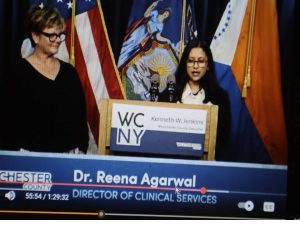
DIRECTOR OC CLINICAL SERVICES TELLS HOW TO GET VACCINATIONS FOR SCHOOL. TESTING FOR SEXUALLY TRANSMITTED DISEASES IN WHITE PLAINS AND YONKERS–FREE

NY COMPTROLLER REPORTS GROWING NUMBERS OF SENIOR CITIZENS CANNOT FIND AFFORDABLE HOUSING. TOO AFFORDABLE HOUSING SHORTAGE NOT ONLY AFFECTS 20S 30S AND 40S BUT SENIORS TOO.

LEGISLATURE GIVEN WAKE-UP CALL ON LONG COVID, COVID GROWTH


PAUL FEINER REPORTS ON THE HIGH COST OF SEWER REPLACEMENT $1 MILLION TO $16 MILLION FOR MASSIVE EAST HARTSDALE AVENUE REPAIR. A HEADS UP SITATION WHITE PLAINS MAY FACE

CAN ANYBODY KEEP OUR BEACHES POLLUTION FREE. CLOSURES EACH WEEK OF COUNTY SOUTH SHORE BEACHES WREAKS HOTTEST SUMMER EVER IN THE COUNTY 

WITH JOHN BAILEY AND THE NEWS

THIS WEEK EVERY WEEK FOR 24 YEARS

ON WHITE PLAINSWEEK


Posted in Uncategorized

AUGUST 21 —BEACHES CLOSED DUE TO OVERNIGHT RAINS

Hits: 500

BEACH CLOSURES DUE TO RAIN IN NEW ROCHELLE, MAMARONECK AND RYE

(White Plains, NY) – The Westchester County Health Department has preemptively closed the following beaches today due to 1.21 inches of rainfall over the past 24 hours:

NEW ROCHELLE: Hudson Park Beach, Davenport Beach Club, Greentree Country Club and Surf Club on the Sound


MAMARONECK: Harbor Island Park, Beach Point Club, Orienta Beach Club and Mamaroneck Beach & Yacht Club


RYE: Coveleigh Club

Beach patrons are advised to avoid the water at these beaches until August 23 due to bacterial contamination from road runoff into drainage outfalls near these beaches. These beaches are allowed to reopen on their own on Saturday, August 23 unless significant additional rainfall is observed.

The County remains committed to maintaining high standards of environmental health and safety across its recreational facilities.

Posted in Uncategorized

AUGUST 21– A REAL HERO

Hits: 664

Community News banner
A Message from the District Attorney…
Dear Friends and Neighbors:
I want to share with you a story that exemplifies the very worst, and best, of our county.

On May 4 of last year, a White Plains man named Carlos Obed-Tovar was inside his basement apartment along with his wife and 6-year-old daughter.

After learning that his wife had been speaking with a male co-worker, Obed-Tovar became irate.

DA Cacace with arms folded
He went to the kitchen, retrieved a knife and began stabbing his wife all over her body. During the attack, she managed to flee the apartment and started running down the block. Obed-Tovar pursued her in the street and caught up to her. He continued stabbing her, lodging the blade of his knife into her head.

Another White Plains resident, Armando Gramajo, noticed a commotion in the street and quickly intervened. He ordered that Obed-Tovar cease his conduct, which he did, and began to tend to the victim’s injuries. Gramajo summoned his daughter, then a nursing student, to bring clean bedsheets so that pressure could be applied to the victim’s open wounds.

Obed-Tovar was apprehended, charged and prosecuted for attempted murder. Last week, he was sentenced to 12 years in state prison, and an additional 5 years of post-release supervision, for his horrific crimes.

Without the intervention of Gramajo and his daughter, Shayla, the victim might not have survived Obed-Tovar’s savage assault.

In moments of utter despair, when people demonstrate the absolute worst of humanity, there are others who rise to the occasion and exemplify the best of who we are. Armando Gramajo and Shayla are those people.

Later this year, Gramajo will be awarded with a good Samaritan citation from our office for his bravery in the face of mortal danger. I am also pleased to report that Shayla is now a nurse specializing in plastic surgery.

Their actions fill me with hope, that our common goodness is stronger than our darkest impulses and that courage can be found even in the most trying of circumstances. Those are lessons we can all draw on as we confront the challenges we face ahead.

As always, never hesitate to reach out to our office with any questions or concerns. I look forward to hearing from you.

In friendship,

DA Cacace Signature
District Attorney Susan Cacace
Thank you for coming to see us at National Night Out. It was a pleasure to meet so many of you in person and enjoy a night of music, food and community.
DA Cacace at National Night Out
Westchester's multi-agency National Night Out
Jewish Heritage Festival 
Our staff members were proud to represent the office this weekend at the Jewish Music and Arts Festival at the Kensico Dam Plaza.
Jewish Heritage Festival
“Don’t underestimate local towns and villages.
We might not be a city, but we’re busy.”

 Jamie E. Fair, Greenburgh Bureau Chief
The Greenburgh branch serves eight local jurisdictions: Greenburgh, Irvington, Elmsford, Ardsley, Hastings, Dobbs Ferry, Tarrytown and Sleepy Hollow. Hastings is the only town with a nighttime court session, while Tarrytown operates exclusively in the morning. And Greenburgh is open on Tuesdays, Thursdays and Fridays.

A team of three attorneys manages cases for all eight courts, handling a diverse range of matters, including misdemeanors, violations, domestic violence, elder and child abuse, DWI, victims’ compensation and sex crimes.

Local courts provide access to the legal process for individuals facing various challenges. Court appearances can be stressful and emotionally taxing, but the Greenburgh branch strives to create a supportive environment, especially for victims.
The Greenburgh branch emphasizes internal and external teamwork. It maintains strong relationships with local police departments, probation and community programs. The branch itself is situated within the Greenburgh Police Department, facilitating efficient victim meetings and prompt collaboration.
In addition to local police, the branch collaborates with New York State Police (Troops T and K) and the Westchester County Police Department due to Greenburgh’s significant highways. Office and court personnel participate in youth programs, camps and other community events. Assistant District Attorneys volunteer at schools and local programs every Wednesday during the school year to reduce recidivism.
Bureau Chief Jamie Fair, pictured below, advocates for positive reinforcement to engage citizens seeking services. All involved must feel heard and be promptly referred for assistance.

On a recent visit to the branch, we met Humphrey, a professionally trained black Labrador Retriever. Humphrey serves alongside handlers in hospitals, schools and courts, providing support and comfort to vulnerable individuals. Trained to perform specific tasks, Humphrey enhances therapies, promotes participation and reduces anxiety.

Jamie E. Fair
Jamie E. Fair
Greenburgh District Attorney’s Office
Justice served banner
New Rochelle man sentenced to 13 years for sexually assaulting teenage boys
scales of justice
Westchester County District Attorney Susan Cacace announced that a New Rochelle man was sentenced to 13 years in state prison for sexually assaulting three teenage boys.
Read more
South Carolina man charged with hate crime over alleged assault at Mamaroneck gas station
Westchester County District Attorney Susan Cacace announced that Carl Jones, 57, of Spartanburg, S.C., was arrested and charged with a felony for allegedly attacking a Hispanic man while they were both waiting in line at a Mamaroneck gas station.
Read more
In the News banner
Westchester DSS clerk charged in alleged shakedown of day cares in Yonkers, Mount Vernon

A clerk with the Westchester Department of Social Services is facing charges alleging that she forced five day care providers in the county to pay her cash so they would get reimbursement checks they were counting on to serve needy families.

Read more
New York Post logo
Yonkers man pleads guilty for brutal murder of senior citizen

Westchester County District Attorney Susan Cacace announced that Deshawn Nunez, 24, of Yonkers, pleaded guilty on July 31 to Murder in the Second Degree, a class A felony, for killing 68-year-old Renee Spencer in 2022.
Read more
Inside the office banner
DA Cacace had the pleasure of meeting MTA Inspector General Dan Cort and his executive team to discuss how our agencies can partner together to enhance the integrity of our public transit systems.
DA Cacace and MTA Inspector General Dan Cort
The Westchester County DA’s Office welcomed the addition of Joseph Monaco as our newest Deputy Chief Criminal Investigator. DC Monaco joins the office after 30 years of experience with the Yonkers Police Department.
DA Cacace with interns
The Westchester County DA’s Office welcomed back to the office ADA Joe DiBenedetto. Joe will be a valuable addition to the Investigations Division.
Facebook X/Twitter LinkedIn
Posted in Uncategorized

AUGUST 21–GUN RESTRICTIONS WORKING GOVERNOR HOCHUL REPORTS. NY SHOOTINGS DOWN

Hits: 174

SAFER STREETS: GOVERNOR HOCHUL ANNOUNCES MAJOR DROP IN GUN VIOLENCE ACROSS NEW YORK, SHOOTINGS DOWN 14%

GIVE Communities Report 48 Fewer Shootings and Nearly 100 Fewer People Shot in First Seven Months of 2025

Albany, Buffalo, Syracuse Lead the Way With Double-Digit Declines in Gun Violence

New York City Sees Continued Reductions in Shootings 

Governor Kathy Hochul YESTERDAY announced that shooting incidents with injury in communities that participate in the Gun Involved Violence Elimination (GIVE) initiative dropped 14 percent in the first seven months of 2025, thanks to record state investments and the work of the local law enforcement agencies and community organizations across the state. New statistics from the New York State Division of Criminal Justice Services also show a 21 percent decrease in shooting deaths compared to the same period in 2024.

“Gun violence in New York is falling as a direct result of our record investments in public safety and prevention initiatives,” Governor Hochul said. “As we work with our public safety partners to make real progress in the fight against gun crimes, I remain committed to investing in programs that keep guns out of the hands of dangerous individuals and keep our communities safe.” 

Posted in Uncategorized

AUGUST 21–THE LEGIONNAIRE’S DISEASE OUTBREAK IN IN NYC–FROM YOUR LOCAL EPIDEMIOLOGIST NEW YORK

Hits: 400

View in browser

Your top 7 questions about Legionnaires’ outbreaks

Yes, your drinking water is safe. Here’s what else you need to know.


Due to the large, ongoing Legionnaires’ disease outbreak in New York City, we’re taking a closer look at the illness and its biology this week. While the outbreak data shared is specific to NYC, much of this information can apply to outbreaks elsewhere. For our readers outside of New York City, know that we’ll be back with state-level updates next week. Let’s dive in.


While the Legionnaires’ outbreak in New York City’s Central Harlem has slowed, it hasn’t stopped. As of August 21, there have been 109 cases, with 9 currently hospitalized and 5 deaths. The affected zip codes include 10027, 10030, 10035, 10037, and 10039.

The most recent case developed symptoms on August 12, which means we’re likely closer to the end of the outbreak. That’s good news. It means that mitigation efforts (like identifying and cleaning contaminated cooling towers) are working.

Figure from the NYC Department of Health and Mental Hygiene. Annotations by YLE.

But we’re not entirely out of the woods—we still might have some cases trickling in. People who may have been exposed before the cooling towers were cleaned could still get sick several days after their exposure.

What does this mean for you? We still need to stay alert, especially if you are someone at higher risk for severe illness (more below).

Since the outbreak began, I’ve gotten a lot of questions about Legionella (the bacteria) and Legionnaires’ disease (the illness it causes). Here are your top 7 questions answered.

1. What are the symptoms, and who is most at risk?

Symptoms usually start 2–10 days after exposure and can include:

  • Cough
  • Fever
  • Chills
  • Shortness of breath
  • Muscle aches
  • Diarrhea

Most healthy people exposed won’t get sick. Those at highest risk are adults over age 50, smokers, and people with chronic lung disease, diabetes, cancer, or weakened immune systems.

2. Can I get Legionnaires’ disease from drinking water?

No.

  • Legionnaires’ disease is caused by breathing in tiny water droplets containing Legionella bacteria. Water doesn’t enter the lungs when drinking unless someone chokes and accidentally inhales it.
  • Stomach acid also likely kills Legionella bacteria if swallowed, so drinking water (even if contaminated) won’t cause illness.

On top of all this, outbreaks in NYC are typically caused by cooling towers, which are on different plumbing systems than residential water, meaning drinking water will not be contaminated.

3. If it’s in the air, why don’t more people get sick?

The bacteria have to be inhaled in a concentrated enough dose to cause illness. Many people breathe in small amounts without getting sick because their immune systems clear the bacteria.

But older adults, people who smoke, and people with chronic lung disease (including asthma) or weakened immune systems are much more likely to develop severe pneumonia. For example, I don’t have any of the risk factors for severe Legionnaires’ disease, so I felt comfortable going on a run through Central Harlem during the outbreak. If I had asthma, I would have found a different area to run in.

4. If it affects the lungs, why can’t it spread from person to person?

In NYC, Legionnaires’ disease almost always comes from cooling towers (though elsewhere in the U.S., outbreaks have been linked to sources like hot tubs). Unlike the viruses that cause Covid-19 or flu, Legionella bacteria don’t spread easily between people—only one person-to-person case has ever been documented worldwide.

The reason lies in the biology of the Legionella bacteria.

  • After someone inhales contaminated water dropletsthe bacteria travel deep into the lungs and infect alveolar macrophages, a type of immune cell.
  • Legionella mostly stays put in the lung immune cells—it doesn’t colonize the throat or nose, and you don’t find it in mucus or saliva. This is different from the viruses that cause Covid-19 and flu, which replicate in the upper airways and are spread through coughing, sneezing, or even talking.

This is also reflected in the way people are tested for Legionnaire’s disease: clinicians often need a lower respiratory sample because infections are typically deep in the lungs. In contrast, to diagnose Covid or the flu, a simple nose or throat swab usually works.

5. What is being done to control the outbreak?

NYC has some of the most intensive and sensitive Legionella monitoring in the world, and was the first city in the world to have a cooling tower inspection program. Every day, special software scans health data across the city for clusters of pneumonia-like symptoms. If a pattern is detected, the health department springs into action: inspectors test cooling towers for Legionella, and any tower that tests positive must be cleaned, disinfected, and retested by the building owner. The goal is to stop ongoing exposure and prevent future cases.

6. Why wouldn’t a health department share the building addresses of the affected cooling towers?

The health department’s decision on whether to release specific addresses is based on a balance of risk vs. public benefit, and how far along the investigation is (e.g., if there are more cooling towers to test). For the recent Central Harlem outbreak, eventually the City did release information on the buildings with positive tests.

Knowing the address of a contaminated cooling tower shouldn’t really change how you act. That’s because Legionella bacteria from cooling towers can travel long distances in the air, sometimes up to several miles.

The health department likely worries that releasing an address can create a false sense of security. Someone might think, “I’m a few blocks away, so I’m safe,” when that’s not how this bacteria behaves. Risk doesn’t scale linearly with proximity, and public health decisions aim to protect everyone, not just those near a known source.

Instead, health departments focus on identifying and remediating the source quickly, which is the most effective way to reduce risk to the public.

7. What do I need to do?

If you live or work in a zip code with a Legionnaires’ disease cluster and develop symptoms, call your doctor right away.

If you have any of the risk factors (age 50 or older, smoke or used to smoke, have a chronic lung condition like COPD or asthma, or are immune-compromised), be on alert for any symptoms and seek medical care right away if you develop any. Also, reduce time in the area of the outbreak (which I know is hard) and spend less time outdoors. For anyone else without risk factors and with no symptoms, I don’t think you need to worry.

Bottom line

Legionnaires’ disease spreads through airborne water droplets, not by drinking water or through person-to-person spread. During outbreaks, spread is slowed by identifying and cleaning contaminated cooling towers. If you live or work in zip codes affected by a Legionnaires’ outbreak and develop flu-like symptoms, contact your doctor right away, especially if you are over 50 years old, have chronic lung conditions, smoke, or are immunocompromised.

As always, I love hearing what’s on your mind. Your questions help shape what I cover here, so drop a comment and let me know what you’re thinking about!

Love,

Your NY Epi


P.S. For paid subscribers: we’ve put together a downloadable PDF with answers to your top 7 questions about Legionnaires’ disease. Feel free to share it with friends and neighbors!

Yle Legionnaires Outbreaks
275KB ∙ PDF file
Download

Dr. Marisa Donnelly, PhD, is an epidemiologist, science communicator, and public health expert. This newsletter exists to translate complex public health data into actionable insights, empowering New Yorkers to make informed and evidence-based health decisions.

Posted in Uncategorized

AUGUST 20—HOUSING FOR SENIORS FACE HUGE GROWTH IN SENIORS WITHOUT HOUSING–STATE COMPTROLLER

Hits: 349

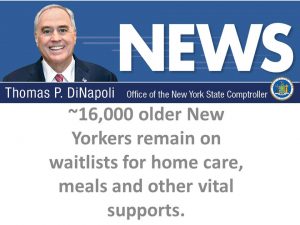
A Report released by the  State Comptroller  shows that even with an 88% increase in state funding for senior services since 2018–19, ~16,000 older New Yorkers remain on waitlists for home care, meals and other vital supports. With federal funding becoming less predictable, DiNapoli says the New York State Office for the Aging must improve transparency and data reporting to ensure resources truly reach those most in need, especially as the state’s senior population is projected to hit 5.5 million by 2030.


Office of the New York State Comptroller News

August 20, 2025

Contact: Mary Mueller, 212-383-1388
For release: Immediately

DiNAPOLI: AMID FEDERAL FUNDING UNCERTAINTY, STATE MUST FOCUS ON PROGRAMS TO AID SENIORS

With federal funding less predictable and New York’s senior population growing, the state must ensure its own investments are reaching older adults who need help. A new report from State Comptroller Thomas P. DiNapoli finds that even as state funding for senior services has increased, thousands remain on waitlists for in-home care, meals and other essential support, and data reporting by the New York State Office for the Aging (NYSOFA) makes it difficult to know who is being left behind or where.

“New York has an obligation to support seniors who need and qualify for in-home, meal or other support services,” DiNapoli said. “These critical services provide necessary care and help people remain in their homes and communities, while preventing more expensive institutional care. The Legislature has stepped up with more funding for the Office for the Aging, but with thousands still on waitlists and some funding going unspent, we need greater transparency and stronger tracking to make sure the state’s investment is truly reaching those who need it.”

New York’s Aging Population and Demand for Services
New York’s population of people aged 60 and over is projected to reach approximately 5.5 million by 2030. Nearly 70% of adults over 65 are expected to need some form of long-term care during their lifetime. Federal funding that typically supports a range of benefits for older New Yorkers, including Medicaid funding, has been reduced, which may further increase demand for state-funded services.

Many prefer to receive care at home rather than in institutional settings, but as the number of older New Yorkers increases, so does the strain on local agencies and service providers that older adults rely on. These services include in-home personal care, meal delivery, transportation, case management and support for family caregivers. In June, the state released a Master Plan for Aging Final Report (MPA) which assessed New York’s services for older adults and made recommendations to improve them. This report found that a primary issue in meeting the needs of older New Yorkers will be the availability and adequacy of the direct care workforce.

NYSOFA Funding and Access Challenges
State funding for NYSOFA programs increased over 88%, or $114 million, in the New York state budget for State Fiscal Year (SFY) 2025–26 when compared to SFY 2018–19. This funding includes support for the Expanded In-Home Services for the Elderly Program (EISEP) and other core services provided by local aging agencies.

The demand for NYSOFA services has exceeded the availability, meaning seniors who would otherwise qualify for services are unable to access them. In recognition of the demand, the state has increased funding to expand access to services like personal care and meals for older adults. Yet thousands remain on waitlists, and some funds were not spent, raising questions about whether the state’s investment is delivering its intended results.

Limited Public Reporting and Transparency
In 2023, DiNapoli released an audit that found NYSOFA did not consistently monitor local agencies or issue guidance on tracking and reporting waitlists. DiNapoli’s new report notes that some data on participation and funding, including allocations for in-home services, is not consistently available.

NYSOFA does not publicly report the information needed to assess the effectiveness of in-home services or the use of unmet need funding, including:

  • Waitlist numbers by county and program;
  • How much funding each local agency receives and spends on in-home services; and
  • How many eligible older adults remain underserved.

Without this information, it is difficult to determine where services are falling short or how effectively taxpayer dollars are being used. DiNapoli’s report recommends improving the consistency and transparency of service and funding data, as well as publicly reporting county level waitlists.

Posted in Uncategorized