WHITE PLAINS HOSPITAL TO DOUBLE EMERGENCY ROOM CAPACITY. PLANS NEW EMERGENCY BUILDING ACROSS FROM PRESENT ONE. NEW PARKING GARAGE IN 5 YEARS

Hits: 833

WPCNR DOWNTOWN DAILY By John F. Bailey. October 31, 2023:

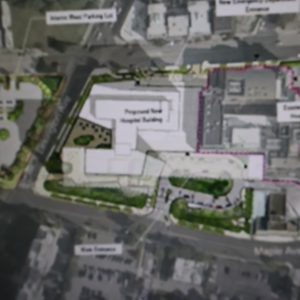
The Chairman of the Board of Montefiore White Plains Hospital Medical Center, William Null  of Cuddy & Fedder presented a request to the Common Council last night for zoning changes needed to proceed with the hospital development of a new Emergency Room across from Davis Avenue including  new operating rooms.

A  new parking garage across from the main buildings of the present hospital

.The completion date is envisioned in five years, Mr. Null explained to the Common Council at a Special Meeting last night. The entrance to the new Emergency Room would be from East Post Road.

 Davis Avenue in front of the present main hospital entrance would be closed.

Null said the design of the new medical building has not been completed yet.

He said the facility is needed because the previous White Plains Emergency Room expansion opened in January 2010  13 years ago,( before Montefiore acquired the hospital) has doubled its visits since the  previous emergency room expansion.

He said the new parking garage envisioned  would increase the already stressed parking facilities on Davis Avenue.

The present bridge between the present entrance to the hospital from the Davis Avenue facility would be removed and a new entrance cul-desac entrance would be built. A new bridge would be built between the new Emergency Room and the original “Legacy” hospital and the present Emergency facility, connecting the two.

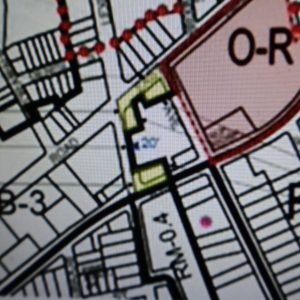
Proposed rezoning of yellow areas to be included in Central Parking District, enabling contruction of new Emergency Building with parking garage in the white square. Temporary Parking would be on surface level parking outlined by the red dots.


Posted in Uncategorized

OUTBREAK OUTLOOK: THE GREAT NORTHEAST

Hits: 542

Outbreak Outlook – Northeast – October 30

By Dr. Caitlin Rivers (Reprinted with permission)

Welcome to the Northeast edition of Outbreak Outlook! It is only available to paid subscribers. If you wish to become a paid subscriber and access region-specific information, please click the Subscribe Now button below. Thanks for reading! -Caitlin

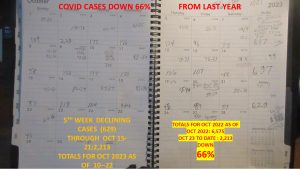
(EDITOR’S NOTE FROM JOHN BAILEY: WESTCHESTER HAS CUT THE RATE OF INFECTIONS THE FIRST 3 WEEKS IN OCTOBER 2023 BY 66% LOWER THAN THE FIRST 3 WEEKS OF OCTOBER 2022.  6,575 IN OCTOBER 2022 THROUGH OCT. 22 AND AS OF THE END OF OCTOBER 15 THROUGH  21, 2023 ONLY 2,213 WESTCHESTER PERSONS CAME DOWN WITH COVID. PROJECTING AHEAD  THIS MAY LIMIT DECEMBER INFECTIONS TO BELOW 6,000 IN DECEMBER. THE  MIDDLE OF WEEK HIGH POSITIVES HAVE DROPPED TO AN AVERAGE OF 72! LAST WEEK DELIVERED JUST 629 INFECTIONS 89 A DAY.

THE ONLY TROUBLING STAT IS WHITE PLAINS HOSPITAL FROM OCTOBER 13 TO OCTOBER 24   (11 DAYS) WAS OF 129 PATIENTS ADMITTED TO THE HOSPITAL 74 WERE FOUND WITH COVID—57% WITH COVID WHICH IS WHAT THE HOSPITAL IS AVERAGING.)

Respiratory diseases

Influenza-like illness

The Northeast continues to experience relatively low flu levels, though activity is beginning to pick up in some states as we enter the heart of flu season.

New York saw influenza-like illness tick up slightly over the past week from 3.5% to 3.8% of doctor’s visits. Nearby New Jersey declined from 3.6% to 3.3% ILI.

Further north, Massachusetts and Connecticut experienced minimal flu changes week-over-week, holding around 1.5% and 1.7% ILI respectively.

Maine and New Hampshire remain on the lighter side for flu activity, with ILI rates of 0.8% and 0.3%. However, Vermont did see a notable jump from 0.5% to 0.8% influenza-like illness.

Rhode Island and Pennsylvania were essentially flat, with ILI rates holding below 1.5%.

Overall flu prevalence is still relatively low across most of the Northeast as we head deeper into fall. But some states are beginning to see upticks, so do get your flu vaccine sooner rather than later.

At the national level, young kids (still!) continue to experience the highest rates of influenza-like illness. Nearly 9% of doctor visits for children aged 0-4 involve symptoms like fever, cough, or sore throat. This rate compares to approximately 4% in the 5-24 age group and less than 2% in older age groups.


RSV

Respiratory syncytial virus (RSV) is ramping up across the Northeast as we head into the winter virus season. Several states saw jumps in RSV prevalence over the past week. I expect test positivity to continue to rise in the weeks to come.

Massachusetts experienced one of the largest increases regionally, with RSV positivity rising from 6.2% to 7.2% of samples tested. This indicates more than 1 in 14 tests are coming back positive for RSV.

New Hampshire and Connecticut also saw sizable RSV gains over the past week. Positivity increased from 2.7% to 3.6% in New Hampshire and 2.6% to 3.1% in Connecticut.

While still lower compared to other states, New York and New Jersey reported RSV upticks as well, rising to 1.0% and 2.1% positivity respectively.

Vermont and Maine continue to show relatively low RSV activity, with positivity holding below 1% in both states.


Other Respiratory + Stomach Bugs

  • Seasonal coronavirus activity in the Northeast remains low, with no concerning increases. Adenovirus and parainfluenza virus activity appears to be trending upward slightly nationally; no data is available at the regional level.
  • Human metapneumovirus activity has picked up in the Northeast. Metapneumovirus causes cough, runny nose, fever, and sometimes wheezing or difficulty breathing.
  • Norovirus (stomach bug) activity appears to be ticking up a bit in the region, now at 5.7% from a recent low of 4.2%. It’s something I will keep an eye on, though current levels of activity still remains far below typical winter surges.

Food recalls

The following foods are being recalled because they are contaminated. Please check your cupboards and throw out any of these items:

New this week:

  • Over the counter eye drops sold at CVS, Leader, Rugby, RiteAid, Target or Velocity Pharma (more info)
  • WanaBana fruit puree pouches (more info)
  • Fresh diced onion products by Gills Onions (more info)
  • Enoki mushrooms by Qilu Enterprise (more info)
  • Lobster by Greenhead Lobster (more info)

Previously reported:

  • Bagged collard greens sold at Kroger (more info)
  • Frozen, ready to eat carne asada burritos (more info)
  • Ready-to-eat ham produced by Sunnyvalley Smoked Meats (more info)
  • Ion and Restore brands Sinus Spray (more info)
  • Organic Chicken and Beef Broth sold at Costco and Whole Foods (more info)

If you have food allergies, you may wish to review these FDA safety alerts and USDA alerts for foods with undeclared allergens.

Posted in Uncategorized

OCTOBER 29: THE DAY THE STOCK MARKET CRASHED “BLACK FRIDAY” 1929

Hits: 1329

from The History Channel.

The Stock Market Crash of 1929 occurred on  Friday, October 29, 1929, when Wall Street investors traded some 16 million shares on the New York Stock Exchange in a single day. Billions of dollars were lost, wiping out thousands of investors. In the aftermath of that event, sometimes called “Black Tuesday,” America and the rest of the industrialized world spiraled downward into the Great Depression, the deepest and longest-lasting economic downturn in the history of the Western industrialized world up to that time.

What Caused the 1929 Stock Market Crash?

During the 1920s, the U.S. stock market underwent rapid expansion, reaching its peak in August 1929 after a period of wild speculation in the Roaring Twenties. By then, production had already declined and unemployment had risen, leaving stocks in great excess of their real value.

Among the other causes of the stock market crash of 1929 were low wages, the proliferation of debt, a struggling agricultural sector and an excess of large bank loans that could not be liquidated.

Did you know? The New York Stock Exchange was founded in 1817, although its origins date back to 1792 when a group of stockbrokers and merchants signed an agreement under a buttonwood tree on Wall Street.

Black Tuesday

Stock prices began to decline in September and early October 1929, and on October 18 a big drop in stock prices began. Panic soon set in, and on October 24, Black Thursday, a record 12,894,650 shares were traded. Investment companies and leading bankers attempted to stabilize the market by buying up great blocks of stock, producing a moderate rally on Friday.

On Monday, however, the storm broke anew, and the market went into free fall. Black Monday was followed by Black Tuesday—October 29, 1929—during which stock prices collapsed completely and 16,410,030 shares were traded on the New York Stock Exchange in a single day. Billions of dollars were lost, wiping out thousands of investors, and stock tickers ran hours behind because the machinery could not handle the tremendous volume of trading.

Effects of the 1929 Stock Market Crash: The Great Depression

After October 29, 1929, stock prices had nowhere to go but up, so there was considerable recovery during succeeding weeks. Overall, however, prices continued to drop as the United States slumped into the Great Depression, and by 1932 stocks were worth only about 20 percent of their value in the summer of 1929.

The stock market crash of 1929 was not the sole cause of the Great Depression, but it did act to accelerate the global economic collapse which it was also a symptom. Stock prices continued to drop through 1932 when the Dow Jones Industrial Average—a widely-used benchmark for blue-chip stocks in the United States—closed at 41.22, its lowest value of the 20th century, 89 percent below its peak.

Posted in Uncategorized

WHITE PLAINS WEEK TONIGHT AT 7 PM THE OCT 27 REPORT ON THE DRAFT ONE WHITE PLAINS PLAN ON FIOS CH. 45 AND WP OPTIMUM CH. 76 & WWW.WPCOMMUNITYMEDIA.ORG THE WHITE PLAINS TV STATION!

Hits: 396

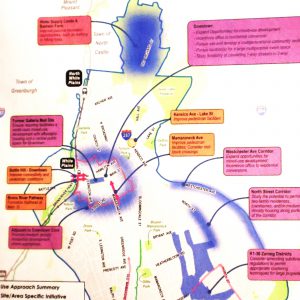
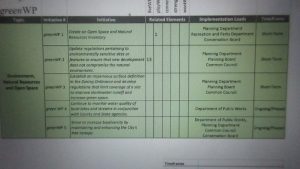
DRAFT ONEWHITEPLAINS COMPREHENSIVE PLAN ARRIVES.

WE’LL TALK ABOUT IT! VIDEOS WITH THE MAYOR AND THE PLAN CONSULTANT

WHAT THE ONEWHITEPLAINS DRAFT PLAN PLANS FOR THE NEIGHBORHOODS

THE IMPLEMENTATION PROCESS. WHO MAKES THE FINAL DECISIONS AND WHEN


HERE THEY COME: THE CANDIDATES ARRIVE FOR LEAGUE OF WOMEN VOTERS FORUM

EXCLUSIVE WPCNR COVERAGE OF WEDNESDAY FORUM. WHO SAID WHAT WHAT THEY STAND FOR.

COVID INFECTIONS DOWN 66% FROM LAST OCTOBER’S PACE

WITH JOHN BAILEY AND THE NEWS

EVERY WEEK ON WHITE PLAINS WEEK

FOR 22 YEARS

“THE BIG MIKE”


Posted in Uncategorized

TONIGHT, 8 PM ON “PEOPLE TO BE HEARD” MAJOR JEN OF THE WHITE PLAINS SALVATION ARMY ON THE HUNGER NEEDS IN WHITE PLAINS ON FIOS CH 45, OPTIMUM CH 76 IN WP AND www.wpcommunitymedia.org

Hits: 67

JOHN BAILEY INTERVIEWS  WHITE PLAINS MAJOR JEN  HEAD OF SALVATION ARMY OF WHITE PLAINS AND JOHN VORPERIAN NEW CHAIR OF THE BOARD OF THE WHITE PLAINS SALVATION ARMY

ON THE  RECORD NUMBER OF PERSONS ASKING FOR MEALS FROM THE SALVATION ARMY THIS YEAR

IMPACTS OF COVID AFTER 2020, THE START OF THE EPIDEMIC

THE NEEDY OF THE HOLIDAY SEASON COMING UP

HOW YOU CAN VOLUNTEER FOR THE SALVATION ARMY

NEW SERVICES OF THE SALVATION ARMY

NEW MUSIC FOR KIDS WITH THE SALVATION ARMY

ENGLISH INSTRUCTION


UPCOMING EVENTS.


Posted in Uncategorized

MEANWHILE: VACCINE COVERAGE OF POPULATION REACHING “PASSIVE POSITIVES”

Hits: 459

Fall 2023 vaccine coverage not good. Reaching “passive positives”

Our piece in Scientific American

We are approaching the end of October, and at least 10 million Americans have gotten the Fall 2023 Covid-19 vaccine. This amounts to ~3% of the eligible population (only 7% of nursing home residents). This is severely trailing typical flu vaccine coverage, just like last fall.

For those interested in nuance: Is this year trailing last year’s Covid-19 coverage too?

Well, yes, as seen in the line above. But, we are comparing apples to oranges. The end of the public health emergency meant that states were no longer required to report vaccine uptake to the CDC, but some are still reporting. So, the 2023 numbers are the bare minimum. Models considering differential reporting show Covid-19 coverage is about the same as last year.

This is nothing to brag about.

Five reasons

Covid-19 is more transmissible, more severe, has more long-term implications, and is more unpredictable than the flu.

So, why is coverage so much lower than flu?

  1. Covid-19 circulates year-round, while flu circulates seasonally. This means that ~15% of the population was infected with Covid-19 this summer and do not need the fall vaccine yet.
  2. Debate on eligibility. There is a debate about whether those under 65 “need” a Covid-19 vaccine. Many physicians I highly regard (but disagree with) are on the fence about recommending it for everyone. We don’t have this with flu.
  3. Lack of access. The choppy rollout this fall is well documented. Even with distribution smoothed out, there is a lack of access. For some local health clinics, the vaccine costs more than they can afford or willing to financially risk. This is causing grave inequities. The closest place for my youngest is 50 miles away.
  4. Fatigue. We have been hammered to get Covid-19 vaccines for the past three years. People are just… tired… of hearing about it.
  5. Lack of resources There is now zero federal money for a Covid-19 vaccine campaign for education and outreach. Health departments are on their own, too. (The panic and neglect cycle is too real in public health.)

So what should we do?

All of us—friends, family, neighbors, schools, pharmacies, doctor offices, health departments, employers—need to be laser-focused on “passive positives.”

This approach works with organ donations. We should do it with vaccines. And it’s beyond time we leverage behavioral science to get vaccinations in arms as much as we do bench science to get vaccines in vials.

In a Scientific American piece last week, I partnered with two leading psychologists on the what, how, and why behind passive positives. Check it out HERE.

Bottom line

Increasing trust, access, and coverage of vaccines will take an all-hands-on-deck approach. We are exhausted, but it’s worth the push—fewer lives will be lost, fewer work and school days will be missed, and our quality of life will improve.

Love, YLE


“Your Local Epidemiologist (YLE)” is written by Dr. Katelyn Jetelina, MPH Ph.D.—an epidemiologist, wife. During the day, she is a senior scientific consultant to several organizations. At night she writes this newsletter. Her main goal is to “translate” the ever-evolving public health world so that people will be well-equipped to make evidence-based decisions. This newsletter is free, thanks to the generous support of fellow YLE community members. To support this effort, subscribe below:

Posted in Uncategorized

OUTBREAK OUTLOOK NORTHEAST OCTOBER 23

Hits: 456

Outbreak Outlook – Northeast – October 23

BY DR. CAITLIN RIVERS (REPRINTED WITH PERMISSION

Welcome to the Northeast edition of Outbreak Outlook, formerly called This Week in Outbreaks! This content is only available to paid subscribers. Thanks for reading! -Caitlin

Respiratory diseases

Influenza-like illness

Influenza-like illness (ILI) actually declined in the region, dropping 2.1% during the last reporting period from 2.4% at the end of September. I think what ILI activity we are seeing is unlikely to be influenza, but rather other pathogens that cause symptoms of fever and cough or sore throat.

All states in the region are currently reporting minimal levels of ILI activity, making them green on the map.

As usual, young children have the highest rates of ILI. Now 8.2% of visits to the doctor were for ILI symptoms, up from 7.6% last week. The rates for older age groups also saw a slight increase this week, but they all remain below 4%.


Covid-19

Covid-19 activity declined in the Northeast during the last report, the activity remains higher than in other regions of the country. Northern New England remains the most heavily affected region; the number of new weekly hospitalizations has hardly decreased in the past several weeks. In Massachusetts for example, the number of new weekly hospitalizations increased in the last week, and in Maine numbers remain flat.

New York and other states to the south are better off, with all Covid-19 metrics currently declining.


RSV

RSV activity is still increasing slowly in New England states. PCR test positivity is currently around 2.5%, up from a recent low of less than 1%. RSV has been high in the South for several weeks now, so I am not surprised that the Northeast is beginning to pick up. I expect activity to continue to increase in the weeks to come.


Other Respiratory + Stomach Bugs

  • Seasonal coronavirus, human metapneumovirus, parainfluenza virus, and adenovirus all look good for the Northeast, with no concerning trends.
  • However, enterovirus/rhinovirus, responsible for the common cold, is currently at a high level in the region.
  • On a positive note, norovirus activity in the Northeast remains low!


Food recalls

The following foods are being recalled because they are contaminated. Please check your cupboards and throw out any of these items:

New this week:

  • Frozen, ready to eat carne asada burritos (more info)

Previously reported:

  • Ion and Restore brands Sinus Spray (more info)
  • Organic Chicken and Beef Broth sold at Costco and Whole Foods (more info)
  • Whole cantaloupes sold by Eagle Produce (more info)
  • Not Fried Chicken sold by Life Raft Treats (more info)
  • If you have food allergies, you may wish to review these FDA safety alerts and USDA alerts for foods with undeclared allergens.
In Other News

  • A pediatric facility in Pennsylvania experienced an outbreak of a waterborne pathogen, Mycobacterium abscessus, among its ventilator-dependent residents in 2022. The Pennsylvania Department of Health identified three cases and found lapses in infection prevention practices at the facility, including improper tracheostomy tube cleaning. The facility lacked a water management plan, leading to water contamination. Health officials recommended improved infection control measures.
  • Health officials identified six cases of Bartonella quintana infections among people experiencing homelessness in New York City in 2022-2023. This bacterium, which is transmitted by body lice, is the causative agent of trench fever. Symptoms range from fever to severe endocarditis. Two patients died from endocarditis-related complications.
Posted in Uncategorized

HUDSON LINE SERVICE RESTORED FOR MONDAY MORNING RUSH HOUR, G0VERNOR REPORTS

Hits: 201

Two of Four Tracks Remain Out of Service; Railroad to Adjust Schedules to Reduce Congestion-Related Delays

Photos Taken Sunday of Crews Clearing Tracks Available Here

Governor Kathy Hochul today  AT 5:30 P.M. announced that MTA Metro-North Railroad will operate on a near-normal weekday schedule on Monday following a mudslide in Scarborough on Saturday morning that prevented trains from operating between Tarrytown and Croton-Harmon.

To reduce the potential for congestion-related delays, the railroad is adjusting schedules and canceling four of the 158 trains the railroad operates on the line daily, and during peak hours, trains that operate in the reverse-peak direction will operate express between Tarrytown and Croton-Harmon.

“In the face of dangerous weather and a looming deadline, our MTA team worked around-the-clock to restore the safe, reliable service New Yorkers count on,” Governor Hochul said. “Hundreds of thousands of commuters will be able to use Metro-North to commute to work Monday morning because of this extraordinary effort. Before heading out the door, New Yorkers should check the MTA website for up-to-date service information to ensure their commute is as seamless as possible.”

Since the mudslide was reported at 9:45 a.m. on Saturday, crews have worked around the clock to successful clear 350 cubic yards of soil and debris and 250 cubic yards of rock and cement walls from two of the Hudson Line’s four tracks. Crews are breaking apart the rock walls to reincorporate segments to help stabilize the slope where the mudslide occurred, and they are repositioning other segments to the shore side of the Hudson Line, transforming it into “rip-rap” that stabilizes the coastline alongside the rail line.

Work is expected will continue for days to clear the mud and debris from the remaining two tracks. Crews will spend the remaining hours on Sunday night and Monday morning rebuilding 140 feet of third rail that was crushed by the mudslide and ensuring the two operable tracks are safe for train service.

MTA Metro-North Railroad President Catherine Rinaldi said, 

“I want to applaud the Metro-North workforce for their quick work recovering from this storm and helping to ensure hundreds of customers could continue their travels via a temporary shuttle bus. When duty calls, the Metro-North team springs into action and goes full-bore until the job is finished. I am very pleased they were able to restore near-normal schedules this quickly.

A restoration of service this fast also would not have been possible without the support we received from MTA Construction & Development, Westchester County, the Town of Mount Pleasant, regional law enforcement partners including the MTA PD, the Westchester County PD, the Mount Pleasant PD, and also from MTA New York City Transit which didn’t hesitate when we asked for buses to help customers.”

To reduce the potential for congestion-related delays, the railroad is canceling four of the 158 trains that operate daily on the Hudson Line. These four trains will not operate:

  • The 6:42 a.m. departure from Poughkeepsie, due into Grand Central at 8:18 a.m. Customers may want to consider the 6:48 a.m. departure, or the 6:25 a.m. departure, as alternatives.
  • Customers of the 7:08 a.m. departure from Tarrytown will be accommodated by the 6:45 a.m. train from Croton-Harmon, which will make all stops of both trains.
  • The 5:30 p.m. and 6:11 p.m. Poughkeepsie express trains from Grand Central will not operate. Customers may wish to consider using the 5:32 p.m. or 6:15 p.m. trains as alternatives.

To reduce congestion in the area where tracks are limited, reverse-peak trains will bypass Philipse Manor or Scarborough during the morning and evening rush hours. Customers looking to travel north to those stations in the morning will need to ride a northbound train to Ossining or Croton-Harmon to board a southbound train. Customers looking to travel south from those stations in the evening will need to ride a southbound train to Tarrytown to board a northbound train.

Posted in Uncategorized

How Government Can be more Responsive to Senior Citizen Concerns : PAUL FEINER

Hits: 253

WPCNR THE LETTER TICKER. By Paul Feiner, Greenburgh Town Supervisor. October 21, 2023:

Last week I invited residents to share thoughts with me on way in which all levels of government could be more responsive to senior citizen concerns.

I received lots of feedback from residents and spoke at the public hearing the County Office of the Aging sponsored. I’m impressed with that office –they have helped many seniors in the town with numerous  problems -big and small. They are informed, helpful and really care.  Here are the concerns highlighted by residents who called me or wrote to me:  I will be sharing these ideas with our state and county lawmakers.

● Aging in place is near impossible with inflation, taxes and cost of living/maintenance/repairs. Need more support for middle class people who might not qualify for Medicaid, etc. just by a small amount and can’t manage when they’ve paid into the system their whole lives.

● Subsidies needed for home improvement for seniors who may not qualify for existing programs but still can’t afford to do the work required to stay safely in home.

● Gradual scale for financial assistance (for aides, assisted living),similar to scales for affordable housing. Would enable the frail elderly to live their final years in comfort and with dignity..

● Assistance in securing home repair/maintenance services for seniors who can pay but  can’t easily find contractors. Perhaps – a list of contractors who would provide less expensive home repair/maintenance services to the elderly.

● Establish list of businesses that can provide senior with discounts for plumbers, pest control, lawn work, etc. A county wide list

● More Bus stops should have enclosures and benches. ●  More benches should be installed on sidewalks and parks everywhere so seniors can take breaks on their walks.

● Reduce school tax by½forseniors; or another requested more specifically reduction or elimination of tax for the elderly who have lived in county for 20+ years.  Another suggestion: freeze the taxes a senior pays after they reach a certain age: Example–if a senior is 80 or older and owns their home their future tax bills would stay the same for life.

● Help fund  affordable assisted living ● Help fund home health aides

● More affordable housing for seniors. Need for affordable senior apartments.

● Program that pairs seniors with high schoolers for games, stories, computers support, etc.

● Allow building conversions for in-laws to allow families to stay together ● Grant tax credits to those caring for senior family members at home

● Provide seniors with more help getting transportation to doctors, supermarkets. Some doctors require a person not a taxi to bring one home after some procedures (colonoscopy)

● Computer-centric nature of most program applications: seniors often are not tech-adept and may not even own home computers or smart phones. The onerousness of navigating tech, document uploads, etc is very difficult and stressful (or impossible!) for many seniors. They often need intensive support from someone like a caseworker assigned just to them to help them navigate government program and services effectively to get the help they need.

PAUL FEINER
Greenburgh Town Supervisor

Posted in Uncategorized