Hits: 0
JOHN BAILEY INTERVIEWS 93RD DISTRICT ASSEMBLYMAN CHRIS BURDICK ON THE ALBANY AHEAD

Hits: 0
JOHN BAILEY INTERVIEWS 93RD DISTRICT ASSEMBLYMAN CHRIS BURDICK ON THE ALBANY AHEAD
Hits: 370
Department of Financial Services Guidance Strongly Encourages Commercial Insurers To Continue Covering 100 Percent of the Costs of Recommended Vaccines
In light of continued attacks on science and health care from the federal government, Governor Kathy Hochul today announced new action to protect vaccine access across New York State. The New York State Department of Financial Services (DFS) is issuing guidance to insurers encouraging them to continue covering all vaccines recommended by The Advisory Committee on Immunization Practices (ACIP) as of today’s date.
ACIP has long been responsible for issuing recommendations on vaccine use to control disease in the United States, and insurers typically provide coverage of vaccines based on ACIP recommendations. Today’s publication also reminds insurers of previously issued guidance requiring insurers to cover COVID vaccines for children. In addition, the guidance urges insurers to encourage employers and other entities who provide self-funded health care coverage to continue covering the cost of vaccines.
Today’s action builds upon Governor Hochul’s Executive Order allowing pharmacists to administer COVID vaccines to ensure New Yorkers can receive the updated 2025-26 COVID shot.
“New Yorkers deserve to have the resources available to get vaccinated if they choose to, and Republicans in Washington should not be able to take that from them,” Governor Hochul said. “Vaccines not only prevent people from getting sick — they can save lives and prevent the spread of infectious diseases, especially as we approach our colder seasons and our children are back in schools.”
New York State Superintendent of Financial Services Adrienne A. Harris said, “Public health experts have been clear that vaccines are an essential tool in combating the spread of infectious diseases and lowering the cost of health care. The cost of a vaccine should not be a barrier to this critical care. DFS strongly encourages insurers to continue to provide comprehensive vaccine coverage for all New Yorkers.”
New York State Health Commissioner Dr. James McDonald said, “In 2024, we lost 2,775 New Yorkers related to COVID, that is enough to fill 7 jumbo jets. Vaccines are the best protection from serious illness and hospitalization. I want to thank Governor Hochul for her leadership in taking swift action to ensure that vaccines remain accessible and affordable for families across our state. By safeguarding coverage and availability, we can prevent illness, save lives and keep our communities healthy as we head into the colder months.”
New York is also working in coordination with — and helping to lead — a regional multi-state public health collaboration among Northeast states, which brings together public health leaders across the region to develop evidence-based recommendations and approaches on vaccination, disease surveillance, and emergency preparedness. The collaborative also supports state public health laboratories in sharing resources and expertise to strengthen regional readiness.
Read DFS’s Guidance Letter to New York’s insurance industry.
Hits: 0
Caroline Hyde, Bloomberg TV: Thank you, Scarlet. And I can’t think of a better person to be sitting down with about how AI is embraced by this state, by this city. Governor Hochul, thank you for being with us today.
Governor Hochul: Thank you.
Caroline Hyde, Bloomberg TV: And I think of 2024, when you first announced Empire AI — when you think about being at the forefront of transformational change that AI is going to bring, what is your answer for what New York’s competitive edge is?
Governor Hochul: This has taken us to a whole new level. This was important to me. I’m a New Yorker, I’m competitive, I want to be number one. And so, we saw the great potential from friends that I’ve had in the industry. Tom Secunda and others brought an idea to me that we could have this incredible, first-in-the-nation partnership between academia, state government and the private sector.
So literally, the idea was talked about over breakfast in October. I had it in my State of the State three months later, and was able to secure $400 million from the Legislature.
We had to persuade them that this was in the public interest. And I will tell you, we now added another $90 million — we’re over almost $500 million invested, and it has exceeded all expectations.
And so, I put together an Emerging Technologies Task Force that is co-chaired by the CEO of IBM, as well as the CEO of Girls Who Code because I want to make sure that we’re diversifying the workforce. I want to see more women, I want to see people of color, and that’s why New York is such an attractive place all across the world.
But in our AI space, I wanted these to be the researchers, the thinkers, the innovators solving some of society’s greatest problems. I literally spent a day out this weekend up in Buffalo, my hometown — saw what they’re doing there, and the part that made me so proud was that we’re about to announce, in a few months, our AI beta, which is 11 times more powerful than what I already have now with our alpha — we just launched.
We’re already going to next level opportunities in a very short time, but they’re also bringing in more people to our state — and this was important to me. More of the brilliant people, the professors we’re attracting from other universities. They have so many students who want to become part of this — not just UB, because this is for all of our universities across the state. They all want a piece of this because they can do their research and their PhD work with power that no other student in the country will have.
Caroline Hyde, Bloomberg TV: You’re talking about talent there and you have lent, in particular, to the labor that’s needed. Energy’s needed.
Governor Hochul: Yes.
Caroline Hyde, Bloomberg TV: How do we have to embrace fossil fuels and nuclear if we’re going to have the resources for this?
Governor Hochul: I have an all-of-the-above approach, but first of all, one of the reasons Empire AI is housed up at the University of Buffalo is that I have an enormous amount of supply of hydroelectric power from the Niagara plant there — that powers about 25 percent of our energy.
Another part of 25 percent of our Upstate energy is nuclear already. I want to add more nuclear. I’ll be the first Governor in a generation and a very rare Democratic Governor who says, “I can’t assume that we’re going to have the power available now. I need sustainability, reliability and affordability, and I’m going to do that.” And we’re also looking at natural gas and other areas, but we have wind and solar–
Caroline Hyde, Bloomberg TV: You fought for wind.
Governor Hochul: I saved wind.
Caroline Hyde, Bloomberg TV: How?
Governor Hochul: Yeah, I saved wind.
Caroline Hyde, Bloomberg TV: How? What did you say to President Trump to keep wind?
Governor Hochul: I said that you have 1,500 people who just lost their jobs when you shut it down. This will power 500,000 homes of clean energy in Brooklyn. But, back to those people who lost their jobs, “Mr. President, a lot of them are from Long Island. I think a lot of them voted for you. So why don’t you tell them that we’ll lift the stop work order. Stop this poor company from aging $15 million a week, get them back going again,” and we were successful.”
But I also said, “I’m looking at an all-of-the-above approach to energy, so work with me. Find a faster way to get me nuclear too, Mr. President, because seven of the 10 years that it takes to get nuclear approvals is at the federal government level.” I said, “I’ll look at my streamline processes, you streamline yours — let’s get this done sooner.”
Caroline Hyde, Bloomberg TV: What’s interesting is you’re putting people first and you’ve been very vocal about the safety element of AI. I want to go back to what’s on your desk at the moment — the RAISE Act. Are you going to sign it off? Because this is about protecting foundational models and ensuring that they’re secure in their security.
Governor Hochul: Right, right. I’m looking at — I have to be honest, our policy is when there’s a bill on my desk, we don’t talk about it until I’m ready to sign. I have over 900 bills that are on my desk. They have to be signed or vetoed by the end of the year. Obviously we’re looking at that seriously, but we have been leaders in protecting our children, in particular, from AI chatbots and making sure that when someone starts to talk about suicidal thoughts, that the platform will provide them resources and support.
And just trying to find different ways because this is the whole new frontier, right? It’s hard to know what the challenges and the problems are going to be when you’re just starting out. But we have to be that forward thinking. I have to protect New Yorkers as well as our businesses, but let the tech industry know this is the place you want to be. We’re innovative. We’re smart. We have the talent. And I’ll make sure we break down barriers to your success.
Caroline Hyde, Bloomberg TV: Is there a worry from those foundational LLM creators — the likes of OpenAI — about that regulation?
Governor Hochul: Well, I think people prefer to have a federal regulation. I mean, think about the responsibility of the federal government. These companies don’t know boundaries. They’re all over the planet, so it’s hard when one state has a set of rules, another state does, another state. I don’t think that’s a model for inspiring innovation, but a lot of companies should be adopting these internal controls themselves — that’s always one step they can take to assure people in government that they’ve done what is necessary.
But in the absence of that, the federal government needs to be looking at these policies as well.
Caroline Hyde, Bloomberg TV: These startups, these foundational LLM model creators and big business also really care, not just about regulation, but about taxation. And with the new bill coming from President Trump, there might be a hole coming in the next year or so. How are you thinking about that landscape for the people who you want to come here and build AI for the Empire State?
Governor Hochul: Right, right. I am very sensitive to competitiveness with other states. I’ve said I don’t want to raise income taxes on high-net-worth people. I want them to know that New York is a place where we want to foster innovation — be open to your success, because your success means you’re hiring more people. You’re putting more people to work, and to the extent that you’re willing to seek out future employees in some of the neighborhoods that have been underserved.
This is what Micron is doing as part of our deal to get the largest semiconductor manufacturing facility investment in American history. $100 million–
Caroline Hyde, Bloomberg TV: That’s out in Syracuse, right?
Governor Hochul: Out in Syracuse. I landed that in my early days as Governor. I said, “I’m not losing this one,” but part of it is they had to have a green energy policy, sustainability — and they’re also looking for talent and changing curriculums in the schools around Syracuse, some of the neighborhoods where kids would never have a chance to have these jobs. And Micron — because they have a strong sense of social responsibility, they’re partnering with us to help that. So companies that show that kind of enlightenment to me, we’ll open a lot of doors for them.
You take care of my people, we’ll take care of you.
Caroline Hyde, Bloomberg TV: And you are thinking about that from a whole state perspective, but some of the founders and CEOs I speak to here in the city, well they’re worried about the next leader of the city. They’re thinking about the mayoral candidate, they’re thinking about Mamdani in particular, and he’s got high tax ideas. How are you convincing them to stay here in the state?
Governor Hochul: Well, they need to know one thing, is that the City of New York — as powerful and mighty as it is — it’s still a subdivision of the State. So any tax increase has to come across my desk first. So I will work with whomever the mayor is as long as they want to help foster my policies, which is pro-growth, pro-business.
And if it’s Mamdani, I will work closely with him to help him understand that when we want to solve society’s problems — and there are many — that we also have the resources to do it. And so, that means letting people know that we appreciate you being here. You’re building companies, you’re creating wealth, you’re hiring people, you’re supporting our cultures and our philanthropies, and that we welcome you to be here and know that this is your home.
So I’ll continue on that effort, but we do have a lot of challenges on affordability. I think he hit a nerve. He hit a real nerve, which is why people want this. At this point in the polls, they are showing an inclination toward supporting him because he’s talking about what I’ve been talking about for a long time — is that people feel like they’re just not getting ahead.
Caroline Hyde, Bloomberg TV: Yeah. A sensitive question, and I know you say time and time again you don’t want to influence the vote, but would you lend him your endorsement?
Governor Hochul: I’m having conversations about all kinds of issues. There are a lot of very strong philosophical differences. I am a staunch capitalist. And so, I need to know that people can have a certain philosophy, but you got to govern in reality.
And the reality is that this is the financial center of the world. We want to make sure that this is known as the tech center of the world, the innovation capital, and I want to make sure we inspire people to come here. Where I do have fear is that the policies out of Washington with Donald Trump is going to stymie that because 47 percent of new startups in the tech space are founded by people who are foreign born.
So if those students stop coming to our universities and we stop attracting people who are the most brilliant in the world, they don’t feel that there’s an open door for them to be here in the State of New York.
Well they’re here, welcome here, but not in our country, and there’s barriers to that.
That’s something we have to overcome. And I’m really fearful about the long-term effect of that on our ability to remain competitive with the rest of the world when these people are being recruited — people who are already here to go to other countries upon graduation or not come here in the first place, how do we overcome that? And that’s what troubles me greatly.
Caroline Hyde, Bloomberg TV: Very briefly, a way you could drive revenue — casinos. Could you have one in Manhattan?
Governor Hochul: I’m not allowed to have my thumb on the scale on that. The way it’s set up, there’s all sorts of prohibitions, but it will drive money. I think it’s going to be a real boost for tourism as well in the right place. So there’ll be three of them. And so, I’m looking forward very much to welcoming those dollars.
Caroline Hyde, Bloomberg TV: It’s about tourism, it’s about talent, it’s about Empire AI. It’s been wonderful having you.
Governor Hochul: Thank you very much, I appreciate that.
Caroline Hyde, Bloomberg TV: Thank you very much, Governor Hochul.
Hits: 721
Sep 9, 2025
White Plains, NY
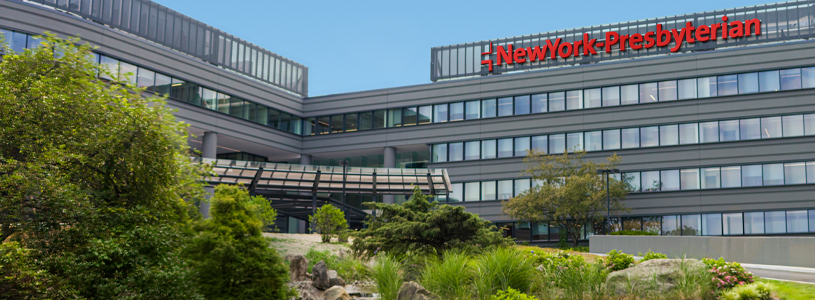
NewYork-Presbyterian announced Tuesday the opening of NewYork-Presbyterian The One, a new center for advanced care in Westchester where world-class doctors from Columbia will provide exceptional, comprehensive care for adults and children.
The 225,000-square foot facility, centrally located in White Plains at 1111 Westchester Avenue, will offer adult and pediatric care spanning more than 90 specialties and subspecialties, so patients can find the care they and their families need in one convenient location.
NewYork-Presbyterian The One is home to five Centers of Excellence that bring together extraordinary knowledge, expertise and resources to key areas of medicine like cardiovascular care, men’s health, women’s health, children’s health, and neurosciences.
At The One, patients can also find comprehensive oncology care for both adults and children, with specialists who guide patients through every step of the cancer journey. From common to complex conditions, leading specialists provide end-to-end care for physical medicine and rehabilitation, ophthalmology and otolaryngology, gastroenterology, dermatology, urology, and pediatric specialties that include orthopedics, immunology, pulmonology, and more.
“With the opening of NewYork-Presbyterian The One, we are transforming the way care is delivered in Westchester, offering easy access to leading specialists from Columbia and the latest advances in care in one convenient location,” said Dr. Steven J. Corwin, president and chief executive officer of NewYork-Presbyterian. “At The One, patients can expect personalized, coordinated care for all of your family’s healthcare needs.”
The new center, which sits on a 26-acre campus with green space and walking trails, features enhanced patient services and advanced technology, with 155 exam and consult rooms; ambulatory surgery and endoscopy suites; one-of-a-kind rehab technology not widely available in Westchester; advanced radiology services; and a state-of-the-art infusion center.
“NewYork-Presbyterian The One is a testament to our commitment to delivering exceptional care to our patients, close to home in Westchester,” said Paul J. Dunphey, senior vice president and chief operating officer of NewYork-Presbyterian Westchester and president of NewYork-Presbyterian Hudson Valley Hospital. “The center offers patients a convenient single destination for their healthcare needs, and we are pleased to open this incredible resource for our community and beyond.”
Concierge coordinators can book coordinated visits with specialists at the center or manage referrals to other locations in NewYork-Presbyterian’s vast network. Other amenities include a spacious lobby, seamless check-in, expansive dining options, and free valet parking for easy arrival and departure. Located in Westchester residents’ backyard, the center also has easy access to public transportation, free parking and main thoroughfares.
Learn more about NewYork-Presbyterian The One and book an appointment here.
Hits: 0

Feeding Westchester Calls on Community for Hunger Action Month
Long-time Supporter Debbie Newman Bernstein to match September donations up to $50,000
Governor Mario M. Cuomo Bridge will be lit up orange on September 12
“Hungry to Learn” panel on September 30:
The Impact of Childhood Hunger in Westchester & Innovative Solutions to Address It
ELMSFORD, NY | September 2, 2026 – September is Hunger Action Month, a nationwide call to fight hunger. Right here in Westchester, 39% of households are struggling to put food on their tables1—a staggering reminder that the rising cost of living, soaring food prices, and historic cuts to federal safety net programs are pushing more families to the brink.
“People across the country have demonstrated immense care for their neighbors in crisis time and time again, helping to build stronger, more resilient communities,” said Claire Babineaux-Fontenot, CEO of Feeding America.
“Ending the hunger crisis in America is no different. This Hunger Action Month, our hope for the nation is to start building a new reality together, through unified action toward a shared vision of a hunger free America.”
The crisis is urgent. More than 47 million Americans—including 14 million children—now face hunger, the highest level in over a decade. In Westchester, thousands of children are returning to school without the proper nutrition they need to focus, learn, and thrive.
“With deep cuts to SNAP ahead, we’re incredibly concerned for Westchester residents—including children, single parents, veterans, working families, and seniors—who don’t know where their next meal is coming from,” said Tami Wilson, COO of Feeding Westchester. “As children head back to school, it is doubly important that we provide them with the nutrition they need to reach their full potential. Hunger is a crisis we can solve—if we act together, and act now.”
TAKE ACTION
There are many ways that Westchester residents can take action with us in the fight against hunger:
Make A Matched Donation to Feeding Westchester
https://feedingwestchester.org/get-involved/donate/
Donations made in September up to $50,000 will be matched by Debbie Newman Bernstein, a generous supporter of Feeding Westchester. Every dollar you give provides four meals to neighbors in need right here in our community.
Hunger Action High School Challenge
Westchester schools are encouraged to take action and challenge their rivals
Feeding Westchester’s Hunger Action Month Calendar
Other Ways To Help…During Hunger Action Month…or Anytime
Feeding Westchester | Other Ways to Help Fight Hunger
Take action and join us in the fight against hunger in Westchester County!
###
Feeding Westchester serves Westchester County, providing food to a hunger-relief network of 175 partners. With a mission to nourish our neighbors in the fight against hunger, the organization sources and distributes good, nutritious food and other resources to wherever it is needed most.
In fiscal year 2025, Feeding Westchester provided more than 21 million pounds of food, equivalent to more than 17 million meals through soup kitchens, food pantries, schools, shelters, residential programs, and mobile distributions.
That served an average of 235,000 neighbor visits – including visits from children, seniors, veterans, and hardworking families – every month. The nonprofit, a 4-star Charity Navigator organization, is committed to creating a community where all people have access to the food they need today, and the fundamental resources to build a better tomorrow.
Feeding Westchester is located at 200 Clearbrook Road, Elmsford, NY 10523. For more information, or to donate, visit feedingwestchester.org.
Hits: 379
DURING HUNGER ACTION MONTH, GOVERNOR HOCHUL ANNOUNCES MORE THAN $500 MILLION DEDICATED TO INCREASE FOOD ACCESS AND BOOST NEW YORK FARMERS OVER THE LAST FIVE YEARS
19 Different Programs and Initiatives Have Been Developed Since 2020 To Address Food Insecurity, Strengthen the Food Supply Chain, and Support New York’s Farmers
New York’s Food Banks Host Food Drives, Distributions and More, Encouraging New Yorkers to Get Involved
Governor Continues To Fight Back In the Wake of Federal Actions that Have Resulted in Cuts to Food Access Programs
Builds on Action To Provide 2.7 Million New York Students With Free Breakfast and Lunch, Saving Families $165 on Meals Per Child Each Month
In recognition of Hunger Action Month, Governor Kathy Hochul today announced that, since 2020, New York has dedicated more than $500 million to projects that will increase access to fresh, local food for New Yorkers in need and provide new markets for New York farmers. State landmarks will be lit in orange today, on Hunger Action Day, to raise awareness of this important issue and to highlight New York’s continued commitment to combating hunger in our communities. In addition, the Governor also highlighted actions taking place across New York State in recognition of Hunger Action Month and encouraged New Yorkers to take part in the fight against hunger.
“New Yorkers band together during the toughest of times, including during the COVID-19 pandemic, helping their neighbors in need and supporting our farmers who continued to feed us,” Governor Hochul said. “As our state began to emerge from the health crisis, I vowed to prioritize investments in our food access programs to help those New York families who were struggling to put food on the table. With more than $500 million invested since those early days, I’m proud of what we have been able to accomplish, reaching people in need while providing a boost to our farmers. New Yorkers always lend a helping hand in times of need, and I encourage everyone to get involved with their local food banks this Hunger Action Month.”
Increasing Food Access and Supporting New York’s Farmers
The Governor continues to prioritize increasing access to food for all New Yorkers, with the Department of Agriculture and Markets implementing an array of programs to build a more resilient food system and ensure that farmers can connect with new local markets.
Over the last five years, approximately $500 million state and federal funding dollars has been dedicated to food banks, farms, schools, and food organizations and businesses at every point along the supply chain, through New York State Department of Agriculture and Markets’ programming, to strengthen the food system and bring local meats, eggs, dairy, produce, and more to families in need. The funding has been committed through 19 different programs and initiatives that were created to reduce hunger, strengthen the local food supply chain and support the state’s agricultural industry. Highlights include:
Additionally, the Nourish New York initiative, which is funded through the New York State Department of Health and administered jointly with the New York State Department of Agriculture and Markets, reroutes New York’s surplus agricultural products to the populations who need them most through the state’s emergency food network. The program, which was launched in May 2020 as an emergency relief program during the COVID-19 pandemic, also provides much-needed support for the food producers and farmers who lost markets due to the pandemic by allowing the purchase of agricultural products directly from New York farmers and food processors. In November 2021, Governor Hochul signed legislation codifying the Nourish New York program permanently in state law.
New York State Department of Agriculture and Markets Commissioner Richard A. Ball said, “Hunger Action Month always offers us the opportunity to reflect on, raise awareness of, and take action to combat food insecurity in our communities and fight for greater food access for all. Ensuring every New Yorker has fresh, healthy food on their plate has always been a top priority for the Department, and that starts with connecting the dots between our farmers, our families who face continued food insecurity, and our great network of food banks and pantries that work so hard to get food on tables statewide. I thank Governor Hochul and all of our partners across the state for continuing to support such decisive, good-sense programs, and encourage all New Yorkers to lend a hand to their neighbors this month, and all year round.”
New York State Department of Health Commissioner Dr. James McDonald said, “Good nutrition is the foundation of overall health, giving children a healthy start in life and preventing chronic disease in adults. Food security is also a critical social determinant of health. It’s vital that together, under the leadership of Governor Hochul and with the collaboration of our state and local partners, we continue to make these impactful investments into our food access programs to ensure New Yorkers have healthy food options they can afford.”
New York Farm Bureau President David Fisher said, “Farmers are an essential part of turning food insecurity into food security for all New Yorkers. Without farmers, it would not be possible to have the bounty of fresh, healthy foods that are so important to nutrition in our daily lives. And without vital health, nutrition, and infrastructure programs shepherded by Governor Hochul and the New York State Department of Agriculture and Markets, it would not be possible to make that nutritious food available to the people who need it most. During Hunger Action Month, we thank the governor, the Department of Agriculture, and especially the farmers who work so hard every day to bring fresh food to our neighbors, our schools, and our communities across New York.”
Feeding New York State Executive Director Kathleen Stress said, “When it comes to innovative programming that both supports local farmers and bolsters food access for struggling families, New York is leading the way. Through programs such as Nourish New York and New York Food for New York Families, our state has invested over $250 million in recent years to help food banks, pantries, nonprofits, and local schools purchase nutritious food grown right here in the Empire State. Our association applauds state leadership for fighting hunger with policies that also support New York farms.”
Other state agencies are also spearheading additional programs to bring food to underserved communities. The New York State Department of Environmental Conservation administers the New York State Food Donation and Food Scraps Recycling Program, which assists not-for-profits that provide emergency food relief in New York State and municipalities seeking to start or expand existing food scraps recycling programs and facilities.
The New York State Office of Temporary and Disability Assistance (OTDA) oversees the Supplemental Nutrition Assistance Program (SNAP) in New York State, which provides food benefits to help 2.9 million recipients – most of whom are children, older adults or disabled — put food on the table. The Department of Agriculture and Markets has also worked over the years with OTDA on the SNAP-Education Community Growers and Food Box Grant Programs, which have now been canceled by the federal administration for future rounds of funding.
The recently enacted “Big Ugly Bill” will result in an estimated 300,000+ households in New York State losing some or all of their SNAP benefits, shift $1.4 billion in new costs annually to state and local governments, and worsen food insecurity while hurting local businesses. In the wake of these actions, Governor Hochul is more committed than ever to ensuring all New Yorkers have access to healthy, affordable food.
Universal School Meals Program
The FY26 Enacted Budget included $340 million for school meals, a $160 million year-to-year increase, and requires all school districts, charter schools, and nonpublic schools that participate in the national school lunch and breakfast program to provide free breakfast and lunch meals to all students regardless of their families’ income. The Governor’s 2025 State of the State initiative thereby reduces costs for families and ensures no student goes hungry at school. Under this initiative, the State will pay the student’s share of costs for all meals served to students not already receiving free meals, expanding eligibility for free meals to roughly 280,000 additional students.
Hits: 299
WESTCHESTER COUNTY TO HOST INTERFAITH PRAYER VIGIL
(White Plains, NY) – Westchester County will host an Interfaith Prayer Vigil to honor the memory of those who perished in the tragic events of September 11, 2001, and those who later died from 9/11-related illnesses. Faith leaders from Christian, Jewish, Hindu, and Muslim communities will lead prayers, followed by candle lighting and a wreath-laying ceremony at the steel beam from the Twin Towers.
***MEDIA ADVISORY***
Interfaith Prayer Vigil
September 10, 2025
5 p.m.
Kensico Dam Plaza
The Rising & 9/11 First Responders Memorial
The Event will be Streamed Live on Facebook:
https://www.facebook.com/westchestergov/
Hits: 351
|
||||||||||||||
|
Hits: 363
Enjoying this newsletter? Why not share it with a friend? Covid-19 state vaccine access, flu on the horizon, grandparents to the rescue, Florida’s school requirement rollback, food safety cuts, and moreThe Dose (September 8)
Welcome to this week’s update (a day late because I spent the weekend fully unplugging with friends—highly recommend). Here’s what’s on the radar: Covid-19 summer wave, with flu peeking around the corner. Also, a patchwork of state vaccine access for Covid-19 vaccines, Florida’s decision to scrap school immunization requirements, and grandparents organizing for their grandkids’ health. Sprinkle in a scaled-down food safety system and a dose of fall foliage science, and you’ve got the picture. Let’s dive in! (WPCNR EDITOR’S NOTE: VACCINES FOR COVID BOOSTER AND FLU AVAILABLE IN PHARMACIES WITHOUT PRESCRIPTION. I got my new COVID-19 BOOSTER VACCINATION and FLU Shot Sunday in White Plains New York USA. Two days after New York Governor Kathy Hochul issued an Executive Order directing all pharmacies to administer the newest covid vaccine booster shots and flu vaccines, I walked in to CVS Sunday and got both shots, available during the CVS Pharmacy hours AT 325 Mamaroneck Avenue. Call CVS if you have any questions as to who can get the new Covid-19 booster. The pharmacy checks to see if you are within the time frame to receive the booster. The qualified vaccination specialist checks with your medical provider to see your vaccination history and after administering the shot, notifies your health care provider you have received, (in my case) the vaccine covid booster and current 2025-26 flu shot. Now on to Dr. Katelyn Jetelina and Dr. Hannah Tote’s Report.
Disease “weather” reportCovid-19: The summer wave continues nationally, still at a moderate level. Growth is slowing overall, but the South and West (especially Florida and Hawaii) remain hotspots. Wastewater levels are still climbing in these states, suggesting we’re not quite at the peak, though we may be getting close.
Covid-19 Wastewater Levels. Source: CDC; Annotated by Your Local Epidemiologist RSV: Still quiet nationwide. Historically, activity kicks off in the Southeast first—nothing is moving there yet. Flu: Starting to stir, especially in the South. Outpatient visits haven’t hit the 3% epidemic threshold that marks the official start of flu season, but activity is creeping upward, particularly among kids.
Influenza-like illnesses, United States, by year. Source: CDC; Annotated by Your Local Epidemiologist What does this mean for you? Wearing a mask in indoor crowded areas will help avoid viruses, especially Covid-19 right now. If you start to feel the sniffles, test before seeing grandparents at the nursing home. Also, this is the time to start planning for fall vaccines. For your options and ideal timing, go here for your 2025 guide for Fall vaccines. Covid-19 vaccine access: A patchwork quiltRight now, access to Covid-19 vaccines depends on your address. Even on-label people (ages 65+ or under 65 with high-risk conditions) face different rules across state lines. Off-label access (younger, lower-risk adults) is essentially blocked everywhere at pharmacies, except in a few states that acted quickly, like Massachusetts. Why the patchwork? Many state laws link vaccine access directly to guidance from FDA or ACIP (the CDC’s Advisory Committee on Immunization Practices). But in June, ACIP was replaced with members handpicked by HHS Secretary Robert F. Kennedy Jr., and they declined to vote on Covid-19 vaccine recommendations. Their next meeting is set for next week. Until that happens, guidance is stalled, leaving state statutes tied to ACIP in limbo and creating uneven access across the country.
The good news is that many states have been taking action (diagonal lines below) to move from “purple” to “green.” They’ve used several levers, including changing legislation expanding pharmacist authority (e.g., Colorado), to executive orders overriding restrictions (Massachusetts, New York, New Mexico), to pharmacy board directives filling gaps (Pennsylvania, Nevada, Kentucky). Off-label access (i.e., if you’re under 65 and not high risk; not shown on the map) is still going to be highly restricted in almost all states, for now. Massachusetts is one exception.
What’s next? If ACIP votes to recommend broad Covid-19 vaccine use next week, many access barriers could lift for on-label patients (purple states above), though off-label access (not shown) would still depend on state action. If ACIP restricts use—or recommends against it—confusion and inequities will deepen. Even “business as usual” states like California are preparing for downstream challenges, especially with insurance coverage. If you’re in CA or NY, follow our state-level newsletters for updates. Matt (CA) and Marisa (NY) are really staying on top of the local context. Florida’s school vaccine requirements: More than shots at stakeFlorida is set to become the first state to end school immunization requirements. The timing and process remain unclear, but the implications are not.
Figure from the New York Times For decades, every state required vaccines for school entry because requirements increase vaccination rates, prevent outbreaks, and keep classrooms open. Even today, support is high, including in Florida. Data from last month shows:
This means that Florida’s move doesn’t reflect parents’ opinions; it reflects politics. When Florida drops school entry requirements, vaccination rates will fall—and the ripple effects go far beyond vaccines. These requirements get kids into pediatricians’ offices. Many families delay care until it becomes necessary, and kindergarten is a well-documented trigger: epidemiologists consistently see a sharp spike in vaccine uptake at age five. Without this nudge, many children—whether due to parental hesitancy, barriers, or busy lives—would remain undervaccinated. The broader health impacts are just as serious. Pediatric visits tied to vaccines are often when doctors:
Without school requirements, fewer children will receive needed medical care. What this means for you: Vaccination rates in Florida will likely decline. If your child is up to date, they are very well protected. Long-term protection depends on the vaccine and disease: measles shots last a lifetime, while whooping cough protection fades more quickly, for example. Grandparents take the mic.Think Moms Against Drunk Driving, but for polio and measles. A new grassroots group of grandparents just launched to protect kids’ vaccine access. They’re driven by lived experience—remembering when these diseases ran rampant—and are elevating their stories. Fueled by personal experiences, they are asking for support and stories. Learn more and join them here! Food Safety: Fewer eyes on the plateOn July 1—unbeknownst to the public—the CDC scaled down its Foodborne Disease Active Surveillance Network (FoodNet), which actively monitors foodborne illness in 10 states.
The CDC maintains that individual states and other programs like the National Notifiable Diseases Surveillance System and the Listeria Initiative can still monitor these pathogens, and that the cut lets them “prioritize core activities.” Food safety experts, on the other hand, warn that unlike FoodNet’s active surveillance, those other surveillance programs are passive—they rely on states to report cases. Bottom line: The cuts may slow outbreak detection and response, and make it harder for the CDC to see the full picture of food safety trends at the national level. Check state-level resources to learn of outbreaks and foods to steer clear of. Question grab bag“My almost 5 year old really wants to go to Disney World and we promised her a trip this January. Then FL decided to do away with vaccine mandates. Thoughts on keeping the trip? Maybe it won’t have much effect come January [or] maybe Disney will require vaccine cards? She’s fully vaccinated btw.” You should definitely still keep your trip. It’s not clear when this will go into effect, and it will take a while for vaccine coverage to decline. The calculus may change if outbreaks emerge, but right now your fully vaccinated child is well protected. Have fun! “What should be the time period between Covid vaccinations? We had the last one in mid- May. Both of us are over 65.” About six months. In your case, that works out perfectly—your next dose will be due in November, likely right before the winter wave picks up. That’s ideal timing. In case fall leaves make you as happy as me…The 2025 Fall Foliage Prediction Map is here! September kicks off leaf-chasing season. I hope you’re able to sneak away to take a look this fall. I’ll be living leaf season vicariously from San Diego.
Photo by Ricardo Gomez Angel on Unsplash Bottom lineThat’s your update for the week: Covid-19 vaccines tied in legal knots, Florida testing “freedom” against measles, CDC slimming down food safety, and grandparents stepping up. And one thing that is right on track: fall leaves. Love, YLE |
Hits: 0
WPCNER COVID VACCINE UPDATE By John F. Bailey. September 7, 2025:
I got my new COVID-19 BOOSTER VACCINATION and FLU Shot today in White Plains New York USA.
Two days after New York Governor Kathy Hochul issued an Executive Order directing all pharmacies to administer the newest covid vaccine booster shots and flu vaccines, I walked in to CVS today and got both shots, available during the CVS Pharmacy hours AT 325 Mamaroneck Avenue. Call CVS if you have any questions as to who can get the new Covid-19 booster.
The pharmacy checks to see if you are within the time frame to receive the boosters. The qualified vaccination specialist checks with your medical provider to see your vaccination history and after administering the shot, notifies your health care provider you have received, (in my case) the vaccine covid booster and current 2025-26 flu shot.
“I promised New Yorkers that their family would be my fight. In the absence of federal leadership, we must do everything we can to ensure that New Yorkers have access to the vaccines and preventative healthcare they have come to rely on,” Governor Hochul said. “By signing this executive order, we are sending a clear message that when Washington Republicans play politics with public health, New Yorkers can still get the care they need, close to home, from trusted providers in their own communities.”
New York State Health Commissioner Dr. James McDonald said,
“Governor Hochul’s Executive Order provides access to the COVID vaccine for New Yorkers who choose to get vaccinated, sets us up for a smoother transition to the updated 2025-26 vaccine and restores pharmacies as a vital part of our vaccination network. While New York State does not require COVID vaccines, vaccination remains one of the most effective tools we have to prevent serious illness, hospitalization, and death from COVID.”


