A STATE OF THE ART COUNTY ADDRESS FOR THE AGES “JUST THE FACTS, MA’AM”: SEE THE COUNTY EXECUTIVE’S STATE OF THE COUNTY ADDRESS IN FULL on WPCNR.com NOW

Hits: 502

WPCNR COUNTY-CLARION LEDGER. From the Westchester County Department of Communications. Introductory Commentary by John F. Bailey. June 29, 2023:

I’ve watched a lot of Political addresses. I’d watch this one again.

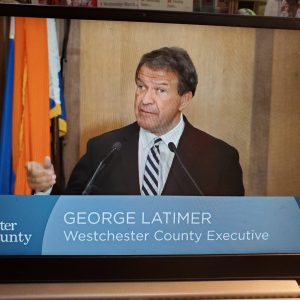
County Executive George Latimer’s State of the County Address last night  in the county chambers in the Michaelian Building was compelling, earnest.

It is could be used as a primer for politicians attempting to figure out how to win over viewers to their  policies.

He gave facts.

His delivery was smooth slow. What he said and how he said it  stopped you to look and listen for an hour and 5 minutes. Spellbound.   The pace of the address made you feel it was important and vital to do and pitch in and help.

He poured himself and what he is as a person into this address.

Mr. Latimer is candor, concern in the way he moves and talks. It was an address, it was not a speech.

When he is talking to you  you listen. He has a way of making you feel he is talking just to you and you matter to him.

His state of the county was backed up with achievement after achievement with splendidly edited live news clips and Latimer personally appearing with staff and people with achievements on topics.

The prerecorded videos broke up the address nicely. It was not info entertainment, it was “InfoFacts” one after another  coming straight at you and you could not ignore the message of the facts.

He did not just say  I did this and that.

He showed you through the just-long enough vignettes, rich, filled with feeling.

When he reminded you towards the end of the address with more bullet-type facts, he gave you a feeling that Westchester County government and its people are the hardest working government on the planet.

I say let’s get them down to Washington and get this country working again.

He also promised the new airport master plan would be started on as soon as litigation involving the airport was completed. He also delivers a reason why something has not happened.

Watch full address HERE.

Read the full address HERE.


Watch a short video recapping the last year in Westchester County Government HERE.
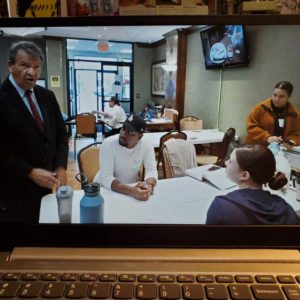
MR. LATIMER MEETS THE MIGRANTS, GETS TO KNOW THEM, AMERICA’S AMBASSADOR

Watch a short video on Westchester’s efforts with Asylum Seekers HERE.

Watch a short video on the rebuilding of Memorial Field HERE.

Watch a short video on Westchester’s commitment to Public Safety HERE.

Watch a short video on Westchester’s building of affordable housing HERE.

Watch a short video on the road ahead HERE.

Here is the county official description of the event.

Touting his Administration’s successes and plans for the future, Westchester County Executive George Latimer delivered his highly anticipated 6th State of the County Address on Thursday, June 29 to a full Board of Legislators Chamber.

The address, which is mandated by the County Charter to be delivered by the County Executive to the Board of Legislators and its Chairman Vedat Gashi, served as a platform for Latimer to outline his administration’s remarkable accomplishments, with a focus on efforts to support asylum seekers within the County, tax reduction and dropping crime rates.

(Editor’s Note:) The address included video of  Mr. Latimer’s  meeting recent migrants seeking asylum now living in one of  the three facilities in Westchester now housing migrants. In WPCNR’s opinion, the interview demonstrated migrants are people just like us. Anyone wanting to know what migrants are like should watch the short clip provided at the beginning of this news release.

During the address, Latimer said: “So here we are, still sharing this small patch of land for a moment in time, all of us here together in our Westchester County. So you ask – what is the State of our County?  Is it fierce? Is it united? Or is it thriving?  It is all of this – because the State of our County is one of unyielding strength, unwavering resolve and, most crucially, boundless potential.”

Latimer’s State of the County Address featured seven short videos, showing, through a different medium, the countless accomplishments of the past year.

Under the leadership of Latimer, Westchester County has experienced significant advancements in various areas, fostering a thriving community that prioritizes the well-being and prosperity of its residents. Through smart fiscal management, Latimer has successfully implemented four consecutive tax cuts that have provided relief to homeowners – allowing them to invest in their future while strengthening the local economy.

Latimer said: “I am proud that we have accomplished another significant milestone in our journey towards a better future. Our County has successfully cut County property taxes for the fourth consecutive year. This achievement is a testament to our commitment to fiscal responsibility, and our dedication to improving the lives of our citizens.

Cutting County property taxes is not mere political rhetoric – it is a tangible action that directly impacts the lives of our residents. It allows hardworking County residents to keep more of their earnings, invest in their dreams, take the kids to do something fun – and most of all – worry less.”

One of the key highlights of the State of the County Address was the decline in crime rates throughout Westchester County. Working with the County’s Department of Public Safety, local police departments and community organizations, Latimer’s Administration has made significant strides in creating safer neighborhoods. Latimer highlighted the importance of these efforts, emphasizing the continued commitment to enhancing public safety and ensuring the well-being of all residents.

Latimer said: “In Westchester County, our commitment to combating crime is unwavering. Recognizing the importance of this mission, I have significantly increased the funding for the Westchester County Department of Public Safety, providing them the highest level of financial support in their entire history. While some areas in the country may be experiencing an unfortunate increase in crime rates, tonight I am announcing that Westchester County continues to witness a consistent drop in criminal activities. I attribute this positive trend to the dedication and bravery displayed by our men and women in uniform.”

Also in his address, Latimer recognized the tireless work in supporting asylum seekers who have found their way to Westchester County. Recognizing the challenges faced by individuals seeking refuge, Latimer has prioritized providing essential services, resources and a welcoming environment to those in need. By fostering a compassionate and inclusive community, Westchester County has become a model for humanitarian efforts, offering support seeking ways to offer opportunities for a brighter future.

Latimer said: “So let’s talk openly, and inclusively, about the most pressing issue of our time – the plight of asylum seekers. We must approach this matter with compassion, empathy and a commitment to upholding our values as a nation. Asylum seekers are individuals, just like you and me. They are individuals who have fled their home countries due to persecution, violence and unimaginable hardships. Unimaginable. They come seeking refuge, hoping for a chance at a better life for themselves and their families. I know that we all, deep down, believe in treating them with dignity and respect, while also ensuring a fair and efficient immigration process and protecting the interests and addressing the legitimate concerns of those who already live here.”


Latimer also used the address to highlight millions of dollars of capital funding allocated toward:

·         the rebuilding of the historic Playland Amusement Park,

·         various County parks projects,

·         restoring Muscoot Farm’s Main House,

·         smart QR codes in parks for patrons who need emergency services,

·         Pickleball Courts at Tibbetts Brook Park,

·         the first full Cricket Pitch at Croton Point Park,

·         an upgraded South County Trailway,

·         restoring Kingsland Point Lighthouse,

·         reopening the Westchester County Center,

·         and the long-awaited reopening of Memorial Field.

Latimer said: “The Parks, Recreation and Conservation Department has been working tirelessly to enhance the quality of life for our residents and provide them with exceptional recreational opportunities.


We reopened the Westchester County Center. After serving as an overflow hospital, testing center and vaccination site during the pandemic, the County Center returned to its regular operations – including Section One Basketball.


And through our tireless efforts and persistent determination, we bore witness to the extraordinary transformation of Memorial Field, as it emerged, triumphantly, like a phoenix from the ashes soaring to new heights.


From my earliest days to the present, I have embraced the spirit of Mount Vernon, and it will forever hold a special place in my heart. Once a Mount Vernon Knight, always a Mount Vernon Knight. Although, let me give a shout-out to my Rye Garnets too.”

The State of the County Address served as a reminder and reinforcement of Latimer’s dedication and vision for Westchester County. In addition to his record on taxes and crime reduction, Latimer touted the County’s efforts on innumerable fronts including: the environment, mental health services, economic development, parks improvements, Westchester values and veterans’ services.

Posted in Uncategorized

HEAT, HUMIDITY AND SMOKE…OH MY!

Hits: 518

Reprinted with permission
JUN 29, 2023

Oof.

This is quite the week for hot, muggy, and smoky conditions in the United States. We are seeing all sorts of alerts across the country.

The dew point will reach more than 70 in the next ten days in more than half of the country. In other words, millions will be lucky enough to experience jungle-like conditions. (For reference: dew point <50 is comfy; 60-65 feels sticky; >65 is muggy; >70 is tropical.)

(Source: Ben Noll)

But all of the above isn’t necessarily a surprise. Meteorologists predicted an unusual heat this summer, with a number of areas to experience temperatures above normal.

The reason for this depends on region:

  • Northeast: Ocean temperatures higher than normal, which increases air temperatures.
  • South: Heat dome from Mexico, one the strongest ever recorded. According to Climate Central— a climate science non-profit— climate change made this extreme heatwave at least five times more likely.
  • WestDrier-than-normal thanks to El Niño.

Heat illness

The biggest health concern with high heat indexes (combination of temperature and humidity) is “heat imbalance”—the heat the body produces is more than the heat it looses. The body typically fixes this with sweat, but in extreme heat it’s sometimes not enough. The heat can build up inside causing a wide range of symptoms, including death.

We can already see an uptick in emergency room visits (per 100,000) for heat-related illnesses thanks to CDC’s super cool real-time surveillance tracker. Unfortunately, we’ve already seen a number of deaths. There have been two in Texas reported: a 14-year-old hiker in Big Bend National Park and a postal worker on his route in Dallas.

Heat-Related Illness and Temperature map shows the rate of emergency department visits (per 100,000) associated with heat-related illness. CDC.

Anyone can be at risk, but there are particularly high-risk groups:

  • People over 65
  • Infants and children
  • Pregnant people
  • People with heart or lung conditions
  • Athletes
  • Outdoor workers
  • Those in urban areas

Heat illness is preventable. We can actively help our bodies with the internal heat balance. The major source of heat buildup is from physical activity. Limit this outside, if possible. Other things that help:

  • Hydration. This means water. Not Red Bull. Not Gatorade. Water. Limit alcohol.
  • Stay cool in air-conditioned areas.
  • Wear lightweight, light-colored, loose-fitting clothes.

Heat illness can creep up fast. The CDC put together a helpful chart of signs and symptoms to look out for, and what to do depending on severity.

(CDC)

Bottom line

It’s a scorcher out there, and it’s not even July. Take the heat seriously, as it’s only increasing heat-related illnesses. They are preventable. Stay cool.

Love, YLE


The YLE archive can be found here. In case you missed it:


“Your Local Epidemiologist (YLE)” is written by Dr. Katelyn Jetelina, MPH PhD—an epidemiologist. During the day she is a senior scientific consultant to a number of organizations. At night she writes this newsletter. Her main goal is to “translate” the ever-evolving public health world so that people will be well equipped to make evidence-based decisions. This newsletter is free thanks to the generous support of fellow YLE community members. To support this effort, subscribe below:

Posted in Uncategorized

TONIGHT AT 8, SATURDAY AT 7 ON “PEOPLE TO BE HEARD” COUNTYWIDE FIOS CH 45 OPTIMUM WHITE PLAINS CH 76 “THE RICCA REPORT ON 2022-23 AND 2023-24 ” AND ON www.wpcommunitymedia.org

Hits: 561

DR. JOSEPH RICCA, WHITE PLANS SUPERINTENDENT OF SCHOOLS  IS INTERVIEWED FOR  HIS END OF YEAR REPORT ON THE 2022-23 SCHOOL YEAR AND THE NEW 2023-24 SCHOOL YEAR COMING UP.

HOW THE KIDS DID ACADEMICALLY THIS YEAR IN A “RETURN TO NORMALCY” 

HOW THE DISTRICT PARENTS, TEACHERS, ADMINISTRATORS DID THIS SCHOOL YEAR– WHAT THEY HAVE LEARNED

THE STATUS OF NEW STATE EDUCATION ASSESSMENTS UNDER REVIEW

BULLYING: THE DISTRICT NEW APPROACH TO BULLYING

HOW DISTRICT CONSTRUCTION WILL PROCEED IN 2023-24

NEW EMPHASIS ON CAREER COURSES FOR COLLEGE AND THOSE NOT PLANNING ON COLLEGE.

MORE INCLUSION OF CHILDREN WITH LEARNING DISABILITIES

THE NEW MISSION OF EDUCATION AHEAD IN THE NEW YEAR

AND MORE


Posted in Uncategorized

AIR QUALITY FORECAST FOR THURSDAY AQI OF 130 IN WESTCHESTER COUNTY DOWN FROM 101 YESTERDAY

Hits: 480

 The Westchester County Health Department has been informed that the Air Quality Forecast for Thursday 6/29 for Westchester County has decreased to:

Max AQI: 130

Air Quality: Unhealthy for Sensitive Groups

While the general public is not likely to be affected, vulnerable individuals such as young children, pregnant women, and those with respiratory conditions or heart disease, should limit their time outdoors.  If the air quality continues to decrease it is recommended that residents close their windows, operate their air conditioners and reduce strenuous outdoor activities.

Stay tuned for further updates and adhere to the recommended precautions to minimize exposure to poor air quality.

The New York State Department of Environmental Conservation and the New York State Department of Health issue Air Quality Health Advisories when DEC meteorologists predict levels of pollution, either ozone or fine particulate matter, are expected to exceed an Air Quality Index (AQI) value of 100. To remain updated on the air quality index, monitor the DEC website for air quality index updates.

Exposure can cause short-term health effects, such as irritation to the eyes, nose and throat, coughing, sneezing, runny nose and shortness of breath. Additional information is available on DEC and on DOH websites.

Posted in Uncategorized

82% OF 2,001 VOTERS POLLED DON’T BELIEVE HIGHWAY EXPANSIONS ARE BEST SOLUTIONS FOR REDUCING CONGESTION.

Hits: 502

WPCNR THE LETTER TICKER. Special to WPCNR from Smart Growth America. June 29, 2023:

National survey shows prioritizing road repair, improving transit, and reducing driving are more popular options for spending transportation dollars

Washington, D.C. (June 29) — A new nationwide survey of American voters’ attitudes reveals a significant divide between voters’ attitudes about the best short-and long-term solutions for reducing traffic, versus the actual priorities of their state and local transportation agencies.

In 2021 The Washington Post estimated that highway widening and expansion consumed more than a third of states’ capital spending on roads (over $19 billion). These projects were backed by promises to reduce congestion. The public isn’t buying it. The results of a national survey of 2,001 registered U.S. voters—90 percent of whom own a car they drive regularly—underscores a widely shared belief that highway expansion doesn’t work as a short- or long-term strategy for reducing traffic and that we should invest more in other options.

  • 70 percent of respondents agree that “providing people with more transportation options is better for our health, safety, and economy than building more highways.
  • 67 percent of respondents agreed that “expanding highways takes years, causes delays,  and costs billions of dollars.” The same percentage believes that “widening highways attracts more people to drive, which creates more traffic in the long run.” Only 11 percent felt state DOTs actually deliver congestion relief with highway expansions. In other words, the public understands the concept of “induced demand,” which is widely ignored by state legislatures, DOTs, Congress, and federal agencies.
  • 69 percent of respondents agree that “it’s more important to protect our quality of life than to spend billions of tax dollars on expanding highways. By removing a few miles of highway and adding more transportation options, like trains, buses, bike lanes, and sidewalks, we can have healthier communities.
  • 71 percent of respondents agree that “no matter where you live, you should have the freedom to easily get where you need to go. Almost all government spending on transportation goes to highways. Instead, states should fund more options, like trains, buses, bike lanes, and sidewalks.

The survey revealed a deep dissatisfaction with the overall status quo of state and local transportation spending which overwhelmingly prioritizes spending on new roads, often at the expense of keeping roads and bridges in good condition, investing in transit and safe streets for walking or biking, or reducing the need to drive overall. Given seven choices for the best short- and long-term solutions for reducing traffic, the least popular option was “building new freeways and highways,” even as states are poised to spend tens of billions on new highways thanks to the 2021 federal infrastructure law.

“Our country remains on a highway spending spree while requests for basic investments in walkability and transit are given low priority.  I hope this survey serves as a wake-up call to politicians that the public is clamoring for reasonable investments in our health, climate and quality of life, not traffic-inducing polluting highways,” said Mike McGinn, Executive Director of America Walks.

Prioritizing the repair of existing roads and bridges first was the top option for how states should be investing their transportation funding (selected by 22 percent of respondents), though Congress has long agreed—in a strong bipartisan fashion—not to institute any binding requirements to prioritize repair first.

“We’re repeatedly told by leaders on Capitol Hill that requiring states to prioritize maintenance first is just too controversial,” said Beth Osborne, director of Transportation for America. “But this survey shows yet again that there’s no controversy among the people they serve—they’re beyond ready to retire the last generation’s playbook when it comes to improving mobility and getting them where they need to go.”

While “reducing congestion” is the top policy goal that shapes the spending decisions of most state DOTs, traffic is not a huge stumbling block for most people to access what they need. Just one in four said they find it difficult to get around.

Survey respondents expressed positive feelings about a range of messages about spending transportation money differently, demonstrating that voters are looking for new ideas, policies, and/or investments that address their problems and deliver meaningful benefits to people and communities—instead of just doing the same old things over and over again. (See attached PDF for full results on pages 19-22, all of which were supported by over 60 percent of respondents.)

“These results are clear: Americans are eager to see the transportation investments that can connect and repair their communities,” said Rabi Abonour, a transportation advocate at NRDC (Natural Resources Defense Council). “Federal, state and local leaders should follow the lead of the public and invest in the public transit and related projects that will really improve mobility, clean the air, and address climate pollution.”

View a more detailed version of the survey data and findings.

###

About the poll

Hattaway Communications, a strategic communications firm based in Washington D.C., was retained to conduct this survey of 2,001 registered voters and assess their awareness of relevant issues, attitudes toward transportation projects, and aspirations for their communities. The survey was fielded online, between February 23–March 7, 2023, and reflects the demographic and geographic composition of the United States. 

This survey was supported by NRDC and a grant from the Summit Foundation.

Posted in Uncategorized

SMOKEY MOON

Hits: 414

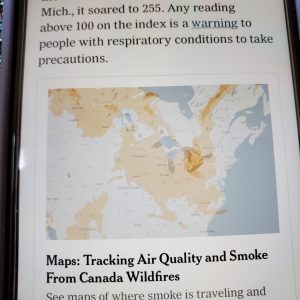
MOON IN WAXING GIBBOUS PHASE IN CLOUDS NEARING MIDNIGHT LAST NIGHT in WHITE PLAINS NIGHT STILL SHOWED VERY FAINT RED HAZE AS SMOKE FROM CANADIAN WILDFIRES WAS NOT AS INTENSE AS EXPECTED. ODOR OF SMOKE WAS NOT DETECTABLE, BUT COULD MAKE YOU SNEEZE. i DID. The New York Times map YESTERDAY  below indicates today’s expected Eastward movement of the smokey Canadian airmass (Dark Orange area in center of map).

Posted in Uncategorized

THIS JUST IN AT 1 P.M.EDT FROM COUNTY HEALTH; 101 AQI PREDICTED IN WESTCHESTER– LESS THAN HALF OF CHICAGO SKIES THIS MORNING;

Hits: 446


(White Plains, NY) – The Westchester County Health Department has been informed that the Air Quality Forecast for Wednesday, June 28 for Westchester County has decreased to:

Max AQI: 101 (Fine Particles)

Air Quality: Unhealthy for Sensitive Groups

While the general public is not likely to be affected, vulnerable individuals such as young children, pregnant women, and those with respiratory conditions or heart disease, should limit their time outdoors. If the air quality continues to decrease it is recommended that residents close their windows, operate their air conditioners and reduce strenuous outdoor activities.

Stay tuned for further updates and adhere to the recommended precautions to minimize exposure to poor air quality.

The New York State Department of Environmental Conservation and the New York State Department of Health issue Air Quality Health Advisories when DEC meteorologists predict levels of pollution, either ozone or fine particulate matter, are expected to exceed an Air Quality Index (AQI) value of 100. To remain updated on the air quality index, monitor the DEC website for air quality index updates.

Exposure can cause short-term health effects, such as irritation to the eyes, nose and throat, coughing, sneezing, runny nose and shortness of breath. Additional information is available on DEC and on DOH websites.


Posted in Uncategorized

CONGESTION PRICING TAX WILL SET PRECEDENT: 5 THINGS TO EXPECT

Hits: 539


WPCNR THE LETTER TICKER. New York-June 28 Special to WPCNR From New York Congestion Tax Free. June 28, 2023:

(Editor’s Note: Yesterday Governor Kathy Hochul officially announced the Federal Highway Administration had approved congestion pricing tolls beginning at 60th Street in Manhattan. A target date for the Congestion Pricing to begin is May 2024.)

If New York moves forward with a congestion pricing tax in Manhattan south of 60th Street, expect a raft of new transportation taxes across the state within the next few years.

NYC Congestion Tax Free, a diverse coalition of civic and business leaders that opposes the controversial new tax on the grounds that:

A. it won’t reduce traffic — it will only move it into other communities;

B. it will unfairly burden low-income New Yorkers for traffic caused by wealthier citizens in ride-share vehicles;

C. it will increase truck traffic and youth asthma rates in inner-city neighborhoods already suffering some of the highest asthma rates in the country;

D. it will erect a paywall around the exact commercial tax-base areas of Manhattan that New York City and New York State are ostensibly trying to revive post-covid, potentially losing more net tax revenue than it raises.

Bottom-line, it will fail to achieve every claim made by its advocates but for imposing higher taxes and costs on too many New Yorkers.

“There are so many reasons to oppose this unfair and counterproductive tax, but the most alarming aspect of its implementation may be the precedent it would set for new transportation-related taxes across New York State,” said Keep NYC Congestion Tax Free spokesman Joshua Bienstock.

“Make no mistake about it, once this tax goes through, it will be open season on drivers across the state. New York is one of the most taxed states in America, and our state leaders never stop looking for new ways to take more money out of our pockets.”

If New York moves forward with the Congestion Pricing Tax, Keep NYC Congestion Tax Free predicts that:

  1. Congestion pricing taxes will be implemented across New York State as the State and municipalities sniff out additional revenues; 
  2.  Towns and villages will begin charging drivers for entering their jurisdictions; 
  3.  Congestion tax rates will steadily increase, just as bridge and tunnel tolls have; 
  4. The State will adapt the technology to continuously monitor the speed of drivers across the state — and to tax them for transgressions, and   
  5.  A tax on car mileage will be passed to address electric vehicles that don’t pay New York’s tax on gasoline. 

“Government leaders don’t want this tax for environmental reasons; they want money, and this will be a whole new taxation avenue for them,” Mr. Bienstock continued.

“Many are opposing this tax as a standalone assault on city drivers, but opposition goes far deeper than that. Hand New York the right to tax moving vehicles, and just watch what happens. This nightmare is only beginning.”

Posted in Uncategorized

COUNTY ADVISORY ON THE CANADIAN WILDFIRES SMOKE SITUATION COMING OUR WAY

Hits: 216

en Español

The Westchester County Health Department is closely monitoring the situation regarding the anticipated influx Wednesday, June 28 of fine particulate matter resulting from the Canadian wildfires in Quebec. We advise all residents to stay informed and take necessary precautions in response to potential changes in air quality.

If the air quality decreases it is recommended that residents close their windows, operate their air conditioners, reduce strenuous outdoor activities and that all residents, particularly vulnerable individuals such as young children, pregnant women, and those with respiratory conditions or heart disease, limit their time outdoors.

The New York State Department of Environmental Conservation and the New York State Department of Health issue Air Quality Health Advisories when DEC meteorologists predict levels of pollution, either ozone or fine particulate matter, are expected to exceed an Air Quality Index (AQI) value of 100. To remain updated on the air quality index, monitor the DEC website for air quality index updates.

Exposure can cause short-term health effects, such as irritation to the eyes, nose and throat, coughing, sneezing, runny nose and shortness of breath. Additional information is available on DEC and on DOH websites.

Stay tuned for further updates and adhere to the recommended precautions to minimize exposure to poor air quality.


en Español

El Departamento de Salud del Condado de Westchester está monitoreando muy cerca la situación con respecto a la afluencia anticipada el miércoles, 28 de junio de partículas finas resultantes de los incendios forestales canadienses en Quebec. Aconsejamos a todos los residentes que se mantengan informados y tomen las precauciones necesarias en respuesta a posibles cambios en la calidad del aire.

Si la calidad del aire disminuye, se recomienda que los residentes cierren sus ventanas, operen sus acondicionadores de aire, reduzcan las actividades extenuantes al aire libre y que todos los residentes, especialmente las personas vulnerables como los niños pequeños, las mujeres embarazadas y las personas con afecciones respiratorias o cardíacas, limiten su tiempo al aire libre.

El Departamento de Conservación Ambiental del Estado de Nueva York y el Departamento de Salud del Estado de Nueva York emiten Avisos de Salud sobre la Calidad del Aire cuando los meteorólogos del DEC predicen niveles de contaminación, ya sea ozono o partículas finas, que se espera superen un valor del Índice de Calidad del Aire (Air Quality Index (AQI) de 100. Para mantenerse actualizado sobre el índice de calidad del aire, controle el sitio web del DEC para conocer las actualizaciones del índice de calidad del aire.

La exposición puede causar efectos en la salud a corto plazo, como irritación de los ojos, la nariz y la garganta, tos, estornudos, secreción nasal y dificultad para respirar. Hay información adicional disponible en los sitios web del DEC y del DOH.

Estén atentos para más actualizaciones y sigan las precauciones recomendadas para minimizar la exposición a la mala calidad del aire.

Posted in Uncategorized

Harassment Against Scientists Out of Control YOUR LOCAL EPIDEMIOLOGIST REPORTS

Hits: 254

Last week Peter Hotez experienced pile-ons, stalking, and bullying after events unfolded on Twitter. So much so that law enforcement got involved. A complete nightmare.

He’s not alone. These nightmares are now a common occurrence for scientists and physicians in public health. Both online and offline. For vaccines. For gun violence. For reproductive health. And apparently for wildfires now, too.

It’s gotten out of control, which becomes an individual risk as well as a risk to the communities we serve.

Hotez’s experience is not uncommon

Many scientists and physicians have similar stories. Harassed at coffee shops. Death threats, doxxing (private information had been shared), hacking, and getting sued. Hand-written letters in the mail. Emails pointing gun barrels at them. Heads added to fake pornographic pictures. Heckled after leaving work. Needing full-time security details. Moving states to escape threats.

I have experienced almost all of these in three short years. Others have too. We don’t just hear each others stories; we see it in the numbers, too. A recent study surveyed 350 scientists about social media commentary:

  • 2 out of 3 scientists reported harassment related to comments made about the COVID-19 pandemic
  • 1 in 5 reported doxxing

Another study in Nature asked scientists what types of harassment they experienced. Fifteen percent reported death threats.

While these surveys do have a potential for bias—those who experience harassment are more likely to fill out a survey—different data angles show a consistent story:

  • Before the pandemic, harassment against scientists wasn’t nearly as high
  • Compared to the general public, the rate of harassment against scientists is higher
  • Scientists posting public health messages on social media were more likely to receive online harassment than those who don’t
  • Of course, harassment isn’t new to other scientists, like climate experts

Women scientists are particularly at risk

Watching gender differences unfold has been particularly jarring, particularly as a woman scientist. Women experience harassment differently:

  • 1 in 3 report being sexually harassed online, more than their male counterparts
  • Targeted for harassment because they are female
  • Women report more emotional stress related to the threats than men

This is a huge problem

Scientific communication, combatting misinformation, and bringing scientific dialogue to social media is dependent on volunteers. Because of this, too often scientists assume the consequences alone. This takes a significant personal toll.

After a while, this risk is just not worth it.

Scientists reach a tipping point—whether it be a health event, a threat becoming too real, or just exhaustion. When they stop interacting, the gap between science and community only grows wider allowing misinformation and disinformation to fill the void.

This takes a toll on communities.

The tipping point has already been reached for many. Axios, for example, reported that scientists are leaving Twitter in droves.

In another survey, scientists who reported higher frequencies of trolling or personal attacks were most likely to say that their experiences had greatly affected their willingness to speak about science in the future in media interviews.

Public health is inherently political.

And, it’s “public,” meaning it requires buy-in from the public. It needs to be a bi-directional conversation with the public.

Rapid, widely accessible scientific dialogue was a life saver during the pandemic: scientists talking to each other, to the community, to media. Scientists listening to the community. We need this in the future, especially if we don’t fix root causes of mis- and disinformation. A conversation can include disagreement, but this means civilized conversations rather than pile-ons and ridiculousness.

Bottom line

We need scientists to speak more than ever. We need communities to join the scientific conversation. At the same time, we need threats to be clearly and unanimously rejected.

Denounced by our communities, but also denounced by institutions through action. If not, more and more will wonder: is the juice worth the squeeze?

Love, YLE


“Your Local Epidemiologist (YLE)” is written by Dr. Katelyn Jetelina, MPH PhD—an epidemiologist. During the day she is a senior scientific consultant to a number of organizations. At night she writes this newsletter. Her main goal is to “translate” the ever-evolving public health world so that people will be well equipped to make evidence-based decisions. This newsletter is free thanks to the generous support of fellow YLE community members. To support this effort, subscribe below:


Posted in Uncategorized