AUGUST 21–THE LEGIONNAIRE’S DISEASE OUTBREAK IN IN NYC–FROM YOUR LOCAL EPIDEMIOLOGIST NEW YORK

Hits: 400

View in browser

Your top 7 questions about Legionnaires’ outbreaks

Yes, your drinking water is safe. Here’s what else you need to know.


Due to the large, ongoing Legionnaires’ disease outbreak in New York City, we’re taking a closer look at the illness and its biology this week. While the outbreak data shared is specific to NYC, much of this information can apply to outbreaks elsewhere. For our readers outside of New York City, know that we’ll be back with state-level updates next week. Let’s dive in.


While the Legionnaires’ outbreak in New York City’s Central Harlem has slowed, it hasn’t stopped. As of August 21, there have been 109 cases, with 9 currently hospitalized and 5 deaths. The affected zip codes include 10027, 10030, 10035, 10037, and 10039.

The most recent case developed symptoms on August 12, which means we’re likely closer to the end of the outbreak. That’s good news. It means that mitigation efforts (like identifying and cleaning contaminated cooling towers) are working.

Figure from the NYC Department of Health and Mental Hygiene. Annotations by YLE.

But we’re not entirely out of the woods—we still might have some cases trickling in. People who may have been exposed before the cooling towers were cleaned could still get sick several days after their exposure.

What does this mean for you? We still need to stay alert, especially if you are someone at higher risk for severe illness (more below).

Since the outbreak began, I’ve gotten a lot of questions about Legionella (the bacteria) and Legionnaires’ disease (the illness it causes). Here are your top 7 questions answered.

1. What are the symptoms, and who is most at risk?

Symptoms usually start 2–10 days after exposure and can include:

  • Cough
  • Fever
  • Chills
  • Shortness of breath
  • Muscle aches
  • Diarrhea

Most healthy people exposed won’t get sick. Those at highest risk are adults over age 50, smokers, and people with chronic lung disease, diabetes, cancer, or weakened immune systems.

2. Can I get Legionnaires’ disease from drinking water?

No.

  • Legionnaires’ disease is caused by breathing in tiny water droplets containing Legionella bacteria. Water doesn’t enter the lungs when drinking unless someone chokes and accidentally inhales it.
  • Stomach acid also likely kills Legionella bacteria if swallowed, so drinking water (even if contaminated) won’t cause illness.

On top of all this, outbreaks in NYC are typically caused by cooling towers, which are on different plumbing systems than residential water, meaning drinking water will not be contaminated.

3. If it’s in the air, why don’t more people get sick?

The bacteria have to be inhaled in a concentrated enough dose to cause illness. Many people breathe in small amounts without getting sick because their immune systems clear the bacteria.

But older adults, people who smoke, and people with chronic lung disease (including asthma) or weakened immune systems are much more likely to develop severe pneumonia. For example, I don’t have any of the risk factors for severe Legionnaires’ disease, so I felt comfortable going on a run through Central Harlem during the outbreak. If I had asthma, I would have found a different area to run in.

4. If it affects the lungs, why can’t it spread from person to person?

In NYC, Legionnaires’ disease almost always comes from cooling towers (though elsewhere in the U.S., outbreaks have been linked to sources like hot tubs). Unlike the viruses that cause Covid-19 or flu, Legionella bacteria don’t spread easily between people—only one person-to-person case has ever been documented worldwide.

The reason lies in the biology of the Legionella bacteria.

  • After someone inhales contaminated water dropletsthe bacteria travel deep into the lungs and infect alveolar macrophages, a type of immune cell.
  • Legionella mostly stays put in the lung immune cells—it doesn’t colonize the throat or nose, and you don’t find it in mucus or saliva. This is different from the viruses that cause Covid-19 and flu, which replicate in the upper airways and are spread through coughing, sneezing, or even talking.

This is also reflected in the way people are tested for Legionnaire’s disease: clinicians often need a lower respiratory sample because infections are typically deep in the lungs. In contrast, to diagnose Covid or the flu, a simple nose or throat swab usually works.

5. What is being done to control the outbreak?

NYC has some of the most intensive and sensitive Legionella monitoring in the world, and was the first city in the world to have a cooling tower inspection program. Every day, special software scans health data across the city for clusters of pneumonia-like symptoms. If a pattern is detected, the health department springs into action: inspectors test cooling towers for Legionella, and any tower that tests positive must be cleaned, disinfected, and retested by the building owner. The goal is to stop ongoing exposure and prevent future cases.

6. Why wouldn’t a health department share the building addresses of the affected cooling towers?

The health department’s decision on whether to release specific addresses is based on a balance of risk vs. public benefit, and how far along the investigation is (e.g., if there are more cooling towers to test). For the recent Central Harlem outbreak, eventually the City did release information on the buildings with positive tests.

Knowing the address of a contaminated cooling tower shouldn’t really change how you act. That’s because Legionella bacteria from cooling towers can travel long distances in the air, sometimes up to several miles.

The health department likely worries that releasing an address can create a false sense of security. Someone might think, “I’m a few blocks away, so I’m safe,” when that’s not how this bacteria behaves. Risk doesn’t scale linearly with proximity, and public health decisions aim to protect everyone, not just those near a known source.

Instead, health departments focus on identifying and remediating the source quickly, which is the most effective way to reduce risk to the public.

7. What do I need to do?

If you live or work in a zip code with a Legionnaires’ disease cluster and develop symptoms, call your doctor right away.

If you have any of the risk factors (age 50 or older, smoke or used to smoke, have a chronic lung condition like COPD or asthma, or are immune-compromised), be on alert for any symptoms and seek medical care right away if you develop any. Also, reduce time in the area of the outbreak (which I know is hard) and spend less time outdoors. For anyone else without risk factors and with no symptoms, I don’t think you need to worry.

Bottom line

Legionnaires’ disease spreads through airborne water droplets, not by drinking water or through person-to-person spread. During outbreaks, spread is slowed by identifying and cleaning contaminated cooling towers. If you live or work in zip codes affected by a Legionnaires’ outbreak and develop flu-like symptoms, contact your doctor right away, especially if you are over 50 years old, have chronic lung conditions, smoke, or are immunocompromised.

As always, I love hearing what’s on your mind. Your questions help shape what I cover here, so drop a comment and let me know what you’re thinking about!

Love,

Your NY Epi


P.S. For paid subscribers: we’ve put together a downloadable PDF with answers to your top 7 questions about Legionnaires’ disease. Feel free to share it with friends and neighbors!

Yle Legionnaires Outbreaks
275KB ∙ PDF file
Download

Dr. Marisa Donnelly, PhD, is an epidemiologist, science communicator, and public health expert. This newsletter exists to translate complex public health data into actionable insights, empowering New Yorkers to make informed and evidence-based health decisions.

Posted in Uncategorized

AUGUST 20—HOUSING FOR SENIORS FACE HUGE GROWTH IN SENIORS WITHOUT HOUSING–STATE COMPTROLLER

Hits: 349

A Report released by the  State Comptroller  shows that even with an 88% increase in state funding for senior services since 2018–19, ~16,000 older New Yorkers remain on waitlists for home care, meals and other vital supports. With federal funding becoming less predictable, DiNapoli says the New York State Office for the Aging must improve transparency and data reporting to ensure resources truly reach those most in need, especially as the state’s senior population is projected to hit 5.5 million by 2030.


Office of the New York State Comptroller News

August 20, 2025

Contact: Mary Mueller, 212-383-1388
For release: Immediately

DiNAPOLI: AMID FEDERAL FUNDING UNCERTAINTY, STATE MUST FOCUS ON PROGRAMS TO AID SENIORS

With federal funding less predictable and New York’s senior population growing, the state must ensure its own investments are reaching older adults who need help. A new report from State Comptroller Thomas P. DiNapoli finds that even as state funding for senior services has increased, thousands remain on waitlists for in-home care, meals and other essential support, and data reporting by the New York State Office for the Aging (NYSOFA) makes it difficult to know who is being left behind or where.

“New York has an obligation to support seniors who need and qualify for in-home, meal or other support services,” DiNapoli said. “These critical services provide necessary care and help people remain in their homes and communities, while preventing more expensive institutional care. The Legislature has stepped up with more funding for the Office for the Aging, but with thousands still on waitlists and some funding going unspent, we need greater transparency and stronger tracking to make sure the state’s investment is truly reaching those who need it.”

New York’s Aging Population and Demand for Services
New York’s population of people aged 60 and over is projected to reach approximately 5.5 million by 2030. Nearly 70% of adults over 65 are expected to need some form of long-term care during their lifetime. Federal funding that typically supports a range of benefits for older New Yorkers, including Medicaid funding, has been reduced, which may further increase demand for state-funded services.

Many prefer to receive care at home rather than in institutional settings, but as the number of older New Yorkers increases, so does the strain on local agencies and service providers that older adults rely on. These services include in-home personal care, meal delivery, transportation, case management and support for family caregivers. In June, the state released a Master Plan for Aging Final Report (MPA) which assessed New York’s services for older adults and made recommendations to improve them. This report found that a primary issue in meeting the needs of older New Yorkers will be the availability and adequacy of the direct care workforce.

NYSOFA Funding and Access Challenges
State funding for NYSOFA programs increased over 88%, or $114 million, in the New York state budget for State Fiscal Year (SFY) 2025–26 when compared to SFY 2018–19. This funding includes support for the Expanded In-Home Services for the Elderly Program (EISEP) and other core services provided by local aging agencies.

The demand for NYSOFA services has exceeded the availability, meaning seniors who would otherwise qualify for services are unable to access them. In recognition of the demand, the state has increased funding to expand access to services like personal care and meals for older adults. Yet thousands remain on waitlists, and some funds were not spent, raising questions about whether the state’s investment is delivering its intended results.

Limited Public Reporting and Transparency
In 2023, DiNapoli released an audit that found NYSOFA did not consistently monitor local agencies or issue guidance on tracking and reporting waitlists. DiNapoli’s new report notes that some data on participation and funding, including allocations for in-home services, is not consistently available.

NYSOFA does not publicly report the information needed to assess the effectiveness of in-home services or the use of unmet need funding, including:

  • Waitlist numbers by county and program;
  • How much funding each local agency receives and spends on in-home services; and
  • How many eligible older adults remain underserved.

Without this information, it is difficult to determine where services are falling short or how effectively taxpayer dollars are being used. DiNapoli’s report recommends improving the consistency and transparency of service and funding data, as well as publicly reporting county level waitlists.

Posted in Uncategorized

AUGUST 20– COST OF REPAIRING GREENBURGH TOWN SEWER LINE ON EAST HARTSDALE AVE–10 TO 16 MILLION DOLLARS

Hits: 326

WPCNR THE LETTER TICKER. From Paul Feiner, Greenburgh Town Supervisor. August 20, 2025:


The  Greenburg Town’s Engineering Department provided updates on the 100 E. Hartsdale Ave sewer repair project at Tuesday’s work session. The sewer break occurred over a year ago (around Memorial day 2024).  You can watch the full update here: https://youtu.be/B6HMeOcyvTw

In summary, both stress the complications and sensitivity of such a job and the need for safety and precision.

The project is extremely costly (approx. $10-$16M estimates), for which the department is applying for various state grants.

The first was a $9M request from a Water Quality Improvement Grant that was due at the end of July and would cover a substantial part of the work. The Engineering Department believes the project is a great candidate for this grant since it involves lining sewage pipe from 100 E. Hartsdale to the Four Corners, an area that is in a floodplain and experiences both inflow (rain water) and outflow (sewage) problems and impacts water quality.

The second grant is due in September and targets aging infrastructure, which also makes this project competitive. The reward would provide up to a 25% match, which could be as much as $4M for this project.

Aging infrastructure is a problem throughout, not just in Greenburgh but regionally, statewide, in fact across the country, as we all face unprecedented storms that come with climate charge. Drainage systems are outdated but also were never designed with the 100 or 500 storms in mind that we now get regularly. We will always have flooding, but a number of studies and mitigation efforts are being made, to alleviate the effects as much as possible. The Engineering Department also indicated that the Town is currently conducting a flood mitigation study and looking for areas to help minimize flooding.

In terms of this project, the sewer break is extremely atypical. To the question of why this project is this long: the typical sewer break might be 5-8 feet deep in the middle of an easily accessible roadway with an 8 inch pipe. This break is 35 feet deep, alongside/under a 60 year old building, involving 90 year old piping that is twice as large, 16 inches. The attempt to fix in place was determined to be too risky and hard to access so the line will likely be rerouted. The sewage has been temporarily diverted with a pumping system.

There are multiple tracks the team is working on simultaneously. For one, applying for funding. The original design team, Collier’s Engineering, has been brought on to design a permanent rerouting plan to go around the building instead of under. The main line is about 80% designed but there’s still a significant amount of design work needed to figure out how to reconnect the building’s service line to the relocated sewer main. At the same time, an RFP is out for the exploratory work, to ensure there isn’t a better alternative the designers may have overlooked.

There are many players in this planning, and our engineers and attorneys meet to ensure we’re on the same page with the building’s team. “We’re all working towards the same goal,” members of the team said.

The department is also talking with the Town Comptroller about upcoming capital budget planning and ensuring extra funds are made available for these continuing repairs and planning. In general, most of the town’s neighborhoods (Babbitt Court ,Fulton Park, Saw Mill River area, Troublesome and Manhattan brooks, Sheldon, Hartsdale Brook) are involved in some project or study to mitigate flooding.

WHAT I LEARNED FROM THE SEWER BREAK—WE SHOULD INCLUDE AN ANNUAL CAPITAL BUDGET ALLOCATION FOR RELINING AGING UNDERGROUND PIPING

Our sewer system is old. The sewer break that happened on E Hartsdale Ave involved a sewer close to a century old!

There are other old sewer pipes around town. A Town sewer main maintenance program would consist of cleaning, camera inspection, and where necessary bypassing and epoxy lining of underground sanitary sewer pipes and manholes.

An annual budget of $1,500,000 would fund the rehabilitation of approximately 1,000 linear feet of sewer pipe and their associated manholes, depending on their size and condition.

Relining aging underground piping can extend its life expectancy  25-50 years, depending on the condition of the host pipe.

The process is also less expensive and invasive than traditional pipe replacement due to the significantly reduced excavation required. This leads to less disturbance to properties and other utilities while minimizing erosion and traffic interruptions.  We could seek grants each year from NYS to increase the amount of sewer pipes that we will line each year.  Could reduce the number of breaks in the future.

PAUL FEINER
Greenburgh Town Supervisor

Posted in Uncategorized

AUGUST 20 –LONG COVID NOT OVER–WHAT THE SITUATION IS–FROM YOUR LOCAL EPIDEMIOLOGIST

Hits: 301

Posted in Uncategorized

AUGUST 19 — LONG AWAITED ADDORDABLE HOUSING APARTMENTS ON WESTMORELAND AVENUE COMING

Hits: 372

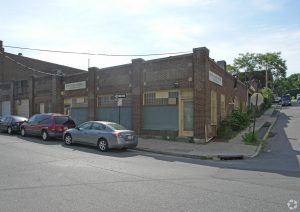
Special Permit and Site Plan approvals are being sought for The Sheffield, a proposed mixed-use development at 90-114 Westmoreland Avenue in White Plains. The project, represented by Cuddy & Feder Partner Bill Null, would bring 154 units of affordable housing along with 5,000 square feet of retail space to the neighborhood.

114 WESTMORELAND AVE

Located adjacent to the newly renovated Kittrell Park, the project site is currently occupied by one- and two-story warehouse buildings and parking. Plans call for a six-story residential building with a mix of studios, one-bedroom, and two-bedroom apartments, with rents set to be affordable to tenants earning between 60% and 80% of the Westchester Area Median Income (AMI).

“The Sheffield is an ideal location for an apartment building, particularly one focused on providing affordable housing in the City of White Plains,” said Bill Null. “This project advances the City’s vision to increase access to affordable housing near the downtown and train station, while also activating the pedestrian streetscape with new residents and neighborhood retail.”

The development is a collaboration among White Birch Development LLC, Marathon Development Group, and Lashins Development Corp., with architectural plans prepared by Warshauer Mellusi Warshauer Architects, P.C. The project includes 238 parking spaces and is designed to complement recent rezoning efforts intended to encourage residential growth in the Westmoreland Avenue area.

Posted in Uncategorized

AUGUST 19 — UNEMPLOYMENT RISES IN HUDSON VALLEY REGION FIRST 6 MONTHS

Hits: 309

The July 2025 unemployment rate for the Hudson Valley Region is 3.5 percent.  That is up from 3.0 percent in June 2025 and down from 3.7 percent in July 2024.  In July 2025, there were 43,500 unemployed in the region, up from 37,400 in June 2025 and down from 46,100 in July 2024.  Year-over-year in July 2025, labor force decreased by 4,400 or 0.4 percent, to 1,236,100.


The Hudson Valley Region’s July 2025 unemployment rate (3.5 percent) is ranked second among the 10 labor market regions in New York State, trailing only the Capital Region (3.4 percent).

  • Capital Region 3.4 percent
  • Hudson Valley 3.5 percent
  • Long Island 3.6 percent
  • Central New York 3.7 percent
  • Finger Lakes 3.7 percent
  • Southern Tier 3.9 percent
  • Mohawk Valley 4.0 percent
  • Western New York 4.1 percent
  • North Country 4.2 percent
  • New York City 5.7 percent

In July 2025, the lowest unemployment rate within the region (3.1 percent) was recorded in Putnam County.

  • Putnam County 3.1 percent
  • Dutchess County 3.4 percent
  • Rockland County 3.4 percent
  • Sullivan County 3.4 percent
  • Westchester County 3.4 percent
  • Ulster County 3.7 percent
  • Orange County 4.0 percent

Jobs data for August 2025 will be released on Thursday, September 18 and the labor force data will be released on Tuesday, September 23.

    Private sector jobs in the Hudson Valley rose over the year by 11,400, or 1.4 percent, to 850,600 in July 2025.

Growth was centered in private education and health services (+6,300), leisure and hospitality (+3,000), professional and business services (+1,300), other services (+900), financial activities (+500), trade, transportation and utilities (+500) and manufacturing (+400).

Losses were greatest in mining, logging and construction (-800) and information (-700).

     The region’s private sector job count reached 850,600 in July 2025 – its highest July employment count on record (dating back to 2000).

The over the year picture remained positive.

Seven sectors added jobs for the 12 months through July 2025 while just two lost jobs.

  Private education and health services remained the region’s leading jobs generator.  Year-over-year in July 2025, the sector grew by 2.8 percent, or 6,300 jobs to reach 229,700.

     Private sector job growth was spread throughout most of the region.  Year-over-year, Rockland County grew the fastest – up 2.1 percent.  The second fastest growth was recorded in the Kingston MSA (+1.9 percent), followed by Sullivan County (+1.8 percent), Westchester County (+1.2 percent), the Kiryas Joel-Poughkeepsie-Newburgh MSA (+1.1 percent).  Putnam County was unchanged over the period.

Posted in Uncategorized

AUGUST 19– ROCK THE BLOCK POSTPONED TO AUGUST 27

Hits: 296

Due to inclement weather, the Rock the Block concert originally scheduled for Wednesday, August 20th has been rescheduled for

Wednesday, August 27.

Check out our rain date details below:

We appreciate your understanding regarding the weather delay. However, there is good news! We will celebrate closer to the end of summer, specifically on August 27th, the day after National Dog Day. This final Rock the Block concert will serve as the ultimate summer farewell celebration!

Rock The Block will still feature all your favorites, including expanded outdoor dining options, yard games, clowns, mini-golf and more! Plus, you can look forward to amazing live music and fantastic restaurants in the area!

We appreciate your understanding and can’t wait to see you at our last Rock the Block!

Posted in Uncategorized

THE DOSE: YOUR LOCAL EPIDEMIOLOGISTS: COVID-19 INCREASING. LONE STAR TICK CAUSING REACTION TO MEAT REACHES SOUTHERN NEW JERSEY, POLICY ANXIETY AS DECISIVE MEETINGS START THIS WEEK

Hits: 350

Posted in Uncategorized

AUGUST 18 –Board Protects Affordable Housing and Strengthens Safety for Local Communities, Law Enforcement Officers 

Hits: 224


WHITE PLAINS, NY
 — The Westchester County Board of Legislators strengthened housing protections and public safety for residents at its meeting on Monday, August 4, 2025.

In three significant votes, the Board secured long-term affordability for more than 160 apartments in Sleepy Hollow, authorized $6.6 million in critical security upgrades at the Westchester County Department of Correction, and enhanced mutual aid agreements to support 29 local police departments during critical emergencies.

Safeguarding Housing Affordability and Maintenance

The Board approved legislation that will deliver significant improvements to 163 affordable apartments in Sleepy Hollow and extend their affordability for decades to come.

The action clears the way for Foundation for Affordable Housing, Inc., a nonprofit with extensive experience managing more than 25,000 affordable units nationwide, to take ownership of the development at 100 College Avenue. The nonprofit will invest approximately $78,000 per apartment in much-needed upgrades, which will improve accessibility and enhance amenities.

Through a 50-year affordability commitment, the Board is ensuring these homes remain available to low-income families well into the future.

Posted in Uncategorized

AUGUST 18–HOCHUL ON NY HEALTH TO COME: NOT GOOD

Hits: 258

GOVERNOR HOCHUL JOINS U.S. REPRESENTATIVE RITCHIE TORRES TO WARN OF CRIPPLING EFFECTS OF REPUBLICANS’ ‘BIG UGLY BILL’

Estimated Health Impacts of Almost $13 Billion Annually, Paralyzing Our Health Care System

1.5 Million New Yorkers Stripped of Health Care Coverage and Become Uninsured; Projected $8 Billion in Losses for New York’s Hospitals

Governor Kathy Hochul today joined U.S. Representative Ritchie Torres, local elected officials, doctors, and healthcare leaders to warn of the destructive ramifications of President Trump and Congressional Republicans’ “Big Ugly Bill” on New York State.

The cuts imposed by Washington Republicans are expected to have a significant impact, with an anticipated nearly $13 billion affecting New Yorkers healthcare system. Additionally, approximately 1.5 million New Yorkers are projected to lose their health insurance coverage, while over 300,000 households are expected to lose some or all of their SNAP benefits.

“Republicans in Washington are resolute in their determination to inflict irreparable harm to the very programs that save the lives of millions of New Yorkers,” Governor Hochul said. “They have one goal in mind: to conceal tax breaks for their wealthy billionaires while simultaneously withdrawing health care and food benefits from families that rely on them. The fight to protect New Yorkers and uphold the very values of our nation is unfolding right now, and I am committed to being at the forefront of this fight every single day.”

Representative Ritchie Torres said, “Donald Trump’s so-called ‘Big Beautiful Bill’ is a big ugly nightmare for the Bronx. By gutting Medicaid and SNAP, Republicans have put hundreds of thousands of New Yorkers at risk just to fund tax breaks for billionaires. I’m grateful to Governor Hochul for standing with us in this fight to protect the families who stand to lose the most.”

One Big Beautiful Bill Act (OBBBA) Impact on NY District 15

  • SNAP: There are currently 272,857 individuals across 158,306 households in NY-15 receiving SNAP benefits
  • Medicaid: There are currently 512,999 NY-15 Medicaid enrollees; 94,094 of which are estimated to lose Medicaid coverage due to OBBBA changes
  • Essential Plan: There are currently 104,400 NY-15 enrollees in the Essential Plan; 12,809 of which are estimated to lose coverage in EP due to OBBBA changes

Essential Plan/Medicaid Cuts Across New York State

Republicans’ cuts to health care and other benefits through the OBBBA will negatively impact all New Yorkers.

These changes will eliminate insurance coverage for millions of New Yorkers, destabilize health insurance programs across the state, and have a substantial fiscal impact on the State and the New York health care system, amounting to nearly $13 billion annually.

The OBBBA will make it challenging for health care providers statewide to continue operating and will make it more difficult for all New Yorkers to access care when needed.

Over two million New Yorkers could lose their current insurance coverage. 

This includes approximately 730,000 lawfully present non-citizens who could lose their Essential Plan (EP) coverage, as over half of the budget for the EP, approximately $7.5 billion in federal funding, is being eliminatedAdditionally, a further 1.3 million New Yorkers will lose Medicaid coverage due to new eligibility and verification hurdles.

Out of these 2 million people, 1.5 million New Yorkers are expected to become uninsured.

As a result, uncompensated care costs to hospitals and providers are projected to rise to over $3 billion annually. This means that New Yorkers will have less access to care and will face higher medical bills.

Analysis from the Greater New York Hospital Association (GNYHA) and the Healthcare Association of New York State (HANYS) estimates a total $8 billion in annual cuts to New York’s hospitals and health systems, which could force hospitals to curtail critically needed services such as maternity care and psychiatric treatment, not to mention to downsize operations, and even close entirely.

These consequences will not only affect Medicaid enrollees, but also harm everyone who requires hospital care, leading to longer wait times and less access to critical services.

Rural Transformation Fund

The Republican OBBBA also includes $50 billion for rural and community hospitals.

The size and scope of the Rural Transformation Fund — an average of $10 billion annually for five years for rural hospitals nationwide — is wholly inadequate to protect hospitals and health systems when compared to the estimated $8 billion in annual cuts that New York’s hospitals and health systems alone are facing.

Adding insult to injury, these funds will also be awarded on a discretionary basis, meaning there is no guarantee that New York and its nearly 40 critical access and sole community hospitals will benefit.

SNAP and Nutrition Assistance Cuts Statewide

Since the inception of SNAP, the federal government has funded these benefits entirely, receiving bipartisan support from presidents of both parties and in Congress.

For the first time in SNAP’s history, the Republican-enacted law mandates that states contribute to the cost of benefits, or risk ending their SNAP programs entirely. This move jeopardizes a program that nearly three million New Yorkers rely on to put food on the table. As a result, New York and local governments are facing up to $1.4 billion in new costs annually.

This further cuts the federal share of SNAP administrative costs from 50 percent to 25 percent, increasing costs for the State by roughly $36 million annually and for counties and New York City by roughly $168 million annually. Counties will have to incorporate this fiscal hit into their 2026 budgets by this fall.

Additionally, New York State is facing over $900 million in lost SNAP benefits for New Yorkers due to new, more punitive program requirements that will make it harder for people to qualify for the assistance they need:

  • The law intentionally imposes unnecessarily administratively complex work requirements on SNAP recipients, which is projected to result in more than 300,000 households losing some or all of their SNAP benefits, devastating low-income families’ grocery budgets. With an average loss of $220 per household per month, New Yorkers are projected to lose more than $800 million of SNAP benefits due to these changes.
  • The law further restricts eligibility for legally present noncitizens who have previously been eligible for SNAP, now excluding anyone that does not have legal permanent resident status, Cuban/Haitian status, or Compact of Free Association status. As a result, 41,000 noncitizens in New York State, including individuals granted refugee or asylee status by the federal government, are expected to lose the food assistance they rely on to feed themselves and their families, totaling roughly $108 million in lost SNAP benefits for New Yorkers.

The law also cuts funding for the SNAP-Ed New York Program, which promotes healthy eating and efficient use of already limited SNAP benefits.

This program teaches SNAP beneficiaries how to shop for and cook wholesome, healthy meals on a tight budget. As a result, New York will lose $29 million annually that funded this work by 18 community-based organizations across the entire state. These organizations include Cornell Cooperative Extensions in Albany, Allegany, Erie, Wayne, Oneida, Onondaga, Orange, St. Lawrence, Steuben and Suffolk counties.

New York State Health Commissioner Dr. James McDonald said, 

“These cuts will have a devastating impact on all New Yorkers, leaving an estimated 1.5 million people in New York uninsured, stripping social and health care safety net services, driving up food insecurity and leaving hospitals to shoulder the burden of increasing health care costs.

These cuts to health care coverage are unprecedented and cruel. The State Department of Health will continue to work with Governor Kathy Hochul, our dedicated hospital systems and state agency partners to take every measure possible to mitigate the impact of this bill.”

Posted in Uncategorized