WHITE PLAINS WESTCHESTER DAILY NEWS SERVICE VISITS SINCE 2000 A.D. 25TH YEARl REPORTING THE NEWS YOU NEED TO KNOW News Service Since 2000 A.D. 2026 WILL BE OUR 26TH YEAR OF COVERING WHITE PLAINS NEW YORK USA . John F. Bailey, Editor (914) 997-1607 wpcnr@aol.com Cell: 914-673-4054. News Politics Personalities Neighborhoods Schools Finance Real Estate Commentary Reviews Policy Correspondence Poetry Philosophy Photojournalism Arts. The WHITE PLAINS CITIZENETREPORTER. TELEVISION: "White Plains Week" News Roundup, 7:30 EDT FRI, 7 EDT MON & the incisive "People to Be Heard" Interview Program 8PM EDT THURS, 7 PM EDT SAT on FIOS CH 45 THROUGHOUT WESTCHESTER AND, ALTICE OPTIMUM WHITE PLAINS CH 1300 Fighting for Truth, Justice and the American Way. TOP 10 VISITORS FROM AROUND THE WORLD :1. USA. 2.BRAZIL3.VIET NAM 4. CHINA 5. JAPAN 6.UK. 7.CANADA. 8.INDIA. 9.AUSTRALIA 10.IRELAND 11.GERMANY 12..ARGENTINA 13.BANGLADESH 14.RUSSIA. 15.NEWZEALAND. 16. FRANCE. 17.MEXICO. 18.UKRAINE. 19.SOUTH AFVRICA. 20. IRAQ.
WPCNR THE LETTER TICKER.From Anthony Pilla. February 10, 2019:
The City of White Plains will be voting on 3 seats on the Common Council this year.White Plains needs a balanced voice to keep City Hall open and accountable to all it’s residents. Please contact Brian Maloney ASAP if you would like to be considered.
Or, forward the name(s)of potential candidates who you would like to be considered to represent you in White Plains.Circulating of nominating petitions begins on February 26th.Thank you for your prompt attention to this very important matter, as well as your dedication to our city.
The Ghost of Old Al Lang Field, St. Petersburg, Florida where we join Bull Allen, Harry and the Ol’ Redhead reminiscing about Spring Training which opens this week.
WPCNR VIEW FROM THE UPPER DECK By “Bull” Allen with Harry and Red from St. Petersburg Florida. February 9, 2019 UPDATED WITH CORRECTION:
Now for something really important:
Hello there, everybody, this is Bull Allen, coming to you
from 1957 the Voice of Seasons Past.
I’m all alone in the gondola pressbox at legendary Al Lang
Field on the shores of Tampa, waiting for spring training to start.
The field is a rich green. You need your sunglasses if
you’re shagging flies. You’ll break a sweat doing wind sprints, and the
blue smoke from my White Owl Wallop is
drifting gently in the warm breeze from the bay. Sailboats are out there, and
some of the players are reporting early.
But as I was having breakfast today at the Gulf Paradise hotel, reading the New
York Times, I noted the new Commissioner of Baseball is promoting two changes
in our game. Harry Carey, Red and I were debating this new whippersnapper of a
Commissioner not only for his inviting gambling into the game, but for his
fundamental lack of understanding of the game.
It is too slow, the television networks say. Doesn’t keep
viewers glued to their sets with excitement. Ratings are down. The games are
too long. We need the games to speed up.
According to the Times, the new Commissioner Rob Manfred, wants to force relief pitchers to throw to at least three batters before being replaced; force a pitcher to throw the ball within 20 seconds (to speed up the game), and God knows what kind of bets and wagers will be made on in-game situations via the scoreboard.
Red even suggested
they could bring back the subway race video between the subway lines running to
Yankee Stadium back, fans could place bets on who wins and would win money if
they had the winning train.
I dropped my cigar out of my mouth on the weathered press
box table beside the PIX mike.
I imagined games this coming season when fans could bet during the game on whether a pitcher carrying a no-hitter would keep it or lose it, or what inning he would lose it.
Fans could bet on whether a slugger could win the game in extra innings on a homer, and what inning.
The management could arrange bets on whether or not a closer would close or blow the lead like the old Vulture, Phil Regan. In addition to snack bars, cafes and restaurants, management could set up “Stadium Bets” where current in-game bets could ne placed.
We play-by-play announcers would have in addition to the action would announce “The Bet of the Inning” brought to you by MGM, and fans could phone in from wherever, or text in their bet. Suzyn Waldman the best color analyst in baseball could announce the “Yankee Bet of the Game.”
Then announcers would when the competitive situation being wagered on was over, would announce the result. This could bring a whole new legion of “fans” to the game. It would add to the color commentary.
Heaven forbid, goes the apology for bringing betting into baseball.
The last time gamblers got into baseball, eight White Sox threw the World Series in 1919. How about betting on batting titles, whether a pitcher would win 20 games. Break Dimaggio’s streak. Break Pete Rose’s hits record. The opportunities for compromising the integrity of the game are unlimited. Gambling will cheapen the games.
Now regarding the Commissioner’s suggestions for speeding up
the game.
The game is not too slow for fans at the game. The pauses in the game allow strategy to be discussed, challenges of the late innings when there is a slim lead, defensive changes. I will not forget the Met playoff game with the Diamondbacks in 1999, when the Arizonas had a 1-run lead on the Mets in the bottom of the 8th.
Going into the last of the 8th, the manager, Buck Showalter replaced his pitcher, but pulled a double switch, moving his all-star shortstop into right and batting the pitcher in the former rightfielder’s spot.
As luck would have it a Met sliced a twisty high fly ball down the rightfield line at the former shortstop, not used to playing rightfield. He misjudges it! The Mets get the tying run in on and get a run in the 10th to win.Discussing strategy, thinking about the danger of double-switches which weaken defense, it’s part of the mystique of the game.
The Commissioiner wants to tinker with pitching rules,
beginning in 2021 according to The Times.
He wants relief pitchers to throw a minimum of 3 batters when brought in to pitch to a batter. This is a distinct advantage to the hitting team. Nowadays the style is to go lefty-righty-lefty-righty in a batting order.
The manager can now lift a pitcher he brings in to face a lefty, and go to a righty to get the right hand hitter, and then bring in another lefthander to get the higher percentage matchup. Commissioner Manfred’s suggestion blows this defensive advantage up.
It may save three pitching changes, but sometimes this works. Of course this gives the hitting team manager the ability to pinch hit a lefty to face a righty on the first batter.
The three batter minimum loads the dice for the hitting team manager.
He can pinch hit 3 straight lefty hitters against a righty, or pinch hit three righty- hitters to face a lefty. It will really cut down pitching changes and proceed to institute changes in the middle of an inning instead of the beginning of the inning, or in the middle of a rally.
This will mean a whole different mindset for pitching changes. And more talented relief specialists.
We no longer will see the “Hold” pitcher, the second “Hold” pitcher and the “Closer” start the 7th, 8th and 9th innings to hold a lead. You’ll have a starter go 6 if the defensive team is lucky, maybe push him to the 7th…to see if you can squeeze another inning.
It is back to the 50s and the 60s again. But…But…But… BACK IN THE 50’S AND 60’S, you had to have pitchers who could “put out the fire” with runners on the bases. Pitchers who could throw strikes!
The relievers today, used to coming in with bases empty are not good with ducks on the pond. Management style popularized by Sparky Anderson in the mid-70s, is going 5 innings with a starter , if that, then, 6th, 7th, 8th and 9th with different pitchers. The art of getting out of a jam is lost.
With the three batter minimum rule as the Commissioner suggests, you’re going to see more implosions, and see more incidents of “throwing gasoline on the fire.”
Pitching coaches in the minors are going to have to teach the art of “putting out the fire.” Throw out pitch counts. Teach them pitching strategies with runners on.
You’ll have to bring in a fireballer (like Ryne Duren, or Dick Raditz, to go after the pinch batter if the offensive manager decides to make a lefty right switch.
This is the subtlety of baseball substitution. Today, an aggressive pinch hitter like the great Gates Brown or Smokey Burgess against a left hander or a right hander respectively, move can be countered by a pitcher who throws from the same side as the hitter bats, especially if the hitter is weak against right-handers or lefties.
If the Commissioner 3-batter minimum is adopted, the opposite side batter can stay in the game and feast on the pitcher who will be coming into him instead of pitching him away– a distinct offensive advantage.
The hitter is also given an advantage by the Commissioner’s 20-second pitch clock. Hitters will love this because the can be primed to hit as soon as the stretch of the pitcher comes to the belt, relaxing until the pitcher comes to a full stop. A good pitcher who works quickly keeps a hitter off balance. Atlanta’s pitchers worked quickly and their four-man rotation was adept at not giving hitters time to adjust.
If a pitcher has to pitch within 20 seconds, it will enhance the running game, because you can only throw over to first once within 20 seconds without rushing the actual delivery.
There has to be an adjustment to the 20 second pitch rule with a fleet runner at first. If not, a walk or a single is a sure double for the fast runner who gets to first .
The 20-second rule for a pitcher to deliver will not speed up the game it will make for much bigger innings and more runs and a lot more pitchers. The baseball men in the Commissioner’s office should tell him this. I do not want baseball to become the NBA.
I also want the Designated hitter done away with. The players want universal designated hitter in both leagues.
If you let the pitcher hit, there is more strategy, and the offensive manager has to think more, how long he stays with his starter. That the Commissioner does not want to change the DH rule back to pitcher hitting in both leagues shows his lack of appreciation for the subtleties of the game.
Baseball attendance was down last season at the ballparks. That was primarily due to a very rainy summer, and a preponderance of lousy ballgames due to diluted pitching and pitching by committee, and slavish devotion to pitch count restrictions.
As my favorite pitcher, Warren Spahn, said arm strength is built by throwing every 3rd day before starting on the fourth day. Spahn could pitch 10 innings in a start, when he was in his late 30s. He also won the most games as a lefthander.
So let’s pay attention to what this new commissioner wants
to do. We have to educate him about the beauty of the game and the depth of it.
Baseball is absolute. It cannot be tweaked like the law or interpreted like the
law because when you change baseball, you take away from the natural balance of
the game that depends on performance.
After this thinking and thinking how the 20 second rule and the
3-pitch minimum rule can be manipulated for advantage, I need a Ballantine Ale.
JACKIE ROBINSON’S 100TH BIRTHDAY WAS CELEBRATED LAST WEEK. TONIGHT BASEBALL HISTORIAN JOHN VORPERIAN DISCUSSES JACKIE’S LEGACY THAT MUST ALWAYS BE CELEBRATED, REMEMBERED AND TAUGHT HIS LEGACY. HIS COURAGE. HIS INSPIRATION HIS TOUGHNESS HIS CHARACTER. A MAN WHO UPLIFTED OTHERS AND STILL DOES TODAY. A BLACK HISTORY MONTH REMEMBRANCE OF NUMBER 42
ptbh with vorperian has been posted the youtube link is
WPCNR THE POWER STORY.From Consolidated Edison. February 7, 2019:
The New York State Public Service Commission today authorized Consolidated Edison to immediately begin implementation of a $223 million initiative aimed at reducing demand for natural gas in the utility’s supply-constrained areas of its gas distribution system.
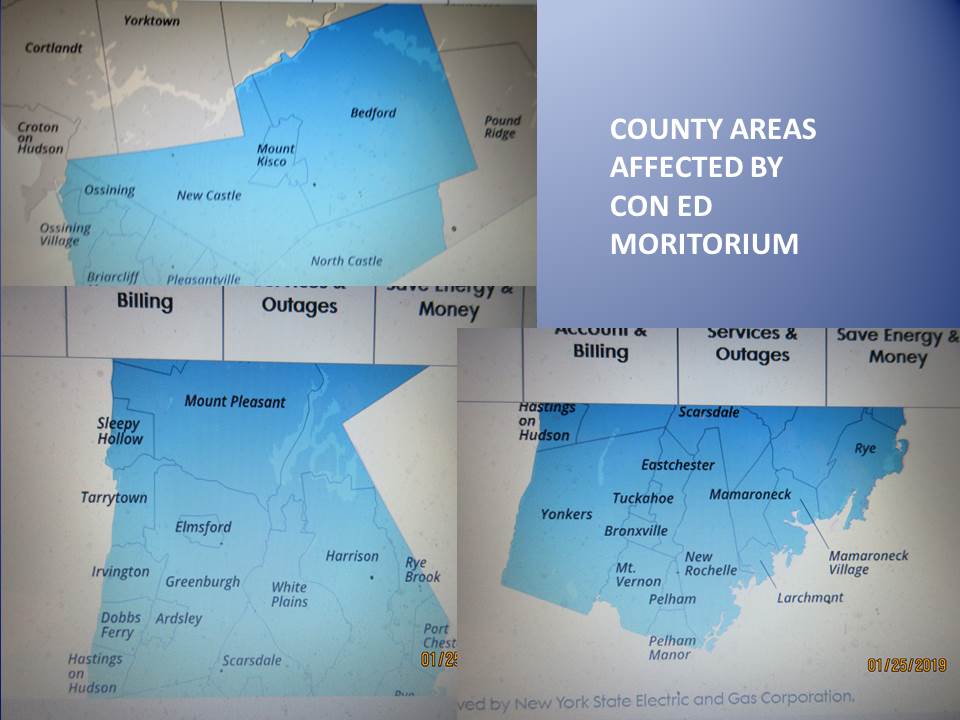
They are cost-effective and can offer substantial relief to current constraints that led Con Edison to recently announce a temporary gas moratorium in Westchester County.
Building upon these measures, the Commission will be laser focused on finding holistic and long-lasting solutions that will support clean energy strategies and economic growth.
“The PSC is providing Con Edison with the ability to deploy non-traditional solutions to address the customer needs currently met with natural gas and expects Con Edison to use these tools to help its customers and protect environment,” said Commission Chair John B. Rhodes. “Con Edison needs to move quickly and put forward innovative solutions designed to meet current and future energy demands throughout its serve territory.”
Con Edison submitted its Smart Solutions proposal to further develop a portfolio to lower demand for natural gas and identify local supply enhancements.
The solutions approved today focus on reducing demand through energy efficiency measures for its gas customers and supporting beneficial electrification through the deployment of heat pump technology.
The planned programs include the installation of:
(1) ground-source heat pumps at 8,800 single-family residences in Westchester County;
(2) air-source heat pumps at over 1,000 small and mid-sized multi-family buildings that currently use fuel oil for heating in the Bronx and other areas of the Company’s natural gas service territory; and,
(3) heat pumps to pre-heat boiler return water at more than 1,000 small commercial and large residential facilities throughout the Company’s natural gas service territory.
These measures will reduce future gas demand that would have resulted from the practice of converting fuel oil customers to natural gas.
Con Edison’s portfolio of demand-side approaches includes initiatives targeted at low-to moderate-income customers, multifamily properties and government buildings that provide critical community services.
The Commission denied the company’s proposal to incentivize shareholders to add supply enhancements such as compressed or liquified natural gas supply sources, but specifically noted that the company is not prohibited from pursuing such projects without shareholder incentives as it has done in the recent past.
Moratorium a safety precaution to avert massive shutdowns of metropolitan areas if Natural Gas demand exceeds available supply.
Rhode Island shutdowns show peril of gas shortage.
WPCNR THE POWER STORY. By John F. Bailey. February 7, 2019:
A Consolidated Edison spokesperson told WPCNR Wednesday the moratorium on natural gas fueled new approvals and installations after March of 2021 was firm.
An extension of the Con Ed “moratorium” on new natural gas connections after March 15, puts the area at risk of natural gas shutdowns if demand for natural gas exceeded supply in high demand periods.,spokesman Bob McGee said.
He cited the shutdown of natural gas to 10,000 gas customers in the Newport area two weeks ago as what happens when gas supply is exceeded by demand.
Hopes expressed earlier this week by Westchester County officials of the county and its cities and towns leaders and local business associations, that the March 15 deadline on new applications announced by Con Edison January 29, could be moved up much farther out into the future by the Public Service Commission appear doubtful.
Con Edison took a look at what they had in already approved
projects, and the gas supply, and the demands the approved projections will put
on the system, McGee told WPCNR. Based on the anticipated demand two years out
and the demand for natural gas for heating, Con Ed decided to impose the
moratorium.
McGee said that projects approved now by Consolidated Edison the company can handle. However new projects not submitted by March 15, would not be considered (immediately). Projects already approved for a connection would be continued, but installation had to be completed by 2021.
Consolidated Edison has alerted officials of the growing
demand for natural gas. In August, 2018, Con Edison pointed out in a news
article the growth of natural gas demand since 2014-15.
“During the winter heating season in 2014-15, ConEd relied on delivered (gas) services for 5% of its gas needs, but by winter 2017-18, delivered services (for gas) reach 17%. The company expects delivered services to meet 22% of gas needs by 2023 unless the region gets access to new pipeline capacity,” the company said in the article.
A New York State Public Service Commission approved a gas
demand response pilot program that the PSC said could meet (only) 1% of the pipeline
capacity shortfall by 2023.
Earlier in October 2017, Con Ed warned again of the exponential gas demand. A Con Ed spokesman was quoted, noting “(construction of gas pipelines) is not keeping pace with growing demand.”
McGee referred to the Newport, Rhode Island gas outage two weeks ago as evidence of why the moratorium and focus on conservation is needed to avoid demand for gas beyond capacity:
Thousands of people have to be turned off from the gas supply, and then have to be returned on one pilot light at a time.
The New Haven Register reported January 24 that during the near zero temperatures of two weeks ago, Marylee Hanley, spokesperson for Enbridge the company that manages the Algonquin gas pipeline, said “Our initial analysis indicates that the primary loss of natural gas servicewere an unusually high demand for natural gas on the Algonquin pipeline due to cold temperatures that exceeded the system’s supply capability, coupled with an equipment malfunction(failed valve),which temporarily restricted available natural gas supplies,” Hanley said.
“There appears to be a number of other contributing factors that may have exacerbated the conditions leading to the loss of service. We continue to collaborate with the local gas company and assist in any way we can with gas service restoration efforts.”
Approximately 10,000 persons were affected. National Grid
crews were going door-to-door restoring service. To read the New Haven Register story on this
consequence of natural gas over demand situation. Copy the following link and Go
to
FIOS 1 interviews Con Ed Director of Media Relations
In an interview with FIOS 1- recorded Wednesday, January 30, (apparently before Con Edison briefed county officials on the moratorium), Michael Clendenin, Director of Media Relations was interviewed on the need for the moratorium. Con Edison provided this link to that interview to WPCNR:
Mr.
McGee told WPCNR that buildings and developments can avert a loss of power due
to a gas cutoff by installing a backup system which can be switched over for
power to run heating systems. Such customers are known as “Interrupted
Customers” which are automatically switched over in the event the gas supply is
“interrupted.”
McGee said ultimately that the solution to the gas supply demand is for advanced storage facilities to reserve gas coupled with conservation demands.
Asked if the Public Service Commision had completed its review of Con Ed restoration of Westchester County in the highly criticized effort to repower 100,000 customers (over 10 days), McGee said he was not aware of any timetable for that PSC report or any disciplines. He suggested WPCNR contact the PSC.
Chairman of the Board of Westchester County Legislators Benjamin Boykin and Mayor of White Plains Tom Roach joined County Executive George Latimer Monday during Latimer’s news conference shedding light on how the county was responding to Con Edison’s imposition of a moratorium on more natural gas hook-ups in southern Westchester County after March 15.
Mr. Boykin explains the impact such a moratorium, if not moved back, would severely affect the county growth and keep county from achieving planned objectives: Here is Mr. Boykin in this video:
White Plains Benjamin Boykin addressing the media at County Executive George Latimer’s News Conference Monday on the Con Edison threat of the moratorium on new natural gas connections in the southern part of the county Monday. Video by WPCNR
Mayor Tom Roach of White Plains noted the impact slow approval processes that could hamstring development in the county.
Mayor Thomas Roach of White Plains speaking Monday at the Latimer moratorium news conference on the impact of the natural gas moratorium, if it is not lifted or moved back. Video by WPCNR
WPCNR THE POWER STORY. From the Business Council of Westchester. February 5, 2019:
The Business Council of Westchester brought together more than 50 leading developers with projects planned for Westchester to a top-level briefing and discussion with representatives of Con Edison of the utility company’s announced March 15 moratorium on accepting new natural gas customers.
A lack of pipeline capacity necessary to supply the gas to the utility to meet increased demand is the root cause of the problem, Con Ed has explained.
The two-hour, closed-door session Monday facilitated an open, wide-ranging discussion of the natural gas supply shortage situation which poses a real threat to the future of economic development in most of Westchester including its major urban centers.
Developers representing a cross-section of smaller, mid-sized and large companies, as well as affordable housing advocates, joined in the conversation and endorsed the BCW’s implementation of a task force to begin exploration of both short and long-term ways of addressing the issue.
“While the gas shortage has been years in the making, it has now reached the point of a crisis that threatens our economy,” said BCW President and CEO Marsha Gordon. “While there are no easy solutions,” she said, “there are potential steps that can be taken to ease the immediate problem that we will be carefully evaluating with the goal of recommending a plan of action steps as quickly as possible.”
Gordon added: “The level of participation and interest, and the strong sense of unity reflects how deeply this issue will affect not only the development community but the residents of Westchester County. After decades of struggling, our downtown areas of Yonkers, New Rochelle and other urban areas are seeing unprecedented new growth and renewal. To jeopardize this is simply not an option.”
The BCW taskforce will include outreach to local, county and state leaders to work together to address the immediate and long-term situation, and in May will hold a major energy conference.
“The major takeaway from our initial meeting is that the business and development community is ready, willing and able to step forward and work with Con Edison, the state government, the Public Service Commission and any and all other involved parties to tackle the issue head-on,” Gordon said. “This was a wake-up call that can’t be ignored, and we’re confident that working together we can and will find viable solutions. We have no choice.”
WPCNR Common Council Chronicle-Examiner. February 4, 2019:
After over eighteen years of being a warmup to the Common Council, and receiving little notice by the citizens of White Plains, except for those who attended Common Council meetings, Citizens To Be Heard debuted as prime time competition at the 7 o’clock hour this evening. And WPCNR shows you how the complete 28 minute program went in the following video as seen in armchairs across White Plains New York USA on channel 75:
Mayor Tom Roach Opens the first-ever telecast of Citizens to Be Heard
WPCNR COUNTY CLARION-LEDGER. BY John F. Bailey. February 4, 2019 UPDATE 5:20 P.M. E.S.T. IN BOLD:
County Executive George Latimer this morning outlined how the county would proceed in seeking to work to find solutions to Con Edison, the major electric and gas in Westchester County, putting in place a moratorium on new natural gas connections in Westchester County over 2/3 of the county.
He announced the county would seek an extension of the March 15 deadline for applications for new connections with the Public Service Commission.
He announced the formation of county and business groups to identify ways natural gas demand could be conserved to allow continued development. In tandem with that across-the-board reach out, Mr. Latimer said he would direct all county departments and municipalities to find how the county could cut down its use of natural gas.
He said he would work cooperatively with Con Edison to identify ways to cut natural gas demand to allow allocation of Con Edison limited natural gas supply.
WPCNR asked Mr. Latimer If the the Con Ed 6 % rate increase for electric and 11% for gas, primarily targeted for “infrastructure improvements,” as stated in the Con Ed news release (reprinted in the preceding article below), announcing the increase last Thursday would be devoted to increasing the availability of natural gas, and Latimer said Con Ed did not plan the rate increase revenues to improve availability of the gas supply.
Noam Bramson, Mayor of New Rochelle, told WPCNR as we were exiting the news conference, said that was important to know that Con Edison infrastructure within the county was not an issue, instead it was the availability of natural gas through either another pipeline leading into the county to bring in more natural gas was the issue behind the moratorium.
Bramson added that the more crucial date concerned when gas installations presently approved had to be connected to any facility being built, which he said was two years away. That date, approximately March of 2021, he said put present developments in jeopardy.
Tom Roach, Mayor of White Plains, told WPCNR that all of White Plains present “approved” projects were not subject to the moratorium, their gaslines already approved. (WPCNR requested a listing of the approved projects.
WPCNR believes they are The Broadstone, The Continuum (second building to come), 440 Hamilton Avenue renovation, the White Plains Pavilion project, (approved but awaiting redesign), Esplanade renovation, Projects that may be affected are the White Plains projects on Bloomindale Road and Westchester Avenue .
Recent projects that may be affected by the moratorium are the four forthcoming White Plains MetroNorth properties, which have no designs or projects yet proposed, the Martin Ginsberg project recently introduced, and the Good Counsel Property development current in an environmental evaluation and not approved yet.
Asked by WPCNR if the Public Service Commission had indicated how Con Edison and NYSEG would hold accountable the two power companies for their severely criticized performance in restoring power last March, Latimer said the county would be meeting with PSC next week, but at present time he had knowledge of PSC decisions on whether to discipline the two companies or not.
Mr. Latimer said he would be sending Joan McDonald, Director of Operations to Albany to discuss the possibility of extending the moratorium deadline.
Asked by WPCNR if he supported the Con Edison rate increases, Latimer said no decision has been made on that issue yet, and it was in the process of being evaluated.
Here is the WPCNR video of the complete news conference, hastily called this morning.
County Executive George Latimer addressing the media at 11 A.M. this morning at the McCallion Building in White Plains. Video, WPCNRMr. Latimer on whether Con Ed indicated the proposed electric and gas rate increases would help to pay and make possible increased natural gas supply. Westchester County Video off YouTubeMr. Latimer comments on when Public Service might discipline Con Ed and NYSEG for their controversial performance in the storms of last March. The next meeting with the PSC is February 11. He is also asked about whether the county would approve of the Con Edison rate hikes for electric and gas. Westchester County Video off YouTube
The details of the County Executive’s Plans include:
· Facilitating next steps with municipalities and Con Edison;
o Including a full list of projects and their timetables for construction to get a big picture of where we as a County are with demand;
· Enlisting the help of energy consultants who can guide us through the regulatory process;
· Tasking Director of Energy & Sustainability Pete McCartt with performing a survey to explore how the County can reduce gas usage at our facilities;
· Tasking Director of Operations Joan McDonald with working with New York State Public Service Commission (PSC) Chairman & CEO John Rhodes from to encourage Con Edison to delay the moratorium so we as a County can develop and action plan;
o Additionally, County Executive Latimer will be testifying at the next PSC hearing;
· Working with the business community, and other entities, to help them navigate this moratorium and how it relates to development.