WHITE PLAINS WESTCHESTER DAILY NEWS SERVICE VISITS SINCE 2000 A.D. 25TH YEARl REPORTING THE NEWS YOU NEED TO KNOW News Service Since 2000 A.D. 2026 WILL BE OUR 26TH YEAR OF COVERING WHITE PLAINS NEW YORK USA . John F. Bailey, Editor (914) 997-1607 wpcnr@aol.com Cell: 914-673-4054. News Politics Personalities Neighborhoods Schools Finance Real Estate Commentary Reviews Policy Correspondence Poetry Philosophy Photojournalism Arts. The WHITE PLAINS CITIZENETREPORTER. TELEVISION: "White Plains Week" News Roundup, 7:30 EDT FRI, 7 EDT MON & the incisive "People to Be Heard" Interview Program 8PM EDT THURS, 7 PM EDT SAT on FIOS CH 45 THROUGHOUT WESTCHESTER AND, ALTICE OPTIMUM WHITE PLAINS CH 1300 Fighting for Truth, Justice and the American Way. TOP 10 VISITORS FROM AROUND THE WORLD :1. USA. 2.BRAZIL3.VIET NAM 4. CHINA 5. JAPAN 6.UK. 7.CANADA. 8.INDIA. 9.AUSTRALIA 10.IRELAND 11.GERMANY 12..ARGENTINA 13.BANGLADESH 14.RUSSIA. 15.NEWZEALAND. 16. FRANCE. 17.MEXICO. 18.UKRAINE. 19.SOUTH AFVRICA. 20. IRAQ.
ONE NEW LOWER COVID CASE WEEK AFTER ANOTHER–CAN WESTCHESTER CONTINUE THE GOOD BEHAVIOR?WHITE HEADED FOR RECORD SALES TAX YEAR AFTER 6 MONTHS–CAN THE BIG REBOUND RALLY CONTINUE? KEEP THOSE INTERNET AND RETAIL SALES COMING IN .NEW NOISE AND POLLUTION ORDINANCE ELIMINATES INTERNAL COMBUSTION BLOWERS EFFECTIVE NEXT SPRING.
PLUS JOHN MARTIN COUNCILMAN THE RISING TIDE OF REVENUE
PLANNING COMMISSIONER CHRIS COMEZ ON THE NEXT STAGE OF THE MASTER PLAN CREATION
ABE NAPARSTEK AND DAVID KATZ OF G&SOLAR ON THE FUTURE OF SOLAR –WHERE IT’S GOING–HOW SOLAR PANELS ON APARTMENT ROOFS CAN BRING DOWN ELECTRIC BILLS FOR NEW AND EXISTING APARTMENTS, AND THOSE ABOUT TO BE BUILT.JOHN BAILEY AND THE NEWS EVERY WEEK ON WHITE PLAINS WEEK for 20 YEARS FRIDAYS AT 7:30; MONDAYS AT 7 AND ON THE INTERNET AT www.wpcommunityumedia.org
WPCNR POLICE GAZETTE. From Cyprus Police Economic Crime Investigation Office. Most current analysis 2018. February 11, 2022.
Editor’s Note: On this Valentine’s Day weekend, it has come to this reporter’s attention that more and more social websites, hundreds, thousands, millions maybe actually require the lovelorn and the lonely seeking romance, companions, to pay a fee for “coins” or membership in order to correspond on the website to persons who write they are interested in them, who express an interest in them The fees payable after you join or sign up are usually quite low, but these sites ask for payment via credit card. After you join the site!
Whether or not the website personalities and photos are even legitimate real people (there are millions of these lonely people advertising all over the world on hundreds of lovelorn websites, and some look like real people, others models), are possibly suspect.
Since many of such romance sites are based abroad in Cyprus, the United Kingdom, Africa, and elsewhere and yes, the USA, I did a search of the Cyprus Police involvement with fraud related to such sites.
If you are a woman or a man filing profiles on these sites, you should be aware they are not free and correspondence ability is limited until you pay that fee to join raging as low as $4 or $5 as a fee to ‘correspond back”. This has been going on since 1996, but has expanded exponentially over the five years.
The Cyprus Police original article below issued in 2018 apparently has not been changed since then, but it can be accessed at https://www.police.gov.cy/police/police.nsf/All/4B7A1882CFBE9EABC22584000041D65D
CYPRUS POLICE ECONOMIC CRIME INVESTIGATION OFFICE
This Unit at Police Headquarters deals with cases of fraud that are committed in all Police Divisions. It investigates serious and complex cases and responds to requests by foreign countries for information and co-operation concerning the investigation of cases of fraud.
The Office investigates cases that are submitted by Police Units and Government Services to the Commander of Crime Combating Department.
A) Advice on the prevention of fraud committed via the Internet, mobile telephones and post
– A key factor in the prevention of fraud is being cautious and suspicious of any letter, unsolicited e-mail, or sms which comes from an unknown sender.
– If you receive a message or letter saying that you have won the lottery abroad and you are asked to send your personal information so that you can receive the so-called amount won, do not respond. Just ask yourself – who or what organisation gives away large amounts of money for free? No one.
– If you receive a message or letter saying that you have inherited property abroad and especially in Africa, don’t believe it. Even if they ask for help to transfer from Africa, property that supposedly belongs to you for an exchange, do not respond, even out of curiosity.
– If you receive a message from your bank saying that for some reason they want to supposedly check your bank account number or the number of your credit card or pin numbers, do not believe it. Your bank will never contact you in this way about such matters. If you respond, you run the risk of not being compensated by the bank. It is better to contact your bank immediately, in another way, to verify the claim.
– Be aware of the fact that you run great risks when you make online purchases. If you don’t know the suppliers avoid making such purchases. If it is absolutely necessary to purchase something, verify before paying, that the particulars / information given by the seller are not bogus, so that you can contact him/her later if s/he fails to fulfil the agreement made.
– If you are selling something over the Internet, do not agree to accept payment by cheque or credit card. There is a great possibility that they are forged or stolen and you will have to pay compensation later.
B) On-Line Buying and Selling
It is the most common form of fraud on the Internet. In such cases various so called buyers or sellers appear on the Internet. The two most common goods bought and sold on the Internet are cars and mobile telephones. When the fraudsters receive the money, they do not send the products(s). It is then virtually impossible to find them because in all cases the particulars and information they give not only on the Internet but also to banks and transfer offices are false.
Fraudsters usually:
– Appear to be selling goods at prices that are much lower than usual so that they can attract customers
– Contact the victim initially by e-mail
– After the initial e-mail, they communicate with the victim by telephone or further e-mails
– Pretend to be the owners and use various names. They therefore manage to trick their victim. It is then impossible or extremely difficult to track them down.
– Use, not only various names, but also titles like “Company Director”, making the whole procedure appear to be more “formal” and “official”, really “convincing” the victim.
– As far as the sale of vehicles is concerned, fraudsters send, by e-mail, fake registration documents to the victim describing the vehicle.
– In order to achieve their goals and deceive victims, they use the websites of so-called transfer companies which guarantee the “safe” collection of money on behalf of their “customers” when the payment is made by the victim. These websites immediately disappear from the Internet and cannot be traced except in cases where fraudsters attempt again to cheat their victim, providing him/her with even more fake information. If they feel that their victim will continue to pay, they tell them all sorts of lies, such as “the Customs Authorities must be paid”.
– Tell the victim to pay through the WESTERN UNION (WU) or by depositing the money in some bank account. In this case offenders use or “rent” the bank accounts of students or unemployed persons who receive a small amount of money in exchange for the use of their bank account by someone else. These persons usually act as bearers, receiving instructions from the offenders to immediately withdraw the money that was deposited in their account and to send it to them, (deposit it in their account) usually using the Western Union.
– If the payment is made to a company, a straw or legal one concerned with the collection of money on behalf of third persons, the money is usually transferred to Eastern Asia and later back to Europe or Africa.
Advice:
Don’t forget that there are many risks involved in buying goods on- line, over the Internet. If you don’t know the suppliers avoid such purchases. If it absolutely necessary to do so, before paying make sure that the suppliers’ particulars are not fake so that you can find him/her if case the terms of agreement are not met.
Internet Fraud
Introduction
Technological developments and especially advancements in computing and the wide use of the Internet have brought about great changes in everyday life both in private life and the workplace. As a rule, this development has improved our quality of life as we can have access to unlimited information which is useful in education, business and communication.
However, the use of the Internet just like every sector of human activity can be taken advantage of by those involved in new forms of criminality, like child pornography, illegal gambling, identity theft, business data and record theft, industrial espionage and various forms of fraud.
The most frequent offence committed on the Internet is Fraud and the various forms it takes. The offenders aim at obtaining amounts of money in an easy, quick manner.
Definition
Generally the term “Internet Fraud” includes any form of fraud in which offenders use e-mails and websites to present to Internet users various fake sites with the intent to defraud and make financial gains.
The danger of not being aware
All Internet users are potential victims of Internet fraud and this is a temptation for fraudsters that are covered by anonymity. Offenders do not have to go out looking for victims but can easily “phish” them. Indeed, in most cases individuals become victims without even being aware of it. There are also others who, despite suspecting that something is wrong, they take risks because they are attracted by the unknown. Offenders take advantage of the fact that Internet users are not aware of the risks they run if they enter an unknown web-site, respond to a message send by someone unknown or “click” to take an unknown path. Therefore, Internet users have to be informed to take their own safety measures, in co-operation with their suppliers. Prevention is therefore most important because when someone loses his/her money, it is difficult if not impossible to get it back. Finding the offenders is difficult because they do not present their real identity – the addresses they give are fake or non-existent and their telephone numbers are not registered (so-easy card).
Origin
This type of fraud occurs world-wide but it is more common in countries with high standards of living like the United States and European countries where the Internet is widely used. Offenders come mainly from African countries, especially Nigeria, from Eastern European countries, South East Asia and China. They do not only operate within their countries, but they have expanded to various countries, mainly the USA, Holland and Spain. The Nigerians especially, have created their own “school” which is known throughout the world as the “Nigerian Mafia”. They are usually well-educated persons who are forced to leave their country because of its bad economic state.
Cyprus
There doesn’t appear to be a serious problem in Cyprus but there has been an increase in the number of complaints. It is believed that there will be a great increase in these complaints in the future. Cyprus Police considers this area important, and in order to protect Cypriot society, it has set up a special office at Police Headquarters which investigates this type of cases as well as other types of cyber crime, such as child pornography, an offence which has unfortunately been increasing.
No Cypriots have as yet been found to be guilty of this type of crime. There have been cases though where Cypriots have been victims of fraud from abroad and some cases have been reported to the Financial Crime Investigation Unit at Police Headquarters. It is believed that many persons have fallen victim to Internet fraud but have not reported it to the Police out of embarrassment at being cheated. This is the case world-wide so it is difficult to know the true extend of Internet fraud.
The main forms of Internet Fraud
The main forms of Internet fraud are the following:
Identity Theft and “Phishing”
In such cases fraudsters create phony websites which look just like the sites of banks. The customers of these banks are asked to follow, step by step, certain instructions – they are instructed to enter their personal information, including their bank account number, credit card numbers and pin numbers. The sender asks users to “confirm” their personal information for made up reasons such as the bank is going through a process of improving or changing its security system. In this way fraudsters gain access to accounts that are connected to the Internet and immediately transfer amounts from the account of the unsuspecting victim to other accounts which are usually abroad. Usually these bank accounts are opened using false personal information. The accounts into which the money is deposited may also belong to intermediaries who are usually poor persons agreeing to the use of their accounts for a small payment. Having obtained personal information on bank cards fraudsters also make bogus cards in the name of the victims. They either use them themselves or sell them to others and withdraw money from automatic cash machines in third countries. These problems arise when banks and other organizations which accept Internet exchanges do not have satisfactory security systems or the victims themselves are not appropriately informed about the way their electronic accounts work.
It is very difficult to detect such cases. In one specific case, sums of money from Cyprus were transferred through the Internet to bank accounts in Latvia. Cypriot detectives went there and with the help of the Latvian authorities managed to find the person in whose name the sums had been transferred. It turned out that the person was homeless and that his personal information had been used for a small payment.
Investigators also find that in most cases, fraudsters have access to the Internet from Internet cafes.
Recently there have been seven complaints by a bank in Cyprus that considerable amounts of money had been stolen from the accounts of its customers through “phishing”, a similar way to the one described above. Investigations found out that this was done through Nigerian students who acted as intermediaries.
Buying and Selling
This is the area where fraud most commonly takes place. In these cases various sellers or buyers of goods appear on the Internet. The prises of the goods offered are usually extremely low so as to attract customers. Communication is carried out through e-mail and fraudsters ask to be paid either by a bank payment or through an international courier. When they receive the payment, they don’t send the goods. Locating them is virtually impossible because in all cases the information they give on the internet, concerning banks and transfer offices is fake.
In the case of purchasing, fraudulent buyers order the goods from legitimate companies which accept payment by credit card or cheque. These cards or cheques however prove to be fake. In some cases the payment is made by a cheque of a larger amount than the price of the goods bought and the fraudulent buyers ask for the return of the excess amount.
Advance fee fraud
This type of fraud includes the case involving the well-known fraudulent letters sent by the Nigerian Mafia. The fraudsters, up until recently, used to send letters by post or fax. They now send them by e-mail.
With these letters they try to deceive people through all sorts of lies. They tell victims that they will supposedly offer them huge amounts of money if they help them transfer money, diamonds and other riches from inheritance in Africa to the victim’s account for safekeeping. Initially they ask for bank account information and then for an advance fee for expenses. If you respond you lose your money and the senders disappear and cannot be traced since the information they gave is false. In one case, a Cypriot was tricked into going to Holland. There they showed him fake bank offices where he deposited approximately 30000€ supposedly to be used as expenses for the transfer of a large inheritance from Africa to Holland. The Dutch authorities said that such cases were very common and they only record them, they don’t investigate them because it is impossible to find the offenders. Other similar cases of fraud are those involving money supposedly won in a lottery. These letters usually come from Spain and Australia and inform the receiver that he/she has won a large amount of money. If there is a response, then the fraudsters ask for an advance fee for the transfer of the fictitious “winnings”.
Romance Scam
It is one of the most recent types of fraud, but it is developing fast. In this case crooks take advantage of people’s loneliness and wish to find a partner. They supposedly take on the role of intermediary on the Internet. Initially, in order not to arouse suspicion, they ask for a small amount of money, supposedly for some small expenses. They then ask for more money, supposedly for more expenses, such as the travel expenses of the “groom” or “bride” that never comes.
Credit Card Fraud
There are various ways in which credit card fraud can occur. These are:
(1) Theft of personal information – the pin number on automatic Teller Machines is stolen by being recorded by special equipment or a small camera. This is the most widely used method in Cyprus.
(2) Entrapment of credit cards in Automatic Teller Machines and use of special equipment and small cameras simultaneously, so that the code number is monitored. As soon as the user leaves the vicinity, the offender withdraws the card and uses it him/her self.
(3) Theft of cards and code numbers by various skillful persons and immediate use of the card by the thief. The cards are stolen from post boxes, cars or bags.
(4) Copying/stealing card information and using it immediately or transferring/copying it to new empty cards. This is done when customers pay for goods or services. Those responsible are the persons selling the goods, waiters etc.
(5) Stealing the card number when a customer pays for goods in shops or other places.
(6) Theft of information on cards, over the Internet.
Protection Measures
If a card is lost or stolen, then the owner must immediately contact his/her bank and JCC. Special care and caution should be taken when using credit cards in Automatic Teller Machines. If there is any suspicion of the presence of any foreign object in any machine then the bank and the police should be informed immediately. Card owners must make sure that no persons unknown to them are around when using a card.
Card owners should keep their receipts so that they can check their accounts on a monthly basis.
A pin number should always be memorised and not written anywhere.
Card holders and users are advised to use the special cards issued by banks when carrying out transactions on the Internet.
Investment Fraud: Advice to Investors
In recent years, in Cyprus and abroad, there have been a number of persons, physical or legal, who offer various investment plans which finally prove to be bogus. These plans usually offer extremely high capital returns, which cannot be feasible.
Fraudsters usually
– Try to sell complicated monetary products which cannot be easily understood by consumers. Do not allow persons unknown to you to handle your money.
– Try to impress people by dressing elegantly and appearing to be successful businessmen and businesswomen.
– Make you feel uncomfortable. They take advantage of your feelings making you feel greedy, insecure, unhappy, and discontent with your self and your knowledge and abilities to handle money matters.
– Don’t forget that investments are liable to risks. If they offer an investment plan and promise you that there are no risks, you should ask yourself if this is in fact true.
Remember that once fraudsters achieve their aims, they disappear together with your money.
How to Protect Yourself
The only way to protect your self from becoming a victim of fraud is to be extremely careful. When you don’t know something, seek advice from experts. Examine carefully the investment plans offered to you and find out about the specific person(s) you are dealing with. Don’t forget: “The best protection against fraud is being knowledgeable and cautious.”
Remember that the smart investor:
– Knows or finds out the names of the people s/he is dealing with or who they represent
– Does business only with persons and companies s/he knows and trusts
– keeps record of conversations, meetings, noting important points mentioned as well as the names, dates and times they took place
– Seeks and finds information on the persons and companies with which s/he is about to deal with
– Verifies the information s/he gathers
– Makes sure that s/he fully understands the terms and conditions of the investment plan
– Asks for a detailed explanation on anything that s/he does not understand
– Makes certain that the company is legal by referring to the relevant inspection authorities – the Central Bank of Cyprus, the Stock Market and the Inspector of Insurance Companies
– Does not give away any personal information or any information regarding his finance or other personal matters before s/he certifies that the company is legal
– Does not make rush decision
– Never hesitates to ask questions. The more questions he/she asks, the better
– Asks for information on a regular basis, keeps up-to-date on the progress of his/her investments and always follows his/her investment goals
– Reports to the relevant Inspection Authorities any attempt(s) of fraud against him/her.
If something appears too good to be true, then there is every possibility that it isn’t.
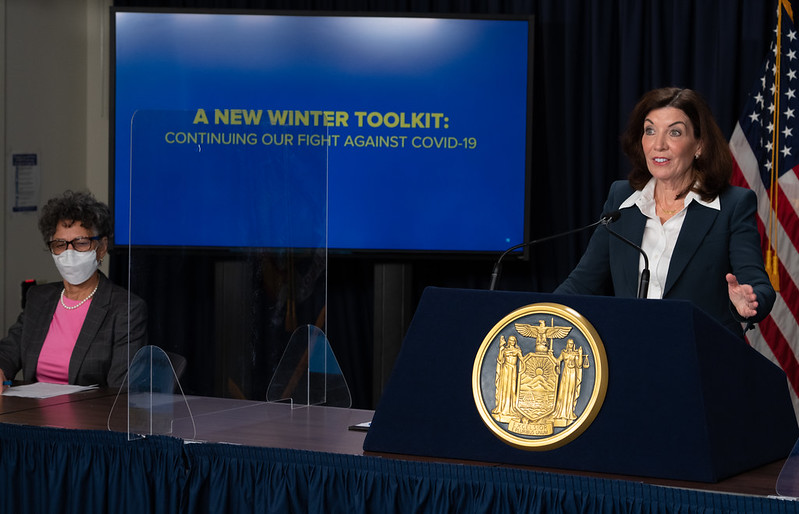
We are not where we were in early December, and I want to thank New Yorkers for doing the right thing to help us get through this winter surge. But make no mistake about it: This pandemic is not over. Our fight against COVID-19 continues, and I’ve put together a five-point toolkit that ensures we keep New Yorkers safe and plan for the future, including a first-in-the-nation effort to help those experiencing long-term effects from COVID. We’re moving in the right direction and our winter toolkit lays out our path forward.
We’re continuing to track many key metrics and to take steps to keep kids safe, including sending every K-12 student home with two COVID tests ahead of the Midwinter break. I’ll continue looking closely at the numbers and working with education partners, and I will make an assessment on school masking in early March.
THE LATEST ON THE NUMBERS
THIS WEEK’S COVID TRENDS. As of February 9, 2022, 4,398 New Yorkers are hospitalized with COVID-19.Our 7-day percentage positivity average is 3.88%, which is down from 5.51% last week. There were 30.88 cases per 100K statewide.
Per the CDC as of February 10, 2022, 85.0% of adult New Yorkers have completed their vaccine series. So far, 36,341,991 total vaccine doses have been administered, with 47,976 doses administered over the past 24 hours.
Photo of the Day: Yesterday, I laid out my plan for a new phase of COVID response (Photo by Don Pollard)
ANSWERING YOUR QUESTIONS
Every week, we’re answering some commonly asked questions about COVID-19 and vaccinations. You can submit a question for a chance to get your question answered in next week’s newsletter. Submit your question here.
QUESTION: What can you do to ensure students are kept safe in schools from COVID-19? (Heather, Ontario County)
ANSWER:
I know how important it is to make sure our kids are safe and in the classroom. As part of our winter surge plan, we’ve distributed over 14 million tests to students in public, charter, and private schools. Masks are still required at schools throughout the state and I am working with teachers, administrators, school boards, & parents on any future guidance. The vaccines are among our best tools to keep our kids safe in schools, and New Yorkers age 5 and up are eligible to get the vaccine. You can learn more about how we’re keeping kids and staff safe in schools here.
New Yorkers, thank you for being smart, doing the right thing, and helping us to get through this winter surge. Let’s keep working together to fight the pandemic and keep each other safe.
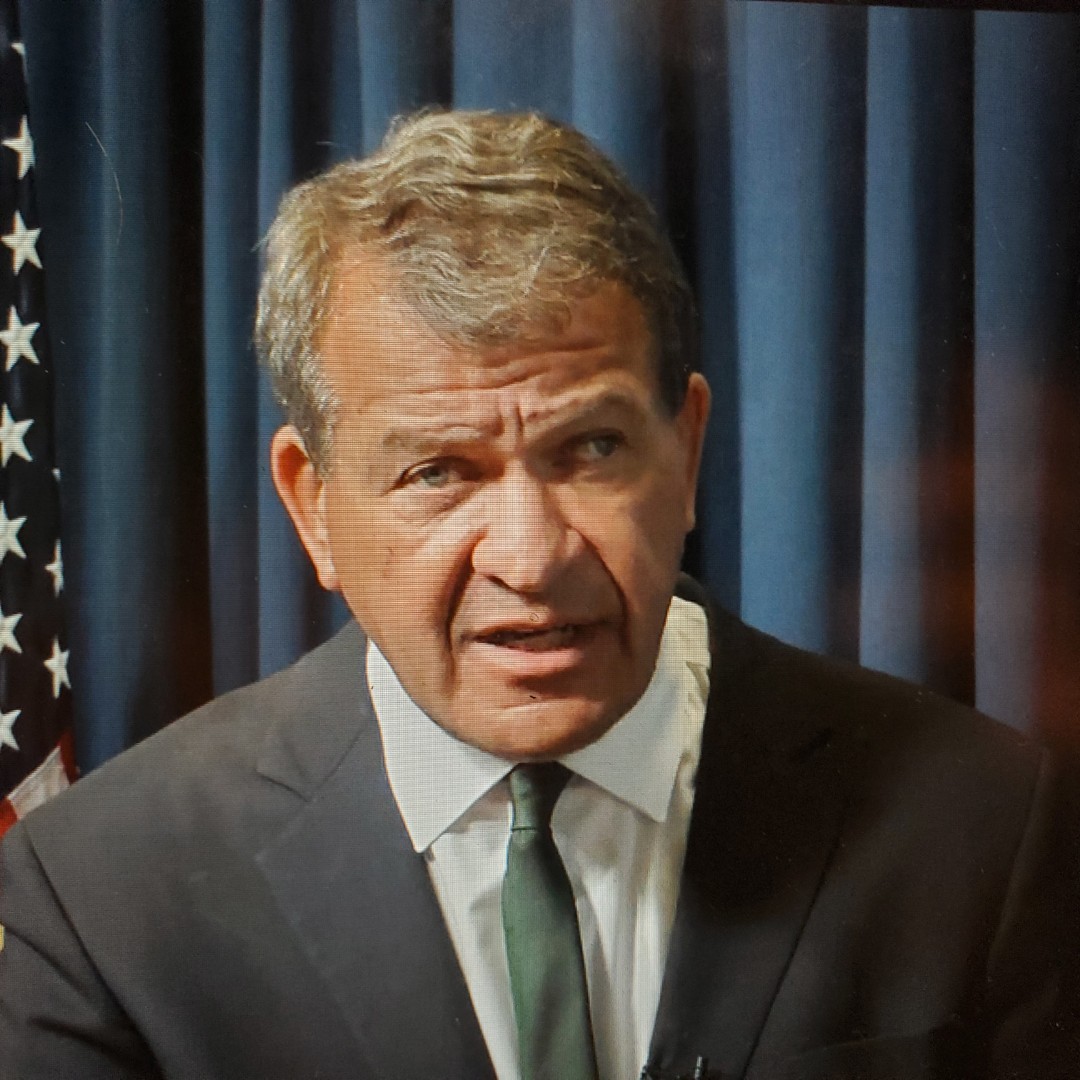
“I want to continue to encourage people to get their full vaccination series. I contracted COVID-19 before I was scheduled to take my third and final shot. Thankfully it was a mild case because I was vaccinated, but I want to continue to curb the spread of this virus in our communities throughout this great County and that is why I made it a point to get my third shot. We all want to get back to living life before the pandemic and getting the third shot is the best way to do that. Let’s continue to keep each other safe and healthy,” said Latimer
Westchester County Health Department Commissioner Dr. Sherlita Amler said:
“While the definition of being fully vaccinated against COVID does not currently include having a third shot, it is important that residents understand that being fully vaccinated is not the same as being optimally protected. Data has shown that getting the third shot increases a person’s immune response, which offers improved protection against becoming infected. To be optimally protected against COVID, everyone should get a third shot when they are eligible.”
Latimer received the Moderna vaccine.
Vaccines continue to be available at the Westchester County Center and Yonkers Armory. To make an appointment, visit this link.
WPCNR SCHOOL DAYS.From Dr. Joseph Ricca, White Plains Superintendent of Schools. February 9, 2022, 3:45 P.M. EST:
I know that questions regarding masking in our schools, statewide, is an understandable focus of conversation, frustration, and anxiety among many of our community members, particularly with the changing landscape and requirements shifting in neighboring states.
Some parents/guardians have asked, “…what will you do when I send my child to school without a mask?” To be clear, this is not a position in which we wish any of our children to ever be in – ever. Still, I am very well aware of strong feelings on all sides of this conversation. I respect them and I respect the right of every community member to weigh in and make their thoughts known to our state leaders.
Please know, for us here in your schools, this is not a political conversation, nor a choice. We are mandated to enforce the statewide mask requirement.
Neither I, nor the Board of Education, derive any joy from the tensions, stress and negative emotions that this statewide policy has created for some of our community members.
I’m sure we all agree that at the core of this conversation, we all recognize that everyone has a different viewpoint.
For our part, we must follow the requirements.
We respectfully ask that you do as well. We don’t want to confuse our children nor create a situation where one child is set apart from others.
Based on today’s update, Governor Hochul indicated that the state would be reviewing the mask requirements following the mid-winter recess.
If our numbers continue to decline, that’s good news for us all.
We’ve asked a lot of our community over the past two years and I recognize that I am asking for a bit more of your patience and help as we move through the next couple of weeks.
Please know that we hear you, on all sides of the conversation, and we will continue to advocate for clear, defined metrics by which parents/guardians can expect to see adjustments in state Covid-19 mitigation mandates.
WPCNR CORONA VIRUS MONITOR. From the Governor’sPress Office. February 9, 2021:
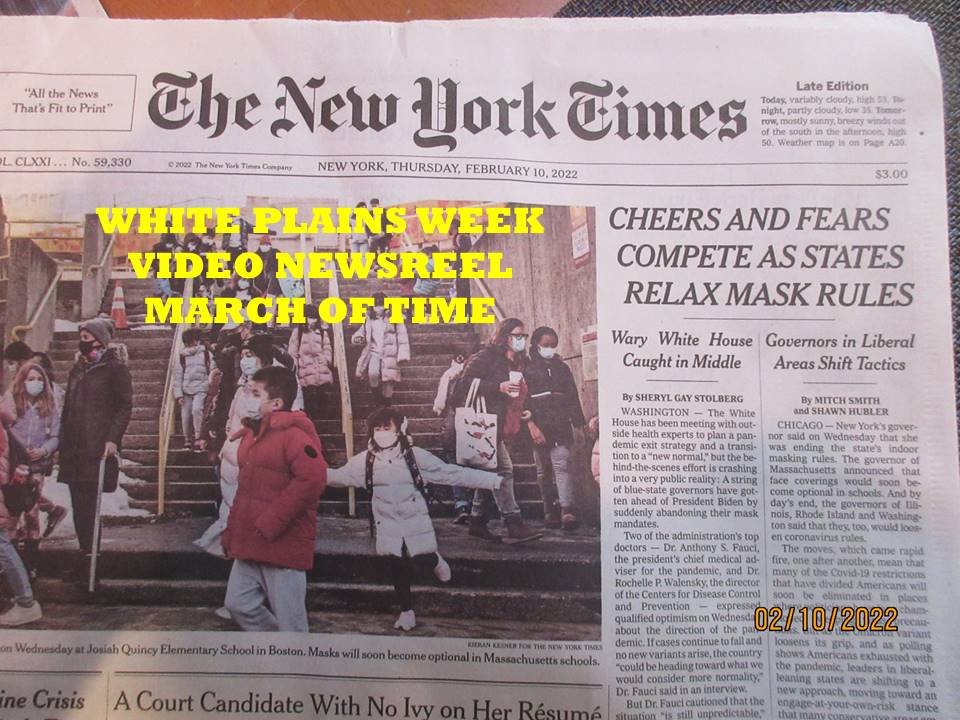
The New York Times reported this morning that Governor Kathy Hochul was suspending masking in businesses or proof vaccination mandates for New York businesses, but at this time is keeping the Masking in Schools mandate until February 21. The maintaining of the school masking effectively protects the school population through masking from spread of socialization of the SuperBowl Sunday parties coming up and the highly social Valentines Day Weekend.
The Governor’s relaxing of business masking and vaccination requirements for businesses follows announcements by New Jersey and Connecticut governors, reacting to public sentiment in eliminating masking and vaccine mandates in their stated.
The Governor met with school representatives Tuesday and issued this statement:
Governor Kathy Hochul today held meetings with New York State teachers, superintendents and parents to thank them for their work to keep our schools safe and open, and hear their input on how to continue smartly protecting against COVID-19.
“As we continue to see cases and hospitalizations decline, I believe it is important to work closely with groups and leaders on the ground so that we move forward in the pandemic in a way where we can stay in front of COVID-19 and keep New Yorkers safe,” Governor Hochul said. “Keeping schools open has always been my top priority, and I want to thank the teachers, administrators, and parents who joined me today to hear directly from them. I want to also remind parents and guardians to please get their children vaccinated, and boosted if eligible. The vaccine is safe, free, doctor-approved and the key to keeping our communities and vulnerable loved ones safe.”
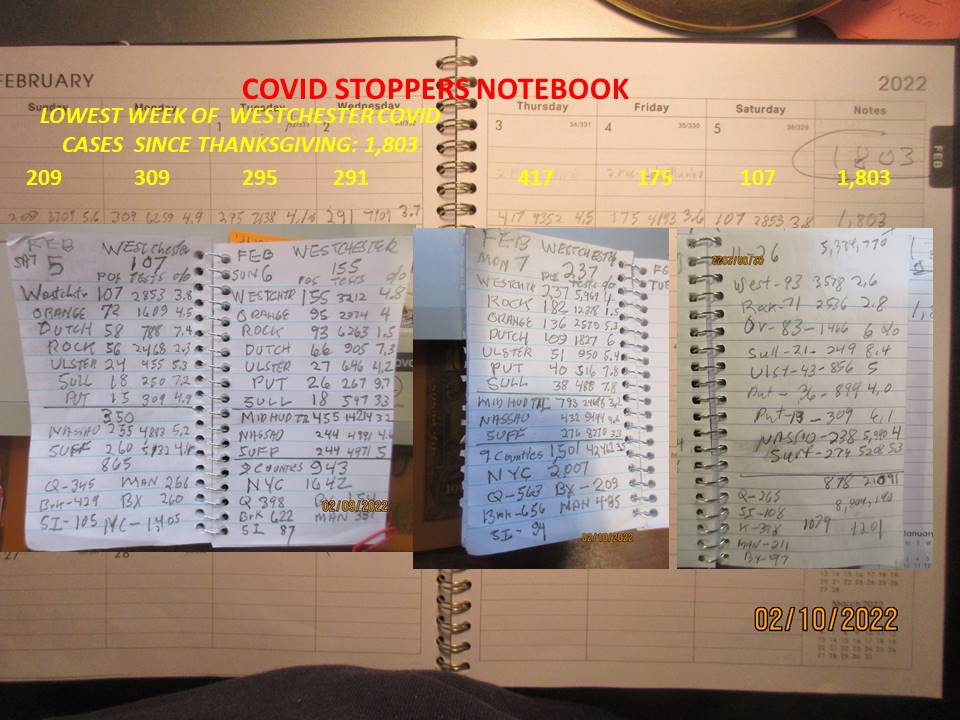
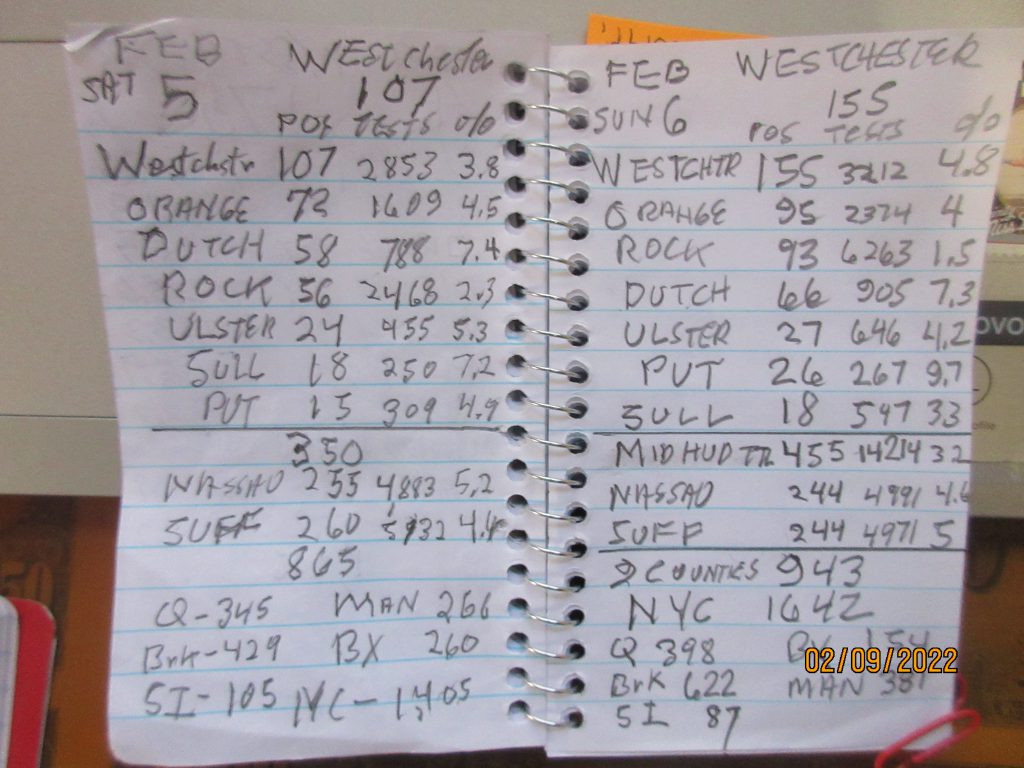
From the WPCNR COVID STOPPERS NOTEBOOK: WESTCHESTER COUNTY ON SUNDAY RECORDED 107 NEW PERSONS CONTRACTING COVID AND 155 MONDAY. THESE WERE THE LOWEST DAILY POSITIVES SINCE NOVEMBER 13, 2021, WHEN THE COUNTY RECORDED 92 NEW CASES; AND NOVEMBER 15, 2021 WHEN THERE WERE 118 NEW CASES. IT IS NOTABLE THAT THE 9 COUNTIES SURROUNDING NEW YORK CITY RECORDED 943 CASES OF NEW COVID PATIENTS, COMPARED TO ALL OF NEW YORK CITY REPORTING A NEW LOW OF 1,642 CASES.
This comes after Governor Hochul sent out this update yesterday afternoon:
Lowest Statewide Cases per 100k 7-Day Average Since November 30
Fewest Hospitalizations Since December 26
Fewest Patients in ICU Since December 20
71COVID-19 Deaths Statewide Yesterday
“We are improving in terms of lower positive cases, hospitalizations, and infection rates statewide,” Governor Hochul said. “We cannot let our guard down now. Those who have yet to get their vaccine, their second dose, or their booster shot should do so as soon as possible. It’s safe, effective, free, and widely available throughout the state. Keep your loved ones safe and healthy by utilizing the best tools at our disposal.”
Tueday’s data is summarized briefly below:
Test Results Reported – 99,004
Total Positive – 4,281
Percent Positive – 4.32%
7-Day Average Percent Positive – 4.36%
Patient Hospitalization – 5,019 (-50)
Patients Newly Admitted – 425
Patients in ICU – 790 (-24)
Patients in ICU with Intubation – 426 (-26)
Total Discharges – 277,916 (+345)
New deaths reported by healthcare facilities through HERDS – 71
Total deaths reported by healthcare facilities through HERDS – 53,789
The Health Electronic Response Data System is a NYS DOH data source that collects confirmed daily death data as reported by hospitals, nursing homes and adult care facilities only.
Total deaths reported to and compiled by the CDC – 67,553
This daily COVID-19 provisional death certificate data reported by NYS DOH and NYC to the CDC includes those who died in any location, including hospitals, nursing homes, adult care facilities, at home, in hospice and other settings.
Total vaccine doses administered – 36,246,761
Total vaccine doses administered over past 24 hours – 33,556
Total vaccine doses administered over past 7 days – 311,783
Percent of New Yorkers ages 18 and older with at least one vaccine dose – 91.2%
Percent of New Yorkers ages 18 and older with completed vaccine series – 82.3%
Percent of New Yorkers ages 18 and older with at least one vaccine dose (CDC) – 95.0%
Percent of New Yorkers ages 18 and older with completed vaccine series (CDC) – 84.9%
Percent of New Yorkers ages 12-17 with at least one vaccine dose (CDC) –80.4%
Percent of New Yorkers ages 12-17 with completed vaccine series (CDC) – 70.2%
Percent of all New Yorkers with at least one vaccine dose – 80.5%
Percent of all New Yorkers with completed vaccine series – 72.3%
Percent of all New Yorkers with at least one vaccine dose (CDC) – 88.0%
Percent of all New Yorkers with completed vaccine series (CDC) – 74.6%
Each region’s 7-day average of cases per 100K population is as follows
REGION
Saturday, February 5, 2022
Sunday, February 6, 2022
Monday, February 7, 2022
Capital Region
54.72
52.58
50.08
Central New York
65.08
61.16
61.05
Finger Lakes
39.45
37.98
36.08
Long Island
32.81
33.45
30.00
Mid-Hudson
32.68
30.88
29.48
Mohawk Valley
58.14
54.22
53.10
New York City
30.29
30.22
28.52
North Country
73.48
70.68
68.26
Southern Tier
57.93
54.77
52.78
Western New York
44.80
42.11
38.24
Statewide
37.78
36.81
34.74
Each region’s 7-day average percentage of positive test results reported over the last three days is as follows:
REGION
Saturday, February 5, 2022
Sunday, February 6, 2022
Monday, February 7, 2022
Capital Region
8.46%
8.43%
8.21%
Central New York
9.65%
9.58%
9.81%
Finger Lakes
7.55%
7.37%
7.29%
Long Island
5.31%
5.25%
4.93%
Mid-Hudson
4.56%
4.48%
4.23%
Mohawk Valley
7.95%
7.61%
7.50%
New York City
2.93%
2.88%
2.77%
North Country
11.09%
10.81%
10.60%
Southern Tier
6.26%
6.06%
6.03%
Western New York
8.76%
8.57%
8.10%
Statewide
4.65%
4.53%
4.36%
Each New York City borough’s 7-day average percentage of positive test results reported over the last three days is as follows:
BOROUGH
Saturday, February 5, 2022
Sunday, February 6, 2022
Monday, February 7, 2022
Bronx
3.03%
3.06%
2.97%
Kings
2.74%
2.70%
2.52%
New York
2.63%
2.57%
2.51%
Queens
3.35%
3.28%
3.19%
Richmond
3.63%
3.59%
3.40%
Yesterday, 4,281 New Yorkers tested positive for COVID-19 in New York State, bringing the total to 4,838,586. A geographic breakdown is as follows:
County
Total Positive
New Positive
Albany
56,818
58
Allegany
8,517
13
Broome
43,143
60
Cattaraugus
14,780
24
Cayuga
15,266
25
Chautauqua
22,857
27
Chemung
20,500
26
Chenango
8,837
17
Clinton
15,451
27
Columbia
9,605
11
Cortland
10,006
2
Delaware
7,381
14
Dutchess
62,353
66
Erie
202,785
175
Essex
5,241
11
Franklin
8,666
16
Fulton
11,944
23
Genesee
13,335
12
Greene
8,255
3
Hamilton
806
2
Herkimer
13,247
28
Jefferson
19,009
61
Lewis
5,972
5
Livingston
11,219
13
Madison
12,344
28
Monroe
147,213
102
Montgomery
11,356
22
Nassau
394,485
224
Niagara
46,504
64
NYC
2,248,971
1,642
Oneida
50,976
72
Onondaga
104,412
305
Ontario
18,963
26
Orange
104,139
95
Orleans
8,401
13
Oswego
23,979
57
Otsego
9,323
18
Putnam
23,019
26
Rensselaer
30,099
41
Rockland
90,332
93
Saratoga
44,007
61
Schenectady
31,617
20
Schoharie
4,782
14
Schuyler
3,278
3
Seneca
5,566
8
St. Lawrence
19,628
49
Steuben
18,936
25
Suffolk
419,040
244
Sullivan
17,848
18
Tioga
10,227
15
Tompkins
16,743
22
Ulster
30,164
27
Warren
12,886
13
Washington
11,530
18
Wayne
16,498
33
Westchester
244,033
155
Wyoming
8,098
6
Yates
3,196
3
Below is data that shows how many hospitalized individuals who have tested positive for COVID-19 were admitted for COVID-19/COVID-19 complications and how many were admitted for non-COVID-19 conditions:
Region
COVID-19 Patients currently hospitalized
Admitted due to COVID or complications of COVID
% Admitted due to COVID or complications of COVID
Admitted where COVID was not included as one of the reasons for admission
% Admitted where COVID was not included as one of the reasons for admission
Yesterday, 71 New Yorkers died due to COVID-19, bringing the total to 53,789. A geographic breakdown is as follows, by county of residence:
County
New Deaths
Allegany
1
Bronx
7
Cayuga
1
Chemung
1
Clinton
2
Dutchess
2
Erie
6
Essex
1
Genesee
1
Herkimer
1
Kings
11
Madison
1
Monroe
2
Montgomery
1
Nassau
3
New York
2
Niagara
1
Oneida
1
Onondaga
3
Ontario
1
Orange
1
Orleans
1
Oswego
1
Queens
3
Richmond
2
Suffolk
9
Wayne
1
Westchester
4
All New York State mass vaccination sites are open to eligible New Yorkers aged 5 and older, with walk-in vaccination available at all sites on a first-come, first-serve basis for people aged 12 and older. Information on which sites require appointments for children in the 5-11 age group is available on our website. People who prefer to make an appointment at a state-run mass vaccination site can do so on the Am I Eligible App or by calling 1-833-NYS-4-VAX. People may also contact their local health department, pharmacy, doctor or hospital to schedule appointments where vaccines are available, or visit vaccines.gov to find information on vaccine appointments near them.
New Yorkers looking to schedule vaccine appointments for 5-11-year-old children are encouraged to contact their child’s pediatrician, family physician, county health departments, Federally Qualified Health Centers (FQHCs), rural health centers, or pharmacies that may be administering the vaccine for this age group. Parents and guardians can visit vaccines.gov, text their ZIP code to 438829, or call 1-800-232-0233 to find nearby locations. Make sure that the provider offers the Pfizer-BioNTechCOVID-19 vaccine, as the other COVID-19 vaccines are not yet authorized for this age group.
Visit our website for parents and guardians for new information, frequently asked questions and answers, and resources specifically designed for parents and guardians of this age group.
Yesterday, 7,608 New Yorkers received their first vaccine dose, and 7,969 completed their vaccine series. A geographic breakdown of New Yorkers who have been vaccinated by region is as follows:
Regional Vaccination Data by Provider Location
People with at least one vaccine dose
People with complete vaccine series
Region
Cumulative Total
Increase over past 24 hours
Cumulative Total
Increase over past 24 hours
Capital Region
960,590
259
876,994
353
Central New York
642,587
283
592,975
171
Finger Lakes
858,810
266
793,380
361
Long Island
2,161,527
1,281
1,910,758
1,650
Mid-Hudson
1,689,609
1,018
1,475,348
1,176
Mohawk Valley
323,302
96
299,606
141
New York City
7,933,024
3,645
6,985,193
3,176
North Country
301,425
276
272,042
290
Southern Tier
437,090
99
399,069
157
Western New York
950,122
385
868,953
494
Statewide
16,258,086
7,608
14,474,318
7,969
Booster/Additional Shots
Region
Cumulative Total
Increase over past 24 hours
Increase over past 7 days
Capital Region
439,682
725
7,846
Central New York
291,091
871
7,019
Finger Lakes
456,121
1,308
10,098
Long Island
1,039,222
4,143
147,869
Mid-Hudson
795,753
2,505
86,917
Mohawk Valley
155,046
406
3,486
New York City
2,624,459
5,943
437,512
North Country
136,214
555
3,477
Southern Tier
208,216
449
4,191
Western New York
496,603
1,366
10,071
Statewide
6,642,407
18,271
718,486
The COVID-19 VaccineTracker Dashboard is available to update New Yorkers on the distribution of the COVID-19 vaccine. The New York State Department of Health requires vaccinating facilities to report all COVID-19 vaccine administration data within 24 hours; the vaccine administration data on the dashboard is updated daily to reflect the most up-to-date metrics in the state’s vaccination effort. New York State Department of Health-reported data from NYSIIS and CIR differs slightly from federally-reported data, which is inclusive of federally-administered doses and other minor differences. Both numbers are included in the release above.