Hits: 168
MAY 27– GOVERNOR HOCHUL : ‘LET THEM BUILD!”
Hits: 168
SIGNS REFORMS TO EASE AND BUILD MORE AFFORDABLE HOUSING AND INFRASTRUCTURE.
Most Significant Reforms of the State Environmental Quality Review Act Since its Passage in 1975
Reforms to Environmental Review Could Save as Much as $82,000 in Per-Unit Building Costs
Cutting Red Tape Will Speed up Building of New Housing by as Much as Two Years
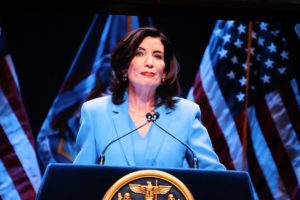
Governor Kathy Hochul today signed a key component of her FY27 budget, which includes her “Let Them Build” agenda, a sweeping set of common-sense reforms that cut red tape and remove duplicative environmental reviews for housing and other critical infrastructure.
The Enacted Budget includes significant reforms of the fifty-year-old State Environmental Quality Review Act (SEQRA), modernizing the law to expedite projects that meet criteria which ensure they have no significant environmental impacts and to let localities build the housing and infrastructure New Yorkers need in communities across the state.
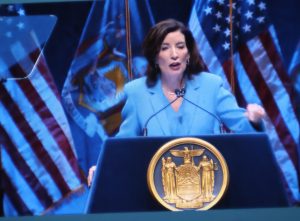
“Red tape and duplicative reviews have stopped New York from doing the very building that made us the envy of the world, making our housing more expensive and our infrastructure outdated – that ends today,” Governor Kathy Hochul said. “By removing these barriers and empowering communities across the state, we are working to drive down costs of critical housing and infrastructure and sending a simple message: now is the time to build.”
Today, it is too difficult to build major projects in New York: housing and infrastructure projects can take as much as 56 percent longer in New York State to get from concept to groundbreaking compared to peer states. Similarly, unduly burdensome requirements delay needed investment in clean water infrastructure, green infrastructure, New York City public schools, and parks and trails.
The Budget includes landmark reforms to slash through the red tape and government bureaucracy that has stymied desperately needed housing and crucial infrastructure projects by enacting Governor Hochul’s “Let Them Build” agenda. The Budget includes a series of common sense changes to modernize SEQRA and expedite categories of housing and infrastructure projects consistently found not to have any significant environmental impact, eliminating unnecessary costs, duplicative reviews and years of delay that raise costs for New Yorkers when they can least afford it.
Together, these actions will increase affordability by fast-tracking housing and infrastructure projects that communities want and that will not harm the environment. This fast-track makes it easier to build more of the vital projects that New Yorkers need while continuing to protect our environment and conserve New York’s natural resources.
Building Housing Faster By Cutting Red Tape
The FY27 Budget contains landmark reforms which will provide exemptions from duplicative environmental review to accelerate housing development that is desperately needed and meets criteria that ensures it does not have significant environmental impacts. Governor Hochul has vowed to tackle the housing crisis and bring down costs by building the housing that New Yorkers desperately need. However, too many projects in New York, including much-needed affordable housing developments, are forced to navigate a web of red tape created by state mandates that add unnecessary costs and years of needless delays, despite these projects consistently being found to have no significant environmental impact.
By cutting red tape and speeding up the timeline to construction, Let Them Build will help cut costs and speed construction for qualifying housing at the following unit caps:
- New York City: up to 250 units citywide and up to 500 units within medium and high-density areas
- Urbanized areas outside of New York City: up to 300 units
- Non-urbanized areas: up to 100 units, and up to 20 units in areas that do not have zoning
The housing projects must be on previously disturbed land and connected upon occupancy to existing water and sewer systems. The law does not supersede environmental requirements, permitting or local zoning.
These common-sense reforms will get more urgently needed homes built faster for New Yorkers. Studies have shown that for housing projects in New York State, SEQRA can slow down building by as long as two years.
These delays increase costs: analysis of housing projects demonstrate that SEQRA reviews increase the cost of building housing by $82,000 per unit in New York City, adding up to $8 million in additional costs for a 100 unit development. By eliminating duplicative reviews, Let Them Build will get projects from the planning process to the construction site faster and make it easier and more affordable for new homes to be built across the state.
Supporting Communities in Building Out Crucial Infrastructure
The legislation adds further SEQRA exemptions for critical categories of projects that New Yorkers need, including clean water infrastructure, public parks and trails, green infrastructure and public schools within New York City.
- Clean Water Infrastructure: Critical water infrastructure projects that avoid impacts to natural resources.
- Green Infrastructure: Nature-based storm water management.
- Parks and Trails: Public parks and recreational bike/pedestrian paths on previously disturbed land.
- Public Schools: New New York City Public School buildings built by the School Construction Authority.
Making Government a Partner in Growth
Currently, SEQRA review timelines vary greatly across projects, creating unpredictability for local communities, project sponsors, and state agencies alike. This uncertainty can contribute to significant project delays and add substantial costs to project budgets.
To create additional accountability for local communities and project sponsors, the bill establishes a two-year timeline to complete an environmental impact statement, creating clear project schedules and faster decisions.
MAY 27–LWV SCHEDULES ZOOM FORUM ON DISTRICT 17 CONGRESSIONAL DEMOCRATIC PRIMARY
Hits: 182
|


MAY 26– SENATOR GILLEBRAND AND SENATOR TED CRUZ HAIL PASSAGE OF BILL BANNING NON DISCLOSURE AGREEMENTS IN SEXUAL CHILD ABUSE CASES– NOW IT MUST PASS THE HOUSE
Hits: 176
GILLIBRAND HAILS SENATE PASSAGE OF HER BIPARTISAN BILL TO PROTECT CHILD SEXUAL ABUSE SURVIVORS
Washington, D.C. – Today, U.S. Senator Kirsten Gillibrand (D-NY) applauded the Senate’s unanimous passage of the Terminating Restrictive Enforcement of Youth Settlements (TREY’S) Law, which she co-leads with Sen. Ted Cruz (R-TX). The bill would void nondisclosure agreements (NDAs) that silence survivors of child sexual abuse.
“For too long, nondisclosure agreements have been used to silence survivors of child sexual abuse and shield perpetrators from accountability,” said Senator Gillibrand. “Today, we are one step closer to correcting that injustice and allowing survivors to publicly tell their stories. I am grateful to Sen. Cruz for his partnership and leadership on TREY’S Law and am thrilled that it has now passed the Senate. I urge the House of Representatives to take up this bill and send it to the president’s desk as soon as possible.”
“Trey’s story is not the exception, but the pattern,” said Senator Cruz. “Non-disclosure agreements are too often used to bury abuse and silence survivors, with incalculable and catastrophic consequences for victims. We will never know how many child victims were silenced by these contracts or how many lives were lost because the law enforced that silence. I am thankful to Senator Gillibrand for helping get TREY’S Law across the finish line in the Senate. I now urge my colleagues in the House to pass this legislation and send it to President Trump’s desk to be signed into law.”
TREY’S Law would void NDAs in cases of child sexual abuse or assault. NDAs can be used to silence survivors of child sexual abuse and shield perpetrators from accountability. This bill would make any NDA provision unenforceable if it prohibits or restricts someone from disclosing the sexual abuse of a minor or facts related to that abuse, regardless of whether the NDA was signed before a dispute arose or as part of a civil settlement agreement.
The bill is named in honor of Trey Carlock, a young man from Dallas, Texas who endured sexual abuse as a child while at a summer camp. He signed an NDA as part of a civil settlement, forcing him to silently carry the trauma of his abuse and barring him from publicly speaking out against the perpetrator. He ultimately took his own life at age 28.
MAY 26–NEW YORK HEALTH ON THE START OF SUMMER FROM DR; MARISA DONNELLEY
Hits: 148

Enjoying this newsletter? Why not share it with a friend? As summer approaches, New York is buzzing back to life. The jazz buskers in the park, the first fireflies, warm late-day sun, and the kind of weather that makes you want to just lie in the grass and absorb it all. I love this part of the year. But while I’m planning afternoon picnics, I’m also watching the health concerns that come with summer. Whether it’s pollution creeping into the Bronx, wildfire smoke drifting hundreds of miles, or stifling heat that can make breathing feel heavier. We’re digging into all of that this week. And we also have some exciting World Cup news to share! Congestion pricing may be pushing pollution into the South BronxCongestion pricing, launched in early 2025, was designed in part to reduce traffic and improve air quality. But is it? An early study suggests it’s not helping everyone equally. A preliminary analysis from Columbia found that air quality worsened in the South Bronx, where asthma rates are already among the highest in NYC.
New York City asthma emergency department visits (ages 5-17) in 2023 by community district. Figure from the NYC Environment and Health Data Portal. Researchers analyzed 19 sensors across the Bronx before and after congestion pricing began and found that several showed increases in fine particulate matter (PM2.5)—the tiny particles that can penetrate deep into the lungs and worsen asthma, heart disease, and other health conditions. Across four of the sensors, air quality worsened significantly, and across two sensors, it improved.
Four sensors showed increased PM2.5 in the Bronx following the launch of congestion pricing. Figure from South Bronx Unite and Columbia. Annotations by YLE. The hypothesis? Cars or trucks may be rerouted through the Bronx to avoid the toll zone. This was a concern flagged by many, including me and the MTA’s environmental review. So the agency pledged $70 million for Bronx mitigation measures, including asthma programs and the electrification of diesel trucks at Hunts Point. Many of these initiatives haven’t been rolled out yet. If we zoom out citywide, air quality may be improving, as shown by preliminary analyses from Cornell and the MTA. The key question is whether cleaner air city-wide is coming at the cost of dirtier air in the Bronx. What to do:
Wildfire season is here: Here’s how I’m preparingFlashback to summer 2023. The sky over NYC turned an eerie orange, like a scene out of an apocalypse movie. Wildfire smoke from Canada blanketed the Northeast, and air quality hit hazardous levels.
Photo from CNN. For many New Yorkers, it felt shocking. For me, the scene is actually familiar. I grew up in Northern California, wildfire-adjacent for most of my life. We had wildfire smoke days at school instead of snow days. In 2018, when the Camp Fire destroyed the town of Paradise, my hometown Chico became a refugee zone overnight. Tents filled up the Walmart parking lot. My sisters and I collected pet supply donations for families who evacuated so fast they couldn’t grab dog food, leashes, or medicine.
We were truly inspired by the amount of community donations supporting families with pets during the Camp Fire! My sisters and I filled three cars to the brim. That experience changed how I think about wildfires. They don’t just burn land, they upend health, school, work, caregiving, pets, housing, all of it. So when smoke reaches New York, I see it as something we need to prepare for, not just react to. New York State and NYC expect wildfire smoke to be a recurring risk this summer. And nationally, wildfire activity is already running high this year. More than 1.8 million acres have already burned across the country as of late April—194% of the previous 10-year average. Here’s what I’m doing now to get ready:
We know that the risk of wildfire smoke is increasing in New York. But taking even just a few of these steps ahead of time helps with how ready we are. Quick updates: vaccine law, heat, ebola, and The World CupTwo new vaccine lawsGovernor Hochul signed two landmark bills on May 15 that make New York’s vaccine policy less dependent on federal recommendations. One bill requires insurers to cover vaccines recommended by the NY state commissioner of health, not just those approved by the federal ACIP (Advisory Committee on Immunization Practices, the body that sets national vaccine guidance). The second removes all references to ACIP from state law, protecting Medicaid coverage of vaccines even if federal recommendations change. It also ensures pharmacists can give Covid-19 vaccines to children ages 2–18. If you have private insurance or Medicaid, your vaccine coverage is now anchored to state law, regardless of what happens federally. Heat is hereParts of New York hit 94 degrees this week, and hotter days are on the horizon. During a heat wave, the best thing to do is to stay cool, avoid strenuous activity when the risk is high, and check in on neighbors who may not have air conditioning. A few helpful resources: (For a deeper dive on heat, check out my earlier post here.)
EbolaI won’t spend much time on the Ebola outbreak here, except to say that my heart goes out to the communities in the DRC navigating this. It must be incredibly scary. For New Yorkers, the risk remains extremely low. YLE National covered the details earlier this week, and I highly recommend this moving piece from my friend Emily Smith on the equity challenges surrounding Ebola outbreaks. GOOOOOOOOOAAAAAAL!The World Cup is coming to New York soon! It will bring thousands of travelers, packed stadiums, many celebrations, mixtures of cultures, and all the public health complexities that come with it. YLE is playing a central role in the national Health Security Operations Center. If you’re attending a game or live within 30 miles of a host city, we want to hear from you!
Bottom lineYou’re all caught up on New York public health news. See you next week! Love, Your NY Epi Dr. Marisa Donnelly, PhD, is an epidemiologist, science communicator, and public health expert. This newsletter exists to translate complex public health data into actionable insights, empowering New Yorkers to make informed and evidence-based health decisions. |


MAY 26–YOUR LOCAL EPIDEMIOLOGIST ON THE EBOLA SITUATION
Hits: 176
|
 |
Enjoying this newsletter? Why not share it with a friend?


The outbreak in Central Africa continues to spread. The latest figures of more than 160 deaths and 600 suspected cases almost certainly represent a significant undercount, and the trajectory remains deeply concerning. For those of us in the U.S., the personal risk remains low, but the toll on the region is severe.
 |
Figure by Resolve to Save Lives
Ebola is often called the disease of compassion by experts like Dr. Craig Spencer. It spreads through direct contact with bodily fluids, which means it spreads when a family member tends to the sick, when a nurse stays at the bedside, or when a community gathers to bury their dead. In other words, it’s spread through acts of care.
But the phrase has been sitting differently lately because this outbreak is spreading not only through compassion but also through the global withdrawal of it. It’s impossible to ignore the quiet (or not-so-quiet) shift from “we” to “me” over the past several years (decades?), now contributing, to some extent, to a body count.
A dangerous myth: Self-interest and global good are opposites
Over the past several years (decades?), a tug-of-war battle has been taking place between individualism and collective responsibility, becoming one of the defining tensions in American identity.
It’s not too hard to understand why. When systems fail people, like through crushing health care costs, stagnant wages, lack of accountability, and governments captured by private interests, people stop trusting those systems. If no one is coming to save you, you learn to save yourself. Sprinkle in profit and power grabs amid the vulnerability of division and isolation, and… here we are.
This personal survival instinct became a governing philosophy, then policy. Fields like public health, which have been built on the basic assumption that society as a whole values a collective approach, have been intentionally targeted. This thinking became so dominant, in fact, that people cheered when a chainsaw was taken to USAID—an organization that built clinics, trained health workers, funded labs, and supported rapid response teams in the places where outbreaks begin. Ebola is one of the first outbreaks unfolding in the aftermath of cutting this global health funding.

The prevailing idea is that what happens on the other side of the world has nothing to do with us. But this idea is a myth, especially when it comes to diseases, for three main reasons:
- Americans are impacted by this Ebola outbreak directly, as they are being flown to another country to seek care.
- We live in an interconnected world bound together by supply chains, air travel corridors, and accelerating disease spillovers from animals to humans. No wall can stop a pathogen, and neither can a travel ban.
- The stakes are also economic. For example, when the U.S. invests in global health research and development, it can yield a sixfold return, including new jobs and economic activity. The Covid-19 pandemic cost 500 times what it would have to invest in proposed preventive measures to reduce disease spillover. The price of prevention is remarkably low, at less than 1% of the federal budget.
This week, the State Department seemed to realize the mistake and announced it will fund up to 50 Ebola treatment clinics in the DRC and Uganda, touting it as an “ironclad” commitment. Sure, treatment centers matter a lot if this actually happens. (As you can see below, the countries don’t even know this is happening.) But what works even better, and is more cost-effective? Helping prevent this in the first place.
 |
True self-interest, rightly understood, is investment in global health. It is a myth that they are at odds.
The ethic of “just because”
But reducing all of this to strategy, or ROI, or soft power is, itself, a shortcoming. Strategy isn’t necessarily why people like the doctors and nurses of Médecins Sans Frontières have spent decades running toward the fire. They put their lives on the line because they simply care.
There used to be a shared value of foreign aid and international cooperation, broadly based on the idea that help was needed. The ROI was compassionate care for others as neighbors, grounded in empathy and equity. The ROI was saving lives and serving. That is enough.
The World Health Organization was built on this. The entire postwar international order, as flawed and incomplete as it often was, rested on the idea that nations had obligations to one another that went beyond what they could extract. That a human life had value that did not depend on its proximity to power, or its usefulness to anyone’s GDP. The value of a life, of all lives, matters and should not depend on where you live.
The Marshall Plan, for example, was not philanthropy because it was strategic. It was simultaneously multiplicative, collective, and synergistic. The people who built it did not find that troubling.
We have lost the animating belief that strangers’ suffering is our concern. That the provision of care is not decided by power but by compassion and collective empathy.
The cost is always paid by the same people
The most heartbreaking thing about all of this is that radical individualism doesn’t distribute its consequences equally. It always funnels suffering downward to the poor, the rural, and the people whose names don’t appear in the articles until they are counted among the dead.
Ebola’s geography is not an accident. Sure, it’s where the fruit bats live, but the cost is high for a reason. The cost lives where the hospitals don’t, where the roads end in mud, and the power cuts out, where the cold chain for vaccines has never been reliable, where the nearest trained physician might be two days’ travel away. It thrives in the gaps left by decades of systematic disinvestment, war, poverty, and a warming climate, and structural adjustment programs that stripped health budgets to the bone. Sometimes international attention arrives, but like many things in public health, it comes in cycles of panic and neglect. Once the cameras leave, so does the money.
The pushback seems to center around power and money. The same countries that hold most of the world’s wealth continue to be the most advanced in terms of health care workers, the number of medical facilities, and their ability to care for infectious diseases like Ebola. There remains a misconception that trickle-down economics and capitalism are the only ways for countries and people to thrive. In an ironic twist, investing and caring for the poorest of the poor first actually benefits all of us more. No matter how you slice the data, collectivism beats out individualism every time.
Research from one of us (Emily Smith) shows that when we start with the poor first, in a trickle-up economy, we actually fare better globally. Within and between countries, starting with the most vulnerable, is advantageous to all of us, fiscally, more than trickle-down capitalistic, individualistic approaches. This is health and wealth. But it only happens when we center the poor first. When the poorest of us are taken care of, we all thrive.
Bottom line
Ebola is called the disease of compassion because it spreads through caring for one another. What we are watching now is what happens when that caring is systematically dismantled. I hope the pendulum finds its way back to a place where compassion and the communal good can, once again, simply exist.
Love, YLE and FNE (ES)
Dr. Emily Smith (ES) is a global health epidemiologist, professor, and scientific communicator. She is the author of the Substack Friendly Neighborhood Epidemiologist (FNE) and the book Science of the Good Samaritan.
Your Local Epidemiologist (YLE) is founded by Dr. Katelyn Jetelina, MPH PhD—an epidemiologist, wife. YLE comprises a team of experts, ranging from physicians to immunologists to epidemiologists to nutritionists, working together with one goal: to “Translate” ever-evolving public health science so that people are well-equipped to make evidence-based decisions. YLE reaches over 425,000 people across more than 132 countries. This newsletter is free to everyone, thanks to the generous support of fellow YLE community members. To support the effort, subscribe or upgrade below:
MAY 26– MEMORIAL DAY PAST
Hits: 148
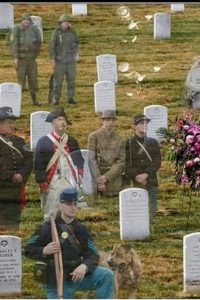
Wishing everyone a peaceful, fulfilling, and reflective Memorial Day .


I want to share two poems: “In Flanders Fields”, and “We Shall Keep The Faith “.  These two poems were born on the battlefield with death all around during The Great War or as we presently call it, World War I.
It is where the association of the wearing of the poppy originated. Please take a moment. Read this history and re-clean yourself with these two incredibly poignant poems.
It is Memorial Day weekend 2020. We all know that the wearing of poppies in honor of America’s war dead is traditionally done on Memorial Day. But what is the origin of the practice?
Most of us know the poem “In Flanders Fields” and we associate that poem with the wearing of the poppy and we associate the poem with Memorial Day.
What ties all these things together, and how many people know the ‘sequel’ to “In Flanders Fields”? Here is, in my view, the complete story.
This may take 4 minutes to read, but it is Memorial Day and if you want a solemn and poignant remembrance moment, this will qualify.
Here it is.
In war-torn battlefields of Belgium during The Great War (aka WW1), the red field poppy was one of the first plants to grow. Its seeds scattered in the wind and sat dormant in the ground, only germinating when the ground is disturbed – as it was by the very brutal fighting during World War I, particularly in the trench warfare in Belgium and France.
The practice of wearing of poppies was inspired by the poem In Flanders Fields, written in 1915 by Canadian soldier John McCrae. McCrae was a poet, physician, author, artist and soldier during World War I and a surgeon during the Second Battle of Ypres in Belgium in 1915.
McCrae’s friend Lt. Alexis Helmer was killed during the battle and his burial inspired the poem which was written on May 3, 1915. McCrae saw the poppies during burials around his artillery position. McCrae himself would later become a casualty while commanding a Canadian unit in early 1918.
As I mentioned, McCrae wrote “In Flanders Fields” after losing his friend, Helmer, on the operating table. He sat on a rock afterwards while he was resting and scribbled out the poem while viewing a spectacle of red poppies as he contemplated the loss of his friend and the tragedy that was this “Great War”. Legend further has it that fellow soldiers retrieved the poem after McCrae, initially dissatisfied with his work, discarded it.
Here now, the poem:
IN FLANDERS FIELDS by Lieutenant Colonel John McCrae (written in 1915)
In Flanders fields the poppies blow
Between the crosses, row on row,
That mark our place: and in the sky
The larks still bravely singing fly
Scarce heard amid the guns below.
We are the dead: Short days ago,
We lived, felt dawn, saw sunset glow,
Loved and were loved: and now we lie
In Flanders fields!
Take up our quarrel with the foe
To you, from failing hands, we throw
The torch: be yours to hold it high
If ye break faith with us who die,
We shall not sleep, though poppies grow
In Flanders fields
“In Flanders Fields” was first published on December 8, 1915 in the London-based magazine ‘Punch’.
The origin of the red poppy as a modern-day symbol of Memorial Day was the idea of an American woman, Moina Michael.
It was on a Saturday morning, while at work, two days before the World War I Armistice was declared. Michael was on duty at the YMCA Overseas War Secretaries’ headquarters in New York.
A young soldier passed by her desk and left a copy of the latest November edition of the Ladies Home Journal there. In it she came across a page which carried the poem entitled “We Shall Not Sleep”.
“We Shall Not Sleep” was sometimes used as the title for the poem “In Flanders Fields”, because McCrae never gave his poem a title.
Michael found herself transfixed by the last verse. She said she felt as though she was actually being called in person by the voices in McCrae’s poem which had been silenced by death.
She made a personal pledge to “keep the faith.” She vowed always to wear a red poppy of Flanders Fields as a sign of remembrance. Compelled to make a note of this pledge she scribbled down a response on the back of a used envelope.
She titled her poem “We Shall Keep the Faith”.
Michael then had the idea to create an emblem of Remembrance using the red Flanders poppy. At the age of 49, with a career in teaching for over 30 years already behind her, she decided to dedicate her life to campaign to have this emblem recognized by governments, veteran agencies and the public.
She continued with the project for the next 26 years until her death. She became affectionately known as the Poppy Lady.
Here now, her poem, a response to “In Flanders Fields”:
WE SHALL KEEP THE FAITH by Moina Belle Michael (Written in 1918)
Oh! you who sleep in Flanders Fields,
Sleep sweet – to rise anew!
We caught the torch you threw
And holding high, we keep the Faith
With All who died.
We cherish, too, the poppy red
That grows on fields where valor led;
It seems to signal to the skies
That blood of heroes never dies,
But lends a luster to the red
Of the flower that blooms above the dead
In Flanders Fields.
And now the Torch and Poppy Red
We wear in honor of our dead.
Fear not that ye have died for naught;
We’ll teach the lesson that ye wrought
In Flanders Fields.
I wish you all a meaningful, somber, reflective, and solemn Memorial Day!
MAY 25 –MEMORIAL DAY: GOVERNOR HOCHUL REMINDS WE ARE ALL AMERICANS
Hits: 160
GOVERNOR HOCHUL ATTENDS MEMORIAL DAY WREATH-LAYING CEREMONY TO HONOR FALLEN SERVICE MEMBERS
Governor Hochul:
“I know that our country feels so divided. Believe me, it was divided back 250 years ago… We have had conflicts before, but I want you to know, whether it’s a blue state, red state, purple state — it doesn’t matter, because if someone shook you in the middle of the night, woke you up and said, ‘What are you?’ I guarantee people all across this country from every walk of life would say, ‘I’m an American. I’m an American first.’ Never forget that. We have so much more that unites us.”
Hochul: “In this particular year, on this very Memorial Day, let us not lose sight of the gift we’ve been given, the gift of freedom. But as you know, freedom is not free. There’s been blood spilled to protect that freedom, and shame on us if we ever forget that sacrifice, especially on a day like today.”
Governor Kathy Hochul today attended a Memorial Day wreath-laying ceremony at City Hall in Albany to honor fallen service members.
VIDEO: The event is available to stream on YouTube here and TV quality video is available here (h.264, mp4).
AUDIO: The Governor’s remarks are available in audio form here.
PHOTOS: The Governor’s Flickr page will post photos of the event here.
A rush transcript of the Governor’s remarks is available below:
Thank you, everyone. Thank you. Mayor, I truly appreciate your confidence in me and how you are a great caretaker of this city that I cherish and have called home for many years. It’s a difficult job to govern this city, and you can count on me to be a willing partner for many years to come. So, thank you, Mayor Applyrs, and to all of our elected officials who are here from our Council and from our Legislature.
Also, our Senator Pat Fahy — more recognizable than anybody, including myself, in the city. She is everywhere, and I thank her for that. And Assemblymember Gabriella Romero, making a real profound difference every day. And also to have our District Attorney be willing to step up and share his emotional story of what it’s like to be one of the ones who was able to go home after being in a conflict where you lost people that you knew personally.
Clearly you still wear that weight of that on your shoulders, but I want to thank you for converting that into extraordinary public service and keeping our community safe here in Albany County as our District Attorney. Let’s give another round of applause to Lee Kindlon.
Our Grand Marshal, you can maybe march next year. We can get you out there again. I want to thank you, our Grand Marshal, Louis Mion, and his wife Susan. And what I’m struck with your service, because service manifests itself in many ways, whether you run for office or you engage in the community. You have been putting a spotlight on the needs of homeless veterans back since the 1990s, and thank you for caring so deeply about those who did what this country asked them to do, and then instead of coming home to a warm thank you and a home or a job or an education, they find themselves living on our streets. So, thank you. Let’s give another round of applause to our Grand Marshal and his wife Susan.
And Reverend Charlene Robbins, I was listening intently to your prayer as you harken the names of all the great leaders during our various conflicts and put a more of an emotional feeling around them. The struggles that they had to endure the night before the great battles are the speeches. And so, thank you for personalizing those who have the weight of the country on their shoulders in those times of need. And also to our Albany marching band, it’s never a great occasion unless we have our marching band joining us. I want to thank them as well.
And to the veterans organizations, the Gold Star families, Memorial Day means a lot to different people, and as a leader myself, I’m also in a position where I have to put people in harm’s way by calling up the National Guard on occasion. And I have incredible respect for those who served in the armed services and returned and wanted to engage in the National Guard or went right to the National Guard.
And on this Memorial Day, I do want to just acknowledge Major Sorffly Davius, an NYPD police officer, a decorated Army veteran. He was a member of our task force, Empire Shield. They’re the ones who are protecting our subways and our congregate areas that we have in New York City that are more at risk, guarding some of our most high-profile locations. We just lost him this spring. He had been deployed by the National Guard to Kuwait to support the conflict in Iran. So even today, we’re still losing members of our family. And I just had a chance to get to know his family and speak at his service, and it was very difficult.
But also, I chatted with some of our friends in the back. What incredible pride we feel, not just in the State of New York, but in the Albany, Saratoga, Ticonderoga region. If you’ve been watching Ken Burns’ American Revolution, and if you have not, this is what you do on a rainy Memorial Day: You go look it up and start watching it. Because you’ll be perhaps shocked, perhaps you knew, but the most seminal parts of our fight for freedom against an oppressive regime abroad across the ocean all was formulated here.
They talk about gatherings in Albany where people are talking about how we can foster a protest and to stand up and fight for our rights and freedoms. It was amazing to watch this. But also, you saw what they went through, these individuals who served — ordinary farmers and merchants and people just living their regular lives. They were called to serve for years, away from their homes, to sacrifice in unbelievably harsh conditions, walking barefoot through the snow and in dark forests at night and being terrorized by raids from the British, unexpecting.
So you watch this and you’re just going to get this sense of awe about what our responsibility is 250 years later as we commemorate this significant anniversary. Know that people who walked in these areas lived their lives here where we do, were called to do something that they never dreamed of but they stood up because they believed in the promise of what a democracy could be, what freedom could actually feel like. And we cherish that because we are the beneficiaries of that.
And also, that means that we are also called on to defend each other and our rights and our values when those are under threat. And I know that our country feels so divided.
Believe me, it was divided back 250 years ago — the Loyalists versus the Patriots. It was an incredible conflict. Or during the Civil War, brother against brother, the North and the South. We have had conflicts before, but I want you to know, whether it’s a blue state, red state, purple state — it doesn’t matter, because if someone shook you in the middle of the night, woke you up and said, “What are you?” I guarantee people all across this country from every walk of life would say,
“I’m an American. I’m an American first.”
Never forget that. We have so much more that unites us. And yes, we’ve gone through conflicts and wars, but we’re always shoulder-to-shoulder in battle. And I looked at some of our Vietnam veterans who are here, and I was reminded of the fact that I was a young girl, but I had four uncles serving at the same time in the Vietnam conflict.
And I’d watch the evening news with my grandparents every night, go to their house, and they were always watching for some sign on Walter Cronkite of whether there’s a glimpse of one of their sons and praying that he wasn’t being carried out, transported to the morgue. It was a difficult time to be a child watching those images. But knowing that I had members of my own family gave me a point, a source of pride to know that someone close to me, my uncles who did come home, but some badly wounded, Purple Heart, they came back home to me. And I’ve always been just so grateful, so in awe of those, even during that conflict, because it was a draft.
Many left. Others, whether you believed in the war or not, still went and served.
And all the conflicts all the way up until what we’re doing in Iran right now, we have had people step up and say, “I love this country enough. I want to protect my country. I want to protect its values. I want to protect its freedoms for not just my family today, but for generations to come, just as we are benefiting from those 250 years ago.”
So in this particular year, on this very Memorial Day, let us not lose sight of the gift we’ve been given, the gift of freedom.
But as you know, freedom is not free.
There’s been blood spilled to protect that freedom, and shame on us if we ever forget that sacrifice, especially on a day like today. Thank you very much.
COUNTY EXECUTIVE KEN JENKINS MEMORIAL DAY OBSERVANCE
Hits: 157
WESTCHESTER COUNTY EXECUTIVE KEN JENKINS
STATEMENT ON MEMORIAL DAY
“Memorial Day is one of the most solemn days we observe as a nation. It is a day to remember the brave men and women who gave their lives in service to our country and to honor the sacrifice they and their families made on behalf of all of us. Behind every name etched on a memorial is a story of courage and sacrifice. These service members came from communities just like ours, raised families, built friendships and answered the call to serve.
As residents gather across Westchester this Memorial Day weekend, I encourage everyone to visit one of the many local memorials as they serve as important reminders of the true meaning of this day and of the sacrifice made by generations of Americans.”
MAY 23– PLAYLAND PARK OPENS FOR 2026 SEASON
Hits: 307
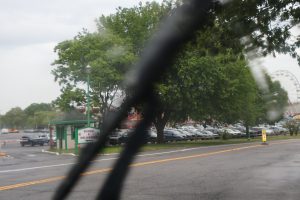
EARLY ARRIVALS PARKED AT 11:30 A.M. FOR OPENING CEREMONIES AND COUNTY EXECUTIVE KEN JENKINS’ OFFICIAL OPENING OF THE PARK.

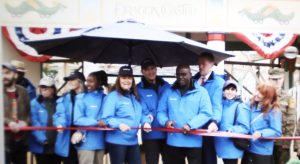
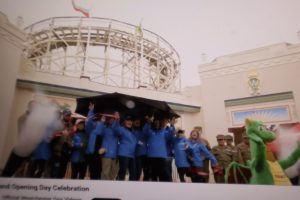
PLAYLAND OPENS AGAIN!
HUZZAH!
[Rye, NY] — Summer has officially arrived in Westchester County as Playland Park is open for the 2026 season, welcoming families back for another summer of classic rides, timeless traditions and unforgettable memories, including the highly anticipated return of the historic Dragon Coaster.
Watch the News Conference Here:
https://www.youtube.com/watch?v=7MCTEl7IoPk
The park is open TODAY, Sunday and Monday of Memorial Day Weekend, each day from 12 p.m. to 10 p.m.
Beginning Wednesday, June 3, the park will be open Wednesday through Sunday through Labor Day, Monday, Sept. 7 and closing out the season on Saturday and Sunday, Sept. 12 and 13.
From adrenaline-pumping thrills to pint-sized adventures, there are rides for everyone in the family. Visit PlaylandPark.org for the current list of open rides, which will be updated throughout the season as more rides open.
Fourth of July Fireworks will return this year, along with weekly Friday night fireworks thereafter that will light up the shoreline through Labor Day Weekend.
Westchester County Executive Ken Jenkins said:
“For generations, Playland Park has been woven into the fabric of summers in Westchester County, creating cherished memories for families and visitors alike. As we welcome guests back for another exciting season, we are proud to continue the legacy of this historic and iconic destination while ensuring it remains a place where residents of all ages can come together to experience the joy, nostalgia and traditions that have defined Playland for nearly a century.”
Westchester County Parks Commissioner Kathy O’Connor said:
“There’s nothing like a summer day at Playland Park. From the rides and games to the beach and pool, Playland offers a true family-friendly experience for visitors of all ages. I’m excited to open the gates once again this season and welcome families back for a summer filled with joy, tradition and lasting memories at one of Westchester’s most beloved destinations.”
Westchester County Parks First Deputy Commissioner Peter Tartaglia said:
“Summer in Westchester is synonymous with Playland Park. For almost 100 years, visitors have been coming to Playland for unforgettable memories, timeless traditions and the unique charm that makes this park so special. From generations of families riding the Dragon Coaster to children experiencing the magic of Playland for the very first time, this park continues to hold a special place in the hearts of so many throughout our community.”
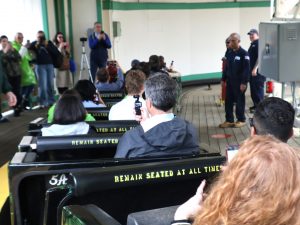
REPORERS ON THURSDAY’S MEDIA PREVIEW TAKING A RIDE ON THE DRAGON COASTER
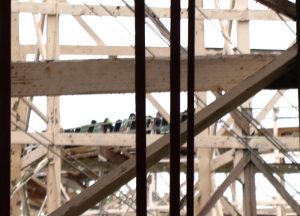
SQUEALS AND THE DRAGON ROARING ON THE TRACKS HIGH ABOVE PLAYLAND BROUGHT BACK MEMORIES AND PROMISED MORE MEMORIES TO COME
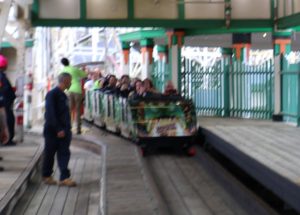
AND DOWN THE STRETCH THEY COME AFTER A RIDE OF A LIFETIME!
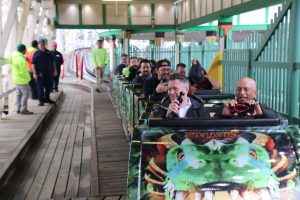
(Coaster photos by WPCNR)
PLAYLAND IS FOR CHILDREN OF ALL AGES, AND IT IS SO EASY TO FEEL LIKE A KID AGAIN!
District 7 Westchester County Legislator Anant Nambiar said:
“I am thrilled to see Rye Playland and the iconic Dragon Coaster open for another season! I am very proud to represent this District and want to thank all the dedicated local residents and staff whose hard work makes this Westchester landmark such a wonderful part of our County. While I’m sorry to miss the festivities today, I look forward to seeing you on the rides very soon. Enjoy opening day, have fun!”
Playland’s beach is also open on Saturday, Sunday and Monday, May 23, 24 and 25, from 11 a.m. to 6:30 p.m., weather permitting. The beach will then operate on weekends and holidays through Sunday, June 21, before both the beach and pool begin daily operations on Friday, June 26, and continue through Labor Day, weather permitting. Parking and admission fees apply.
Season Passes are available to purchase online only and daily rider wristbands are available to purchase online or at the park.
Playland Park is located at 1 Playland Parkway in Rye, NY.
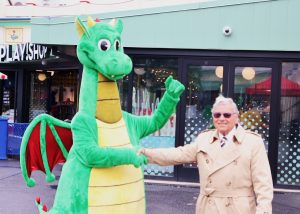
“COASTER” THE OFFICIAL HOST AT PLAYLAND
WELCOMES THE CITIZENETREPORTER AT THE MEDIA PREVIEW THURSDAY