Hits: 365




JOHN BAILEY AND THE NEWS THIS WEEK EVERY WEEK FOR 21 YEARS
Hits: 365
JOHN BAILEY AND THE NEWS THIS WEEK EVERY WEEK FOR 21 YEARS
Hits: 537
COUNTY EXECUTIVES FROM WESTCHESTER, ROCKLAND, PUTNAM, ORANGE, DUTCHESS AND ULSTER COUNTIES ANNOUNCE HOLTEC PAUSING RELEASE OF TREATED WASTEWATER FROM INDIAN POINT ENERGY CENTER INTO HUDSON RIVER AND URGE THE PLAN TO DUMP THE WATER BE ABANDONED
The County Executives from Westchester, Rockland, Putnam, Orange, Dutchess, and Ulster Counties claim victory in Holtec’s decision to pause the May planned release of treated wastewater from Indian Point Energy Center into the Hudson River and demand the planned dump of the toxic water be abandoned. Additionally, they are collectively insisting on more transparency and dialogue about the plan for the wastewater going forward.
As the situation continues to develop, the County Executives from Westchester, Rockland, Putnam, Orange, Dutchess, and Ulster Counties remain committed to advocating for the safety and well-being of local communities and the environment.
On WVOX 1460 AM Good Morning Westchester with Dennis and Tonni, County Executive George Latimer said the state legislature was considering legislation to forbid Holtec form dumping the wastewater into the Hudson River. he added that this might initiate a challenge leading to a higher court, should such legislation be passed.
Hits: 1414
WPCNR COUNTY CLARION LEDGER. From the Westchester County Department of Communications. April 19, 2023:
During Earth Week, Westchester County Executive George Latimer, Sustainable Westchester & Local Municipal Leaders held a press conference to discuss Sustainable Westchester’s GridRewards™ Program and other current initiatives residents can participate in to improve the County’s environmental impact.
Speakers included local leaders driving the charge to lower the region’s carbon footprint, including Jim Kuster, Interim Executive Director of Sustainable Westchester, David Klatt, COO of Logical Buildings and Alex Von Braun, Board Member of 175 Huguenot in New Rochelle, along with Hastings-on-Hudson Mayor, Nicola Armacost.
Latimer said:
“Demand response programs, empower Westchester residents and businesses to take control of their energy usage to earn cash back and reduce pollution. By lowering electricity usage at key times, we can collectively reduce the need for the utility to bring peaker plants. I am proud to partner with Sustainable Westchester to encourage residents to enroll in this program – similar to what your County Government is doing with our buildings.”
The event discussed how residents and businesses can participate in GridRewards™, a platform created by Logical Buildings and promoted through Sustainable Westchester. When high energy demand is forecasted, GridRewards™ provides users the opportunity to earn cash by reducing energy use at peak times. This can be achieved through simple actions including waiting to perform energy-intensive tasks such as running dishwashers, laundry machines and air-conditioning until the demand response event has passed.
Sustainable Westchester Interim Executive Director Jim Kuster said:
“In 2020, Sustainable Westchester launched the first residential demand response program in the County, GridRewards, in partnership with Logical Buildings. This was made possible once ConEd had deployed smart meter infrastructure across its service area. In the subsequent three years, Sustainable Westchester has focused on raising awareness of the benefits of the demand response program to residents and municipalities, and to grid infrastructure and the local environment. As a non-profit, Sustainable Westchester remains dedicated to maximizing the benefits to our municipal members and their residents.”
In honor of Earth month, Mayors from Hastings to Sleepy Hollow have engaged in an annual
competition by urging residents to sign up for GridRewards™ by April 28 to illustrate the
importance of synchronicity when it comes to reducing energy consumption. Last summer, single family homeowners, apartment dwellers and commercial businesses utilized Logical Buildings and Sustainable Westchester’s GridRewards™ program.
Through their participation, these users created a combined load reduction of 7MW, up from an estimated 3.5-4MW in 2021, enough electricity to instantaneously power 25,000 homes. The same program is now available for Westchester residents to participate in for the 2023 peak energy season.
In a similar program, the County partners with NuEnergen to administer a Demand Response program on many Westchester County buildings. On days of peak energy usage in the area, the County powers down certain properties in order to earn real dollars, offsetting both energy use and taxpayer funds.
About GridRewards™
GridRewards™ was developed in 2019 by Logical Buildings, an AI technology solutions leader in sustainability, smart building and virtual power plant software and a solutions provider for the built world.
The firm’s revolutionary technologies combat climate change by empowering residential, commercial, and industrial energy users to earn money, enhance building health and reduce carbon footprints through user-friendly, award-winning mobile apps. GridRewards™ was initially introduced as a digital program in 2019.
It was launched as a free app in spring 2021 and is downloadable via the Apple Store and Google Play.
Logical Buildings, which was founded in 2012 as a smart building technology software developer, IoT and DER systems integrator, and smart building services provider, currently operates in major national urban markets, including New York, Boston, Dallas, Los Angeles, San Francisco, Seattle, Washington, D.C., Camden, Chicago, and Miami, and more. To learn more, visit logicalbuildings.com and follow Logical Buildings on LinkedIn.
Hits: 699
Hits: 9
WPCNR REALTY REALITY. From Greenburgh Town Supervisor Paul Feiner. April 19, 2023:
Yesterday, the Greenburgh Town Board held a special meeting to vote on a new law that will tax NEWLY CONSTRUCTED condo’s and coops at residential rates – not commercial rates. Last year the Governor signed a law approved by the NYS Legislature that authorized the Town of Greenburgh to adopt this legislation.
The new law does not impact existing condo’s and coops.
Developers who wish to build affordable condos and coops could still apply to the town for tax abatements. Councilmembers Ken Jones, Francis Sheehan and Gina Jackson voted for the legislation. Councilwoman Ellen Hendrickx and I recused ourselves because we reside in a condo.
RESOLUTION OF THE TOWN BOARD OF THE TOWN OF GREENBURGH AMENDING CHAPTER 440 OF THE CODE OF THE TOWN OF GREENBURGH BY CREATING A NEW ARTICLE XVII ENTITLED, “TAX ASSESSMENT OF CONDOMINIUMS AND COOPERATIVES.”
Hits: 386
Have received many complaints about the traffic congestion at the 4 corners in Hartsdale. This is an update from NYS. The work is necessary and will be an improvement. But, there are inconveniences during the construction period. PAUL FEINER, Greenburgh Town Supervisor
Good morning Supervisor Feiner,
I’m the Area Construction Supervisor for NYSDOT on the subject project at the intersection of Rt 100 and Rt 100A (East/West Hartsdale Rd). I’m reaching out to let you know the anticipated remaining schedule of work at this location.
This week we expect DOT’s prime contractor (JR Cruz) to complete their concrete sidewalk work in the Northeast corner (in front of “Hartsdale Corners”). Cruz’s electrical subcontractor (Verde Electric) has been following them and doing the underground electrical work in each quadrant of the intersection, which we anticipate to be completed by end of next week. In the meantime, ConEd is to install a new utility pole in the NE corner of the intersection and then relocating their overhead wires from the existing pole onto the new pole, followed by the other utilities. Our best guess for all of the utility relocations being completed is by the end of June.
After all the utilities are relocated onto the new pole, the old pole will be removed and Verde Electric will return to excavate the foundation for the new traffic signal pole which is immediately adjacent to where ConEd’s existing pole is currently located. Verde’s work will be followed by JR Cruz completing the curb and sidewalk work in the NE corner, and finally Verde will install the signal poles, overhead span wire, and hang the new signal heads over the road. Once the utilities are done, JR Cruz and Verde’s work at this intersection will only take a couple of weeks to complete (hopefully by mid-July), and then the new signal will be scheduled for activation hopefully by end of July. The wild card here is the utility work, we’ll try to keep them on track so DOT’s contractors can finish their work and get the new signal turned on.
We realize traffic is very heavy at this intersection even under normal circumstances. JR Cruz made arrangements with Town of Greenburgh police to help with traffic control and close lanes when needed. Cruz and Verde are doing their best to finish the work as quickly as possible so as to minimize any traffic impacts.
I hope this update is helpful. Please don’t hesitate to reach out to me if there are any questions.
Thank you,
Jason E. Hilton, P.E.
Area Construction Supervisor
New York State Department of Transportation, Region 8 Construction
Hits: 219

It’s been a few weeks since I’ve updated on COVID-19. Here’s the state of affairs.
SARS-CoV-2 continues to decline after a small Spring Break bump. Wastewater levels are the lowest they’ve been in over a year! Hospitalizations and deaths continue to decline as well, but we are still losing 1,300 people per week.

As expected, COVID-19 continues to mutate. Interestingly, scientists are finding that mutations not on the spike protein are becoming more and more influential in the virus’s ability to continue to spread.
XBB.1.16 (which social media has deemed “Arcturus”) has created a huge wave in India, which is finally peaking. But this isn’t necessarily what will happen elsewhere. The last wave in India was nine months ago; there were a lot of susceptible people. In the U.S., XBB.1.16 accounts for 7% of cases. If growth continues, this could create a bump in transmission in weeks to come, but we do not expect a tsunami.
Another up-and-coming Omicron subvariant could provide competition—XBC.1.6. This is a recombination of Delta and Omicron first detected in Southern Australia. It has since caused a wave of cases and hospitalizations there. This may be also one to follow.


We are entering a lull in transmission, but COVID-19 continues to show its colors. A big shift is coming in our response as the emergency ends in the next month. Will keep you updated.
Love, YLE
“Your Local Epidemiologist (YLE)” is written by Dr. Katelyn Jetelina, MPH PhD—an epidemiologist, data scientist. During the day she works at a nonpartisan health policy think tank and is a senior scientific consultant to a number of organizations, including the CDC. At night she writes this newsletter. Her main goal is to “translate” the ever-evolving public health science so that people will be well equipped to make evidence-based decisions. This newsletter is free thanks to the generous support of fellow YLE community members. To support this effort, subscribe below. Today’s Report is reprinted with permission.
Hits: 501

This Op-Ed was submitted to a number of news organizations but never picked up. There is a deep need for this conversation and I am getting increasingly frustrated with the lack of action and/or community of practice. So, you’re the lucky audience that gets this in their inbox; a bit different format and tone than other YLE articles. Just pretend you’re reading the Washington Post.
A new bill introduced in Congress calls on the U.S government to focus on combating misinformation.
The “zero draft” of a proposed international pandemic treaty calls on member states to do the same.
The FDA is zeroing in on misinformation. Webinars galore are focusing on fighting misinformation to build trust. Even public libraries and schools are entering the fight against fake news.
These efforts are among the latest in a wave of initiatives—and for good reason.
Social media sites are flooded with inaccurate, misleading, and sometimes nefarious messaging about science and health. Too often, these falsehoods get traction.
Researchers have found that the modern information ecosystem allows false news to spread six times faster, more broadly, and by more people than the truth.
The field has stumbled in communicating effectively during times of crisis. During the pandemic, ineffective or absent risk communication left people scrambling for up-to-date and relevant information about their health and safety. (Hence YLE was born.) Concurrently, producers of disinformation were busy intentionally sowing doubt and confusion. Together, these obstacles created an impossible landscape for people to navigate when making decisions about everyday life, like whether and when to travel, wear a mask, see grandparents, or attend a party.
Meanwhile, researchers and policy experts are producing a steady stream of proposals to prevent the next pandemic. Too often, these plans do not even contain the word “communication.” What good is faster vaccine development if uptake is poor? If no one is proactively anticipating concerns, listening to people on the ground, and addressing their information needs from a place of empathy and authenticity, how will we influence evidence-based decision-making?
The wellspring of misinformation is effectively infinite compared to the scant resources of public health. It is unlikely that we will ever get ahead of the deluge. But there is another way forward: we must focus instead on getting our own house in order by improving core communications.
Communications should feature in every pandemic preparedness and response plan, with the same seriousness of purpose as vaccine development or diagnostic testing. Supporting people with readily available, relevant, detailed information will help to restore confidence in public health and address the systemic weaknesses that encouraged people to turn to misinformation in the first place.
The biggest gaps in public health information are timeliness and volume. Messaging is too slow and too scant to meet the need. Public health organizations and officials must get more comfortable communicating quickly, continuously, and with empathy.
For many organizations, this means expanding (or just creating) the scientific communication workforce. Officials must recognize that communicating with the public is an essential part of their mission, and energy and time allocations must reflect that. Also, the clearance processes for communication products must be dramatically thinned. Onerous clearance processes discourage frequent information sharing and can inadvertently erode key messages.
Once the systems and people are in place, the content of what is communicated is critical. Crisis communication should not serve the interests of the players, but of the people.
This means that messaging cannot hasten to reassure how much is being done by the responsible parties or how under control the situation is.
The proper goal of communication is to tell people honestly and clearly what the situation is, what risks they face, and what they should do to keep themselves and their families safe.
Missteps can be avoided by properly acknowledging uncertainty: What do we know? What do we not know? And how are we trying to find answers?
Knowledge translation also must come from a place of empathy.
People do not turn to media companies for their news.
They turn to anchors and reporters whom they come to know and trust—warm bodies that they can relate to and who appear consistently over time.
We don’t give the public enough opportunities to see and trust warm bodies in public health. Messages must be delivered by real people, preferably the same people, in a style that feels human.
These challenges don’t just apply to a pandemic. Health emergencies happen all the time, from the mpox outbreak to the earthquake in Turkiye to the train derailment in East Palestine, Ohio.
Communities are starved for good information, leading to unnecessary anxiety, confusion, frustration. That void is often filled with misinformation. Going forward, the public health community should double down on bolstering frequent, reliable communications for these crises—instead of attempting to bat back the torrent of misinformation.
Public health is unlikely to “win” at combatting misinformation, at least in the near term. We win by earning the ear and the trust of the public, and we do that by communicating honestly, frequently and directly. We must not lose sight of that mission. I’m afraid it’s a lesson we haven’t yet learned.
Love, YLE and CR
Caitlin Rivers, PhD, MPH, is an assistant professor and epidemiologist at the Johns Hopkins Center for Health Security. She has her own newsletter called Force of Infection:
“Your Local Epidemiologist (YLE)” is written by Dr. Katelyn Jetelina, MPH PhD—an epidemiologist, data scientist, wife, and mom of two little girls. During the day she works at a nonpartisan health policy think tank and is a senior scientific consultant to a number of organizations, including the CDC. At night she writes this newsletter. Her main goal is to “translate” the ever-evolving public health science so that people will be well equipped to make evidence-based decisions. This newsletter is free thanks to the generous support of fellow YLE community members. To support this effort, subscribe below.
This latest edition is published with permission.
Hits: 247
THE WESTCHESTER HOUSING SQUEEZE ON THE YOUNG, THE OLD THE POOR. “HAS ANYONE GOT AN EXTRA $100,000 SO i CAN GET OUT OF THIS APARTMENT?” WHAT THE STATS DON’T TELL YOU!

GOVERNOR HOCHUL ORDERS UP MEDICAL ABORTION SUPPLIES FOR NEW YORKERS TO ANTICIPATE DEMAND
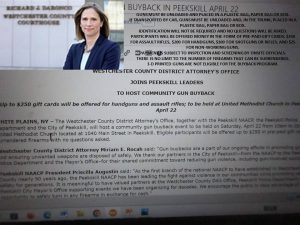
GUN BUYBACK IN PEEKSKILL NEXT SATURDAY. WESTCHESTER NEEDS MORE OF HIGHLY EFFECT COMMUNITY EFFORTS. ONLY THE SECOND IN 9 YEARS

GOVERNOR OUT MANEUVERS AMBITIOUS OPPOSITION IN THE NY SENATE
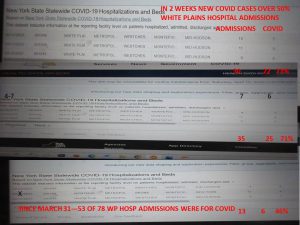
COVID ADMISSIONS AVERAGE OVER 50% OF WHITE PLAINS HOSPITAL MEDICAL CENTER ADMISSIONS FIRST 2 WEEKS OF APRIL
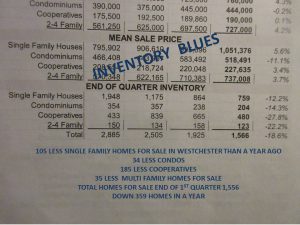
INVENTORY BLUES, HOUSING SALES IN COUNTY STAGNATES. PRICES RISE MORGAGES OUT OF REACH FOR THE YOUNG AND THE RESTLESS.
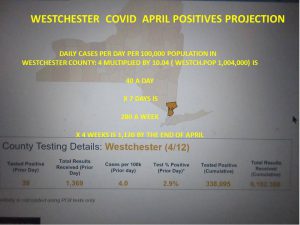
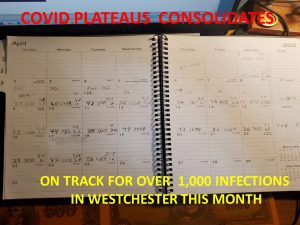
BACK TO OVER 1,000 CASES A MONTH. COUNTS UNDERCOUNT REAL GROWTH OF NEW COVID CASES

JOHN BAILEY AND THE NEWS TONIGHT EVERY WEEK
ON WHITE PLAINS WEEK FOR 22 YEARS
FIRST SHOW FEBRUARY 1, 2001
Hits: 393
WESTCHESTER COUNTY DISTRICT ATTORNEY’S OFFICE
JOINS PEEKSKILL LEADERS
TO HOST COMMUNITY GUN BUYBACK
Up to $250 gift cards will be offered for handguns and assault rifles; to be held at United Methodist Church in Peekskill on April 22
WHITE PLAINS, NY – The Westchester County District Attorney’s Office, together with the Peekskill NAACP, the Peekskill Police Department and the City of Peekskill, will host a community gun buyback event to be held on Saturday, April 22 from 10am to 2pm at the United Methodist Church located at 1040 Main Street in Peekskill. Eligible participants will be offered up to $250 in pre-paid gift cards for surrendered firearms with no questions asked.
Westchester County District Attorney Miriam E. Rocah said: “Gun buybacks are a part of our ongoing efforts in promoting gun safety and ensuring unwanted weapons are disposed of safely. We thank our partners in the City of Peekskill—from the NAACP to the Peekskill Police Department and the Mayor’s Office–for their shared commitment toward reducing gun violence, including gun-involved suicides.”
Peekskill NAACP President Priscilla Augustin said: “As the first branch of the national NAACP to have established in Westchester County nearly 90 years ago, the Peekskill NAACP has been leading the fight against violence in our communities while promoting peace and safety for generations. It is meaningful to have valued partners at the Westchester County DA’s Office, Peekskill Police Department and the Peekskill City Mayor’s Office supporting events we have been organizing for decades. We encourage the public to take advantage of this opportunity to safely turn in any firearms in exchange for cash.”
Peekskill Police Department Chief Leo Dylewski said: “The Peekskill Police Department is proud to partner with the District Attorney’s Office, the Peekskill NAACP and the Mayor’s Office for this community gun buyback event, which is an opportunity for the public to help us potentially prevent the next possible gun-related incident, as well as keep guns out of the wrong hands. It’s also a chance to get rid of old firearms lying around the home as a good measure of safety.”
Peekskill Mayor Vivian McKenzie said: “Community gun buyback programs help get guns off the streets and out of our communities. I thank the DA’s Office, the Peekskill NAACP and our Police Department for hosting this event with the City of Peekskill, and supporting our fight against gun violence so we can ensure our residents feel safe and secure in our neighborhoods.”
Guns must be unloaded and placed in a plastic bag, paper bag or box.
If transported by car, guns must be unloaded and, in the trunk, placed in a plastic bag, paper bag or box.
Identification will not be required and no questions will be asked.
Participants will be offered money in the form of pre-paid gift cards: $250 for assault rifles, $200 for handguns, $100 for shotguns or rifles, and $25 for non-working guns.
Payment is subject to inspection and screening by onsite officials.
There is no limit to the number of firearms that can be surrendered.
3-D printed guns are not eligible for the buyback program.
Licensed gun dealers and active or retired members of law enforcement are not eligible to participate.
For more information, visit bit.ly/peekskillgbb
Hits: 389
WPCNR REALTY REALITY. From the Hudson Gateway Assocation of Realtors. (Edited, Observation and analysis by John F. Bailey) APRIL 12, 2023:
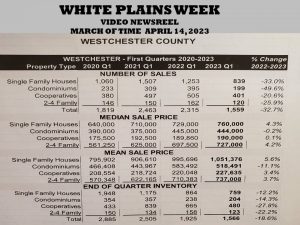
The 1st Quarter real estate market shows a market that continues to struggle due to high interest rates and low inventory with prices od single family homes and multi-family homes rising and condos and coops even.
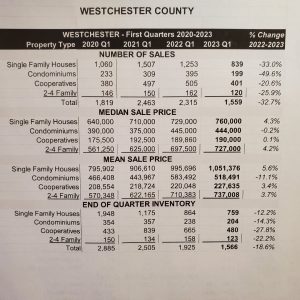
Westchester County total residential sales were down 32.7%. Putnam County saw a decrease of 31.7%, Orange County’s sales dropped 35.1% and Sullivan County’s sales were down 31.6%. Rockland sales had the largest drop, 38%.Bronx County saw the smallest decrease in residential sales, at 24.8%.
Westchester Single-family median price (half sales above, half below quoted price)sales rose 4.3% to $760,000.
Rockland County median price rose 4.2% to $625,000.
Orange County median was up 5.2% to $394,000.
Putnam County saw a 5.3% decrease in median price to $450,000.
Sullivan County saw a 5% decrease to $254,500.
Bronx County saw a 2.5% decrease in median to $585,000
The average price of a single family home in Westchester was $1,051,376 (inflated by homes bought for more than than $1 million).
The median prices for Condominiums sold in Westchester January through March was $444,000 down 11%
Cooperatives selling price median was $190,000 even with last year and 2-4 Family the lowest number of properties available had a median selling price of $727,000, up 4.2%
Westchester County saw an increase in the time it takes to sell a home in this market today in all categories except for condominiums, which had a marginal decrease of 0.7%. The numbers of homes for sale have dwindled.
There were 105 less single family homes for sale than a year ago; 34 less condos;185 fewer Cooperatives; 35 less 2-4 families for sale (in the entire county of Westchester). The total for sale 1,556 at the time of the HGAR report.
Available inventory continues to fluctuate, with inventory being down in all markets except for Orange (+11.3%) and Bronx (2.9%) counties, compared to availability at the end of Q1 2022.
When it comes to average days on the market (DOM) there were a few bright spots in several counties, especially for 2-4 family multi-family properties. Sullivan County saw the largest decrease in DOM for this property class, with a 41.6% drop. Rockland County saw a 31.4% decrease and Putnam County saw a 26% decrease in the same property category. Bronx County and Orange County saw an increase in DOM for all property classes this quarter, an
However, most of the HGAR market area saw already low inventory levels continue to decline as compared to a year earlier, with Putnam County’s inventory falling 34.9%, followed by declines in Westchester (-18.6%), Rockland (-12.0%) and Sullivan (-6.5%).
HGAR member firms are saying that buying demand remains high. However, buyer confidence has been shaken by the recent banking crisis, high interest rates, inflation and predictions by some economists of an impending downturn or recession later this year.
There has been some good news lately as mortgage rates have declined recently and many predict the Federal
Reserve may be nearing the end on its policy of raising rates to battle inflation. NAR Chief Economist Lawrence Yun recently said,
“Though week-to-week rate changes can move up and down, the longer-term prospect on rates is for further improvement, with a clear possibility of going under 6% by the year’s end. This is because, with so much apartment construction, the new empty units steadily hitting the market will limit rent growth and calm overall consumer price inflation.
The Federal Reserve can therefore stop tightening. With lower rates, more homebuyers will steadily appear. That is why it is critical to ensure more housing supply to help meet the recovering demand.”