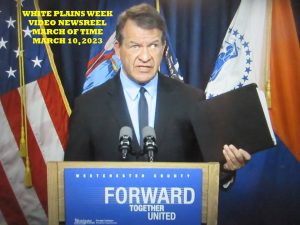
ALL IN: WESTCHESTER TO THE RESCUE: COUNTY EXECUTIVE STATES WESTCHESTER WILL HELP RESETTLE NYC IMMIGRANTS

Hits: 265

George Latimer. Westchester County Executive On the Record. WPCNR Media Library Photo by WPCNR

WPCNR THE LETTER TICKER. MAY 12, 2023 Opinion  From the Westchester County Executive George Latimer.

The lack of a coherent federal strategy to deal with immigration into the United States forced the issue to the front doorstep of those states and towns that span our southern land border. This is not unprecedented in our national history: the ports of New York City, Boston and San Francisco faced the same influx of poor, oppressed people seeking a better life in America over an extended span of time more than 100 years ago.

Then, as now, a significant portion of the existing American population wanted nothing to do with the newcomers. The immigrants looked different. They spoke a different language. They may have worshiped a different religion. Those already here made no connection to their own family immigration stories and treated the newcomers as aliens, strangers and dangerous to their way of life.

“They are not us.”

“We owe them no entry.”

“If they are suffering poverty or persecution in their land, we cannot be expected to take them all in.”

That mantra has become once again the firm policy of one of our political parties, and no coherent strategy can be constructed with such opposition.

A rational strategy is essential

In the book of Matthew, given that sacred scripture is often quoted to support other political policies, the disciple who writes is clear: when you offer food and drink, shelter and compassion to the stranger, you have done so to the Almighty. Eternal reward or punishment is meted out depending on your response.

A rational direction of immigration can make America stronger, not weaker.

How Westchester will respond

I am the chief elected official of a suburban county of one million people directly north of New York City. As the city exceeds its capacity to handle the flood of people in need, they have turned to their neighbors for help. Political philosophy applies — and some neighboring counties want no part of the problem and fight any shared assistance vigorously.

My administration in Westchester County sees this in pragmatic terms. The people who are migrants are in dire need. Our city neighbor is trying to address that need. They, too, need help. Realistically, we have limited resources and can help to a limited degree. If we can manage some numbers, with proper services and controls in place, we, too, can help. We do not have the resources to take on overwhelming numbers — if other places, everywhere each do a modest share, we can make this influx manageable.

There are some of our residents and not just a few, who will bitterly oppose any such rational response, however well managed and limited that may be. And there are as well many other residents who support compassion and rational responses to this.

I don’t doubt we’ll see at the next Election Day how we are judged.

And I don’t doubt that when the political careers are over, and when our time on this planet is over, we will be judged again.

All of us. Every single one of us. Judged for how we treated our neighbor.

George Latimer is Westchester County Executive.

Posted in Uncategorized

ALBANY’S $5 BILLION DOLLAR BUNGLE TONIGHT AT 7 EDT ON www.wpcommunitymedia.org or FIOS CH 45 COUNTYWIDE, WHITE PLAINS OPTIMUM CH 76

Hits: 339

THE PRESIDENT COMES TO VALHALLA 

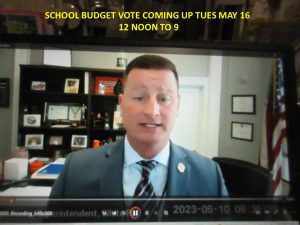
SUPERINTENDENT OF SCHOOLS ON THE 2023-24 $256.6 MILLION BUDGET

COVID DATA DISAPPEARING AS PANDEMIC EMERGENCY ENDS

BUDGET BLUES FROM ALBANY AND WE PAY THE PRICE. CSEA CONTRACT SIGNED

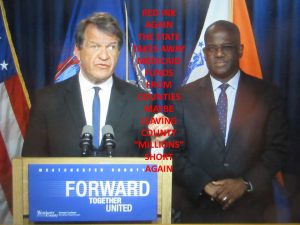
COUNTY EXEC CONFIRMS ALBANY TAKES AWAY $30 MILLION IN MEDICAID FUNDS. GEORGE LATIMER EXPLAINS THE ALBANY SURPRISE..BUT BUT BUT THAT’S THE TIP OF THE RED ICEBERG.

PROFESSOR STEPHEN ROLANDI, ALBANY BUDGET OBSERVER REVEALS SHOCKING STATE DEFICIT NEXT THREE YEARS: $5 BILLION  SHORT!

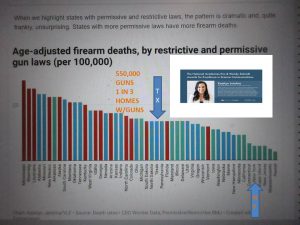
THE  GUNDEMIC: GUN DEATHS GROW AS PERMISSIVE GUN LAWS TAKE AFFECT

STEPINAC CELEBRATES 75TH ANNIVERSARY. BICYCLE SUNDAYS BACK 

WE’RE RIDIN ON THE RAILROAD AGAIN 200,000 A DAY ON METRO NORTH AND LIRR

\

JOHN BAILEY AND THE NEWS

THIS WEEK EVERY WEEK 

ON WHITE PLAINS WEEK SINCE 2001 A.D.

Posted in Uncategorized

TONIGHT AT 8 ON WPTV’S “PEOPLE TO BE HEARD” THE WHITE PLAINS 2023-24 SCHOOL BUDGET VOTE COMING UP COUNTYWIDE FIOS CH 45 AND OPTIMUM WHITE PLAINS CH.76 & www.wpcommunitymedia.org

Hits: 292

JOHN BAILEY INTERVIEWS DR. JOSEPH RICCA SUPERINTENDENT OF SCHOOLS ON THE SCHOOL BUDGET VOTE MAY 16 — THE FUTURE OF THE BUDGET GOING FORWARD, THE TAX SAVINGS, SCHOOL AID, IMPACT ON YOU AND WHY YOU SHOULD VOTE FOR THE BUDGET.

ASSISTANT SUPERINTENDENT FOR BUSINESS, ANN VACCARO-TEICH ON THE NUMBERS

Posted in Uncategorized

BACK TO THE OFFICE AGAIN! WE’VE BEEN RIDING ON THE RAILROAD ALL THE LIVE LONG DAY MTA ANNOUNCES BEST RIDERSHIP SINCE MARCH 2020 DASHING DANS AND DINAHS ARE COMING BACK TO THE OFFICE.

Hits: 544

GOVERNOR HOCHUL ANNOUNCED MTA COMMUTER RAILROADS SET POST-PANDEMIC RIDERSHIP RECORDS ON SAME DAY

 LIRR and Metro-North Both Carried More Than 200,000 Riders on Tuesday, May 9 

LIRR Carried Over 200,000 Riders in a Single Day 27 Times Since Opening of Grand Central Madison (pictured above)

Metro-North Surpasses 200,000 Riders in a Single Day for First Time Since March 6, 2020 

Governor Kathy Hochul announced Wednesday, the Long Island Rail Road and Metro-North Railroad set post-pandemic ridership records on Tuesday, May 9. LIRR carried approximately 221,290 riders on Tuesday, marking the 27th time the railroad has eclipsed 200,000 riders in a single day since the opening of Grand Central Madison. Metro-North hit the 200,000-rider mark for the first time since March 6, 2020, carrying approximately 205,069 riders on Tuesday, smashing the previous record of 195,086 on April 19.


“We have continued to make historic investments in our commuter rail services and the MTA – the life-blood of New York City,” Governor Hochul said. “From opening Grand Central Madison to securing more than $1 billion in sustained funding for the MTA, I am committed to expanding service and bringing riders back to the nation’s largest transit system.”


The LIRR records follow a 41 percent service increase in February 2023 that accompanied the opening of Grand Central Madison. Prior to the full opening of Grand Central Madison on February 27, the LIRR had exceeded 200,000 riders in a single day only twice since the beginning of 2023. 


The Metro-North record follows a strong month of April, in which Metro-North set post-pandemic ridership records on consecutive days on April 18 and 19. The railroad also had a record-high level for Monday ridership, carrying 180,789 riders the day before yesterday, nearly 7,000 more than the previous best Monday on April 24. 


MTA Chair and CEO Janno Lieber said, “The ridership records keep coming, and they validate everything the MTA has been doing to make the commuter rails an attractive option—more frequent service, fare discounts, and with Grand Central Madison, an incredible new facility and a shorter commute.” 


Metro-North Railroad President and LIRR Interim President Catherine Rinaldi said, “While discretionary travel has been an important part of the railroads’ recovery, it’s clear that in-office work is returning, and we are thrilled to see both railroads shattering their previous weekday post-COVID ridership records. With the opening of Grand Central Madison, the expansion of CityTicket, and the recent introduction of the Combo Ticket, it is clear that the railroads are simply the best and most convenient way to move around the region.”   


The ridership records on both railroads come on the heels of their best month since 2020. Preliminary ridership statistics indicate that in April, both the LIRR and Metro-North carried a combined 9.46 million riders and posted their highest average weekday ridership since the pandemic began. 


On an average weekday in April, the LIRR carried 200,915 customers. Grand Central Madison has already passed major iconic facilities like Boston South Station and Chicago Union Station in the rankings of busiest commuter railroad facilities. On April 24, the LIRR reinstated full-time, year-round service at Mets-Willets Point station to encourage riders to take mass transit to Citi Field events and provide Queens residents with an alternative travel option.


Metro-North carried 180,174 riders on an average weekday in April. On April 18, Metro-North reached a pandemic-era ridership record with 194,549 customers. The record was broken a day later, on April 19, when Metro-North carried 195,086 riders. The consecutive ridership records culminated in the railroad reaching its three-day ridership high since the pandemic of 193,111. 

Posted in Uncategorized

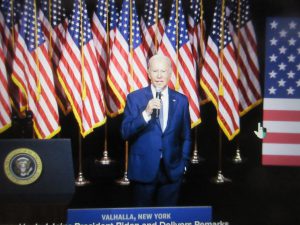
President Biden Comes to Valhalla. Governor Hochul, Representatives Jamaal Bowman, Mike Lawler, Senator Kirsten Gillibrand, join him. Biden says Republican stance on Debt Ceiling Must Changed to avoid crisis of confidence in USA “Devastating,” he says.

Hits: 5

President Biden speaking at Westchester Community College Wednesday morning.

Governor Kathy Hochul, flanked by Senator Kirsten Gillibrand and U.S. Representative Jamaal Bowman

President Joe Biden in his 15-minute address to educators and local Westchester politcians took Republicans to task for putting the U.S.at risk of defaulting on its world debt for refusing to raise the debt ceiling unless the President agreed to spending cuts. He said Republican efforts to cut spending would hurt education and veterans. He assured Americans that inflation was coming down, pointing to 12.7 million jobs added was a sign of economic turnaround. He said no negotiations could start until the debt ceiling was raised.The President also took the occasion to advocate for junior college educations, and said how much he admired educators.

“It’s important for the American people to know what’s at stake. This isn’t just a theoretical debate going on in Washington. The decisions we make are going to have real impact on real people’s lives,” Biden said.

“They’re literally, not figuratively, holding the economy hostage,”

Governor Kathy Hochul in the text of her speech reinforced the President’s message:

“I am so delighted to be here once again with some extraordinary individuals, my partners in government. And you’ll be hearing from someone that we’re so proud is the President of the United States, and that is President Joe Biden  Our Senator, Kirsten Gillibrand has joined us. Congressman Jamaal Bowman has joined us as well.


We are also so fortunate to have the Majority Leader of the New York State Senate, Andrea Stewart-Cousins. I believe that we also have Congressman Mike Lawler in the house. County Executive George Latimer is here. The Mayor of White Plains, Tom Roach is here. Mayor of Mount Vernon, Shawyn Patterson-Howard is here. Brian Sullivan, teacher at Highlands Middle School  (White Plains) is here. (Editor’s Note: Mr. Sullivan addressed the gathering, introducing the President .) I want to thank Dr. Belinda Miles for hosting us here today. Thank you.

We also know that the Majority Leader of the United States Senate, Chuck Schumer is working right now – working right now with the future Speaker of the House Representatives, so that would be our very own, from Brooklyn as well, Hakeem Jeffries. 

They’re both working together, working with our President – working being the operative word here. You get elected, you work together to do the job. And having to encounter a lot of opposition – from guess who? Republicans don’t want us to work together. They don’t want us to do what we’re required to do, and that’s called paying your bills.

I’m sure a lot of you would like the chance to like, run up some debt, pay for things you need. You’ve got to pay for your house, you’ve got to pay for your electric bill, you’ve got to pay for the diapers, and tuition, all these other things.

And if you could walk away from paying your bills after just having a couple of fights, probably be interesting wouldn’t it? But we don’t do that. We’re responsible. We do what we’re supposed to do.

And so, you come to New York, New York is the beating heart of the U.S. economy. So, you mess around with the debt ceiling, you’re hurting New York. You’re hitting us hard. And not just the state in general, but let’s think about who. How about the students right here at SUNY Westchester who will have their financial assistance unavailable to them.


It’ll put us closer to a recession, cause unemployment to go up. It’ll be devastating. It also shakes the confidence of the rest of the world in the United States of America. And we don’t need that at this time. We need friends. We don’t want people to question our ability to govern.


And brinkmanship is their attempt, Republicans attempt, to just bring it right to the edge. Make everybody all anxious – affect the stock market because they don’t care. They don’t care. This is going to play out in their political games. And I’ve got a message for them, it doesn’t work.


In 2011, I was elected as a Democrat in the most Republican district in the State of New York. Clearly there were a lot more Republicans than Democrats in that district. How did I do that? I talked about issues that people cared about regardless of their party.


Because here’s the message to Republicans, when you think you have a great political strategy, I’m telling you now it’s going to backfire. There actually are Republican seniors who don’t want you to mess with Medicare and Social Security. There are Republican veterans who don’t want you to affect their benefits. There are Republican students who don’t want you to mess with their student loans. There are Republican businesspeople in particular who aren’t real excited about you playing around with this.


So the message is, you might think it’s a political strategy, I’m here to tell you it is going to backfire because the people in this nation and in this state, Democrats and Republicans, want you go and do the job you’re elected to do. And that’s exactly what President Biden wants to do.


Let’s get this done. What’s the big deal? This is what we’re supposed to do. And so, this is an attempt to focus attention, to say ‘You have to do what we want you to do.’ But it’s going to fail. It’s going to be a cataclysmic failure because the longer this plays out, the more uncertainty, the more volatility, the more anxiety – not just in the markets, not just around the world, but in people’s houses, at their kitchen table. Because they need to know that the confidence that their government is actually going to work together.


So that’s what we’re just saying. That’s what President Biden is saying. Come on. Let’s roll up our sleeves, we can get this done. It’s not complicated and there’s no reason to play these games at this time.


So here we go. My message is: Stop playing games with the American people. Stop playing games with the American economy. Stop playing games with our farmers. Stop playing games with our citizens. Stop playing games with our small businesses and just do your jobs. Thank you, President Biden for being our leader. Thank you very much.


Posted in Uncategorized

End of Public Health Emergency: A SHIFT IN DATA– WHAT TO EXPECT FROM YOUR LOCAL EPIDEMIOLOGIST

Hits: 336

This week the Public Health Emergency (PHE) for COVID-19 is ending in the U.S. This means many things, but one major shift will be the data—the dashboards and updates we’ve grown accustomed to.

Why the change? 

The public health system in the U.S. is complicated. But, essentially it’s decentralized. In other words, the federal government (i.e., CDC or HHS) is not the “center” of the public health universe. Public health is local. What “local” means depends on the state—driven by state health departments (like in Vermont) or by counties within a State (like in Texas).

On one hand, this decentralized system is a good thing. Flexibility allows health departments to focus on problems relevant to their population in their specific context. The approach to a public health problem in Texas, for example, is different from in Vermont. This also means health departments have full autonomy to decide how data is collected, what data is collected, and what is communicated.

During a national emergency, this decentralized system became a massive problem, though. It was impossible to get a national picture of what the hell was going on in a timely, comprehensive, and consistent manner: who’s at risk, how is the virus changing, and how are vaccines working?  

Slowly the PHE stepped in: mandate health departments to feed data to the CDC. This meant that COVID-19 data (eventually) traveled from county → state→ CDC→ national dashboards.

Blue dots= county health departments; red dots= state health departments; blue arrows= data flow. Figure by Katelyn Jetelina/YLE

As you can imagine, there were a lot of places where this flow broke down:

  1. CDC had to literally create and sign data use agreements (i.e. contracts) with every county- or state-level entity for certain data.
  2. The majority of health departments didn’t have the resources, manpower, infrastructure, or technical knowledge to collect or report data due to complexity. Some counties were sending case reports via fax.
  3. There was a problem with data consistency within and between states. Is El Paso collecting, measuring, and reporting the same data as Massachusetts? In short, no. 
  4. Then there were politics. Even if health departments had the data, some states didn’t report it. 

Over time, most problems were smoothed out.

But it took an incredible amount of time, resources, coordination, and manpower to get where we are today.

The PHE ending means that data flow, from county → nation, is no longer required. But this doesn’t mean that everything is disappearing:

  1. Health departments may still update locally;
  2. Some health departments are still willing to report data to CDC, even if not required;
  3. The CDC has sentinel surveillance programs— a set of locations chosen for intensive surveillance. This will allow us to see trends but not counts.

What is changing?

No change: 

  1. Wastewater and genomic surveillance, which will allow us to track variants and transmission.
  2. Emergency room data, which is one of the best early indicators of state-level transmission.

Changing a little:

  1. Hospitalization data will remain through April 2024, but frequency of reporting will change. This will help us track severe disease.
  2. Death data will remain, but the data source is changing.

Changing a lot:

  1. Test positivity rates —one of our earliest metrics of transmission—will no longer be national, state, or county-wide. Negative tests no longer have to be reported. But, some pharmacies will still report.
  2. Cases will be dropped. This makes sense given at-home antigen tests.
  3. Vaccination coverage will be spotty. The frequency of updates will also change. 

What to do on an individual level? 

The CDC transmission levels data is going away. Starting today, the CDC recommends using hospitalization data to guide behavior. If numbers go up, put on a mask.

I don’t really agree with this for several reasons. I suggest following wastewater trends either locally or regionally. (If it’s going up, put on a mask.)

What to do on a national level? 

Moving forward, the key is to prepare so this data problem doesn’t happen again during an emergency or every winter. We do that by changing how we fund, plan, and coordinate our public health system.

The CDC is giving states money to modernize their data infrastructure (move away from faxes, for example). This may sound simple, but it is incredibly complex, technical, and expensive. Unfortunately, there are already a few bumps:

  1. Funding is going to the states, leaving some local health departments with no money to modernize.
  2. Little to no coordination. Even if states or local health departments are modernizing, they are doing so using their own priorities and with no guidance.

Bottom line

On Thursday there will be a shift in data. We won’t be flying blind but it’s not the best we can do. We need to figure out how to sustain our top notch work when we are not in an emergency.

Love, YLE


“Your Local Epidemiologist (YLE)” is written by Dr. Katelyn Jetelina, MPH Ph.D.—an epidemiologist, data scientist, wife. During the day she works at a nonpartisan health policy think tank and is a senior scientific consultant to a number of organizations, including the CDC. At night she writes this newsletter. Her main goal is to “translate” the ever-evolving public health science so that people will be well-equipped to make evidence-based decisions. This newsletter is free thanks to the generous support of fellow YLE community members. To support this effort, subscribe below.

Posted in Uncategorized

COUNTY EXECUTIVE GEORGE LATIMER’S COMPLETE WEEKLY UPDATE OF MONDAY AVAILABLE 24/7 RIGHT HERE AT WPCNR.COM

Hits: 260

WPCNR is pleased to introduce  the first prime time rebroadcast of the Westchester County Executive George Latimer’s Weekly Update. it debuted on WPCNR  MONDAY 8 PM last night.  He gives insights into the recovered funds New York State has given back to the taxpayers and delivers the status of the New York State budget. Click on the video “arrow” to see the complete telecast, including press questions. The Weekly Update will  be rebroadcast every week at 8 PM on WPCNR.COM as a public service and will remain all week! BULLETIN announcements at once!  You always know you can see the comprehensive, always eye-opening WESTCHESTER WEEKLY UPDATE on WPCNR.COM “Where the news that matters is–ALWAYS”

https://www.youtube.com/watch?v=LjFHtWDApV0

Posted in Uncategorized

66 YEARS AGO IN 1957, FATE STALKED HERB SCORE AS IT STALKS ALL OF US. HE SHOWED US HOW TO DEAL WITH IT.

Hits: 204

Hits: 16

 herb motion

herb in motion

WPCNR VIEW FROM THE UPPER DECK. By “Bull Allen” May 7, 2018:

It was a sultry night in Cleveland’s Municipal Stadium 1957 with baseball’s hottest pitching talent scheduled to pitch against the New York Yankees. I will never forget this night.

I was listening to the game on WINS which carried the Yankees that year and Herb Score was on the mound for the Tribe.

He was smoke. As a rookie he went 16-10 in 1955 as a rookie southpaw, fanning 245 batters in 227 innings pitched, a strikeout an inning,  and 20-9 in 1956, striking out 263 in 249 innings. His fastball was overpowering, curve devastating, changeup you were never ready for.  He was first pitcher in major league history to average a strikeout an inning. His 245 strikeouts as a rookie was broken by Dwight Gooden of the Mets.

Score’s pitching motion was electric, compact and swift, landing on both feet ready to field.

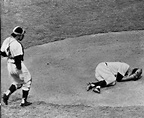
As an 12 year old I was tuned in as the baseball season had just been 3 weeks old. I like to think it was Mel Allen at the mike. Score got the first Yankee hitter, then Gil McDougald stepped to the plate. McDougald lined a pitch right back at Score that hit him in the face, squarely in the eye.

herb score


McDougald said he heard the thud of the ball he had hit as it struck Score in the face, saw the blood streaming out. McDougald started to go to the mound, shattered by what his hit had done. 

Score was 24 at the time with a great future in baseball. But in an instant, his career was shattered.  He took the mound again in 1958, but was not nearly as effective. Never winning more than 9 games in one year.  ,

The reason Score said was  that he tore a tendon in his arm while pitching on a damp night against the Washington Senators and sat out the rest of the season.

In 1959, he had shifted his pitching motion in a bid to avoid another, similar injury. “The reason my motion changed”, Score told the author of The Curse of Rocky  Colavito, “was because I hurt my elbow, and I overcompensated for it and ended up with some bad habits.”

herb score playbyplay

He stayed with the game he loved though, returning as play-by-play man for the Tribe (Cleveland Indians).

In 1964 he became a broadcaster for the Indians where he stayed behind the mike to 1998. His last broadcast was the 7th game of the 1997 World Series, the only Series the Indians had been in since 1954.

Score died in 2008. He is remembered as a reminder of how fate deals you a bad break, and Mr. Score showed fans how to accept one’s fate with grace and perseverance.

Score was a beloved figure in Cleveland, voted a member of the Cleveland Indians Hall of Fame.  

Posted in Uncategorized