Hits: 417
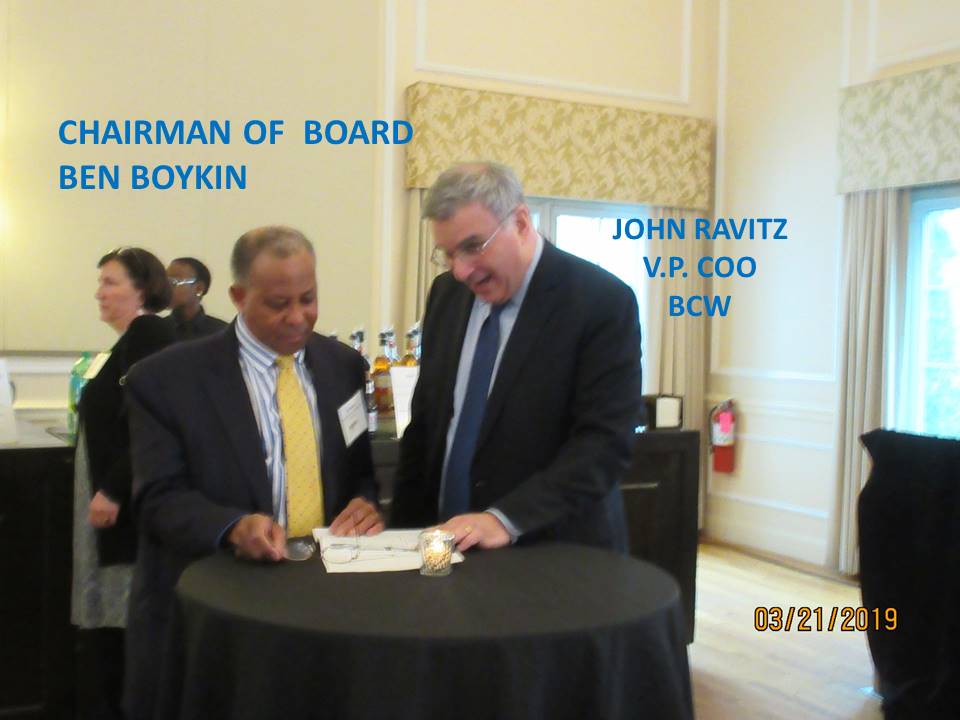
WPCNR THE LETTER TICKER. Oped from Marsha Gordon and John Ravitz, Westchester Coalition for Smart Development and the Business Council of Westchester. March 26, 2019:
With the
shock of Amazon’s decision to abandon its plan for opening a second
headquarters in New York still fresh, New York State now is facing another
decision with the potential to be even more damaging to the State’s
increasingly fragile economy. It’s called Prevailing Wage legislation and it is
a construction project killer.
Both the
Assembly and the Senate have included Prevailing Wage language in the new State
Budget scheduled for adoption by April 1. If passed, this legislation, that is
strongly backed by the construction labor unions, would require that any
development project receiving state funding assistance would be required to the
pay prevailing wages for all construction labor. The requirement, which would
apply to private development projects as well as projects built by not-for-profits
including hospitals and colleges, would increase labor costs by 30 percent or
more.
What would
this mean? However well-intentioned, instead of helping construction workers, it’s
a job killer. In simplest terms, any project receiving financial assistance
would pay union wages for all work. While laudable on the surface, the
consequences are far-reaching and would bring a large percentage of the major
construction projects planned in communities across the state to a standstill.
The most severe impact would be on urban downtowns such as in Yonkers, New
Rochelle and White Plains that are on the cusp of unprecedented revivals after
decades of little or no new investment.
Why? Without
state subsidies, the vast majority of projects being planned in urban downtown
locations will simply not be built. State and municipal subsidies provide the financial
cushion to make these costly construction projects financially viable. The vast
majority of the affected projects are residential, meaning much needed new housing
at all levels, including affordable housing built by non-profit groups, could
not move forward.
The
significantly increased labor costs resulting from the proposed legislation
would be particularly harmful in Westchester where residential rents are considerably
lower than in New York City.
In
Westchester, more than 30 prominent development company leaders have joined
with the Business Council in forming the
Westchester Coalition for Smart Development to present the facts about the
unintended consequences of the proposed legislation. We have met with the
entire Westchester legislative delegation, as well as other leaders in Albany to
promote an open public dialogue before passage of this far-reaching
legislation. We have also joined with the Business Council of New York State in
this effort.
We need look
no farther than Yonkers to see the consequences of requiring Prevailing Wages.
For 18 months the City’s Industrial Development Agency (IDA) imposed the
requirement for any project it funded. What happened? The additional labor
expense was far greater than the IDA
benefits would have been. The net result? Not a single major proposal
came before the IDA during that period.
We have no
opposition to union labor. In fact, most major projects employ some union
labor. But requiring all construction projects receiving public financing of
any kind to pay union wages will effectively assure that most of the projects
won’t move forward. That is certainly not an outcome that anyone wants.
We strongly
urge that the Prevailing Wage legislation proposals be put on hold until a
thorough and thoughtful discussion of all consequences takes place. New York State
cannot afford to do otherwise.
Marsha Gordon, President & CEO
John Ravitz, Executive Vice President & COO
The Business Council of Westchester