
ONLINE HARASSMENT RATES TWICE AS HIGH AMONG DATING-APP USE, Information Removal Service Finds

Hits: 1238

WPCNR INTERNET WATCH. From Incogni Research. February 12, 2024:
In an era where online interactions increasingly shape our social lives, the occurrence of online harassment poses a significant threat to the safety and well-being of individuals, particularly those engaging in online dating.
Incogni’s researchers have found that almost a fifth of Americans (19%) have experienced online harassment, while people currently dating online experienced it almost twice as often (36%).
A significant portion of Americans (37%) claim to know what of their personal data is available online, with a majority also recognizing the link between exposed data and the potential for online harassment.
The consequences of online harassment extend far beyond the digital realm, affecting the mental and emotional health of victims.
Anxiety, depression, and a sense of vulnerability are just some of the devastating consequences experienced by those subjected to online abuse. Moreover, extreme forms of harassment, such as swatting, can escalate situations to life-threatening levels, highlighting the critical nature of this issue.
Incogni, data privacy company, conducted a survey to determine Americans’ experiences with online harassment and their usage of dating apps. The researchers analyzed the data collection and sharing practices of some of the most well-known dating apps currently available.
It was found that among the 19% of respondents who had experienced at least one form of cyber abuse, cyberbullying, hate speech, and trolling were the most common manifestations.
Women were disproportionately affected by sexual harassment, online impersonation, and cyberstalking. 
A significant number of Americans (37%) are aware of the availability of their personal data online, with a majority understanding the connection between data exposure and the occurrence of online abuse or harassment.
Among Americans who use dating apps, 36% have reported experiencing online abuse, with cyberbullying and hate speech being the most prevalent forms of harassment. This number is almost twice as high compared to the general population.
Researchers then focused on popular dating apps, including Facebook, Bumble, Hinge, Plenty of Fish, and Coffee Meets Bagel. Some concerning data-collection practices and security incidents were revealed. These platforms collect sensitive information such as sexual orientation, information on race and ethnicity, and political beliefs, and many have also experienced data breaches, leading to the unauthorized exposure of user data, including photos. 
It’s important to consider factors such as the data collection and sharing practices of such apps, as apps that collect large amounts of user data may inadvertently heighten the risk of security breaches and, in turn, incidents of harassment. Dating apps require users to disclose personal information, ranging from basic demographics to more intimate details such as sexual orientation and preferences. While certain information may be essential for the functionality of these platforms, users should exercise discretion when sharing optional data and interacting with unknown individuals while using these apps.
“Incogni calls upon dating-app developers to prioritize user security and privacy by introducing effective data-protection measures and contributing to a culture of accountability. Additionally, we urge users to remain cautious, stay informed of the risks associated with online interactions or when sharing personal information and report instances of harassment. Together, we can work towards creating safer and more inclusive digital environments where individuals can connect and build meaningful relationships without fear of harassment or violence,” – underlines Darius Belejevas, Head of Incogni.
The survey was conducted using the Cint platform. The research team surveyed a nationally representative sample of 1,008 adults residing in the United States. The quotas on age, gender, and place of residence are based on US demographic data. The most well-known dating apps were recognized based on a ranking by Forbes. The research team then collected information about these apps from the Google Play Store, noting what user information the selected apps collected and shared and for what purposes. 
 
The full text of the study and images are available here: study
The data used in this study is available here: public dataset.
 
Posted in Uncategorized

The Rolandi Forecast on the Suozzi-Pilip Race Special Election to Replace George Santos.

Hits: 228

WPCNR CAMPAIGN 2024: By Professor Stephen S. Rolandi. February 12, 2024:

The special election to choose the candidate who will complete the balance of disgraced former Representative George Santos’ term will be held on Tuesday, February 13, 2024. This election pits former Nassau County Executive/U.S. Representative Tom Suozzi (D) against first time Congressional candidate Mazi Pilip, a Democrat running on the Republican-Conservative lines.

Over $ 20 million has been spent by both candidates in a race with national implications. Suozzi has run the better race, aided by key endorsements. Pilip will no doubt be helped by the border security/immigration issue, while Suozzi will be helped by voters favoring reproductive freedom/pro-choice. 

Pilip did not campaign this weekend, a strategic error in my view.

In a low turnout that will likely see a major winter storm on Election Day, my call is: SUOZZI 51%, PILIP 49%

Do not be surprised to see both candidates square off again in the fall for the regular two-year term commencing January 2025.


Posted in Uncategorized

BASEBALL’S BACK! HOT STOVE LEAGUE FROM AL LANG FIELD, ST. PETERSBURG FLORIDA with LINDSEY NELSON AND WPTV’S “BULL” ALLEN

Hits: 234

“BULL” ALLEN, FAR LEFT, (with JohnVorperian).MR. ALLEN,  WPTV’S VOICE OF BASEBALL PAST AND LINDSEY NELSON, VOICE OF THE ORIGINAL NEW YORK METS ON OPENING OF SPRING TRAINING THIS WEEK AND 2024 PROSPECTS OF THE NEW YORK NINES FROM THE UPPER DECK AT AL LANG FIELD, IN ST. PETERSBURG FLORIDA

WPCNR VIEW FROM THE UPPER DECK with BULL ALLEN & LINDSEY from SUNNY FLORIDA. FEBRUARY 11, 2024:

Hello everybody, this is Lindsey Nelson along with The Great “Bull”Allen from Al Lang Field in St. Petersburg Florida and it is a pleasure to have the Voice of Baseball’s Past of WPTV with me to look at the New York Yankees and the New York Mets of  2024.”

“It is great to be talking baseball with you again, Lindsey in Al Lang Field home to the Yankees and the Mets Spring Trainings 84 years ago. I brought the Yankees back to baseball hungry fans in New York and  you introducing the first New York Mets to the New York fans for the first time.”

“This old park brings that  magical first year back to me,Bull. Fans were starved for National League ball and our first telecasts back to the New York  from Old Al Lang Field just got them so excited the National League was coming back to of all places the Polo Grounds. You know, Bull, spring training games as you mentioned in last week’s column, are great. Hopes are high. Even if you lose games they do not count. And we in the booth, Ralph Kiner, Bob Murphy knew our new Metropolitans might be bad, but not as bad as they were.”

“I had the same experience with the Yankees in 1964 and 1965, Lindsey. We were used to being the best in baseball, even though the Dodgers beat us in the 1963 World Series. The team thought it would bounce back in 1964  when Yogi managed the Yankees, his first management job. The papers were all over him during  the season, saying he lost control of the club and the team was not playing up to par. When  Yogi chewed out Phil Linz for playing the harmonica on the team bus, on the way back to the airport after a doubleheader loss in Comisky Park,  it sort of ignited the team.”

“Bull it’s great up here in the stands again reminiscing and thinking about the new season, but after watching the Mets last season, I can’t help but compare that disappointment of Buck Showalter and the team picked to win in 2023 finishing well behind having a dismal July and August and never getting a run going, to the Yankee season of 1965 when the old bats did not hit. The pitching declined and with a new manager Johnny Keane,  again failing. Showalter being dismissed. What did you think of how the Mets are looking  at this point? Did Showalter suffer first season lack of rapport with the players?”

“Well Lindsey, I am shocked the Mets did not go after some of the hot free agents that were available, and at this point, they are bringing in a new manager who has never managed in the big leagues, but who did coach for the Yankees. He appeared very likable and press friendly during his introduction, but talked little specifics about what needs to be done  when he was introduced by the President of Baseball Operations, David Stern.

Reporters went easy on him. When two women reporters,  asked him specific questions as to what needed to be changed that he and Stern were working on that. Asked what the weaknesses were he said he was still evaluating with Stern.”

“Bull, what did you see about the Mets big disappointment last season?”

“Lindsey, they reminded me a lot of the way the New York Mets lost so many games. The bullpen failed they only had 34 saves last season. Leads were lost due to fielding lapses at the worst possible time. 


Scherzer and Verlander had major problems adjusting to the new pitch clock, because they were deliberate pitchets. Scherzer developed  arm trouble.  I believe because they were deliberate pitchers in the pre pitch clock and pre 9 seconds to hit days, they could do their psychological game with the hitters.  They lost that edge with the  pitch clock.

The entire staff had terrible control, they issued 595 walks in 1,461 innings pitched, the staff walk frequency was 25th among the 31 teams in baseball, a walk ratio of almost  3 walks per inning. What does this tell me? When they went to the bullpen to hold the lead after the starter left, they most liked walked their way into situations that coughed up leads.  Those two starters Sherzer and Verlander are no longer there. The Mets needed and are apparently hoping for holdovers to step it up and a resign of a Yankee pitcher who had a bad arm last year.

Sterns was responsible for rebuilding the Houston Astros and Milwaukee Brewers mainly through trades. So he may be seeing how the hitters rebound.

Pitching.  The Mets have no bullpen The most saves was 14 held by two pitchers Adam Ottavino and David  Robertson, but Robertson is gone.   Who is going to save? You cannot have one closer guy. They need to develop two.

The Mets hitters  hit 215 homeruns, tenth of 31 teams, but only scored 717 runs, 20th in the big leagues, and 20th in on-base percentage.

Fielding is something else, don’t you think, Lindsey?”

“Bull, when I did the New York Mets first season back in 1962, they became baseball’s story because of the way they let games get away. Bad fielding, especially in the late innings cost them games. The New York Mets of 2023, expected to reach the World Series, their collapse in July attracted just as much attention to their collapse as the original New York Mets attracted under an aging Casey Stengel as manager in 1962.

In an uncanny way, the Mets of 2023 did not throw to cut-off men, costing important runs. The baserunning was not only slow but notoriously unaware of the number of outs. The fundamentals broke down. When the New York Mets entered the second half, the big hitters failed in the clutch. They did not move the runners. Like the New York Mets of 1962, they appalled the fans with the way they let games slip away. “

“Lindsey Nelson the voice of the New York Mets, I have to agree. I never saw a team that should have been so good, contending to the end, go wrong so soon in the season. Was it chemistry?”

“Bull, I think that it had a lot to do with the manager. In 1962, the Mets were managed by Casey Stengel who was hired for public relations. He charmed the press and made the Mets lovable and it became a status symbol to bring posters to the games saying, “We love the Mets,” and “Marvelous Marv,” I could not believe how losing became an attraction. But, Casey was known to fall asleep in the dugout.

Brooklyn Dodger fans bereft of their Dodgers, loved their Bums because they came so close every year, but the old Dodgers were good for a decade until they won in 1955. It was heartbreak for those fans, that is why they loved the old Brooklyn Dodgers. And hate for the mighty Yankees uptown.”

“So you think the Mets had a manager problem with Mr. Showalter last season, Lindsey?”

“Bull Allen, you have said the Yankees had a manager problem all last season, too. But we can get to that next. Showalter is a professional manager and a good one, but he cannot build a fire under a team. He has managed good teams to good records, but he treated them like professionals, expecting them to come through.  He was not a fiery Billy Martin.  He was not a demanding manager like  Ralph Houk, who led an aging Yankee team to pennants in 1961,1962 and 1963 and managed pitching tremendously.”

“Another thing, Bull Allen, the Mets were dealing with players who may be too focused on their performances that caused little things like failing to move the runner, failing to get a runner in from third with less than 2 out.  When you make the big leagues you have to know the game is a team game everybody has to do their part. You may have a Big Bopper but he has to know when to Bop and when to put the ball in play on the ground to advance an inning or a run, or have the ability to situation-hit.  That is why your Mets, scored less runs with all those homeruns. Trying to hit it out every time leads to strikeouts, and they struck out a lot. What do you think about Aaron Boone, Bull, you have long been critical of his management.”

“Lindsay, we’ve been tearing Mets performance last season to shreds because the formula did not work. The on-field performance did not work out and the hitting did not work out and they could not make a run.

The same thing happened to the Yankees, but in my opinion, it is the inexperience of Aaron Boone in handling the bullpen, combined with the foot injury of Aaron Judge in L.A., and he never came back with the same power.  But if Boone had not worked 4 relief pitchers every game because starters could not go more than 5 innings, they might won a lot more games.”

“Bull – that is a striking observation! “

Mets and Yankees not getting the most out of their talent, their pitching, their bullpens  for two different reasons.  The Mets for expecting their team to perform and the two top pitchers strangely ineffective, perhaps due to the pitching clock, and the manager expecting professional performances from the hitters used to hitting homeruns and coming through, and a breakdown in fielding at the worst times. I also cannot remember Showalter ever turning over a buffet in the clubhouse or closing a door, (because there are no longer any natural back to back doubleheaders) but I am watching from up here in Heaven doing games in the Eternal League of all the hall-of-famers.”

“Lindsey it is a pleasure working this spring training preview with you in the catbird seat as The Old Redhead used to say, and it is time for me and you to stop tearing the Mets apart and take I look at the Yankee problems, have they solved them?”

“Bull, I could not agree with you more. Aaron Boone is duplicating the Joe
Torre school of pitching management: Leave starters in too long when they do not have it then go to  bullpen in the sixth, or even the 5th inning.

“But even when the starters are pitching well, and they reach a pitch count due to this new practice of not wearing out arms. But Boone does not seem to realize (I am sure he does) if a relief pitcher warms up every day but is not used or is used he’s pitching say  50 pitches or more in a one inning stint. If you come in the next day that is more pitches. So the third day in a row he is up to perhaps 200 throws a week the equivalent of 3 complete games. That I believe is why the Yankee bullpen was notoriously prone to saving a game one day and  blowing leads twice in a week. By pulling pitchers and running in a “bullpen consist” of the same names everyday in succession after the fifth—that the bullpen does not work consistently.”

“Mr Nelson, that is very insightful. Comparing the Yankee daily bullpen parade as a “Bullpen Consist,” a railroad term, is brilliant. Now I agree some pitchers say can warmup with 20 pitchesl If they throw 20 more in an easy inning, that’s 40 pitches If they appear three days in a row, boom that’’s 120 and that’s with a short inning. So you wonder about that. The Yankee starters were notoriously inconsistent with the exception of Derrick Cole. The best game he pitched was a 2-0 win complete game in August. I think that was the only complete game the Yankees had. Two top pitchers went out with injuries. They are expected to come back this year. Will they? But the bullpen needs two dependable closers and starters to go longer.”

“You know Bull, the question is Judge, he now has another slugger added behind him. Can Judge regain his homer production to get that Maris-Mantle “Swings of Fear”  back — like 1961?”

“It depends on pitch selection, Lindsey the hitters cannot strike out as much as last year. They have to put the ball in play, as John Sterling and Suzyn Waldan pointed out all summer long.

The new hitting coach has to work on that.

The Yankees could not score runs the second half of the season. But since the pitching and bullpen are so sketchy, something the Yankees did not fix over the winter, adding another big bopper, and no starting pitchers, relying on last year bad arms to come back is crossing your fingers.  They have to win tight games by not leaving pinstripes on the bases. Letting Kiner-Falefel go – the player who always got hits when he had to shows the Yankee tunnel vision, saying all season the hitters will hit, but noooooo they did not.”

“Lindsey Nelson, Voice of the Original New York Mets, The Yankee problem was similar. In the second half of the season they fell out of First Place and never even fought back to get into the playoffs. Their manager got mad at the press, but not at his team.

 They had the same season as the Mets.

“Bull Allen, always a pleasure talking the coming baseball season with you.  But really I wonder if the Mets with their new manager who has never managed in the major leagues, are about to experience a repeat of the Yankee hiring of Aaron Boone to replace Joe Girardi?”

“Don’t remind me. Girardi was a great manager.  The players played for him. The pitchers pitched. Boone could not rally a team  for a stretch run and the management did not acquire new hitters or pitchers to start driving in men on the base paths and getting people out without starting an inning with 2 bases on balls.”

““Bull Allen, always a pleasure talking the coming baseball season with you.  When every team and every fan has hope.”

“Yes, and God forbid they do not go to automatic pitch calling next.”

“Bull, I was trying to end this program in a positive way.”

“You’re right Lindsey Nelson, Voice of the Original Mets. It happens every spring!


Posted in Uncategorized

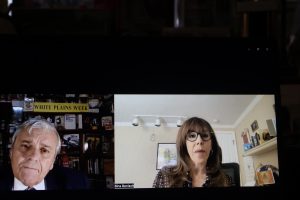
WHITE PLAINS WEEK TONIGHT 7 PM MONDAY EST THE FEB 9 REPORT ON THE ONEWHITEPLAINS OPENING HEARING ON WPTV OPTIMUM CH 76 AND FIOS A CH 45 IN WESTCHESTER AND www.wpcommunitymedia.org

Hits: 257

JOHN BAILEY AND THE NEWS

THIS WEEK EVERY WEEK ON

WHITE PLAINS WEEK FOR 23 YEARS

THE WHITE PLAINS NEWSMAN

ONEWHITEPLAINS COMPREHENSIVE PLAN HEARING WITH WITH COMPREHENSIVE ANALYSIS AND VIDEO CLIPS THAT YOU NEED TO HEAR

GEORGE LATIMER SIGNS BILL FOR $5.7 MILLION AFFORDABLE HOUSING PROJECTS–NEED MORE TO COME A LOT MORE

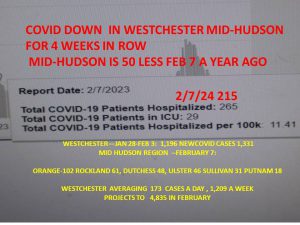
COVID DOWN BUT WITH US GOING INTO FEBRUARY SOCIALS. NATIONAL EPIDEMIOLOGIST WARMS OF EMERGENCY ROOM OVERLOAD NATIONWIDE. BAILEY IS ON IT!

STATE SENATOR SHELLEY MAYER ANNOUNCES $10 MILLION  FOR WHITE PLAINS NEW YORK USA

AND MORE


Posted in Uncategorized

EMERGENCY ROOMS ARE NOT OKAY.

Hits: 2983

View in browser

Si quiere leer la versión en español, pulse aquí.


Emergency rooms are not okay

It has now reached a crisis point. It is killing people.

We are slowly coming down from a peak in respiratory illness. This past winter was a real test. How will our hospitals—the safety net of our society—fare, given the combination of:

  1. Year 4 of a pandemic with a new threat to our repertoire,
  2. A recent surge of respiratory viruses,
  3. An aging population, and,
  4. A massive infrastructure problem decades in the making.

The answer is in—our hospitals are overwhelmed. And it has now reached a crisis point. It is killing people.

Emergency medicine doctors across the country have been sounding the alarm. Americans are noticing it too. In a recent poll, nearly half of Americans said they avoid the ER—avoid critical care they need—given the wait times.

Here’s what is happening on the front line and how to fix it.

A dangerous hospital overload problem called “boarding”

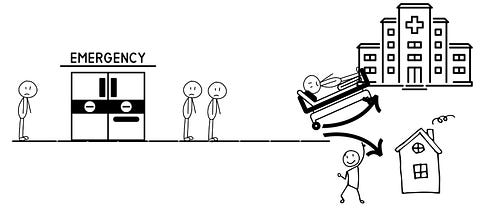
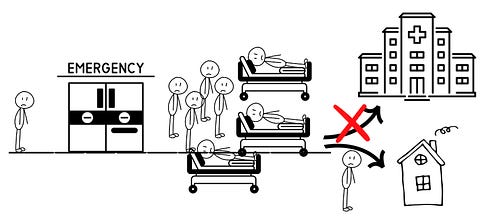
The emergency room (ER) is the front door of the hospital. Patients come and are quickly seen by a physician, who addresses medical emergencies and other needs. After evaluation and treatment, many are well enough to go home, and some require admission to the hospital. Those admitted patients are seen by the inpatient team of doctors and taken to a hospital bed upstairs.

Figure by YLE

But what if there are no open beds upstairs? Those patients wait in the ER until a bed opens. These patients are called “boarders.”

Figure by YLE

Over the last two decades, this problem has grown and grown, causing a nasty clog. We haven’t fixed it, and it’s now overwhelming ERs nationwide.

The fallout

Boarding patients are waiting hours, days, or even weeks in the ER. It creates an unsafe environment for patients:

  • Dangerous medical errors: ER boarding is associated with increased medical errorsworse patient outcomes, and higher risk of in-hospital death.
  • A recent study found that an extra hour of boarding was associated with a 16.7% increase in the odds they would require a higher level of care in the hospital (i.e., they were going to the floor, but now need the ICU.)
  • Death: In a nationwide survey, multiple ER physicians reported deaths that occurred because their ER was overwhelmed with boarding. For some, the backlog of patients is so bad that patients are dying in the waiting room before they can see a doctor.

Here’s why:

  1. Waiting too longCritically ill patients in the waiting room may not be recognized fast enough, and patients may leave because of the wait, only to come back the next day much sicker than before.
  2. Unsafe nursing ratios. Unlike inpatient floors and the ICU, there are often no caps on the number of patients an ER nurse is assigned. In the ICU, each nurse has 1-2 patients. In the ER, a single nurse can have 7 patients or more, some requiring ICU level of care.
  3. No inpatient doctor. Normally when a patient is admitted to the hospital, the ER doctor’s role ends and the inpatient doctor takes over, freeing up the emergency physician to see new patients. For boarding patients, often there is no inpatient doctor. Instead, emergency physicians are ordering critical medications and checking on boarding patients when they can. But realistically, they can only do so much while still responding to all the new cardiac arrests and strokes coming through the door.
A crowded emergency department waiting room

Why is boarding happening?

The primary problem is not the number of patients coming to the ER. It’s the lack of open beds upstairs. A recent NEJM commentary provided some insight:

  • No buffer in the hospital. To optimize revenue, hospitals try to keep their beds full, which means there’s little buffer for predictable surges of patients.
  • Weekend delays. Many hospital operations stop on weekends. Patients who otherwise could be discharged are delayed because a service they need is not available.
  • Prioritizing elective surgeriesElective surgeries bring in more money, so sometimes hospitals prioritize beds for surgeries instead of sick patients waiting in the ER.
  • Nursing home shortages. Sometimes patients are ready to be discharged, but no nursing home bed is available. (Or a bed is available, but their insurance hasn’t approved it yet.)
  • Staffing shortages. As we learned during the pandemic, it doesn’t matter if we have an open bed upstairs if there isn’t staff for it.

How do we fix this?

Hospitals are financially disincentivized from fixing this problem. We need regulatory institutions to step in. The Centers for Medicare and Medicaid Services (CMS) is a strong player as they certify hospitals to receive Medicare funds, define safety standards, can require public reporting of hospital data, and manage many “pay for performance” programs. If CMS approves a new quality measure focused on boarding, it has the potential to do 3 things:

  1. Get data. We do not have national data on the boarding crisis because hospitals are not required to report it. We are dependent on on-the-ground anecdotes, which hospital staff are often afraid to share. CMS can require public reporting of this data.
  2. Set standards. Currently, there are no standards defining how long patients can board in the ER or how many patients a single ER nurse can cover.
  3. Create better financial incentives. Once publicly reported, quality measures may be used in pay-for-performance programs that would reward hospitals that best manage capacity challenges by minimizing boarding.

new CMS clinical quality measure on boarding is finally in the works, but it’s not yet approved. For a limited time (until February 16, 2024), the public can comment on this proposed measure and provide input. Typically, only parties invested in ignoring the problem comment. I’m asking you to change that:

  • ER physicians/nurses/staff: Look at the proposed metrics to track boarding, and provide any input you have here. These are metrics that hospitals would be required to report if the CMS measure is approved.
  • Everyone else: If you don’t have the time or experience to comment on the specific metrics, then go to the second page of the survey, and tell your stories about ER boarding. Thousands of responses from all of you will show CMS this is a giant problem that needs to be fixed.

Bottom line

Emergency rooms are the only place in the U.S. healthcare system that will never turn a patient away. And we don’t want them to. But a backlogged ER is the canary in the coal mine—our inadequate healthcare infrastructure showing its massive cracks. It is unsafe, and we must fix this.

Love, KP and YLE


Kristen Panthagani, MD, PhD is an emergency medicine physician at Yale. In her free time, she is the creator of the medical blog You Can Know Things. You can subscribe to her newsletter here

“Your Local Epidemiologist (YLE)” is written by Dr. Katelyn Jetelina, M.P.H. Ph.D.—an epidemiologist, wife. During the day, she is a senior scientific consultant to several organizations, including CDC. At night, she writes this newsletter. Her main goal is to “translate” the ever-evolving public health world so that people will be well-equipped to make evidence-based decisions. This newsletter is free, thanks to the generous support of fellow YLE community members. To support this effort, subscribe below:

Posted in Uncategorized

TOO MUCH DEVELOPMENT ADVOCATED BY ONEWHITEPLAINS DRAFT COMPREHENSIVE PLAN. RESIDENT POINTS OUT

Hits: 336

WPCNR THE LETTER TICKER. February 7, 2024:


February 5, 2024

To Common Council Members:
Mayor Thomas Roach
Justin Brasch
Jeremiah Frei-Pearson
Richard Payne
John M. Martin
Jennifer Puja
Victoria Presser
CC:
Planning Board Members
Christopher Gomez, Commissioner of Planning

Subject: Opposition to the Draft Comprehensive Plan: liveWP 13 and liveWP 14

Dear Common Council Members,

I am writing to express my opposition to specific sections of the draft One White Plains Comprehensive
Plan – namely, liveWP 13 and liveWP 14. These sections propose amendments to zoning regulations that
would allow clustering techniques for large properties in single-family zoning districts on parcels greater
than 10 acres and permit attached housing units on parcels greater than five acres. These suggested
modifications deviate from the City’s existing Comprehensive Plan and present a substantial risk to the
distinctive character and open spaces of our R-30 districts, potentially resulting in significant
consequences for the affected neighborhoods.

In addition to conflicting with the goals of the current Comprehensive Plan, permitting changes in R-30
zoning to allow cluster and attached housing in the last open spaces, such as golf courses and
environmentally-sensitive areas, can create various problems for the landscape and the community,
including environmental concerns, loss of open space, increased density, and population and traffic
congestion.

One of the primary concerns is that alterations in land use, particularly the expansion of
impervious surfaces through development, can impact surface water runoff and result in shifts in water
flow patterns and flooding. The notion of altering zoning regulations to allow attached housing units and
clustering in R-30 zones under the guise of conservation is fundamentally contradictory. True
conservation efforts should focus on safeguarding open spaces, preserving natural habitats, and
maintaining the ecological balance of an area. The introduction of attached housing and clustering in
these zones stands in stark contrast to the very essence of conservation.

With a substantial increase in multi-family apartments in White Plains over the last decade, it becomes
crucial to question the relentless march of development. The City’s charm and character are at stake, and
the proposed changes in zoning, allowing for more attached housing and clustering in single-family
residential areas, signal a potential tipping point. Thousands of apartment units have already altered the
landscape of our community; thus, we must ask ourselves: when does it stop? The solution isn’t to change
zoning for more development, more attached housing, and more clustering. Instead, the long-term plan
should prioritize protecting the character of our neighborhoods and preserving the remaining open spaces
that make White Plains unique.

In addition to considering changes to zoning regulations for single-family areas greater than five and 10
acres, the draft also proposes potential revisions for institutional campuses like New York Presbyterian
Hospital and Burke Rehabilitation Center (liveWP 12). Furthermore, major properties such as
Bloomingdale’s and the former Windward School are also being evaluated for potential redevelopment.

These additional alterations to the Comprehensive Plan, combined with the suggestion to explore the
potential for permitting two-family residences, townhomes, and/or medium-density housing along parts of
the North Street Corridor (liveWP16), underscore the significant and potentially negative impact of the
proposed changes on the City.

When considering the broader picture, including potential revisions on institutional campuses and redevelopment of significant properties, alongside the proposed changes in zoning for multi-family housing and clustering in single family districts, it becomes evident that the draft advocates for even more density development and substantial modifications across various segments of
the City.

These proposed changes to the Comprehensive Plan raise serious concerns about the long-term impact on
the City’s character, open spaces, and overall quality of life for its residents. I strongly urge you to
reconsider these proposed changes and prioritize the preservation of the City’s unique neighborhoods and
the true essence of conservation.

Sincerely,
Melanie Kolby


Hello, Editor…

I wanted to inform you that a Common Council public hearing took place Monday night to discuss the draft comprehensive plan. The meeting drew a significant crowd to the City Chambers, as well as several neighborhood association presidents questioning the proposed zoning changes and lack of neighborhood association input.
Many attendees expressed concerns about the proposed shift towards greater density in the south end of the city. As you may be aware the city wants to change zoning in single family districts on larger properties to allow clustering and attached housing, which would dramatically change the landscape of the south end.

I think this story can help WP residents understand how the new Comprehensive Plan aims to alter the city’s landscape.I am a resident of Gedney Farms and also very concerned about the proposed changes to zoning in single family districts.

Attached is a letter I wrote to the Common Council, Planning Board and Commissioner Gomez, and also below is a link of the video which includes the public hearing from last night: Feb 05, 2024 Regular Stated Meeting of the Common Council – White Plains, NY (swagit.com)

I hope you consider writing about this issue.

Thank you,
Melanie Kolby
Posted in Uncategorized

STATE OF AFFAIRS FEB 6–FROM YOUR LOCAL EPIDEMIOLOGIST– DR. KATELYN JETELIA

Hits: 177

View in browser

Si quiere leer la versión en español, pulse aquí.


State of Affairs: Feb 6

Still a lot of sickness out there, marking the longest respiratory season since the beginning of the pandemic.

After a few weeks of nosediving, things are, unfortunately, stabilizing. Does it feel like this respiratory season is never-ending? That’s because this is the longest respiratory season since the beginning of the pandemic.

Here is your state of affairs.

Influenza-like illnesses: High and plateauing

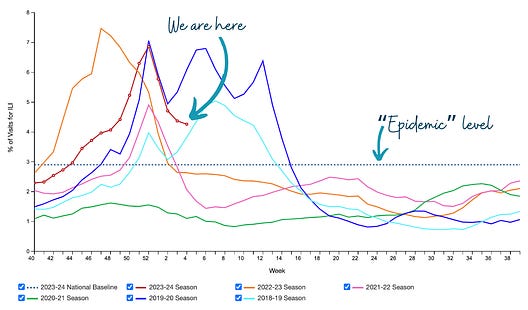
The climate of respiratory health in the United States (coined “influenza-like illnesses” by CDC) remains above the epidemic threshold and has plateaued due to children returning to school after the holidays.

We are going into our 13th week of being above “epidemic” levels. Last year, our entire season was 11 weeks. (The year before was 7 weeks). It’s looking more and more like “pre-pandemic” times, where we had ~15-18 weeks of illness during the winter.

Outpatient Respiratory Illness Visits (Source: CDC; Annotated by YLE)

Covid-19 still takes the cake for respiratory deaths. By how much? We don’t know yet. The data below are from death certificates, which are pretty accurate for Covid and RSV but not for flu. CDC annually adjusts flu deaths post-hoc to account for underreporting. We must wait to see how those calculations play out.

Trends in Viral Respiratory Deaths in the United States (Source: CDC; Annotated by YLE)

Covid-19: High and… stabilizing? 

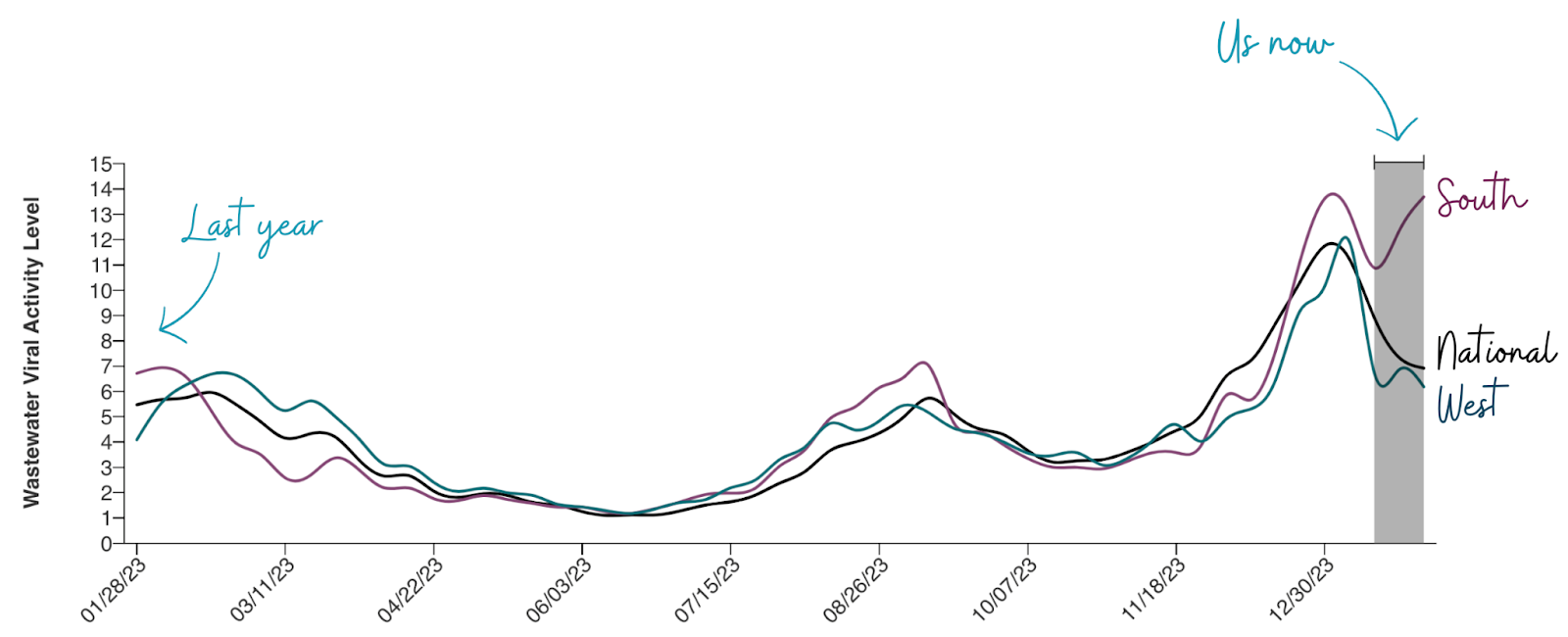
Nationally, Covid-19 in wastewater is still “high.” Unfortunately, levels have stabilized in all regions except the South, where exponential growth started again. This could be a “noise” signal due to unstable reporting or a “real” signal due to, perhaps, it getting colder later in the South.

Wastewater SARS-CoV-2 viral activity level on a national level (Source: CDC; Annotations by YLE)

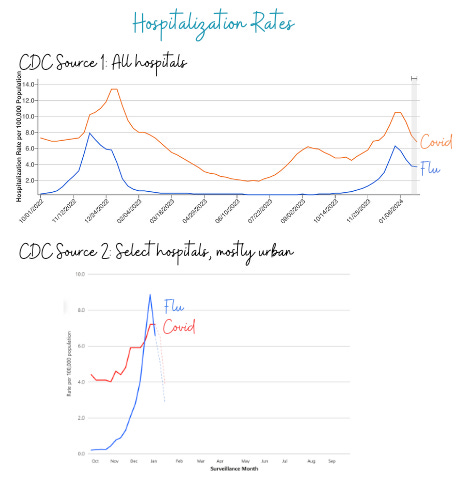
Covid-19 hospitalizations are slowing down, too, after a few weeks of nosediving. Are Covid-19 hospitalizations higher than flu? Well… it depends on which CDC graph you look at, which is confusing. The top graph below shows Covid-19 hospitalizations winning while the bottom shows flu winning.

(Top) Covid-19 and Influenza Hospitalization Rates (Source: CDC) (Bottom) Weekly Rates of Respiratory Virus-Associated Hospitalizations by Season (Source: CDC); Annotated by YLE

Why the different data stories? The sources are different. The top graph is from all hospitals mandated to report due to the pandemic, and the bottom is a few hospitals representing only 10% of the population from mostly urban areas. This is probably causing two things to happen:

  1. Vaccine effect. Urban places have more Covid-19 vaccinated than rural; thus Covid-19 hospitalizations are lower on the bottom graph than the top.
  2. Case definition differences may be happening. The data in the top graph is reported by hospitals, which may differ from the bottom graph, reported by a review of lab records.

I trust the top graph more. Unfortunately, this data story will stop in April because the reporting mandate is ending. Hospitals hate reporting this metric, but if you ask me, I don’t care. We need this data.

Flu: High and stabilizing

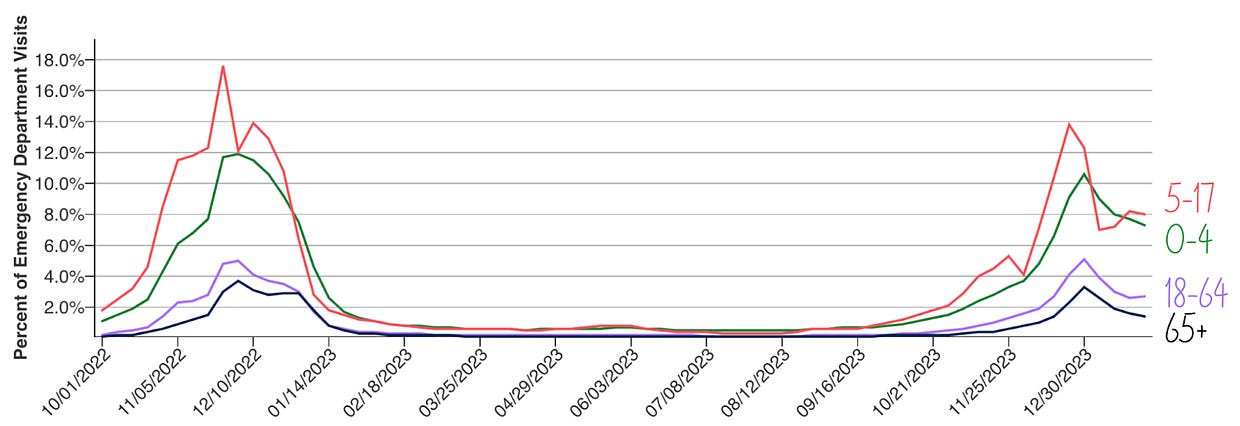
Influenza is still surging. Emergency department visits for flu increased due to one particular group: 5-17 year olds.

Percent of Emergency Department Visits for Flu, by age. (Source CDC; Annotated by YLE)

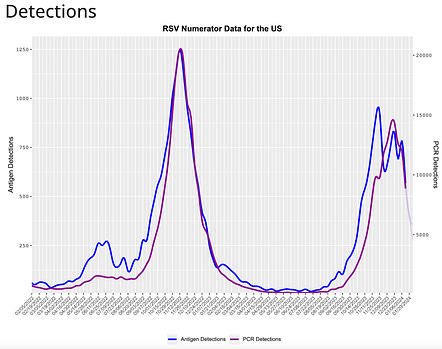
RSV: Moderate but nosediving

RSV continues to go down and down. Good riddance.

(Source: CDC)

Other things I’m paying attention to:

  • New CDC data show that the 2023 fall Covid-19 vaccines provide 54% increased protection against infection. In other words, fall Covid vaccines were a good call. A few more thoughts of mine are here.
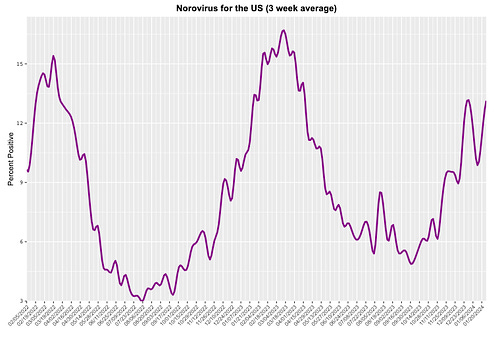
  • Norovirus (think throwing up and diarrhea) has been a rollercoaster, but is now increasing quickly. Historically, this is about the time that norovirus takes off. Wash those hands.

(Source: CDC)

Bottom line

We are still very much in the middle of the “feeling crappy” season. And, unfortunately, it’s already longer than last year’s. Hopefully we get a reprieve in the next month or two.

Love, YLE


“Your Local Epidemiologist (YLE)” is written by Dr. Katelyn Jetelina, M.P.H. Ph.D.—an epidemiologist, wife. During the day, she is a senior scientific consultant to several organizations, including CDC. At night, she writes this newsletter. Her main goal is to “translate” the ever-evolving public health world so that people will be well-equipped to make evidence-based decisions. This newsletter is free, thanks to the generous support of fellow YLE community members. To support this effort, subscribe below:

Posted in Uncategorized

SOCIAL MEDIA AND TEEN MENTAL HEALTH: YOUR LOCAL EPIDEMIOLOGIST EXPLAINS

Hits: 333

Si quiere leer la versión en español, pulse aquí.


Social media and kids’ mental health- An update

The public health datastory behind the congressional hearing

Public health touches all aspects of our lives, not just during a pandemic and not just with infectious diseases. Thanks to your feedback, this newsletter will continue with Covid-19 updates and address other public health topics, like mental health. To choose what topics land in your inbox, click HERE.


Strong bipartisan statements came out of a congressional hearing yesterday about the harms of social media use among children and teens. Parents of kids harmed by social media showed up in immense force.

“You have blood on your hands.”— Sen. Lindsey Graham to five social media CEOs.

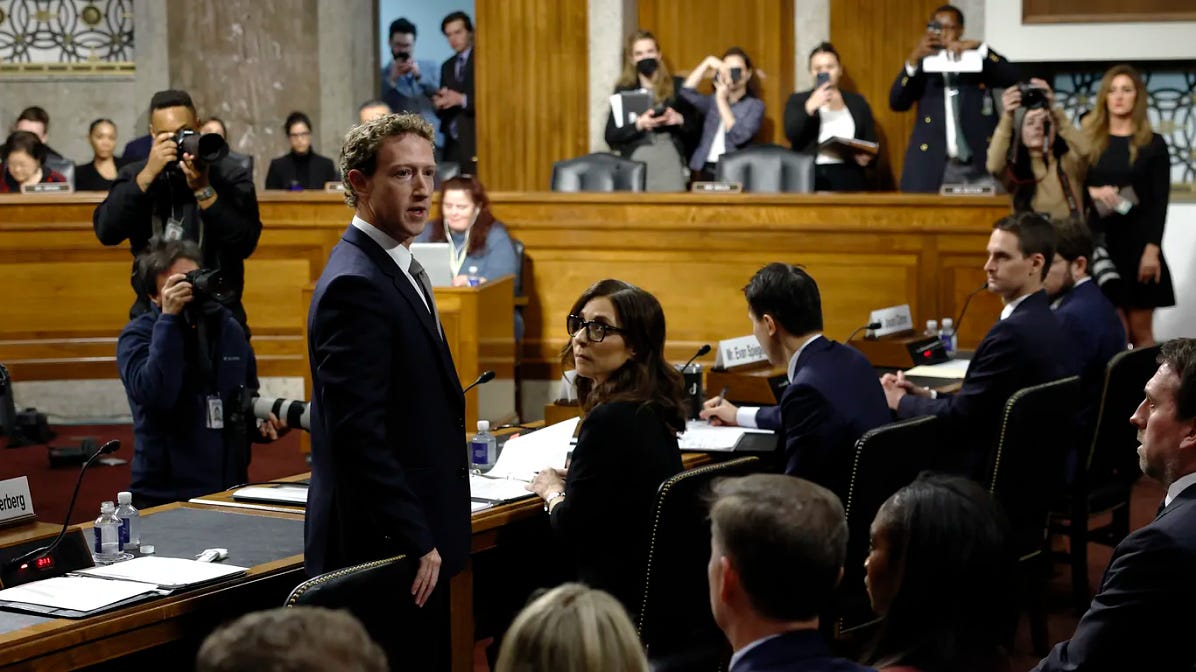
“I’m sorry for everything you have all been through.”— Mark Zuckerberg to parents in the audience.

Meta CEO Mark Zuckerberg speaks directly to audience members of a Senate Judiciary Committee hearing on the dangers of child sexual exploitation on social media. Photo: Anna Moneymaker/Getty Images)

Is social media dangerous for children and teens? And, if so, what are our options?

Here is the nuanced public health data that (hopefully) congressmen/women are using to (hopefully) make meaningful and needed change. But, as we know by now, policy isn’t always based on science.

Note: The below was published 8 months ago, and some things have changed since. We bolded the changes to bring you along for the ride. As a parent, I still root for Option #4.

Love, YLE

YLE MENTAL HEALTH

Mental health and social media among teens

·
MAY 18, 2023
Mental health and social media among teens

Protecting youth from the potential negative mental health effects of social media is front and center in the mass media, in conversations around dinner tables, and in federal- and state-level bills.

Is the teen mental health crisis a real thing?

Mental health and social media among teens

47
Share

This post contains sensitive information, including a discussion of suicide. If you are in need of help, there is an abundance of resources on the National Suicide Prevention Hotline website, which includes an anonymous chat function and a direct line at 800-273-8255.


Protecting youth from the potential negative mental health effects of social media is front and center in the mass media, in conversations around dinner tables, and in federal- and state-level bills.

Is the teen mental health crisis a real thing?

Yes. Rates of mental health problems have continually increased among young people over the past 15 years, regardless of how you measure it:

In 2021, 42% of U.S. high school students reported “persistent feelings of sadness or hopelessness,” up from 28% in 2011. The increase was especially dramatic among girls.

According to diagnostic measures (structured interviews by a trained professional), depression has increased 7.7% in U.S. teens—and 12% among girls—between 2009 and 2019.

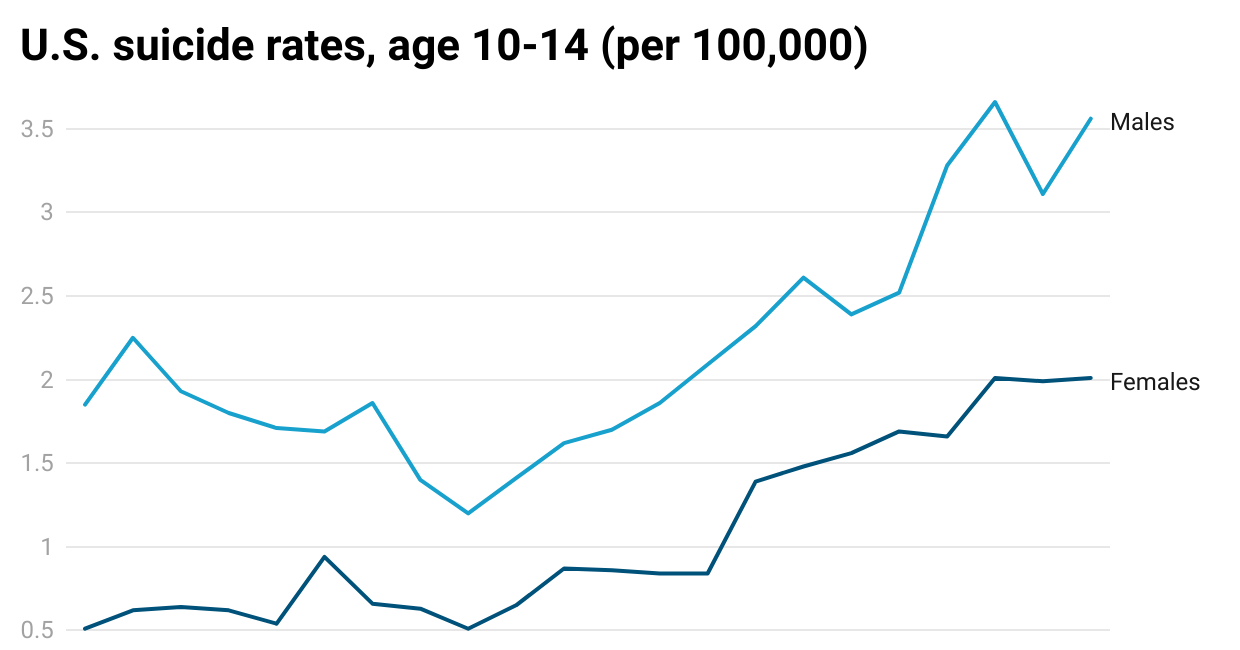
According to U.S. death certificates, suicide rates among youth ages 10-14 increased 139% for girls and 70% for boys since 2012. However, this is a bit difficult to interpret given low the rates to begin with for girls.

(The trends are increasing fast among teens. But, for perspective, the rates of suicide are significantly higher in adults.)

Is this rise due to social media?

Teens use social media. A lot. Almost one in five teens use YouTube “almost constantly.” Nearly half of teens use TikTok (48%) and Snapchat (44%) several times per day. And the total hours of use have increased in recent years among teens.

But using social media doesn’t necessarily equate to mental health problems. Correlation doesn’t always equal causation. And, to make things more complicated, there are harms and benefits of social media.

Harms of social media 

We have a lot of correlational evidence, and some—but not much—causal evidence of the harms of social media on teens’ mental health.

Correlational studies ask teens how much time they’re spending on social media, and ask them about mental health. In general, these point to weak but statistically relevant correlations between social media use and lower teen well-being.

In terms of causal evidence, we have a couple of studies:

  • Some studies randomly assigned people (both adults and teens) to stop using social media (and others not to stop) and then evaluated their well-being. The results of these studies are mixed. Variability seems to depend on the details of the design: How long did they stop using social media?  Did they “detox” completely or just reduce the time spent? What are they using social media for?
  • Other studies have taken advantage of circumstances that naturally occurred in the world to mimic an experimental design. One study ​​looked at when Facebook was introduced on different college campuses (which varied randomly) and found that after Facebook showed up, rates of mental health concerns increased. A few others (like this and this) look at the introduction of high-speed Internet in different areas and found associations with poorer mental health after its introduction. Generally, these do not address social media specifically.

What is clear is that we need more research with more rigorous designs.

Benefits of social media 

Competing with these harms are studies that show social media has benefits for mental health, too. Teens report that social media is important for:

  • Helping them stay connected with friends
  • Meeting like-minded peers
  • Exploring their interests
  • Learning
  • Discovery

These benefits can be especially important for those who may be socially vulnerable in their offline lives, like LGBTQ+ youth.

What else could explain it? 

Assessing causality means understanding what other factors may also explain the rise of mental illness among teens. A few alternative explanations have been proposed:

  • Rising income inequality
  • Wars
  • Violence and access to firearms (suicides)
  • Global financial crisis
  • Racial inequality
  • Academic and social pressures
  • Political views on current events
  • Climate change
  • The opioid epidemic
  • Unhelpful narratives around mental health

Of course, many of these explanations may be intertwined with and amplified by social media, but the short answer is that we likely can’t blame social media alone. Mental health is complicated, and there is unlikely to be a single, simple explanation for a large-scale phenomenon like this one.

So, what should we do about it?

We’ve got a few options:

  • Option 1: Do nothing until research is “settled” on the issue before taking legislative action. Unfortunately, this may require a “burden of proof” that is rarely, if ever, established in psychology research. In this case, some evidence of harm, even if imperfect, may need to be enough to drive change.
  • Option 2: Put it on the parents. Parents certainly play a hugely important role in teens’ relationships with social media. Evidence supports parents’ active involvement in kids’ digital lives through ongoing conversations, reasonable limits, and appropriate monitoring. But can (and should) they manage it alone? If large-scale policy changes create safer social media platforms, individual disadvantages are minimized.
  • Option 3: Ban it among minors. No states have outright banned it among minors yet. This option would limit access to its benefits and would limit kids’ opportunities to practice using social media in safe and healthy ways prior to adulthood.  This has changed substantially since this piece was originally published. Many states, like Arkansas and Utah, have passed bills that limit social media use. In one case (Florida), it’s banned among kids under 16.
  • Option 4: Put reasonable protections in place. Social media is probably more like cars than drugs. We want protections in place (seatbelts, airbags, drivers’ ed), but an outright ban may go too far. Some options include: raising the minimum age from 13 to 15 or 16; requiring age verification of some kind; limiting recommendations of harmful or problematic content; limiting overall time spent (e.g., via forced “breaks” or overall time limits); and limiting targeted advertising.

Bottom line 

We have some evidence that social media is playing a role in the teen mental health crisis, but that evidence is not definitive. And social media can play a positive role, too. It is highly unlikely that social media is the only cause of mental illness among children. We can certainly take steps to make social media a healthier place, but if we truly want to support teens’ mental health, this is only the start.

Love, YLE and JN


Posted in Uncategorized