Hits: 175

WHITE PLAINS STATE SENATOR SHELLEY MAYER PREVIEWS THE ISSUES COMING UP IN ALBANY AHEAD TONIGHT AT 8 AND SATURDAY AT 7 AND ANY TIME ON WWW.WPCOMMUNITYMEDIA.ORG

Hits: 175
WHITE PLAINS STATE SENATOR SHELLEY MAYER PREVIEWS THE ISSUES COMING UP IN ALBANY AHEAD TONIGHT AT 8 AND SATURDAY AT 7 AND ANY TIME ON WWW.WPCOMMUNITYMEDIA.ORG
Hits: 286
Enjoying this newsletter? Why not share it with a friend? Covid, vaccine recommendation updates, West Nile Virus, a Legionella outbreak, and moreThe NY Dose
 Infectious disease “weather report”Ugh, even epidemiologists get Covid. Recently, my partner and I both felt like we had “allergies”—itchy eyes, mildly scratchy throats, and some lung irritation. It was so mild that at first we didn’t even think to test. When we finally did, his turned positive instantly. Mine never did. But, based on the timing of symptoms, I’m pretty sure I caught it first and then cleared the infection by the time we tested. Consider this my firsthand evidence that Covid activity is elevated in New York, and the data agree. Wastewater data is showing an upward trend. I’ll note that the latest data is usually unstable as all the sites submit data, but it stabilizes after about two weeks. This likely explains what looks like a big drop near the end of August.
New York state Covid-19 wastewater activity levels. Figure from CDC NWSS. Annotations by YLE. That said, the recent rise in wastewater concentrations aligns with increased hospitalizations.
Everything else is quiet still: Flu: Outpatient visits for flu-like illness haven’t started rising in New York yet, but I’m keeping a close eye on it. In other parts of the country, numbers have already started to climb. RSV: Still quiet. I was planning on getting my fall Covid booster soon, but after just getting over Covid, I’m deciding to wait. Data show that after a Covid infection, delaying immunization by about ~6 months can increase its effectiveness. (YLE national covered the timing of Covid vaccines here). I’m getting my flu shot soon though! Speaking of immunizations… Updates to routine immunization eligibility are expected this weekThere’s a lot happening right now around vaccine access and eligibility, both for Covid and routine immunizations. Last week we covered New York’s steps to keep Covid-19 vaccination accessible, including executive and standing orders that allow pharmacists to vaccinate anyone over age 3 without a prescription. In practice, you may still need to check “yes” to the eligibility question on pharmacy websites when scheduling, but New York pharmacists have the authority to vaccinate you whether or not you have an underlying condition.
CVS appointment scheduler questions. Check “yes” that you would like to receive a Covid vaccine and are eligible. Today, the Advisory Committee on Immunization Practices (ACIP) is starting a two-day meeting to vote on Covid-19, hepatitis B, and MMRV (measles, mumps, rubella, varicella) vaccine recommendations. There is a very real possibility that ACIP will vote against recommending some of them for certain ages. Such a decision would truly be unprecedented given overwhelming evidence supporting their safety and effectiveness. If that happens, the availability of these vaccines will be reduced. I do expect New York State will step in to protect these vaccines. Governor Hochul has already issued an executive order and standing order to safeguard Covid-19 vaccine access (we covered it here), and I anticipate something similar if ACIP votes against hepatitis B or MMRV. Even so, a quick executive order can’t erase the confusion. Potentially conflicting messaging from federal and state departments will undoubtedly create uncertainty and confusion, making it harder for some to get vaccinated. While I don’t think that Covid vaccines should be removed, most people in New York have a buffer of community immunity, and access to Covid vaccines through the executive order. If recommendations change, it will have the greatest impact on those who don’t have immunity, like young children, pregnant women, and people who are immunocompromised. But hepatitis B and MMRV are a different story. Removing these vaccines sets us back in the progress we’ve made in protecting babies, and puts kids and vulnerable populations at risk of serious, preventable diseases. That’s why now it’s more important than ever to stay informed, and remember that vaccines remain one of the safest, most effective tools to protect babies, children, and everyone else from severe and preventable illness. I’ll be back next week with the implications for New Yorkers after we know with certainty what the ACIP votes will be. We are in peak West Nile Virus seasonNew York is seeing West Nile Virus activity across the state. This is typical—September is when we often see the highest WNV infections. This most recent data show mosquitoes tested positive in:
A few mosquitoes in Oswego County also tested positive for Eastern Equine Encephalitis (EEE) virus, which is rare but more dangerous than WNV. So far, there have been 26 human WNV cases across the state, and no cases of EEE. In New York, it’s too early to tell if this is a normal year or not because this is the time of the year when WNV cases typically really pick up.
New York West Nile Virus infections for this year (2025) and the average of the previous 3 years (green). Data from NY DOH. Annotations by YLE. Nationally, WNV is 40% higher than normal. In New York, we’re getting close to last year’s total WNV-positive mosquito pools (1,638 so far compared to 2,167 last year), and the season usually runs until the first few freezes in November. So, it’s too soon to tell how bad this year will be. (Editor’s Note: Last week Westchester County had reported one case of West Nile Virus) NY counties continue to use mosquito control to reduce risk. Many have conducted or plan to conduct aerial insecticide spraying, where a plane disperses chemicals to kill mosquitoes or prevent breeding. (You can check your local health department website for local schedules.) There are recent or upcoming events for NYC (Brooklyn and Queens this week).
To minimize exposure to insecticides during spraying:
Legionnaires’ disease in WestchesterYes, another outbreak. This time Westchester County is investigating a spike in Legionnaires’ disease. So far this year:
This is an increase—last year there were 24 cases total in the county. Across the state, excluding NYC, we are at 383 cases so far for this year. Officials recently confirmed a cluster of 5 cases in Yonkers and said that cooling towers are being inspected in response. But we don’t know where the cases reside or where they could have been exposed. I’m concerned that not enough information is being shared, or shared quickly enough. Knowing which neighborhoods or zip codes are affected helps us assess personal risk. And clear, timely, and consistent communication from public health departments is essential, not just for managing outbreaks, but for building and maintaining community trust. Legionnaires’ disease is a serious lung infection caused by breathing in tiny water droplets containing the Legionella bacteria. Symptoms usually start 2–10 days after exposure and can include:
Most healthy people exposed won’t get sick. Those at higher risk are adults over age 50, smokers, and people with chronic lung disease, diabetes, cancer, or weakened immune systems. It’s not spread person-to-person because it doesn’t infect cells the same way a respiratory virus does (like Covid). You also can’t usually get it from drinking water— water rarely enters the lungs while drinking, and stomach acid likely kills it when ingested. In New York, and especially around NYC, outbreaks with cases across communities (like this one) are typically linked to cooling towers, which are separate from residential plumbing. This means that your tap water is not a risk. Why has there been so much Legionnaires’ this summer?The increase in Westchester Legionnaires’ cases follows the large outbreak in Central Harlem, where seven people died and 114 were diagnosed. We covered it here. And Legionnaires’ disease has been increasing nationally.
National Legionnaires’ disease rates have been increasing, though data after 2022 have not yet been published. Figure from CDC. Several factors may be driving the increase in Legionnaires’ cases this summer in New York:
Grandparents for vaccinesThink Moms Against Drunk Driving, but for polio and measles. A new grassroots group of grandparents just launched to protect kids’ vaccine access. They’re driven by lived experience—remembering when these diseases ran rampant—and are elevating their stories. Fueled by personal experiences, they are asking for support and stories. Learn more and join them here! What else you need to knowMeasles in NYCThe NYC Department of Health and Mental Hygiene has confirmed two adult cases of measles in Manhattan. They are investigating potential exposures at two unnamed restaurants in SOHO and the Lower East Side, and contacting those who may have been exposed. Reminder—if you are fully vaccinated, you are well protected. Blue-green algae in OnondagaOnondaga County has issued an advisory for a harmful algal bloom at Skaneateles Lake. These blooms, caused by overgrowth of blue-green algae (cyanobacteria), can cause skin rashes, stomach upset, or more serious illness if swallowed or inhaled. Before swimming at lakes or ponds, check local advisories and pay attention to posted signs. If you or your pet were exposed, rinse off really well and seek medical care if symptoms develop. Bottom lineYou’re all caught up on New York public health news this week! Love, Your NY Epi Dr. Marisa Donnelly, PhD, is an epidemiologist, science communicator, and public health expert. This newsletter exists to translate complex public health data into actionable insights, empowering New Yorkers to make informed and evidence-based health decisions. |
Hits: 204

Funding Will Further Fuel New York’s Research Excellence; Brings Governor’s Total Investment in Higher Education Research Under Her Leadership to $1.34 Billion

Governor Kathy Hochul today announced $300 million to establish the Quantum Research and Innovation Hub at the State University of New York at Stony Brook, further catapulting New York’s national leadership in groundbreaking research that saves lives, grows the economy and improves national security.
“At a time when national investment in research and innovation is at risk, New York State is doubling down and SUNY is on the move,”
Governor Hochul said. “The State University of New York at Stony Brook is a research powerhouse and will now be able to reach new heights in quantum. We know that to provide our state and nation with a brighter future, we need to invest today, and that is what New York is committed to do.”
Reversing years of disinvestment, since Governor Hochul took office in 2021, the State University of New York at Stony Brook has received $73 million in additional Direct State Tax Support operating aid and $969 million in additional State capital commitments (including the $300 million for the Quantum Research and Innovation Hub).
In addition to increased operating aid, Stony Brook has also received $12 million to support new full-time faculty, $8 million to fully close the “TAP gap,” and access to the State’s $500 million endowment match. The latter provides a $1.00 in Direct State Tax Support for every $2.00 raised by philanthropic activity at the University Centers.
The $300 million Quantum Research and Innovation Hub will be New York’s premier facility dedicated to leading-edge research and education in quantum science and technology, with a particular focus on quantum communication and networking.
Building on the State University of New York at Stony Brook’s current leadership in this area, the hub positions the State University of New York at Stony Brook to become one of the premier global centers for Quantum Information Science and Technology, ensuring that the United States leads the world in this critical technology area.
As part of this funding commitment, over the course of the current semester, the State University of New York at Stony Brook will engage in a rebranding to more fully align to the SUNY name and logo in order to consistently demonstrate and amplify SUNY’s leadership on research and in recognition of the campus’s role in New York State’s public higher education system. SUNY will work with each University Center on their own similar branding process.

Senate Majority Leader Andrea Stewart-Cousins said: “The State Legislature is committed to ensuring that New York’s public higher education system has the resources to thrive. This $300 million investment to establish the Quantum Research and Innovation Hub at Stony Brook reaffirms our dedication to making New York a leader in discovery and innovation. Supporting world-class research in quantum science and technology will fuel breakthroughs that grow our economy and prepare the next generation of students for the jobs of the future. This investment reflects our belief that public education should drive opportunity and excellence for all New Yorkers.”
Assembly Speaker Carl E. Heastie said: “As a proud alumnus of Stony Brook University and a staunch supporter of the public education system in New York State, continued investment in our educational institutions are tantamount for the future success of the next generation. Our research universities have become the driving force behind technological and scientific advancements. As our SUNY system continues to expand, bridging the educational gap and fostering innovation, we must persist in making these investments that solidify New York and SUNY campuses as premier educational institutions. I want to express my gratitude to the leadership of Governor Kathy Hochul and the tireless advocacy of my many colleagues in government.”
SUNY Chancellor John B. King Jr. said:
“The State University of New York at Stony Brook is leading the way on cutting-edge research and emerging technologies, and this historic investment will accelerate efforts to ensure New York State is a global leader for generations to come. SUNY is committed to achieving Governor Hochul’s goal to double research expenditures for the sake of our students and our state.”
Empire State Development President, CEO and Commissioner Hope Knight said: “ESD was proud to support the Long Island Quantum Internet Test Bed at Stony Brook, laying the foundation for New York’s leadership in this transformative field. The creation of the Quantum Research and Innovation Hub marks the next step in expanding research capacity, cultivating top talent, and advancing breakthroughs that will drive economic growth and cement New York’s position as a global leader in quantum technology.”
State University of New York at Stony Brook President Andrea Goldsmith said: “Stony Brook is proud to have built the largest quantum network in the United States. Through such transformative research, in partnership with New York State and SUNY, we are accelerating technology advancement and its positive impact across our state and beyond.
The Quantum Research and Innovation Hub will spearhead the future of quantum computing and networking. We are grateful to Governor Hochul, Chancellor King, and SUNY for placing their trust in Stony Brook with this historic investment that further advances our leadership in quantum science and technology, and showcases the bold ground-breaking research across our campus that delivers solutions to society’s most pressing challenges.”
Governor Hochul has announced more than $1.34 billion over the last three years in State and matching private sector funding commitments for cutting-edge research by New York’s leading higher education institutions. These resources include support for the Empire AI research center for the public good — which is housed at the State University of New York at Buffalo (UB) and includes leading public and private universities from across the state — as well as research investments through SUNY’s annual capital appropriations.
SUNY is the largest comprehensive public institution of higher education in the nation, and thanks to the steadfast support of Governor Hochul and state leaders, the SUNY system is a hub of innovation, discovery, and real-world impact. With groundbreaking research taking place at campuses throughout the state, SUNY is making progress toward achieving technological breakthroughs that will help shape the future of New York and the United States.
About the State University of New York at Stony Brook
The State University of New York at Stony Brook is New York’s flagship university and No. 1 public university. It is part of the State University of New York (SUNY) system. With more than 26,000 students, more than 3,000 faculty members, more than 225,000 alumni, a premier academic healthcare system, Stony Brook is a research-intensive distinguished center of innovation dedicated to addressing the world’s biggest challenges. The university embraces its mission to provide comprehensive undergraduate, graduate and professional education of the highest quality, and is ranked as the #58 overall university and #26 among public universities in the nation by U.S. News & World Report’s Best Colleges listing.
Fostering a commitment to academic research and intellectual endeavors, Stony Brook’s membership in the Association of American Universities (AAU) places it among the top 71 research institutions in North America. The university’s distinguished faculty have earned esteemed awards such as the Nobel Prize, Pulitzer Prize, Indianapolis Prize for animal conservation, Abel Prize, Fields Medal and Breakthrough Prizes in Mathematics and Physics.
Stony Brook has the responsibility of co-managing Brookhaven National Laboratory for the U.S. Department of Energy — one of only eight universities with a role in running a national laboratory. In 2023, Stony Brook was named the anchor institution for The New York Climate Exchange on Governors Island in New York City. Providing economic growth for neighboring communities and the wider geographic region, the university totals an impressive $8.93 billion in increased economic output on Long Island.
About the State University of New York
The State University of New York is the largest comprehensive system of higher education in the United States, and more than 95 percent of all New Yorkers live within 30 miles of any one of SUNY’s 64 colleges and universities. Across the system, SUNY has four academic health centers, five hospitals, four medical schools, two dental schools, a law school, the country’s oldest school of maritime, the state’s only college of optometry, and manages one U.S. Department of Energy National Laboratory.
In total, SUNY serves about 1.4 million students amongst its entire portfolio of credit- and non-credit-bearing courses and programs, continuing education, and community outreach programs. SUNY oversees nearly a quarter of academic research in New York. Research expenditures system-wide are nearly $1.16 billion in fiscal year 2024, including significant contributions from students and faculty. There are more than three million SUNY alumni worldwide, and one in three New Yorkers with a college degree is a SUNY alum. To learn more about how SUNY creates opportunities, visit suny.edu.
The following is Governor Hochul’s personal remarks about what the new center will accomplish:

Photos courtesy of the Governor’s Press Office.
“I don’t know how you don’t believe in the power of SUNY, we’ve seen that, but also how SUNY is embracing the power of quantum computing.
I mean, this is something I don’t think a few years ago people would’ve envisioned. I mean, that’s something the private sector does — we’re going to teach the basics here. There are leaders who’ve come before who’ve left their mark here. And I always want to mention James and Marilyn Simons on this organization, on this institution, and their belief and their ideas that maybe seem so wild and farfetched at the time, but really create an opportunity for them to be successful, but also to return to this great place and make massive, major investments.”
I know because we started a program a few years ago where the state would match contributions to endowments to our public institutions. I didn’t know that the Simons would break the bank on the first day. It was a lot of money. But it all came here. So I was like, okay, I have to go back to my Budget Director. And I thought it was a little here, there a little there. It’s all gone.
But I was there at those great announcements. But this institution has been the beneficiary of a lot of people who believe in what you do is the point. As I do and I look at your new leadership and the support of the trustees and everyone else who’s part of this — we’re creating an institute of advanced computational sciences and moving us in from the theoretical to the practical, which I probably won’t even understand when it becomes the practical.
But people who need to know will know, and that’s why to make further investments and to sort of catalyze our belief in the future of State University of New York at Stony Brook University. We’re investing big time today, big time. How does $300 million sound to you?
It’ll establish the new Quantum Research and Innovation Hub right here. You heard it here first, it’ll cement SUNY’s role as a global powerhouse. We don’t just want to be the best in the nation. That’s shooting too low. Our moonshot is to be the one recognized globally as the place where the smartest people want to be, and the smartest students want to be educated. And the ideas that are incubated here are commercialized, and we create more jobs here on Long Island in New York State. That’s my vision of how these investments will ultimately benefit all the people of our great state.
So that’s what we’re going to do. We’re going to strengthen our leadership in the industries of tomorrow. And as you mentioned, I designated the Stony Brook University as a flagship because people say, “Well, how come some of these other states — you think about Michigan and California, other places in Texas — like they have a flagship. Well, why don’t we?” Well, if we don’t have one, I’m going to have one. I mean, I want to have my flagship.
So we had this kind of ambition in mind. With that designation, but also I knew that designation would help lift up the prestige of Stony Brook University and let’s look at some of the results. Freshman applications are up 65 percent. PhD applications are up 45 percent. This is the smartest in the nation and abroad, they want to be here — 45 percent increase, and faculty applications, because everybody wants to be part of the action, are up 100 percent. That’s what a designation and the leadership and the cultivation of this innovation hub, this whole concept of a place where the smartest people gather. The momentum that we’re experiencing here is nothing short of extraordinary, beyond my expectations. And that’s why I’m so excited but we’re not done. No matter what the topic is, I say we are not resting on our laurels. We’re never saying mission accomplished for anything, because I want to make sure that we establish New York’s brand as the place for the smartest minds gathered, but also there’s opportunities for everyone.
Whether it’s what we’re doing with free community college now – which is often a pipeline. President, you said that you started in community college yourself. And to realize that there’s a lot of adults, not everybody knows their future when they’re 18 years old and they take a pass on even applying to colleges.
But to say in our budget, again I thank our Senators and our Assemblymember for their support. We offer in the State of New York, for the first time ever, free adult learning free community college for anyone over the age of 25 to be able to go back and get a degree or an enhanced or get more credentials — and to really embrace these new opportunities and technologies and curriculum that weren’t there before.
So I want people to have a reset in life sometimes and just another chance to lift their credentials. And I’m going to call on the Chancellor, and maybe he knows this number. A few weeks ago I asked and said, “how many more students have applied to college at SUNY community colleges this year than last.” I think it was 16,000 — over 16,000 people. We just enacted this a few months ago.
So that shows the demand, and we’re focusing people on the jobs we know that there’s openings. Whether it’s health care or education, but also specific industry, advanced manufacturing in particular. But also the trades, I want more people to learning skills and so that’s what I get most excited about.
I want every single student to have the same shot at the American Dream that lifted my family out of its circumstances. My parents lived in a trailer park and my dad worked at the steel plant — it was tough, dirty work. His father worked there, his brothers were, this was the American dream for poor Irish immigrants, that was to be able to work at a steel plant and have a union card.
But my dad had an even bigger dream and he worked all day and had a little baby, my brother, lived in the trailer park. I came along a year later. We’re Irish, like I said, a year later and there’s more and more, there’s more lots of little kids. But he went on and pursued a college degree at night and when he got that credential, he’s able to move up out of the hard work in the factory and move into a different position there and ultimately took a risk — and I’d say this because I think I have the same risk-taking gene or else I wouldn’t be here. But my dad, when he was 30 and had five of his six kids, already had a secure job at Bethlem Steel. He had met a couple of guys who had just been involved in something crazy called computers, and my dad left his job. People thought he was crazy. And took a chance to join a couple of other guys who started before.
Four people started a company that worked in technology and solutions and went into companies and sold business, and I went on business calls with my dad and they almost went under so many times — we struggled and struggled. But eventually, they made it and grew to 3,000 employees in my hometown and took the company, not national, but global — my dad became the CEO.
I take all that success back to a decision he made to get a college degree. And whether you want to go into the trades out of high school, we have great programs and BOCES and others you can go on that path. And I meet so many people in that space as well. But for those who want to embrace these new opportunities of the future, they’re being developed and unfolded as we speak before our very eyes today.
Giving people that chance to get that degree without worrying about the cost. It is something I feel is a gift to the people of this State, and I’m so proud about that initiative and I know that there are going to be other lives that are transformed just as my family was because of that access to education.
So we’re going to have a brand new quantum hub here. It will be anchored by other institutions. It’ll be a data center, a network control room, an institute — all sorts of big, fancy names and people are going to make this happen. I’m going to come back and say, “That’s very cool, I don’t really quite understand it, but that’s all right. As long as you do, I don’t need to.”
But I’ll close with this. It just means an investment like this solidifies our position — as an incubator of ideas and possibilities and ultimately an educational system that’ll lead to more businesses being created and supported by the graduates of institutions like this.
This is the whole ecosystem because I want Long Island to thrive and prosper, and this is the linchpin — this is our key to unlock that even more. It’s a wonderful place to live, raise families. I know that our educational institutions K through 12 are outstanding, especially since the kids are finally off the cell phones.
I said our kids will be a lot smarter than the other states’ kids, I’m telling you I’m putting my money on them, but this is what it’s all about. It’s about opportunity, and I want to thank everyone involved in this because for me, this is a good day. And I can look out at a room full of true believers. People know that we just haven’t quite unleashed our full potential. And we’re going to seize it like this.”
Hits: 173


GOVERNOR HOCHUL ANNOUNCES RECORD 7-DAY SUBWAY RIDERSHIP WITH 26.8 MILLION RIDES LAST WEEK
Subway Ridership Exceeded Four Million Riders Every Weekday for the First Time Since March 2020
Paratransit Achieves Highest Ridership Month Ever in August and Sets New Single-Day Ridership Record With Nearly 47,000 Trips
Metro-North Railroad Hits Highest 5-Day Ridership Average Since March 2020
Governor Kathy Hochul announced TUESDAY the Metropolitan Transportation Authority (MTA) set a new post-pandemic subway ridership record, setting a new 7-day high of 26.8 million riders traveling between Monday, Sept. 8 and Sunday, Sept. 14.
Additionally, the subway recorded more than four million riders every weekday – a first since the COVID-19 pandemic.
New York City Transit recorded 4.1 million riders on the subway on Monday; 4.44 million on Tuesday; 4.48 million on Wednesday; 4.51 million on Thursday; and 4.2 million riders on Friday.
This ridership milestone underscores customer confidence in public transit as the best way to get around the region as the MTA continues to deliver the best service in over a decade, with record on-time performance and enhanced reliability.
“The subway is New York City’s lifeblood, and when ridership is growing, it means even more New Yorkers are going to work, to school, to shop, and to take advantage of everything this city has to offer,” Governor Hochul said. “We’ve made real progress in the subway system delivering more service with increased reliability and by improving safety and reducing crime. This is what New Yorkers expect and deserve: a safe and reliable ride. By continuing to improve what matters to riders, I look forward to even more record weeks to come.”
Growing ridership comes on the heels of strong performance and improving safety.
ONTIME!
Subway weekday on-time performance in August was 85.2%, matching the previous high set in May of this year. It was also the best August in 10 years. The subway had a historically safe August, with transit crime down 22.8% from August of 2024. Last month was the safest August in the subway system in recorded history.
MTA Chair and CEO Janno Lieber said, “Back to school always brings a bump in ridership, but this one’s for the record books – MTA’s busiest week across almost all agencies since before the pandemic. It’s simple math: increased safety + top notch performance = huge transit turnout.”
New York City Transit President Demetrius Crichlow said, “With a new and improved bus network in Queens and historic subway on-time performance and Paratransit ridership in August, it’s no surprise we’re already breaking records in September. New York City Transit will continue to deliver safe, reliable, and fast service and I look forward to bringing this incredible momentum into the fall.”
Buses saw its third highest weekly ridership since the pandemic with 9.3 million rides, up 2.7% compared to 2024. The highest week was the week of September 12, 2022, with 100,000 more riders.
Can’t get around without help? MORE USE ACCESS-A-RIDE+ A RECORD MONTH
Access-a-Ride paratransit service continues to experience historic ridership growth, setting a milestone of the highest monthly total ridership of all time in August and a new single-day record on Wednesday, Sept. 10, with 46,875 scheduled trips. Paratransit leads the MTA in post-pandemic ridership return, with 2025 ridership at 140% of its pre-pandemic peak.
Access-A-Ride now regularly exceeds 40,000 scheduled weekday trips, with ridership the size of entire bus networks of cities such as Charlotte, Cincinnati and Kansas City.
It has also been a strong week for the commuter railroads.
Metro-North Railroad carried an average of 237,994 riders for the workweek, the highest 5-day average since March 2020.
The Long Island Rail Road reached its highest 5-day ridership average since the pandemic the week of August 25, with an average of 288,459 riders,and continued to see strong ridership this past workweek with an average of 277, 435 riders.
Additionally, on-time performance for both the Long Island Rail Road and Metro-North have consistently been at or near 97% in 2025.
The first time the MTA reached four million subway riders in a single day during the non-school summer season since the start of the pandemic was on Wednesday, June 25, 2025. These milestones reaffirm the MTA’s path towards a record-breaking year in ridership and on-time performance.
AND PEOPLE ARE PAYING FARES!
On top of the ridership increases, tap-and-go fare payment continues to grow in popularity with 81percent of riders deciding to tap their phones, contactless debit/credit cards, or OMNY cards to pay their fares during the week of Sept. 8, up from 67 percent in March 2025.
Hits: 192
WPCNR THE LETTER TICKER
|
|
|
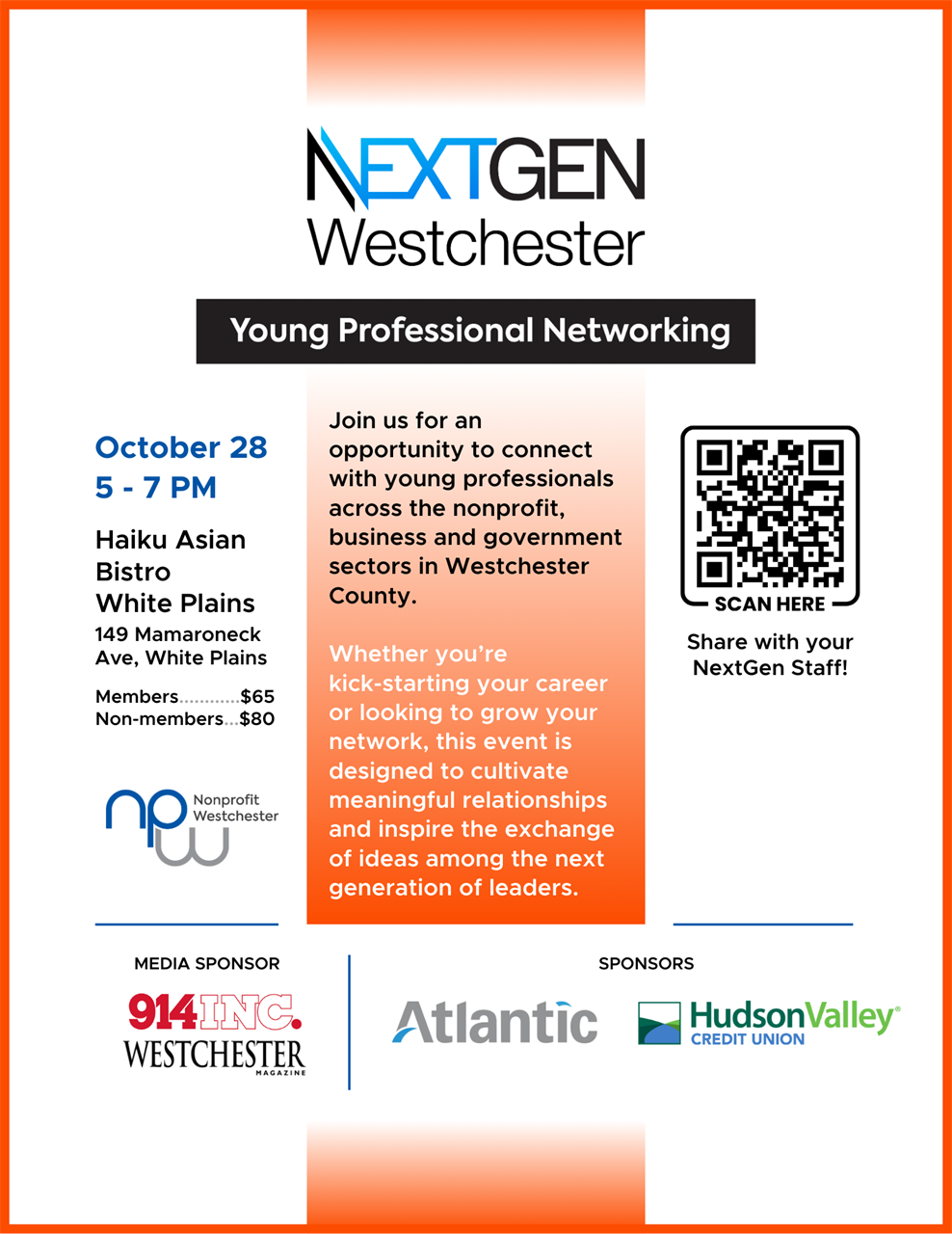
Following the success of last year’s NPW NextGen networking event, we are pleased to once again welcome young professionals to an exceptional gathering of individuals from the nonprofit, business, and government sectors. NPW is committed to providing this and other meaningful opportunities that foster connection, learning, professional growth, and collaboration among young leaders across our Westchester County. Amy Rivera |
|
|
|
|
Hits: 211
|
Over $453 Million Waiting to Be Claimed in Westchester |
Westchester County Executive Ken Jenkins and New York State Comptroller Thomas P. DiNapoli are urging residents to check if they have lost money owed to them. Westchester County residents, businesses, nonprofits, religious institutions and others have about $453 million waiting to be claimed.
Every day the State Comptroller returns more than $2 million to New Yorkers, and today reconnected nearly $12,000 in unclaimed funds to local organizations, including $5,781 for the White Plains City School District, $3,695 for the Business Council of Westchester, $2,175 for My Sisters Place and $330 for the Plumbers and Steamfitters Local 21.
County Executive Jenkins said: “Too often, people don’t realize they’re owed money—and the truth is, you could be one of them. Westchester residents work hard for every dollar they earn, and we want to make sure they get back what’s rightfully theirs. It only takes a minute to check the State Comptroller’s website and see if you or a loved one is owed unclaimed funds. Don’t leave your money behind.”
State Comptroller DiNapoli said: “We’re returning more than $2 million a day to New Yorkers, and my office is working to make it easier than ever to reclaim lost money, including mailing some checks directly to their rightful owners. If you get a check, cash it. There are $453 million reasons why people living in Westchester should visit our website to search for their names, check for family members and reclaim their money.”
Unclaimed funds occur when people lose track of their money or an account and can come from utility deposits, trust funds, old bank accounts, uncashed checks or unused gift cards. These funds never expire, and its quick and easy to check the website: https://www.osc.ny.gov/unclaimed-funds.
There are currently over 648,000 accounts with addresses in Westchester County.
In an effort to speed up returns, the State Comptroller’s Office of Unclaimed Funds (OUF) began mailing checks for newly reported accounts of $250 or less to eligible individuals in January. About 73,000 checks have been sent out, valued at $5.5 million as of August.
Residents who need assistance with the search process can attend an in-person event held by DiNapoli’s office or call OUF at (800) 221-9311, Monday – Friday, 8:00 a.m. to 5:00 p.m.
|
Hits: 165

Hits: 172
|
Hits: 246
WESTCHESTER WATCH: LEGISLATIVE HIGHLIGHTS
Board Invests in Families, Career Training, and Crime-Fighting Technology
WHITE PLAINS, NY — At Monday night’s meeting, the Westchester County Board of Legislators acted to improve life quality for families, passing legislation to ensure diaper changing stations are available to all parents. The Board also expanded educational and training opportunities for adult learners, incarcerated individuals and invested in crime-fighting technology for the Westchester County District Attorney’s office.
Board Chairman Vedat Gashi (D- New Castle, Ossining, Somers, Yorktown) said, “From the playground to the courtroom to our educational centers, and correctional facilities, Monday’s actions show that we’re thinking about every member of our community. Whether you’re a parent changing a diaper, a resident concerned about public safety, or someone seeking a second chance or new career skills, Westchester County is investing in your success.”
New Law Makes Diaper Changes Easier for All Westchester Parents
Westchester families will soon find diaper changing stations in more places, easing outings with young children for mothers, fathers and other caretakers. The Board passed new bipartisan legislation requiring at least one changing station in all County park bathrooms and on each publicly accessible floor of County buildings. Currently, many men’s restrooms lack these facilities, forcing fathers to seek alternatives or ask female family members to handle diaper changes.
The bipartisan DIAPRS Act (Diapers Involve All Parents Regardless of Sex) was co-sponsored by 13 legislators from both parties. The County’s Department of Public Works and Transportation will create a plan indicating where new stations will be installed, their cost, and installation timeline.
Legislator Colin D. Smith (D- Cortlandt, Peekskill, Yorktown), Chair of the Board’s Legislation Committee, said, “I am proud to support the DIAPRS Act, as it underscores the fundamental principle that both parents share equal responsibility in the upbringing of their children. Historically, fathers have faced practical barriers—such as the absence of changing facilities in men’s restrooms—that have limited their ability to support their partners in childcare duties. Fatherhood merits the same respect and recognition as motherhood, and this legislation is an important step toward ensuring that equality.”
Legislator Erika L. Pierce (D- Bedford, Lewisboro, Mount Kisco, North Salem, Pound Ridge, Somers) said, “Being able to change a diaper on the fly is no small need, and this legislation will help us make certain that every caregiver, regardless of their gender, can do that safely and hygienically. This is a real win for dads all across Westchester.”
Board Secures Larger, Safer, More Modern Space for WCC Adult Ed Center
Westchester Community College, part of the State University of New York (SUNY) system, now has approval to relocate the SUNY Westchester Educational Opportunity Center (EOC) to a larger, modern facility, following the Board’s passage of its 11-year lease on Monday night. The new 44,000-square-foot facility on four floors in Building #3 at 28 Wells Avenue in Yonkers will significantly expand the center’s capacity.
The EOC’s tuition-free programs provide crucial pathways for adult students to improve their financial trajectories and those of their families. The center offers vocational training programs, college preparation courses, and workforce development services that help eligible adults gain the skills and credentials needed for higher education or career-focused employment.
Moving from its current South Broadway location will benefit students through improved facilities, 49 parking spaces, and enhanced security. For families, these accessible programs offer opportunities for career advancement without the burden of tuition costs. The expanded facility will also better serve local employers by training more skilled workers for critical industries.
The lease agreement, set to begin in July 2026, ensures these vital educational services remain available to Westchester residents seeking stronger financial futures and contribute to the regional workforce.
Legislator Jewel Williams Johnson (D- Elmsford, Greenburgh, Tarrytown, White Plains), Chair of the Board’s Budget and Appropriations Committee, said, “As Legislator for District 8, home to WCC’s main campus and the district with the most students enrolled, I am proud to support this Local Law securing a new, stable home for the Educational Opportunity Center. Though the site is in Yonkers, this modern facility is an investment in our entire County. By expanding space and resources, we’re opening doors for more residents to gain the skills needed to thrive. This is not just about buildings — it’s about strengthening lives, families, and communities. Education remains our surest pathway to equity, mobility, and prosperity.”
Board Approves HVAC-R Training Program for Incarcerated Individuals
The Board authorized an Intermunicipal Agreement with Southern Westchester BOCES to provide an HVAC-R training course for incarcerated individuals at the Westchester County Department of Correction. The program will run from November 1, 2025 to October 31, 2026 teaching refrigeration and air conditioning basics, award participants a certificate, and provide a scholarship for a follow-up course after release. This initiative, costing under $11,250, helps expand career opportunities and supports successful re-entry into the community.
Majority Whip Terry Clements (D- New Rochelle, Pelham, Pelham Manor) said, “HVAC-R system training for incarcerated individuals is a proven vocational program that equips participants with valuable in demand skills while reducing recidivism and supporting successful re-entry into society.”
Board Greenlights $1.1 Million for Crime-Fighting Technology
Westchester residents will benefit from faster, more thorough investigations thanks to new funding for the District Attorney’s Office. The County Board approved $1,091,000 to purchase modern crime-fighting tools. The funding will pay for improved forensic equipment to analyze evidence, upgraded surveillance systems to track criminal activity, and new computers and software to help prosecutors build stronger cases.
These installation of these technology improvements at DA offices countywide, giving investigators and prosecutors tools to solve crimes more effectively, keeping communities safer.
Hits: 143
$3.20 A GALLON FOR REGULAR FOR CASH
WPCNR MOVING ON. NEWS & COMMENT By John F. Bailey. September 15, 2025:
I drove out to fill up for the coming week Saturday and had a deja’ vu moment as I pulled in to my regular gas stop.
The price of unleaded regular had gone up from a very manageable $2.99 to $3.20.
Is this just the seasonable change over to winter gas?
Is this Middle East manipulation of their production?
Is it oil companies trying to beef up quarterly earnings?
Is this the beginning of steady increases in tariffs? Or all of the above?
Funny did any media even recognize this as a story? It is.
The Newsmobile took its usual 8 gallons but it cost $25.49 not the usual $23.92. All summer long I’ve been paying $2.99 ($36) to fill my 12 gallon tank, now that fill up costs $38.40. I get good mileage but do not do a lot of driving.
The average person commutes by car 50 60 miles if you commute to the city. After the over summer gas prices to encourage vacations, we get spoiled.
(Long paragraph ahead to give you the big picture)
If you earn under a $100,000 A YEAR, and have to commute by car this ominous upturn in the face of inflation which supposedly is now going to go up with the tariff policies the nation is imposing at the same time, the money people in Washington want to lower interest rates (which seems like a sure thing right now, because real estate and the banks and the stock industries have to keep us going, coupled with industries continuing to raise prices which will mean windfall profits for them, you have a real squeeze on those families on everything they need to buy to live and work and eat and take care of their health.
Look what is going up: Food, gas, health care, car prices, clothing, child care, airfare,house prices, layoffs, electricity
Look what is going down: jobs, purchasing power, benefits, aid, clean power

Looking at that new price of gas took me back to 1976 to 1980 when OPEC nations in the Middle East imposed the oil embargo in 1973 when Egypt and Syria crossed into the Sinai and attempted to seize the Sinai lands..this spiked gas prices up overnight. Gas lines around the block, arguments at the pump leading to fist fights. Trains were jammed.


Gas Shortage Sign in Connecticut During Energy Crisis
The gaslines cost President Carter a second term. Why? Here is how Encyclopedia Britannica explains it:
The Jimmy Carter administration began a phased deregulation of oil prices on April 5, 1979, when the average price of crude oil was US$15.85 per barrel ($100/m3). Starting with the Iranian revolution, the price of crude oil rose to $39.50 per barrel ($248/m3) over the next 12 months (its all-time highest real price until March 3, 2008).[11] Deregulating domestic oil price controls allowed U.S. oil output to rise sharply from the large Prudhoe Bay fields, while oil imports fell sharply.
Although not directly related, the near-disaster at Three Mile Island on March 28, 1979, also increased anxiety about energy policy and availability.[12] Due to memories of the oil shortage in 1973, motorists soon began panic buying, and long lines appeared at gas stations, as they had six years earlier.[13] The average vehicle of the time consumed between two and three liters (about 0.5–0.8 gallons) of gasoline an hour while idling, and it was estimated that Americans wasted up to 150,000 barrels (24,000 m3) of oil per day idling their engines in the lines at gas stations.[14]
When the Reagan administration came in, we continued to do business as usual with OPEC
We have learned nothing in 40 years.
We practice the comfortable art of wishful thinking.
Denying reality.
Dumb ideas in the 1930s made the depression worse.
Those same Dumb ideas were used in the 1990s (eliminating the Glass-Seagal Act comes to mind)
Now the 40 years between 1976 and 2025 has apparently taught us nothing.
The country is still partners with the Middle East oil producers they are holding us hostage again in a nice way of course.
(Another long long paragraph to round up the maverick cattle in the congressional herd:)
We are throwing out environmental protections. The oil industry now essentially the Standard Oil Trust recreated has had their way with the new administrations, all of the and restrictions on how they make oil how they pollute and deplete the ozone to the point where climate change has turned weather into something unpredictable and dangerous to the point where the planet is warming to destructive status. However, our “leaders” in congress continue to twiddle their thumbs and do nothing, empowering our arch enemies. And thinking everything will work out and “Happy Days a booming economy, and it is just a bad winter will come back” The more the leaders in Washington think that in both houses and in positions of power say that the more they believe it.
As Governor Hochul said this weekend “You have to govern in reality.”
.