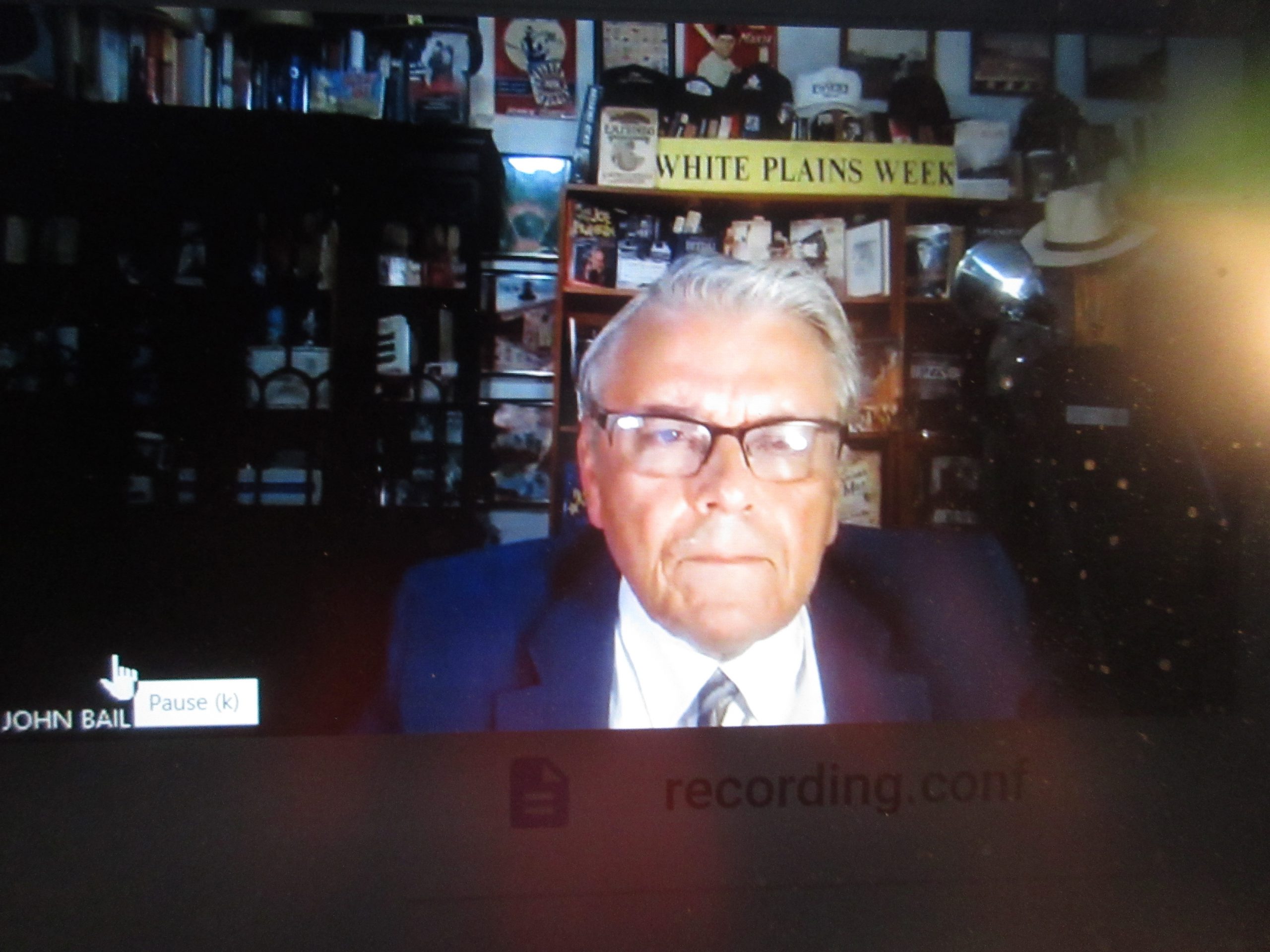
How to Solve the New York State Budget Crisis.

Hits: 0


WPCNR NEWS & COMMENT. By John F. Bailey. November 27,2009:


I have been so close to the solution, it had escaped me. But, it came to me this morning!


Attention Governor Paterson, State Senators and Assemblymen!


I am about to solve your problem.


And keep you in office.


You will go from goats to heroes and heroines faster than you can write a news release.


Why didn’t I think of this before! (Slapping myself on the forehead and asking myself why didn’t I think of this before…)


Can you say, can you consider a “Windfall Bonus Surcharge?”


Perhaps a “windfall profits surcharge?”


Lyndon Johnson did it. Richard Nixon did it.


You can do it.


That is the answer to New York State’s $3.2 Billion budget gap this year and the predicted $15 Billion gap the next two years.


Since the Wall Street ganovim are looking forward to millions in company bonuses for their “performance” this year buying back and forth from each other and promoting the “recovery,” I suggest that New York State take a leaf from what they did for their beloved Metropolitan Transportation Authority. Enact a surtax on Wall Street Bonuses.


A big surcharge, and make it renewable every year until the economy recovers.


Wall Street created the misery America is facing, let them at last do their share in helping New York State recover.


State Senators and Assemblypersons – you don’t want to get “Spano-ed” do you?


No matter how much your Wall Street and banker pals throw at you to keep things the way they are – if the Westchester County electorate can turn on good old Uncle Andy and throw him on the landfill by a 20% margin – it could happen to you.


The villains are smoking their cigars, scooping up the caviar like M & Ms, swilling the Chivas and the Absolut, and the  Dom Perignon in long tall glasses up to here and laughing at us, counting their bonus millions to come.


You, Assemblymen and State Senators can put a stop to the biggest Grand Theft of all time –condoned by the Washington establishment and abetted by the administration—at least in New York State.


Simply slap a hefty 90% (whatever it takes) Bonus Surcharge on all Wall Street bonuses reported in 2009 tax year. Very simple really. And, if you’re really using your head, make it retroactive to 2008. But, that might be harsh.


Can you hear the howls of indignation?


I love the sound of Wall Street whining.


Or, since Comptroller Thomas DiNapoli knows the numbers – let him figure out what kind of percentage on the “Windfall Bonuses” would work to bail New York State out.


After all the Wall Street investment banks were bailed out, and now they are using the equity boost from their stock price rises the last year to pay bonuses to their hucksters who created the mess in the first place. Not only that, but they are not lending — the bankers are holding back the economy! Let’s put that money they are going to pay themselves in bonuses for doing such a “good job” back to work for New York State.


Does it seem fair that we must cut hospital workers, police and fire personnel,  not pay cost of living raises to workers with the disabled, lay off state employees, and cut aid to education when all the greed boys and girls can “give a little back” with friendly New York State persuasion?


The recent public relations contribution by Goldigger Sacks, was a transparent public releations ploy.


After all Washington is already talking about a tax surcharge on all of  the rest of us to pay for the Ahfganistan troop build-up according to this dispatch from the McClatchy papers:


Steven Thomma
McClatchy Newspapers


Posted: Thursday, Nov. 26, 2009


WASHINGTON Abraham Lincoln levied the country’s first income tax to help pay soldiers and buy rifles for the Civil War.


Franklin Roosevelt raised taxes as well, to help pay for World War II.


Lyndon Johnson tacked a temporary 10 percent surtax on top of normal income taxes to help pay for the Vietnam War.


Now, as President Barack Obama prepares to send tens of thousands more U.S. troops to the eight-year-old war in Afghanistan, the pending escalation is raising the question of how the country should pay the growing bill.


Some top Democrats in Congress propose a surtax starting in 2011. Conservatives call it a political ploy from lawmakers who felt no need to raise taxes to pay for things they wanted, such as the economic stimulus package. Economists say that more tax increases could hurt the economy just as it starts to rebound.


Obama hasn’t said what he wants to do. He has, however, signaled that he no longer can afford – economically and perhaps politically – to simply add the cost of the war to the soaring federal debt, as his predecessor did.


For the first time in nine meetings over months of deliberations on the Afghanistan strategy, Obama on Monday invited Budget Director Peter Orszag to sit in, a sign that the White House was weighing the budget consequences of a troop surge that could cost a trillion dollars over 10 years.


I think the legislature, instead of balancing the budget on the backs of us as they did when they cut our STAR EXEMPTIONS last year by 11% to make us pay for their own restoration of school aid to us – a fact unreported by any news outlet except the CitizeNetReporter, I think the Wall Street ganovim need to pay their fair share


Instead of balancing the budget by cutting the STAR EXEMPTION more this year to sneak through a tax increase, please sock it to the analysts, traders and CEOs who are laughing at us.


Why hasn’t any other editorial board suggested this? Seems like a no-brainer to me.


The Wall Street gangs with their tassel loafers, silk bandanas and dollar sign tattoos, and switchblade stilettos will just have to do without the new benz, boat, multiple ski vacations, sunbronzing in the Bams, or twenty-oning in Vegas. I know that would be a sacrifice for them.


What do you think, Albany?


Do you have the guts to do it?


The surcharge on bonuses, or a windfall profits scythe?


It’s your only shot to get reelected.


I don’t think so.


Show us you’re fair.


Show us you’re intelligent.


Show us you really want to hold the ganovim accountable.


Show some leadership.


Have the Comptroller draw up a surcharge structure by Monday and let’s spoil Wall Street’s Christmas.


Also – can we put a surcharge on the Wall Street Holiday Parties,too?


Or will you ignore this obvious solution, saying it would not be fair? You don’t want to jeopardize the economy recovery by penalizing Wall Street.


What recovery?


Your state has no money.


Go get some from Wall Street.


They have it all.


Take it from them.


They created it.


They used taxpayers’ trust to create it.


Let’s have a taxpayer dividend, a taxpayer bonus, o.k.?


Instead of the property tax increases the cities, the feckless school districts, and the bloated counties have in store for us, let Wall Street bail us out for a change.


The ganovim will never miss it.


And they shouldn’t if they have any class.


But they don’t


The ganovim have no class, they just think  they are better than every one else.


But they’re worse.


Posted in Uncategorized

White Plains Turns Away Stepinac Rally, 21-14, to Take Turkey Bowl

Hits: 0

WPCNR PRESS BOX. November 26,2009: Daryl Schuler’s 8 Yard scamper around left end in the waning moments of the Third Quarter today, proved to be the winning TD as White Plains held off a two-touchdown rally by Stepinac in the final stanza to snap Stepinac’s winning streak in the traditional Thanksgiving rivalry between the two teams. White Plains Doug Sewitch made a game-saving shoe-string tackle behind the line of scrimmage to stop Stepinac on 4th down deep in Tiger territory in the third quarter, to stall a touchdown drive, which at the time did not seem like a big play, but as it turned out it was a game-saver.


MR. UNSTOPPABLE, Daryl Schuler, leaves Crusaders behind him as he scores the third and deciding Tiger touchdown with two minutes to go in the Third Quarter. Unofficially, WPCNR had Schuler rushing for over 200 yards in the contest. Schuler keyed two drives in the third quarter to give the Tigers a 21-0 lead. Stepinac rallied on an onside kick to launch a  drive that cut the lead to 21-14 with seven minutes to go in the game, but White Plains held them off on two possessions in the final moments to hold on to the win before approximately 6,000 fans. Schuler also scored the first WP TD midway in the second quarter.

Posted in Uncategorized

America’s Hometown: Plymouth, Massachusetts

Hits: 0

WPCNR ROVING PHOTOGRAPHER. Thanksgiving Portfolio: On this Thanksgiving, let us remember that band of hardy intrepid souls who crossed an ocean in a boat no more bigger than a large Chris Craft and settled in an unforgiving landscape and started a country in the cold landscape of New England. They were helped by Indians who welcomed them, without whom they would not have survived. A salute to this brave band. They sailed into a bay, dropped anchor and just carved out a living after living in incredible conditions in a ship’s hold for weeks, crossing the storm-tossed North Atlantic. Here are some views of America’s first hometown captured by the WPCNR Roving Photographer.


Plymouth Rock Landing. Plymouth, Massachusetts. Photo, WPCNR News


The Mayflower II. Plymouth Harbor. Photo, WPCNR News


Indian Statue welcoming the Pilgrim Settlers. Plymouth, Massachusetts. Photo, WPCNR News.


Governor William Bradford Statue on the Shores of Plymouth Harbor, Plymouth Massachusetts. Photo, WPCNR News.


“Plymouth Rock,” The landing place of the pilgrims. Photo, WPCNR News


Settlers Home, left, circa 1690. Photo, WPCNR News


Church, Plymouth, Massachusetts, late 1700s. Photo, WPCNR News.


The Jury: Old Burial Ground, Plymouth Massachusetts. Last resting place of the pilgrims overlooking Plymouth Harbor. The sacrifices, bravery and perseverence of these persons stand as examples to Americans today. Photo, WPCNR News


Posted in Uncategorized

Thanks for the Memories You Help Create. Westco Honors Supporters

Hits: 0


WPCNR STAGE DOOR. November 25, 2009: In this time of year when many organizations are staging benefits asking for donations, Westco Productions, Westchester’s most popular, loved-by-all-ages nonprofit theatrical company, held an intimate buffet and cocktail gathering at the Westchester Arts Council rehearsal space Westco leases, last week to thank the donors who have supported Westco over the last 30 years.


Serena Russell, center, member of the Westco Board of Directors welcomes donors and supporters of Westco last week. Susan Katz, founder and impressarioess of Westco Productions is at left.


White Plains Susan Katz, founder of  Westco in 1979 has been staging shows and experiences that matter throughout the county, such as  The Magic to Do Players (show business experience for disabled youngsters, lauded by WARC and parents, that is in need of more support to keep the program going), Healing Walls, Bedside Buddies (actors visiting hospital-bound kids),  original educational shows in schools around the county, plus Ms. Katz’s Gold Star Concert Series – the county’s most successful, affordable popular artist’s series, which helps fund Westco’s public service performances. On hand were many of the persons who support the arts, including Chester Day, Jim Benerofe, Assemblyman-White Plains Mayor-Elect Adam Bradley, and others.


Susan Katz — reminisced about how Westco grew out of a county program she originally began in the County Center with Westchester  — which eventually turned into Westco Productions


Among the foundations who support Westco work are The Shirley G. Benerofe Foundation,The Bossak/Heilbron Charitable Foundation,The Louis R. Cappelli Foundation,The Thomas & Agnes Carvel Foundation, Drew Industries, Edith Glick Shoolman Children’s Foundation, Fein Foundation, Glickenhaus Foundation, Hitachi America Ltd., Hitachi Foundation,The H.O.P.E. For Youth Foundation, HSBC Bank USA (which funded the cocktail party) , Hudson Valley Developmental Disabilities Service, Office of Westchester County Hudson Valley National Foundation, James A. Macdonald Foundation, New York State Council on the Arts,New York State Senate, Paul & Harriet Weissman Family Foundation, The Janis & Alan Menken Foundation, The John H. & Ethel G. Noble Charitable Trust, Westchester ARC, Westchester Arts Council, Westchester Delegation of New York State Assembly


Posted in Uncategorized

Larchmont’s Liz Feld Announces Interest in U.S. Senate Opposing Gillebrand

Hits: 0

WPCNR WASHINGTON SHUTTLE. From Bill O’Reilly. November 25,2009: Larchmont Mayor Liz Feld announced today she is interested in running for the New York State Senate Seat now represented by Kirsten Gillibrand. Gillebrand was appointed to the Senate Seat by Governor David Paterson, when Hillary Clinton was appointed Secretary of State. Feld issued this statement today:


“I am actively considering a run for the United States Senate and expect to make a final decision sooner rather than later. The ever-growing debt coming out of Washington is alarming.  It will have serious implications for New York and for the next generation of Americans. Priority number one in this country has to be debt reduction and long-term tax relief. That will be the major focus of my campaign should I formally enter this race.”-Liz Feld 11/25/09 


Ms. Feld ran opposing State Senator Suzi Oppenheimer and lost in 2008.

Posted in Uncategorized

Red Sea: City Runs a Projected $13.9 Million Deficit if Sales Tax Matches08/09

Hits: 0

WPCNR COMMON COUNCIL-CHRONICLE EXAMINER. By John F. Bailey. November 23, 2009: The Common Council and Mayor-Elect Adam Bradley  learned Monday evening from the City Chief Financial Officer, Gina Cuneo-Harwood that the city is running a worst case scenario budget deficit of $13.9 Million.   Harwood said she expected White Plains sales tax to stabilize and equal the last year sales tax “handle”  and only be down 2.6% if sales tax collections over the next eight months equal the last year total of $30,066,929 over those 8 months. To date, as reported on White Plains Week, and this website last week, sales tax is at $14, 879,395.


Common  Council Hears a Bit of Bad News. Common Council hears Chief Financial Officer Gina Cuneo-Harwood, head of table, give the numbers on the budget after four months Monday evening at City Hall. Attending were Adam Bradley, the Mayor-Elect, Beth Smayda and David Buchwald, new councilpersons-elect.


After the meeting, Mayor-Elect Adam Bradley, right,observed to reporters, after Ms. Harwood’s report,  the deficit is finally being reported by the city in line with the deficits he had expected, and told reporters in the rotunda of city hall afterwards he expected it would rise up to $20 Million, not $13.9 Million.


Harwood said declines of $1.2 Million in mortgage recording tax (given the “dead” state of home sales in the city), $400,000 in parking and permit fees, $500,000 in fines and forfeitures, and $6.9 in fund balance, the revenue deficit at this time she forecasts will be $10.4 Million.


If sales tax were to decline farther, as Councilman Benjamin Boykin pointed out, the projected budget deficit of 2009-10 (current year)would be worse. Boykin this would mean there would be no fund balance reserve to help balance the 2010-2011 budget the council has to begin work on.


Harwood drew a bleak picture in 9 of  13 revenue categories. Only one source was up and that was Hotel Occupancy Tax that is expected to bring in $400,000, based on preliminary reports of the first two months of hotel tax from the county, Harwood said. Even with that cash injection new this year the total revenue shortfall is $12.9 million.


Harwood reported that $12.9 million revenue decline was offset by a $2.5 Million decrease in expenditures due to cost-saving measures, for a forecasted variance of $10.4 Million.


Looming Labor Settlement Spikes Deficit


However, Harwood laid out the grim reality that if the labor settlement expected perhaps early next month on the police and fire binding arbitration matter with the city (the decision is now being formulated by the arbitrator), is 3.75% to 4% this would add $3 million to this year’s budget. (The administration had only budgeted a 2% increase in the reserve for financing.  This would increase the $10.4 Million forecast budget gap to $13.9 Million.


Harwood painted the prospect that the fund balance appropriation of $6.9 Million would have to be increased by taking another $7 Million from the $19.8 Million fund balance available June 30 of this year. She said that only $8.9 Million is undesignated and available for making up the deficit, meaning a $7 Million transfer from the fund balance would leave the city with just $1.9 Million going into the 2010-11 budget.


What a difference two months makes.


Council President Benjamin Boykin observed grimly that two months ago Ms. Harwood had said the city was running $3.8 Million in deficit, and that two months later it was up to $10.4 Million.


No member of the council raised any voice as to whether the city was planning to cut more operating expenses to turn back the rising tide of red ink. Tom Roach queried Harwood and Mayor Joseph Delfino as to whether the city departments were operating close to the bone. Delfino said they were. There was no call for new direct spending cutbacks by any council member.


Adam Bradley announced  to reporters after the meeting he would announce  some appointments to his new administration next Monday.


Mayor Joseph Delfino had no comments on the state of the budget after Harwood finished her presentation.


What Might Be Done to Cut the Deficit.


WPCNR notes that a $14 Million deficit could be made up and present city services and work force preserved by a one-time 42% increase in the city property tax, or a budget cut of 21% with a 21% property tax increase. As a general rule to generate one million in revenue, the city property tax has to increase 3%. The present city expense budget would have to be cut $6 Million to achieve a 20% decrease.


The city tax rate would have to raise from $157.06 per $1,000 of assessed valuation to $188.48 per $1,000 of assessed valuation, (providing the assessment roll does not decline. That would mean the city tax on a $650,000 to $700,000 home would go from $2,901 in 2009 to 2010 to $3,473 in 2010-11 if a tax increase was used to make up the other $6 Million and change in the projected deficit, not covered by budget cuts.


To eliminate the deficit next year, without raising city property taxes it would have to be cut $15 Million or more, other revenue to cut into that $15 Million hole. After all if the assessment roll continues its death spiral, the deficit will project even higher into 2010-11 and that has to be made up in more property taxes, too.


The city tax rate would have to go up 42% to clear out the present worse case deficit, the optimistic Ms. Harwood projects assuming the sales tax holds steady to last year’s numbers.


A 42% increase in city property taxes would increase the tax rate from $157.06 per $1,000 of assessed valuation, $66 to $223 per $1,000 of assessed valuation.


You’re wondering what a 42% increase would do to your city taxes? It would mean that the $650,000 to $700,000 home in White Plains would increase from $2,901 in city taxes this year to $4,120 next year — a $1,219 tax increase.


Of course, any tax increase would be subject to additional pressure for expansion if the city assessment role currently at $285.2 Million were to decline further.


Posted in Uncategorized

Where Are the Stimulus $$ Being Spent in Westchester? County Shows You.

Hits: 0

WPCNR COUNTY CLARION-LEDGER. From the Westchester County Board of Legislators. November 23, 2009: In an effort to showcase transparency on stimulus funding within the county, Westchester County Board of Legislators Economic Recovery Task Force Chair Tom Abinanti (D-Greenburgh) announced the launch of a new website to allow county taxpayers to see precisely which entities received economic stimulus money from the federal government.  In addition to how and where the money is spent, the site displays easy-to-understand, user-friendly graphs, charts, and maps.


 “It is vitally important for the public to see how Westchester County is spending federal stimulus funds,” said Legislator Abinanti. “The site contains all categories of stimulus projects within the county and task force reports, as well as links to state, federal and other sites.”  The online resource guide can be found on the County Board’s website, www.westchesterlegislators.com.


 “This is one more example of how the County informs its citizens of resources through our use of technology,” said Board Chairman Bill Ryan (D, WFP-White Plains). “These ARRA funds are being used to build a foundation for economic growth by revitalizing infrastructure, job retention and to advance the creation of new jobs, especially in “green” industries.  As the fiscal crisis deepens, the County Board is doing everything possible to update taxpayers about stimulus projects being used within their communities.”


Earlier this year, Congress passed the American Recovery and Reinvestment Act of 2009 (ARRA) at the urging of President Obama.  A direct response to the looming economic crisis, the Recovery Act has three immediate goals — the creation of new jobs, as well as retaining existing ones, the need to spur economic activity and invest in long-term economic growth and to foster unprecedented levels of accountability and transparency in government spending. 


Posted in Uncategorized

County Legislators Take Up Budget This A.M.

Hits: 0

WPCNR COUNTY CLARION-LEDGER. November 23,2009: Westchester County Board of Legislators various committees swing into action this morning reviewing portions of the outgoing County Executive’s 2010 Budget.


On tap at 10 A.M., the Budget Committee takes up the budget of the County Clerk, Emergency Services, and the Department of Transportation/Westchester County Airport. At 3 P.M., the Environmental Committee examines the Water Distribution System including $9.8 Million for district 3.


The Schedule:


What’s Happening at the County Board: Week of November 23, 2009


Board & Committee Meeting Preview: Items for Discussion


Please note: Latest Board and committee meeting agendas posted online at www.westchesterlegislators.com/calendar


Monday, November 23, 2009


10:00 AM


Budget & Appropriations—Hon. Jose Alvarado, Chair; Coordinator: Sally Schecter (995-2832)


2010 County Operating Budget Review


The following departments are scheduled to appear:


  • County Clerk
  • Emergency Services
  • Transportation/County Airport


3:00 PM


Environment & Energy—Hon. Tom Abinanti, Chair; Committee Counsel: Christopher Crane (995-2104)


  • Water Distribution System Improvements – Water District No. 3: The Committee will review proposed legislation to finance and implement water distribution system improvements in County Water District No. 3 (total authorized amount $9,800,000).


  • Pest Management Committee Report: Representatives of the Pest Management Committee will report on their activities to the Committee.


7:00 PM


Regular Meeting of the County BOARD OF LEGISLATORS – Streamed Live from www.westchesterlegislators.com starting at 7:00 PM


Tuesday, November 24, 2009


10:00 AM


Budget & Appropriations—Hon. Jose Alvarado, Chair; Coordinator: Sally Schecter (995-2832)


2010 County Operating Budget Review


The following departments are scheduled to appear:


  • Planning
  • Information Technology
  • Public Safety


Joint with


Public Safety & Security—Hon. Vito Pinto, Chair; Coordinator: Sunday Vanderberg (995-4604)


  • Tracs Program-Use & Dissemination Agreements: Act authorizing the County to enter into Use and Dissemination Agreements with local municipalities, pursuant to which the County will act as lead agency to coordinate the local municipalities’ use of New York State‘s Traffic & Criminal Software Program and act as liaison with the New York State Police.


  • Prisoner Transport IMA (Greenburgh): Act authorizing the County to enter into an Intermunicipal Agreement (IMA) with the Town of Greenburgh in order to provide reimbursement for prisoner transportation to the Westchester County Jail.  


Posted in Uncategorized

Hospital Scales Back Future Renovation Due to Budget Concerns:Fischer Hill

Hits: 0

WPCNR WEST SIDE STORY. From The Fischer Hill Association. November 23,2009: An update from Fischer Hill Neighborhood Association advises that at the November 18 meeting of the Association, the White Plains Hospital Center has scaled back its expansion plans (recently given a five year site plan window to begin that massive project) to continue to keep the main entrance of the hospital where it is instead of moving it to the Maple Avenue side.


The Association also reports that its Committee for the Preservation of the 1923 Salvation Army Church Building has received a commitment from the Salvation Army that the church will be preserved and will meet Tuesday evening with the Salvation Army architects to learn about their plans.


The Association advises residents that the official White Plains Police contact with the neighborhood is Nicholas Kralik, replacing Kevin Christopher.


Posted in Uncategorized

The Coming of Caesar

Hits: 0


WPCNR NEWS AND COMMENT. Guest Column by Dr. Mark W. Hendrickson, Grove City College, Grove City, Pennsylvania. November 21, 2009: We have a problem. This could be “the big one”—bigger than coping with the Ahmadinejads, Kims, and Chavezes of the world and bigger than our current economic woes. Our republic, our society, may be heading for a crackup. We are bankrupt, both financially and politically.


The source of the problem is democracy. Decades of so-called “progressive” thought have led us to abandon the limited-government, constitutional republic established by our founding fathers. In the name of putting more power into the hands of “the people,” the government has arrogated sweeping powers.


There is a famous passage (possibly cobbled together from several separate statements and authors) that explains democracy’s fatal flaw, the inherently self-destructive element that caused our founding fathers to distrust democracy (google “James Madison on democracy” for more):


“A democracy is always temporary in nature; it simply cannot exist as a permanent form of government. A democracy will continue to exist up until the time that voters discover that they can vote themselves generous gifts from the public treasury. From that moment on, the majority always votes for the candidates who promise the most benefits from the public treasury, with the result that every democracy will finally collapse due to loose fiscal policy, which is always followed by a dictatorship.”


Crude, majoritarian democracy (as in, “there are more of us than there are of you, so we’re going to redistribute your wealth”) inevitably undermines the harmony of society. A free market, as competitive as it is, is based on peaceful, voluntary cooperation. When commerce is free and unfettered by government interference, both sides to a transaction normally gain, thereby promoting social harmony.


Democracy, by contrast, engenders social conflict. Money changes hands by force of the taxman and the threat of imprisonment, not voluntarily. Democracy pits citizens against each other in a sordid squabble whereby many strive to have the state confer benefits seized from their fellow citizens.


Today, Washington redistributes trillions of dollars annually, so the capital is swarmed by battalions of lobbyists, representing myriad special interests, each trying to secure more political rent from government than what government takes from them. As the late, great economist Hans Sennholz described it, the democratic “transfer society” resembles the absurd spectacle of a circle of people, each trying to pick his neighbor’s pocket. How can there be social harmony when everyone is trying to rip off someone else?


This process of using government to extract wealth from other citizens (dubbed “legal plunder” by the 19th-century French economist Frederic Bastiat in his brilliant essay, “The Law”) has reached the point where Uncle Sam is essentially bankrupt. (See “We’re Broke.”) With government spending and deficits soaring under the present administration, the day of reckoning approaches. If foreigners should decide to cut their losses and balk at financing any more of our debt, either interest rates will soar, collapsing the economy, or the Fed will monetize all the debt, collapsing the dollar and the economy.


Can that day of cataclysm be postponed? Perhaps the wealth-redistribution system can be kept on life support a while longer, if government can confiscate a much larger share of the middle class’ wealth (yes, the middle class, because there aren’t enough rich people to finance all of Uncle Sam’s promises) or by dramatically slashing benefits.


When that momentous day arrives, there will be a lot of angry Americans. One might say that the so-called “social contract” will be broken, but the problem is, there isn’t just one such “contract.” There are two, and they are fundamentally and irreconcilably opposed to each other.


One “contract” is the government’s long-standing promise to support those in need. Many Americans have been taught to believe that they are entitled to a share of other people’s property, even if they have contributed nothing of value to society themselves and have made poor choices. The other social “contract” is the traditional implicit promise of America: namely, that if you work hard, you are entitled to the fruits of your labor.


When a financial crackup occurs, those who have been taught to depend on government will demand continued government benefits. If government fails to provide them, those demands could turn violent. On the other hand, if government moves to confiscate a significant chunk of whatever wealth remains in the hands of an already-hurting middle class, then millions of peaceful, law-abiding, hard-working Americans may finally reach the breaking point and rebel, as our forebears did in the 1770s, against a government viewed as abusive and oppressive.


How bad could it get? If the social order breaks down, civil unrest could disrupt markets and shortages of essential goods could occur. The resulting chaos could trigger martial law. A strong leader—a Caesar—could institute some sort of command order. Millions would resent it, but it would be accepted, because the alternative—civil conflict, chronic disorder, and impending starvation—would be intolerable. In such a calamity, Caesar would be the lesser of two evils. The American Republic and Constitution would join earlier democracies in the ashbin of history.


God help us.


— Dr. Mark W. Hendrickson is an adjunct faculty member, economist, and contributing scholar with The Center for Vision & Values at Grove City College.

Posted in Uncategorized