County Executive, Chair of Board of Legislators Announce $274 Million in Capital Projects at Breakfast.

Hits: 478

WPCNR COUNTY CLARION-LEDGER. From the Westchester County Board of Legislators. January 10, 2014:

County Executive Robert P. Astorino and Chairman of the Board of Legislators Michael Kaplowitz today announced agreement on $274 million in vital public infrastructure investments.   The investment represents an increase of $86 million over what was invested last year.  Hundreds of jobs will be created to complete the infrastructure improvements to buildings, roads, bridges, the airport, transportation and the sewer and water districts, as well as funding for a variety of technology upgrades and renovations to county parks.

“These are solid investments that strengthen the county’s assets and create hundreds of jobs, and I want to thank Chairman Kaplowitz for his leadership in pledging to move these projects forward expeditiously,” said Astorino. “By working together, we can speed the benefits of these projects to residents and businesses.”

Kaplowitz added, “The Board of Legislators is committed to working with the administration to move these capital projects through the approval process quickly. We’ve established a new committee structure that will allow us to perform our oversight functions in a more effective and timely way.”

Astorino made the announcement at the Westchester Business Council’s 2014 KeyBank breakfast at Tappan Hill in Tarrytown on Friday morning. “The county executive’s announcement is great news for Westchester County,” said Dr. Marsha Gordon, President and CEO of The Business Council of Westchester. “Investing hundreds of millions of dollars in capital projects is vital for the region’s infrastructure — and benefits residents and local businesses. It creates well-paying jobs, generates significant economic activity and ensures that our roads, bridges and transportations systems are safe, secure and up-to-date. When coupled with the Astorino Administration’s other economic development efforts, these nuts-and-bolts investments show that Westchester County is well-positioned for a bright future.”

The largest road and bridge projects include the rehabilitation of the Ashford Avenue Bridge in Ardsley and the Fulton Avenue Bridge in Mount Vernon and Pelham Manor.

There is $31 million planned for the Parks and Recreation Department for projects that include improvements and renovations to the Maple Moor and Dunwoodie Golf Courses, the County Center, Lasdon Park and the North and South County Trailways.  There is also ongoing restoration work taking place at Playland Park to make repairs to the Boardwalk and Ice Casino, which were damaged by Superstorm Sandy.

The $25 million being spent at the airport will go toward upgrades at the airport terminal systems including airport approach protection, electrical system upgrades, heavy equipment acquisition, repaving of the asphalt surfaces, natural gas pipeline, runway safety improvements, and improvements to the water supply system.

The 2014 sewer improvement projects include: $82 million for the construction of a pumping station in Eastview and $24 million for the engine and boiler replacements, HVAC, odor control and other upgrades to the Yonkers Joint Wastewater Treatment Plant.

Posted in Uncategorized

Bomb Scare at WPHS was “inappropriate note passing” in Class, not Threat Received in Advance, Superintendent Explains. Protocol followed, Connors asserts. Student Identified by Parent.

Hits: 369

.

WPCNR SCHOOL DAYS. By John F. Bailey.  January 9, 2013 UPDATED  9:30 P.M. E.S.T:

White Plains Superintendent of Schools Timothy Connors told WPCNR Thursday morning that White Plains High School absolutely did “follow protocol” in a Monday classroom incident in handling what Connors described as a spontaneous passing of a note from one student to another during a class that was in full session.

Mayor Thomas Roach of White Plains, in a statement on Mr. Roach’s Facebook page, acknowledged five hours ago that the student who passed the note in the class was his 14 year old son. Rumors to that effect had been circulated without attribution in a News 12 report Wednesday evening.

The note, according to Superintendent of Schools Connors,  read “There’s a bomb under my desk,” and was not a threat that was received in advance from outside the school. (That would have  presumably called for an evacuation and search of the building.)

Connors said the teacher in charge observed the note being passed, confiscated the note, asked the student on the spot who had passed the note,  if they had wrote it, and that the student said they had written it.

“The Principal was notified and took disciplinary action, the police were notified, they arrived and investigated, and there was no need to evacuate the school,”  Connors said.

White Plains Commissioner of Public Safety David Chong confirmed Connors statement, issuing this statement: “No evacuation, at no time was there a threat to anyone.  School is handling as strictly  a administrative matter.”

Asked if the  note-passer had been scheduled for a hearing  for disciplinary action, or had been disciplined, Connors said he does not comment on disciplinary matters. The name of the student who admitted to passing the note was not released.

Connors said “In this day and age passing a note with content of that nature is highly inappropriate and will not be tolerated.”

Connors said “This (note passing) was not a threat. There was no such thing. The teacher, principal followed protocol.”

The district does not release the names of students in such matters.

Mayor Tom Roach of White Plains posted a message on his Facebook page, announcing that his older son was the student who passed the note: Mr. Roach’s statement read:

“My 9th grade, 14 year old son exercised poor judgment by writing a note in class he intended to be funny. Clearly, it was not. No one was ever in danger and he owned up to it right away. The school punished him in accordance with their policy and we accepted their determination without question. My son is a good student who loves his teachers, his friends and his school. He regrets this incident deeply. As a family we love him even when he makes mistakes. 

He is not a public figure and we will have no further comment.”

Posted in Uncategorized

Governor Delivers State of the State: More “Controlled” Spending Ahead. Property Tax Freezing.$2 Billion Education Bond, Bonuses for Teachers. Modernizing NYC Airports

Hits: 160

WPCNR ALBANY ROUNDS. From the Governor’s Press Office.(EDITED) January 8, 2013:

Governor Andrew M. Cuomo today delivered his 2014 State of the State Address, outlining a sweeping agenda which builds on the success of the last three years to change the direction of New York State: reducing spending below inflation and personal income growth for the first time in 40 years, transforming a $10 billion deficit into a $2 billion surplus, reducing unemployment in all ten regions of the state, creating nearly 400,000 new private sector jobs (the highest job creation in the state’s history), improving the state’s credit standing with all three rating agencies, increasing exports by 15% and delivering on longstanding progressive policies that have made our state safer, healthier, and fairer for all New Yorkers.

The Governor’s agenda for 2014 continues this progress: controlling spending while cutting taxes to create jobs and make the state more affordable for families, expanding successful economic policies and rebuilding infrastructure, making bold new investments to transform classrooms and improve the quality of education for all students, and continuing to fight for equal rights and opportunity for all New Yorkers.

“Three years ago, we pledged to make the government work for the people of New York, transform our economy by reducing taxes and attracting business, develop world-class schools that give every student opportunity, and make New York a progressive leader once again,” Governor Cuomo said. “Today, we have hundreds of thousands more private sector jobs, a lower unemployment rate in all ten regions of the state, schools that are held accountable for our children’s success, safer communities, more affordable healthcare and a fairer, more just state. This year, we will build on that success. For 2014, we have put forth the most comprehensive plan for the future of New York yet. This agenda will grow the economy and provide fiscal relief to taxpayers, give our schools the classrooms of tomorrow, reimagine infrastructure across the state to face the new climate reality, and take steps to make our communities safer, fairer, cleaner and more progressive. Working together, we will continue to move New York forward.”

Governor Cuomo outlined the following initiatives as part of his State of the State message. For more information, click here.

Continuing New York’s Successful Job Growth Strategy Through

Tax Relief: As a result of fiscal reforms from the last three years, the State is poised to go from a $10 billion deficit when the Governor took office to a $2 billion surplus by 2016-17. Rather than using this revenue to increase spending, Governor Cuomo proposed to instead cut taxes for New Yorkers and businesses to provide taxpayers relief and grow the economy. The proposals have been informed by the hard work of the New York State Tax Reform and Fairness Commission and the New York State Tax Relief Commission. Click here to learn more.

· Freeze Property Taxes for Working Families: New York’s real property taxes are among the highest in the nation, and one of the main reasons is the large number of local governments that place high burdens on taxpayers and harm the business climate. To address this issue and incentivize local governments to share services, the Governor proposed to freeze property taxes for two years, providing nearly $1 billion in tax relief. Residents will be eligible for the freeze in the first year if their local governments stay within the property tax cap. During the second year, local governments must also take concrete steps to share services and reduce costs in order to remain under the freeze.

In Education the Governor proposed–

Launching the Smart Schools Bond Referendum: The Governor proposed a $2 billion “Smart Schools” bond referendum to help bring all of New York schools to today’s high-speed, high-tech world. If approved by voters, the initiative will provide students with state-of-the-art classrooms and leverage technology to transform education. “Smart Schools” funds will be allocated to each school district.

Reward the Most Effective Teachers: Building on the universal implementation of the teacher evaluation system, the Governor proposed creating a Teacher Excellence Fund to help school districts reward the most effective teachers. Highly effective teachers in participating school districts will be eligible for up to $20,000 in annual supplemental compensation through the Teacher Excellence Fund.  (Note: in the news release, the governor was not reported to address the matter of high stakes testing currently a controversial issue across the state.)

In another newsworthy endeavor, the Governor proposed bringinging New York airports into the 21st century:

Modernize Our Airports: the Gateways to New York: New York’s airport system is one of the busiest in the world. JFK and LaGuardia airports are major economic engines for the New York City region, but they are consistently rated among the worst airports in the country in terms of design and overall passenger experience. Governor Cuomo proposed steps to upgrade these two major gateways to the state, including assuming management responsibility for airport construction from the Port Authority to ensure these critical transportation hubs are modernized efficiently and quickly.

In other tax cutting efforts, the Governor proposed to:

· Create a Property Tax “Circuit Breaker” Based on Ability to Pay: 1.9 million low- and middle-income taxpayers pay an effective real property tax rate relative to income that exceeds their income tax rate. To help these families and individuals, the Governor proposed providing tax relief based on ability to pay for households that earn up to $200,000, ultimately providing $1 billion in tax relief by the time the circuit breaker is fully phased in.

· Provide Tax Relief for Renters Facing Significant Housing Burdens: In New York State, 3.3 million households rent their homes, and more than 829,000 low-income renters pay more than 50% of their monthly cash income on housing costs. To provide meaningful tax relief to millions of New York’s renters, Governor Cuomo proposed a refundable personal income tax credit that takes into account a family’s size. The credit will be available to renters with incomes below $100,000 and will provide over $400 million in tax relief for 2.6 million renters.

· Additional Tax Relief to Boost Manufacturing: To propel and spur new economic growth, particularly in Upstate, Governor Cuomo proposed creating a refundable credit that would be equal to 20 percent of a firm’s annual real property taxes. Additionally, to grow existing manufacturers and attract new businesses Upstate, Governor Cuomo has proposed eliminating the corporate income tax rate for Upstate manufacturers. Together, these two proposals would provide approximately $161 million in tax relief to the manufacturing sector.

· Corporate Tax Reform: Streamlining the State’s corporate tax structure is another way to improve New York’s business climate and promote economic growth across the state. To do this, Governor Cuomo proposed merging the bank tax into the corporate franchise tax and lowering the rate to 6.5 percent. This would be the lowest corporate tax rate since 1968 and provide $346 million in annual tax relief to New York’s businesses.

· Estate Tax Reform: New York is one of only 15 states in the country that imposes an estate tax, and New York currently taxes significantly more of an individual’s estate than the federal government, creating a perverse incentive for elderly New Yorkers to leave the state. To address this burdensome tax, Governor Cuomo proposed increasing New York’s exemption threshold to match the federal government, and lowering the top rate to 10 percent over four years.

The Governor seeks to transform education with steps in addition to the referendum and teacher incentives, including

Transforming New York’s Schools

Meeting the education needs of New York’s students gives them a path to prosperity and the tools to become productive members of society, while also providing a more secure economic future for the state. The Governor proposed a series of actions that build on the progress and investments from the last three years to ensure all of New York’s students receive a quality education.

Encourage the Best and Brightest STEM Students to Stay in New York: The Science, Technology, Engineering and Math – “STEM” – fields are one of the fastest-growing sectors of New York’s economy. To encourage the best and brightest students to pursue STEM college degrees and build their careers in New York, Governor Cuomo proposed providing full tuition scholarships to any SUNY or CUNY college or university to the top 10 percent of high school graduates if they pursue a STEM career and then work in New York for five years.

Expand and Launch Another Round of NYSUNY 2020 and NYCUNY 2020: The Governor proposed another round of NYSUNY 2020 and NYCUNY 2020 that have made the State’s public universities incubators of academic excellence and economic growth. This year’s program will expand New York’s strategic investment in higher education performance by awarding plans that use technology to improve academic success and economic development, leverage opportunities for public-private partnerships through START-UP NY, and provide experiential learning opportunities such as internships to better connect students to the workforce.

Make Full-Day Pre-K Universal in New York State: Expanding on last year’s program to provide full-day pre-kindergarten to children in the highest-need communities, Governor Cuomo believes that it is time to fulfill the State’s goal of truly “Universal Pre-Kindergarten” access for all children.

In other efforts to encourage business growth the Governor said he wants to–
· Accelerate the Phase-Out of the 18-A Utility Surcharge: New Yorkers pay some of the highest energy rates in the nation, and the Temporary Utility Assessment (18-A) adds to this burden for families and businesses, particularly energy intensive industries. It is scheduled to phase out by 2018, but Governor Cuomo proposes accelerating the phase-out by $200 million per year, immediately eliminating the temporary surcharge for industrial customers, and hastening the phase out for residents and other businesses.

Form a Joint Executive-Legislative Commission to Reduce Regulatory Barriers on Business: After years of discussion in the state government with no action, the Governor proposed finally creating a joint commission with the state Legislature to identify ways to eliminate regulatory barriers that make it difficult to do business in New York State and hinder economic growth.

Expedite Transmission Projects that Rely on Existing Transmission Corridors and State-Owned Rights-of-Way: The State’s transmission infrastructure is antiquated and is preventing excess power in Upstate New York from entering the downstate region where demand is greatest. Transmission bottlenecks on the aging electric grid increase utility bills and result in adverse environmental and economic consequences when older, less efficient plants must run more frequently. In order to meet the State’s electric needs as well as preserve the quality of life in local communities, the Governor proposes expediting projects that would be built wholly within existing transmission corridors or buried along existing State-owned rights of way such as waterways and highways.

Launch REDC Round 4 to Create Jobs and Attract International Investment: The Governor will launch “Global NY” which will link START-UP NY and the Regional Economic Development Council initiatives to attract international investment and jobs to Upstate New York. In this fourth round of the REDCs, the State will recognize and reward plans that incorporate Global Marketing and Export Strategies. The Governor will also create the START-UP NY Global Initiative to attract foreign direct investment and grow exports by leveraging the START-UP NY program.

Host Global NY International Business Conference: In 2014, the Governor will host the Global NY Summit on World Trade and Investment to reach foreign investors and create a peer learning network among local and regional leaders. Continue to Attract Visitors Upstate and Outdoors: Governor Cuomo will continue to boost the Upstate economy by encouraging New Yorkers and visitors to explore and enjoy the area’s unique treasures. The Governor will create the NYS Adventure License – a driver’s license that includes optional icons for all of an individual’s lifetime license designations, such as the Boater Safety Certificate and the newly created lifetime State Parks’ Empire Pass. The Governor also proposed a bold new outdoors initiative to create 50 new access projects to connect hunters, anglers, bird watchers and other outdoor enthusiasts to untapped State-owned lands. The Governor will also make the revitalization of New York’s park system a continuing priority to attract new visitors. The Governor today unveiled the first ever I Love NY tourism smartphone app. Developed in partnership with AT&T, the app provides comprehensive geographically targeted tourism, recreation, lodging, and dining options in every region of the state. The app is available right now on the Apple app store and Google Play.

Encourage Targeted Investment through Key Industry Summits: Governor Cuomo will host a second round of industry summits to identify additional economic growth opportunities, including a new Upstate-Downstate Food-to-Table Agriculture Summit in 2014 to connect the Upstate agriculture industry to downstate consumers and markets.

Bring World-Class Destination Resorts to Upstate NY: In 2014, the State will begin taking steps to bring world-class destination resorts to Upstate, including appointing a Gaming Facility Location Board to select bidders through a merit-based and transparent process. The process will be designed to produce the best and highest quality bids and bidders in order to increase tourism and encourage Upstate economic growth.

Create the NY Genomic Medicine Network: The Governor proposed establishing the NY Genomic Medicine Network – a partnership that will link the medical community in New York City with the University at Buffalo’s computational infrastructure and biomedical research expertise at the Buffalo Niagara Medical Campus – to develop Upstate New York as a national center for genomic medicine research and jobs.

Progressive, Safer, Cleaner, and Fairer Communities

Launch a Medical Marijuana Program to Research the Feasibility of Medical Marijuana in NYS: Research shows that medical marijuana may help manage the pain and treatment of cancer and other severe illnesses. To provide relief to patients suffering from serious illnesses, Governor Cuomo will use existing statutory authority (The Antonio G. Olivieri Controlled Substances Therapeutic Research Program; PHL Art. 33-A) to launch a pilot medical marijuana research program that allows up to 20 hospitals to provide medical marijuana to patients being treated for serious illnesses. This program will allow qualified eligible participants to seek relief for their symptoms in a safe and legal manner, while also evaluating the effectiveness and feasibility of a medical marijuana system. Its findings will be used to inform future policy.

Create the Commission on Youth, Public Safety & Justice to Help NYS “Raise the Age”: Governor Cuomo proposed establishing a Commission on Youth, Public Safety & Justice to provide concrete, actionable recommendations regarding youth in New York’s criminal and juvenile justice systems.New York remains one of only two states in the nation whose age of criminal responsibility – the age at which youths are treated as adults – is just 16. As a result, in 2012, nearly 40,000 16- and 17-year-olds in New York had their cases handled in adult or criminal court, where they are less likely to receive the services they need. The ultimate goal of the Commission will be to create a roadmap to help these young people become productive, successful adults.

Expand the Successful NY Youth Works Program: Since its launch, the NY Youth Works program has helped more than 13,000 of New York’s inner city young people find employment at 1,270 businesses. Governor Cuomo proposed increasing the size of the program in 2014 from $6 to $10 million for each of the next four years, incentivizing employee retention with additional tax benefits, and providing training funds to employers through the existing Job Linkage Program.

Create and Preserve 3,000 Units of Affordable Housing: Last year, the Governor launched House NY to build and restore more than 14,000 affordable housing units statewide. This year, the Governor proposed a $100 million additional investment to build and preserve 3,000 additional affordable housing units in multi-family developments. This construction would also lead to the creation of more than 3,500 new construction jobs.

Launch the New York State Council on Community Re-Entry and Reintegration: To enhance the State’s efforts to help formerly incarcerated individuals successfully re-enter and remain in the community, and ensure that State policies regarding a broad spectrum of issues – housing, health care, education, employment, and veterans’ services, among others – are aligned with both federal and local efforts, the Governor proposed creating the New York State Council on Community Re-Entry and Reintegration. This Council will bring leadership from a wide array of agencies together with key community stakeholders, including non-profits and re-entry service-providers statewide.

Continue the Fight for the Women’s Equality Act: In the spring of 2013, Governor Cuomo introduced ambitious and transformative legislation to address gender inequality, and this year, the Governor remains deeply committed to advancing sweeping legislative reform to overcome discrimination against women. He will continue the fight for the Women’s Equality Act that will:
· Achieve Pay Equity
· End Family Status Discrimination
· Stop Sexual Harassment in All Workplaces
· Stop Pregnancy Discrimination Once and For All
· Allow for the Recovery of Attorneys’ Fees in Employment and Credit and Lending Cases
· Better Position the State to Address Source of Income Discrimination
· Stop Housing Discrimination for Victims of Domestic Violence
· Protect Victims of Domestic Violence by Strengthening Order of Protection Laws
· Strengthen Human Trafficking Laws
· Protect Freedom of Choice

Ethics Reform: The Governor has made restoring New Yorkers’ trust in state government a top priority. This year, he will continue to fight for reforms to ensure New Yorkers have confidence that their elected officials are serving them faithfully. He proposed new anti-bribery and corruption laws, public financing of elections, independent enforcement and oversight at the Board of Elections, and disclosure of outside clients with business before the State.

Protect Students Against Discrimination and Harassment: In November, New Yorkers were horrified to learn about terrible allegations in the news of anti-Semitism in the Pine Bush Central School District. In response, Governor Cuomo immediately ordered an investigation by the State Police and the State Division of Human Rights. This year, the Governor is taking steps to ensure that all students are protected from any discrimination and harassment.He proposed amending State law to require all public schools to notify the State Education Department (SED), the Division of Human Rights and the State Police if there is a pattern of discrimination or harassment. Schools will also be required to implement SED-constructed plans to remedy these injustices. The Governor also proposed to amend the Human Rights Law to ensure that all students are afforded protection against discrimination.

Stop Repeat Drunk Drivers: Three Strikes and You’re Out: Governor Cuomo will continue to lead the fight against drunk and dangerous driving in 2014. He proposed a new law that will suspend licenses for five years for drivers found guilty of two convictions for driving while intoxicated or driving while impaired by drugs or alcohol in a 3-year period. The law will also provide for full revocation of licenses for those drivers who have three such convictions in their lifetime.

Continue to Crack Down on Youth Texting and Driving: For any person under age 21 convicted of texting-while-driving, Governor Cuomo proposed a new law that will double the period of their license suspension from six months to a year.

Continue to Expand Opportunities for MWBE Businesses: In the last three years, New York State has made great strides in increasing equal opportunity in contracting for Minority- and Women-owned Business Enterprises (MWBE). MWBE participation met and exceeded 20 percent for the first time in the program’s history. To continue this success and increase MWBE economic growth, Governor Cuomo proposed increasing the number of MWBE certified firms by an additional 2,000.

Promote and Grow Businesses Owned by Disabled Veterans: To support and expand economic opportunity for New York veterans and military families, Governor Cuomo proposed steps to establish a 5% goal in the awarding of state contracts to service-disabled veteran-owned small businesses. The Governor will also convene a Veterans and Military Families Summit this year to address the unique issues faced by these New Yorkers and determine how the State can better serve them.

Reimagining New York for a New Reality

Following the impact of Superstorm Sandy, Hurricane Irene and Tropical Storm Lee, Governor Cuomo proposed a $17 billion strategy that will transform New York’s infrastructure, transportation networks, energy supply, coastal protection, weather warning system and emergency management to better protect New Yorkers from future extreme weather.

The State will undertake major projects to improve and strengthen the State’s infrastructure including:
· Replacing and repairing 104 older bridges at risk due to increasing flooding
· Implementing the largest reconstruction of the state’s transit system in 110 years with $5 billion of federal funds;
· Creating a statewide Strategic Fuel Reserve, and statewide gas station back-up power on critical routes throughout the state;
· Hardening the state’s electric grid and creating 10 microgrids for communities and buildings that can operate as “energy islands” in the event of a power outage;
· Building new natural infrastructure to protect New York’s coastline and communities, and provide advanced flood control for inland waterways; and
· Expanding the $650 million NY Rising Community Reconstruction program to allow 124 communities around the state to create their own individualized storm resilience plans.

The Governor also proposed the following initiatives to ensure New York State’s communities are the most prepared for future storms and other emergencies:
· Building the most advanced weather detection system in the nation, with 125 interconnected weather stations to provide real-time warnings of local extreme weather and flood conditions;
· Launching the nation’s first College of Emergency Preparedness, Homeland Security, and Cybersecurity;
· Training a new Citizen First Responder Corps to make New York residents the best prepared in the nation to deal with emergencies and disasters; and
· Issuing special license plates for first responders

The Governor also proposed the Penn Station Access Project to provide critical system resilience to protect Metro-North service in the event of natural or other disasters. The entire Metro-North system currently depends on the Harlem River Lift Bridge and the Mott Haven Junction remaining fully operational to provide access into and out of Manhattan. The need for additional railroad network resiliency was made clear by Superstorm Sandy, when for the first time in their 100-year history, the Hudson River tunnels and two of the East River tunnels into Penn Station were flooded. Using existing tracks, the project would establish new links for the New Haven Line that will bypass both of these corridors. It would also provide Metro-North with access to a second Manhattan terminal in the event an emergency affects Grand Central. The Governor proposed constructing four new stations under the Penn Station Access Project in the Eastern Bronx and the purchase of new rail cars to support the new service. The project will for the first time connect these communities via commuter rail both to Manhattan’s West Side and to the I-95 corridor, whileimproving resiliency against natural and man-made disasters.

The recommendations of the federal Hurricane Sandy Rebuilding Task Force, chaired by U.S. Housing and Urban Development Secretary Shaun Donovan, helped provide a blueprint for the State in its long-term rebuilding process.

For more information, go to http://www.governor.ny.gov/press/01072013-cuomo-biden-future-recovery-efforts.

Launch a Study on Improvements to Enhance North Country Access: Residents and businesses in the North Country region have long expressed interest in better connecting I-81 in Watertown to I-87 in Champlain along a route running south of the Canadian border and just north of the perimeter of the Adirondack Park. Numerous projects have been proposed since the 1950s. New York State will now conduct an in depth feasibility study to develop the most efficient transportation enhancements for this important North Country corridor.

Posted in Uncategorized

Greenburgh Assistant Principal Charged by District Attorney with Grand Larceny 2nd Degree. Allegedly Diverted $778 G’s from Union Funds

Hits: 152

WPCNR POLICE GAZETTE. From the Westchester County District Attorney. January 8, 2014:

Westchester County District Attorney Janet DiFiore announced that Frank Gluberman (DOB 08/16/47) of 47 Waters Edge, Congers, New York was arraigned today on a Felony Complaint charging him with:

  • one count of Grand Larceny in the Second Degree, a class “C” Felony.

The defendant is the Assistant Principal at WoodlandsHigh School in the Hamlet of Hartsdale and former Treasurer of the Greenburgh Teacher’s Federation (GTF) and the Greenburgh Teacher’s Welfare Fund.

frankgluberman

Frank Gluberman

The GTF Welfare Fund receives taxpayer money, which is negotiated by the GTF, to pay for benefits such as: dental, optical, legal services, for school teachers and administrators of the school district.

Over a period of seven years, from 2006 to 2013, the defendant wrote checks to himself from the Greenburgh Teacher’s Fund checking account and GTF Welfare Fund totaling more that $778,995.

The defendant forged the signature of the president of the GTF, as he needed dual signature authorization to make payments.

The checks written by the defendant were to himself, his two daughters, and to pay property taxes on two homes that he owns.

The larceny came to light when in September 2012, the defendant was promoted to Assistant Principal and had to relinquish his position at the treasurer of the union funds.

Greenburgh police and the District Attorney’s office were contacted and initiated an investigation.

The defendant was arrested yesterday by Greenburgh Police.

“This defendant used and abused his position as a trusted educator and administrator to both defraud the taxpayers of the Town of Greenburgh and steal from his colleagues and associates. His cynical raiding of the welfare fund of hundreds of thousands of dollars comes at a time of tight school budgets and dishonors the teachers and administrators who work diligently and professionally on a daily basis in the Greenburgh school system,” said District Attorney Janet DiFiore.

Bail was set at $50,000 cash over $100,000 bond.

His next court date is January 10th, 2014.

The defendant faces a maximum sentence of fifteen years in state prison.

Assistant District Attorney Steven Ronco of the Public Integrity Bureau is prosecuting the case.


Westchester County District Attorney Janet DiFiore announced that Frank Gluberman (DOB 08/16/47) of 47 Waters Edge, Congers, New York was arraigned today on a Felony Complaint charging him with:


  • one count of Grand Larceny in the Second Degree, a class “C” Felony.


The defendant is the Assistant Principal at WoodlandsHigh School in the Hamlet of Hartsdale and former Treasurer of the Greenburgh Teacher’s Federation (GTF) and the Greenburgh Teacher’s Welfare Fund.


The GTF Welfare Fund receives taxpayer money, which is negotiated by the GTF, to pay for benefits such as: dental, optical, legal services, for school teachers and administrators of the school district.


Over a period of seven years, from 2006 to 2013, the defendant wrote checks to himself from the Greenburgh Teacher’s Fund checking account and GTF Welfare Fund totaling more that $778,995.


The defendant forged the signature of the president of the GTF, as he needed dual signature authorization to make payments.


The checks written by the defendant were to himself, his two daughters, and to pay property taxes on two homes that he owns.


The larceny came to light when in September 2012, the defendant was promoted to Assistant Principal and had to relinquish his position at the treasurer of the union funds.


Greenburgh police and the District Attorney’s office were contacted and initiated an investigation.


The defendant was arrested yesterday by Greenburgh Police.

“This defendant used and abused his position as a trusted educator and administrator to both defraud the taxpayers of the Town of Greenburgh and steal from his colleagues and associates. His cynical raiding of the welfare fund of hundreds of thousands of dollars comes at a time of tight school budgets and dishonors the teachers and administrators who work diligently and professionally on a daily basis in the Greenburgh school system,” said District Attorney Janet DiFiore.


Bail was set at $50,000 cash over $100,000 bond.


His next court date is January 10th, 2014.


The defendant faces a maximum sentence of fifteen years in state prison.


Assistant District Attorney Steven Ronco of the Public Integrity Bureau is prosecuting the case.


Posted in Uncategorized

JP Morgan Chase Fined $1.7 Billion for its Conduct Relating to the Madoff Securities fraud.

Hits: 174

WPCNR FBI WIRE. From the Federal Bureau of Investigation. January 7, 2013:

Preet Bharara, the United States Attorney for the Southern District of New York, and George Venizelos, the Assistant Director in Charge of the New York Office of the Federal Bureau of Investigation (FBI), announced criminal charges against JPMorgan Chase Bank N.A. (JPMorgan or the bank), consisting of two felony violations of the Bank Secrecy Act, in connection with the bank’s relationship with Bernard L. Madoff Investment Securities (Madoff Securities). The case is assigned to United States District Judge Lewis A. Kaplan.

Also today, Mr. Bharara announced an agreement (the agreement) with JPMorgan, under which the bank agreed to accept responsibility for its conduct by stipulating to the accuracy of an extensive statement of facts; to pay a $1.7 billion penalty to the victims of the Madoff fraud through a parallel civil forfeiture complaint; to refrain from future criminal conduct and cooperate fully with the government; and to continue reforms of its Bank Secrecy Act (BSA)/Anti-Money Laundering compliance program. The criminal charges are contained in a two-count felony Information (the information). Assuming the bank’s continued compliance with the agreement, the government has agreed to defer prosecution on the information for a period of two years, after which time the government will seek to dismiss the charges.

Manhattan U.S. Attorney Preet Bharara said, “Today, the largest financial institution in the country stands charged with two criminal offenses. Institutions, not just individuals, have an obligation to follow the law and to police themselves. They must exercise due care not only with their own money but with other people’s money also. In this case, JPMorgan connected the dots when it mattered to its own profit but was not so diligent otherwise. Fortunately, with today’s resolution, the bank has accepted responsibility and agreed to continue reforming its anti-money laundering practices. Most importantly, the victims of Bernie Madoff’s epic fraud are $1.7 billion closer to being made whole.”

FBI Assistant Director in Charge George Venizelos said, “JPMorgan failed to carry out its legal obligations while Bernard Madoff built his massive house of cards. Today, JPMorgan finds itself criminally charged as a consequence. But it took until after the arrest of Madoff, one of the worst crooks this office has ever seen, for JPMorgan to alert authorities to what the world already knew. In order to avoid these types of disasters in the future—we all need to be invested in making our markets safer and more equitable. The FBI can’t do it alone. Traders, compliance officers, analysts, bankers, and executives are the gatekeepers of the financial industry. We need their help protecting our markets.”

In separate actions, the United States Department of the Treasury, Office of the Comptroller of the Currency (OCC), and the Financial Crimes Enforcement Network (FinCEN) announced that they had also reached agreements with JPMorgan.

According to the documents filed today in Manhattan federal court:

Since 1986, JPMorgan and its predecessor institutions served as the primary bank through which Madoff ran his Ponzi scheme. Madoff Securities maintained a series of linked checking and brokerage accounts at JPMorgan—collectively referred to as the “703 Account.” Madoff was a client of the bank’s broker/dealer banking group, an investment bank group that comprised personnel from various business lines that serviced the needs of broker/dealer clients. JPMorgan designated a banker as Madoff’s “relationship manager,” who was principally responsible for Madoff’s business with the bank, as well as for the bank’s first-line BSA responsibilities, including certifying that the Madoff relationship “complies with relevant legal and regulatory-based policies” and “that the necessary due diligence has been performed.”

Early on in its relationship with Madoff Securities, JPMorgan, because of its unique vantage point as the firm’s banker, had reason to be suspicious about Madoff. For example, in the early 1990s, the bank learned that Madoff and a prominent client of JPMorgan’s Private Bank (the “private bank client”) were engaged in what looked like round-tripping, check-kiting transactions. Another bank involved in these transactions (Madoff Bank 2) recognized them as suspicious and without any legitimate business purpose. In or about 1996, unlike JPMorgan, Madoff Bank 2 not only filed a suspicious activity report (SAR) with law enforcement, but it actually closed down Madoff’s account. As a result, Madoff moved all of his accounts from Madoff Bank 2 to JPMorgan, where the size of these transactions became much larger. For example, in December 2001 alone, the private bank client engaged in approximately $6.8 billion worth of transactions with Madoff through a series of circular $90 million transfers.

Over the years, other parts of the bank developed their own suspicions about Madoff. In 2006, an entirely different part of the bank—a derivatives trading desk located in the London branch of JPMorgan’s Investment Bank—became interested in Madoff. The trading desk began receiving requests to issue derivatives tied to the performance of various Madoff “feeder” funds—funds that sent investor money to Madoff Securities. In order to hedge and offset the risk created by these products, JPMorgan invested the bank’s own capital directly in the feeder funds. The bank initially issued about $100 million of Madoff-linked products in 2006 and early 2007. Then, because of continued demand for these products, in the summer of 2007, the traders on the London desk sought to write more than $1 billion in Madoff-linked derivatives—a large deviation from normal risk limits, which therefore had to be approved by the Investment Bank’s chief risk officer. In June 2007, the chief risk officer convened a committee to consider authorizing a request for more than $1.3 billion of the bank’s proprietary capital to be invested directly into Madoff feeder funds to hedge the issuance of additional derivative products tied to the performance of Madoff feeder funds. Ultimately, the chief risk officer—who at one point was told by a senior colleague that there is a “well-known cloud over the head of Madoff and that his returns are speculated to be part of a Ponzi scheme”—rejected the proposal and set the Madoff risk limit at $250 million.

Over the next several months, JPMorgan began to have increasing concerns about its exposure to Madoff. In late 2007, the London trading desk hired its own due diligence staff; on the first day of his job, the newly-hired head of hedge fund due diligence was directed to review the Madoff feeder fund positions and offer any insight into how Madoff was able to generate his purported returns. Ultimately, in October 2008, the London desk’s due diligence team circulated a negative memorandum describing continuing concerns about Madoff. Among other things, the memorandum described the inability of JPMorgan to validate Madoff’s trading activity or custody of assets, questioned Madoff’s “odd choice” of a one-man accounting firm, and generally made the point that JPMorgan “seem[ed] to be relying on Madoff’s integrity” with little reason to do so.

About two weeks after the circulation of this memorandum, on October 29, 2008, JPMorgan filed a report with regulators in the United Kingdom, listing Madoff Securities as the “main subject—suspect” and repeating many of the concerns from that earlier memo. The report to the U.K. regulators concluded that Madoff’s returns were “probably” “too good to be true,” and, “as a result,” JPMorgan was withdrawing about $300 million of its own money from the Madoff feeder funds. On November 19, 2008, the bank filed a second report, notifying U.K. regulators about an additional planned transaction involving its position in the feeder funds, lest JPMorgan “be considered party to laundering the proceeds of crime.” As part of a broader directive to reduce generally the bank’s exposure to hedge funds, between October 2008 and Madoff’s arrest on December 11, JPMorgan redeemed approximately $288 million of its approximately $370 million position in the Madoff feeder funds.

Although JPMorgan filed a report with U.K. regulators about its concerns relating to Madoff, it failed to do so in the United States. While the suspicions raised by the U.K. bankers led to JPMorgan’s own redemptions from Madoff feeder funds, during the same time, U.S.-based anti-money laundering compliance officers at JPMorgan never looked into Madoff and nor was the relationship sponsor alerted about the London desk’s concerns. And while certain senior compliance officers in the United States were provided with all of the relevant facts—critically, the London traders’ suspicions about Madoff and the fact of the decades-long banking relationship with Madoff—the U.S. compliance officers did very little to investigate those suspicions, failed to raise these concerns with the bank’s anti-money laundering department, and failed to file a SAR.

Meanwhile, the balance in the 703 Account that held the billions Madoff stole from his customers was being drained. In August 2008, the account held approximately $5.6 billion. But by October 16, 2008—the date of the negative memorandum described above—the balance had fallen to $3.7 billion. And on October 29, when the bank filed its report in the U.K., the balance had fallen another $700 million, to about $3 billion. Over the next five weeks before Madoff’s arrest, a little over $2 billion exited the 703 Account. By the time Madoff was arrested on December 11, 2008, only about $234 million remained in the 703 Account. Of those lost billions, the vast majority went to the very funds in which JPMorgan had built a position, including about $288 million that went back to JPMorgan itself to pay for its redemptions from the feeder funds.

As a result of the foregoing conduct, this office has entered into a deferred prosecution agreement with JPMorgan, which has been submitted today to Judge Kaplan. Pursuant to the agreement, the bank has agreed to the following terms and conditions. First, JPMorgan has agreed to waive indictment and to the filing of the Information, charging the bank with violations of the Bank Secrecy Act. Count one of the information charges that JPMorgan failed to maintain an effective anti-money laundering program in 2008, as required under the BSA. Specifically, count one alleges that JPMorgan failed to enact adequate policies, procedures, and controls to ensure that information about the bank’s clients obtained through other lines of business—or outside the United States—was shared with compliance and AML personnel. Count two of the Information alleges that JPMorgan violated the BSA by failing to file a Suspicious Activity Report on Madoff Securities in October 2008.

Second, pursuant to the agreement, JPMorgan agrees to acknowledge responsibility for its conduct by, among other things, stipulating to the accuracy of a detailed statement of facts.

Third, JPMorgan agrees to pay a non-tax deductible penalty of $1.7 billion, in the form of a civil forfeiture, which the government intends to distribute to the victims of the Madoff fraud, consistent with the applicable Department of Justice regulations, through the ongoing remission process. To effectuate that forfeiture, the office has today filed a parallel civil forfeiture complaint, which has been assigned to United States District Judge Andrew L. Carter, Jr. The $1.7 billion penalty represents the largest ever financial penalty imposed by the Department of Justice for a violation of the Bank Secrecy Act and the largest forfeiture from a bank. Information about the remission process, including instructions for filing a claim, can be found on its website at www.madoffvictimfund.com.

Fourth, JPMorgan agrees to various cooperation obligations, including (1) cooperation in connection with this office’s ongoing investigation of the fraud at Madoff Securities; (2) an obligation to report any criminal conduct by any employee acting within the scope of his employment at JPMorgan; (3) reporting to this office any BSA-related investigation or proceeding in which JPMorgan is involved; and (4) committing no subsequent federal crimes.

Fifth, JPMorgan agrees to continue reforming its bank Secrecy Act/Anti-Money Laundering compliance programs and procedures, consistent with a pair of consent orders previously entered by the bank’s principal regulators, and to provide quarterly reports and other information to this office about its progress.

In consideration of these obligations, the government has agreed to defer prosecution on the information for a period of two years, after which time—assuming that the bank does not violate the agreement—the government will seek to dismiss the charges.

Mr. Bharara praised the work of the FBI. He also thanked the OCC and FinCEN.

This case was brought in coordination with President Barack Obama’s Financial Fraud Enforcement Task Force, on which Mr. Bharara serves as a co-chair of the Securities and Commodities Fraud Working Group. The task force was established to wage an aggressive, coordinated, and proactive effort to investigate and prosecute financial crimes. With more than 20 federal agencies, 94 U.S. attorneys’ offices, and state and local partners, it is the broadest coalition of law enforcement, investigatory, and regulatory agencies ever assembled to combat fraud. Since its formation, the task force has made great strides in facilitating increased investigation and prosecution of financial crimes; enhancing coordination and cooperation among federal, state, and local authorities; addressing discrimination in the lending and financial markets; and conducting outreach to the public, victims, financial institutions and other organizations. Over the past three fiscal years, the Justice Department has filed nearly 10,000 financial fraud cases against nearly 15,000 defendants including more than 2,900 mortgage fraud defendants. For more information on the task force, please visit www.StopFraud.gov.

This case is being handled by the Office’s Securities and Commodities Fraud Task Force. Assistant U.S. Attorneys Arlo Devlin-Brown and Matthew L. Schwartz are in charge of the prosecution.

Posted in Uncategorized

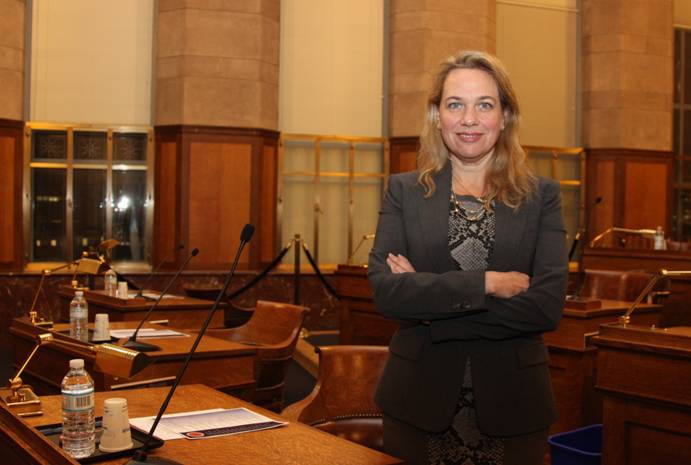
Catherine Parker Joins the County Board of Legislators Representing Rye, Mamaroneck, Larchmont

Hits: 160


catherine parker

WPCNR COUNTY CLARION-LEDGER. From the Westchester County Board of Legislators. January 7, 2013:

Catherine Parker, a Rye City Councilwoman since 2007 and a small business owner with a long résumé of community service, was sworn in officially Monday evening as a member of the Westchester County Board of Legislators (BOL). She will be representing the county’s 7th Legislative District, which includes the Town of Mamaroneck, Village of Larchmont and a portion of the City of Rye. The district was previously represented by Judy Myers, now retired.

“I thank all of the residents of the Seventh District for bestowing me with the privilege to serve them,” said Parker. “My experience in public life has taught me that party politics sometimes unnecessarily distracts us from our common purpose. We are at our better when we work together; and we are at our best when we do so with respect for one another.”

Parker added, “The challenges ahead are significant, and it’s important that we make real progress on a number of important issues, like lessening the tax burden on residents and business owners, protecting our environment and making proper investments in infrastructure improvements, including flood mitigation. I’m excited about working with all of my colleagues on the Board of Legislators in order to strengthen our communities for the future.”

First elected to the Rye City Council in 2007, Parker helped pass budgets that added to the city’s reserve fund and advocated for small businesses. Thanks to her efforts, the City Council passed a number of smart environmental measures. She also helped create the city’s flood action committee.

Parker helped re-establish the Rye Chamber of Commerce in 1998 and served as its first president. In 2003, she worked to re-establish a local chapter of the League of Women Voters, and served as the group’s first president for four years. A big supporter of the arts, Parker is an advisory board member for the Rye Arts Center.


A fourth-generation Westchester resident, Parker resides in Rye with her husband David Walker and two children, Julia (12) and Aidan (6). For over 15 years, Parker has owned and operated a travel store in downtown Rye, which sells clothing and luggage. In addition to her public service, Parker is a member of the Rye Presbyterian Church, Rye Lions Club, and Rye Middle School Parent’s Teachers Association.

Posted in Uncategorized

They’re BAAAAACK! Foreclosures soar 48% in the County: Stricter Financing Rules coming

Hits: 121

 WPCNR County Clarion-Ledger. From the Office of the Westchester County Clerk. January 7, 2014:

“Foreclosure actions filed in Westchester County this year (2013) represent a forty eight percent increase over last year,” reported Westchester County Clerk Timothy C. Idoni who serves as Clerk of the Westchester County Supreme Court where foreclosure actions are heard.

The Office of the Westchester County Clerk reported two thousand six hundred and ninety four (2,694) foreclosure actions started between January 1st and December 31st of this year, as compared with one thousand eight hundred and thirteen (1,813) last year.  Three hundred and sixty nine (369) foreclosure judgments have been entered in 2013, in comparison to two hundred and eight (208) entered during 2012.  A month-by-month breakdown of foreclosure filings follows:

Jan

Feb

Mar

Apr

May

June

July

Aug

Sept

Oct

Nov

Dec

Total

2006

100

119

159

120

140

128

112

136

117

162

130

123

1,546

2007

146

132

252

181

145

156

176

226

179

201

181

191

2,166

2008

243

231

285

224

202

225

238

242

73

96

71

76

2,206

2009

124

154

210

266

240

266

280

319

332

320

249

363

3,123

2010

260

181

222

210

208

262

219

247

216

209

110

141

2,485

2011

133

145

144

150

157

156

155

153

106

113

143

100

1,655

2012

105

131

143

148

150

147

192

162

159

184

142

150

1,813

2013

207

200

275

269

265

210

252

228

138

227

195

228

2,694


“Later this month, stricter mortgage financing rules go into effect which will no doubt curb foreclosures down the road,” shared Idoni.  “But it is hard to predict the immediate impact these rules will have on the Westchester housing market and the current foreclosure burden”.  Westchester Residential Opportunities (WRO), a non-profit housing agency with offices in White Plains and Mount Vernon, conducts Mortgage Default Orientation sessions most Wednesdays in their White Plains Office.  Trained counselors are available to help at (914) 428-4507 or by visiting www.wroinc.org.


Posted in Uncategorized

Benjamin Boykin Sworn In as District 5 County Legislator

Hits: 223


boykinWPCNR COUNTY CLARION-LEDGER. From the Westchester County Board of Legislators. January 6, 2014:

Ben Boykin, a former White Plains Common Councilman and a business executive with a strong record in community service, was sworn in officially tonight as a member of the Westchester County Board of Legislators (BOL). He will be representing the county’s 5th Legislative District, which includes Scarsdale, most of White Plains and a portion of Harrison. The district was previously represented by Bill Ryan, now retired.

“I am looking forward to working with the sixteen other County legislators to hold down property taxes and create new job opportunities for the residents of Westchester,” said Boykin. “Government, at all levels, has to take a proactive approach in increasing economic growth and ensuring a level of prosperity for future generations. That’s no small task, but I think working together we can achieve success.”

Boykin noted that many Westchester residents are still in need of help and support from County government programs, and pledged to preserve child care subsidies for working mothers while also maintaining services for seniors and at-risk youths.

First elected to the White Plains Common Council in 2000, Boykin served as president on three separate occasions (2002-3, 2009-9 and 2010-11). He was a member of the White Plains School Board from 1992 to 1999 as well.

A Phi Beta Kappa graduate of the University of North Carolina and Northwestern University’s Kellogg School of Management, Boykin is a Certified Public Account and former Assistant Treasurer at Nabisco, where he helped the international conglomerate maintain its investment-grade credit rating. Presently, he runs his own financial consulting business, Ben Boykin & Associates, in White Plains.


Posted in Uncategorized

Sunrise Rises Again at the Zoning Board of Appeals–WednesDAY!

Hits: 166

WPCNR NEIGHBORHOOD WATCH. From the Carhart Association. January 6, 2014:
The Zoning Board of Appeals will hear an appeal Wednesday January 8th at 7PM by Sunrise of an interpretation made by Commissioner of Building Amadio on August 14thn(2013) that an “alcoholism facility” does not meet the criteria of a “community residence”.
Should the ZBA over-turn this decision, then Sunrise would need to submit a new Application and begin the process all over again to tae the Nathan Miller Nursing Home on DeKalb Avenue and turn it into an alcohol-drug rehab facility.
Should the ZBA uphold Amadio’s decision, then Sunrise would almost definitely go back to federal court and re-file their discrimination against the disabled lawsuit against White Plains.
Posted in Uncategorized

Slippin’ and a Slidin’ Floods White Plains Hospital ER–Got Salt?

Hits: 201

WPCNR WEATHER SCOOP. From White Plains Hospital Medical Center. January 6, 2013:

The combination of snow, rain and plummeting temperatures can create a nightmarish scenario for anyone walking, even if it is just a few feet. A simple walk to your car or along a sidewalk where there is “Black Ice” can result in serious problems including sprains, fractures, and brain injury.

                        White Plains Hospital, for example, experienced a roughly 50 percent spike in Emergency Room visits on Sunday that can be attributed to the yo-yo-like temperatures. In one hour, in particular, 41 patients were registered for treatment in the ER.

Because temperatures are expected to free-fall today, Hospital staff members are expecting another busy evening. (As of 4 P.M. the temperature in White Plains was at 40 degrees and falling.)

In adults ages 65 and older these types of injuries can be serious: One out of three adults falls each year and they are the leading cause of both fatal and nonfatal injuries, according to U.S. Centers for Disease Control. There were 2.3 million nonfatal injuries in 2010 that resulted in more than 662,000 hospitalizations and cost $30 billion in treatment. Common injuries include fractures of the hip, spine, arm, leg, ankle and hand while more serious spills can even cause traumatic brain injuries.

Posted in Uncategorized