Hits: 0
WPCNR
Assemblyman Adam Bradley of District 89, the attorney who handled Glen Hockley’s case, has also sponsored a completely different bill to amend the law, two weeks ago and is not sponsoring the Attorney General’s bill, Mr. Bradley said late this afternoon. Earlier the Attorney General’s bill had been misidentified by Mr. Bradley’s office as being “Adam’s Bill.” Bradley told WPCNR Monday evening that he would be very happy to work with the Attorney General on formulating an acceptable bill.
The Spitzer legislation (# 87-04) will amend Section 16-102 of the election law to extend Supreme Court jurisdiction to review challenges to results in general elections, and give that court the right to determine the winner or call a new election.
“This situation (Delgado-Hockley) is untenable. Over two years have passed since the White Plains voters cast their ballots, and the individual duly elected to office has not been able to serve, while the individual who actually lost the election has been able to take office, receive a salary, and continues to take actions as a government official, despite the will of the voters to the contrary.”
“This Bill (16043-01-4) creates a remedy. In particular the bill grants the Supreme Court the same jurisdiction to hear general and special election disputes as it currently has to hear primary election disputes. Moreover, the bill explicityly provides that the court can determine who was rightfully elected in a general or special election, or to order a new election if such a determination cannot be made.”
The AG’s memorandum notes that the legislature may not see as pressing a need to enact the legislation, “since similar proposals were made in the 1980s and the early 1990s and not enacted.”
The key language in Mr. Spitzer’s bill reads:
“In the case of a proceeding with respect to a special or general election, the court shall finally determine who was rightfully elected; provided, however, that when such a determination cannot be made, the court may direct the holding of a new election.”
Delgado-Hockley a TurnKey to History
Mr. Spitzer notes the delays in the course of the historic Larry Delgado- Glen Hockley saga which began the night of
Adam Bradley, Mr. Hockley’s attorney appealed Judge Nicolai’s decision on technical grounds and violation of election law to the Appellate Court in
Then Mr. Bradley appealed the case to the New York State Court of Appeals which reversed the decision on
Two years three months of delay. More to Come.
Spitzer’s memorandum notes the two years of delay that have passed since the Supreme Court decision. After the Attorney General filed the quo warranto proceeding in November, 2002, it was challenged as being filed too late. The Supreme Court denied that motion, and the defendant appealed. On
Now, WPCNR notes, the Appellate Division is reviewing Hockley Attorney Thomas Abinanti’s latest challenge, demanding that Judge Nicolai not decide on the case. However, Judge Nicolai is free to rule on the case and make a summary judgment declaring Delgado the winner, and Mr. Delgado is waiting patiently for that Nicolai decision.
The case may be on the threshold of yet more appeals to keep Mr. Hockley in his seat.
Delgado Waits.
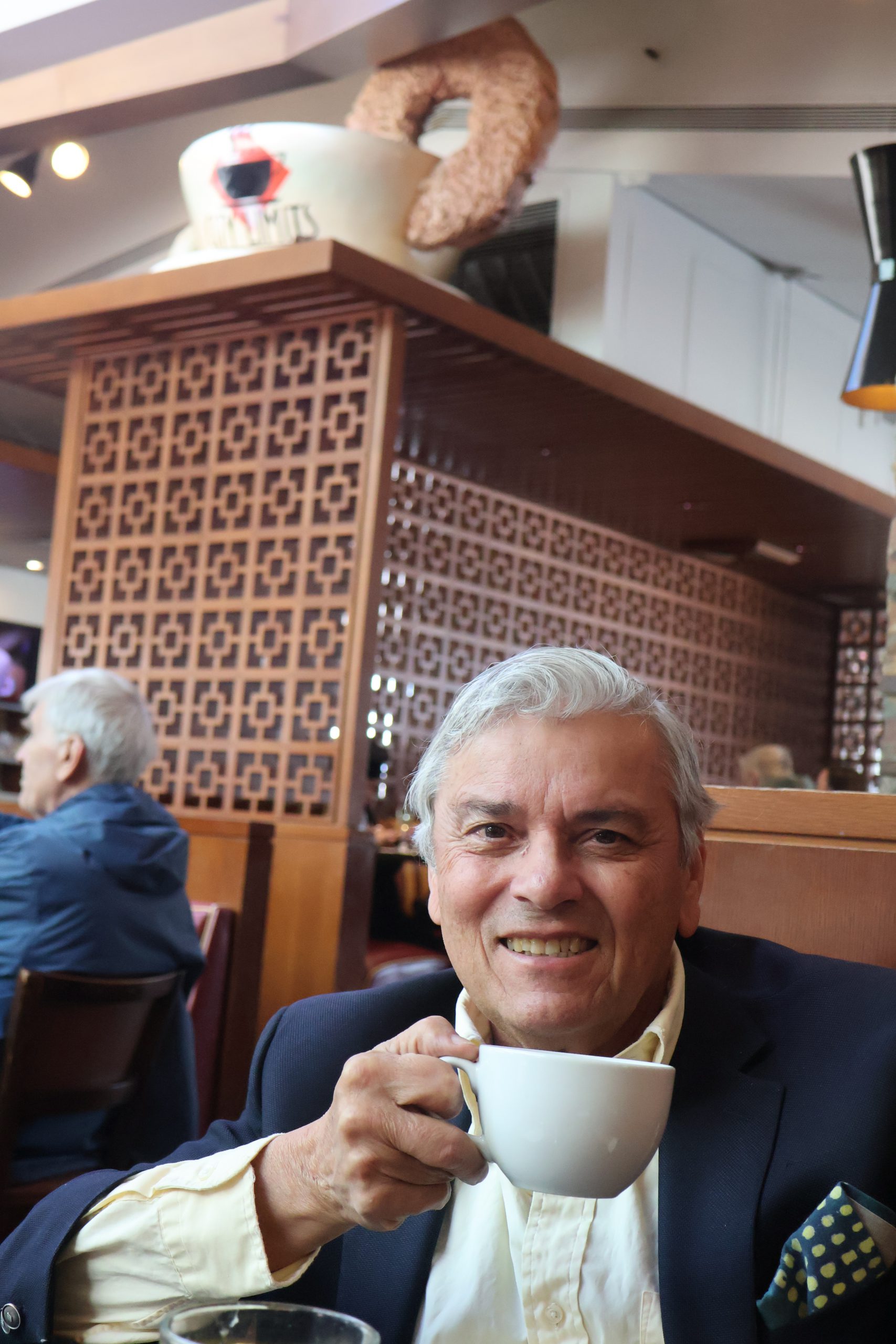
Mr. Delgado, in a restaurant interview last week, told WPCNR that he felt Judge Nicolai would be making a decision soon. He thought with 21 months to go in the term Hockley has withheld from him, that he would be back on the council, saying there just is too much time to stretch out the process the full length of his (Delgado’s) term.
Spitzer Memorandum Witheringly Cites Flaws of quo warranto:
“First, the Attorney General cannot bring a quo warranto proceeding until after the “usurper” has actually taken office. This allows an individual who was not duly elected to be sworn in and to exercise governmental powers, and also subjects that person to possible arrest and the imposition of monetary damages. The Supreme Court instead should be empowered to determine the validity of elections before an individual takes office.”
“Second, the quo warranto process is a lengthy one. It requires a losing candidate to bring his or her complaint to the Attorney General, who must review the allegations and conduct an investigation into the validity of the election. This generally involves gathering evidence and/or testimony from both the winning and losing candidates, as well as other individuals who were involved in overseeing the election. If the Attorney General determines that the election results were incorrect, then the Attorney General may commence a quo warranto action and present this exact same evidence in court, so that the court can make its own determination of the facts. There is no need for this duplication of effort, which creates unnecessary delays. Instead, the aggrieved candidate should be able to commence an action and present proof of the allegations directly to the court.”
“Finally, the quo warranto procedure unnecessarily involves the Attorney General in partisan political disputes. Allegations and counter-allegations relating to the validity of elections frequently are the result of partisan efforts to control local offices. These are matters that the Supreme Court is fully capable of adjudicating, and there is no reason that the Attorney General should be involved in these disputes.”
“The Delgado case mentioned above amply demonstrates the significant problems caused by the current system. That case involved the November 2001 election for three at-large seats to the White Plains Common Council. The declared “winner” of the third seat (Hockley) had 47 more votes recorded than the fourth-place finisher, but one of the voting machines had malfunctioned, and failed to record at least 64 votes for the fourth-place finisher (Delgado). As a result, the “winning” candidate actually got fewer votes than the fourth place finisher (Delgado), who actually won the third seat and should have taken office on
Adam Bradley the Advocate will Sponsor Own Bill.
The Office of Adam Bradley, Assemblyman of the 89th District, said that Assemblyman Bradley is sponsoring new election law legislation in the Assembly. “That’s Adam’s bill,” his office spokesperson told WPCNR, and promised the Assemblyman would be issuing a statement shortly, when WPCNR asked if the Assemblyman was sponsoring Mr. Spitzer’s bill.
Mr. Bradley contacted WPCNR at 6 this evening to clear up confusion: there are presently two bills, the Attorney General’s bill and his bill. However since the Attorney General’s bill was the only one asked about, when WPCNR called Mr. Bradley’s office, and WPCNR was unaware of Mr. Bradley’s bill, confusion resulted.
Suzi Oppenheimer, White Plains State Senator, has also not indicated her position on the Attorney General’s bill or Mr. Bradley’s bill, yet.
Mr. Delgado has not indicated whether he will sue Mr. Hockley for salary paid Mr. Hockley the first two years and 3 months of the term, a possibility, Mr. Spitzer refers to in his Memorandum accompanying the bill.

