Selling Price of WP Homes fell 24% in Last 1/4; 5 Months, 3 Weeks to Sell

Hits: 0


WPCNR THE REALTY RECORDER. February 24, 2010: Rand Realty citing White Plains Multiple Listing Service statistics on White Plains sales in the October, November December 2009 quarter showed that 104 White Plains homes were on the market, and that the average sale price for the 48 homes sold  in that period continued to drop, off 24%.2 from the identical final quarter of 2008.


There were 13 more home sales in the final quarter of 2009 than there were in the final quarter of 2008. The Median Selling Price (meaning exactly half of the 48 homes sold sold for above the median price, and half below it), continued to fall…off 22.5%. That median price is $542,000, down from $700,000 in 2008.


The average selling price was $583,832 for the 48 homes sold in the last quarter, down from the $770,003 average sale price for the 35 homes sold in 2008.


The average time it takes to sell a home continues to be about five months  and 3 weeks. There were 104 homes on the market as of January 1.


In contrast, when all of Westchester County home sales in the fourth quarter are taken into account, across the county the Average Selling Price only declined 1.2% as opposed to the  24.2% decline in White Plains average selling price. This could be taken to mean high end homes are not coming on the market, and that those that are on the market are selling for less than they used to, a lot less. But at least half the homes sold above the $542,500 level.


In the fourth quarter, White Plains homeowners who sold their homes averaged selling their homes for 5.6% less than they originally listed them for. For example if you put your home on the market for $600,000, you could expect to have to take it down $33,000 more before selling.  Across the county homeowners were settling for 7.4% less than their asking price in the final quarter.


There were 54 homes put on the market in White Plains last quarter, and the inventory was 104 as of December 31, 2009.


Rand notes that “median prices fell 25% (in White Plains), however that does not necessarily mean your home lost 25% of its value.


Posted in Uncategorized

Reader’s Digest Will Move Into 44 South Broadway. Take 3 Floors

Hits: 0

WPCNR MAIN STREET JOURNAL. By John F. Bailey. February 24, 2010: WPCNR News has learned from reliable sources speaking on condition of anonymity that Reader’s Digest, the publishing company relocating from its former Chappaqua Headquarters has signed a contract to move into 44 South Broadway, adjacent the White Plains Pavilion Mall, and next to The Westchester Mall.


The company, according to WPCNR sources, will be leasing three floors at “44” which are currently being renovated for the publisher. Previously it had been reported that the Digest was considering moving about 550 employees and was considering White Plains. Now it is definite, according to WPCNR information.

Posted in Uncategorized

City Considers Sewer Tax Based on Water Usage, to Apply to Tax-Exempt Properties

Hits: 0

WPCNR CITY HALL CIRCUIT. By John F. Bailey. February 21, 2010: The Bradley Administration is putting the finishing touches on a new “Sewer Usage Charge” on city water use, Mayor Adam Bradley’s Chief of Staff, John Callahan confirmed to WPCNR Sunday.


John Callahan, City Chief of Staff.


The legislation now in process, WPCNR estimates, could conceivably generate a $1Million windfall to the city, by channeling the surcharge into a new Sewer Fund, similar to the City Water Fund, while spreading the cost of maintaining the city sewers proportionately to the largest users. Presently the cost of maintaining the sewers is charged in the city general fund.


The legislation, not yet presented to the Common Council, Callahan said, would transfer part of the cost of maintaining the city sanitation sewer system to properties now tax-exempt from the city property tax, including county-owned buildings, federally-owned buildings, hospitals, churches and the city school district, all of which are now city property tax-exempt.


Callahan said the legislation would establish a surcharge to each user’s water bill based on the amount of water the property used. The current figure being considered is 10%, he said. He said the average annual water bill in White Plains is $200, and if the 10% tax is passed by the Common Council this means the average additional charge to the water bill would be $20, for homeowners.


A large office building, a hotel, a school, an apartment building owner with considerably higher water usage would pay more of a surcharge proportionately.


 Proceeds of the new “sewer tax” would be dedicated into a special fund (the Sewer Fund to be created) which WPCNR has been told by City will be dedicated to paying the $777,802 budgeted for sewer charges in the general fund. The costs of maintaining the city sewers would be transferred out of the general fund and into the new proposed Sewer Fund.


Callahan said the city did not have numbers yet on exactly how much “surplus” over the annual $777, 802 budgeted in 2009-10 would be generated.


In 2009-10, the water fund is budgeted to generate $10,688,811, approximately 90% of which is based on “services,” supply of water. WPCNR reasons that, if a 10% surcharge (“sewer tax”) is enacted  eventually this would mean the new sewer charge could conceivably generate $1.6 Million and with expenses pegged at $778,000, the city would generate a $922,000 surplus


This might contribute to replenishing fund balance, or other uses, and at the very least, make the city balance sheet look a million dollars better. The surplus possibly would be greater if city water rates go up as expected due to New York  City increasing the rates to White Plains.


Callahan said that communities are allowed to legislate such a surcharge without approval by the state legislature.


News of the plan comes just two days after Mayor Adam Bradley told WPCNR he was considering no further cuts in the current 2009-10 city budget to cut back on the expected deficit  at the close of June, 2010 when the current fiscal year ends.


The Budget & Management Committee meets this Thursday to consider the first look at what city departments are looking at in expenses being budget for 2010-11.


Callahan told WPNCR the program could conceivably begin July 1, the start of the new fiscal year, if approved by the Council.


Asked if the city was considering a commuter tax, Callahan that was not being considered (at this time).

Posted in Uncategorized

George Washington: Still the First and Best Leader

Hits: 0

WPCNR RETROSPECTIVE. By John F. Bailey. (Reprinted from the CitizeNetReporter, 2003): It is George Washington’s Birthday again. The time when we remember the first leader and the best. It is instructive to look at our first leader, George Washington, the father of our nation. 


The Jacob Purdy House, a National Historic Site, was built c. 1721, and served as Washington’s Headquarters both during the Battle of White Plains, on October 28, 1776 and again in 1778.

(Photo, WPCNR NEWS ARCHIVE)


One cannot help be reminded of the snowy winter at Valley Forge, when the bedraggled, poorly equipped rebel army suffered but held together, and attacked the Hessians in Trenton on Christmas Eve, 1776, crossing the Delaware River at night. What kind of man was he that George Washington could inspire his troops against all odds?

Washington was a man of tremendous character. Where did he get this character? He specialized in self-control at an early age:


Reenacters Marching to Raise Old Glory at Purdy House in Honor of George Washington’s Birthday. Photo, 2003 WPCNR News Archive.

According to The American President, Washington, at sixteen, had formed a code of conduct. He had written a book of etiquette with 110 “maxims” to guide his conduct in matters. In this etiquette book he had written, Every action done in company ought to be done with a sign of respect to those who are not present. Sleep not when others speak; sit not when others stand; speak not when you should hold your peace; walk not when others stop;…Let your countenance be pleasant but in serious matters somewhat grave…Undertake not what you cannot perform but be careful to keep your promise.

The character sketch provided by the authors of The American President, this personal “rulebook” was a book that Washington wrote over the years and referred to it often, “for self-control, to avoid temptation, to elude greed, to control his temper. Reputation was everything to him. It had to do with his strength, his size, his courage, his horsemanship, his precise dress, his thorough mind, his manners, his compassion. He protected that reputation at any cost.”


Honor Guard Strikes the Colors to a Drum Roll. Photo, WPCNR News.


Earning respect by example. Quelling rebellion with a few words.

Washington inspired by example. He lived with his troops. He shared hardships with them, and so much was there respect for him that he was able to talk them out of armed rebellion at the end of the American Revolution. Washington had been asked by the army to join them to overthrow the Continental Congress, and make himself King.

Washington had been asked by one of the officers of the rebels to join them, and he wrote them,

You could not have found a person to whom your schemes are more disagreeable. Banish these thoughts from your mind.

Hearing that the rebels who were planning insurrection against the new country due to not having been paid by the Continental Congress, Washington rode to Newburgh, New York, on March 15, 1783, to meet with the dissident insurgents. Washington spoke to the rebellious group, saying,

“Gentlemen, as I was among the first who embarked in the cause of our common Country; as I never left your side one moment, but when called from you on public duty; as I have been the constant companion and witness of your Distresses…it can scarcely be supposed …that I am indifferent to your interests. But…this dreadful alternative, of either deserting our Country in the extremest hour of her distress, or turning our Arms against it…has something so shocking in it that humanity revolts from the idea…I spurn it, as every Man who regards liberty…undoubtedly must.”

The would-be rebels fell silent, digesting what he had said. Then Washington withdrew a letter from Congress, but could not read the text, withdrawing some eyeglasses from his tunic, remarking,

“Gentlemen, you will permit me to put on my spectacles for I have not only grown gray but almost blind in the service of my country.”

The men present were reported to have tears in their eyes at this gesture of Washington’s and abandoned their plot out of respect for their leader.

Washington retired from the military, surprising the entire new country. His action surprised King George III of England, who was astonished that Washington had refused to hold on to his military authority and use it for political or financial gain. The defeated King of England, remarked, “If true, then he is the greatest man in the world.”


Seeker of Diverse Views

As President, George Washington invented the Presidential Cabinet, whom he referred to as “the first Characters,” persons who possessed the best reputations in fields and areas of the jobs he was filling. Washington said on political appointments, “My political conduct and nominations must be exceedingly circumspect. No slip into partiality will pass unnoticed…”

Washington tolerated the relentless clashes between Thomas Jefferson, Secretary of State, and Alexander Hamilton, Secretary of the Treasury, but lectured them on the necessity for tolerance and moving beyond partisanship:


 “I believe the view of both of you are pure, and well meant. Why then, when some of the best Citizens in the United States, Men…who have no sinister view to promote, are to be found, some on one side, some on the other…should either of you be so tenacious of your opinions as to make no allowances for those of the other? I have great esteem for you both, and ardently wish that some line could be marked out by which both of you could walk.”

The Constitution Should be Protected

When George Washington left office after two terms, he made a farewell address which warned future generations of Americans about foreign entanglements and partisanship in the republic:

I shall carry to my grave the hope that your Union and brotherly affection may be perpetual; that the Constitution may be sacredly maintained; and that free government…the ever favorite object of my heart…will be the happy reward of our mutual cares, labors and dangers.”

Washington died in 1800, three years after leaving office in 1797. He was saluted on the floor of congress as being “First in war, first in peace, first in the hearts of his countrymen.”


The Jacob Purdy House where George Washington planned strategy at  the Battle of White    Plains, at a celebrationhosted by the White Plains Historical Society. Photo, WPCNR News Archive


Note: The American President By Philip B. Kunhardt, Jr., Philip B. Kunhardt III, and Peter W. Kunhardt (Riverhead Books. Penguin-Putnam, Inc.,1999) is the source for this information on George Washington.

Posted in Uncategorized

Robert Castelli Officially Sworn In as 89th District New York Assemblyman

Hits: 0

WPCNR ALBANY ROUNDS. From Assemblyman Robert Castelli’s Office. February 16,2010: Bob Castelli was sworn in Tuesday to the office of Assemblyman, New York Assembly District 89, at the Mt. Kisco American Legion Hall, with friends, family members and supporters in attendance, one week after being elected to complete the 11 months remaining in the term of Adam Bradley. Bradley resigned the seat after running and winning the Mayor’s Office in White Plains.


Bob Castelli Being Sworn In by former Justice Charles Banks in Mount Kisco today.


“New Yorkers are hurting,” Castelli said.  “State, county and local governments are running short on funding and taxpayers are continually squeezed for more and more of their hard-earned dollars. Together, we overcame tough odds to win this election.  With your continued support, we can change the way things are done in Albany and work to make the state a more affordable place to live while laying the foundation for a stronger New York”
 
After taking his Oath of Office, Assemblyman Castelli remarked that he is looking forward to getting to work at the state capitol reiterated his campaign pledges to reform Albany’s corruption and dysfunction, and cut state spending and property taxes to reverse New York’s hostile business climate and foster an environment that creates private sector jobs.


“We need to move away from the tax and spend politics of the past and move the state in a new direction, one of fiscal responsibility and reduced burdens. That’s why I was elected to represent the 89th Assembly District and that’s what I will be fighting for in Albany and at home,” Castelli said.   


Castelli noted that he looks forward to shaking up the status quo in Albany and restoring the publics confidence to what is widely regarded as the most dysfunctional state government in the nation. 


“There is no greater threat to the hard-working honest taxpaying citizens than government corruption,” Castelli said. “With every ounce of my being, I will fight to enact the toughest ethics legislation in the nation to put an end to the corruption in Albany and restore public confidence in state government more affordable place to live for hardworking families.”

Posted in Uncategorized

Camp Chill Is Back!: The Joys of Ice-Skating on a Winter’s Day at Winter Break

Hits: 0

WPCNR SPORTS PHOTOGRAPHS OF THE DAY. February 16, 2010: Kirsten Fuerst’s Camp Chill winter break skating camp came back today. Olympians of the future took to the ice this morning at Ebersole Rink with 40 children of all ages breaking out onto the ice for the three-day program. At 9 A.M. they were still coming in.From beginners to seasoned little skaters Camp Chill with its teen and young adult instructors continued the process of passing the joy of skating to future generations.


Camp Chill Begins: Snowballers take the ice.


Jenna Bisignano, second from left, helps a skating mom with details. Still time to register for days 2 and 3..


Beginning skaters went from falling to gliding tentatively along the ice thanks to the encouraging  instruction within minutes. 


Seasoned Ice Princesses were practicing cross-overs.


Yet another level were getting footwork together. Camp Chill continues Wednesday and Thursday.


Posted in Uncategorized

POLICE UNCOVER MAJOR MARIJUANA LAB IN RESIDENTIAL APT BLDG

Hits: 0

POLICE RAID MAJOR MARIJUANA FACTORY


by John Bailey and Peter Katz UPDATED FEBRUARY 14, 2010.


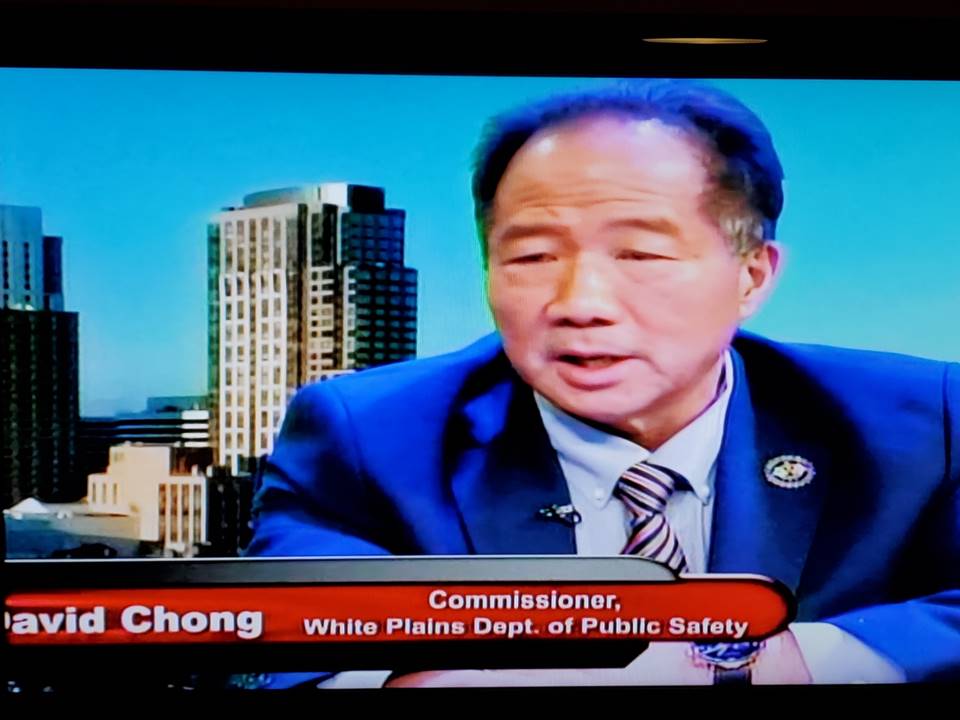
White Plains detectives executed a warrant Saturday at about 2:35 pm and entered a hydroponic marijuana factory located in apartment 11C at 235 South Lexington Avenue. Two suspects, Adam L. Dickerson and Dominique DePietro were taken into custody according to Public Safety Commissioner David Chong and will be charged with felonies.


Reporters John Bailey and Peter Katz were at the scene and observed a large quantity of mature marijuana plants growing in hydroponic (irrigation) containers which were illuminated by bright lights. Also in the apartment were a large quantity of processed marijuana in mason jars, chemicals for processing, and cartons for packaging large quantities, possibly for shipment. Also observed were a number of plastic pouches containing marijuana.


Commissioner Chong said the warrant to enter the apartment was obtained as part of an on-going investigation. He said that due to the danger posed by the chemicals, electrical extensions, and other items, his detectives would be calling on the White Plains Fire Department, the DEA, and possibly others to aid in emptying the apartment. He said that the makeshift electrical wiring and use of chemicals in the apartment posed a hazard to the building’s residents. He said that the apartment apparently was used just for growing the marijuana and the suspects did not live there.


Chong said that the suspects are being held in White Plains and would be arraigned in the next day or two on what he expected would be felony charges. Chong estimated the street value of the marijuana on hand in the apartment at about $30,000. 


The Commissioner said this kind of operation will not be tolerated in White Plains. He charactertized it as a set of conditions that could result in an explosion that would jeopardize the lives of residents of the building.


WPCNR will have further details as they are received.

Posted in Uncategorized

Looking at the Long, Tall, Lean Guy from Illinois

Hits: 0

WPCNR’s The Daily Bailey. By John F. Bailey. February 13, 2010 Reprinted from the WPCNR Archives: No, not whom you think.


Friday marked the birthday of Abraham Lincoln, whose Presidential performance during the Civil War (1861-1865) was perhaps the most admirable of any American President. He had to create things as he went, dealing with a complex political issue: slavery, while deciding to fight a war to preserve a divided nation.


How did Abraham Lincoln handle pressure and political opportunists? He did not have press agents and spinmasters and talk show hosts and superior punditry critiquing his every move and loading him up with advice. 


Though he did have the “crusading editors” and “editorial boards” of his day.  Let’s take a look at the Big Guy  from Illinois


In the days of Lincoln, media coverage was simply print media, however, the amount of reporting on the burning issues of the day was far more detailed than today with dozens of newspapers presenting the chronicles of burning issues. For Lincoln’s presidency was the presidency of the nation’s greatest crisis in its eighty-five year history:


The Civil War.


 It is interesting to note how President Lincoln conducted himself in dealing with America’s interests, its factions, pulling him to free the slaves.

When Lincoln was running for the Presidency in 1860 at the Republican Convention in riproaring Chicago, he was up against James Seward, a powerful New York politician. However, the western states at the time were highly distrustful of the New York political machine. Lincoln won over support by taking a position of what was good for the nation as a whole.

Taking a Position and Working To it

Lincoln first gave notice of his potential for the Presidency when he impressed Horace Greeley, influential editor of the New York Tribune with a fiery speech at the Cooper Union in February, 1860, delivering a sharp criticism of the South, hard on the heels of South Carolina’s secession from the Union. The speech included these words,

You say you will not abide the election of a Republican President. In that supposed event, you say, you will destroy the Union; and then, you say, the great crime of having destroyed it will be upon us! (The northern states) That is cool. A highwayman holds a pistol to my ear, and mutters through his teeth, “Stand and deliver, or I shall kill you, and then you will be a murderer!”

Greeley printed the speech in his Tribune the next day, scooping the other New York papers, by simply asking Lincoln for a copy of the speech. The subsequent printing in the popular Trib, sent Mr. Lincoln on his way. As William Harlan Hale’s biography of Mr. Greeley (Horace Greeley: Voice of the People)describes the scene at “The original Trib’s” offices, as remembered by Amos Cummings, a young proofreader:

Amos Cummings, then a young proofreader, remembered the lanky westerner appearing over his shoulder amid the noise of the pressroom late at midnight, drawing up a chair, adjusting his spectacles, and in the glare of the gaslight reading each galley (of the Cooper Union speech) with scrupulous care and then rechecking his corrections, oblivious to his surroundings.

A Comeback President

Lincoln had been a highly successful politician from Illinois in the 1830s and 1840s. He was three times elected to the state legislature, and The Kunhardts’ The American Presidency reports he was “a recognized expert at forming collations…he learned how to keep secrets, how to trade favors, how to use the press to his advantage. And he cultivated his relationship with the party hierarchy.”

Graff’s book writes that Lincoln was described as “ruthless,” that he “handled men remotely like pieces on a chessboard.” Humor and frankness were character traits.

Lincoln was elected a congressman, only to serve just one term.

Lincoln had been practicing corporate law privately and had lost interest in politics by 1854, until the repeal of The Missouri Compromise, which had restricted slavery to the southern states. Lincoln felt stirred to come back. He spoke out against the spread of slavery, running for the senate in 1858 against William Douglas, unsuccessfully.

Saving the Union His Mantra

As the furor over slavery and the South’s threats to secede grew, a crisis of spirit and purpose in this nation which makes today’s concerns about terrorism as a threat to America, pale in comparison, Lincoln realized that the Union was the larger issue. He expressed this in response to Horace Greeley, editor of the New York Tribune, an influential figure at the Republican (Whig) Convention in Chicago in 1860. Greeley was the kingmaker at the 1860 Chicago convention who eventually swung the western states for Lincoln, giving the man from Illinois the nomination on the third ballot over William Seward, the candidate of the Thurlow Weed “New York Machine.”

Greeley then tried to influence the President-Elect to free the slaves. (Lincoln was being lobbied by the still-powerful Weed-Seward faction to compromise with the southern states on the issue of slavery).

Standing Tall Against Pressure.

Lincoln refused to free the slaves as one of the first acts of his presidency, standing firm to hold the union together, when he announced his attention not to do so, on his way to Washington after being elected. His words in this time of international tension, are worth remembering as America considers starting a war for the first time. Lincoln said:

I have often inquired of myself what great principle or idea it was that kept this Confederacy (the Union, he means), so long together. It was not the mere matter of separation of the colonies from the motherland, but that sentiment in the Declaration of Independence which gave liberty not alone to the single people of this country, but hope to all the world, for all future time. It was that which gave promise that in due time the weights would be lifted from the shoulders of all men, and that all should have an equal chance.

Seeing the Big Picture.

After Fort Sumter was fired upon, Lincoln was pressured harder to free the slaves. Still, Lincoln held firm. Mr. Greeley published a blistering open letter to the President, he called “The Letter of Twenty Millions,” meaning his readers (slightly exaggerated)in The New York Tribune. Greeley’s letter took the President to task for not freeing the slaves now that the Civil War was on, writing, “all attempts to put down the rebellion and at the same time uphold its inciting cause are preposterous and futile.”

President Lincoln responded with an open letter which Greeley published in The Tribune. President Lincoln’s letter is instructive as to how a President moves in crisis, when a nation is ripped apart to calm and state his position. He begins with a conciliatory tone, calming Greeley’s bombast:

…If there be perceptible in it (Greeley’s letter) an impatient and dictatorial tone, I waive it in deference to an old friend whose heart I have always supposed to be right.

As to the policy I “seem to be pursuing,” as you say, I have not meant to leave any one in doubt. I would save the Union. I would save it in the shortest way under the Constitution.

The sooner the national authority can be restored the nearer the Union will be – the Union as it was.

If there be those who would not save the Union unless they could at the same time save slavery, I do not agree with them.

If there be those who would not save the Union unless they could at the same time destroy slavery, I do not agree with them.

If I could save the Union without freeing any slaves, I would do it – if I could save it by freeing all the slaves, I would do it – and if I could do it by freeing some and leaving others alone, I would also do that.

What I do about slavery and the colored race, I do because I believe it helps to save this Union, and what I forbear, I forbear because I do not believe it would help to save the Union.

I shall do less whenever I shall believe what I am doing hurts the cause, and I shall do more whenever I believe doing more will help the cause.

I shall try to correct errors when shown to be errors, and I shall adopt new views so fast as they shall appear to be new views.

I have here stated my purpose according to my views of official duty, and I intend no modification of my oft-expressed personal wish that all men everywhere could be free, Yours

A. Lincoln


Wearied by War

Horace Greeley described the toll the Civil War had taken on Mr. Lincoln, seeing him in person shortly beforeGeneral Lee surrendered. Greeley wrote:

Lincoln’s face had nothing in it of the sunny, gladsome countenance he first brought from Illinois. It is now a face haggard with care and seamed with thought and trouble…tempest-tossed and weatherbeaten, as if he were some tough old mariner who had for years been beating up against the wind and tide, unable to make his port or find safe anchorage…The sunset of life was plainly looking out of his kindly eyes.”


Note: In recognition of Abraham Lincoln’s Birthday yesterday, WPCNR reprints this column about perhaps the greatest President of them all.
Posted in Uncategorized

City January Sales Tax Handle Down 8.2% From Jan. 2009. County Down 4.8%

Hits: 0


WPCNR QUILL & EYESHADE. Special to the CitizeNetReporter. February 11, 2010 UPDATED, FEBRUARY 13, 2010f UPDATES IN ITALICS: White Plains Sales Tax Receipts declined for a second consecutive month in January, down 8.2% year-to-year, according to  figures furnished to WPCNR by the New York State Department of Taxation and Finance.


Westchester County Sales Tax Receipts in the first month of their new fiscal year, 2010, were down 4.8% from January 2009 indicating for the second consecutive month that persons possibly may be avoiding White Plains because of its present sales tax and aggressive parking enforcement policies. County Sales Tax Receipts are down 5% while City of White Plains receipts — the retail center of the county are down 8.2%.


The city is currently thinking about raising its sales tax share to 2-1/2%.


The New York State Department of Taxation and Finance reports White Plains collected $4,093,154.84 in January, 2010, compared to $4,460,803 a year ago, a decline of 8.2%. The city  retail sales subject to sales taxes are recovering slightly. They had been declining at an 11% sustained rate. In December and January the rate has been about 8%.


Westchester County as a whole, on the other hand, collected $36,262,442.60 in January 2010, down 4.8% from its January 2009 collection of $38,092,852.22, according to Susan Burns, Assistant Public Information Director of the New York State Department of Taxation and Finance. Incidentally, the $1.8 Million decline in the first month of the fiscal year already eclipses the proposed cut in non-union personnel health benefits being worried about by the Board of Legislators that would save the county $1.5 Million.


If the White Plains 8% decline does not rebound significantly the next five months, and continues at the present soft pace, the city will generate $41.8 Million in Sales Tax, lowest since 2005-6. It also presents a 16.5% property tax increase to make up the $5.5 Million deficit between the $47.3 Million sales tax expected to be collected in 2009-10 and the $41.8 Million figure reflected by present rate of retail sales.


Posted in Uncategorized

9 Inches of Snow Taken In Stride.

Hits: 0

WPCNR PHOTOGRAPHS OF THE DAY. February 11, 2011: In one of the great performances of public service in a snow storm, White Plains Department of Public Works made sure, steady progress on the winter’s largest snow storm to date and by dawn, sideroads and tucked-away neighborhoods had been cleared masterfully.


 Crews of 45-50 men each worked alternative 8-hour shifts under “The Snow Master,” Commissioner of  Public Works Joseph Nicoletti to assure White Plains and its businesses were reachable (malls are open and reachable, folks)  and functioning smoothly this morning. Schools only took a 2-hour delay, but they really did not need one based on White Plains roads. Here’s how it looked after  approximately 20 hours of snow.


White Plains Thursday morning. 9  inches of snow?


9 Inches? Forget about it!


White Plains DPW Takes Care of it.


Photos by the WPCNR Roving Reporter


Posted in Uncategorized