THINKING THROUGH THE HOLIDAYS THIS YEAR

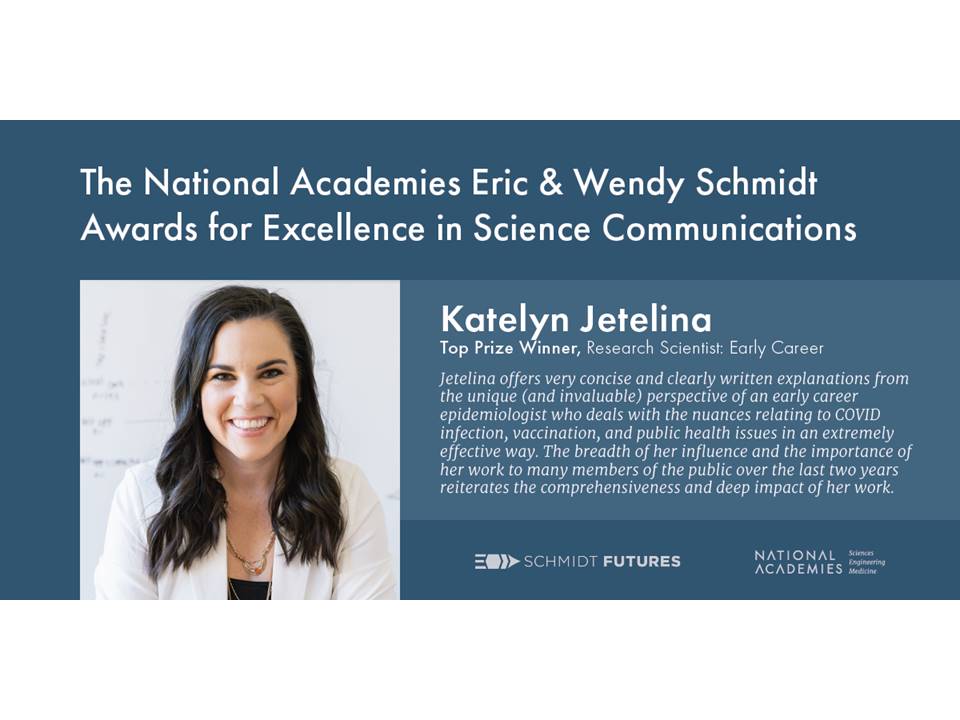
By Dr. Katelyn Jetelina. From Your Local Epidemiologist. November 3, 2022. Reprinted with permission.

It’s been a while since I’ve shared my own chronicles of navigating this pandemic. But it’s getting harder and harder to ignore the questions as we navigate the “choose your own adventure” phase of the pandemic. We are all just trying to figure this out as we go. And, unfortunately, the “normal” viruses are back, too.

This is what my little family is doing this holiday season to stay healthy and enjoy time with our loved ones. I hope it’s useful.

Goal 1: Protect the vulnerable

There are still ~2,600 Americans dying each week from COVID-19. The vast majority are older and vaccinated (but not up to date). As an epidemiologist, I refuse to accept this as the “new normal.”

So my professional bias influences my priorities: Ensure the vulnerable around us (like grandparents) do not end up in the hospital with COVID-19 (or flu or RSV). This means we are going to do everything in our power to break transmission chains before gathering for the holidays. This includes…

At least three weeks before event:

  • Ensure everyone is up-to-date on their flu shot and fall booster (especially the older adults). The fall booster rate is currently 7.3% (20% for those aged 65+).

One week prior to the event:

  • Wear an N95 mask. In public. Everywhere I go. This will help ensure we don’t bring COVID-19 (or flu) to Thanksgiving dinner. It will also help make sure I don’t miss the event because I’m sick. Don’t rely on case levels to influence masking decisions; at this point, they don’t accurately reflect transmission.
  • Cadence testing. Use COVID19 at-home antigen tests two days before seeing grandparents and the morning of. Test everyone. Including my toddlers who scream when I approach their nose.
    • For people who have the virus and are asymptomatic, the average antigen test will catch 44% to 70% of cases. This isn’t perfect, so we don’t rely solely on this layer. But it sometimes works.
    • If I’m positive a few days before the event. We see strong evidence (here, here) that an Omicron infection lasts, on average, 8-10 days. Some people will be infectious for less, and some will be infectious for more. You won’t know unless you test. Antigen tests are very good at telling us when we’re not infectious anymore (very few false positives).
    • If I get a negative after a positive, then I would trust that I’m not contagious anymore and go to the event.
    • With Paxlovid, we are seeing rebounding. So for anyone who tests negative after Paxlovid, I would continue to test for another couple of days. If you turn positive again, assume you’re infectious until you turn negative again.

Day of the event:

  • Ventilation and filtration are powerful tools. This is especially important in the middle of winter when people head indoors. You can use a CO2 monitor if you want to take safety at your family event to the next level.
  • If we have symptoms, stay home. This is lonely during the holidays, but the best thing to do. When symptoms are present, COVID-19 antigen tests are great at detecting highly infectious people: the average antigen test will catch 78% to 97% of cases in the first week of symptoms.
  • False negatives are more common at the beginning of infection, especially with Omicron. If you have symptoms and test negative, it’s a good idea to re-test in 24-48 hours. But, because flu and RSV levels are high right now, there’s a good chance it could be something other than COVID-19, too. Just stay home.

After the event:

  • If an older adult gets infected, make sure they know about Paxlovid and get it within 5 days of symptoms, even just the sniffles.

Goal 2: Limit disruptions

We are trying as much as possible to prevent disruptions in our lives due to sickness. We want to go on our trip. We want to go to holiday parties. We want to help the crowded and broken healthcare systems right now.

This means we are all up to date on vaccines.

This also means wearing masks. (Yes, still.)

I wear one probably 40% of the time when I go to Target, but if there’s an event we’re really looking forward to, I wear it religiously (I usually dial up about four days before the event). This also means wearing a mask while traveling for work so I can come home, not get sick, and spend time with my girls.

Having two little ones and avoiding sickness gets harder and harder because they are in childcare. This is just a reality that I have to accept: they may bring something home.

I’m going to do all I can to not bring it home. I know parents of older kids struggle what to do because there are competing realities: masks help reduce the odds of disruption (including missed school). But peer pressure is real, and they probably don’t wear them when you’re not around, anyways.

We are booking our holiday travel. With boosters, there is very little SARS-CoV-2 could do in the next couple months to cancel our trip. (A severe mutations may be an exception.) I know people travel with COVID-19 and sickness. Staying home is the least I can do to help someone else’s grandparents. We are prepared to cancel flights if we get sick. Make this an expectation with travel this winter.

Other considerations

I’m a healthy young adult who has been incredibly lucky. I recognize not everyone has similar situations. If you…

  • Are the vulnerable person, like an older grandparent: The pandemic is not over for you. And I’m sorry. I would consider wearing a mask throughout winter. This will help with COVID, the flu, and (we think) RSV. If everyone who attends Thanksgiving dinner embraces Goal #1 above, the risk to you is very low.
  • Have a child under 6 months: The pandemic is not over for you either. And RSV and flu should be concerning, too. The biggest advice I have for you is not to let people kiss or hold your baby. They’ll live.
  • Have limited means: One tragic reality is that tools are being stripped away from people who can’t afford to pay for them. Free antigen tests are gone. Free masks are gone. Vaccines are still free, but many places are asking for proof of insurance. Cancelling flights can be super expensive. I recognize taking all of the steps above involves privilege. Instead, choose one or two precautions. It will help.

Bottom line

Yes, we are still in a pandemic. Yes, the “normal viruses” are back. We can enjoy the holidays this year while staying healthy: get vaccinated, mask (at least leading up to the event), ventilate, test and stay home when you’re sick. This seems like a lot— especially when it looks like the greater public isn’t doing anything— but it really isn’t. It’s still worth navigating this petri dish to ensure our loved ones are protected.

Posted in Uncategorized

NYC CONGESTION PRICING A THREAT TO NEIGHBORHOOD FAMILIES IN BOROUGHS ABOVE 60TH STREET


Even More Asthma Inducing Particulate Matter to 

Move to Low-Income Communities

Link to graph 

New York-Nov. 3…A picture may be worth a thousand words, but not the one above. That image — showing the rates of juvenile asthma hospitalizations throughout New York City — leaves one both speechless and breathless, says the group Keep NYC Congestion Tax Free. 

The image shows that the area below 60th Street in Manhattan, where congestion pricing tax toll readers are expected to be installed, has among the lowest rates of juvenile asthma hospitalization in the city, while areas in the Bronx and northern Manhattan, where traffic is expected to be funneled after congestion pricing is implemented, asthma rates are already the highest in the city.

In effect, children in poor communities will be hit with a double dose of harmful particulate matter in their lungs in order to reduce particulate matter in a wealthier area of the city.  

“There’s nothing progressive about poisoning our kids with vehicle exhaust,” said Keep NYC Congestion Tax Free spokesman Joshua Bienstock, “but that’s exactly what the Congestion Pricing Tax plan will do. Children of color will be hit particularly hard, and it’s pretty amazing that so many progressive politicians are simply ignoring that fact. It is, as former Vice President Al Gore might say, an inconvenient truth.” 

Posted in Uncategorized

NYS COMPTROLLER DINAPOLI: NY DRUG OVERDOSES INCREASED DURING PANDEMIC–HALF ARE WHITE. WESTCHESTER MORE THAN DOUBLED OVERDOSES.

Thomas DiNapoli, New York State Comptroller has released a report – that breaks down the counties and boroughs that have seen the most drug overdoses in 2020 by increase since 2010 (figure 5) here: https://www.osc.state.ny.us/reports/continuing-crisis-drug-overdose-deaths-new-york.

Video from the event announcing the findings on Tuesday, which can be embedded is here: https://fb.watch/gx0i3fZD01/.

The Comptroller was at THRIVE in Westbury, a community and outreach center for people in recovery on Long Island. There is very good sound from the fourth speaker- a young woman named Samantha Morales, who survived a drug overdose after receiving Narcan 3 times. Her title is Program Manager, THRIVE East End.

Key Takeaways from report:

  • Drug overdose fatalities surged during the pandemic.
  • Opioid-related deaths increased by 68% between 2019 – 2021, claiming the lives of nearly 5,000 New Yorkers in 2021 alone.
  • The surge was largely due to a significant increase in deaths from opioids with illicit fentanyl and similar synthetic opioids.
  • Overdose deaths statewide from opioids and all drugs in 2021 surpassed the previous 2017 high by more than 1,700 fatalities and are nearly 3,900 greater than in 2010.
  • 85% of drug overdose deaths involved opioids in 2021. The rise in fentanyl-related deaths has been shocking, growing from 11% of all drug overdose deaths in 2010 to 78% in 2021.
  • Fatalities grew across all racial and ethnic groups. Death rates for all drug overdoses increased five-fold for Black New Yorkers, quadrupled for Hispanic or Latino New Yorkers, and nearly tripled for White New Yorkers.
  • In 2020, ten counties or boroughs exceeded the statewide average of 25.4 deaths per 100,000 people.
  • (Figure 5) They include all five boroughs — The Bronx, Staten Island, Manhattan, Brooklyn, and Queens.

Recommendations

  • Improve efforts to track funding, as current financial reporting doesn’t clearly identify total state, federal and local resources dedicated to addressing opioid crisis. 
  • Establish clear performance targets and regular reporting on program outcomes.
  • Ensure direct funding and support for communities facing the greatest challenges.

WHO’S DYING OF OVER DOSES? KEY EXCERPTS FROM COMPTROLLER’S REPORT

Posted in Uncategorized

Bus Patrol, Company Specializing in Improving School Bus Kids’ Safety Finds Flagrant Passing of Stopped School Buses in Hendrick Hudson School District: 200 Violations a Month

WPCNR SCHOOL DAYS. From BusPatrol.com. November 1, 2022:

Editor’s Note: BusPatrol is a safety technology company with the mission of making the journey to and from school safer for children. BusPatrol’s safety programs change driver behavior and create a culture of awareness and responsibility around school buses. In addition, they provide accessibility for school districts and municipalities to modernize their entire school bus fleets by outfitting them with the latest stop-arm, route planning, and route execution technology. 

BusPatrol and the Hendrick Hudson School District today released the results of a pilot program aimed at deterring school bus stop-arm violations. Data shows that over the course of two months, nearly 400 motorists illegally passed a stopped school bus. 

The pilot program also captured video footage of close encounters, providing the public a firsthand look into the dangerous driving behavior that routinely endangers students when getting on and off a school bus. The footage was captured using cameras that were installed on stop-arms affixed to 49 school buses.

The Hendrick Hudson School District obtained the data through a pilot program with BusPatrol, the leading stop-arm enforcement technology provider in North America. 

From September through October, school buses equipped with AI-powered stop-arm cameras recorded a total of 367 illegal passings.

The school district serves approximately 2,300 students in five schools in Buchanan, Verplanck, Crugers, Montrose, and portions of Cortlandt Manor, Croton-on-Hudson, and Peekskill.

In addition to providing transportation to the five Hendrick Hudson schools, the district also provides transportation services to 15 out-of-district private, parochial and special needs schools.  

Liz Gilleo, the Transportation Supervisor at the Hendrick Hudson School District and President of the Lower Hudson New York Association for Pupil Transportation, said:

“The stop-arm camera program is incredibly important to the safety of our children. Each day school buses are passed, and our children are at risk of being hit and injured or killed by a passing motorist. I have been working on getting this program in our county since 2021 and I feel that saving our children is extremely important.”

“When drivers illegally pass stopped school buses, they put the lives of students in danger. The information released today demonstrates the need for sensible photo enforcement of these violations on our roads. One close-call is too many, and the video evidence of nearly 400 close-calls is compelling.

The Hendrick Hudson School District has taken leadership in generating the data to support Westchester County as it considers implementing a school bus safety program that gives schools and law enforcement the tools they need to keep our kids safe,” said Jean Souliere, CEO and Founder of BusPatrol.   

Westchester is the only county in the New York City region that has not yet authorized a school bus safety program.

As a result, school districts and police departments across the county are denied the opportunity to utilize advanced photo enforcement technology to catch lawbreakers and issue citations to motorists who illegally pass a stopped school bus.

Neighboring suburban counties including Rockland, Dutchess, Putnam, as well as Suffolk County and several municipalities in Nassau County on Long Island, have all approved bus safety programs.

According to the Governor’s Traffic Safety Committee, stopped school buses are passed illegally an estimated 50,000 times per school day.

In New York State, it is illegal to pass a stopped school bus when the large red visual sign is in operation. Flashing lights mean the bus is picking up or discharging students. All motorists are required to stop whether approaching a stopped school bus from the front or overtaking it from the rear. This applies whenever their visual signal is in operation on any public highway, street, or private road.

As of August 19, 2019, a school bus camera law in New York authorizes school districts and municipalities to use stop-arm cameras on school buses to hold vehicle owners responsible for their cars passing a stopped school bus. 

How it Works: This program allows a school district to equip school buses with stop-arm cameras designed to capture images of vehicles illegally passing stopped buses. The images are then transmitted to the municipality and used to identify the owners of vehicles and to send notices of liability to the owners. Tickets given by these cameras can result in fines of $250 for a first violation up to $300 for each violation in an 18-month period. The owners may then pay a fine or contest their liability.


Posted in Uncategorized