
Hits: 118
|
Hits: 118
|
Hits: 108
WPCNR ALBANY ROUNDS. From the Governor’s Press Office. January 4, 2017:
Governor Andrew M. Cuomo today announced that two men in the City of Newburgh were arrested and charged with illegally selling synthetic marijuana and violating state tax law.
The arrests and charges that were made are part of a series of statewide enforcement actions that have resulted in an increased police presence to combat the illegal sale of K2 in communities throughout New York.
“Make no mistake: K2 and other synthetic drugs are dangerous and a risk to public health and safety,” Governor Cuomo said. “Selling this poison is illegal and this administration will continue to do everything in its power to get K2 off the streets and hold accountable those who continue to break the law.”
Under current law, an owner of an establishment, as well as any other person possessing, distributing, selling or offering prohibited synthetic marijuana for sale, will face a fine up to $500 and/or up to 15 days in jail. Civil penalties include a fine up to $2,000 per violation.
Synthetic marijuana is marketed as legal and typically consists of plant material coated by chemicals, which are supposed to mimic THC, the active chemical compound in naturally grown marijuana.
The drugs are marketed as incense, herbal mixtures, or potpourri in order to mask their true purpose. Brand names for substances include Spice, K2, Green Giant, Smacked, Wicked X, AK-47, Geeked Up, Ninja, Caution, Red Giant, Scooby Snax, and Keisha Kole.
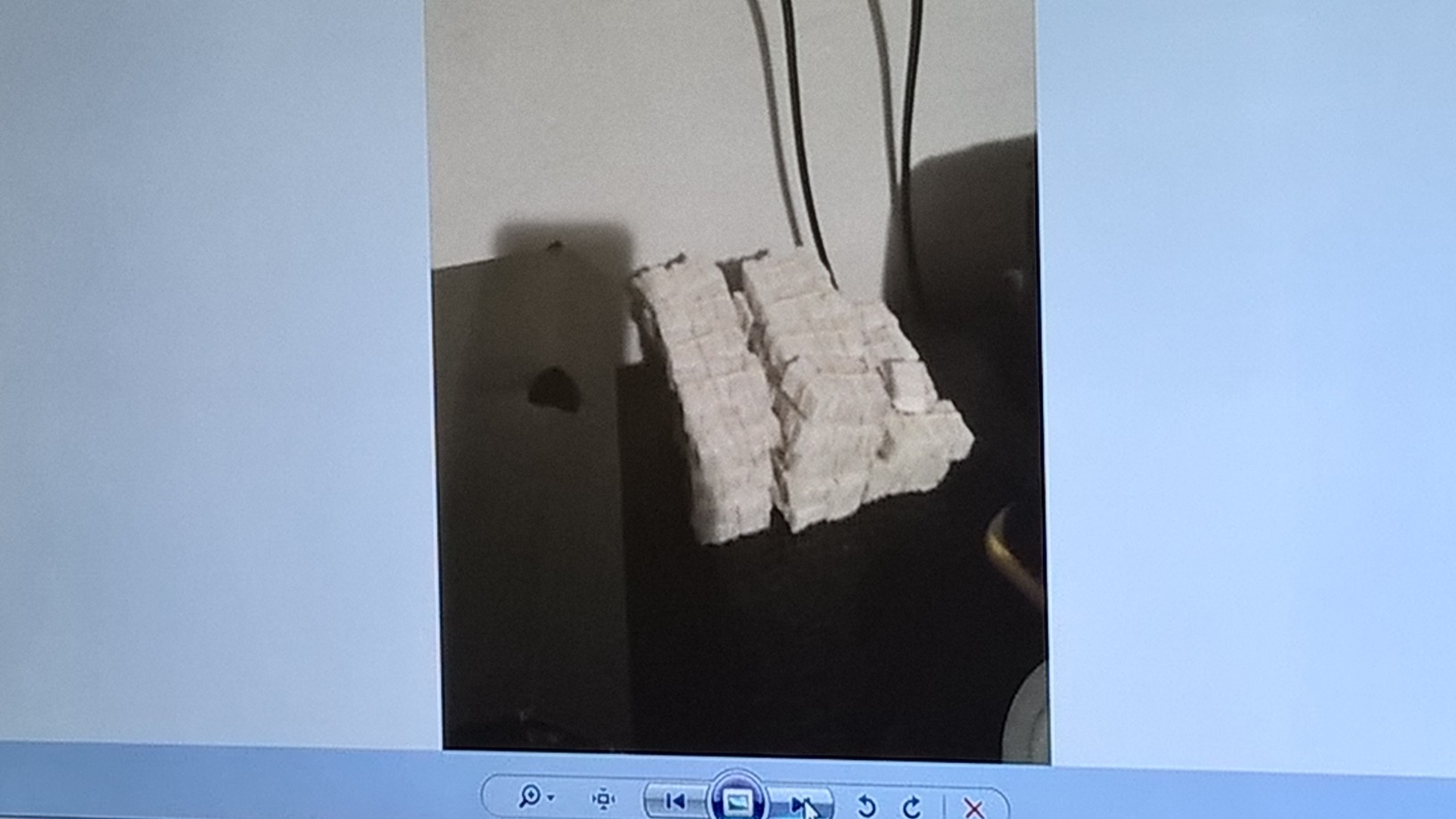
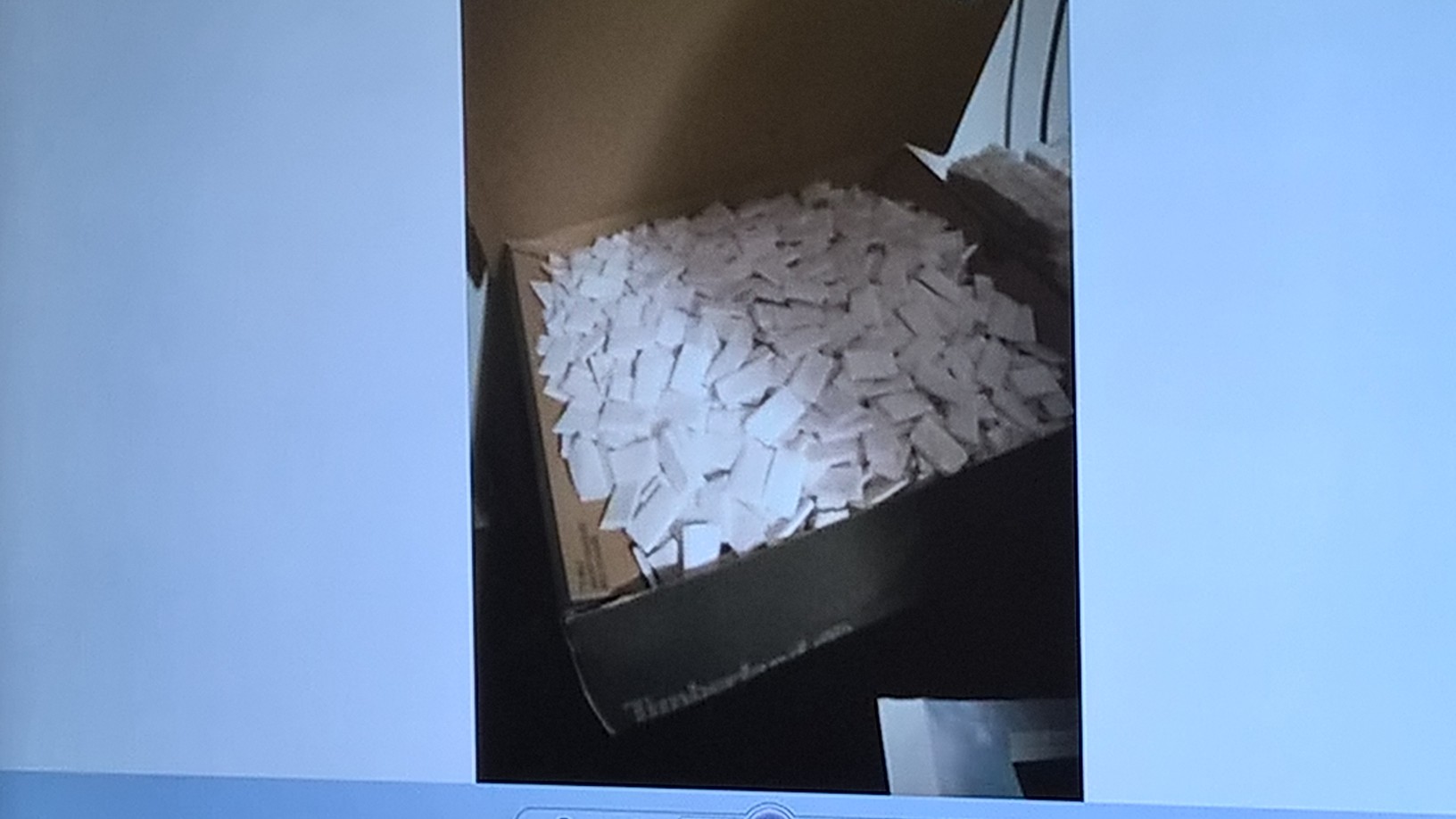
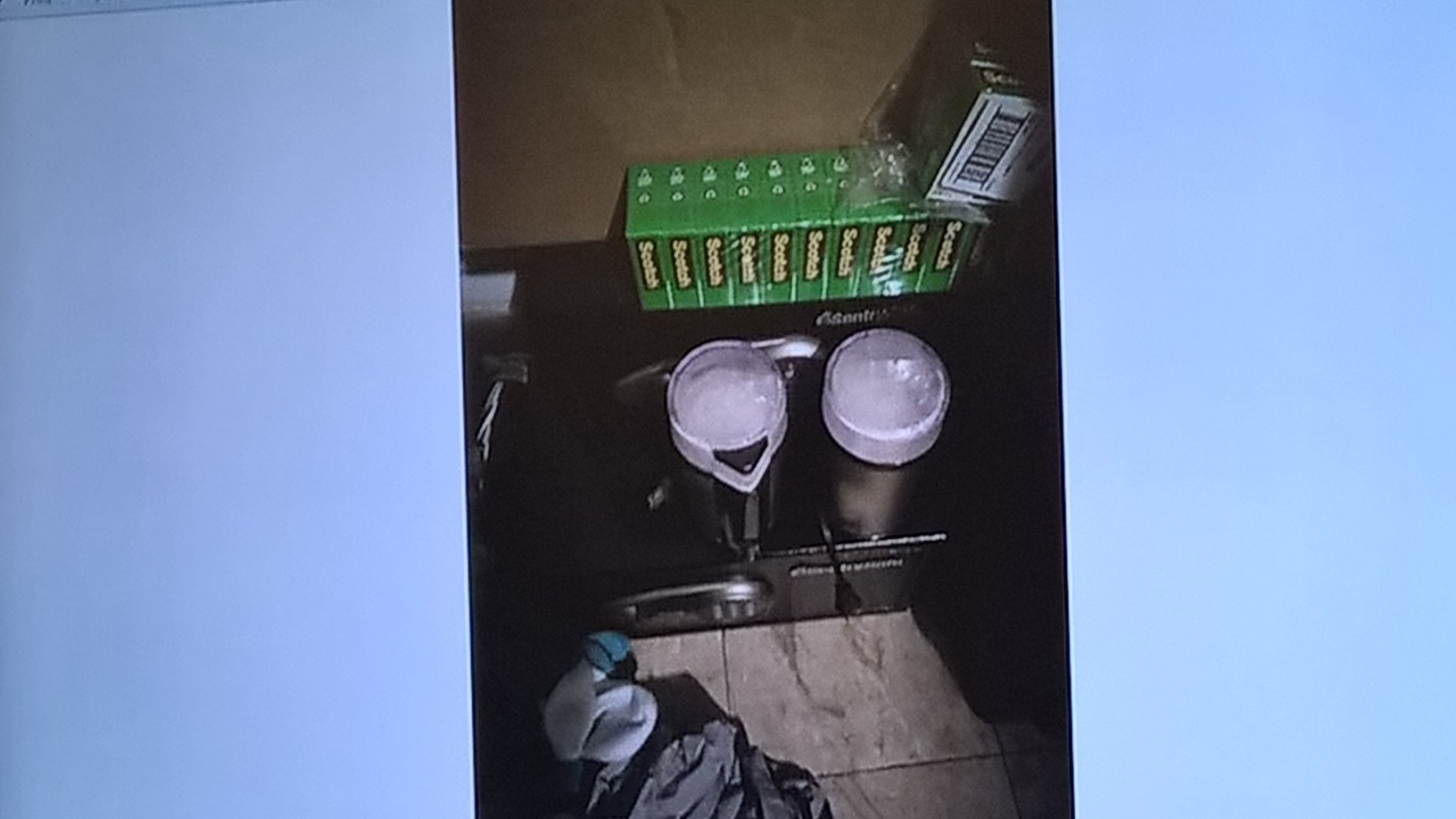
The New York State Police Community Narcotics Enforcement Team – Hudson Valley, working in conjunction with the New York State Department of Taxation and Finance, the New York State Department of Health, City of Newburgh Police Department, and the Orange County District Attorney’s Office Friday seized 111 packets of suspected synthetic marijuana from Manhattan Deli, located at 212 Broadway in Newburgh. The location was also found to have forged cigarette tax stamps, unstamped cigarettes, marijuana, and illegal possession of a weapon.
Samples of the seized products were analyzed by the Department of Health’s Wadsworth Center laboratory in Albany, and tested positive for 5-fluoro-ADB, FUB-PB-22, XLR-11, NM2201, AB-CHIMINACA and MMB-FUBINACA, six synthetic cannabinoids as defined in Section 9.1 of Title 10 of the Official Compilation of Codes, Rules and Regulations of the State of New York.
Following the lab tests, Department of Health Commissioner Dr. Howard Zucker immediately moved to close the store.
Hemyar M. Almaflehi, 28, of Walden and the owner of the store, was charged with Criminal Possession Forged Instrument 1st Degree (forged cigarette tax stamps), a Class C Felony; Possession of Unstamped Cigarettes for Purpose of Sale, a Misdemeanor under state tax law; Criminal possession of marihuana 5th degree, a Class B Misdemeanor; Unlawful Possession of Marihuana, a Violation; and 111 counts of violations of the Department of Health regulation banning the possession of synthetic cannabinoid substances.
Omar Nagi, 22, of Newburgh and a clerk at the store, was charged with Criminal Possession Forged Instrument 1st Degree (forged cigarette tax stamps), a Class C Felony; Possession of Unstamped Cigarettes for Purpose of Sale, a Misdemeanor under state tax law; Criminal Possession of Marihuana 5th Degree, a Class B Misdemeanor; Criminal Possession of a Controlled Substance 7th Degree, a Misdemeanor; three counts of Criminal Possession of a Weapon 4th Degree, a Misdemeanor; and 111 counts of violations of the Department of Health regulation banning the possession of synthetic cannabinoid substances.
State Police Superintendent George P. Beach II said, “I want to commend the outstanding work done on this case by our Community Narcotics Enforcement Team, along with our state and local partners. Synthetic Cannabinoids are dangerous substances which have damaging impacts to a user’s health as well as to our communities as a whole. We will continue to work with our partners to crack down on the sale of these illegal drugs.”
Department of Health Commissioner Dr. Howard Zucker said, “Synthetic drugs continue to pose a threat to the health and safety of all New Yorkers. Under Governor Cuomo’s leadership, the Department is working collaboratively with other state agencies to not only educate the public of the dangers of these substances, but take aggressive steps to eliminate them from our communities.”
New York State Office of Alcoholism and Substance Abuse Services Commissioner Arlene González-Sánchez said, “Synthetics have no purpose other than to cause harm. I applaud Governor Cuomo, the State Police and our other State agency partners for their continued efforts to remove these poisons from our streets.”
Orange County District Attorney David Hoovler said, “The Orange County District Attorney’s Office will use every means at our disposal to prevent businesses from endangering the public and encouraging addiction through the sale of synthetic drugs. I agree with the Governor that this problem must be addressed both by enforcement of criminal laws and by action through regulatory authorities. I thank the New York State Police and the New York State Department of Taxation and Finance for their work on this investigation.”
Lieutenant Richard Carrion of the Newburgh Police Department said, “The City of Newburgh Police greatly appreciates the support we receive from our local and state law enforcement partners. Drugs, including new synthetic drugs, destroy the fabric of communities and are a major contributor to the violence that affects the safety of our citizens. We look forward to the continued partnerships that can help us keep our city safe.”
Last July, New York stepped up statewide enforcement efforts to ensure that businesses fully comply with all applicable laws, including the 2012 emergency regulations banning the manufacture, sale, and distribution of synthetic marijuana.
Additionally, the Governor directed that the Department of Health’s Bureau of Narcotic Enforcement, the State Liquor Authority and the New York State Gaming Commission increase their oversight efforts and revoke store owners’ liquor and lottery licenses if they are found to be illegally peddling K2. The State continues to vigorously pursue all available civil, criminal, and administrative remedies against any business or business owner found to be manufacturing, possessing for sale or selling illegal synthetic marijuana.
Hits: 149
WPCNR COUNTY CLARION-LEDGER. From the Westchester County Democratic Caucus. January 3, 2017:
Democrats on the Legislation, Labor/Parks/Planning/Housing, and Public Safety & Social Services committees voted to recommend that the full Board of Legislators vote on ID# 9417, an act amending the Laws of Westchester County to prohibit participation in a gun show on County-owned property.
This Act was first proposed by Legislator Ken Jenkins (D-Yonkers) in 2010 and has since been sponsored by every member of the Democratic caucus.
“I, as do my Democratic colleagues on the Board, feel that the people’s best interests are not being served when we use our County facilities to host the sale of weapons used to kill,” said Jenkins. “This Act does not stop any of the sponsors of this show, which include the locally affiliated NRA chapter, to host this event down the street on private property. My proposal simply says that County parklands and facilities will not be used to host events that sell guns. It is not a business the County should be getting into and I am glad we took this first big step to making this the law of Westchester,” concluded Jenkins.
A ban on gun shows at the County Center, where one is scheduled to take place in the coming weeks, was County policy from 1999-2010. County Executive Astorino lifted the ban upon taking office, and a gun show was held in 2012, but however a subsequent gun show was cancelled following the tragedy that took place in Sandy Hook. The plan for the 2017 show was only made public in the days during the pre-holiday lull even though the show had been scheduled for months.
“Law enforcement officials around the country have stated that gun shows are the ‘critical moment’ of custody when guns are transferred from the legal to illegal market,” said Legislator Ben Boykin (D-White Plains), Chair of the Committee on Public Safety & Social Services. “According to the ATF, 30% of guns involved in federal illegal gun trafficking investigations are connected in some way to gun shows. This could be through the use of a ‘straw man’ purchaser or a grey-market transaction set up as a result of contact made at a gun show. Bottom line, we as a County do not want to open ourselves up to more exposure to these dangerous weapons than we already are” finished Boykin.
“On New Year’s Eve, my community suffered another senseless act of gun violence. This time a 13-year-old eight grader became the victim of crossfire as she sat in the passenger seat of her mother’s car. It is time for us to take a strong stand against the proliferation of guns in our community. A strong message banning sales and distribution of guns at gun shows from the County Center and on any county-owned building is the first step. I thank the advocates for their support and encourage the community to have your voices heard on this issue before our vote next Monday,” said Legislator Lyndonn Williams of Mount Vernon
Hits: 129
WPCNR THE LETTER TICKER. January 3, 2017:
Hits: 290
First-in-the-Nation Action is offered to New Yorkers Convicted of a Misdemeanor or Non-Violent Felony at 16 or 17 Years Old and Remain Crime-Free for Ten Years
Governor Grants 12 Clemencies, Including Five Pardons
WPCNR ALBANY ROUNDS. From the Governor’s Press Office.January1, 2017:
Governor Andrew M. Cuomo Saturday issued the first conditional pardons to more than 100 New Yorkers who were convicted of a non-violent crime when they were minors, and who have since lived crime-free for 10 years or more.
This marks the first round of executive youth pardons since the Governor announced this first-in-the-nation action in December 2015 and is the largest number of clemencies issued in any year since taking office in 2011.
Last year, the Governor announced executive actions to remove minors from adult state correctional facilities, where they are likely to be victimized at higher rates, and may learn to become better criminals from older incarcerated individuals. As a result of the Governor’s Executive Order, the Department of Corrections and Community Supervision has transferred all female youths and all minimum and medium security classified male youths sentenced to state prison from adult facilities to the Hudson Correctional Facility.
“These New Yorkers have spent at least a decade proving their rehabilitation, but have been unable to fully reenter society due to the stigma of conviction and the barriers that come with it,” said Governor Cuomo. “New York is a state of opportunity and today, we are granting these individuals and others a second chance to live up to their full potential, provide for their families and give back to their communities. With these actions, we have taken one more step toward a more just, more fair and more compassionate New York for all.”
By pardoning New Yorkers who committed crimes at a young age, the Governor is helping people who present little danger to the public while recognizing that those with an adult criminal record are often burdened with having a harder time to attain employment, get admitted to college, find housing, and become licensed in certain occupations. Pardons granted through this program are conditional, meaning that if a person defies the odds and is reconvicted, it will be withdrawn.
Any person eligible for this pardon is invited to apply through the Governor’s website, ny.gov/services/apply-clemency. Each person will undergo a careful screening process and agency staff will make a recommendation to the Governor to grant a pardon if:
· The person was 16 or 17 at the time they committed the crime for which they were convicted.
· At least 10 years have passed since the person was either convicted of the crime, or released from a period of incarceration for that crime, if applicable.
· The person has been conviction-free since that time.
· The person was convicted of a misdemeanor or a non-violent felony.
· The person was not originally convicted of a sex offense.
· The person is currently a New York State resident.
· The person has paid taxes on any income.
· The person is a productive member of his or her community, meaning that the individual is working, looking for work, in school or legitimately unable to work.
In addition to this general invitation to apply, the Administration has done targeted outreach to candidates for the pardon, sending letters to eligible candidates for whom contact information could be found inviting them to apply for the pardon.
The Governor’s action continues his efforts to break down barriers for people with criminal convictions, which includes his creation of a Council on Community Re-Entry and Reintegration to alleviate barriers for those who have criminal convictions. This year, the Governor has accepted recommendations from the Council for executive actions, which include requiring the Board of Parole to account for an inmate’s current risk to public safety when making a release decision, and prohibiting insurance companies from denying coverage to businesses seeking to hire formerly incarcerated New Yorkers.
Today’s conditional pardon grant for people who were convicted as 16 and 17 year olds reaffirms the Governor’s commitment to advancing the Raise the Age agenda and other criminal justice reform measures.
As part of the Executive Order, DOCCS has also collaborated with the New York State Office of Children and Family Services to train staff and develop youth-based programs for younger offenders while also ensuring the safety of staff, inmates and the surrounding community. However, this is only an interim step as the Governor continues to call on the Legislature to pass his Raise the Age legislative package, which includes provisions to seal crimes committed at a young age after a person has remained crime-free for a period of time.
The Governor also granted five pardons and five sentence commutations, as well as commuting the extraordinarily long sentences of two individuals that will now enable them to appear before the Board of Parole. These individuals have demonstrated rehabilitation and made positive strides in their lives since their criminal convictions.
Youth Pardons Program Update
Today, Governor Cuomo issued the first conditional pardons under this program to 101 deserving New Yorkers convicted at age 16 or 17 of crimes including misdemeanors and non-violent felonies. All 101 recipients have proven themselves to be positive, contributing members of their communities. These pardons will remove barriers to employment opportunities.
Governor Cuomo today issued sentence commutations to reward the rehabilitative efforts, and positive institutional records and adjustment of the following individuals:
Anthony Desmae, 34, has served almost eight years of his sentence of 10 years in prison following his conviction of Robbery in the Second Degree. He has made exceptional strides in self-improvement, including earning a GED in 2014. Mr. Desmae has been very involved as a group facilitator and certified animal caretaking with the Puppies Behind Bars program, in which inmates train service dogs for U.S. veterans returning home with post-traumatic stress disorder. He has also worked as a teaching assistant in GED courses. When released, he plans to reunite with his two children, ages 15 and 11. Ultimately, he hopes to move closer to his parents in Florida and create a non-profit similar to Puppies Behind Bars for Florida State correctional facilities.
Matthew Hattley, 49, has served over 24 years of his sentence of 25 years to life for Murder in the Second Degree. While incarcerated, he has committed himself to helping others, leading substance abuse and aggression treatment workshops and serving as a voice for his peers in his regular columns for the Shawangunk Journal, a local paper of Shawangunk, NY. He has received many commendations and an award from facility staff and organizations. His case was handled pro bono by the Legal Aid Society and the law firm of Kirkland and Ellis through the Governor’s pro bono program. Upon release, he plans to pursue a career in both heating system repair and counseling for youth at risk of criminal justice involvement.
Charlie Lee, 73, has served more than 13 years of a 16-year sentence and has no prior criminal history. He was convicted of Manslaughter in the First Degree in New York County in 2004 after shooting the ex-boyfriend of his girlfriend during an argument. During his incarceration he has met his primary programming requirements, including completing Aggression Replacement Training, and has demonstrated a willingness to change his behavior to positively impact others. As someone who was born in India and became a naturalized U.S. citizen in 2004, Lee is ready to help others of different backgrounds deal with the challenges they face with language barriers. Upon his release, Lee plans to live in an adult home where he can volunteer in the community as an interpreter and re-establish connection with his family.
Felipe Rodriguez, 51, has served almost 27 years of a 25 to life sentence following his conviction of Murder in the Second Degree and Criminal Possession of a Weapon in the Fourth Degree. While incarcerated, Rodriguez has excelled as a devoted leader of the Catholic faith, leading worship and bible study groups as well as contributing to facility Catholic newsletters. In 2013, his religious work earned him a laudatory visit from Cardinal Timothy Dolan, the Archbishop of New York. Rodriguez is also known for using his faith to guide infamous New York serial killer, Artie Shawcross, towards atonement before Shawcross’ death in 2008. Over the last 26 years, he has prepared himself for a productive life post-release by training in masonry, television and radio repair, and barbering, as well as HIV/AIDS counseling, receiving marks of high praise from his instructors in all courses. Felipe Rodriguez will reunite with his 30 year-old son, who was three years old when Mr. Rodriguez was taken into custody, and looks forward to being there for him as a father upon his return.
Valerie Seeley, 61, has served 15 years of a 19 to life sentence for Murder in the Second Degree after killing her live-in boyfriend. She had a documented history of domestic violence at his hands, including having an order of protection against him. She turned to the domestic violence support group Steps to End Family Violence (STEPS) before trial and has stayed active with this group throughout her time in prison. She has improved herself by working towards her high school equivalency, and taking all rehabilitative programming, including Aggression Replacement Therapy. This grandmother has a good disciplinary record, and upon release, looks forward to living with her daughter.
Governor Cuomo today commuted the extraordinarily long sentences of two individuals, enabling them to appear before the Board of Parole within the first quarter of 2017:
Judith Clark, 67, has served over 35 years of her 75 years to life sentence. On October 14, 1983, she was convicted of Murder in the Second Degree and Robbery in the First Degree in Rockland County for driving the getaway vehicle in a 1981 Brinks armored car robbery. Clark, who appeared pro se at her trial, received one of the longest sentences of her six co-defendants, the majority of whom are either deceased or no longer in custody. She received the same sentence as one of the known shooters. Her only female co-defendant, Kathy Boudin, whose participation in the underlying crime was similar to Clark’s, received a 20-year minimum sentence and was paroled in 2003, and then discharged from parole supervision in 2010. While at Bedford Hills, Clark has made exceptional strides in self-development. She earned a Bachelor’s Degree and a Master’s Degree from Mercy College and has an extensive prison programming record including teaching pre-natal parenting courses in the Nursery Program, founding an HIV/AIDS education program, training service dogs in the Puppies Behind Bars program, and serving as a college tutor. Further, she has maintained a perfect disciplinary record and lives in honor housing. Based on her original sentence, she would be 106 years old before she becomes eligible for parole, leaving her without an opportunity to appear before the parole board during her natural lifetime.
Jim Whitt, 50, has served more than 20 years of a 33 1/3 years to life sentence imposed during the late 1990s, under the harsh sentencing guidelines of the old Rockefeller drug laws. He was still a young man in his twenties when he was convicted of Criminal Sale of a Controlled Substance in the First, Second and Third Degrees, and Conspiracy in the First Degree. He is serving combined concurrent sentences that amount to 25 to life in prison, made even longer by additional shorter sentences for lesser included charges that were run consecutively. Whitt was a non-violent offender with no prior criminal record, and has not incurred any disciplinary infractions in the last 10 years. Without this commutation, he would not be eligible to appear before the parole board until 2030, when he is 63 years old. If he were charged today, rather than under the Rockefeller drug laws, he would not face a life sentence. With this commutation to the parole board we are removing the zero tolerance, life sentence punishment of the Rockefeller Drug Law era.
Governor Cuomo today issued the following pardons:
DeJuan Callender, 42, was convicted of disorderly conduct and unlicensed operation of a vehicle resulting from an incident in 2002. He has had no further criminal activity, but because of his prior criminal history he was ordered to be removed from the country in 2005 – although the order was not originally executed. For several years, Mr. Callender has worked steadily and on-the-books as a doorman for a residence in White Plains, NY, where several residents attest to his work ethic and good character. In 2015, he was placed into federal Immigration and Customs Enforcement custody based on the 2005 removal order. He has a six year-old son and wife, both of whom are United States citizens. Based on evidence of his rehabilitation, as well as the special circumstances of a pending removal from the United States, the Governor is issuing a pardon for the 2002 state offenses, which served as grounds for the order of removal. Mr. Callender will seek to reopen his removal order in immigration court, using the pardon as a changed circumstance.
Jessica Ennist, 33, was the subject of several convictions for Driving Under the Influence and Assault in the Third Degree during a period of heavy drinking that ultimately led her to drop out of community college. She has been sober since her last conviction in 2006, and has volunteered in substance abuse programs in jail and sponsored several young people battling addiction. She is a current PhD student at Bozeman Graduate Chemistry Department of Montana State University, aiming to become a research chemist. She has earned accolades as a young woman of color in science as a member of The SUNY Louis Stokes Alliance for Minority Participation (SUNY LSAMP), and was featured in a “SUNY LSAMP Student Success Stories” report from 2011. Additionally, she was granted a Certificate of Honor from New York State Collegiate Science and Technology Entry Program (CSTEP) in April 2010. A pardon will allow Ms. Ennist to apply for federal research grants as a research Chemist, which she is currently unable to do as a result of her past convictions.
Kelly Jarrett, 64, was convicted of Murder and Robbery in the First Degree in 1977; subsequently, she was convicted of Escape in the Second Degree and Attempted Escape in the First Degree in 1979. She received an aggregate sentence of 28.5 years to life in prison. In 2005, Ms. Jarrett was released after completing her minimum 28.5-year sentence and she was released from parole supervision in 2008. Throughout her incarceration, she maintained an excellent disciplinary record and worked in the prison infirmary as a caretaker for terminally ill inmates suffering from AIDS and cancer. This compassion extended to her profession outside of prison, and for the last 13 years, she has resided and worked at the Franciscan Missionary Sisters of the Sacred Heart, a Catholic religious convent, where she cares for ill and elderly nuns. With this pardon, she plans to attend nursing school and obtain a nursing license to expand her employment opportunities.
Anthony Papa, 62, was convicted of Criminal Sale of a Controlled Substance in the First Degree and Criminal Possession of a Controlled Substance in the First Degree in 1985. He was sentenced under the former Rockefeller Drug Laws to 15 years to life in prison; however, after serving 12 years, his sentence was commuted by former Governor George Pataki on December 23, 1996, he was released from prison on January 23, 1997, and successfully completed parole supervision on January 25, 2002. Mr. Papa is an author and painter. He has published two books about his experience living and painting through his 12 years in prison including This Side of Freedom: Life After Clemency (2015), and 15 to Life: How I Painted My Way to Freedom (2004). His artwork has been displayed in museums, including the Whitney Museum of American Art. With this pardon, Mr. Papa hopes to expand housing and employment opportunities, as well as restore his right to serve on a jury.
MitchellPine, 63, was convicted of Attempted Criminal Sale of a Controlled Substance in the Sixth Degree, for which he was sentenced to a five-year term of probation. He has since led a law-abiding life in the Fort Lauderdale area of Florida, father to 2 adult autistic sons. He volunteers much of his time at his son’s autistic services center, involved in parenting workshops for fathers with autistic children and developing new technologies allowing autistic individuals to communicate more effectively. Mr. Pine will use the pardon to reopen his petition in the Florida court system to register as the legal guardian for his youngest son, age 18, so that he may manage his son’s insurance and medical needs.
Pro Bono Project Update
The Pro Bono Clemency project announced by the Governor in October of 2015 is underway. Volunteer lawyers from the New York State Bar Association, the Legal Aid Society of New York, the New York County Lawyer’s Association, the New York City Bar Association, the Prisoners’ Legal Services of New York’s Pro Bono Project, and the Volunteer Lawyers Project of Onondaga County have been trained in preparing clemency applications through a webinar program hosted by the Executive Chamber in January. Attorneys from these organizations are actively assisting individuals who are currently incarcerated in New York State prisons with their application packages. These efforts have resulted in a steady supply of high-quality clemency applications for the Governor’s Office to review.
Individuals interested in applying for clemency should visit Governor Cuomo’s clemency website – www.ny.gov/clemency – launched within the last year. The website is a central resource for those seeking to learn more about clemency, eligibility requirements, and the application process, including submitting application materials electronically. Family members and friends of individuals serving prison sentences are encouraged to visit the website and apply for clemency on behalf of their family member or friend.
State Senator Brad Hoylman said: “I heartily applaud Governor Cuomo for granting this commutation, which I have supported, and allowing Judith Clark to appear before the Board of Parole. I met Judith at Bedford Hills Correctional Facility for Women when I was first elected to the Senate four years ago and have been moved by the extent of her personal redemption and the widespread support for her clemency from within and outside the criminal justice system. Through her multitude of good works, compassion for fellow prisoners and self-improvement, Judith has more than proven that rehabilitation is indeed possible. Today’s news is a sterling example of how our criminal justice system should work.”
Senator George Latimer said: “Governor Cuomo deserves enormous credit for recognizing when someone has turned their life around and is deserving of a pardon that will remove a very real barrier to their freedom, as the case of DeJuan Callender who is facing deportation. This is a father to a six year-old child and we should not punish him, but honor his journey to rehabilitation and becoming a success story.”
Assemblyman David Buchwald said: “ Governor Cuomo has shown compassion to those worthy of his act of clemency, and such is the case with DeJuan Callender. With the prospect of deportation, the Governor has rightfully stepped in to prevent an injustice from occurring while acknowledging his rehabilitation and transformation from incarceration to a member of our community.”
Nina Morrison, Senior Staff Attorney at the Innocence Project, said: “We are grateful that Governor Cuomo has recognized the extraordinary record of community service and dedication to others that Felipe Rodriguez has demonstrated throughout his incarceration, and which we have no doubt will continue after his release. Thanks to the Governor’s compassion, he will be reunited with his family for the first time in more than twenty-six years.”
New York State Secretary of State Rossana Rosadosaid: “As the Chair of the Governor’s Council on Community Re-Entry and Reintegration, I commend Governor Cuomo’s actions today to provide these individuals a second chance and the opportunity to return to their families and communities. We remain committed to addressing the wide range of challenges facing formerly incarcerated people who have paid their debt to society in order to help build stronger families and safer communities all across New York.”
Elizabeth Gaynes, President/CEO of the Osborne Association, said: “In decades of working behind the walls, Osborne has learned that there are many men and women who, regardless of crime, have transformed their lives, pose no risk to public safety, and only desire an opportunity to make amends for the harm they caused. Those whose sentences were commuted today have taken responsibility for their crimes and have demonstrated true rehabilitation. Governor Cuomo is to be commended for his courage and wisdom in demonstrating that New York is a land of second chances, in recognizing that a system based only on punishment makes society neither safe nor just, and in affirming the possibility of redemption for each of us.
Anne Patterson, Director of STEPS to End Family Violence, said: “We, at STEPS to End Family Violence, want to express our profound gratitude to Governor Cuomo as he grants clemency to Valerie Seeley. Our beloved founder, Sister Mary Nerney, met Valerie shortly after she was arrested and maintained a strong bond with her until Sister Mary’s death. During our agency’s long relationship with Valerie, we learned about the pain she endured at the hands of her abusive partner. We also witnessed Valerie’s uncommon resilience, her ability to persevere in the face of devastating loss, and her true sense of remorse. We are deeply appreciative of the Governor’s recognition of the special circumstances that lead to Valerie’s incarceration and celebrate his noble act of compassion.”
Anthony C. Thompson, Professor of Clinical Law and Director of the Center on Race, Inequality and the Law at New York University School of Law , said: “I applaud Governor Cuomo in the exercise of one of his most important responsibilities: granting clemency to these deserving candidates. While clemency can be a difficult matter, the Governor has demonstrated a careful and thoughtful approach in showing mercy and redemption for these individuals. We thank him for his courageous leadership.”
Ronnie Eldridge, Former NYC Council Member and Director for the Division of Women under M. Cuomo, said: “By using his power to grant clemencies to these individuals, the Governor has made a profound statement in acknowledging that people can change and become a positive force for good in their communities. This is further proof that our correctional system is not just a place to punish, but a place to reform, to rehabilitate, and ultimately to provide a better way forward.”
Max Kenner, Founder and Executive Director of the Bard Prison Initiative, said: “Whether it’s college classes in prisons or developing youth-based programs to teach them the skills they need upon reentry, the Governor has fundamentally changed the way we approach criminal justice reform here in New York. These clemencies display an empathy that is much deserving and will make a transformative difference in the lives of these person and their families.”
Steven Zeidman, CUNY Professor, said: “The Governor has shown a remarkable level of empathy in his decision to commute the exceptionally long sentence of Judith Clark and giving her the chance to make her case before the Board of Parole. Whether it’s gaining an education or helping others through programs offered in prison, this is a once in a lifetime opportunity for her to show the Board just how much self-development she has made.”
Seymour W. James, Jr., Attorney-in-Chief of The Legal Aid Society, said: “We are pleased to be working with the Governors’ office on clemency cases to identify worthy candidates who can re-establish their lives and again productively contribute to our New York community. Clemency has always been a fail-safe against unduly harsh punishments, particularly for those who made mistakes at a young age and have worked hard to rehabilitate themselves.”
Ann Jacobs, Director of the John Jay College of Criminal Justice’s Prisoner Reentry Institute, said: “The Governor’s commutation of Judy Clark’s sentence for consideration by the parole board is both principled and inspiring. It evidences the best of American values –of giving second chances, of recognizing that the measure of a person is more than the worst they have done, but what they have done to learn from their mistakes and to give back. For decades now, Judy has been a pivotal member of the community of incarcerated women who have seen needs and found creative ways of addressing them even within the confines of a prison. Judy has been an asset to the Bedford Hills Correctional Facility community and I am confident will continue to find ways to contribute to society if she is released.”
Soffiyah Elijah, Executive Director, Alliance of Families for Justice, said: “Governor Cuomo is to be commended for his important decision to grant clemency, through commutations and pardons, to a deserving group of petitioners. His decision recognizes the importance of redemption and rehabilitation; that people should be judged by who they are today and not who they were decades ago. In the case of Valerie Seeley, a domestic violence survivor, this grant of clemency acknowledges the complex set of circumstances surrounding the life and suffering of a battered individual. This is an extremely significant step in the right direction for New York.”
Claudia Angelos, Professor of Law, NYU, an attorney who represented Kelly Jarrett in the late 1970s and 1980s, said: “During Patsy Kelly Jarrett’s long imprisonment and since her release on parole she has lived a life of extraordinary grace. The governor’s grant of pardon is a true act of justice that serves all the people of our state.”
Scott Christianson, Ph.D., former New York State criminal justice official, said: “I cannot imagine a more fitting recipient for executive clemency than Patsy Kelly Jarrett, an individual who served more than 28 years in prison, and whose life since her early discharge from parole has been exemplary and further shows that she has earned a pardon. Since her release from prison in 2005—which neither the family of the deceased victim nor local or state criminal justice officials opposed—Ms. Jarrett has worked tirelessly to care for elderly and infirm nuns in a convent in Peekskill and a pardon will help her seek a license to provide home health care. She poses no risk and bears no animus toward anyone. She is a paragon of virtue.”
Bennett Gershman, Professor of Law, Pace Law School and former prosecutor with the Manhattan District Attorney’s Office, said: “I first became aware of Kelly’s case in the early1990s and have always been struck by Kelly’s courage, perseverance, and commitment to those persons most in need of help. She has been a transformative presence in the lives of the many people she touched. Her work inside prison and after—on behalf of the vulnerable, weak, and ill—is well documented. Her goodness, humanity, and compassion have lifted the spirits and inspired hope in so many people. Kelly is exactly the kind of person for whom the act of clemency was meant to be used.”
Abbe Smith, Professor of Law, Director, Criminal Defense & Prisoner Advocacy Clinic, Georgetown University Law Center, and Kelly Jarrett’s lawyer, said: “Clemency is meant for the most extraordinary and deserving individuals that dedicate their lives to the greater good. After spending nearly 30 years in prison, Patsy Kelly Jarrett has continued to live a life of service on the outside. Everyone whose life she touches is the better for it—and she will now be able to care for more elderly and ailing people without the impediment of a criminal record. I could not be more grateful to Governor Cuomo for exercising his executive power for such a worthy person.”
Michael Cordozo, former President of the New York City Bar Association, former New York City Corporation Counsel under Mayor Bloomberg, and longtime practicing lawyer, said: “I am delighted that the Governor has chosen to exercise his clemency power in this major pursuit of justice. Given the overwhelming facts surrounding Judith Clark, I applaud him for making this decision.”
###
Hits: 971
WPCNR WASHINGTON WIRE. Special to WPCNR from the Department of Homeland Security. December 31, 2016:
Editor’s Note: The Department of Homeland Security issued this summary of the government investigation of Russian hacking during the American election to the media Friday:
Department of Homeland Security Assistant Secretary for Public Affairs Todd Breasseale issued an executive summary today of the U.S. government’s findings of Russian malicious cyber activity known as Grizzly Steppe. The executive summary is below.
Russia’s civilian and military intelligence services engaged in aggressive and sophisticated cyber-enabled operations targeting the U.S. government and its citizens. The U.S. Government refers to this activity as GRIZZLY STEPPE. These cyber operations included spearphishing campaigns targeting government organizations, critical infrastructure entities, think tanks, universities, political organizations, and corporations, and theft of information from these organizations. This stolen information was later publicly released by third parties.
In operations targeting other countries, including U.S. allies and partners, Russian intelligence services (RIS) have undertaken damaging or disruptive cyber-attacks, including on critical infrastructure—in some cases masquerading as third parties or hiding behind false online personas designed to cause the victim to misattribute the source of the attack.
RIS often uses spearphishing to gain access to targeted systems (see Figure 1 below). In one 2015–16 operation (detailed in our Joint Analysis Report (JAR)), Russian cyber actors conducted a spearphishing campaign to establish presence and persistence on a target network, obtain higher-level privileges, and steal (or “exfiltrate”) information.
These actors tricked recipients into changing their passwords through a fake website that was designed by the Russians cyber actors to appear legitimate. The actors then used those credentials—the username and password—to access the network as if they were legitimate users.
They installed other malicious files, moved freely throughout the target network, gathered data and information, and exfiltrated it from the target network. Russian cyber actors continue to conduct spearphishing campaigns, including one launched as recently as November 2016, just days after the U.S. election.
The Department of Homeland Security (DHS) and Federal Bureau of Investigation (FBI) released a Joint Analysis Report (JAR), which provides details of the tools and infrastructure used by Russian intelligence services (RIS) to compromise and exploit networks and infrastructure associated with the recent U.S. election, as well as a range of U.S. government, political, and private sector entities.
The JAR also arms network defenders with the tools they need to identify, detect, and disrupt Russia’s global campaign of malicious cyber activity. We urge users and administrators to use this information to better protect your networks.
Spearphishing is the use of forged emails, texts, and other messages to manipulate users into opening malware or malicious software or clicking on malicious links.
Spearphishing attacks can lead to credential theft (e.g., passwords) or may act as an entry point for threat actors into an organization to steal or manipulate data and disrupt operations.
For more information, see the US CERT Tip on Avoiding Social Engineering and Phishing Attacks.
![Screenshot of email that states: Incoming eFax: Elections Outcome could be revised [Facts of Elections Fraud]. Sent by Taylor Fax <securefaxsolutions@gmail.com> on Wednesday, November 9, 2016 at 10:39 To undisclosed-recipients. Attachment: election-headlines-FTE2016.docm (1.1 MB). Preview. eFax Solution. You have received a secure message from eFax Solution Corp. Please open the attachment election-headlines-FTE2016 in this email and enter PIN CODE: 3209. SUBJECT: ELECTIONS OUTCOME CUOLD BE REVISED [FACTS OF ELECTIONS FRAUD]. Please note: if you have trouble opening the message, please try the following 1. In your web browser, delete the temporary internet files and cookies. 2. Close the web browser. 3. Open the election-headlines-FTE2016 file in your secure email. End of screenshot.](https://www.dhs.gov/sites/default/files/images/post-election-spearphishing_0.png)
Figure 1: Sample of Russian Post-Election Spearphishing
Figure 2: Lifecycle of Successful Spearphishing Operation
The JAR includes information on computers, servers, and other devices around the world that RIS uses to conduct command-and-control activity between compromised devices, send spearphishing emails, and steal credentials. The JAR identifies these devices by each one’s Internet Protocol (IP) address, which is a set of numbers that serves as an “address” for each computer and is used to transmit data between computers. Because RIS is using other people’s networks without their owners’ knowledge to hide their malicious activity, the computers at these IP addresses typically also host legitimate websites or other Internet services. In some cases, the cybersecurity community was aware of this infrastructure. In other cases, this information has been newly declassified by the U.S. government. The map in Figure 3 shows the 60 countries in which newly declassified IP addresses are located. The JAR also includes information on how RIS typically conducts their activities. This information can help network defenders understand how this adversary operates and can help identify new activity or disrupt ongoing intrusions by RIS.
Figure 3: Declassified Worldwide Infrastructure Co-Opted by Russian Intelligence Services
A commitment to good cybersecurity and best practices is critical to protecting networks and systems. Here are some questions you may want to ask of your organization to help prevent and mitigate against attacks.
If you find signs of malicious cyber activity, we encourage you report it to DHS’s National Cybersecurity and Communications Integration Center (NCCICCustomerService@hq.dhs.govor 888-282-0870) or the FBI through your local field office or the FBI’s Cyber Division (cywatch@ic.fbi.gov or 855-292-3937).
Hits: 394
WPCNR THE LETTER TICKER. From the Gedney Association. December 31, 2016:
(EDITOR’S NOTE: John Sheehan, President of the Gedney Association, long the opposition group to the French American School of New York proposal to build a 7 building campus on the former Ridgeway Country Club alerted the CitizeNetReporter to this legal development:)
“A very significant Federal Court decision was issued recently. A three judge panel rejected a developer’s claim for monetary damages and found that the Village of Mamaroneck acted within its rights in denying a development proposal for the former Hampshire Country Club and affirmed community opposition as a legitimate factor in the government’s decision.
There are many similarities between the former Hampshire Country Club and the former Ridgeway Country Club. Both:
That’s where the similarities end.
The Village of Mamaroneck remained steadfast in its position defending against its lawsuit and won! It didn’t cave in to the idle threats of a developer to inflict outrageous monetary damages upon the municipality.
In White Plains, despite a consensus that the City would prevail in its defense of the FASNY suit, the Mayor and three Common Council members (Martin, Kirkpatrick and Smayda) decided to quickly approve an agreement whereby FASNY would put their litigation on hold while the City would review yet another FASNY application.
Importantly, the three Common Council members (Lecouna, Krolian and Hunt-Robinson) who opposed the Hathaway road closure voted against the agreement. The new agreement is a crude attempt to circumvent the earlier decision when FASNY failed in receiving the requisite super-majority approval.
As a further slap in the face of the record the Mayor and the other three Council members agreed to consider doing an about face on two key earlier decisions by the Common Council that:
In commenting on the recent Mamaroneck Federal court decision the Mayor (of Mamaroneck) said:
“One of the most important things about any municipality is zoning because it determines the character of the Village and that’s what just was reinforced in the decision.”
The Mayor’s words are right on target and are typically the cornerstone of public officials everywhere.
Sadly, Mayor Roach and Council members Martin, Kirkpatrick and Smayda have decided for whatever reason not to proceed with their outside attorney’s very strong defense of the FASNY lawsuit.
The Mamaroneck decision demonstrates that municipalities can and must defend against any development that presents a clear threat to the health, safety and welfare of a community regardless of empty threats of monetary damages.
Shortly, another Public Hearing will be scheduled on the FASNY matter. Please call, write or e-mail our Mayor and elected officials and remind them how Mamaroneck officials acted on behalf of its citizens and that the residents of the south end of White Plains will not succumb to the relentless and aggressive efforts by FASNY to push this unacceptable development upon us.
Best Wishes for the New Year to you and your families.
Regards,
John E. Sheehan, President
Gedney Association
Hits: 930
JOHN BAILEY, JIM BENEROFE AND PETER KATZ
ENTERING THE 17TH YEAR OF WHITE PLAINS WEEK
COUNTDOWN, STORY BY STORY
THAT WONDERFUL YEAR 2016
35 STORIES IN 30 MINUTES
ON WHITE PLAINS WEEK
THE FASNY FIASCO
THE FASNY “SETTLEMENT”
THE TRANSIT DISTRICT
THE NEW TAPPAN ZEE BRIDGE
THE NEW WHITE PLAINS MALL
THE NEW GALLERIA MALL
THE NEW GOOD COUNSEL PROPOSAL
THE YEAR HILLARY CAME TO TOWN
THE YEAR OF THREE SCHOOL SUPERINTENDENTS
THE TERRIBLE TEST SCORES
THE LOWEST CITY AND SCHOOL BUDGET INCREASES IN 15 YEARS
HOW COME WESTCHESTER COUNTY CAN’T ADD–THEY NEED A NEW CRYSTAL BALL
PSST! HEY MACK–WANNA RUN AN AIRPORT? JUST GIVE US $15 MILLION TO BALANCE OUR BUDGET
WHAT’S NEXT? DO YOU REALLY WANT TO KNOW?
AND MORE
ON
THE WHITE PLAINS WEEK TRADITIONAL YEAR END REVIEW SHOW
SEE IT INSTANTLY ON YOU TUBE AT
Hits: 825
WPCNR MAIN STREET JOURNAL. From The Mayors’ Office.
The City of White Plains and the White Plains BID are once again preparing to ring in the New Year at our downtown New Year’s Eve Spectacular.
The event is held at the intersection of Main and Court Streets and includes a DJ as well as a live band, a crowd countdown and ball drop, followed by a not-to-be-missed fireworks display and confetti.
The event is large and a number of street closures are necessary. The attached map of downtown White Plains highlights the street closings as well as parking options for attendees. The City will begin closing streets in the event area at 1:00 p.m. on New Year’s Eve. Streets will begin to re-open to vehicular traffic after the event is over, starting at approximately 1:00 a.m.
The event will be accessible via gated entry only. Four gates will be set up at the following locations:
– Main Street at Church Street – Renaissance Square at Williams Street
– Court Street at Martine Avenue – Martine Avenue at Mamaroneck Avenue
Please note: No large bags will be permitted inside the event area and all bags are subject to search at the entry gates.
We ask that all attendees plan ahead, leaving extra time to go through security before entering the event. In addition, the event will be a No Fly Zone for Unmanned Aerial Vehicles (aka “drones”). These security precautions are intended for the safety of the public attending this event.
New Year. Safe Ride.
We are pleased to announce that for the 13th consecutive year, Heineken USA is partnering with the City of White Plains and the White Plains Business Improvement District on its New Year. Safe Ride. program, created to help local residents get home safely on New Year’s Eve. Over the past 12 years, the program has provided free and safe rides home to approximately 4,500 Westchester County residents of legal drinking age.
Through the New Year. Safe Ride. program, HEINEKEN USA will provide free and safe rides home for Westchester County residents of legal drinking age who celebrate New Year’s Eve in downtown White Plains. Between 11:00 p.m. on December 31 and 3:00 a.m. on January 1, a dedicated fleet of 30 cars will provide complimentary rides home for those 21 and older traveling from the heart of downtown White Plains to anywhere in White Plains or across Westchester County.
The Safe Ride pick-up location will be located on the corner of East Post Road and Mamaroneck Avenue.
The White Plains New Year’s Eve Spectacular promises to be a fun, family-friendly event. All are encouraged to come downtown and ring in the New Year close to home with us in White Plains.
Hits: 507
WPCNR COUNTY CLARION-LEDGER From the Westchester County Department of Communications. December 27, 2016. (Edited):
County Executive Robert P. Astorino announced at a news conference this afternoon in the Michaelian Building today that Westchester has surpassed the fundamental benchmarks of the 2009 housing settlement with the federal government.
Under the settlement agreement reached by former County Executive Andrew Spano and the United States Department of Housing and Urban Development, Westchester has until Dec. 31 of this year to have financing and building permits in place for 750 units of affordable housing in 31 mostly white communities.
As of today, the county is over the benchmark with 790 units – 40 more than required, and with another 100 units in the pipeline. Missing the deadline could have resulted in hundreds of thousands of dollars of fines.
“We had to fulfill our obligations within seven years, and we exceeded them,” Astorino said. “We met our goals because we worked cooperatively with our cities, towns and villages. That approach allowed us to succeed and push back attempts by the federal government to bypass home rule and take over local zoning. I want to thank all our local communities for their efforts and support and also commend all the Westchester County staff members for their expertise and countless hours of hard work.”
With the housing benchmarks met, two tasks, which the court labeled as “peripheral,” remain: sign off by HUD on an analysis of issues that could be impediments to building fair housing in Westchester (primarily in seven upscale Westchester towns), and the enhancement of the county’s marketing and outreach efforts tied to the settlement.
The county expects both to be wrapped up early next year.
The Analysis of Impediments, or “AI” as it is called, is now in the hands of a consulting group, which is expected to release its report to the public in mid-January. Westchester has already submitted the most comprehensive AIs that HUD has ever received.
The county has also hired a consultant to expand its “One Community Campaign,” which promotes the benefits of diversity and affordable housing. New print, radio and social media advertisements are being developed to run in 2017. To date, the county has spent over $1 million on marketing and outreach, well above the settlement’s $400,000 requirement.
As a result of these efforts, more than 10,000 households from 32 states and New York City, as well as Westchester, have signed up for the county’s Homeseeker Central Intake system to learn about and apply for affordable housing opportunities in Westchester.
Because of its progress on all fronts, the county has told the U.S. Attorney that it doesn’t think it is necessary for HUD to appoint a new monitor, who serves at the agency’s pleasure.
James Johnson, whose tenure as monitor dated back to the beginning of the settlement, resigned in August to run for the Democratic nomination for governor of New Jersey. Should HUD appoint a new monitor, the county maintains the selection should be made by the incoming Trump administration.
The county has also objected to HUD’s seeking to eliminate the cap on the monitor’s annual fee, currently $175,000 a year, particularly at a time when the settlement is winding down.
“The settlement’s legal and financial obligations were never intended to last forever,” said Astorino. “It’s time for a conclusion. As the Second Circuit of U.S. Court of Appeals said, ‘At some point in time this litigation has to be ended.’ That time should be near.”
Tallying up the costs, the county has spent about $30 million more than the $51.6 million required under the terms of the settlement. In addition, the county has leveraged more than $152 million in other public funding, putting total subsidies at $233 million and the average taxpayer subsidy per settlement unit at approximately $290,000.
As a comparison, the 2016 median sale price in Westchester is $640,000 for a single family home, $357,750 for a condominium and $153,000 for a co-op, according to the Hudson Gateway Association of Realtors.
Since 2010, the county has also approved over $5 million in funding to support over 400 non-settlement affordable housing units, which are located in Mount Vernon, New Rochelle, Ossining Village and White Plains.
The county’s Industrial Development Agency has also provided millions of dollars in financial incentives to support over 800 affordable housing units, which are located in a number of municipalities, including Hastings on Hudson, Mamaroneck, Mount Vernon, Rye and Scarsdale.
Astorino said the key challenge to affordable housing in Westchester was and remains economics. For example, he said 16 sites were reviewed in Bronxville, but none were seen as feasible because the subsidies just from the county would have been more than $200,000 per unit.
“Affordable housing is not immune to the high cost of land and high taxes,” said Astorino. “If the goal is to get more people into good affordable housing, as it should be, economics has to be a core focus. Otherwise you end up with housing that’s not affordable to the residents or the taxpayers and that’s not sustainable.”
About 400 of the settlement units are already occupied, with about one third as homeownership and two-thirds as rentals.
Data from the applications show 35 percent of the households applying for the county’s units identified as white, 35 percent as African-American, 3 percent as Asian, 8 percent as multi-racial and 29 percent as Hispanic.
The 31 settlement communities were selected on the basis of the 2000 Census as having lower African-American and Hispanic populations than the county average. Notably, between 2000 and 2010 prior to the implementation of the settlement, the African-American and Hispanic populations of those 31 communities increased 56 percent as a result of natural market forces.
In contrast, the settlement’s 750 units, assuming three people per unit, would at most only increase Hispanic and African-American representation in the 31 communities by 5 percent.
Westchester is the fourth most diverse county in New York (virtually tied with Manhattan; behind only Brooklyn, Queens and the Bronx).
If Westchester were a state it would have the seventh largest Hispanic population in percentage terms, and the 14th largest African-American population in percentage terms.
In exceeding its obligations under the 2009 housing settlement, Westchester has put in place policies and plans that will help the county continue to work with local governments on affordable housing. These county initiatives include:
Through Homeseeker, the county can use data about the specific needs of families seeking affordable housing to ensure that future affordable housing developments meet the demands of those most in need. Interestingly, more people have indicated their interest in affordable housing opportunities in Yonkers and Mount Vernon, two communities not covered by the settlement, than any other places in Westchester, according to Homeseeker data.