Unique 9/11 Benefit Event at White Plains Performing Arts Center: The Story of a Firefighter & Survivor of 9/11

Hits: 115

2014811theatre 046
 
 WPCNR STAGE DOOR. From the White Plains Performing Arts Center. August 11, 2014:
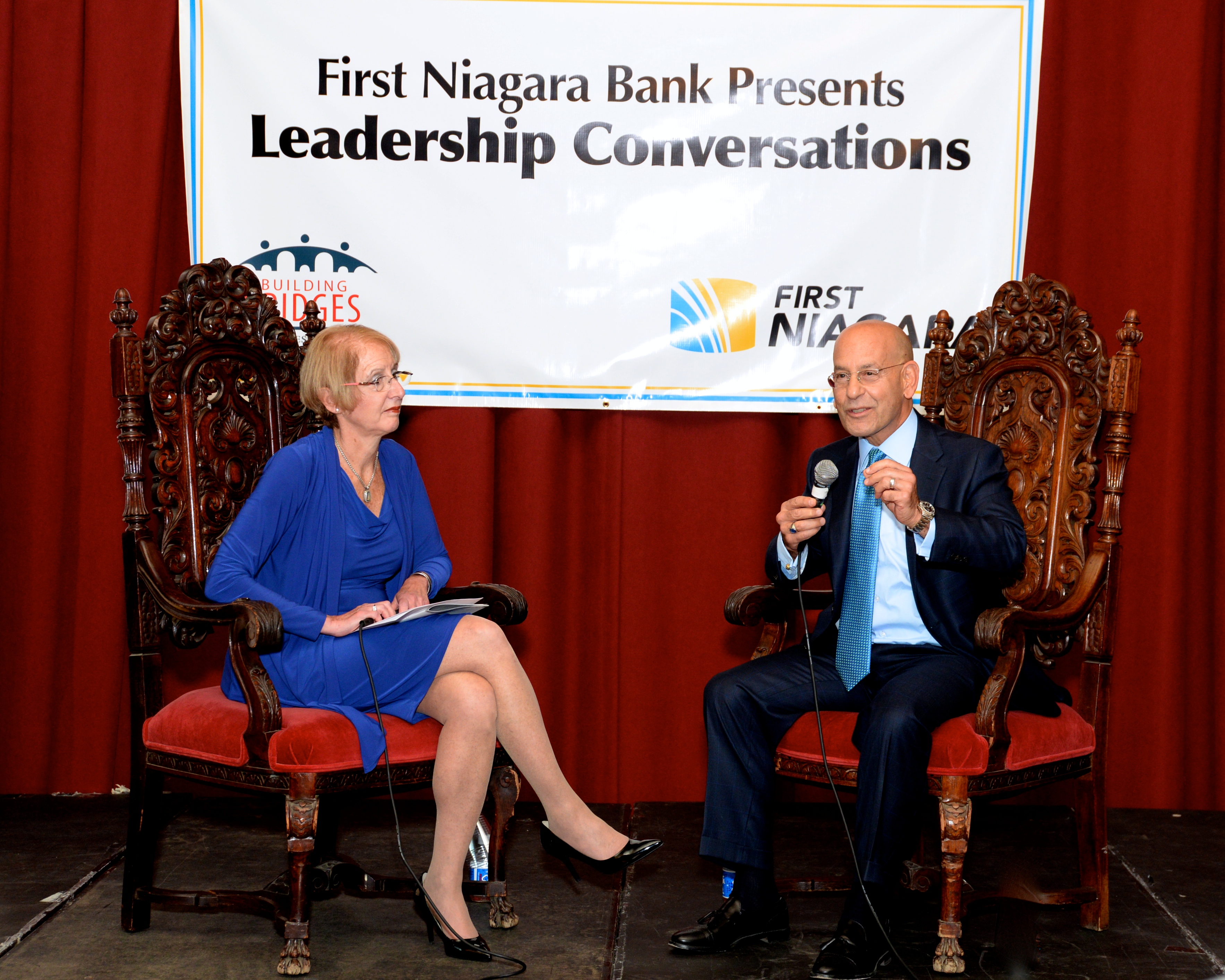
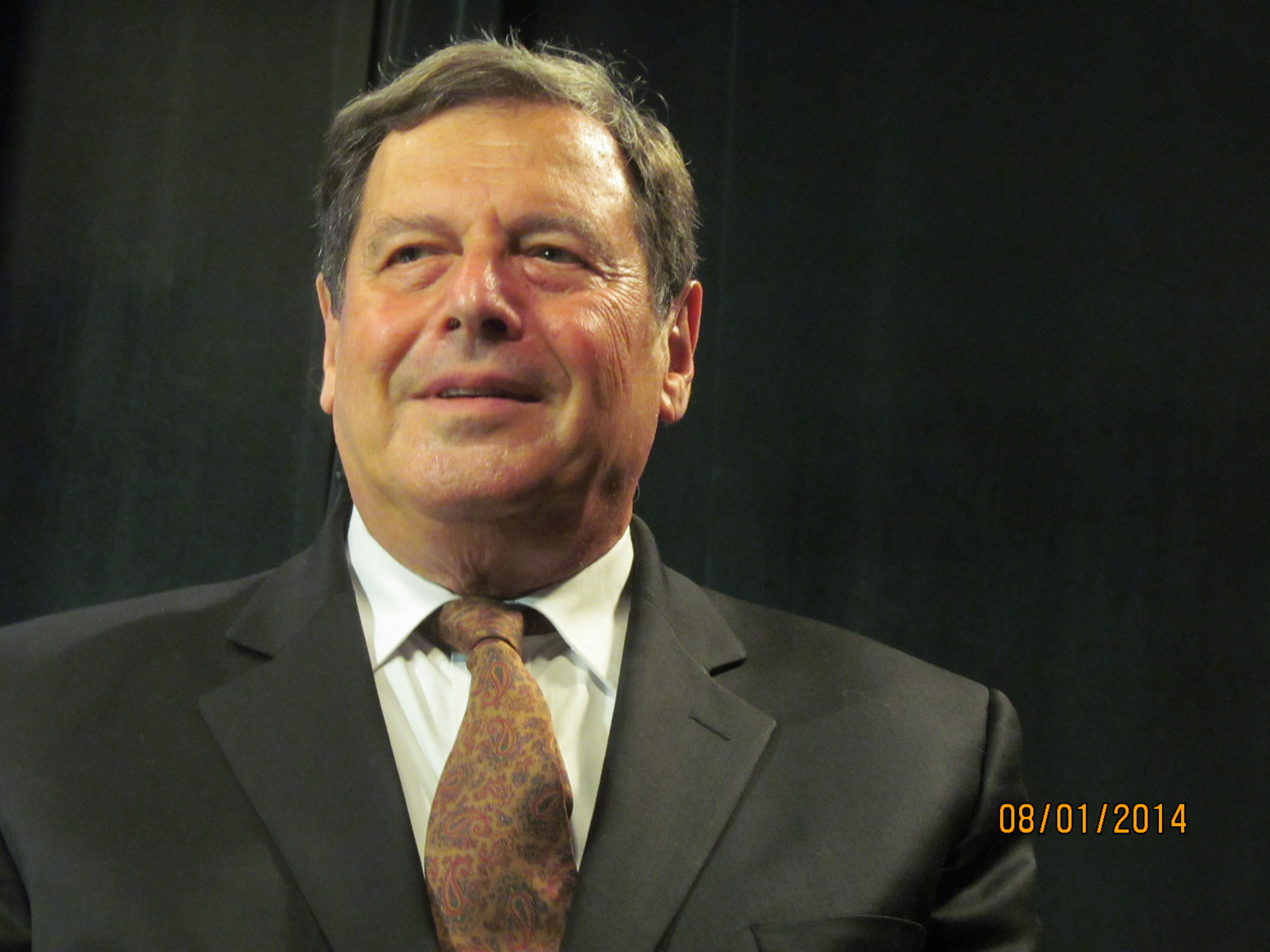
 Premiering at the White Plains Performing Arts Center on September 5th and 7th 2014, to commemorate the anniversary of September 11th, Reality Theatre Productions™ presents, “IN SESSION with DR. MARK LERNER” featuring Firefighter Bobby Senn, Directed by Jeremy Quinn.
All proceeds will be donated to the 9/11 Tribute Center which funds the 9/11 Memorial at the former World Trade Center site and contributes to victims of 9/ll, the box office said. Tickets are $30 at the front of the house, and $20 at the back. Tickets may be purchased through the box office by calling 914-328-1600
 
Reality Theatre Productions is an innovative theatrical genre, created and originated by Executive Producer Mark D. Lerner, where real people share real stories that inspire and enlighten audiences. While improvisation is spontaneous and presented without preparation, Reality Theatre Productions is a neoteric, unscripted, structured theatrical genre. 
 
“IN SESSION with DR. MARK LERNER,” featuring Firefighter Bobby Senn, marks the inception of Reality Theatre Productions. It is an auspicious production in which Dr. Lerner presents as a psychologistand speaker.
Bobby Senn presents as a patient† and speaker who shares his story as a New York City Firefighter who survived the attacks on September 11th. This premier production features a special appearance by Broadway actor, David Gabriel Lerner (AEA).
 
While our nation is focused on mental illness, “IN SESSION with DR. MARK LERNER” fosters emotional wellness – an awareness, understanding and acceptance of one’s feelings and an ability to manage through challenges and change. This timely production “infotains” audiences with remarkable stories of distinguished people who have lived through and overcome adversity.
 
Posted in Uncategorized

Pressure on Common Council to start the questioning , adhoc advocates of FASNY denial write

Hits: 143

WPCNR LETTER TICKER. August 10, 2014 (The following was shared with WPCNR by the authors)::
Dear Members of the Common Council:
We are sending this request just to you. . .and not the Mayor and other City Staff employees.
The August 7th email to you from Carry Kyzivat deserves your full attention. . .and serious consideration as there a lot of residents of White Plains like Carry and ourselves questioning the transparency and honesty of the City’s “FASNY review process”.
As Council members we admire your public service and the toll your part-time commitment takes on your professions, family and personal time.
We imagine the FASNY submissions have been particularly difficult because there have been so many pages of documents and resultant changes along the way. . . that we realize some of you may not have studied all the FASNY documents to the extent some of us residents have.  So Carry’s question of who is helping and advising you is critical.
If the answer is no one is helping and advising you and you are reading all of the submissions yourself. . .then you, like us, are aware of all the FASNY misinformation, inaccuracies and misdirections that we have encountered so far.
Reviewing the FASNY documents is like the game we used to play with our children “Where’s Waldo” except with the FASNY submissions when we search and find information. . .it always ends up to be misinformation.
In the opinion of many this whole FASNY review process has been “flawed”. . .and it leads us to wonder:
Who is giving the Council legal opinion that the review process you are following, including not asking questions. . .is right according to the law?
Could those giving you input be interpreting the law incorrectly or could there be other interpretations?
Are City Staff and outside consultants covered by the City ethics codes?  Does the City have Ethic codes?
The reason we ask is that we have been looking at WP regulations. . .and will report our findings to you in future emails. . .however we can tell you now. . .nothing in the WP regulations we found supports approving this FASNY project. . .and common sense would tell most of you that this project does not fit with any residential neighborhood in WP.
Even searching our memory of past Common Council reviews of major developer projects in WP. . .showed Council members have in fact asked many good questions. . .so who advised you to stay silent with the FASNY project before you?
Something strange is going on in our City. . .where this FASNY project, which is not supported by residents or WP regulations, is moving along with the Common Council, by your silence, participating in the process.  Is it possible for innocent Council members to be tainted by this review process?
Even if you have not made up your mind yet on the FASNY project. . .you have to admit the “review process” is flawed….
And if so should you take action right now. . .so as the “FASNY review process” continues at the least it is honest and transparent?
We report. . .you decide.
Marie and Ron Rhodes
P.S.  In line with our comments above. . . .If anyone past or present has told the Common Council that you have to grant a Special Permit to a school. . .they really should have said it depends on the type of school. . . yes a “public school” would be eligible. . .however a “private regional school campus” is not eligible for a Special Permit.  We’ll give you the details in our next email on Special Permits.
Posted in Uncategorized

Legislator Jenkins Proposes Legislation to lease Playland to Central Amusements and Standard Amusements before Legislators “review” those firms’ Proposals.

Hits: 107

WPCNR COUNTY CLARION-LEDGER. From the Westchester County Board of Legislators with a WPCNR interview with Ken Jenkins.  August 8, 2014  (Edited)

County Legislator Kenneth Jenkins announced today that he has introduced legislation to lease the Playland amusement area to a partnership comprised of Central Amusements and Standard Amusements, the two remaining respondents to the proposal to reinvent Playland, which was issued by County Executive Astorino in 2010.

Mr. Jenkins told WPCNR, the legislation is in the form of a “Bill-Memo” that has yet to be considered within committee yet. He said at this time, “no other legislator is buying into it yet, we haven’t even dotted the i’s and crossed the t’s yet.”

He described  the “bill memo” as an attempt to get both amusement companies to run Playland jointly, that would possibley get the County $3 million to pay the Playland debt service as early as 2015, while the firm or firms if a common lease could be hammered would invest $25 Million the park in refreshed rides, new rides, while preserving the historic one.

Jenkins said the proposals of the two firms had already been examined by the Board three years ago, and the firms have not altered their proposal and he said they have not altered it significantly. He said Legislator Peter Harckham’s committee when they take up the review process again in September could do what they wished. He said Harckham had not backed his joint proposal at this time.

Jenkins told WPCNR, both Central Amusements and Standard would pay for County Police security at the park, would allow free admission and charge for rides only; move county employees out of Playland and hire summer employees. He said the details of the lease had not been worked out, and that was part of the idea of submitting a “bill-memo” so the concept of how a joint deal might be worked out. “Everybody participates adds, takes away, and shapes the final bill.”

The proposed legislation will be referred to committee at the next regular meeting of the Westchester County Board of Legislators (BOL) on September 8, 2014, after it was held over at the last BOL meeting on August 4, 2014 by Minority Leader John Testa (R-Peekskill).

Editor’s Note:The legislation is being introduced before the new review of Central Amusements and Standard Amusements “visions” and financials for Playland should they take it over, even begins. That review is not scheduled until September, reported County Legislator Benjamin Boykin to WPCNR Tuesday evening. 

The proposed legislation that Jenkins has introduced to enter into a lease agreement to operate the Playland amusement area with Central Amusements and Standard Amusements is modeled on the County’s lease with the Children’s Museum to operate at Playland  which was adopted unanimously by the BOL after being vetoed by County Executive Astorino.

Editor’s Note: the lease with the Children’s Museum  was for a lease fee of $1 a year, with the Museum investing, at last indication,$10 Million in money to fill the bathhouse with attractions.  The organization has yet to raise the $10 Million, after the county invested over $8 Million in renovating the North Bathhouse for the museum which the county is not expecting to be paid back. In return, Mr. Jenkins told WPCNR  this afternoon, the Museum would invest $8 to $12 Million in fleshing out the museum.

“The combined talents of these two world-class amusement operators and their confirmed investment of $25 million into Playland with a guaranteed minimum payment to Westchester County is a win-win-win situation for this great park’s future and the county’s taxpayers,” said Jenkins. “I am hopeful that this legislation can be considered and adopted in time to positively impact the 2015 County Budget.”

Lawsuit Against Astorino Management Agreement Is Withdrawn.

 
Westchester County Legislator Ken Jenkins (D-Yonkers)also  announced today that the lawsuit challenging the management agreement between Westchester County and Sustainable Playland, Inc. (SPI) has been terminated, now that Sustainable Playland has withdrawn from consideration.

“Filing a lawsuit was the only option after County Executive Astorino entered into the management agreement with Sustainable Playland without the approval of the Board of Legislators, which is required for any County contract that exceeds five years,” said Jenkins. “The SPI agreement crumbled under the scrutiny of the Board of Legislators’ review process.  The truth, though, is that this management agreement should have never been authorized by the Board of Acquisition and Contract in the first place without the approval of the Board of Legislators.”

Yonkers attorney Evan Inlaw represented Jenkins and entered into an agreement to terminate the legal action after receiving a copy a letter, which is attached to this press release, from SPI to County Executive Astorino, noting that the not-for-profit organization was exercising its right to terminate the Asset Management Agreement it had signed with Westchester County to revitalize Playland.

Posted in Uncategorized

The Mosquito Coast: Deploy the Repellents County Says. West Nile Virus Detected in County Mosquitos

Hits: 165

WPCNR HEALTH WATCH. From the Westchester County Department of Health. August 7, 20014:

 The Westchester County Department of Health has learned for the first time this year that a mosquito batch has tested positive for West Nile Virus.

The mosquito batch had been collected by County Health Department staff in New Rochelle and sent to the New York State Department of Health for testing. Last year, seven positive mosquito batches were found in Westchester County and two human cases of West Nile Virus were reported.  So far this year, there have been no reported human cases.

“This is the time of year when we typically start to identify mosquitoes that carry West Nile Virus in Westchester,” said Sherlita Amler, MD. “While it should not be a major cause for concern, it would be prudent for residents to use repellents when outdoors from dusk to dawn to avoid mosquito bites altogether.”

The Health Department will continue to trap and test mosquitoes and survey catch basins for mosquito larvae or standing water. No standing water was found near the trap that contained the mosquitoes that had West Nile virus, but catch basins on nearby streets will be re-inspected and retreated with larvicide as needed.

The Health Department prepared for the summer mosquito season by applying larvicide to catch basins throughout the county in an effort to prevent the spread of mosquito-borne diseases such as West Nile virus.

The Health Department recommends that residents:

  • Use insect repellent if you must spend time outdoors in the late afternoon and evening when mosquitoes are active and feeding. Be sure to follow the label instructions. Adults can apply insect repellents with up to 10% DEET once a day on infants over 2 months of age by applying the product to their own hands and then rubbing it onto their children, avoiding their hands.  Products containing DEET should not be used on children under 2 months of age. Instead, consider keeping them indoors when mosquitoes are most active, at dusk and dawn.
  • Wear long pants, long-sleeved shirts, and socks when outdoors in the late afternoon or early evening when mosquitoes are active and feeding.
  • Check their property for buckets, plastic containers, ceramic pots or similar water-holding containers that should be discarded or turned over.
  • Remove standing water from children’s toys and play houses left outside.
  • Remove discarded tires.
  • Drill holes in the bottoms of all recycling containers that are left outdoors.
  • Turn over plastic wading pools, buckets and wheelbarrows when not in use.
  • Change the water in birdbaths at least twice weekly.
  • Sweep driveways after it rains to clear puddles.
  • Keep storm drains and gutters clear of leaves and debris.
  • Clean and chlorinate swimming pools, outdoor spas and hot tubs and drain water that collects on their covers.

Residents who notice large areas of standing water on public property that could serve as potential mosquito breeding grounds should report this to the Westchester County Department of Health at (914) 813-5000. For more health information, Like us on Facebook at www.Facebook.com/wchealthdept, Follow us on Twitter @wchealthdept or visit our website, www.westchestergov.com/health.

Posted in Uncategorized

State Releases HALF the questions on 2014 Assessment Tests.

Hits: 136

WPCNR SCHOOL DAYS.From the New York State Education Department (Edited). August 7:

As WPCNR and White Plains Week first reported  last June, and again reported last week, the New York State Education Department  released approximately 50 percent of the questions used on the 2014 Grades 3 – 8 assessments Wednesday.

The released questions will, the Department said in a news release, help students, families, educators, and the public understand the breadth and depth with which the state tests measure college and career readiness.

IMG_1570[1]

Education Commissioner  John King, Jr.(center) after a meeting of the Westchester Business Council June  11 when he first said in response to a WPCNR question, that Common Core Assessment Test Questions would be released this month.

“The test questions we are releasing today (Wednesday), coupled with item level data analysis and instructional reports made available in July, are important components of a comprehensive approach to instructional planning and professional development,” said   Education Commissioner John B. King, Jr.  “We’ve listened to New York State educators make the case that having more test questions available would benefit our kids so we’ve doubled the number and provided a thorough explanation for every student response.”

The released questions represent a range of difficulty and illustrate how student performance is assessed in accordance with the learning expectations and instructional shifts established by the New York State Common Core Learning Standards.  Released questions can help inform classroom instruction and local assessment practices.

The released questions are posted here: https://www.engageny.org/resource/new-york-state-common-core-sample-questions 

For each released multiple-choice question, explanations are provided, detailing how the question measures the intended learning standard and why the right answer is correct and why wrong answers are incorrect.

For constructed response questions, several examples of student work are provided, with explanations of why the responses received the scores they did.

“New York State students and their teachers are rising to the challenge,” said Regents Chancellor Merryl H. Tisch.  “Educators can use this information together with student work from throughout the school year to help understand whether their instruction, assignments and classroom assessments reflect the rigor and depth of our learning standards and our statewide assessments.”

The 3-8 assessments are only one indicator among multiple measures of student performance and are intended to be used in conjunction with other tools to gauge student performance, educator effectiveness and school accountability. All Regional Information Centers (RICs) offer reports that allow educators to see the percentage of students that answered each test question correctly and (for released test questions) the percentage of students who selected each incorrect response.

This year, NYSED requested additional funding in the New York State Budget to increase the number of test forms – because more test forms would enable the Department to release more test questions and eliminate stand-alone multiple choice field tests. The request was not funded in this year’s budget.

The federal No Child Left Behind Act (NCLB) requires that states annually administer tests in English Language Arts (ELA) and Mathematics in grades 3 – 8 and high school. The 2014 Grades 3–8 Common Core ELA and Mathematics New York State Testing Program (NYSTP) has been designed to measure student knowledge and skills as defined by grade-level New York state standards in ELA and Mathematics.

A wide range of resources are available to parents and educators on State Assessments:

Performance Level Descriptions for 3-8 ELA and Math Tests that describe the knowledge and skills students should display at each performance level:

https://www.engageny.org/resource/performance-level-descriptions-for-ela-and-mathematics

Suggested analyses for 3-8 ELA and Math Tests that support student learning:

https://www.engageny.org/resource/suggested-data-analyses-for-3-8-ela-and-mathematics-state-tests

Test Guides for each grade and subject that contain specific details about the number of questions on each test, which standards are measured on each test, and how students will be graded on their performance:

https://www.engageny.org/resource/test-guides-for-english-language-arts-and-mathematics

Item and passage selection criteria for the 3-8 Assessments:

https://www.engageny.org/resource/new-york-state-passage-selection-resources-for-grade-3-8-assessments

https://www.engageny.org/resource/new-york-state-item-review-criteria-for-grade-3-8-english-language-arts-tests

At the high school level new Regents exams aligned to the NYS Common Core learning standards are being phased in and the complete exams were posted in June.

The Common Core Regents Exam in ELA (including annotated questions) is posted at:

https://www.engageny.org/resource/spring-2014-regents-examination-ela-common-core-resources

The Common Core Regents Exam in Algebra I (including annotated questions) is posted at:

https://www.engageny.org/resource/spring-2014-regents-examination-mathematics-algebra-i-common-core-resources


-30-

Posted in Uncategorized

69 Years Ago Today: Hiroshima was Bombed

Hits: 184

WPCNR OBSERVATIONS. August 6, 2014:

Sixty-nine years ago in 1945 today, the Enola Gay, a single American bomber dropped an Atomic bomb on the city of Hiroshima, Japan.

The terrible effects of that single bomb are a horror that has never been repeated

A second bomber, Bock’s Car on August 9, dropped another atomic bomb on Nagasaki.

Unknown thousands of Japanese citizens’ lives were vaporized, burned,  and maimed and two cities leveled to the ground in an instant in both bombings.

To grasp what one atomic bomb did to Nagasaki. Readers may see the photographs Japanese photographer Yosuki Yamato took of the aftermath of Nagasaki the day it happened at http://www.exploratorium.edu/nagasaki/photos.html#journey/63.jpg

The decision to drop the bombs was made after the United States, Great Britain and the Republic of China demanded Japan  surrender in the Potsdam Declaration on July 26 or face  “prompt and utter destruction”.

The Japanese government did not surrender.

The United States deployed two nuclear weapons  dropping one on Hiroshimi today, 69 years ago and one on Nagasaki on August 9.

Over four months the bombs resulted in the deaths of   90,000–166,000 people in Hiroshima and 60,000–80,000 in Nagasaki, half dying the day the bombs fell.

The Hiroshima prefecture health department estimated that, of the people who died on the day of the explosion, 60% died from flash or flame burns, 30% from falling debris and 10% from other causes. During the following months, large numbers died from the effect of burns, radiation sickness, and other injuries, compounded by illness.

In a US estimate of the total immediate and short term cause of death, 15–20% died from radiation sickness, 20–30% from burns, and 50–60% from other injuries, compounded by illness. In both cities, most of the dead were civilians, although Hiroshima had a sizeable garrison.

The horror of those two bombings and the aftermath, the injuries created have resulted in an effort and reluctance on the part of nuclear-armed powers to avoid any nuclear attacks since that date.

Within a few days of those bombings, Japan surrendered unconditionally, officially ending World War II.

The decision to use the bombs by the United States has long been debated. A dialogue on what the bombs did, why the decision was made was collected in 1995, the fiftieth year since the bombings. It is available at http://www.exploratorium.edu/nagasaki/commentary/decision.html

Posted in Uncategorized

Solar Energy Growth Report Presented.

Hits: 170

WPCNR ENERGY & ANSWERS. From the Office of State Senator 35th Senate District, Andrea Stewart-Cousins. (Edited) August 5, 2014:

Today, Environment New York Research & Policy Center released a new report: “Lighting the Way” showing strong solar growth across the nation including a 30% increase in New York in 2013.

The report emphasizes that it is not availability of sunlight that makes states solar leaders, but the degree to which state and local governments have created effective public policy to help capture the virtually unlimited and pollution-free energy from the sun.

New York’s progress on solar has helped fuel a tripling of solar energy nationwide between 2011 and 2013. In 2013, solar capacity in New York grew from 175 MW to 250 MW. (Editor’s Note: this is comparable to the output of the Indian Point nuclear power plant in one year.)

 “Solar energy is emerging as a go-to energy option here in New York and across the country,” said Heather Leibowitz, Director of Environment New York. “Thanks to the commitment of New York’s leaders, this pollution-free energy option is poised to play a major role in helping us meet New York’s goal of a 44% reduction in carbon emissions by 2030.”

Here in New York, solar progress is attributed to a number of programs; including; Governor Cuomo’s NY-Sun Initiative.

“New York officials deserve tremendous credit for recognizing the environmental and economic benefits of solar energy and taking action to make it a reality,” said Leibowitz. “As more people see the benefits of solar energy, we’re confident clean, limitless energy from the sun will be a growing part of New York’s plan to reduce pollution from power plants.”

“The Solarize Westchester team is proud to be part of New York State’s ambitious efforts to maximize the economic and environmental benefits from solar technology,” said Nina Orville from Solarize Westchester.

“Through the Solarize Westchester initiative, we are focused on driving down the non-hardware costs of solar installations to make Westchester County New York State’s leader in solar installations.  Our efforts include assisting Westchester municipalities to adopt solar-friendly permitting and zoning policies and also leading Solarize campaigns, aggregating demand for solar installations at reduced costs, in eight Westchester communities.  We anticipate that these campaigns will result in approximately 400 installations during these 20-week campaigns. We’re proud to have the support of our funder, NYSERDA, and to work to deliver great results in Westchester County that can be replicated elsewhere in New York State.”


Democratic Conference Leader, State Senator Andrea Stewart-Cousins (White Plains 35TH Senate District) of Yonkers, said,

“Let’s make New York number one for solar energy use. We may not be in the top ten states now, according to Environment New York’s report, but we are committed with our government partners to expand solar because using the sun to generate electricity makes sense and reduces greenhouse gases.”

Solar in the United States increased more than 120-fold in the last 10 years. In the first quarter of 2014, solar energy accounted for 74 percent of all the new electric generation capacity installed in the United States. Ten states with the most solar installed per/capita are driving 89% of the solar installed in the U.S, while, representing only 26 percent of the population and 20 percent of the electricity consumption. 

And as the solar industry grows, the cost for installation decreases; making it more accessible. The price of installed solar systems fell 60 percent between the beginning of 2011 and the end of 2013.  Jobs in the solar industry are also growing rapidly. In 2013, there were more than 140,000 solar jobs in the U.S., including 5,000 in New York. 

“I am cheered by the belief that our collective conscience is at a tipping point, and that folks are waking up to the fact that renewable energy is the path to a healthy future for our planet, and our existence. Solar, wind, water power will guide our way,” added Weschester County Legislator Catherine Parker.

“I believe good news is upon us. New York State while an honorable mention today for its use of solar, has paved a way for New Yorkers to embrace solar, not as an alternative energy, something to be tossed into the mix like a cherry on an ice cream sundae, but as a renewable, dependable, affordable choice for running our businesses, our homes, our cars.  We have leaders who get this, who understand that solar power is not just for states like California, Arizona, and those that have warmer climates. Those of us who see what countries like Germany have done, know that we can get there too. It just takes persistence to keep banging the drum, and Environment New York is banging that drum today.”

Another major driver for solar energy is that it produces no pollution; including climate-altering carbon emissions.  According to the report, solar power produces 96 percent less global warming pollution than coal-fired power plants over its entire life-cycle and 91 percent less global warming pollution than natural gas-fired power plants.

“Environment New York’s report on solar states identifies and fosters an open forum for discussion of the smartest next steps that states can take now to capture the value and grow the market for solar power in a manner that protects ratepayers and strengthens the reliability of our grid while boosting clean energy jobs and the clean energy economy” said Tom Thompson of New York Solar Energy Society.

Several strong policies adopted by the top 10 solar states, like New York helped encourage homeowners and businesses to “go solar:”

  •  9 states have strong net metering policies. In nearly all of the leading states, consumers are compensated at the full retail rate for the excess electricity they supply to the grid.
  • 9 states have strong statewide interconnection policies. Good interconnection policies reduce the time and hassle required for individuals and companies to connect solar energy systems to the grid.
  • All 10 states have renewable electricity standards that set minimum requirements for the share of a utility’s electricity that must come from renewable sources, and 8 of them have solar carve-outs that set specific targets for solar or other forms of clean, distributed electricity.
  • 9 states allow for creative financing options such as third-party power purchase agreements, and 8 allow property assessed clean energy (PACE) financing. 


Posted in Uncategorized

Third and (Possibly) Final FASNY HEARINGS MOVED UP TO September 8. Reduced Number Speak at Two Hearings Monday Evening.

Hits: 102


WPCNR COMMON COUNCIL CHRONICLE-EXAMINER. Special to WPCNR. August 5, 2014:

Mayor Tom Roach, responding to citizen-generated complaints that holding the third set of French American School of New York hearings the day after Labor Day might unduly limit persons’ ability to attend, announced the third (and potentially last) hearings on the school site plan and Special Permit application would take place on Monday September 8 at 6:30 P.M.

The hearings on the site plan/special permit application and closing of Hathaway Lane saw about 25 persons speak, according to a WPCNR correspondent. The observer told us  two new perspectives were brought up by the leader of the North Street Civic Association who pointed out that the North Street neighborhood motorists have no other place to go except North Street in the mornings and afternoons when French American School of New York traffic is expected to impact North Street at the proposed new entrance opposite the White Plains High School entrance. The North Street spokesperson said motorists would avoid possible backed up traffic by driving over Ridgeway to get to Mamaroneck Avenue.

Our correspondent also observed that the Lees who live on the impacted street the city would close, Hathaway Lane, complained the city never came to them and told the closing of the street was being considered.

Our observer noted the Common Council again listened and did not ask any questions of French American School of New York representatives who were there in the audience to elaborate and make clear any  matters the citizens speaking brought up.

He mentioned there was questioning of the Common Council and the administration’s leadership on the project. He reported one resident asked the Common Council to make clear their reasons, if they approved the project, whey they thought it would be good for the city and the neighborhood.

He said FASNY did not make any statement on the cost of the project, the site plan revelation that the project would be built in two phases and could take as long as 10 years to complete, because of the need to “replenish” financing. (This new element indicating financing was not in place in its entirety came up in some questioning, but no one from FASNY stepped up to explain it, and the Common Council did not ask FASNY reps to explain it.)

On the Westchester Pavilion…

In another public hearing on the change of zoning for the Westchester Pavilion property, owned by Urstadt-Biddle, two representative from the Carhart Association, said they supported the rezoning (that would allow an increase in height to 280 feet, and parking ratios allowing residential and mixed use development). However they expressed they had concerns about the scope of the project and awaited a more detailed explanation of the project, currently seen only in renderings.

Posted in Uncategorized

Board of Legislators Votes full risk assessment on new gas pipeline right of way Proposal

Hits: 189

WPCNR COUNTY CLARION LEDGER. From the WCBOL Press Office. August 4, 2014:

The Westchester County Board of Legislators (BOL) announced today passage of a resolution calling for a stricter review process and full risk assessments in regard to the proposed expansion of the Algonquin natural gas pipeline through the county by Houston, Texas-based Spectra Gas Corporation.

The major construction project would replace existing section of the existing 26-inch diameter pipe for pressurized gas with new 42-inch pipe from Rockland County to Massachusetts via Northern Westchester and Putnam County. Included in the project would be a tunnel built for the pipeline beneath the Hudson River and expansion of compressor stations situated in Stony Point and Southeast, plus metering and regulating stations along the way.

The approved resolution from the BOL, which was approved in a vote of 15 to 1 at its regular meeting held this morning, focuses primarily on two specific risks regarding the proposed pipeline:

its location in highly populated areas in Westchester, where potential accidents and regular emissions could be harmful to the populace, and

2) proximity to the Indian Point Nuclear Power Plant and two geological faults.

“Our first concern must be for the protection of our residents and the environment,” said BOL Chairman Michael Kaplowitz (D-Somers). “This resolution embodies important safety and environmental standards that must be upheld before permission is granted to construct the pipeline.”

In its resolution, the BOL notes that the resource report submitted by Spectra Energy Partners does not reflect aggregate and cumulative emissions from compressor stations, metering stations and pipelines in the proposed expansion project. A number of health problems have been associated with emissions from compressor stations, which push the pressurized natural gas through the pipeline. These emissions typically include a number of toxic chemicals and compounds that result in ground level ozone and degraded air quality.

“We’re asking all Federal and State agencies involved with this process to make the health and safety of residents, workers and all other stakeholders their top priority,” said BOL Majority Leader Catherine Borgia (D-Ossining). “We agree that meeting our region’s energy needs is a priority for further economic development, but the review, permitting, and approval process must be stringent to ensure environmental and safety concerns are addressed and needed mitigation plans are in place.”

Added Legislator Catherine Parker (D-Rye), chair of the BOL Environment & Energy Committee, where the resolution was first passed by BOL members,

“No one should sign off on this project until we know for sure that air quality for Westchester residents will not be affected, and that every conceivable safety measure and emergency contingency plan is in place. The bar for this project has to be at the highest level imaginable. Anything less simply increases the chances of a catastrophe and long-term health risks.”

A chief concern for the BOL members is that the significant risks inherent in the proposed gas pipeline aren’t covered in the usual state and federal review processes for projects as such.

“This particular project definitely calls for a more stringent review,” said Legislator Pete Harckham (D-North Salem). “There will need to be independent assessments and monitoring completed before permitting takes place, all of which should be funded by Spectra, and then continuous monitoring of air, water and land around the pipeline after its built.”

Harckham remarked that his BOL colleagues worry about blowdowns:

— when the gas is removed from the pipeline at various stations for maintenance. One such station is to be situated in Peekskill, where the equipment for a Pipeline Inspection Gauge (PIG) launching and staging area, will be adjacent to a school and playground. In the resolution, the BOL asks for immediate notifications of unplanned blowdowns are given to municipal and County officials, and that health impact assessments for these incidents are made as well.

Susan Van Dolsen, co-founder of Stop the Algonquin Pipeline Expansion (SAPE) and co-chair of Westchester for Change, said, “We thank our pro-active Westchester legislators for protecting us by passing this resolution calling for the imperative measures of a risk assessment, baseline air testing, SEQR, and a Health Impact Assessment to ensure health and safety for Westchester residents.”

Suzannah Glidden, SAPE co-founder and board director of Community Watersheds Clean Water Coalition, stated, “We count on our Westchester legislators’ strenuous advocacy and follow through to make sure all resolution measures are executed before permits are issued on Spectra Energy’s ill-conceived and unacceptably dangerous proposed high-pressure, forty-two-inch diameter Algonquin natural gas pipeline right next to Indian Point.”


Posted in Uncategorized

FASNY CONSTRUCTION COULD LAST 10 YEARS. SITE PLAN: NEEDS TO “REPLENISH” FINANCING. BUILD 2, THEN 3

Hits: 127


6-WPW-Building by Building

The new French American School of New York proposed structures for the former Ridgeway Country Club property  (in green shading) are anticipated to be opened by 2016 if construction begins this fall. The site plan has revealed that construction of the three additonal structures (in orange) could take until 2025 to complete because of the need to “replenish” financing.


WPCNR SOUTH END TIMES. By John F. Bailey. August 4, 2014:

The new site plan of the proposed French American School of New York indicates the school does not have enough financing already in place to build the campus in one continuous sequence.

WPCNR notes the site plan is the first time the school has indicated the project may take 10 years to complete. In Section 10, page 4 of the site plan under the heading “Deferred Phasing of the Elements,” the site plan states:

4-WPW-Phase 1

And Phase II is hoped to be completed by 2025, but the start could be delayed until 2025:

3-PTBH-PHASE 2


Another issue which has not previously been disclosed is that the school does not have capital sources in place to pay for three of the buildings proposed in Phase II of the project, according to this statement in the site plan, it will need to “replenish its capital funds” and appears to hold the city responsible for hurting its fund-raising efforts:

5-PTBH-THE 2025 FACTOR


Posted in Uncategorized