FASNY RESPONDS TO QUERIES ABOUT ITS FINANCES IN A STATEMENT TO WPCNR.

Hits: 150

WPCNR SOUTH END TIMES. Statement From The French American School of New York. August 19, 2014:

In recent letters to WPCNR, opponents of the French American School of New York raised questions about the school statement that it would execute its new campus  project in two phases finishing by 2025, due to a need to “replenish” its financing. WPCNR asked if they wished to repond to clarify their financing status.

The school issued this statement to WPCNR:

“As a not-for-profit, our financial records are public.  We have the financial ability to finance our new campus. 

The school is currently conducting a search for a new development director.  Our former development director left on good terms to join Burke Rehabilitation Center, one of our White Plains neighbors.

The capital campaign for the new campus is in its early stages and has enjoyed an enthusiastic response from the FASNY community and will accelerate as the plans for the campus move forward.      

Posted in Uncategorized

3 Sought in Tourneau Jewelry Robbery Sunday at The Westchester Mall

Hits: 124

WPCNR POLICE GAZETTE. August 18, 2014:

White Plains Police are seeking any information from the public (your anonymity will be preserved) on the identities of three suspects who robbed the Tourneau Jewlery store in the Westchester Mall Sunday.

The suspects, according to Lieutenant Eric Fischer, White Plains Police, entered the Tourneau jewelry store at 11:38 A.M. Sunday morning and took 8 to 12 “high end” watches. Fischer said the store armed security guard drew his weapon and attempted to apprehend the three, but they escaped on foot. Fischer said no shots were fired.

Fischer said the police are at this time attempting to get hold of the Tourneau inside surveillance video so they may release pictures of the suspects.

Fischer also reported that some of the stolen merchandise had been recovered

The police are looking for three black males.

Suspect number one  is described by Lieutenant Fischer as 5 foot 11, 240 pounds, wearing khaki pants, dark jacket and a baseball cap. The suspect had a scruffy beard,

Suspect Two does not have a height description, was also wearing dark clothing, a baseball cap and had scruffy facial hair.

Suspect three is described as 5 foot 7 to 5 foot 8, thin build, scruffy facial hair and a white long sleeve jacket.

Fischer asked members of the public that if they had any information on the suspects, or knew them they can contact the police at 914-422-6223 or 914-422-6200 and share the information anonymously.

Fischer noted that the police were aware of recent previous larceny cases involving the Tourneau store.

Posted in Uncategorized

Hathaway Lane Closure Discussion

Hits: 113

WPCNR THE LETTER TICKER. August 17, 2014:

Dear Mayor Roach and Members of the Common Council:

We write to voice our objections to FASNY’s proposal to close Hathaway Lane south of 57 Hathaway Lane. The analyses by FASNY and TRC of impact of this proposal on the contiguous neighborhood, and in particular, on the residents of Gedney Esplanade, Hotel Drive, and Murchison Place, do not support the proposal. Accordingly, the Council should deny this application.


  1. A.         FASNY’s analysis of this proposal contained in the FEIS is grossly                        inadequate.


The single page of handwritten notes of FASNY’s consultant enclosed herewith only addresses a.m. and p.m. peak hours, and only on one single day. This analysis is inadequate because the closure will have an impact on a 24/7 basis. Further, FASNY did not conduct a traffic count analysis on Hathaway Lane between Ridgeway and Gedney Esplanade, and did not conduct any traffic counts or any other analysis on the impacted alternative route, Gedney Esplanade, Hotel Drive and Murchison Place.


B.         The analysis contained in the TRC report from the fall of 2013 is wholly insufficient and factually incorrect.

We have enclosed the pertinent portion of the TRC report to this letter. We are astounded that this is all that the City’s independent traffic consultant had to say regarding closure of one end of the only two-way north-south route in the neighborhood.

  1. TRC states that the closure would involve local traffic only. This is false because Hathaway is a main cut through street used by a large number of nonresidents. There is significant cut through traffic in both the a.m. and p.m. peak hours on Hathaway, including many students traveling to and from White Plains High School.


  1. TRC claims that the closure would decrease cut through traffic, as the “efficiency” of the cut through would be lost. TRC does not support this conclusion with any facts, and in fact, we do not believe that the closure would decrease the cut-through traffic.

Drivers that currently use the Hathaway cut through will still use it, as it is not a meaningful inconvenience for them to access Ridgeway via Murchison Lane as opposed to Hathaway Lane.  Drivers who currently travel eastbound on Ridgeway will turn left onto Murchison rather than at Hathaway in order to avoid the North Street/Ridgeway intersection. Further, drivers who currently come from the north and east and use Bryant Avenue to make a left onto Hathaway to cut through the neighborhood do so to avoid congestion on North Street. They will still avoid congestion on North Street and use Hathaway, and will simply go down Gedney Esplanade, around Hotel onto Murchison to access Ridgeway.

  1. In fact, FASNY will likely increase the cut through traffic onto Hathaway and surrounding streets.  With additional traffic from the FASNY development in the general neighborhood, this will increase the bottleneck at North Street and Ridgeway, and create a new bottleneck at the FASNY North Street entrance opposite White Plains HS. This, in turn, will create a greater incentive for non-neighborhood traffic to cut through the neighborhood rather than encounter these new and increased bottlenecks.


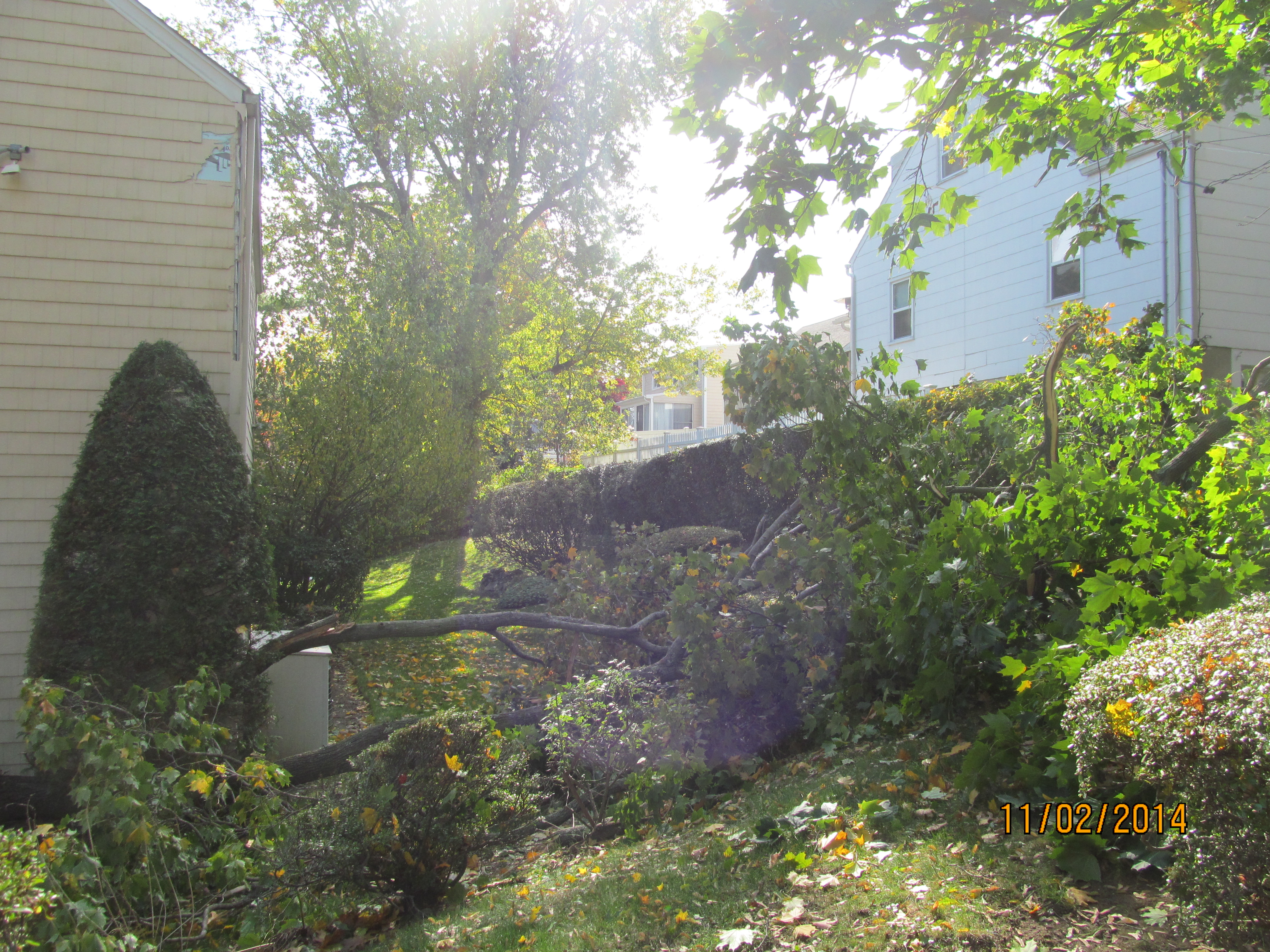
  1. TRC utterly failed to consider the differences in character of the Ridgeway/Hathaway intersection and the Ridgeway/Murchison intersection.  A photo of this intersection from Murchison facing south is enclosed.

Ridgway/Hathaway is a three-way intersection, while Ridgeway/Murchison is a four-way intersection, as Murchison crosses Ridgeway to become Richbell.  Secondly, the Ridgeway/Murchison intersection contains a school crossing across Ridgeway. This will likely create a negative safety issue in that the closure of Hathaway Lane will shunt more traffic to an intersection that contains a school crossing. This school crossing is the pedestrian access route to and from Ridgeway School by students living on Richbell and related streets.

TRC failed to analyze whether closure of Hathaway will lead to an increased safety hazard for pedestrians, including school children, at this intersection. By contrast, Hathaway at Ridgeway has very little, if any, pedestrian traffic, and there are no pedestrian cross walks or school crossings.

  1. TRC did not analyze the character of the alternate access Gedney Esplanade/Hotel Drive/Murchison access route. Hathaway south of 57 Hathaway has no homes, and no parking is permitted south of 57 Hathaway. By contrast, the new route has several homes on both sides of the street and parking on one side.


  1. TRC did not analyze whether Gedney Esplanade can handle the additional traffic. This is a country lane and it is already burdened by existing traffic. We walk on Gedney Esplanade on a near daily basis and can tell you that it is not wide enough, particularly between Oxford Road and Hotel Drive for vehicles going both ways and pedestrians. Can this already problematic road handle the additional traffic in a safe manner?


  1. All of the deficiencies in the TRC report outlined above also apply to FASNY’s analysis. These are simple common sense issues. Why didn’t FASNY did include analysis of these issues in its application to close Hathaway Lane? Did FASNY study these issues but decide not to include submit its analysis because its analysis revealed negative impacts? Or did the FASNY willfully ignore these issues and submit a bare-bones, shoddy report? Either way, FASNY has utterly failed to show that its proposal is sound and safe.


Discussion


            This letter contains the observations of two residents of the neighborhood who do not have expertise in traffic management and safety. However, as 24-year residents of the neighborhood, we have the several concerns that we discussed above. We respectfully suggest that both the FASNY and TRC analyses of the closure of Hathaway Lane do not support this extraordinary proposal.

We also believe that the proposal to close Hathaway Lane shows that the FASNY development is utterly inappropriate for the Ridgeway property. Simply put, it is the wrong proposal in the wrong place. Placing the FASNY complex in context going back over three years, FASNY first proposed the Ridgeway entrance to its complex. This was soundly rejected. In the next iteration of the plan, FASNY adopted the North Street entrance, which FASNY itself had rejected in the initial proposal.  Now, FASNY proposes yet another bad traffic plan. No matter how hard FASNY tries, it has not shown, and can never show, that this development is an appropriate fit for the surrounding neighborhood. Quite simply, enough is enough.

In the absence of a thorough analysis that demonstrates that the closure of Hathaway Lane will not have a detrimental impact, we ask that you deny FASNY’s application. FASNY should not be heard to complain if you deny its application. FASNY has the burden of demonstrating the soundness of its proposal, but has utterly failed to do so.  We also implore you to ignore any explicit or implicit threats of a lawsuit by FASNY if you deny this application. While this well-funded developer certainly has the resources to sue, FASNY’s failure to demonstrate the propriety of its proposal dooms any lawsuit.

Thank you for your consideration of this letter.


Very truly yours,


Denise and Joseph DeMarzo

Posted in Uncategorized

White Plains Students Performances on 2014 State Common Core Assessments Flat. No significant progress in Lifting Number of Students Passing. State Declares Progress Statewide

Hits: 142

1-WPW-FIRST OPENER

WPCNR SCHOOL DAYS. By John F. Bailey  (article followed by the official New York State News Release commenting on statewide results) August 15, 2014:

The White Plains City School District test scores on the 2014 second year of Common Core Assessment Tests were released by the State Education Department Thursday.

WP Elementaries improve in math.

The city’s five elementary schools performances on Math assessments were the only signs of significant improvement with 39% of students passing the third and 4th grade math assessments and 46% passing at the 5th grade level.  This math improvement at the 5th grade level is 14% better than what the 5th graders achieved in 2013.

Math performance in the 8th grade level at the Middle School (students now entering high school in September) saw  32% of students passing at the Level 3 and above. In 7th Grade, 28% passed. In 6th grade, 33% passed.

The English Language Arts Common Core Assessments were flat. No significant improvement.

In the elementary grades ELA Common Core Assessments, grades 3, 4,5,   29% passed in 3rd grade; 29% in 4th grade, and 34% in 5th grade.

In the Middle School, performance in passing ELA Common Core standards was worse.

In the first year of Middle School, 6th Grade (2013-14) was the first year of the  Middle School Academy at Eastview where all sixth graders attended one middle school in an effort  to upgrade their academic adjustment to middle school work and concentrate on Common Core Skills.

Of those sixth graders, 33% passed English Language Arts.

In 2012-13  those sixth graders were in 5th grade, and 29% passed the first ELA Common Core Exam. Their  2013-14 ELA Common Core performance improved 4 percentage points in year.

On the 7th Grade 2014 ELA assessments, 25% passed.

In the 8th Grade 2014 ELA assessments, 32% passed.

(Editor’s Note:)To see the actual chart above go to 

http://www.p12.nysed.gov/irs/ela-math/2014/201314-ELAandMath-UnmatchedStudents.pdf      

Scroll down to District number 662200010000. You will see the White Plains District Results for Grades 3 through 8 and results by White Plains School.

Comparison of the 5th Grade  and 8th grade Common Core assessments of 2013 show not much progress in passing the tests (prepared by the education giant publisher Pearson) by White Plains students and statewide.

The first time new 5th Grade Common Core aligned tests prepared by Pearson were administered in spring 2013, the number passing ELA from 2012(a different, obviously easier test) went down to 29%. A shock to this district as well as virtually every school district in the state triggered a wave of protest against the tests. White Plains “passing rate” went from  roughly over 50% down to 29% on both ELA and Math, producing an uproar.  In Math, the 2013 Fifth Graders passing math dropped to 28.2% — down 36%.

At the 8th grade level, in 2013, 36.6% of Eighters passed the ELA Assessment — down 23%. In math just 34.3%  of White Plains Eighth Graders passed — down 40%.

At the third Grade Level  in 2013, 33.1% passed ELA  and 31.8% passed math.

Not much improvement has been made in White Plains students being able to cope with the Pearson and Stated Education Department and Board of Regents vision of the kind of questions and skills needed to answer them to pass these state-prepared and approved by educators who know what questions children can answer.

In the official news release on the test results, the Commissioner of Education, John King, Jr. and the head of the Board of Regents, and educators across the state cited significant process here is that news release. (The Governor of the State of New York has no statement on the results in this release):

Board of Regents Chancellor Merryl H. Tisch and State Education Commissioner John B. King, Jr. today released the results of the spring 2014 Grades 3-8 Math and English Language Arts (ELA) assessments. Students statewide made significant progress in math, including students in every need/resource group (urban, suburban, and rural).  Statewide, the percentage of students scoring at the proficient level and above in math rose from 31.2 to 35.8 across all grades combined.  The percentage of students scoring at the partial proficiency level and above also rose in math, from 66.9 to 69.6 percent.  Students made slight progress in ELA, (the percentage of students scoring at the proficient level and above rose 31.3 to 31.4 percent across all grades combined), though progress varied across the need/resource categories. The percentage of students scoring at the partial proficiency level and above in ELA also rose slightly, from 69 to 70 percent.  Encouraging gains were made by Black and Latino students, particularly in New York City.

This year, for the first time, assessment results are presented based on the performance of all students who took an exam last year (2013) compared with those same students in the following year (2014) at the next grade level. This “matched students” approach focuses on growth in student learning and provides more useful data than an approach that compares the performance of one year’s students at a particular grade level against the next year’s cohort of students at that same grade level.  This matched approach is consistent with New York’s USED waiver from No Child Left Behind and New York’s teacher/principal evaluation system.  For Grades 3-8 ELA and math, students at Levels 2 and above are on track for current graduation requirements.  Students at Levels 3 and above are on track to graduate at the aspirational college- and career-ready level (indicating readiness to succeed in credit-bearing first year college courses). 

“The test scores show that students from all economic, race, ethnicity and geographic backgrounds can and are making progress,” Tisch said.  “This is still a transition period.  It will take time before the changes taking place in our classrooms are fully reflected in the test scores. But the growth we see is directly attributable to the dedication and determination of so many classroom teachers and school leaders across the state. When school districts focus on providing the resources and professional development teachers need, their students do better.  Parents want the best education possible for their children, and the tests are one of multiple measures we need to make sure we’re moving in that direction.”

“New York has completed the fourth year of a 12-year Common Core phase-in,” King said.  “Like more than 40 other states, we’re in a period of transition; for us, that transition began with the adoption of higher standards in 2010.  We’ve invested millions of dollars in training to support educators to better prepare students for college and career success, and we will invest millions more in the years ahead.  These assessment results, along with our college- and career-ready high school graduation rate and NAEP scores, show we have a lot of important work ahead of us to ensure the success of all our students.  But with proper support and resources and an intense focus on continuous improvement of instruction, New York’s educators and parents will help our students develop the skills they need for success in the 21st century.”

Although there is some correlation between 2014 math and ELA performance and poverty, there are many examples of schools outperforming demographically similar peer schools.  See http://www.p12.nysed.gov/irs/pressRelease/20140814/home.html for a list of higher achieving schools and higher growth schools at both higher and lower levels of wealth.    

Hundreds of New York educators helped to develop New York’s Common Core assessments.  Every question that appears on a state exam is reviewed by New York educators.  The assessment results announced today follow related data releases earlier this summer. In July, the Department authorized Regional Information Centers (RICs) to release secure instructional reports to districts and schools (for samples of reports, seehttp://www.boces.org/Portals/0/Web%20Docs/RIC%20Reports/NYSRICsCognos.pdf(link is external) ).

These reports can be used to analyze student performance at the student, class, school, district, and regional levels. Earlier this month, the Department also released 50 percent of the 2014 Grades 3-8 ELA and math test questions (an increase from 25 percent for the 2013 tests), with detailed explanations for correct and incorrect responses (2014 annotated items can be found at https://www.engageny.org/resource/new-york-state-common-core-sample-questions ). Released test questions help teachers and families better understand how the standards were measured and the reasons why students may have responded incorrectly. 

Summary of 3-8 Exam Results:

Mathematics

  • Students statewide are doing better in math. The percentage of students who met or exceeded the proficiency standard (by scoring at a Level 3 or 4) increased from 31.2 to 35.8 across all grades combined.  The percentage of students scoring at the partial proficiency level and above also rose, from 66.9 percent to 69.6 percent. 
  • A smaller percentage of students met or exceeded the proficiency standard (by scoring at a Level 3 or 4) in the Big 4 city school districts than statewide. However, year-to-year performance increased in each Big 5 city school district, and New York City performance approached statewide levels.

    • Buffalo: the percentage of students scoring at Level 3 and above improved from 11.4 in 2013 to 13.1 in 2014.
    • New York City: the percentage of students scoring at Level 3 and above improved from 30.1 in 2013 to 34.5 in 2014.
    • Syracuse: the percentage of students scoring at Level 3 and above improved from 7.2 in 2013 to 7.6 in 2014.
    • Rochester: the percentage of students scoring at Level 3 and above improved from 4.8 in 2013 to 6.8 in 2014.
    • Yonkers: the percentage of students scoring at Level 3 and above improved from 16.1 in 2013 to 21.1 in 2014.
  • Although the achievement gap remains statewide, an increased percentage of students across all race/ethnicity groups met or exceeded the proficiency standard (by scoring at a Level 3 or 4).

    • Black students: the statewide percentage of students scoring at Level 3 and above across all grades combined improved from 16.1 in 2013 to 19.3 in 2014.
    • Hispanic students: the statewide percentage of students scoring at Level 3 and above across all grades combined improved from 18.9 in 2013 to 23.1 in 2014.

 ELA

  • Students statewide are doing slightly better in ELA. The percentage of students who met or exceeded the proficiency standard (by scoring at a Level 3 or 4) increased from 31.3 to 31.4 across grades combined.  The percentage of students scoring at the partial proficiency level and above also rose, from 69.0 percent to 70.0 percent. 
  • A smaller percentage of students met or exceeded the proficiency standard (by scoring at a Level 3 or 4) in the Big 4 city school districts than statewide. Year-to-year performance increases were largest in New York City and Yonkers, and New York City’s performance approached statewide levels.

    • Buffalo: the percentage of students scoring at Level 3 and above improved from 12.1 in 2013 to 12.2 in 2014.
    • New York City: the percentage of students scoring at Level 3 and above improved from 27.4 in 2013 to 29.4 in 2014.
    • Syracuse: the percentage of students scoring at Level 3 and above stayed the same, at 8.5, from 2013 to 2014.
    • Rochester: the percentage of students scoring at Level 3 and above improved from 5.6 in 2013 to 5.7 in 2014.
    • Yonkers: the percentage of students scoring at Level 3 and above improved from 16.9 in 2013 to 18.7 in 2014.
  • In New York City, an increased percentage of students in all race/ethnicity groups met or exceeded the proficiency standard (by scoring at a Level 3 or 4). For example:

    • Black students: the percentage of students scoring at Level 3 and above across all grades combined improved from 17.2 in 2013 to 18.6 in 2014.
    • Hispanic students: the percentage of students scoring at Level 3 and above across all grades combined improved from 17.2 in 2013 to 18.7 in 2014.

The Department continues to provide professional development support and resources for educators seeking to improve their understanding and implementation of the Common Core.  For example:

  • Earlier this week, the Department  awarded Teaching is the Core grants to districts to support teams of administrators and teachers in reviewing all local assessments given in the district, eliminating non-essential assessments, and improving districts practices around the use of assessment to inform high-quality instruction.
  • The Department is providing $500 million of Race to the Top funding to school districts to support their work to raise standards for teaching and learning:
    The Department supported almost 12,000 principal and teacher leaders and regional professional development coordinators on ways to successfully implement the Common Core, through 23 multi-day Network Team Institutes in Albany. 

    • Approximately $350 million was provided through Race to the Top formula grants available to all districts, along with approximately $150 million in competitive grants to districts and higher education partners, including several focused on career ladder models in which highly effective teachers and principals coach their colleagues and strengthen district professional development support for schools.
  • The Department provided teachers with tools and resources to successfully implement the Common Core, including exemplar curricular materials and videos of excellent instruction, through its EngageNY.org website.  Recognized nationally as an excellent source of high quality teaching materials, EngageNY.org has had over 73 million page views and the optional curriculum materials have been downloaded over 8 million times.

A summary of the test results, as well as individual school and district results, are available at:http://www.p12.nysed.gov/irs/pressRelease/20140814/home.html

Educators from across the State offer perspectives on the value of the data and how they’ll use it to inform instructional decisions:https://www.engageny.org/resource/educator-perspectives-3-8-grade-assessment-score-release

NOTE: Following are statements from educators and business leaders in reaction to today’s release.

Statements on the 2013-2014 Grade 3-8 Score Release

  1. “I am encouraged to see New York State students trending in a positive direction as we continue to implement the higher Common Core standards.  Parents, teachers, school leaders, and community partners should be proud of the progress we are making, but our collective efforts must continue in order to deliver the best possible results for our children. As we move forward with the Common Core and work together to address current achievement gaps, these positive student outcomes will only improve.” – Nancy L. Zimpher, Chancellor, The State University of New York
  2. “We are pleased and encouraged by the test results released today. In a knowledge-based global economy, a highly educated workforce is a critical competitive advantage to a region and country. High standards are essential and the results achieved thus far, as measured by the indicators reported today, represent important progress that should serve as further incentive for educators, parents, students, and policymakers. At the end of the day, students will be in much better position to take full advantage of the educational opportunities at universities such as CUNY if the achievement levels in the early grades through high school substantially improve. For our part, we are committed to continuing to partner with schools to provide effective teacher and staff preparation and to conduct significant research. We join with our colleagues in thanking all those who contributed to the successes thus far, while recognizing the importance of making additional gains in the future.” – James B. Milliken, Chancellor, The City University of New York
  3. “The new, more rigorous standards will help ensure that students are appropriately prepared to meet the demands of the 21st century economy.  The skills gap must be addressed on the state and national level if we want to remain competitive in the global arena.” – Heather C. Briccetti, Esq., President and CEO, The Business Council of New York State
  4. “The state of New York has been a leader in raising standards. We’ve worked with NYSED since 2009 to support the state in making necessary shifts, for example using text evidence in reading and prioritizing arithmetic within elementary grades math. We know that not enough students in this country are on track for success in college and careers—assessments show us what’s working and what isn’t. New York is helping educators understand the work that lies ahead to help ensure that New York students are college- and career-ready.” – Susan Pimentel and Jason Zimba, Founding Partners of Student Achievement Partners, Contributing Authors of the Common Core
  5. “The teachers of mathematics, their students and parents are very fortunate.  Based on a review of the New York State 2014 released mathematics assessment items for grades 3 to 8 in, one finds many elements that everyone should expect and welcome in a high-quality assessment of mathematical skills, concepts and applications.” – Steven Leinwand, American Institutes for Research (Washington, DC), Principal Research Analyst
  6. “Our teachers really worked incredibly hard. They took time as grade teams to unpack the modules. They decided collaboratively what they needed to cut as well as augment in order to adapt the modules to fit the needs of our students.  We partnered with another district in this work and teachers saw great value in the opportunity to work together, share ideas and strategies, and problem-solve around challenges with pacing.  They saw the work as valuable and through collaboration they accomplished a seemingly overwhelming task.  We believe in professional learning communities, collaborative teams, embedded professional development led by teacher leaders.  We have partnered with a neighboring district and with our BOCES in an effort to ensure the success of every student.  This year we’ll be even more informed about the decisions we need to make with regard to curriculum and instruction.  Our teachers are able to tell the teachers who will serve their students next – what these kids know and where they continue to struggle. Our 4th grade teachers are now able to say to our 5th grade teachers, ‘Here is what is surprising me about what these kids can now do!  I’ve never known entering 5th graders who could do this before’. Probably most importantly, this work took place while still providing a positive learning environment and incredible opportunities for our students both in and outside of the classroom.” – Jason A. Andrews, Superintendent, Windsor Central School District
  7. “We were hoping for better results to reinforce all of the hard work our teachers have done around Common Core implementation. Our teachers are getting better at ensuring our students do the tough work in our classrooms each day. This means supporting our teachers who are getting better at letting kids do the analysis when they are reading. I think implementing the modules in and of itself is not enough. We have to really change how we do our work and that is going to happen by ensuring our leaders and teachers continue to work collaboratively, learn from the test results and reach our goals for this coming school year.” – Paul Casciano, Ed.D, Superintendent, William Floyd School District
  8. “Our gains in student achievement speak to the hard work of our Milton Terrace North teachers who have worked tirelessly in our classrooms every day to help our students achieve higher standards. Our entire school community has worked extremely hard to provide our students with an exceptional instructional program, social emotional supports, and strong home-school connections. We are excited to see the continued academic growth of our students and we remain committed to our focus on the progress of every child.” – Kathleen Chaucer, Principal, Milton Terrace North Elementary School, Ballston Spa School District
  9. “In the past year, where we’ve been using the modules and where we’ve been aligning our practice, we are seeing things work for our students. We’re not even close to where we need or want to be, but we believe in our hearts and souls we are headed in the right direction. As hard as we’re working at it, parents, teachers, students, and administrators will still be concerned about the time that genuine growth requires.  We’re moving forward with the idea that our students can and will achieve and our job is to be keep spirits high and provide teachers, parents, and students with both the tools and confidence to achieve.” – David Bennardo, Superintendent, South Huntington School District
  10. “We are a learning community and so we will dig into the data to see what we can learn from it.  It will take time.  I am disappointed in the overall ELA results and wonder what the impact the opt-out has on the results; however we will not make excuses.  We have seen growth in our instructional spaces as a result of our focus on Common Core.  There is still work to be done.  This is serious work. I have to ask myself, ‘Do I want to make the future different or not?’   This may be difficult, but we must – for our students- press on.” – Lorna Lewis, Superintendent, Plainview-Old Bethpage Central School District
  11.  “We are intentional about meeting as a leadership team. We are getting synchronized as a district. We are in this boat as a team. We know we need to learn together and work towards solving our most complex challenges. Right now, literacy across the curriculum is our greatest challenge and we are using learning walks, professional development and constant conversation to get us where we need to be. We know our students can reach the higher standards that the Common Core demands. We are just now beginning to see the changes in academics.” – Nicole Williams, Superintendent, Poughkeepsie City School District
  12. “I am extremely proud of our teachers, administrators, and parents for their work in implementing the new Common Core State Standards for our students. While change is never easy, and while we did have our share of resistance from some, we are pleased that our resolve to remain steadfast in our commitment to quality instruction has been borne out in the New York State Education Department’s recently released student growth data for our district.” – Louis De Angelo, Superintendent, East Meadow Union Free School District
  13. “We’ve really, really focused on supporting our teachers with professional development opportunities that are consistent throughout the district.  One thing that stuck w/ me from the feedback of our Diagnostic Tool for School and District Effectiveness review for our district’s Focus status was that we didn’t yet have enough consistency in our district wide systems.  We needed to focus on our systems. One mechanism for doing this was to create opportunities for teacher collaboration through monthly grade level meetings in our elementary schools.  In our secondary schools, we have implemented professional learning communities.  These meetings include teachers and administrators from across the district getting together to plan, collaborate, and produce items that they can use in the classroom.  We have also created enhanced opportunities for administrators to collaborate through monthly meetings and professional development.  Internal district mobility is less of an issue for us now because of the consistency of program and instruction we are able to provide our students and families.  We know that our kids need to hit the ground running no matter what school they are in.  Our teachers are a very collaborative group and have done an excellent job of supporting one another through the leadership of their Administrative teams.  As a district, we have both adopted and adapted the use of the modules.  Our work will continue next year as we dig deeper into our data and broaden our opportunities to support teachers and administrators.” – Hilary Austin, Superintendent, Elmira City Schools
Posted in Uncategorized

WHITE PLAINS WEEK IS ON THE NET: FIRST TO REPORT WHITE PLAINS 2014 TEST SCORES.

Hits: 122

WhitePlainsWeekkeysign


IMG_9712

JOHN BAILEY

008

JIM BENEROFE

ON

THE WHITE PLAINS SCHOOLS 2014 ASSESSMENT SCORES  SHOCK!

LCOR RETURNS TO 55 BANK STREET

THE BAT THREAT AND HOW TO DEAL WITH THE RISK OF RABIES

WHITE PLAINS HOUSING SALES MUDDLING ALONG.

EXPOSE: THE TRUTH ABOUT ASSESSMENT ROLL REVALUATION:

HOW A REVAL COULD BAIL CITIES OUT, BLOAT BUDGETS AND SOLVE ALL MONEY PROBLEMS — IF ASSESSMENT ROLLS GO UP! BUT IF THEY GO DOWN????

AND MORE

ON WHITE PLAINS WEEK

2014131 002

THE NEWSWORTHY TRIO: PETER KATZ, JOHN BAILEY JIM BENEROFE REPORTING THE NEWS AND PREDICTING THE FUTURE FOR 14 YEARS

WHERE REALITY LIVES!

AT

www.whiteplainsweek.com

AND ON THE VERY SAME WEBSITE

OUR

PEOPLE TO BE HEARD

WHERE PEOPLE WHO HAVE SOMETHING TO SAY, HAVE THEIR SAY:

YOU’VE GOT

THE BAT

Bats007

A SPECIAL ISSUE TO BE AIRED IN OUR FIRST PEOPLE TO BE HEARD SPECIAL:

THE INCREASE IN THE COUNTY BAT POPULATION

HOW TO CAPTURE A BAT AND HAVE IT TESTED FOR RABIES IF YOU FIND ONE IN YOUR  HOME

 WHY

YOU CAN GET RABIES FROM A BAT WITHOUT IT BITING YOU.

WHY YOU HAVE TO BE TREATED FOR RABIES

IF THE BAT GETS AWAY.

DOWNLOAD THE WEEKLY 

NEWS DOUBLEHEADER

AT

www.whiteplainsweek.com

24/7

THE MOST RELEVANT NEWS YOU CAN GET.

Posted in Uncategorized

First Person in County to Come Down with West Nile Disease Reported

Hits: 125

WPCNR HEALTH ISSUES. From the Westchester County Department of Health. August 15, 2014:

Westchester County has learned of its first human case of West Nile Virus this year, which was confirmed today in a 71-year-old Larchmont resident who is hospitalized.

The Westchester County Department of Health searched for signs of mosquito breeding activity in the surrounding area. If needed, nearby catch basins will be retreated with larvicide.

“This first case should serve as a reminder to residents to discard any standing water from their property and to use repellents if they spend time outdoors from dusk to dawn, when mosquitoes are most active,” said Sherlita Amler, MD, Commissioner of Health.

As in prior years, the Health Department prepared for the summer mosquito season by applying larvicide briquettes to more than 40,000 street catch basins that held standing water on county and local roads in an effort to prevent the spread of mosquito-borne diseases such as the West Nile virus. Residents should continue to do their part by removing standing water where mosquitoes can breed and using insect repellent if they spend time outdoors during dawn or dusk hours when mosquitoes are most active.

So far this year, three positive mosquito batches were identified in Westchester, starting July 24.

West Nile Virus infection most often causes a mild or moderate flu-like illness, but can be more serious and potentially fatal in people 50 and older, and  those with other health complications.

            To help eliminate mosquito breeding grounds where you live:

  • Get rid of all water-holding containers, especially old tires, cans, buckets, drums, wheelbarrows and bottles.
  • Cover outdoor trash containers to keep rainwater from accumulating inside.
  • Drill holes in the bottoms of recycling containers that are left outdoors. Clean roof gutters and remove standing water from flat roofs.
  • Drain water in birdbaths, plant pots and drip trays twice a week.
  • Sweep driveways after it rains so that they are free of puddles.
  • Clean and chlorinate swimming pools, outdoor saunas and hot tubs. Keep them empty and covered if not in use; drain water that collects in pool covers.

To reduce your risk of mosquito bites:

  • Use insect repellent if you must spend time outdoors from dusk to dawn. Follow the label instructions. Adults can apply insect repellents with up to 10% DEET once a day on infants over 2 months old by applying the product to their own hands and then rubbing it onto their children, avoiding their hands. Products containing DEET should not be used on children under 2 months old. Instead, consider keeping them indoors when mosquitoes are most active, at dusk and dawn.
  • Wear long pants, long-sleeved shirts and socks when outdoors in areas and at times where and when mosquitoes are active.
  • Make sure doors and windows have tight-fitting screens.
  • Check your property for buckets, containers, pots, toys and tires that can hold standing water.
  • Clean and chlorinate swimming pools and hot tubs and drain water that collects on their covers.
  • Change the water in birdbaths at least twice weekly.
  • Keep storm drains and gutters clear of leaves and debris.


Residents who notice large areas of standing water on public property should report this to the Westchester County Department of Health at (914) 813-5000. For more information, like us at www.facebook.com/wchealthdept,  follow us on Twitter @wchealthdept or visit www.westchestergov.com/health.

Posted in Uncategorized

SUFFOLK COUNTY CLOSES 66 BEACHES for SWIMMING DUE TO RAIN RUNOFF. HAMPTONS NOT AFFECTED

Hits: 146

WPCNR BAY WATCH. From the Suffolk County Government and the Town of Southampton. April 13, 2014:

If you are going to Long Island for beaches this weekend, you should be aware that 66 Beaches throughout Suffolk County  with the exception of the beaches on the South Fork of Long Island known as The Hamptons, are closed  today due to bacteria levels exceeding public safety standards, presumably due to rainwater runoff. It is not clear if sewage has infected the beaches as it has been known to do in southern Westchester communities after heavy rains.

The Town Supervisor’s Office for the Town of Southampton, summer playground of the well-connected, reports to WPCNR that their beaches are open, because that community did not get the amount of rain most of Suffolk County absorbed Wednesday. WPCNR suggests checking the Suffolk County Government website for updates on the closings going into the weekend.

August 13, 2014

Advisory Issued Against Bathing at 66 Suffolk County Beaches Due to Heavy Rainfall

Dr. James Tomarken, Commissioner of the Suffolk County Department of Health Services, has issued an advisory against bathing at 66 beaches. (See list below.) The advisory is based on the potential that the presence of bacteria at levels that exceed New York State standards will impact these areas.

The beaches covered by the advisory are located in areas that are heavily influenced by stormwater runoff from the surrounding watersheds and/or adjacent tributaries, and because of their location in an enclosed embayment, experience limited tidal flushing.

The department recommends that bathing and other water contact be suspended in affected areas until the waters have been flushed by two successive tidal cycles (at least a 24 hour period) after the cessation of rainfall.  This advisory will be lifted at 7 p.m., Thursday, August 14, 2014, unless sampling conducted by the department finds elevated bacterial numbers persisting beyond the 24-hour period.

 Additionally, Copiague Harbor Beach and John Schiff Scout Reservation beach are also closed to bathing due to elevated bacteria levels.

For the latest information on affected beaches, call the Bathing Beach HOTLINE at 852-5822, contact the Suffolk County Department of Health Services’ Office of Ecology at 852-5760 during normal business hours, or visit the website link: www.suffolkcountyny.gov/health.


Suffolk County Department of Health Services66 Beaches Included in Bathing Advisory of 8/13/14


BEACH_NAME TOWN VILLAGE CURRENT_STATUS CONFLICT_TEXT
Amityville Village Beach Babylon Amityville Advisory Rainfall related
Tanner Park Beach Babylon Copiague Advisory Rainfall related
Venetian Shores Beach Babylon West Babylon Advisory Rainfall related
Copiague Harbor Beach Babylon Copiague Advisory Rainfall related
Sound Beach POA West Brookhaven Sound Beach Advisory Rainfall related
Tides Beach Brookhaven Sound Beach Advisory Rainfall related
Beech Road Beach (NSBA) Brookhaven Rocky Point Advisory Rainfall related
Broadway Beach (NSBA) Brookhaven Rocky Point Advisory Rainfall related
Friendship Drive Beach (NSBA) Brookhaven Rocky Point Advisory Rainfall related
Shoreham Village Beach Brookhaven Shoreham Advisory Rainfall related
Shoreham Beach Brookhaven East Shoreham Advisory Rainfall related
Corey Beach Brookhaven Blue Point Advisory Rainfall related
Shirley Beach Brookhaven Shirley Advisory Rainfall related
Stony Brook Beach Brookhaven Stony Brook Advisory Rainfall related
Stony Brook Yacht Club Beach Brookhaven Stony Brook Advisory Rainfall related
Shoreham Shore Club Beach Brookhaven East Shoreham Advisory Rainfall related
Miller Place Park Beach Brookhaven Miller Place Advisory Rainfall related
Scotts Beach Brookhaven Sound Beach Advisory Rainfall related
Woodhull Landing POA Beach Brookhaven Miller Place Advisory Rainfall related
Bayberry Cove Beach Brookhaven Setauket-East Setauket Advisory Rainfall related
Bayview Beach Brookhaven Setauket-East Setauket Advisory Rainfall related
Grantland Beach Brookhaven Setauket-East Setauket Advisory Rainfall related
Indian Field Beach Brookhaven Setauket-East Setauket Advisory Rainfall related
Little Bay Beach Brookhaven Setauket-East Setauket Advisory Rainfall related
Soundview Beach Association Beach Brookhaven Old Field Advisory Rainfall related
Terraces on the Sound Brookhaven Rocky Point Advisory Rainfall related
Eagle Dock Community Beach Huntington Cold Spring Harbor Advisory Rainfall related
Cold Spring Harbor Beach Club Beach Huntington Lloyd Harbor Advisory Rainfall related
West Neck Beach Huntington Lloyd Harbor Advisory Rainfall related
Lloyd Neck Bath Club Beach Huntington Lloyd Harbor Advisory Rainfall related
Lloyd Harbor Village Park Beach Huntington Lloyd Harbor Advisory Rainfall related
Gold Star Battalion Park Beach Huntington Huntington Advisory Rainfall related
Head of the Bay Club Beach Huntington Huntington Bay Advisory Rainfall related
Nathan Hale Beach Club Beach Huntington Huntington Bay Advisory Rainfall related
Baycrest Association Beach Huntington Huntington Bay Advisory Rainfall related
Bay Hills Beach Association Huntington Huntington Bay Advisory Rainfall related
Crescent Beach Huntington Huntington Bay Advisory Rainfall related
Knollwood Beach Association Beach Huntington Huntington Advisory Rainfall related
Fleets Cove Beach Huntington Huntington Advisory Rainfall related
Centerport Beach Huntington Centerport Advisory Rainfall related
Huntington Beach Community Association Beach Huntington Centerport Advisory Rainfall related
Steers Beach Huntington Northport Advisory Rainfall related
Asharoken Beach Huntington Asharoken Advisory Rainfall related
Hobart Beach Huntington Northport Advisory Rainfall related
Crab Meadow Beach Huntington Northport Advisory Rainfall related
Wincoma Association Beach Huntington Huntington Bay Advisory Rainfall related
Valley Grove Beach Huntington Eatons Neck Advisory Rainfall related
Prices Bend Beach Huntington Eatons Neck Advisory Rainfall related
West Islip Beach Islip West Islip Advisory Rainfall related
Benjamins Beach Islip Bay Shore Advisory Rainfall related
Islip Beach Islip Islip Advisory Rainfall related
East Islip Beach Islip East Islip Advisory Rainfall related
West Oaks Recreation Club Beach Islip West Sayville Advisory Rainfall related
Brightwater Village Beach Islip Brightwaters Advisory Rainfall related
Sayville Beach Islip Sayville Advisory Rainfall related
Bayport Beach Islip Bayport Advisory Rainfall related
Sayville Marina Park Beach Islip Sayville Advisory Rainfall related
Lake Ronkonkoma – Islip Town Beach Islip Ronkonkoma Advisory Rainfall related
Bayberry Beach & Tennis Club Beach Islip Islip Advisory Rainfall related
Callahans Beach Smithtown Northport Advisory Rainfall related
Short Beach Smithtown Nissequogue Advisory Rainfall related
Nissequogue Point Beach Smithtown Nissequogue Advisory Rainfall related
Long Beach Smithtown Nissequogue Advisory Rainfall related
Schubert Beach Smithtown Nissequogue Advisory Rainfall related
Hecksher State Park – West Beach Islip Islip Advisory Rainfall related


Posted in Uncategorized

The Bat Files: Photographs of the Day

Hits: 151

Bats010

Pictures of a bat recently brought in by a Westchester County resident for rabies testing by the County Department of Health. From The Westchester County Department of Health

Bats007

Caren Halbfinger, spokesperson for the Westchester County Department of Health reports residents who find a bat in their home, attic, basement, wherever to capture the bat and bring it to the Department of Health for testing either dead or alive.  The brain must be preserved to be tested. The best way to kill the bat is by freezing them.
“Bats lick themselves while grooming and saliva remains on their claws. If the bat is rabid, a person can be infected either by a bite or through saliva on the bat’s claws” (when scratched…of if a claw touches the person when sleeping for example) If you have been exposed to a bat. Catch the bat without touching it and bring it to the County for testing…call 813-5000


Bats009

Ms. Halbfinger told WPCNR today, the bat population has rebounded after being decimated by the fungus called white nose syndrome.
“Bats enter (homes) wherever they can, through the eaves or a tiny opening, often in the attic. When it gets too hot, they seek a cooler location, often in the house. We tend to see more bats in August because it is a time when baby bats are beginning to grow stronger and explore their surroundings.

Bats010

To see a video on how to capture a bat, go to
http://youtu.be/_YhnV5WJQBA


Posted in Uncategorized

What are the City Brass doing on FASNY? What will happen next in the process? Where is “Transparency” on FASNY? FASNY FIGHTER ASKS.

Hits: 120

WPCNR LETTER TICKER. August 14, 2014.(The following letter to the Mayor of White Plains and the Common Council was submitted to WPCNR for publication with permission):

In your continuing coverage of the FASNY proposal I am forwarding you a letter I sent to the Common Council on Aug 7, 2014. You may post this on your website.
Carry Kyzivat
To Mayor Roach and Councilmembers Hunt-Robinson, Lecuona, Kirkpatrick, Krolian, Martin, Smayda:

I feel compelled to reiterate the concerns and questions that I brought to your attention at the Common Council FASNY Public Hearings last Monday.

The unprecedented involvement of some many concerned residents stems from the fact that, not only was the previous FASNY documentation which resulted in an FEIS riddled with problems, but now the FASNY “De-mapping of Hathaway Lane” and the “Site Plan and Special Permit” documentation again contain innumerable misinformation, contradictions and inaccuracies . The public has responded by providing the enormous amount of information that you have received from residents both at the 2 hearings and undoubtedly in emails, letters and personal conversations.

Therefore, it is imperative  that the public’s input and critique be used by city staff, outside legal and professional consultants and others to analyze the two latest FASNY proposals. The  work and studies of the White Plains residents must be given equal if not more weight than documentation provided by the applicant. That is what Public Hearings and Input are all about.

The council, in turn, must study, question, deliberate in depth the resulting information in order to achieve an objective and fair outcome for White Plains, all its residents, voters and tax payers and in particular the residents of neighborhoods that could be so severely and negatively impacted by the FASNY proposal.

There needs to be a publicly known process to achieve  this goal. At this point there does not seem to be such a process.

Therefore, so that each member of the council and the mayor, city staff, boards, commissions and all residents can develop and understand the process, it is imperative that these questions be answered:

  • Who is collecting and categorizing all the information received to date and which will continue to arrive until the hearings are closed?
  • Is this occurring in the Planning Dept? In the mayor’s office? in the office of corporation counsel?
  • Is it being delivered for review to the outside counsel/Mr. Silverberg and/or his staff? What is the role of Mr. Silverberg in this process?
  • What is the role of TRC in the collecting and reviewing process?
  • Why is city staff  – Mr. Callahan, Commissioner Cheteny, Commissioners and others, and outside counsel Mr. Silverberg –  not present in chambers during the Public Hearings when FASNY has its attorney and consultants sitting in the room?
  • Why has Mr. Silverberg not spoken publicly or delineated the process as he did for the EIS process?
  • Is any review taking place at this time or will it only take place after the hearings are closed?
  • As residents’ comments are received and heard by council members who do they turn to for clarification and analysis and how does this occur? Is it by phone or frequent email exchanges with staff or others?
  • Will there be a period of public comment after the hearings are closed? If so, for how long?
  • Who will prepare the final document upon which the council will make its determination ? What time period will the council have to study the document before a vote takes place?
  • Will the document be available online and at city hall and at the library and will the public be  notified?

I believe it is extremely important that these questions be publicly responded to and that the promised policy of transparency be made an actuality. It will shed a more positive light on this administration and squelch any thoughts among the residents that – according to a popular saying – “don’t confuse me with facts, my mind’s all made up”.

Lastly, I have just viewed the city’s website and see that the announcement for the next Public Hearing (Sept 8 , 2014, 6.30 pm) has been posted but the location still remains at City Hall.

Has not experience taught you that such a meeting will attract an attendance that cannot safely be accommodated in City Hall Chambers???? There is still plenty of time to make other arrangements as has been requested and suggested by many caring residents. And furthermore, it is still not clear if the regular monthly meeting will take place on Tuesday Sept 2!

I am taking the liberty of sharing this communication with many of those that have spoken at the hearings as well as with some of the neighborhood associations so that they too can urge you to activate an open process.

Sincerely,

Carry Kyzivat, 17 Maplemoor Lane 10605


Posted in Uncategorized

FASNY FIGHTING IS DAVID VS. GOLIATH: MISSING FINANCING BRINGS ABILITY TO EXECUTE PLAN INTO QUESTION

Hits: 134

WPCNR LETTER TICKER. August 13, 2014:

DAVID vs. GOLIATH

THE BATTLE CONTINUES

Over the course of the last three years, I have written many letters to you, Mayor Roach and Common Council members, voicing my opposition to the French-American School of New York’s proposed project.  One of my letters referred to the events unfolding as a David vs. Goliath battle.

That analogy still applies because this is not a level playing field and never has been.  FASNY has an army of consultants, lawyers, and public relations personnel as part of its team.  Despite this array, the opposition is resolute, has fought back hard, and has gained the support of a broad cross section of White Plains residents.  The more that is revealed about the FASNY project, the more the opposition grows.

From FASNY’s very first plan, shown at a presentation by the Gedney Association on 1/06/11, the proposed project has morphed and expanded until it has reached the current size of 261,200 sq. feet on a 53.2-acre campus.

Like “The Blob,” in the classic Steve McQueen horror movie, the project has been spreading and devouring the former Ridgeway Country Club. Looking at the plan shown at that January meeting is surreal, because by 1/29/11, at an open house, FASNY presented a plan so different and so much larger, that it seemed like slight of hand. See http://whiteplainsusa.com/ridgeway01.htm   The first plan appears practically benign in comparison to the current monster.

Following the Finding Statement, which called for reduced student enrollment from 1,200 to 950, FASNY did something completely counterintuitive in its Special Permit/Site Plan Application submitted 5/21/14.  It did not decrease the size of the proposed buildings.

It increased the size by 30,337 sq. ft.  Why is this latest increase necessary?  The explanations offered by the FASNY team at the 7/15/14 Planning Board meeting do not pass the smell test.  The only logical explanation is that, if allowed to build the school, at some future date, FASNY will return to the Common Council to ask for an increase in enrollment to the original 1,200, or perhaps even more.

Vintage French Whine

At the same Planning Board meeting, FASNY representatives mentioned the enormous cost of constructing bicycle paths and the 3,000 foot access road from North St.  Cost was an attraction when FASNY bought the Ridgeway Country Club property at a fire sale price because the club was close to bankruptcy.

With the club a financial ruin, FASNY thought it could roll into Gedney Farms and be welcomed like General Charles de Gaulle when Paris was liberated in World War II.  Funny thing about that — expectations are often greater than the outcome.  FASNY embarked on its journey by buying the property at record speed and without the necessary due diligence.  That this ignorance about the environmentally sensitive property it bought, and its residential location, is now causing FASNY financial indigestion, is solely FASNY’s problem, not White Plains’ problem.  Caveat Emptor!

Funding is cited as a reason why some of the earlier construction plans for Phase I, proposed to begin in the fall of 2014, will be delayed until Phase II, which is scheduled to be completed no later than 2025.  This incredibly long time frame, to which Gedney Farms residents will be subjected, is due to FASNY’s need to replenish its finances between Phases.

Previously, when FASNY’s ability to pay for the entire project was questioned, FASNY blew off the concern, saying that as a non-profit, it did not have to provide financials.

Because of this refusal to reveal whether it was financially sound, FASNY continued unimpeded and we now face the possibility that once started, financial deficits could result in the inability of FASNY to complete the proposed project.  This would be a disaster for White Plains, Gedney Farms and, of course, FASNY.

Despite the fact that FASNY has obtained a $60 million dollar loan guarantee from the French Government, that sum is not enough money to complete the bloated project.  FASNY needs at least another $20 million and possibly more. At this point, it has only raised $3.5 million, which is far below its needs.

That explains why it is searching for a Director of Development, whose main job will be fund raising.  FASNY will no doubt be very aggressive in this pursuit.  Since financing the entire project appears to be a serious problem, wouldn’t a reduction in the size of the buildings to reflect the lower enrollment, help alleviate the money issue?   Increasing the square footage is illogical.

Money is also cited as a cause for possible delays in implementing Stage II of the proposed Conservancy restoration.  FASNY previously stated, and continues to state, that a number of its “aspirational” plans will have to wait for funding as well as approvals from NYSDEC and the City of White Plains.

The funding may never arrive, and I don’t see how the Common Council can force FASNY to raise the funds for Stage II.  It is also possible that the needed approvals may not be granted.  Reaching into a bag of fairy dust and sprinkling it around will not result in aspirations being realized.  Stage II could be put on the back burner permanently.

The Conservancy Master Plan spells out Stage 2 Implementation on page 14, and is shown below.

“The following elements of the Conservancy may be implemented over time as funding becomes available:

.  Wetland habitat restoration adjacent to the large pond and in the southeastern corner of Parcel D, subject to grant funding and NYSDEC permitting.

.  Stream restoration on Parcel C and on Parcel D conducted in coordination with any wetland habitat restoration and subject to grant funding and potential NYSDEC permitting.

.  Construction of an observation deck and/or pier in the large pond could be pursued subject to available funding and NYSDEC and City of White Plains permitting.  FASNY believes that the observation deck and/or pier would be an opportunity to enhance the educational value of the large pond and associated wetlands.

.  Construction of a wetland boardwalk and outlook for educational interpretation of the wetland covering the southeastern portion of Parcel D could be pursued subject to available funding and NYSDEC and City of White Plains permitting.  FASNY believes that a wetland boardwalk and outlook area would be an opportunity to enhance the educational value of the forested wetlands area.

Construction of a propagation greenhouse on Parcel D.

.  Construction of a shade structure on Parcel D.”

All the stipulations in this section of the Conservancy Master Plan give FASNY the perfect excuse not to fulfill its “aspirational” promises.

A Neighborhood in Jeopardy

The one thing about the FASNY project that has not changed from the outset is that it is still the wrong project in the wrong place.  Here are some of the reasons:

.   It so obviously does not fit in with the character of the neighborhood.

.   It will exacerbate traffic on the North St. corridor and still bring traffic to Ridgeway.

.   Our own students’ safety will be compromised by this traffic.

.   Its outsize plan will harm fragile and environmentally sensitive land.

.   Its economic benefits are vastly overstated.

.   It will contribute to an increase in real estate taxes because FASNY is tax-exempt.

.   It is already harming property values in Gedney Farms.

.   The majority of Gedney Farms and its neighbors in southern White Plains are dead set

against the proposed project.


This litany of reasons should make you realize that the requested Special Permits must be denied.  To do otherwise would leave the leaders of this City’s government with the unwelcome legacy of having presided over irreparable damage to historic Gedney Farms.


Respectfully,

Ellen Alzerez

August 11, 2014


Posted in Uncategorized