“BRIDGING THE GAP” :CITIZEN BUDGET COMMISSION ANALYSIS: GOVERNOR MARIO M. CUOMO BRIDGE TOLL PREDICTION: $10.61 ACCORDING TO PRIVATE CITIZEN COMMITTEE

Hits: 386

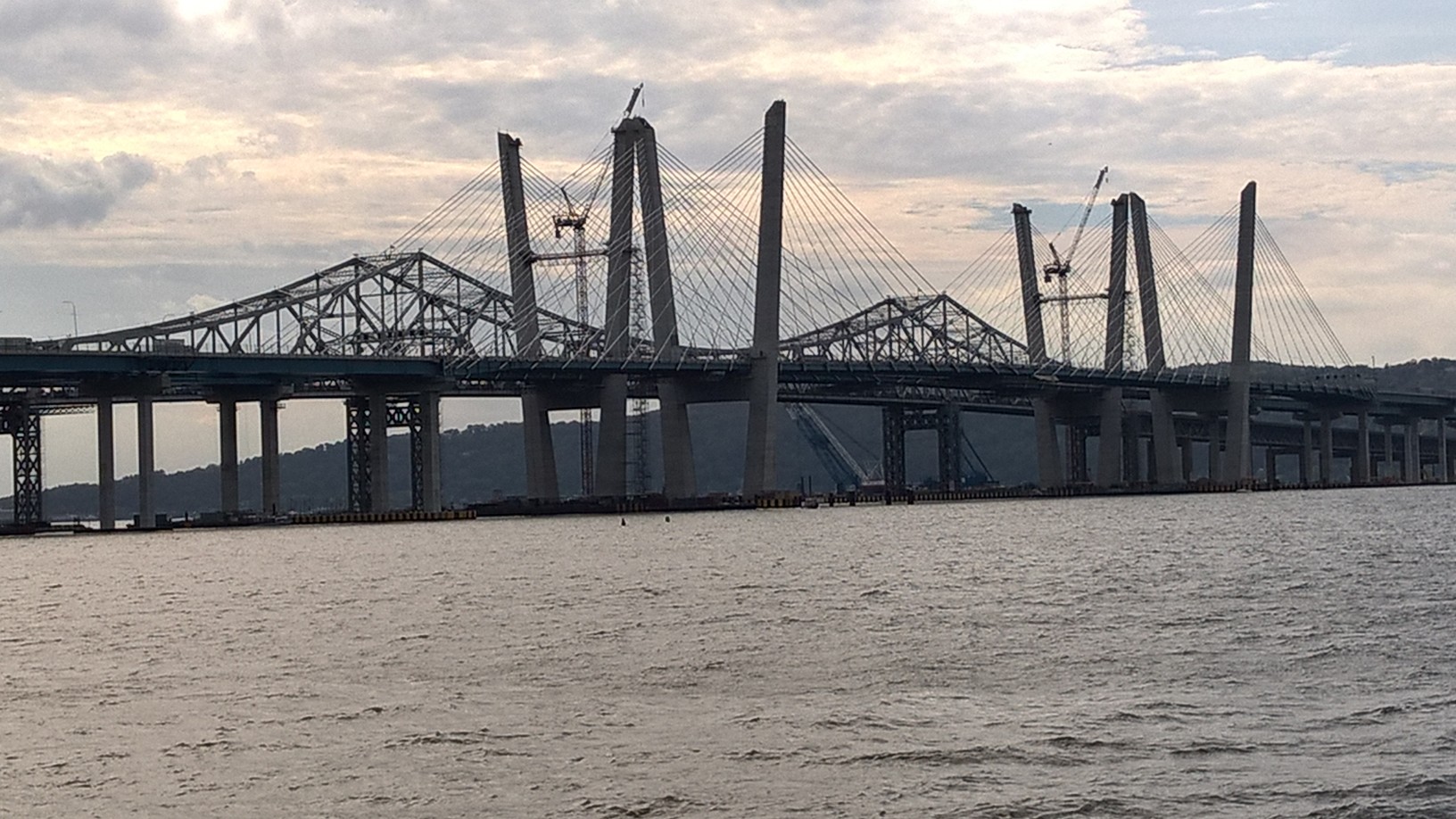
WP_20171007_14_52_58_Pro

WPCNR FOR THE RECORD. From the Citizen Budget Commission website. October 15, 2017:

Editor’s Note: Friday the following report from an independent citizens commission was released on the Citizen Budget Commission website which was widely quoted as the basis for the reports of a doubling of the toll on the new Mario M. Cuomo Bridge across the Hudson.

However, it should be noted that the toll figure has not been determined yet by the state. Here is the copy of that report as posted on the Citizen Budget Commission website.

(The Citizens Budget Commission (CBC) founded in 1932, is a nonpartisan, nonprofit civic organization whose mission is to achieve constructive change in the finances and services of New York City and New York State government.  Our mission is rooted in serving the citizenry at large, rather than narrow special interests; preserving public resources, whether financial or human; and focusing on the well-being of future New Yorkers, the most underrepresented group in city and state government. The wesbite is at www.cbcny.org)

Bridging the Financial Gap

Funding the Governor Mario M. Cuomo Bridge

October 12, 2017
In late August the Tappan Zee Bridge replacement, the Mario M. Cuomo Bridge, opened to traffic. How will the costs of constructing this new bridge be funded?A loan from the federal government, bonds issued by the New York State Thruway Authority, and cash funneled to the project by the State will pay the bills in the short term. In the long term, approximately $2.9 billion in loans and bonds will need to be repaid. The debt service cost should be paid by a toll increase for bridge users, but the Governor and Thruway Authority have remained mum on what the toll will be and when the increase will take effect.Based on current debt projections, the toll could be as much as $10.61 for passenger vehicles; less than initial projections of up to $14, but approximately double the current $5 toll.

History of the Bridge

The idea of a tolled road connecting New York’s major cities was initially proposed in the 1940s. This superhighway would run from Buffalo to western Rockland County and connect the rest of the state to New York City via New Jersey highways and the George Washington Bridge. In 1950 Governor Thomas Dewey changed the plan, bringing the highway all the way to New York City, necessitating a Hudson River crossing. Though other points along the river would have been easier to cross with a bridge, the State selected the Tappan Zee portion of the river because it lay beyond the Port Authority of New York and New Jersey’s (Port Authority) jurisdiction, and thus all toll revenue could be used by the Thruway Authority to subsidize the rest of the system.1The Tappan Zee Bridge opened on December 15, 1955 at a cost of approximately $80 million, or $735 million in 2017 dollars. Though an engineering marvel at the time, the bridge included design flaws, which would lead to a need for costly repairs, or its eventual replacement.2 Those crossing the bridge on opening day paid a toll of 50 cents, approximately $4.50 in 2017 dollars, and local residents could purchase a monthly passbook for $10, $91 in 2017 dollars.3Plans to replace the Tappan Zee Bridge began in 1997 when Thruway Authority officials determined that a new bridge would be more cost effective than repairing the existing span. Though the project’s estimated cost climbed as high as $19 billion at some points, Governor Andrew Cuomo eliminated many of the nonessential improvements associated with the project, received federal assistance in fast-tracking the permitting process, and qualified for a $1.6 billion federal loan.4  After serving travelers for nearly 60 years, plans to replace the Tappan Zee were finalized in 2013.The first span opened on August 25, 2017, accommodating only westbound traffic. Later, on October 6, 2017, the first span began to serve eastbound traffic as well while the old Tappan Zee is removed and approaches are built for the second new span. The second new span is scheduled to open in 2018, and westbound and eastbound traffic will each have its own new crossing structure.5

Financing the Bridge

Tappan Zee Constructors, LLC, a consortium of builders, designers, and engineers, will complete work on the new bridge under a fixed-price, design-build contract.  The bridge’s total cost includes $3.1 billion for the design-build contract and approximately $800 million for administrative and contingency costs.The State is funding the $4 billion Cuomo Bridge with pay-as-you-go (PAYGO) capital contributions and borrowing. Approximately $1.1 billion in PAYGO comes primarily from the Thruway Stabilization Fund.6 The State established this fund in the fiscal year 2016 budget, appropriating $1.3 billion of the money received from financial settlements of litigation with financial institutions won over the past several years. In fiscal year 2017, the State budget appropriated an additional $700 million, increasing the fund to $2 billion. This fund allows the Thruway Authority to freeze tolls on the system through 2020, with about half of the funds earmarked for the new bridge and the remainder for other Thruway Authority priorities.The remaining $2.9 billion cost is financed from two types of borrowing. In 2013 the federal government approved a $1.6 billion Transportation Infrastructure Finance and Innovation Act (TIFIA) loan.8 TIFIA loans are granted by the U.S. Department of Transportation (USDOT) for major infrastructure projects undertaken by states, municipalities, and private partners, and provide access to credit and reduced debt service costs compared to other types of debt. The TIFIA program provides flexibility in the payback period, allowing borrowers to defer repayment up to five years after completion of the project. The USDOT estimates that use of a TIFIA loan, rather than other debt options, will save the Thruway Authority approximately $350 million over 35 years.9 The Thruway Authority has already issued $850 million in bonds and will issue up to $431 million more to cover the remaining costs, depending on whether additional administrative and contingency costs are incurred. Through June 2017, $279 million of contingency costs have been incurred, leaving about $528 million in unspent administrative and contingency costs, suggesting the final cost of the bridge could fall below the $4 billion projected price.10
Table 1: Financing the Mario M. Cuomo Bridge
The estimated $2.9 billion in TIFIA loan and Authority bond proceeds will require a revenue source to fund this borrowing. The Thruway’s TIFIA loan application included an increase in the new bridge’s toll as a means for financing the TIFIA debt.11 The delayed onset of the TIFIA payback period allows the Thruway Authority to postpone any increases through 2020; the extent of the toll increase on the Cuomo Bridge, or toll increases across the system that will be required after the freeze ends, remains unspecified.

Increasing Tolls on the New Bridge

A toll increase on the Cuomo Bridge is an equitable means of funding the project: the cost of the asset is borne by those benefiting from it through increased user fees. The State’s TIFIA loan application estimated a round-trip toll of $14 for passenger vehicles and $8.40 for commuters.12  These estimates assumed the bridge would cost up to $5.4 billion and be financed entirely by federal and state debt.13 Based on the updated estimates, which include cost savings from the design-build contract and reduced debt from the use of Thruway Stabilization funds, the new tolls would range between $9.67 and $10.61 for passenger cars using E-ZPass, and $6.74 and $7.45 for local residents with commuter toll plans. (See Table 2.)14

Table 2: Projection of a New Toll on Mario M. Cuomo Bridge
Though doubling the toll on the new bridge would represent a significant change for those that cross it, this higher toll compares favorably to the nearest alternative crossing, the George Washington Bridge, which is approximately a half hour south of the Cuomo Bridge. The George Washington Bridge, which is owned and operated by the Port Authority, assesses a toll between $10.50 and $15 for cars, depending on the time of day and form of payment. The Cuomo Bridge with its toll increase would still represent a savings, between 28 percent and 34 percent for E-ZPass commuters, and 25 percent and 32 percent for those paying without E-ZPass compared to the George Washington Bridge.15 Studies show that demand for the use of the Tappan Zee crossing is inelastic; the projected toll increase would not decrease usage significantly.16

Increasing Tolls on the Thruway System

Based on debt service costs, it is also possible to illustrate the magnitude of a toll increase across the entire Thruway system to pay for the Bridge’s debt. Annual debt service costs for the Cuomo Bridge’s loans and bonds will average $174 million.17 A 24 percent increase on all Thruway tolls including the Cuomo Bridge, assuming no decreases in utilization, would be required to fund the increase in debt service, and the new standard toll for the Cuomo Bridge would increase by $1.19, from $5.00 to $6.19. Drivers on other portions of the Thruway, not crossing the Cuomo Bridge, would see their tolls increase 24 percent, despite not using the new bridge.18

This systemwide toll increase is both inequitable and unlikely. Though an across-the-board increase of Thruway tolls to pay for the bridge would stretch the connection between users of the bridge paying for its construction, operation, and maintenance, it would still represent Thruway tolls supporting Thruway infrastructure. Current tolls, on the old bridge, represent a significant share of the revenue generated by the entire system: nearly one-fifth of all Thruway revenues are generated by the Tappan Zee Bridge.19 The State Budget Director recently stated: “Tolls on the bridge will cover all of the remaining costs of its construction.”20What remains unsaid, and is perhaps unknown, is the extent to which the new Cuomo Bridge will support the rest of the Thruway.

Conclusion

Increasing the toll on the new Cuomo Bridge alone is the appropriate approach, and the new toll should cover all of the bridge’s debt and maintenance costs. The announced systemwide toll freeze runs through 2020, preventing the toll increase from coinciding with the functional completion of the bridge in 2018, when debt service will begin to be paid. Instead of allowing drivers to use the new bridge for three years before facing a toll increase, the freeze should be reconsidered and the Thruway Authority should increase tolls by the rate necessary to service the debt when the costs are payable. Even if the toll doubles, the Cuomo Bridge still represents a significant value relative to its alternative crossing, the George Washington Bridge.There should also be transparency and public discussion on the toll increase now, as the bridge is opened for use. The best approach would be to effectuate a toll increase that covers all of the increased debt service costs, when the asset begins serving users with the completion of the bridge.
By Patrick Orecki and Jamison Dague
Posted in Uncategorized

THE OCT. 13 WHITE PLAINS WEEK PROGRAM ONLINE NOW

Hits: 326

IMG_0169

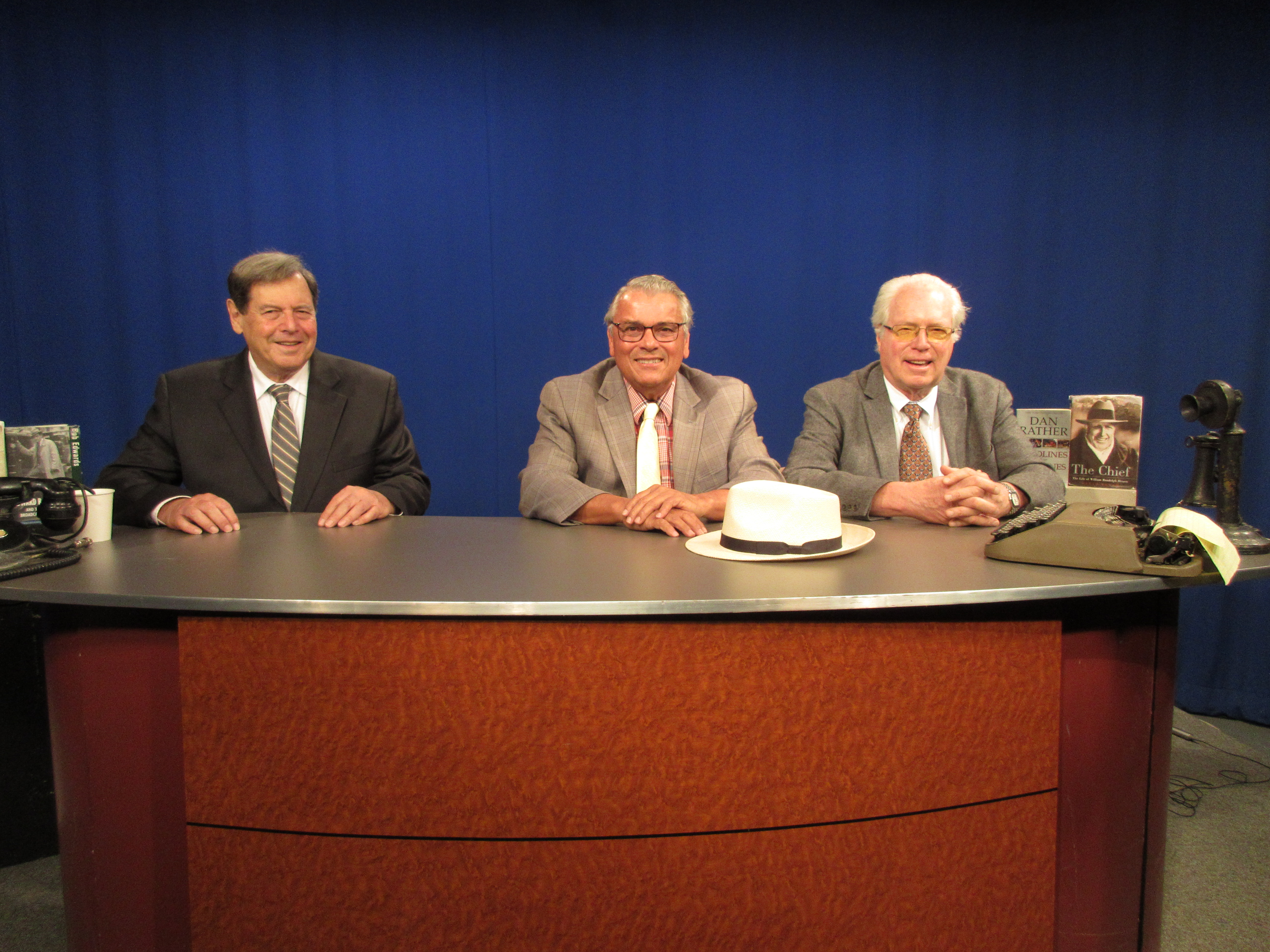
PETER KATZ JOHN BAILEY JIM BENEROFE 

ON YOUTUBE


the link to whiteplainsweek.com is
 

ON

THE ASTORINO-LATIMER FIRST DEBATE–VIDEO COVERAGE

THE LATIMER ANTI CORRUPTION LAW

 STRANGE SILENCE AT CITY OF RYE ON THE LATIMER TAX ACCUSATIONS BY ASTORINO CAMPAIGN

MILAGROS LECUONA HITS THE PHONES

HOUSING SALES IN WESTCHESTER SLOW-PRICES EDGE UP

AND ANOTHER EDITION OF TRUMP THE PRESIDENT


Posted in Uncategorized

County Executive Announces Shared Services Plan Complying with Governor Cuomo’s Directive.

Hits: 379

WPCNR COUNTY CLARION-LEDGER. From the Westchester County Department of Communications. (Edited) October 13, 2017:

County Executive Robert P. Astorino Thursday outlined a shared services plan aimed at savings taxpayers money.

The plan, recently approved in a bi-partisan vote of 29-0 of county municipal leaders, could save taxpayers nearly $6 million over the next few years. Astorino today discussed the plan with the backdrop of the Fire Training Center in Valhalla, one of the county’s most important shared service initiatives, where Westchester’s fire departments conduct emergency training exercises.

In approving the shared services plan after several forums, three public hearings and hundreds of hours of input, leaders endorsed 12 ways – mostly information technology initiatives – to save money by eliminating redundancies and increasing efficiencies in government. Initiatives agreed to include having the county assist some localities with IT management, document scanning and storage and technology and software purchasing, among others, that can reduce costs on a local level. View the report here.

“It was completed with cooperation, collaboration and communication,” Astorino said.  “We know that sharing services is not a silver bullet. The way to reduce taxes is by growing the economy, controlling costs and eliminating state mandates. But by working together, we are able to find additional savings and provide services more cost-effectively.”

The Shared Service Forums were chaired by Astorino and included representatives from nearly all of Westchester County’s municipalities who discussed ways that local governments can continue to cut costs, notably through sharing services with the county, and lobbying the state to stop passing down its costs.

“The county’s Fire Training Center, run by our Department of Emergency Services, is one of the most vital and cost-effective shared services programs that we can provide to both career and volunteer firefighters – and the people they protect – throughout Westchester County,” said Astorino. “Can you imagine how expensive it would be if all 58 fire departments had to pay for 58 different emergency training centers? The cost would be prohibitive, the training less effective and lives would be put in jeopardy.”

Posted in Uncategorized

Westchester District Attorney Names White Plains Site of One of 4 New Drug “HUB” Courts

Hits: 125

WPCNR POLICE GAZETTE. From the Office of the Westchester County District Attorney. October 13, 2017:

Westchester District Attorney Anthony A. Scarpino, Jr. announced Thursday that Mount Vernon, New Rochelle, White Plains and Yonkers are now designated as “Hub” Courts.

The “Hub” Court designation will make drug treatment courts accessible to individuals who suffer from alcohol and drug dependency and military veterans who have had run-ins with the law. Their cases can now be transferred to the “Hub” Courts.

 “During my campaign for District Attorney and now under my administration, it was important to keep the promise that these courts would be created to offer non-violent offenders and military veterans’ access to intensive court-supervised treatment and tailored services that might not be available through their own town and village courts. The goal of these drug treatment courts is to reduce incarceration and recidivism and hopefully give these individuals a path to a new life” said District Attorney Scarpino.

The Westchester County Drug Court Enhancement Project, under the direction of Ninth Judicial District Administrative Judge Alan Scheinkman, will coordinate the efforts of Westchester County drug court programs currently operating in Mount Vernon, New Rochelle, White Plains and Yonkers.

Supported by a federal grant from the Substance Abuse and Mental Health Services Administration (SAMHSA), the New York State Court System’s Ninth Judicial District, which encompasses Westchester County, is launching this new drug court initiative in the County to focus on the unique needs of two populations: individuals with opioid use disorder and justice-involved military veterans. The Westchester County Drug Court Enhancement Project aims to enhance the delivery of clinical and other services to these target populations, including the provision of medication-assisted treatment (MAT), where appropriate, to Westchester County Drug Treatment Court participants.

Posted in Uncategorized

DEVON PERRY ENDEARING, CONFIDENT IRRESISTIBLE ANNIE OAKLEY- WOMAN FOR THE AGES IN WBT’S ROLLICKING IRVING BERLIN RIPSNORTIN’,CRACKLIN’ CLASSIC REVIVAL. ADAM KEMMERER HER DASHING FRANK BUTLER IN “ANYTHING YOU CAN DO I CAN DO BETTER” ROMANCE!

Hits: 4

AGYGCast

No Business Like Show Business! The hard-working, over-the-top entertainers!

WPCNR STAGE DOOR. Theatrical Review by John F. Bailey. October 12, 2017:

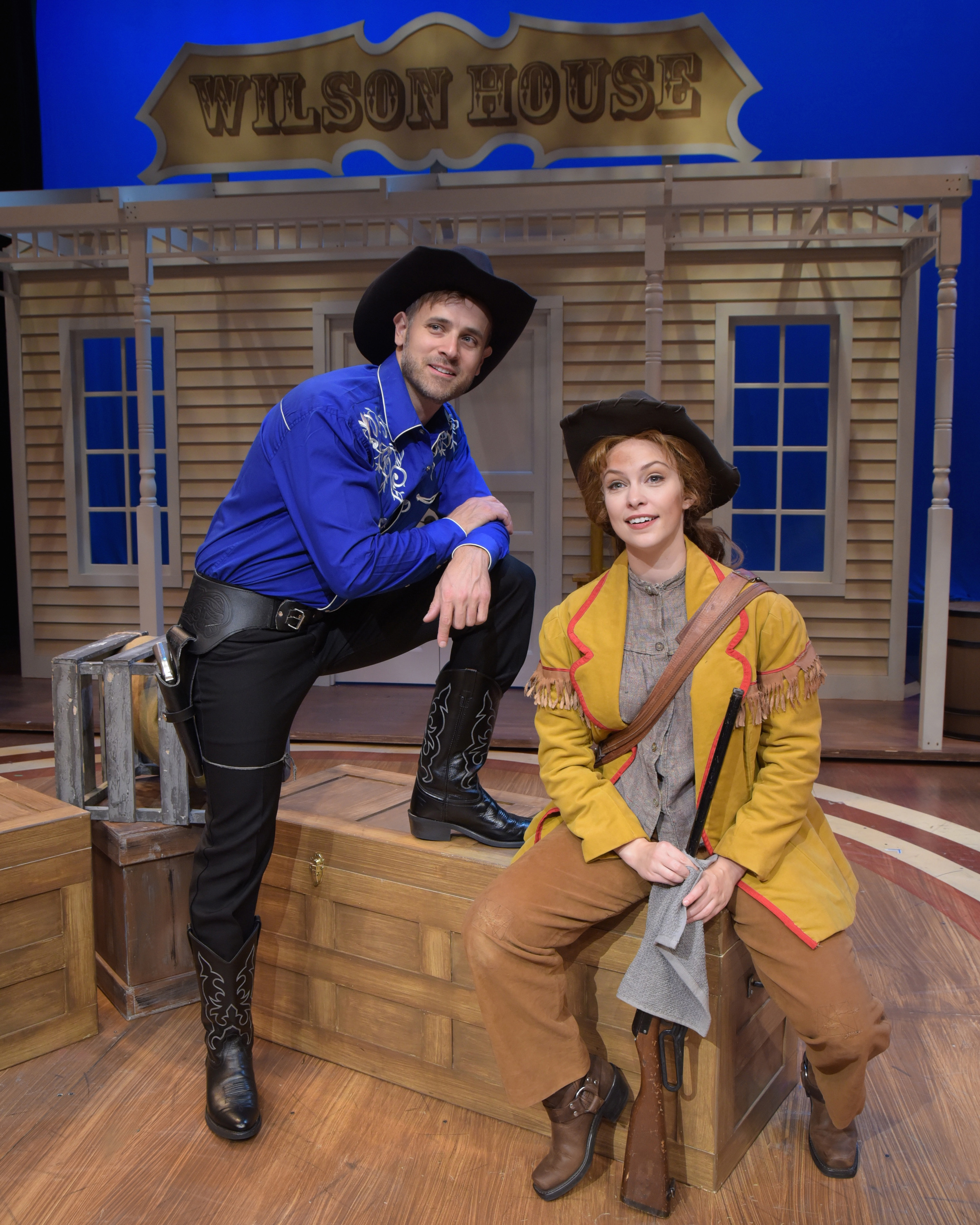
From the moment, Devon Perry struts in as saucy 15 year old Annie Oakley as contestant in a marksmanship competition to secure Buffalo Bill’s Wild West Show a performance at the Wilson House on the vaudeville circuit, she wins you over, as she wins the rakishly rugged cowboy Marksman champion, Adam Kemmerer’s Frank Butler – with determination, innocence, and being-true-to herself ‘tude.

AGYGduo

Adam Kemmerer and Devon Perry as Frank Butler and Annie Oakley. All Photos Courtesy Westchester Broadway Theatre by John Vecchiola

Perhaps one of the first career women in America  to earn a reputation in the late 19th century, Annie’s character in Ms. Devon’s talents, is one of the first true life heroines of American women.  She never compromised and still won the man she loved on her terms.

The Irving Berlin masterpiece of a musical, Annie Get Your Gun, (perhaps his most consistently entertaining spectacle with every song a show stopper) hit Broadway like gangbusters in 1946 and ran for 1,147 performances. Audiences went out humming and toe-tapping and above all feeling so good hearing songs that mirrored their own hearts. It’s stampeding through audiences at Westchester Broadway Theatre’s living Hall of Fame for Hit Shows.  What a score:  

Anything You Can Do I Can Do Better, Doin’ What Comes Naturally, There’s No Business Like Show Business, They Say It’s Wonderful, I Got Lost in His Arms, I Got the Sun in the Morning and the Moon at Night, The Girl That I Marry, and An Old-Fashioned Wedding. 

Ms. Perry plays Annie very believably from age 15 to grown-up, from tomboy to a lady who can handle herself, a man, as well as a gun, only coming to realize, You Can’t Get a Man With a Gun. 

She mugs and threats, and laments about, frowning, with pouting lip, and determined shake of her head at the end of Act I when she delivers this humorous Berlin classic. Ms. Perry sells all her songs solidly. You’re a man, you want to sweep her up and take her out on the town. You’re a woman you hope fervently that Ms. Perry’s feisty little heroine gets her man.

Kemmerer as Frank Butler, the Buffalo Wild West Show top draw for his marksmanship prowess  hitting clay pigeon after clay pigeon and dozens of trick shots, is stunned when Perry, the 15 year old Annie Oakley hits more targets than he does.

Annie despite being awestruck by the rugged Mr. Kemmerer, does her job refusing to be awed by the romantic feelings she’s feeling. Frank, though is enjoying his life as “I’m A Bad, Bad Man” with the pick of woman-admirers.  Kemmerer has swagger, the rough edge of the legendary cowboy image and is not  the typical pretty boy baritone, singer without swagger who have played this role in the past.

Annie agrees after beating Frank to join the show Buffalo Bill’s Wild West and go on tour.

Traveling east on the Overland Train, Frank and Annie, (Kemmerer and Perry) duet on They Say It’s Wonderful (one of my favorites in this show). You first hear Perry’s ability to phrase a song with heart, that you just cannot help listening to.

Ms. Perry  delivers the goods:  wistfulness with vibrato that is so right, a voice to haunt a moonlit night. Kemmerer, a confused Frank Butler transitions from no nonsense woman-wrangler to a man who has just realized something so wonderful has happened to him. It happens that way.

AGYGquartet2

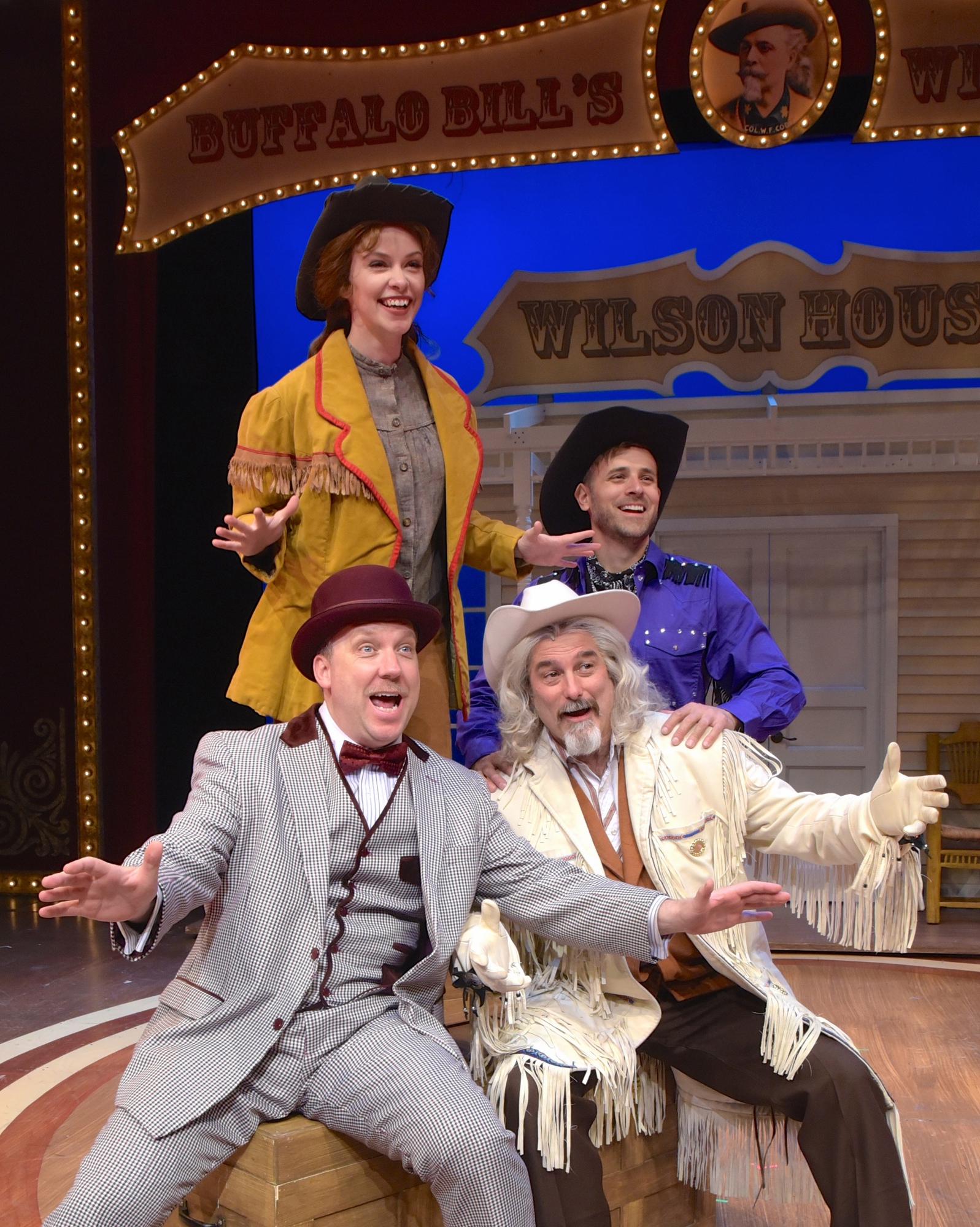
The Wild West Show is not doing well, and  the scheming manager of the show Kilty Reidy as Charlie Davenport (left above) (who gets loads of laughs with perfect timing), convinces Buffalo Bill (Gary Lynch), (right above) to merge his show with his competitor Pawnee Bill.

Frank is annoyed at Annie getting top billing in the show, and decides to jump to Pawnee Bill’s show where he is expected to wow the debutantes of New York. Sarah Cline who plays one of the debutante-investors does a very winning pitch to Frank, and Ms. Cline doubles in acid catty jealousy as Dolly Tate, the number one assistant to Frank in the show who resents Frank’s infatuation with Annie.

When he meets Annie again in New York at the elegant Hotel Brevort his old feelings for the “Little Sure Shot,” Sitting Bull’s Indian name for her, return.

But, true love does not go smoothly as their Annie and Frank’s egos continue to keep them apart. However Marshall Factora as Chief Sitting Bull (providing timely hysterical lines throughout) devises a way. What is the solution to bring this romance to Happily Ever After? Will Annie miss her shot at happiness?  Spoiler alert: Annie Oakley and Frank Butler were married for fifty years.

Other show-stoppers—The No Business Like Show Business Number, (so good you love it twice);  and of course the Anything You Can Do I Can Do Better where Perry delivers the signature Ethel Merman song with a style all Perry’s own with shining confidence and efervesence!  The romantic  leads Perry and Kemmerer have a lot of cute fun with the contrapuntal duet An Old Fashioned Wedding where each sings different lyrics to the same song. She has big plans he has small. Conflict erupts. Its’ charming as any wedding planner knows.

This show really moves. The scenes are quick. The intrigue ingeniously silly. The clashing egos of Annie and Frank classic “Battle of the Sexes.”

Richard Stafford has directed and choreographed this production flawlessly packing it with wonderful real West, turn-of-the-century costumes and cowboy outfits; dancehall girl outfits, crafted by Costume Designer Kara Branch. Making the dance scenes with action daringly put on collision courses the style of the show puts you into fading West period of the 1880s.

The WBT orchestra  directed by Shane Paris, with John Bowen, James Mack, Jordan Jancz, Brian Uhl. Steven Bleifuss  handles Irvin Berlin classics with gusto, flare, humor, notes that linger and never override the big singing of Kemmerer and Perry. Perhaps their most impeccable performance. The Irving Berlin music is so exciting in this show, it is so easy to overplay because it’s fun. They never overplayed.

Annie Get Your Gun plays for the next month through November 27 at WBT. Go to the website www.BroadwayTheatre.com  for showtimes, and remember you get dinner with tickets. I loved the pork loin—real Wild West and tasty, just like Delmonico’s. Or dial the boxoffice at 914-592-2222.

There’s No Show Like  Annie Get Your Gun


Posted in Uncategorized

UBER IMPACT ON WHITE PLAINS TAXI DRIVERS AFTER 3 MONTHS IN WHITE PLAINS–8 PM FIOS CH. 45 AND ALTICE-CABLEVISION CH. 76

Hits: 392

ON PEOPLE TO BE HEARD

THE TRI-STATE’S MOST RELEVANT INTERVIEW PROGRAM

 INSTANTLY ON

www.wpcommunitymedia.org

JOHN BAILEY INTERVIEWS

2017103ghosts 003MARIO ALFONSO AND ROBERT MENDEZ

WHITE PLAINS TAXI ASSOCIATION

ON

THE UBER IMPACT ON WHITE PLAINS TAXI DRIVERS

AFTER 3 MONTHS OF UBER AND LYFT LEGAL SERVICE IN WHITE PLAINS

Posted in Uncategorized

“GHOST” OPENS FRIDAY AT WHITE PLAINS PERFORMING ARTS CENTER WITH AMERICA’S IDOL NAALIE WEISS

Hits: 141


RIGHT NOW ON 


YOU’VE GOT

2017921wppac 005

JOE WALSH, DIRECTOR OF GHOST

AND

 STEPHEN FERRI, ASSOCIATE PRODUCER

ON “GHOST” WITH NATALIE WEISS

THEY PREVIEW 

THE WHITE PLAINS PERFORMING ARTS CENTER FALL SEASON

rehearsalwithdirector
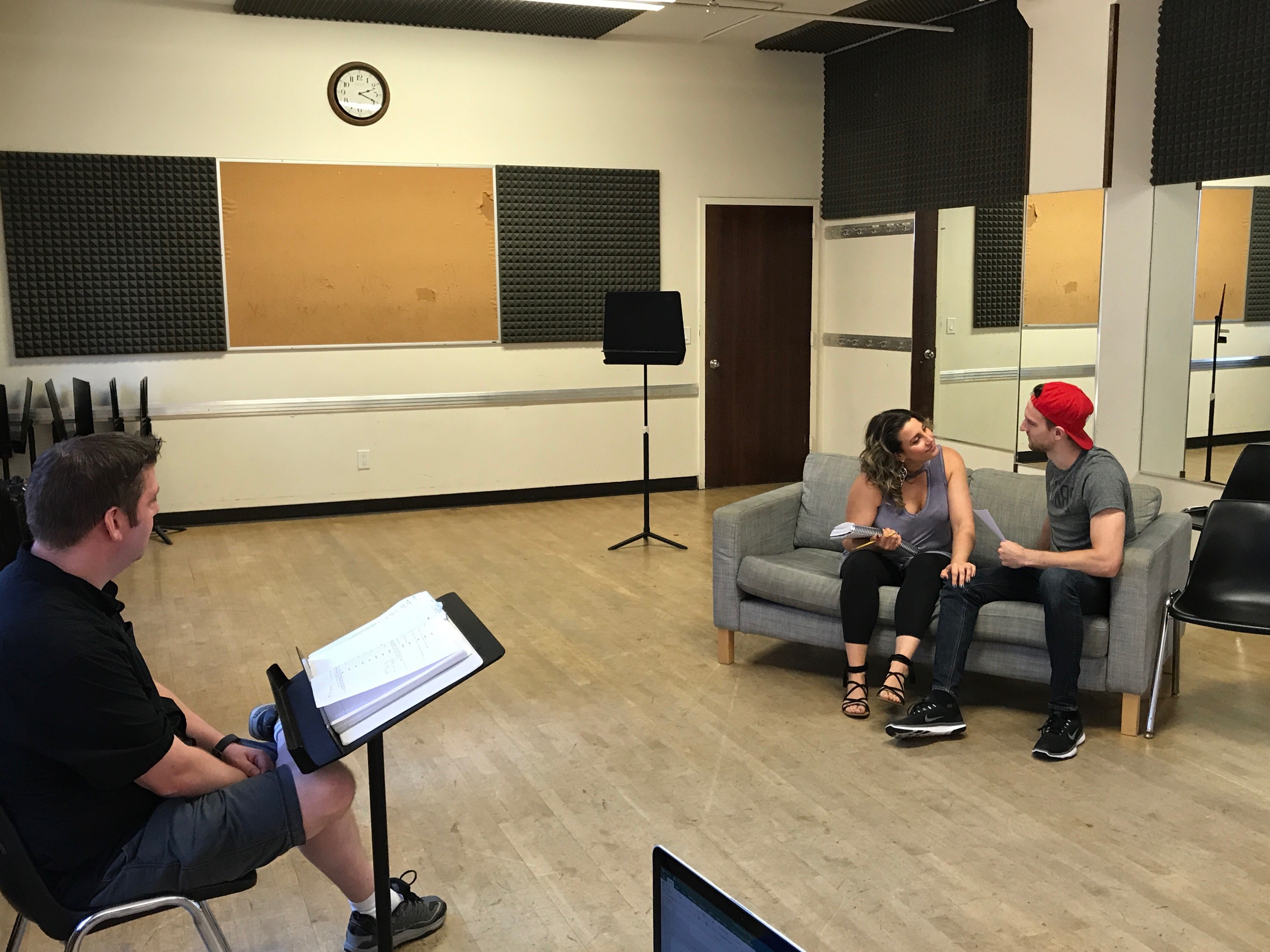
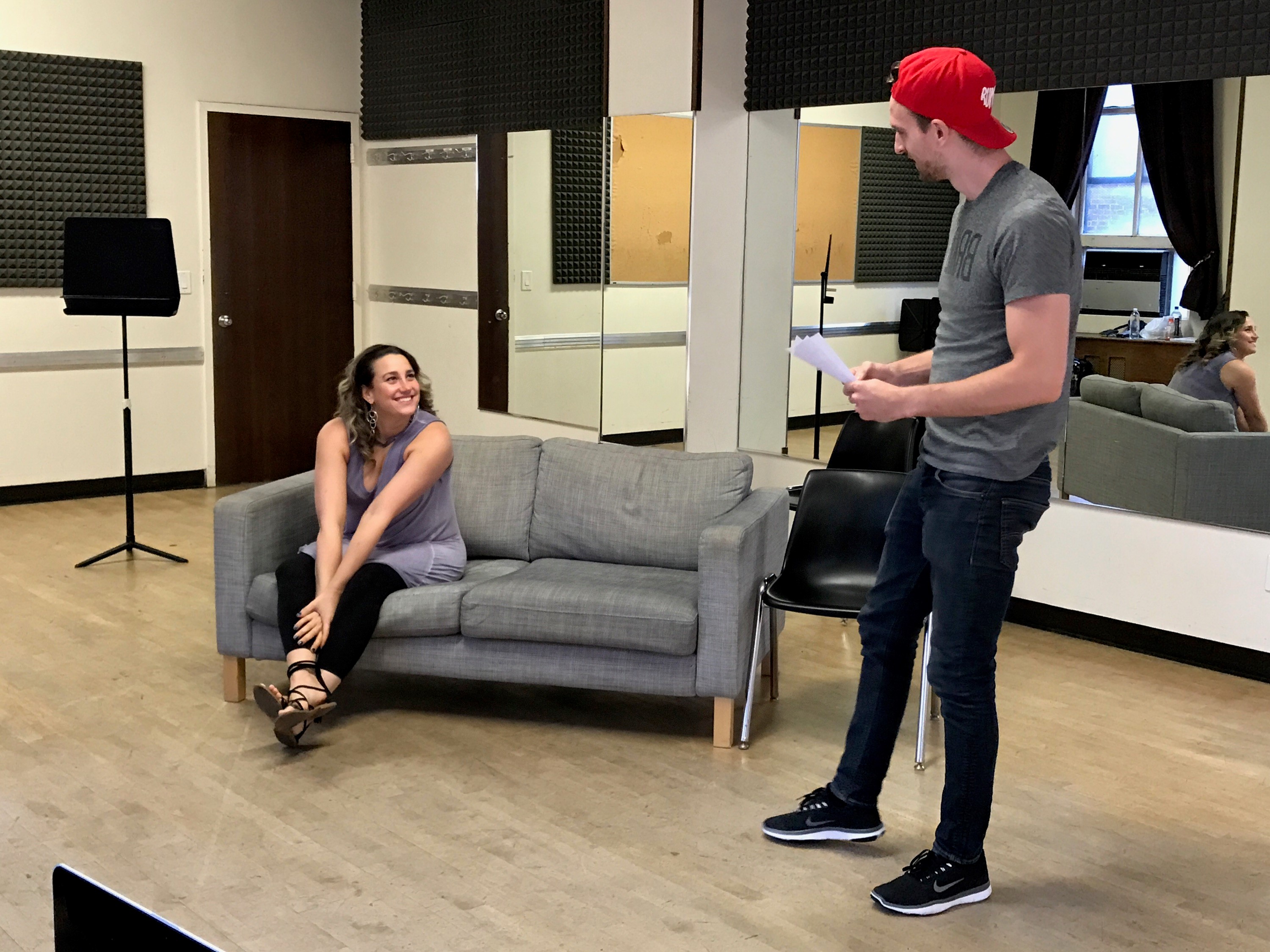
JOE WALSH DIRECTING NATALIE WEISS AS MOLLY and STEVEN DOUGLAS as SAM in the Musical Ghost that opens the season Friday Night at White Plains Performing Arts Center

rehearsal

Molly_Sam

Posted in Uncategorized

Home Sales in Westchester Third Quarter Flat. Prices of Single Family Homes Up Slightly.

Hits: 123

 WPCNR REALTY REALITY. Third Quarter 2017 Sales Report from the Hudson  Gateway Association of Realtors. October 11, 2017:

Westchester, Putnam, Rockland and Orange Counties, New York Real estate sales continued at a brisk pace in the lower Hudson region, albeit at a slightly slower pace as the year has progressed.

With the exception of Orange County where sales increased by 7.9%, third quarter sales figures were generally flat in the lower Hudson region that is served by the Hudson Gateway Multiple Listing Service.

Prices, however, remain strong in all counties.

The primary driver of spotty sales figures can most likely be attributed to the lack of inventory; down 16% in Orange, 16% in Putnam, 15% in Rockland and 8% in Westchester as compared to third quarter 2016.
Westchester, the most populous county and the county with the highest number of sales, recorded a median sale price of $680,000 for a single-family home as compared to $668,000 for the same period last year. This represented an increase of 1.8%.

Orange County had the highest percentage increase in median sales price at 4.3% going from $245,000 to $255,000 for the period. Single family median sales price in Rockland County, for the third quarter, rose to $445,000, an increase of 3.7% over last year. In Putnam County the median of $340,000 was unchanged from the third quarter of 2016.

Total third quarter residential sales numbered 5,646 which was less than 0.5% fewer sales than third quarter 2016.

Inventory has been consistently lower each quarter in each of the last four years which could indicate a headwind for healthy sales numbers going forward.

It is difficult to ascertain at what point rising prices, due to lack of supply, will begin to affect sales.

The 2017 year to date sales figures continue to trend significantly higher than the previous year for most of the lower Hudson region.

The macro environment, e.g. attractive mortgage rates, high employment and a healthy economy should be an indication that the market will remain vibrant.

Posted in Uncategorized

COUNTY EXECUTIVE ASTORINO WITHDRAWS FROM LEAGUE OF WOMEN VOTERS DEBATE IN DOBBS FERRY

Hits: 107

WPCNR CAMPAIGN 2017. From the League of Women Voters of Westchester. October 10, 2017:

The League of Women Voters of Westchester is regretfully cancelling its candidates’ forum at Mercy College OCTOBER 30 because County Executive Rob Astorino withdrew from the debate. Below is the League’s press release with the details.

 The League of Women Voters of Westchester regretfully announces that it is cancelling its October 30 candidates’ forum at Mercy College because County Executive Rob Astorino has withdrawn his agreement to participate. The forum was to include four candidates in two races, County Executive and County Clerk.

As of September 22, 2017, all four county executive and county clerk candidates had agreed to an October 30 debate. Candidate for County Executive Rob Astorino subsequently withdrew his agreement to participate. Because its nonpartisan policy does not allow the League to hold a forum for a race in which only one candidate appears, the organization is compelled to cancel the event.

The League appreciates the dean and administration at Mercy College in Dobbs Ferry’s offer to host the debate. “This was to have been a program to engage first-time student voters,” states League President Marylou Green. “We regret the lost opportunity for these young people to participate in fair and open campaigns, and to hear and question candidates.”

The League of Women Voters is well known and widely respected for its long history of sponsoring nonpartisan candidate debates at all levels of government. These nonpartisan programs are an important part of its mission to prepare voters for active and informed participation in our democracy. “This cancellation has been a disappointing and unprecedented development,” says Green. “Our time-proven format has consistently delivered civil and fair discourse. It provide candidates with equal opportunities to speak and the public with the chance to ask about their concerns.”

The League is hosting eleven other debates throughout Westchester County during the month of October. A complete listing can be found at lwvw.org. Local election information and ballot proposals can be found at Vote411.org.


Posted in Uncategorized

THE HIGH AND THE MIGHTY: TRIBUTE TO COLUMBUS AND THOSE WHO FOLLOWED HIM

Hits: 158

This column originally appeared on WPCNR on February 1, 2003, and celebrates the Dreamers, the Achievers, the High and the Mighty, of whom Columbus was one–the man who kept a frightened crew together and a mission of three ships across unchartered waters to open half the world. I wrote it about the Apollo 11 Crew, but the sentiments expressed aptly fit Columbus the man and the achievers who risked the unknown:

The Space Blazers:

 The Apollo 11 Crew: Nail Armstrong, Michael Collins,  Buzz Aldrin, Jr. Mr. Armstrong set foot on the moon  48 years ago July 20, 1969(NASA Photo)

The two papers I receive at WPCNR White Plains News Headquarters, White Plains, New York, USA did not tell you this was the anniversary of the day when Neil Armstrong walked on the moon.

The exact hour  was  20:11 GMT (Greenwich Mean Time). That was the culmination of the last great American achievement  – the personal computer and the internet were to come as the next great American achievement conquering space — when Apollo 11 with Armstrong in command, with astronauts Michael Collins and Edwin E. Aldrin, Jr. blasted off to the stars  for real becoming the Flash Gordons, Buck Rogerses, Tom Corbetts and Captain Videos for all-time.

Their mission was a success.

But there have been the tragedies associated with striving for the stars and being the best, achieving the best, working for the good. Those are the persons who keep the dreams alive by their deaths and personal sacrifice. I wrote the following after the explosion of the Columbia Space Shuttle upon reentry after 19 days in space in January 2003.

Saturday’s fatal Columbia Space Shuttle accident killing all 7 astronauts aboard when the historic spacecraft broke up over East Texas at daybreak Saturday morning begins a period of national mourning. 
The expected media speculations have started, guessing at the cause of the reentry that went bizarrely, awfully wrong.
The truth is the civilized world takes absolute scientific miracles for granted. We do not appreciate the courage and skills of the men and women creating the future.
Those of us with cell phones, internet connections, high-speed trains, satellite communications and entertainment (all products made possible by the space program), do not realize the magnitude of daring achievements that you and I have come to accept to be executed like clockwork.
I first learned of Columbia’s fate late Saturday afternoon when my wife mentioned that instead of sports programming being videotaped on our television, there was coverage of a live NASA event on ABC.
(Incredibly, the radio station I had been listening to on the way from a sports clinic had not reported any hint of the accident. That station was Z-100, the most listened-to station in the New York metropolitan area. America Online also on their first up page did not mention the missing craft as of midday. That kind of communications misjudgment is sad.)
As I watched the close of Mr. Jennings’ coverage at about 3 PM, he signed off with no recap, no names of astronauts, and some parting words about what he thought was the cause of the disaster.
I’ll say what he should have said.
Columbia’s seven astronauts who died — we know their names: they were


Columbus, Magellan, Cook, Lewis, Clark, the Wrights, Lindbergh, De Laroche, Earhart, Markham, Gruber, Chaffee, Grissom, White, Gargarin, Komarov, the Challenger Crew, the crew of Soyuz 11. They are a handful of the hundreds of brave men and women who went into the unknown.


Appollo 11′s Crew turned the dreams of the 1950s visualized in television shows like Tom Corbett, Space Cadet (above, Astro, Roger and Tom) and Captain Video, “The Master of Science” below  into reality.

America’s Spacemen and the explorers before them are the people who trust in their ability and their vessel to expand the world’s horizons, to know the unknown, whose legacies build a better world. Whose deeds inspire and achievements are the catalyst for achievement to come.


From Cook’s fragile vessel which sailed the Pacific, to the marvel that was the Columbia, the captains courageous who sailed the Roaring 40s, blazed the Oregon Trail, discovered how to fly, and flew the oceans, journeyed to the stars, knew the risks they were taking. 

The media  trivializes their courage, their skills, and the difficulty of what they did and wanted to do, to concentrate on the causes of their failure, as if knowing the cause will make their loss acceptable.

The Magnificent Seven


I do not know Columbia’s Magnificent Seven. I just see their smiling faces in their photograph, and I regret the loss of every one. They had achievement on their faces, pride in their demeanor. Their eyes shown with the glow of being alive and striving to do the great things they set out to do.


Civilization has been created because of people like the crew of the Columbia’s Magnificent Seven, not the incompetence we see demonstrated daily today where technology is concerned.


The Columbia itself had flown 26 missions since launching in 1981. It was guided and outfitted with the best 2003 communications and equipment had to offer.

Not like Captain James Cook’s bark, Endeavour, a 100-foot ship powered by sail that conquered the “space” of his time, the Pacific Ocean. It was the Columbia’s Magnificent Seven’s Endeavour. They were tracked, they were backed up, but they perhaps more than anyone here on the ground knew the high dangers of the shuttle mission.

Liftoff, as their predecessors, The Challenger crew fell victim to, is fraught with risk. Reentry, which needs to be negotiated at precisely the right angle of attack, is equally risky. Soyuz 11’s spacecrew of Dobrovolskiy, Volkov, and Patsayev died in 1971 on reentry, when the Russian cosmonauts took too long to descend.


No guarantees in real life. Machines sometimes run out of miracles.


The magnificence of the explorers’ sacrifice and dedication, is that they accept the risk of “the endeavor.”


They accept the challenge, bear it alone, seizing challenge with an indomitable spirit and confidence, facing death when it comes with the satisfaction that they made the effort, and I suspect analyzing, coping, trying to fix it until the end, the very end.

They never give up.

Columbia’s Magnificent Seven, after 16 days in space, are gone now. My sorrow is with their families who will miss these Magnificent Seven, and who know in their hearts that they died trying to reach the pinnacle of their aspirations.


They are only human.


They tried their best, achieved their best, and experienced what they longed to experience. They dared to live the great adventure.
Not all of us have the courage to follow our longed-for adventures and make them real. You can watch movies that attempt to give that experience by transference. That’s why, I believe, you and I take it so personally when we lose heroic personalities of our time. We wonder what they are like. We glorify them, rightly so.


“Follow Me! ” They Say.


I wonder how those Magnificent Seven felt, how satisfying it must have been, to be at your best, doing what you love, coping with the risks.I envy them that.


The Columbia Crew is the Miracle.


In reality it is not machines that conquer, it is the intrepid personalities, each unique, each contributing, who perform the miracles with God’s help. That they fall short is an example to us, not to take ourselves, our fates, or our existences for granted.


This is true of the everyday people we take for granted: the firefighter, the policeman, the train engineer, the airline pilot, the construction worker. All are highly trained disciplined workers, executing precise tasks for which the non-expert has no feel or understanding . What makes for the desire to achieve? What is out there or up there that leads them on?

The Feel of the Unknown


I took Anne Morrow Lindbergh’s biographical adventure diary, Listen! The Wind down from the bookshelf.

She was the young bride of the aviator-pioneer, Charles Lindbergh. She navigated for him in his aircraft, and ran his radio communications on his many exploratory flights around the world.

In a passage she describes a night flight over the ocean, in which she was operating the radio for her husband Charles, who was at the controls. Mrs. Lindbergh is describing the feelings she has as she tries to tune in the South American coast at sea in the dark of night in 1933, 80 years ago.

The feeling, the courage of the adventurer, the explorer has not changed. This is great:


“Night was the hardest. It would be all right once it was day. I kept saying…We began to hit clouds. I could tell without looking up, for the plane bumped slightly from time to time, first one wing down and then the other. And the moon blackened out for short periods.

Then for longer periods. I could not see to write my messages. I stiffened, dimly sensing fear – the old fear of bad weather – and looked out. We were flying under clouds. I could still find a kind of horizon, a difference in shading where the water met the clouds. That was all. But it seemed to be getting darker.

Storms? Were those clouds or was it the sky? We had lost the water. We were flying blind. I turned off the light quickly (to give my husband a little more vision), and sat waiting, tense, peering through the night. Now we were out again. There were holes through which one could see the dark sky. It was all right, I felt, as long as there were holes.


More blind flying. This is it, I thought is what people forget. This is what it means to fly across the ocean, blind and at night. But day is coming. It ought to be day before long… Daybreak! What a miracle. I didn’t see any sign of day and yet it must be lighter. The clouds were distinguishing themselves more and more from water and sea.


Daybreak—thank God—as if we had been living in eternal night—as if this were the first sun that ever rose out of the sea.

Note: This column originally appeared February 1, 2003 on WPCNR.
Posted in Uncategorized