WHITE PLAINS WESTCHESTER DAILY NEWS SERVICE VISITS SINCE 2000 A.D. 25TH YEARl REPORTING THE NEWS YOU NEED TO KNOW News Service Since 2000 A.D. 2026 WILL BE OUR 26TH YEAR OF COVERING WHITE PLAINS NEW YORK USA . John F. Bailey, Editor (914) 997-1607 wpcnr@aol.com Cell: 914-673-4054. News Politics Personalities Neighborhoods Schools Finance Real Estate Commentary Reviews Policy Correspondence Poetry Philosophy Photojournalism Arts. The WHITE PLAINS CITIZENETREPORTER. TELEVISION: "White Plains Week" News Roundup, 7:30 EDT FRI, 7 EDT MON & the incisive "People to Be Heard" Interview Program 8PM EDT THURS, 7 PM EDT SAT on FIOS CH 45 THROUGHOUT WESTCHESTER AND, ALTICE OPTIMUM WHITE PLAINS CH 1300 Fighting for Truth, Justice and the American Way. TOP 10 VISITORS FROM AROUND THE WORLD :1. USA. 2.BRAZIL3.VIET NAM 4. CHINA 5. JAPAN 6.UK. 7.CANADA. 8.INDIA. 9.AUSTRALIA 10.IRELAND 11.GERMANY 12..ARGENTINA 13.BANGLADESH 14.RUSSIA. 15.NEWZEALAND. 16. FRANCE. 17.MEXICO. 18.UKRAINE. 19.SOUTH AFVRICA. 20. IRAQ.
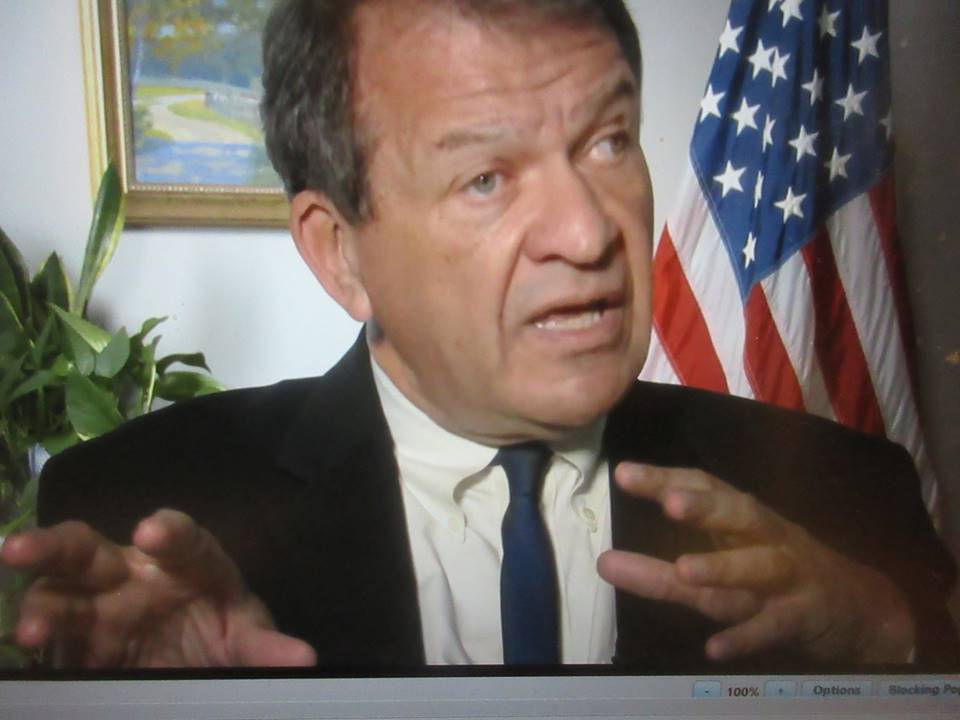
During his weekly Westchester briefing, Latimer discussed:
· Latimer was joined by Village of Tarrytown Mayor Karen Brown
· Latimer was joined by the County’s Department of Community Mental Health and Ossining Officials to give an update on THE NEW “PROJECT ALLIANCE” EXPEDITING APPROPRIATE POLICE RESPONSE TO PERSONS AT RISK.
· Upcoming Parks Events
· Westchester Tobacco-free Program
THE MIGRANT SITUATION IS ADDRESSED AFTER MAYOR KAREN BROWN SPEAKS
Over the weekend, a vaccine brawl took place. Robert F. Kennedy, Jr.—presidential candidate and longtime spreader of old, tired vaccine rumors— had a conversation with Joe Rogan on his podcast. The conversation bled onto social media in which Rogan ultimately challenged Dr. Peter Hotez—a Nobel Prize-nominated vaccine scientist—to debate RFK Jr. about vaccine rumors that have already been addressed dozens of times.
Everyone chimed in: from Elon Musk amplifying the conversation to Mark Cuban calling Rogan a bully to stalkers confronting Hotez at his house and pressuring him to debate.
Through the noise, Hotez held his ground; he didn’t go for the bait. He’s not going to debate. But he did propose an alternative: he will go on Rogan’s show to talk about vaccines but without RFK Jr.
Hotez 100% made the right move.
This is why. (Brought to you from our experience in the trenches.)
The dilemma
There is no doubt that rumors and falsehoods on social media impact behavior. As a scientist, it’s really tempting to address them because we are deeply entrenched in the data. We can help, right?
But the toughest part of addressing these rumors is deciding when to actually do it. There are benefits but also great risks:
It can create a false sense of equivalence. When scientific experts debate those promoting fringe, demonstrably false views, it can create a false impression of a genuine scientific controversy where none exists, misleading the public.
Backfire effect. It’s very easy for these discussions to get heated, which can lead to psychological defense mechanisms being triggered, making it even more challenging for people to learn. People don’t think as logically when they’re angry or insulted.
It takes a lot of time. “A lie can go around the world before the truth gets its pants on.” Scientists’ time and energy are finite, and many scientists who address these rumors volunteer their free time to do so. Choosing which debates are worth the time is important.
May be personally dangerous. Presenting yourself to a hostile audience can become physically dangerous. A close scientist friend of YLE pushed against Rogan during the pandemic, and their family had to flee after the FBI picked up death threats.
Live debate rewards charm, not data
We understand why live debates are preferred by many—they are more accessible and more entertaining than the slow work of careful science.
While scientists are great professional arguers (in fact, debate is ingrained into the definition of science), scientific debate is not usually done in the same way as political debate between candidates vying for your vote or high school debate teams.
Instead, scientific debate is typically done in writing and focuses on very specific scientific questions. This allows for careful presentation of data and citation of sources. It can be slow and boring, but it is much more effective.
Live debates can easily be hijacked when arguers use logical fallacies and rhetorical tricks that give the appearance of “winning,” but in reality are a path to nowhere. Both of us have experienced being on the receiving end of these types of dead-end debates:
Moving the goalpost: As soon as one question is adequately answered with data, the goal post is moved and a new excuse is found why the answer is unsatisfactory. This is done ad nauseum so no amount of answers or data are ever deemed “enough.”
“Firehosing”: Throwing so many different rumors at the scientist all at once that it is impossible to address them all.
Unfalsifiable hypotheses: Assertions that are impossible to prove wrong, not because the assertions are correct but because they are untestable. No amount of inquiry will ever lead to an answer.
Rapid topic switching: When one claim is satisfactorily addressed, instead of acknowledging it and learning, a new topic is rapidly introduced.
Ad hominem attacks: Instead of discussing specifics of data and scientific claims, the scientist is attacked. (Calling them a pharma shill is a particularly common one.)
Misunderstanding standards of evidence: For a successful debate on science to occur, both parties must be in agreement about how much weight different types of evidence are given (anecdotes vs. observational trials vs. randomized-controlled trials, etc.). When one party holds an anecdote as more informative than a randomized-controlled trial, it’s very difficult to have a useful discussion.
“Debates” like these are often harmful. They don’t help people discover what’s true; they confuse and divide.
Some debates are worthwhile
How do you tell the difference?
One easy check: are participants willing to change their minds if a valid argument is presented? These folks are definitely worth the time to talk to. But if someone is repeating the same tired rumor, despite it having being studied and addressed over and over and repeatedly found to be without merit, chances are a debate with that person is not going to be particularly helpful.
Also, subject matter is important. Beyond vaccines, it’s important that the science is not politically and/or religiously polarized. One study found debating GMOs (something that hasn’t been linked to politics or religion) can change minds, for example, but a debate on evolution (which has been religiously linked) or climate change (which has been politicized) is much less effective.
Many people are genuinely seeking answers
Hundreds of thousands of people really wanted this vaccine debate. Why?
A combination of things: severe loss of trust, anger against pharma, anger against the pandemic, anger against scientists, tribalism, and some people truly have unanswered questions.
Legitimate concerns exist. In fact, the vast majority of people who have questions or doubts about vaccines don’t outright deny vaccines as beneficial. They are somewhere in the middle of the spectrum.
Answering people with valid questions needs to be scientists’ priority.
We need to meet them where they are, answer their questions from a place of empathy not condescension, equip trusted messengers, and anticipate concerns so we can prevent information voids that will otherwise be filled with false rumors.
The goal should always be to foster a society that values critical thinking, evidence-based reasoning, and the dissemination of accurate scientific information.
In order to do this, scientists need to get our own house in order. We need to make science more accessible, entertaining, and more down to earth while still staying true to the standards of scientific integrity.
Bottom line
Hotez made the right call.
“Debate me or you’re a coward” will not help move knowledge forward.
And, typically, it will not help those in the middle whose concerns will still not be addressed.
Deeply ingrained beliefs, hostile environment, and a lack of expertise makes it counterproductive and dangerous in the worst case scenario.
Given our limited time and resources, we need to focus on where we can really makes a difference.
Kristen Panthagani, MD PhD, is an emergency medicine physician at Yale. In her free time, she is the creator of the medical blog You Can Know Things. You can subscribe to her newsletter here.
“Your Local Epidemiologist (YLE)” is written by Dr. Katelyn Jetelina, MPH PhD—an epidemiologist, wife, and mom. During the day she is a senior scientific consultant to a number of organizations, including the CDC. At night she writes this newsletter. Her main goal is to “translate” the ever-evolving public health world so that people will be well equipped to make evidence-based decisions. This newsletter is free thanks to the generous support of fellow YLE community members. To support this effort, subscribe below:
WPCNR CITY HALL CIRCUIT. REPRINTED FROM THE WPCNR NEWS ARCHIVES OF June 8, 2005:
New York State’s first-ever Juneteenth Celebration highlighted by a mammoth parade down Main Street beginning at 12 noon, followed by a Street Festival on Church Street and Martine Avenues will not only recognize the contributions of African-Americans to America, but will feature a historic display of an original copy of the Emancipation Proclamation, signed by the Great Emancipator, Abraham Lincoln.
Seth Kaller, one of the most respected American historic document dealers, will display a rare signed copy of The Emancipation Proclamation at White Plains’ first Juneteenth Heritage Parade and Festival at Barnes & Noble in the City Center across from City Hall.
The Emancipation Proclamation, signed by Abraham Lincoln, was displayed at Barnes and Noble . The exhibit, also displayed nine other documents relating to slavery, emancipation, and freedom, including original letters by Frederick Douglass, the noted oratorian and Lincoln opponent for President in 1859. The historic display was unveiled by White Plains Mayor Joseph Delfino.
Juneteenth commemorates the final implementation of The Emancipation Proclamation by the Union Army on June 19, 1865, in Galveston, Texas (almost two-and-a-half years after the proclamation was issued). The White Plains celebration included a parade beginning at noon on Mamaroneck Avenue, and a festival between Main and Court Streets. It was the biggest celebration of African American heritage in Westchester County.
“I am pleased that Seth Kaller has offered to participate in the Juneteenth Parade and Festival by displaying this historic document. The Juneteenth Parade and Festival is a celebration of African-American achievement, and promises to be a tremendous event here in our community,” stated Mayor Delfino.
According to Seth Kaller, president of Seth Kaller, Inc., “I am very pleased to be a part of this celebration. Without the Emancipation Proclamation, one could argue that America would not be the free and democratic country that it is today. I have to thank the City of White Plains and the Juneteenth organizers for providing this opportunity for people today to see a document that changed the world.”
Kaller is the leading collection builder of American historical documents and manuscripts. He has purchased and coordinated authentication of more than 50,000 documents during the past 17 years, including working drafts of the U.S. Constitution.
Lincoln signed them to benefit the troops.
Partial Exhibit List of Historic Documents On Display at Barnes and Noble at City Center that day as part of the Juneteenth Heritage Parade and Festival:
The Emancipation Proclamation: The Document That Saved America
“I do order and declare that all persons held as slaves…are and henceforward shall be free.” Authorized Edition, with the complete text, signed by Lincoln, William Seward as Secretary of State and John Nicolay, Private Secretary to the President; January 1, 1863 [printed and signed in 1864].
Frederick Douglass on “The price of liberty…”
“The price of liberty is eternal vigilance and though I see no immediate danger to free institutions in our country I think every American should be on guard and ready to meet the development of any malign force which may endanger the honor, the peace and stability of this great nation.”
Frederick Douglass (1817?-1895) letter signed to E. M. Rasafy, 1880, accepting an offer of membership in an organization called the “National Ciphers.”
Frederick Douglass Speech on the Emancipation Proclamation
“I congratulate you, upon what may be called the greatest event of our nation’s history, if not the greatest event of the century. In the eye of the Constitution, the supreme law of the land, there is not now, and there has not been, since the 1st day of January, a single slave lawfully deprived of Liberty in any of the States now recognized as in Rebellion against the National Government…I congratulate you upon this amazing change—the amazing approximation toward the sacred truth of human liberty.”
Frederick Douglass (1817?-1895) Speech about the Emancipation Proclamation, at the Cooper Institute in New York City on February 6, 1863. Printed in the New-York Daily Tribune, February 7, 1863.
WPCNR THE SUNDAY BAILEY. By John F. Bailey. Republished from The CitizeNetReporter of June 17, 2007:
This week celebrates a great American Father, mine and the other fathers across time who provide an eternal legacy their sons and daughters rely on every day and think about their fathers every day.
Charles F. Bailey.
He is my father. He was born November 17, 1918.
My father gave me four pieces of advice in life: Always drive an air-conditioned car. Always central air-condition your home. Stay out of court.
And, oh yes, don’t sit in traffic. Take the next exit and wing it.
Always take the service road on the Long Island Expressway. (He would have loved a Garmin.)
In retrospect, his advice has served me well. I am always comfortable. I sit out traffic delays in comfort. I have not made lawyers rich.
CHARLES F. BAILEY MY DAD OF PLEASANTVILLE, NY 1918-1986
He was not an emotional man. He was a banker and always wore suits to work. I have fond memories of going to meet him in the days of steam engines in Pleasantville – when train tracks were at grade with Manville Road at the old stone station.
I was most impressed as a young child by how he always smelled of coal cinders when he got off the train – like commuter’s cologne.
Sadly on today’s electric trains you do not get that. And you always heard those steam engines coming. Chuffing doing serious work.
You could see them coming around the bend but you heard then first. Bell ringing,chuffing, puffing : Clouds of very busy, inspiring industrious black smoke streaming at the horizon down the line.
He’d get off the train.
My mother would move over and he’d drive the old Hudson Hornet home. He always spoke quietly. Never raised his voice. Drank scotch and soda in the winter. “G & T’s” in the summer, martinis with George and Howard two close friends. He smoked Chesterfield, Philip Morris, Marlboros, Kents with the micronite filter.
He set up a Lionel train set in our basement – perhaps our unspoken connection. When I was sent in by train for the first time to meet him at the office during Christmas time, he’d have his secretary Margie greet me at Grand Central Terminal which still is a very big and scary place to me .
He would take me to lunch at Jack’s Monte Rosa Restaurant on 49th Street – which I thought was a very great place. Hub bub, tinkling glasses. Sharp-dressed waiters in white jackets black bow ties.
When I first went to it with him, I was a little disappointed that it was not more glamorous but I was really impressed that Jack the owner greeted him by name. I thought that was great that my Dad was greeted with respect.
When I first started working in Washington, D.C. in 1968 I ate regularly at a restaurant below the television station WMAL-TV where I worked, it was called Marty’s Italian Village. Marty, the owner (who looked like Humphrey Bogart, the only thing missing was the white sport coat) started calling me when I came in around 7 PM, ‘Hi John, how are you?” People would look at me. They thought I was big. I liked that. Feeling big in my small world at $90 a week.)
When my father came to visit me in Washington where I worked. I took him around town. I told him when he got off the plane. “Hi, Dad, welcome to my town.” I wanted to impress him. We’re always trying to impress our fathers. At least I was.
Another Father time was when my Dad came out for Dad’s Day at college.
I mean this was a big thing to me. He watched me do play-by-play of a football game from atop the press box in 15 degree weather. It was cold. But he watched. Acted impressed. He hated cold weather. No watching from the warm press box for him.
Another time he impressed was when I lost a job where I was working at the television station that I was being considered for. I told him how unfair it was, he put things in perspective:
“Puggy, he said, “The film manager wasn’t going to put you in as his Assistant if you were going to be bucking him all the time.” It put things in perspective. No false sentiment. No making me feel better, he was tough enough to teach by being realistic while telling me not to feel sorry for myself.
Then later in my career, I was fired out of a job completely blindsided. He again intervened, saying to me he thought what the agency head had done was a terrible thing. I needed that at the time.
He also, in a very supportive move, told me if I could make $1,000 a night writing a free lance direct mail package, I should keep trying to do that.
Dads are there to say the right things to you at the right time. Sometimes it is not always the right thing, but they try. Often, if you’re lucky, as I was, they say the right thing. Always — when you really really need it. Not the wrong thing.
With my father, who was not really my father, since I was an adopted child, it was never all about him, it was all about you. Making me better, even when it hurt him to say things that were the truth.
When I bought my first house in White Plains. He never criticized the house. But when I sold it, he complimented me, “I think it’s great how you came out of it (the crummy first house).” He was a personal trainer.
The good ones train you to run a race. If you stumble, no one hurts more than they do. When you succeed, no one is prouder. The good ones push you in front of the cameras, they say interview her or him. They did it.
They know what you should do, but they can’t tell you, because you won’t do it if you’re a kid.
But the more subtler of them tell you anywayin hopes it will sink into the rebellious offspring mind. My dad was subtle.
Another fond memory: My father took me camping once at a friend’s cabin in Pennsylvania. Funny thing was there was such a great comic collection we wound up sleeping in sleeping bags on the porch of the cabin. That was funny.
Another time when I was being threatened in college over a position at the radio station, I asked him if I should just abdicate and assign a play-by-play position to the person who was being forced on me. He advised me to “stick to your guns,” so I reported the threat to the Dean.
The position was compromised, but I was never threatened again. He never shared my love for baseball and sports. In fact he never played catch with me all that well or that often.
I mean I could have made the big leagues (pipe dream) if he played catch with me more. But that’s a small criticism. I wish I had more of his financial acumen. But I do not. I married that.
As you grow into your 30s and 40s, little things they say to you you begin to understand.
My father never struck me.
He always disciplined me with quiet words. I have not always been that way as a parent myself, being somewhat volatile. I wish I had his even temperament. He always asked me to take care of my mother. And the only time he really got mad at me was when I had made my mother upset with me.
He was a little like Humphrey Bogart in movie roles in the way he disciplined, I remember he would say admonitions quietly. Such as when I got an F in an English course at college. He told me, that was the last F I would get at Ohio Wesleyan, because the next one he would stop paying my tuition.
That had an effect. And that was when tuition was only $3,000 a year.
I have taken to, after my children have grown, telling them always “Be careful,” “Don’t do anything stupid because someone suggests it,” “Do not go anywhere alone without telling people where you are going,” “Don’t lose your temper,” “Don’t tailgate,” “Don’t stand close to the of a sever drop.” In hopes that when I am not with them, they will remember it when they need it.
I think of him every day of my life. I become more like him every day. He is always lingering in the background of my thoughts. I do not know what he would think of what I am doing now. But, he’d say — “If that’s what you want to do. Do it.” He also would say, “You have to make yourself happy.”
I also think, even today of what advice (laconic as always) he’d give me in a situation. I wish I could discuss property taxes with him. Banking today and how it has become a predator system.
I especially have to salute him, because I am an adopted child.
That alone makes me appreciate his love and acceptance with a sense of awe to this day. He loved me like his own son. Because in his mind, I was. He took responsibility. He did what had to be done.
You never outgrow your need for Dad.
The good ones are immortal, alive and with you in your head when you need them. They are ghosts that comfort always. Haunt you in memory.
Immortality is leaving a good memory of you with the ones who knew you.
Because what you give them, lives on for generations.
Your children will talk of you because of the good things and behaviors you gave them when you needed them and you never lose those tools Dad gave you
MIGRANTS FROM NEW YORK CITY HOUSED IN YONKERS, WHITE PLAINS AND ARDSLEY. MAYORS WELCOME THEM!
COUNTY EXECUTIVE LATIMER ON THE MIGRANTS’ ARRIVALS. STATUS OF WASHINGTON AID (NO JUDGES, NO MONEY, NO STATUS COURT) AS HOMELAND SECURITY CHIEF HEADS TO SWEDEN
GOVERNOR HOCHUL REVEALS TROUBLED YOUTH AND THEIR PROBLEMS UNVEILS LISTENING TOUR FINDINGS
FULL HOUSE FOR THIRD COMPREHENSIVE PLAN WORKSHOP. JOHN BAILEY TAKES YOU THROUGH IT
YOU ARE THERE!
DR. KATELYN JETTELINA SCOOP: NEW COVID VACCINE COMING IN FALL
WPCNR THE LETTER TICKER.From Greenburgh Town Supervisor Paul Feiner. June 14, 2023:
(Note: WPCNR this morning asked the Greenburgh Town Supervisor if community groups have been allowed by Dotgo the organization handling care and housing of migrants housed Sunday at Ardsley Acres in Ardsley were allowing community groups to welcome the migrants, introduce themselves and organize activities for children and adults outside the hotel such as trips to parks, schools, playgrounds, church services to give them an experience other than the continued feeling of incarceration. Mr. Feiner wrote:)
I am copying the Mayor of Ardsley since the hotel is in the village.
I support efforts to help migrants have a better quality of life and applaud the Mayor for her compassion.
I think that churches, synagogues should be involved. Many churches, synagogues have social action committees. They have -in the past sponsored immigrants from Afghanistan and elsewhere.
Many people in our communities would probably be willing to help the migrants.
The federal government should also let the migrants hold jobs.
In my opinion the federal government should try to identify jobs that are hard to find employees for -and try to match migrants with those skills with the employers. It would be a win-win.
WIth employment as a possibility – migrants could help our communities and become productive residents.