WHITE PLAINS WESTCHESTER DAILY NEWS SERVICE VISITS SINCE 2000 A.D. 25TH YEARl REPORTING THE NEWS YOU NEED TO KNOW News Service Since 2000 A.D. 2026 WILL BE OUR 26TH YEAR OF COVERING WHITE PLAINS NEW YORK USA . John F. Bailey, Editor (914) 997-1607 wpcnr@aol.com Cell: 914-673-4054. News Politics Personalities Neighborhoods Schools Finance Real Estate Commentary Reviews Policy Correspondence Poetry Philosophy Photojournalism Arts. The WHITE PLAINS CITIZENETREPORTER. TELEVISION: "White Plains Week" News Roundup, 7:30 EDT FRI, 7 EDT MON & the incisive "People to Be Heard" Interview Program 8PM EDT THURS, 7 PM EDT SAT on FIOS CH 45 THROUGHOUT WESTCHESTER AND, ALTICE OPTIMUM WHITE PLAINS CH 1300 Fighting for Truth, Justice and the American Way. TOP 10 VISITORS FROM AROUND THE WORLD :1. USA. 2.BRAZIL3.VIET NAM 4. CHINA 5. JAPAN 6.UK. 7.CANADA. 8.INDIA. 9.AUSTRALIA 10.IRELAND 11.GERMANY 12..ARGENTINA 13.BANGLADESH 14.RUSSIA. 15.NEWZEALAND. 16. FRANCE. 17.MEXICO. 18.UKRAINE. 19.SOUTH AFVRICA. 20. IRAQ.
(Hawthorne, NY) — Westchester County Police impounded 16 mopeds/scooters and wrote 54 summonses earlier this week to address the illegal operation of motorized or battery-powered vehicles, including on County bike paths and trail ways.
Motorized and battery-powered vehicles are prohibited from operating on these paved recreational paths, which are limited to use by bicyclists, joggers and walkers. It is also illegal to drive one on a sidewalk.
During the enforcement initiative on Wednesday, officers were deployed on the South County Trailway and Bronx River Pathway as well as at locations on adjacent streets where the pathways can be accessed.
Scooters and mopeds were impounded when their drivers were found to be operating without the required license, registration or insurance. Summonses were issued for these violations and other violations of Vehicle & Traffic Law.
“The use of unregistered and uninsured scooters and mopeds, driven by unlicensed or improperly licensed operators, poses unacceptable safety and quality-of-life issues – especially on sidewalks and bike paths,” Commissioner Terrance Raynor said.
In coordination with the WCPD initiative, several other agencies conducted similar enforcement in a variety of other locations. These agencies include the Yonkers Police Department, New York State Police, Bronxville Police Department and the NYPD in the Bronx.
Raynor thanked these agencies for their collaboration in addressing a shared public safety concern. Those agencies collectively reported impounding 25 mopeds and scooters and issuing about 150 summonses.
Owners/operators of scooters and mopeds, which are designated legally as “limited use motorcycles,” are reminded of the following:
· All limited-use motorcycles require valid registrations.
· Operators must have proper licenses to operate on public roadways.
· Mopeds and scooters are not permitted to operate on any sidewalks or bike paths.
The only type of limited-use motorcycle permitted to operate on a parkway or in any lane of travel on a local street is a Class A limited use motorcycle (meaning it has a performance speed of at least 30 mph but not more than 40 mph). The operator of a Class A limited use motorcycle is required to have a motorcycle license, a valid registration and inspection, and insurance.
Class B and C limited use motorcycles are not permitted to operate on parkways. Drivers do not need a motorcycle license specifically but must have a valid driver’s license of any class. Class B vehicles (max performance speed of 30 mph) and Class C vehicles (max speed performance of 20 mph) may legally operate on local streets in the right lane of travel only or on the shoulder.
JOHN BAILEY INTERVIEWS PACE UNIVERSITY’S ADJUNCT PROFESSOR STEPHEN ROLANDI AND JOHN JAY COLLEGE OF JUSTICE ON ON THE SUPREME COURT DECISION ON PRESIDENTIAL IMMUNITY AND WHAT LIES AHEAD?
AN EXPERT IN CONSTITUTIONAL LAW, HE PUTS INTO PERSPECTIVE THE EFFECTS OF THE IMMUNITY DECISION.
HOW MIGHT THE IMMUNITY DECISION EFFECT NEW YORK STATE LAW AND RELATIONS WITH THE FEDERAL GOVERNMENT?
THE PROJECT 2025 OBJECTIVES AND THE AGENDA 47 OF THE REPUBLICAN PARTY HOW MIGHT NEW YORK STATE GOVERNMENT NAVIGATE EFFECTS OF THESE POSSIBLE POLICIES?
CAN NEW YORK PROSECUTION PROCEDURES BE COMPROMISED BY NEW ADMINISTRATION DIRECTIVES?
HOW MUCH RIGHT DOES NEW YORK STATE HAVE TO PASS ITS OWN LAWS?
IT’S JUSTICE UP THE MINUTE ON WHITE PLAINS TV’S “PEOPLE TO BE HEARD” WESTCHESTER’S ALWAYS TIMELY INTERVIEWS THAT MATTER MOST BECAUSE PEOPLE TO BE HEARD INTERVIEWS PEOPLE WHO HAVE SOMETHING TO SAY HAVE THEIR SAY
FIRST POSITIVE WEST NILE VIRUS CASES IN WESTCHESTER IN 2024
County Health Department Reminds Residents to Remove Standing Water and Use Repellents
(White Plains, NY) – A New Rochelle resident and a Mount Vernon resident have tested positive for West Nile Virus, marking the first confirmed human cases in Westchester County this year.
Westchester County Health Commissioner Dr. Sherlita Amler said: “These first cases of West Nile Virus are earlier than usual and should serve as a reminder to all of us to remove all standing water around your home every time after it rains. They are also a reminder to use repellents when you spend time outdoors, especially from dusk to dawn, when mosquitoes are most active.”
West Nile Virus most often causes a mild or moderate flu-like illness, but can be more serious, especially for people age 65 and older, and those with underlying medical conditions. Residents who notice large areas of standing water on public property should report them to the County Health Department at (914) 813-5000.
Throughout the season, the County Health Department traps and tests mosquitoes to track the presence of viruses they carry. For more information go to https://health.westchestergov.com/west-nile-virus
(White Plains, NY) – After retesting, the following beaches associated with the preemptive closure due to rainfall must remain closed to bathers:
MAMARONECK:
Mamaroneck Beach & Yacht Club
Harbor Island Beach
NEW ROCHELLE: Hudson Park West Beach
The following beaches must remain closed due to a Harmful Algae Bloom observed in the bathing areas:
MOHEGAN LAKE:
Mohegan Beach Park District Beach
Mohegan Colony Association Beach
The following beaches are allowed to reopen to bathers:
CROTON ON HUDSON:
Croton Point Park Beach
RYE:
Rye Town Park Beach
Rye Playland Beach
LARCHMONT:
Larchmont Manor Park
Larchmont Shore Club
MAMARONECK:
Beach Point Club
Orienta Beach Club
RYE:
Coveleigh Club
NEW ROCHELLE:
Hudson Park East Beach
Davenport Club
Greentree Club
Surf Club
Residents and visitors are being advised to avoid contact with the water in the immediate area until further notice, and visit the Westchester County website for the latest updates on beach closures and reopening schedules. The County remains committed to maintaining high standards of environmental health and safety across its recreational facilities.
Influenza activity remains minimal, with 1.5% of all outpatient visits nationally due to influenza-like illness. Hospitalizations remain near-zero at 0.1 hospitalizations per 100,000 individuals. As we near the fall, this will start to change, but I am enjoying the break while it lasts.
COVID-19
The summer wave continues. Wastewater activity is high nationally and increased again this past week; it is at levels last seen in January of this year.
Wastewater concentration of SARS-CoV-2. Source: CDC
Emergency department visits have also increased yet again this past week and now account for 2.2% of all ED visits. This is close to the 2.5% peak of last summer’s wave. Most of the country reported moderate (+10-19%) or substantial (>20%) increases in ED visits this past week.
While hospitalizations declined slightly this past week to 2.8 hospitalizations per 100,000 population, this has limited usefulness as a proxy for severity nationwide, given that we are only receiving hospitalization data from a small number of states and the Covid-19 picture is quite different from state-to-state at the moment.
Western region
The West continues to have the highest wastewater activity in the country at 1.5x the national average, and viral concentration increased again this past week. Levels are the highest they have been since January, and every state in the region except Arizona is reporting high or very high levels of wastewater concentration.
I thought the region might have been peaking, but I’m less certain this week, given that indicators bumped back up.
In California, Covid-19 now accounts for 2.3% of all ED visits (on par with the peak from last summer of 2.4%), and after a couple weeks of moderate declines, hospitalizations in the state increased again, to 6.1 hospitalizations per 100,000. Wastewater activity in the state also increased again this past week, and concentrations are higher than the regional and national averages.
Emergency department visits held steady in most Western states this past week, with moderate increases in Colorado and Oregon. Oregon also saw an increase in hospitalizations (to 3.1 per 100,000), but Colorado held steady (1.9), and New Mexico (2.2) and Utah (1.6) reported slight declines.
Southern region
Wastewater activity has been making a steep ascent in the South, and that pattern continued this past week. The activity is now as high as it was in January, and it has handily surpassed that of last year’s late summer wave.
Some relief may be coming for Florida, where wastewater activity appears to have peaked (it was hit early by this wave), but the same cannot be said for most of the other states in the region.
Emergency department data show that severe illness is also increasing in the region. Nearly every state in the region reported moderate or substantial increases in ED visits. Florida (4.1%), Texas (3.6%), and Louisiana (3.7%) have the highest rates in the region.
Unfortunately, we do not have hospitalization data for the states that appear to be experiencing the greatest surge in cases, so it is challenging to get a true sense of severity. For the states for which we do have data, hospitalizations declined (to 2.5 hospitalizations per 100,000 individuals in Maryland, 2.2 in Tennessee, and to 1.5 in Georgia).
Midwestern region
Although the Midwest continues to fare better than the West or the South, wastewater activity continues to rise in the Midwest and is now greater than that seen in last summer’s wave. Kansas’s wastewater activity caught my eye – it is now higher than anywhere else in the region and greater than the national average.
Severe illness is on the rise as well. Every Midwestern state reported moderate or substantial increases in emergency department visits for Covid-19 (Minnesota and Missouri did not report any data), though rates still remain low overall.
Hospitalizations have increased significantly in Michigan – increasing by over 2 points in the past week, to 3.6 hospitalizations per 100,000 individuals – this is back around where hospitalizations were in March of this year. However, after increasing for the past several weeks, hospitalizations dipped in Minnesota (to 2.4), and held steady in Ohio (at 1.8).
RSV
There are no signs of RSV yet, with wastewater activity and test positivity still very low nationwide (< 3%). But it’s time to start looking out for it, as RSV typically begins to pick up in late summer, and there have been very slight upticks in test positivity the Northeast and the South.
Stomach Bugs
Could it be — some good news about norovirus?! Test positivity this past week dropped to 6.1%, the lowest levels we’ve seen since last November.
First, the good news. The Midwest reported a significant decline in test positivity to 5.3% – this is less than half the average rate in the region of the past 9 months (11.4%). In addition, the West, which had been seeing very high rates the past few weeks, dropped from 15.2% test positivity last week to 7.5% this week. However, given the wide swings that have been occurring in the West, it is too soon to say whether this will last.
Now for the not-so-good news. Things have not yet improved in the South, where test positivity increased again, to 8.3%, which is well above the expected rates for this time of year. The Northeast also reported a slight increase in test positivity, to 4.1%, but this is within the expected range for this time of year.
Food recalls
The following foods are being recalled because they are contaminated. Please check your cupboards and throw out any of these items:
New:
Fresh guacamole products from Lunds & Byerlys (more info)
Previously reported:
! Boar’s Head meats sliced at deli counters (more info)
A range of SNOWFRUIT branded vegetable, salsa, and herbs sold in clam-shell containers in Kroger and Jay C stores (more info)
ALB Flavor cinnamon powder, for lead contamination (more info)
Jalapenos, peppers and green beans sold at ALDI’s in Kentucky, New York, Ohio, Pennsylvania and West Virginia (more info)
Kenny’s Farmhouse branded St. Jerome’s cheese (more info)
The previously reported Wier’s Farm recall of whole vegetables and bagged salads has expanded substantially. Items were sold in a number of major retailers, including Wal-Mart and Kroger. (more info)
Shelled walnuts in 1lb bags provided primarily to food banks, shelters, school lunch systems, and prisons (more info)
The Minnesota Department of Health (MDH) confirmed three measles cases in unvaccinated children this week in Anoka, Hennepin, and Ramsey counties, raising concerns about community spread. These cases, confirmed on July 22 and July 24, are not linked and involve two hospitalizations. Minnesota has reported 15 measles cases in 2024, all in unvaccinated children, with over 50% hospitalized.
A traveler with measles flew from London to Los Angeles International Airport (LAX) and then to Orange County, potentially exposing the public to the disease, health officials reported Wednesday. Individuals in the LAX terminal from 2:30 to 4 p.m. on Friday, July 26 may be at risk of developing measles. Several other locations in the area, including a local emergency department, are also affected. The number of people potentially exposed is unknown.
Other pathogens
No new human cases of H5N1 were reported in Colorado this week. Last week, there were two clusters totaling 10 cases, all farm workers.
Alpha-gal syndrome, an allergy to red meat caused by tick bites, is rising in Arkansas, Oklahoma, and Missouri, with a 41% increase in cases reported by the CDC from 2017 to 2022. The lone star tick, prevalent in the southeastern U.S., is the primary vector, injecting alpha-gal (galactose-alpha-1,3-galactose) into humans through its saliva, triggering allergic reactions. Researchers are uncertain why only some people develop this allergy despite widespread tick bites. Milder winters and better reporting contribute to the increased tick population and alpha-gal cases. Preventative measures include avoiding tick bites and eliminating red meat and mammal products from the diet if diagnosed.
World Health Organization Director-General Tedros Adhanom Ghebreyesus is considering convening the committee that can advise on whether the clade Ib mpox outbreak is a Public Health Emergency of International Concern. It’s the latest indication that the outbreak, first reported in the Democratic Republic of Congo (DRC), is a serious event that merits international attention and support to the responding countries. As a reminder, this outbreak is a different clade than the one responsible for the 2022 outbreak that mostly affected men who have sex with men. DRC is finding a high burden in children, evidence of household and heterosexual transmission, and disseminated rash.
The Pan American Health Organization has upgraded the risk level of Oropouche fever in the Americas to High due to an increase in cases in South America, because of expansion to new areas, the first-ever reported deaths, and potential vertical transmission linked to fetal death and newborn microcephaly. The spread is attributed to mosquitoes (Culex quinquefasciatus) as well as biting midges (also called no-see-ums). What is unique about this virus compared to dengue, Zika, etc. is that the vectors are thought to be present in much of the United States. (However, no transmission has been found in the U.S. to date.)
The California Department of Public Health (CDPH) is investigating cases of Valley fever among attendees of the Lightning in a Bottle music festival held from May 22-27, 2024, in Kern County. Five cases have been identified, with three hospitalizations, and more cases are possible. Valley fever, caused by the Coccidioides fungus found in California soil, can lead to respiratory symptoms such as cough, fever, and difficulty breathing.
VISIT NORTH CAROLINA, SOUTH CAROLINA, ALABAMA FLORIDA!
CARE ABOUT THEM
HELP!
WPCNR NEWS & COMMENT. By John F. Bailey. August 10, 2024:
Remember when President George W. Bush “flew over” Texas and New Orleans surveying damage from Hurricane Katrina to the Gulf Coast, but not landing?
I do.
It was 19 years ago this month, August 31,2005.
He was criticized unmercifully for that and the message of the President showing his presence FROM ABOVE in the flooded areas and those without electricity and homes and the absence of FEMA response. That resulted in a backlash against Republicans.
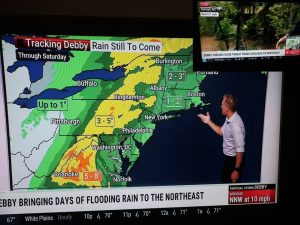
The torrential rains of Tropical Storm Debbie inundated states with 13 to 15 inches of rain and now cresting rivers are making the multiple problems worse.
The administration in Washington has not to my knowledge sent anybody to the states to say “we’ll make you whole again. We’ve got your back. We’ll send Seabees, military construction to open your buckled in roads and help is on the way.” (Don’t they watch The Weather Channel? They could have gone in with the brave reporters unswe Debbie wet torrents)
Kamala Harris Democratic Nominee for President and Vice President nominee Governor Tim Waltz should visit the areas now.
Before Mr. Trump and Mr. Vance do.
Trump is going to start talking about the Democratic Party again showing disrespect for the South and that only he and Vance can save America from the disasters of climate change, and fix the south fast, he may even say he will stop the storms.
Mr. Trump or Mr. Vance is probably going to repel by Blackhawk chopper into each state to make a personal inspection and announce his “MAKING THE SOUTH GREAT AGAIN” program with business, homes, road rebuilding in the first 6 months of his administration, “from Day One.”
The clueless people managing the Democratic Party should have television spots running now telling how they are the Party that saves Americans, helps them, spends to get the economy moving, stopped the covid epidemic and we are going to rebuild you as we did in the depression, saved you as we did in World II…got America moving with the GI Bill, improved education and now we are coming to the South’s rescue.
As announced this week President Biden is taking tours to European leaders to solidify America commitment to Europe security.
Wrong.
No one in the southern part of the country devastated by flooding for a week cares about preserving anything in Europe. Biden may have these priorities right but he has 6 months to deal with Europe. He could do it on ZOOM.
The southern states in chaos are proud and want to show they can help themselves. But they need immediate help. MEN WOMEN MANAGERS MACHINES AND MONEY they do not have.
Where is the FEMA to house, the military that builds bases, the swift help that is needed now today?
The Trump campaign is going to start throwing salvos of scathing embarrassing charges at the Democrats in control in Washington by —“They don’t Care. They aren’t there. When I get reelected I will announce instant help on Day 1”
Where is the Democratic administration response to this now.
None.
Not even to my knowledge a phone call from Harris or Walz or Biden for that matter
As soon as the Trump campaign starts talking about Southern neglect by the Democrats the bounce from the start of Ms. Harris’ campaign is going to disappear.
Where are those spots? Where is the Democrat campaign?
Kammala Harris and Tim Walz have to go to those staffs be seen with the governors and Mayors assess their needs and get action going mobilizing America to help.
That’s what American government does it helps when no one else can.
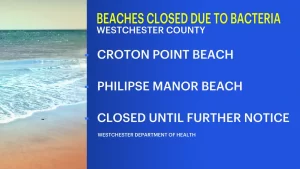
(Westchester, NY) – The Westchester County Health Department has closed the following beaches until further notice due to water samples that have exceeded the upper value of the density of bacteria for marine water.
Croton on Hudson: Croton Point Park Beach
Rye: Rye Town Park Beach
Rye: Playland Beach
These beach closures are in addition to the following:
As of Thursday, August 8: The following beaches have been closed to bathers due to a sewage pump station repair and must remain closed until further notice:
Larchmont: Larchmont Manor Park Beach & Larchmont Shore Club Beach
As of Wednesday, August 7: The following beaches have been preemptively closed, until further notice, due to 2.41 inches of rainfall observed in the past 24 hours.
Mamaroneck: Harbor Island, Beach Point Club, Orienta Beach Club, & Mamaroneck Beach and Yacht Club
Rye: Coveleigh Club
New Rochelle: Hudson Park Beach, Davenport Club, Greentree Club, & Surf Club
As of Wednesday, August 7: The following beach has been closed to bathers until further notice due to the presence of a Harmful Algae Bloom in the swim area.
Mohegan Lake: Mohegan Beach Park District Beach
Residents and visitors are being advised to avoid contact with the water in the immediate area until further notice, and visit the Westchester County website for the latest updates on beach closures and reopening schedules. The County remains committed to maintaining high standards of environmental health and safety across its recreational facilities.
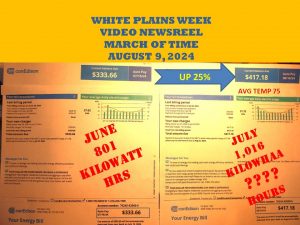
HEAT WAVE ENDS AFTER CON ED RATES AND RESIDENTS USAGE TURN THE MONEY HEAT ON
THE COUNTY SURGE IN COLORECTAL CANCER IN ADULTS UNDER 40–FREE SCREENING TESTS URGED CLIPS FROM THE LATIMER AND HEALTH COMMISSIONER REPORTS–MUST SEE
WESTCHESTER DODGES DEBBY
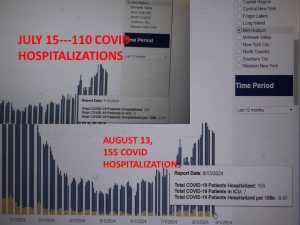
COUNTY DOWN IN NEW CASES OF COVID BUT ON TRACK FOR 4,000 CASES FOR MONTH OF AUGUST. WHITE PLAINS HOSPITAL STILL SEEING 50% OF ADMISSIONS TESTING POSITIVE FOR COVID
HOW AIR CONDITIONING AFFECTED YOUR ELECTRIC BILL
HOTEL TAX RELIEF FOR LONG TERM HOTEL RESIDENCIES RECEIVING COUNTY ASSISTANCE
CRACK DOWN ON CORPORATE LONG TERM LEASES REQUIRING THEM TO PAY HOTEL TAX.
FBI CONTINUES TO CRACK DOWN ON BUSINESS FRAUD
WITH JOHN BAILEY AND THE NEWS THIS WEEK EVERY WEEK
Happy August! I’m back from summer vacation. My little family explored all three gorgeous national parks in Washington State, which required much-needed unplugging.
The YLE team is refreshed and ready for the fall season! I hope you are, too. Let’s dive into the state of affairs.
Covid-19: Up, up, and away
We are knee-deep in a substantial Covid-19 infection wave. Wastewater levels—a good indicator of community spread—remain high and continue to increase, especially in the South and the West, where levels are coming close to last winter’s.
Thankfully, immunity keeps our hospitals from overflowing at this point, but severe disease trends continue to mirror infections. For example, in California, hospitalizations this summer are as high as last winter.
This pattern—2024 summer rates reaching winter rates— is not unique to the U.S. Covid-19 hospitalizations in the U.K., Spain, and Australia all show similar trends.
Covid-19 hospitalizations trends across the globe
The height of this summer wave is surprising to me, as we would hope that summer waves get smaller and smaller over time. So, three unanswered questions are top of my mind:
Why is this happening? I don’t know. The newest subvariant doesn’t have so many mutations that I would predict this would happen. Vaccination rates are about the same as last year, which also wouldn’t explain it. Could this be due to the CDC changing its isolation guidelines to be more relaxed in February? Probably not, given similar patterns in other countries.
Will we have a milder winter? We can hope that the immunity we have built up will lead to a milder winter, which would be a welcome reprieve to health systems.
Are biannual waves the future? Many (including me) hypothesize Covid-19 will eventually become a winter virus, like flu. But clearly Covid-19 is still unpredictable and will likely take another decade to find a rhythm.
Other updates
Epidemiologists are monitoring these other viral outbreaks. You have nothing to do, but here is an update so you can follow the scientific discovery ride.
H5N1 (bird flu): Continues to spread
We are keeping an eye on H5N1 because of the potential for it to become a pandemic.
H5N1 continues to spread among animals. USDA has reported 171 dairy cow herds in 13 states with confirmed H5N1 infection.
Four big developments have occurred since the last YLE update.
More humans have been infected, but no onward spread. This year a total of 13 people have been infected with bird flu: four from sick dairy cows and nine from poultry. This is a lot of cases, considering U.S. had 1 H5N1 human case last year and zero before. The human tally recently increased thanks to a big outbreak in Colorado, when several workers got sick after culling (killing) infected poultry. As far as we can tell, this outbreak wasn’t because the virus mutated; instead, it was the environment—it was over 100 degrees at the farms, so workers didn’t wear PPE (understandably), and massive industrial fans to cool the area spread feathers (and virus). So far, cases have been mild (red eye and respiratory symptoms), and there is no ongoing human transmission.
We are missing human cases. Given our limited human (and animal) testing, it shouldn’t be a surprise that we are likely missing human cases. In Texas, scientists tested the blood of 14 previously symptomatic farm workers and found 2 workers had antibodies. This could be evidence that they had H5N1 at one point. (However, it’s also possible because of the type of test used that these antibodies reflect infections from seasonal flu [H1N1]). We don’t think there is an asymptomatic spread. Another study in Michigan tested the blood of 35 workers who were exposed to infected herds but never had symptoms, and none were positive.
There are no signs of it “burning out.” The genetic sequences of bird, cow, and human cases suggest the U.S. has created a new reservoir of H5N1 that can spill over into poultry and humans all year round.
All eyes are on the upcoming seasonal flu. If one of these farm workers gets infected with H5N1 while sick with seasonal flu, the risk of a pandemic skyrockets, as the virus can easily swap genes to become more adaptable to human spread. CDC is funding an extensive seasonal flu vaccine campaign for farmworkers to prevent a nightmare.
We still don’t have an updated CDC risk assessment of an H5N1 pandemic (called iRAT), which is surprising. (The last iRAT was published in April 2023 after minks were infected in Spain. They rated the pandemic risk as “moderate.”) The U.K. recently raised their risk assessment (from 3 → 4) given the U.S. outbreak.
Mpox (Monkeypox): Surging in Africa
The WHO is considering naming the ongoing mpox outbreak a public health emergency of international concern.
Case counts continue to explode in Africa, with over 37,000 cases and 1,400 deaths. The Democratic Republic of Congo (DRC) has been the epicenter, accounting for over 96% of this year’s cases and deaths. The vast majority of deaths (85%) are among children. The Africa CDC has heightened its monitoring and declared the risk “high.”
In a surprising turn of events, mpox has mutated. Mpox is primarily divided into two clades (types): Clade I and Clade II. Clade I, found predominantly in Central African countries, tends to be more severe. The new strain, called Clade 1b, is severe and can be transmitted human to human.
Unfortunately, many patients in Africa lack the resources that can keep mpox at bay, like vaccinations, treatments, and access to care. In the United States, for example, where only Clade II—the less severe strain—is spreading, cases are far lower than in 2022. Even if the more severe strain landed in the U.S., we don’t think it would be as detrimental as it is in Africa.
Mpox cases in the United States; Graph by YLE
Bottom line
Covid-19 infections are surging this summer. There are things you can do—stay up to date on vaccines, mask indoors and in crowded areas, and get that indoor air flowing. Concurrently, H5N1 continues to march into the upcoming flu season, increasing the risk of another pandemic, and WHO is considering another mpox emergency. As always, we’ll keep you updated as things change.