NOVEMBER 5– MR. LATIMER GOES TO WASHINGTON, WINS 16TH CONGRESSIONAL DISTRICT OVER FLISSER.

Hits: 165

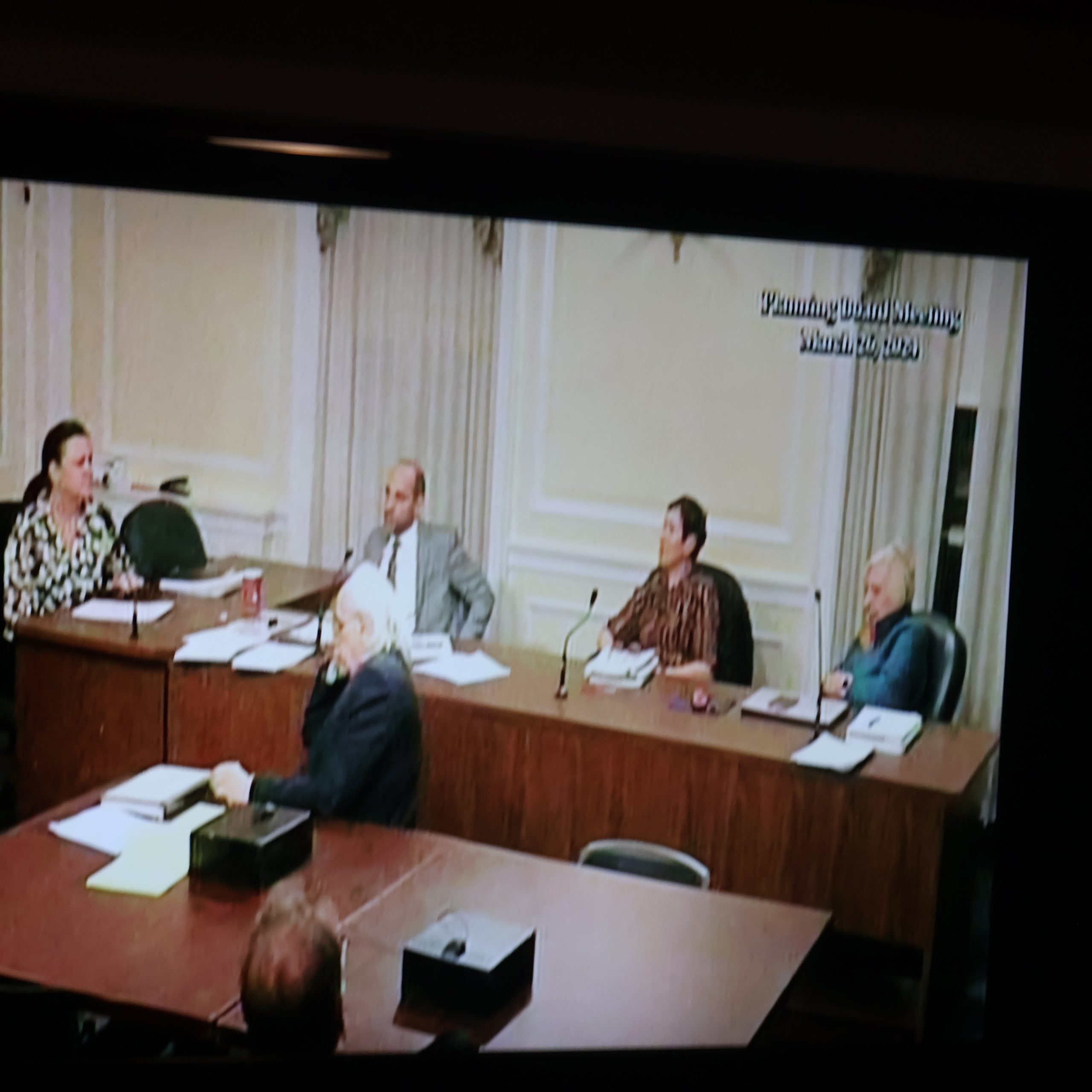
Hail to the Victor! George Latimer speaking to a crowd of  over one hundred Democratic supporters last night at Colosseum restaurant after winning the 16th Congressional District Race.

WPCNR CAMPAIGN 2024. UPDATED 8 A.M. EST By John F. Bailey. November 5, 2024:

County Executive George Latimer defeated Republican Miriam Flisser 60,426 votes to 32,103, 65% of of the vote to win the 16th Congressional District. He will be  going to congress in January, capping a political career of achievement in which he has never lost an election Rising from town Council in Rye, to assemblyman to state senator and Westchester County Executive. Now he is going to Washington

A Special Election will be  held within 90 days in January to fill Mr. Latimer’s last year as County Executive

Mr. Latimer announced a winning sweep of Democrats to the STATE assembly:

MaryJane Shimsky, Amy Paulin, and Steve Otis. State Senator Shelley Mayer was reelected to the State Senate over Trish Lindsay 86,509 votes to 59,646; Mondaire Jones, Latimer said had defeated Mike Lawler for the 17th Congressional district, but that Mr. Lawler overcame the deficit.

UPDATED 8:50 A.M. EST 11/6, INCUMBENT MICHAEL LAWLER WITH ALL VOTES COUNTED DEFEATED MONDAIRE JONES, 191,681 VOTES TO 166,331 A 52.5% TO 45% MARGIN TO WIN  A SECOND TERM SERVING  THE 17TH CONGRESSIONAL DISTRICT.

Statewide, Proposition One the new Equal Rights amendment passed with 63% of the vote.

State Senator Peter Harckham defeated Gina Arena.

The Westchester County Proposition that would extend County Legislator terms from 2 years presently to 4 years was rejected by Westchester voters 80,587 votes to 46,395.

Kirsten Gillebrand was reelected to her Senate Seat in Washington over Michael Sapprascone.

As of 8 AM EST, The Associated Press reports the Republicans have won the majority in the United States Senate. The House results are still undecided.

Posted in Uncategorized

ELECTION ANXIETY

Hits: 339

SUN RISE AS POLLS OPEN AT WHITE PLAINS HIGH SCHOOL ABOUT 5:40 A.M.

POLLS OPEN 6 A.M., OPEN UNTIL 9 P.M. IN WESTCHESTER COUNTY. JUST VOTE, BABY

ELECTION WORKERS READY FOR 6 AM OPENING OF THIS POLLING PLACE

15 VOTERS WERE ON LINE AS OF 6 AM TO “HAVE THEIR SAY” By 7 AM 49 HAD VOTED.


WPCNR CAMPAIGN 2024. NEWS & COMMENT By John F. Bailey. November 5, 2024.

It is 4:25 A.M Eastern Standard Time.

I could not sleep..It is still dark in White Plains New York USA.

The sun will rise at 6:30 this morning and the polls open at 6 A.M.

This election day is like no other I have ever experienced in my voting lifetime

I am melancholy.

Unlike other election days, when I went to the pols to “have my say” in how our leaders are running the country, I am worried about the future this day will bring.

Will my fellow Americans decide to change the way its government treats people who live here going forward? Or will enough of us realize what may happen if a new way forward quite different from the way  the America of the past has been lead?

When I asked my father years ago, what if Adlai Stevenson is elected in 1956, instead of Dwight Eisenhower. He told me that I should not worry because over his lifetime, he has found that nothing much changes when a new administration takes over in Washington,D.C.

This Election may change that perception.


However when you fill in the little circles on your ballot today if you have not already voted early or by absentee ballot, what circles you fill in will have Washington, Jefferson, Adams, Madison, Lincoln, Grant, the Roosevelts, looking over your shoulder.

You have the legacy of these leaders of the past in the choices you make.

If you vote one way you may forever change the unique country that is The United States of America by changing the framework of how decisions are made, what kind of character your decision-makers have and the kind of decisions they will make for the country, quietly changing how you are governed for better or worse.

As my father told me, a new administration may not change too much.

That is what I am hoping that those politicians who are elected to our congress will listen to the voice of their consciences and do the American Way, making compassionate, fair productive decisions to compromise and avoid hurting Americans no matter who they are.

I am hopeful for sensible fair decisions.

All I have is one vote today.

There are millions of votes out there to be cast.

Mine is just one.

It may be my last vote

But it will be cast with confidence and I will cast it to send a message to the leaders who might be, telling them with a firm mark where I stand and what my vote means.

Many countries have fixed elections.

Russian people fear their leaders

Chinese fear their leaders.

There are so many countries where leaders do what they want when they want to whomever they want with no compassion, or guilt, even eliminate those who speak against them.

Trust me I know no one will like that here, really.

But it could happen here and today may set the stage for just this kind of atmosphere if those we elect and the persons who work in the new administration do not think with you and me in mind.

Whoever is elected today have to change the way politicians act and think.

They have to be accountable to us, we the people.

We are not people to be hurt and manipulated and controlled.

A member of congress is not there to assure the wealthy and powerful are not held accountable and get what they want to do with their business practices  to their profit, whether it hurts the people or not. You who are elected have to get over being lobbyist lapdogs.

You  are not there to throw people in jail if they disagree with what you  say like  Elena Sassower of White Plains was jailed by a congressional committee chairman for shouting from the committee gallery. Senator Charles Grassley did that to Ms. Sassower.

I suggest whomever is elected this day to congress or the Oval Office check their arrogance and self-importance at the  Capitol doors.. Stop listening to the lobbyists and listen, really listen and vote with integrity of conscience listen to what used to be in your head when you were a kid.

Being elected is not endorsement of anything you say as a congressperson or  Senator or anything you want to do.

Our judges on the Supreme Court have forgotten that.

Get a grip on what is right.

If you do that when you vote, if officials elected today when elected, America will be all right.

When you fill in the circles today, think who will treat the country right.

That is what voting is all about.

Your vote counts! Use it.

United we stand.

I have never met wherever I have traveled in this country people who have disliked me, We do not hate each other.

Posted in Uncategorized

EDITORIAL BURIAL

Hits: 267

Here lies

Kamala  Harris

Ran for President 2024

Defeated by Big Media November 5, 2024


WPCNR NEWS & COMMENT By John F. Bailey November 4, 2024;


It has been going on for eight years: Editorial Burial

What is Editorial Burial?

It is burying the truth by irresponsible coverage of what is alleged but not proven, or what is said that is not constructive.

It is subtle denigrating of a person by dwelling on parents, upbringing, influence of  race or gender with prejudiced judgment of what is “acceptable” childhood, a good “race” with good behavior and its influences.

It is writing about why people feel a certain way justifying their behavior despite it being misinformed and destructive, more a false truth than the reality, that in a subtle way excuses the feelings. Makes it O.K.

It is writing about feelings people have toward a choice of leader regardless of the consequences of electing persons who are inept.

It is the more than willing  compulsion of edtors and owners of media to tell both sides of a story, but placing one side of the story on the front page or in lead-off of a broadcast report and burying the other side of the story on page 14.

It is the self-righteous editor hutzpah that compels editors that they  must tell both sides of the story no matter how dangerous and untrue what one or both sides may be saying. It is the  safe way to play the news. “Fair and balanced.”

The hubris of  driven editors who insist on diluting a very nasty event like the Madison Square Garden rally and a profile of how a vice president running for the same office,  but conveniently pairing that story with a national story on the economy on the right side of the page.

Front page 1 : Trump “Don’t Say It Style–Transgressor” just below negative analysis of Harris economy aproach


ON PAGE 14–HARRIS DECLARES TRUMP IS DISQUALIFIED


The shame was that the paper I saw did not give equal play and front page coverage of the Harris rally  where Ms. Harris said Mr. Trump should be disqualified  from the presidency because of his remarks about  Elizabeth Cheney should be placed in front of a gun  without giving full blown coverage to the Harris rally the same weekend on the  front page.

Never mind the the fact that one side says the same offensive, vacant promises every day, and every day we see the same analysis of a candidate’s speech essentially repeating a candidate’s  message.

This in my judgment is irresponsible destructive journalism, preserving the news organization as one of the power establishment and preserving after-campaign status as an acceptable and prestigious paper of record to curry favor, saying “look how fair we are.”

Reporting both sides of a story when one side is uttering campaign slogans and the other side is trying to say what and how they have to lead the country is giving the campaigns equal weight validity.  Burying a major historical statement on page 14 and the other campaign rally on page 1 is not equal. To my knowledge, no other presidential candidate has ever said their opponent should be disqualified. You might fact-check there — but really that is front page upper right put the stories side by side. It is a no brainer.

On Saturday there was a blatant demonstration of this burying a message that had to be reported equally with the coverage of another was committed by a newspaper of record.

Front Page:

Page 14  Harris meeting coverage adjacent to continuation of front page Trump article and a J.D. Vance piece:

Not only that but often when the candidate tries to explain you cannot say what you are going to do when what you will do is decided when the situations are in the future when you, if elected have to deal with it.  This perfectly rational response is his is often met with a flurry of pompous reporter questions  saying well what will you do “if.”  This line of questioning is done just to make the new media look  good.

When they deal with an evasive candidate, who is aggressive and threatens them, the reporters never challenge that. Never asking a media-hating candidate “Well would you prosecute me if I reported a secret deal you made with Vladimir Putin?” Well this mythical evasive candidate could very well answer,

“Well, if had made a secret deal and your betraying it, hurt my policy I would.”

But often the evasive slogan spouting candidate,  would duck by saying, “I would never do that”

But that opens another line of questions pursuing whether or not the slogan  slinger  candidate, “ Hold on, Mr Candidate, doesn’t prosecuting a reporter for a story if true take away freedom of speech. What would be freedom of speech and what not under your administration? ”

The effect of this practice putting the pouting hectoring face of the same candidate on the front page every day of the week has the effect of a political ad pounding home the message of the flamboyant candidate’s clever  subtle building his strength week by week by upgrading promises without premise repeatedly written about on the front page or in the lead or on the proliferation of right wing cub reporter websites every day.

The constant exporsure every day every newscast of high profile hyperbolic events has an effect that  gaslights this impression to the public:

The louder candidate, the threatening candidate, the candidate who speaks to  what  or who people of righteous  belief feel, fuels fear in  voters and makes them more confident in him or her. The strong man who will fix it. In fact two days the Republican coined a new slogan “Trump will Fix it”

That’s what we all want isn’t it? The plumber.  The electrician. The doctor. The mechanic. To make the problem go away.

At the end of the last week there was another twist on Make America Great, which turned into (seen on the podium of the candidate) “Keep America Great” that the latest clinch line, “Trump will Fix It.”

This is how wizards of advertising make you believe in a product. “It may taste great but it may be less filling” This how light beer was invented and sold.

Circling back as the scam artists and fundraisers say, covering every unexamined or explained promise of a candidate because they say it outrageously, proudly, confidently is not responsible. It pounds home a false positive. Remember President, “I am not a crook” Nixon who said “I havea plan to end the war in Viet Nam?” Well he did: 5 years later we withdrew. Bottom line: there was no plan. Thousands more died.

Nixon pounded that lie about the plan and he defeated Humphrey in 1968.

Circling back to this morning,  one of the paper’s of record covered the last candidate rally and ticked off all the lies on the front page. Thousands of dollars of advertising free by covering that Trump rally. Once again the editors choosing to write a long debunking of what was said highlighted the message.


This is another stroke of creative genius on whose who have devoted themselves to building an image of competence.

Voters’ possible hates of others, misunderstandings of business culpability for inflation, builds the troubled voter feeling that the louder stronger candidate they see every day on propaganda networks, establishment papers of record, and hear from irresponsible media personalities getting paid to say what the network may be telling them want o say, has the strength to help them more feel the message with no substance, but substantial strength brings back the old western hero we yearn for the actor, the young hero, the youth Mr Smith Goes to Washington who looks like Jimmy Stewart.

The media and we love the movies. They make movie comparisons to candidates,

The trouble is movies are not reality

What a candidate says matters.

When the voters do not hear equal coverage, the rational message is buried because it is not sensational enough for the front page.

The failure of a campaign or candidate to answer questions does not matter. It is his or her persona that counts. The more the same message booms out there the stronger the bigger the lie gets. Nixon showed us that.

If Ms. Harris loses this election.

Blame the media.


They have covered Mr. Trump as a model successful businessman.

Now in their coverage of this campaign they have made him President by  amplifying his messages, vilifying Ms. Harris and Mr. Biden, by reporting the conflicting sides with a double standard.

The journalism schools have got to change their tune.

Both sides now is not the way, equal space and time is.

Dumb nasty hate messages are not news.

They are calls to chaos.

They incite violence against one another.

Editors should know that.

It is time to realize that “If it bleeds, it leads”.

“It leads to violence.”


Posted in Uncategorized

OUTBREAK OUTLOOK: NORTHEAST NOV. 4– FLU ON RISE IN NY CONNECTICUT. COVID CONTINUES TO FADE

Hits: 172

View in browser

Welcome to the Northeastern edition of Outbreak Outlook! It is only available to paid subscribers. If you wish to become a paid subscriber and access region-specific information, please click the Subscribe now button below. Thanks for reading! -Caitlin

Respiratory Diseases

ILI

Most of the region is reporting low levels of influenza-like illness, with a few exceptions. There’s a general pattern of decreasing activity as you move north, with the lowest levels in northern New England.

New Jersey and New York City stand out from the rest of the Northeast, with both reporting over 4% of visits due to flu-like illness (4.2% and 4.5% respectively).

Connecticut is the next highest at 2.4% of visits, while New York State (excluding NYC) is reporting about 2% of visits for ILI.

A cluster of states including MassachusettsMaineRhode Island, and Pennsylvania are all reporting similar moderate levels between 1.5-1.8% of visits.

New Hampshire and Vermont have the region’s lowest activity, at 1.3% and 1.0% respectively.


COVID-19

Covid-19 wastewater activity is minimal and decreasing in the Northeast. It is lower now than at any point in the last year. Severe illness is also low and declining in most states in the region.

Source: CDC

Activity was moderate in Vermont and Pennsylvania (limited data). It was low or minimal in New YorkNew JerseyRhode IslandMassachusetts, and Connecticut. The exception to this rosy picture is Maine, where wastewater activity spiked this past week, from moderate to high activity.

Source: CDC

Trips to the ED for Covid-19 are minimal (<1.5% of all ED visits) in every state in the region. The rate decreased across much of the region this past week, including in MassachusettsNew Hampshire, and Vermont. In New York, both ED visits and hospitalizations are down. Hospitalizations in the state decreased for the fourth week in a row, to 3.6 hospitalizations per 100,000 people. This is still a bit elevated but much better than where it was a month ago. In Connecticut, ED visits declined, but hospitalizations crept up a bit, to 3.6. ED visits held steady in Pennsylvania and New Jersey. No states reported an increase in ED visits.


RSV

Minimal activity, according to both hospitalizations and wastewater. Enjoy the lull!


Other Bugs

Some common causes of respiratory illness, with cold and flu-like symptoms, continue to rise nationally.

  • Parainfluenza viruses in particular has increased rapidly, and is up to about 5% test positivity. Parainfluenza viruses have had two waves in the past year, and right now test positivity is higher than its peak last fall, but remains lower than its peak in May of this year (which was 8%).
  • After decreasing slightly a couple weeks ago, rhinoviruses/enteroviruses have also increased again in the past week, and remain quite elevated at 28% test positivity.
  • Adenovirus has been slowly increasing for the past few weeks, as have human coronaviruses, though neither are at particularly high levels at the moment.

Stomach Bugs

Norovirus rates are low in the Northeast – around 2% – in contrast to the rest of the country. Norovirus tends to pick up starting around November – and other regions are already seeing increases, so I’m enjoying the quiet while it lasts!


Food recalls

The following foods are being recalled because they are contaminated. Please check your cupboards and throw out any of these items:

New:

  • Enoki mushrooms sold by HH Fresh Trading Corp (more info)
  • Kirkland Signature Smoked Salmon (more info)
  • Gourmet Cafe Chicken Caesar Salad Bowls sold by Fresh Express (more info)

Previously reported:

  • Waffles and pancakes – many flavors and styles – sold under a very large variety of brand names, including numerous store brands, including 365 Organic, Best Choice, Good & Gather, Harris Teeter, H-E-B, Nature’s Promise, Publix, Trader Joe’s and Wegmans.
    • Given the size of this recall, if you have any variety of frozen/toaster waffles, Belgian waffles or pancakes in your freezer that you bought in the US or Canada, check this list. (more info)
  • Prepackaged Chicken Street Taco Meal Kit produced by Sprouts Farmers Market (more info)
  • Ready to eat meals and store-made deli items including chicken from a variety of grocery chains, including Albertsons, Safeway, Star Market, and others. (more info)
  • Green onions sold under Church Brothers, Trader Joe’s and Imperial Fresh brand names (more info)
  • Prepackaged sandwiches – Pepperjack Cheeseburger, Bacon Cheeseburger and The Gambler sold under the Dakota Tom’s brand name (more info)
  • Large variety of ready-to-eat meat and poultry products under different brand names, including Rao’s chicken alfredo and Michael Angelo’s grilled chicken piccata with penne pasta (more info)
  • If you have food allergies, you may wish to review these FDA safety alerts and USDA alerts for foods with undeclared allergens.
In other news

  • Greely High School in Cumberland, Maine is under investigation by the Maine CDC for a whooping cough outbreak following multiple reported cases, including a recent one this week. Pertussis, or whooping cough, spreads through respiratory droplets and starts with cold-like symptoms that progress to a severe cough. School officials are notifying students and staff of potential exposure.
    • Vaccines that protect against pertussis include the DTaP vaccine for infants and young children and the Tdap booster for older children, teens, and adults. The CDC recommends DTaP doses at 2, 4, 6, and 15-18 months, with a final dose at 4-6 years. Tdap is recommended at 11-12 years, with adults advised to get a Tdap booster every 10 years to maintain immunity.
Posted in Uncategorized

WHITE PLAINS WEEK THE NOVEMBER 1 REPORT TONIGHT 7:30 PM ON FIOS CH 45 OPTIMUM WHITE PLAINS CH 76 & WWW.WPCOMMUNITYMEDIA.ORG

Hits: 179

LENNAR SURPRISES COMMON COUNCIL: CANNOT PAY FOR CONSTRUCTION OF 3,200 UNIT MIXED USE MALL, SEEKS TO SELL PROPERTY

HEAVY EARLY VOTING TRAFFIC IN WESTCHESTER COUNTY USA

THE LONG AWAITED DISTRICT GALLERIA  PRELIMINARY DRAFT ENVIRONMENTAL IMPACT STATEMENT ARRIVES


THE NAZI RALLY IN 1939 AT MADISON SQUARE GARDEN

THE RALLY IN MADISON SQUARE GARDEN LAST WEEK FOR MONEY


COVID UNDER CONTROL IN WESTCHESTER 33% LESS CASES IN OCTOBER  COMPARED TO 2023


FORMER COUNTY EXECUTIVE ANDY SPANO HONORED


THE NEW SITE PLAN FOR THE GALLERIA 7 TALL TOWERS AND A SOUTH LEX TO MLK BOULEVARD MALL

OCTOBER 29 95 YEARS AGO THE GREAT CRASH AND WHY IT HAPPENED

CITY CONSIDERS MAKING YOU PROPERTY OWNERS RESPONSIBLE FOR REPAIRING YOUR SIDEWALKS YOURSELF AND MAKING OWNERS LIABLE IF THEY DID NOW REPAIR SIDEWALKS.

WITH JOHN BAILEY AND THE NEWS

THIS WEEK EVERY WEEK ON WHITE PLAINS WEEK

FOR 23 YEARS

Posted in Uncategorized

YOUR LOCAL EPIDEMIOLOGIST: NOVEMBER 1

Hits: 188

Forwarded this email? Subscribe here for more

Si quiere leer la versión en español, pulse aquí.


The Dose (November 1)

Mental health during elections, rapid tests for viruses, confusing pneumococcal eligibility, and H5N1 in a pig.

It’s November! (How is it November?) Here is a dose of public health that may help you forget the stress of the elections. Including a Halloween poll at the end.


Your “weather” report for the week

The “big three” (RSV, Covid, and flu) are at low levels.

If you or your kid has a cough that has lingered for weeks, it may be mycoplasma pneumonia or “walking pneumonia.” Cases are typically mild, but because bacteria causes the disease, antibiotics can help. The U.S. usually gets a surge every 3-7 years, and thus far, cases have been about 10 times higher this year than last year.


Opportunity to Get At-Home Tests for Multiple Respiratory Viruses This Fall!

Once the respiratory season starts heating up again, you may be interested in knowing which virus you have if you get sick. Some brilliant City University of New York scientists are working on cutting-edge, multi-pathogen rapid tests for Covid-19, RSV, and influenza (with flu a and b subtyping). They are recruiting study participants and shipping testing kits right now!

  • Participation in the study involves completing surveys about your health. You will also have free at-home testing for Covid-19, RSV, and flu.
  • Here is a video about what you can expect from the study.

  • They are particularly looking for people ages 50 and older or those living with chronic health conditions, but anyone over 18 in the United States is eligible to join.
  • If you want to participate, email recruitprotects@sph.cuny.edu with “Interested in CUNY Project PROTECTS – YLE” in the subject line.
  • Note: I don’t get anything from this other than cheering on my colleagues who are doing good science.

Feeling stressed from elections? You’re not alone. 

The world feels very heavy a week before the election, at least to me. I’m not alone. A recent American Psychology Association report found that 3 in 4 Americans are stressed about the 2024 election.

Elections can have a pretty dramatic impact on health right before and right after, especially among those who are predisposed to heart problems. Studies have shown a dramatic increase in heart attacks, strokes, and heart failure:

  • One study found cardiovascular events increased nearly 2 times in the 2 days immediately following the 2016 election.
  • Another study found rates were 17% higher in the 5 days after the 2020 election than in the same 5 days in the period 2 weeks before the election.

I spent some time in Boston this week, speaking at several events. (Here is the Harvard recording, if you’re interested.) While I enjoyed them immensely, I found taking (a million) photos of the changing leaves and hugging friends was exactly what my soul needed to reduce stress. All this to say: Please take care of yourself in this stressful time.

No alternative text description for this image

Pneumococcal vaccine eligibility is lowered to 50+, and… you may need a booster.  

Last week, CDC lowered the recommended pneumococcal vaccine age to 50. This seems like a straightforward policy, but… it’s complicated in real life.

Here’s the deal.

Pneumococcal disease is caused by bacteria, which can result in pneumonia, meningitis, joint space infections, and sometimes sepsis. There are around 15-25 cases per 100,000 people every year.

Since 2013, anyone over age 65 has been recommended for pneumococcal vaccination. (And children.) It was also recommended for people aged 50-64 with certain risk factors; however, uptake is incredibly low, especially for Black Americans.

Last week, CDC simplified recommendations for all people aged 50 and older. The upside: clearer eligibility. The downside: the likelihood of serious illness is low, and the vaccines are expensive.

But there’s an even bigger complication, regardless of your age. The bacterium has many different strains— about 100. So, over time, manufacturers and scientists have tried to figure out how many strains vaccines should cover, for whom they offer most benefit, and when. This has generated a variety of options:

  • PCV21 (Capvaxive) covers 21 strains, which is ~85% of strains that are known to affect adults
  • PCV20 (Prevnar 20) covers ~55% of the strains impacting adults but also includes serotype 4, which PCV21 does not include and can be important in some parts of the U.S. (This is especially important if you are in Alaska).
  • PCV15 (Vaxneuvance) covers 15 strains.
  • PCV13 (Prevnar 13) was one of the earlier vaccines available, and the one infants receive.

Because we keep adding strains, you may not be up-to-date on your pneumococcal vaccine. Here is an updated chart that may help.

(Source: CDC)


Not great news coming from a pig

Earlier this week, a pig in a small backyard farm tested positive for H5N1, known as bird flu. Viruses spread, so it’s unsurprising that a virus jumped from poultry to pigs.

Then why is a pig a big deal? Pigs are dangerous hosts for bird flu because they have avian and human receptors. This makes them “mixing vessels”—if a pig is infected with a human and bird flu strains, the virus can switch genes. When this happens, the virus could become more adaptable to human spread and become a pandemic. This is how the 2009 H1N1 pandemic started.

The risk to you today is still very low. But this virus is making public health very uncomfortable.


Poll

Posted in Uncategorized

TONIGHT 8 PM PROFESSOR STEPHEN ROLANDI ON “PEOPLE TO BE HEARD” ON ELECTION PREVIEW! WHAT LIES AHEAD AFTER THE ELECTION WHAT TO EXPECT WHAT COULD HAPPEN AND PARTY STRATEGIES CH 45 FIOS AND CH 76 OPTIMUM AND www.wpcommunitymedia.org

Hits: 4

PROFESSOR ROLANDI OF PACE UNIVERSITY AND JOHN JAY SCHOOL OF JUSTICE, IS AN EXPERT IN NEW YORK STATE LAW AND THE STATE POSITION AND STRATEGIES IN WHAT IT CAN AND CANNOT DO UNDER DIRECTIONS AND POLICIES SET BY WASHINGTON. TONIGHT HE REVIEWS HOW A TRUMP ADMINISTRATION AND A HARRIS ADMINISTRATION HAVE AS THEIR OPTIONS IN VARIOUS CONGRESS AND PRESIDENCY POLICIES AND NEW YORK STATE OPTIONS IN THE SITUATIONS. 

(This “People To Be Heard” election special is being aired on www.whiteplainscommunitymedia.org at special repeat times along with other programs commenting on the election. Check the website for days and times.)

Posted in Uncategorized

THE WALL STREET CRASH OF 1929 TOOK PLACE TODAY –95 YEARS AGO –CAUSE EFFECTS AFTERMATH

Hits: 587

WIKIPEDIA: THE Wall Street Crash of 1929

Crowd gathering on Wall Street after the 1929 crash

The Wall Street Crash of 1929, also known as the Great CrashCrash of ’29, or Black Tuesday,[1] was a major American stock market crash that occurred in late 1929. It began in September with a sharp decline in share prices on the New York Stock Exchange (NYSE), and ended in mid-November. The pivotal role of the 1920s’ high-flying bull market and the subsequent catastrophic collapse of the NYSE in late 1929 is often highlighted in explanations of the causes of the worldwide Great Depression.

It was the most devastating stock market crash in the history of the United States when taking into consideration the full extent and duration of its aftereffects.[2] The Great Crash is mostly associated with October 24, 1929, called Black Thursday, the day of the largest sell-off of shares in U.S. history,[3][4] and October 29, 1929, called Black Tuesday, when investors traded some 16 million shares on the New York Stock Exchange in a single day.[5] The crash, which followed the London Stock Exchange‘s crash of September, signaled the beginning of the Great Depression.

Background

[edit]

The Dow Jones Industrial Average, 1928–1930

The “Roaring Twenties“, the decade following World War I that led to the crash,[6] was a time of wealth and excess. Building on post-war optimism, rural Americans migrated to the cities in vast numbers throughout the decade with hopes of finding a more prosperous life in the ever-growing expansion of America’s industrial sector.[7]

Scholars believe that declines in the money supply caused by Federal Reserve decisions had a severely contractionary effect on output.[8] Despite the inherent risk of speculation, it was widely believed that the stock market would continue to rise forever. On March 25, 1929, after the Federal Reserve warned of excessive speculation, a small crash occurred as investors started to sell stocks at a rapid pace, exposing the market’s shaky foundation.[9] Two days later, banker Charles E. Mitchell announced that his company, the National City Bank, would provide $25 million in credit to stop the market’s slide.[9] Mitchell’s move brought a temporary halt to the financial crisis, and call money declined from 20 to 8 percent.[9] However, the American economy showed ominous signs of trouble.[9] Steel production declined, construction was sluggish, automobile sales went down, and consumers were building up large debts because of easy credit.[9]

Despite all the economic warning signs and the market breaks in March and May 1929, stocks resumed their advance in June, and the gains continued almost unabated until early September 1929 (the Dow Jones average gained more than 20% between June and September).

The market had been on a nine-year run that saw the Dow Jones Industrial Average increase in value tenfold, peaking at 381.17 on September 3, 1929.[9] Shortly before the crash, economist Irving Fisher famously proclaimed “Stock prices have reached what looks like a permanently high plateau”.[10]

The optimism and the financial gains of the great bull market were shaken after a well-publicized September 8 prediction from financial expert Roger Babson that “a crash is coming, and it may be terrific”.[11][12] The initial September decline was thus called the “Babson Break” in the press. That was the start of the Great Crash, but until the severe phase of the crash in October, many investors regarded the September “Babson Break” as a “healthy correction” and buying opportunity.[13]

On September 20, 1929, top British investor Clarence Hatry and many of his associates were jailed for fraud and forgery, leading to the suspension of his companies. This may have weakened the confidence of Americans in their own companies,[14] although it had minimal impact on the London Stock Exchange. In the days leading up to the crash, the market was severely unstable. Periods of selling and high volumes were interspersed with brief periods of rising prices and recovery.[citation needed]

Crash

[edit]

Overall Price Index [clarification needed] on Wall Street from just before the crash in 1929 to 1932 when the price bottomed out

Selling intensified in mid-October. On October 24, “Black Thursday“, the market lost 11% of its value at the opening bell on very heavy trading.[citation needed] The huge volume meant that the report of prices on the ticker tape in brokerage offices around the nation was hours late, and so investors had no idea what most stocks were trading for.[15]

Several leading Wall Street bankers met to find a solution to the panic and chaos on the trading floor.[16] The meeting included Thomas W. Lamont, acting head of Morgan BankAlbert Wiggin, head of the Chase National Bank; and Charles E. Mitchell, president of the National City Bank of New York.[17] They chose Richard Whitney, vice president of the Exchange, to act on their behalf.[citation needed]

With the bankers’ financial resources behind him, Whitney placed a bid to purchase 25,000 shares of U.S. Steel at $205 per share, a price well above the current market.[18] As traders watched, Whitney then placed similar bids on other “blue chip” stocks. The tactic was similar to one that had ended the Panic of 1907 and succeeded in halting the slide. The Dow Jones Industrial Average recovered, closing down only 6.38 points (2.09%) for the day.[citation needed]

The trading floor of the New York Stock Exchange Building in 1930, six months after the Crash of 1929

On October 28,Black Monday“,[19] more investors facing margin calls decided to get out of the market, and the slide continued with a record loss in the Dow for the day of 38.33 points, or 12.82%.[20]

On October 29, 1929,Black Tuesday” hit Wall Street as investors traded some 16 million shares on the New York Stock Exchange in a single day. Around $14 billion of stock value was lost, wiping out thousands of investors.

The panic selling reached its peak with some stocks having no buyers at any price.[21] The Dow lost an additional 30.57 points, or 11.73%, for a total drop of 68.90 points, or 23.05% in two days.[22][23][24][25]

On October 29William C. Durant joined with members of the Rockefeller family and other financial giants to buy large quantities of stocks to demonstrate to the public their confidence in the market, but their efforts failed to stop the large decline in prices. The massive volume of stocks traded that day made the ticker continue to run until about 7:45 p.m.[citation needed]

Dow Jones Industrial Average on Black Monday and Black Tuesday[26]
Date Change % Change Close
October 28, 1929 −38.33 −12.82 260.64
October 29, 1929 −30.57 −11.73 230.07

After a one-day recovery on October 30, when the Dow regained 28.40 points, or 12.34%, to close at 258.47, the market continued to fall, arriving at an interim bottom on November 13, 1929, with the Dow closing at 198.60.

The market then recovered for several months, starting on November 14, with the Dow gaining 18.59 points to close at 217.28, and reaching a secondary closing peak (bear market rally) of 294.07 on April 17, 1930.

The Dow then embarked on another, much longer, steady slide from April 1930 to July 8, 1932, when it closed at 41.22, its lowest level of the 20th century, concluding an 89.2% loss for the index in less than three years.[27][28]

Beginning on March 15, 1933, and continuing through the rest of the 1930s, the Dow began to slowly regain the ground it had lost. The largest percentage increases of the Dow Jones occurred during the early and mid-1930s. In late 1937, there was a sharp dip in the stock market, but prices held well above the 1932 lows. The Dow Jones did not return to its peak close of September 3, 1929, for 25 years, until November 23, 1954.[29][30][31]

Aftermath

[edit]

In 1932, the Pecora Commission was established by the U.S. Senate to study the causes of the crash.[32] The following year, the U.S. Congress passed the Glass–Steagall Act mandating a separation between commercial banks, which take deposits and extend loans, and investment banks, which underwrite, issue, and distribute stocksbonds, and other securities.[33]

Afterwards, stock markets around the world instituted measures to suspend trading in the event of rapid declines, claiming that the measures would prevent such panic sales.

However, the one-day crash of Black Monday, October 19, 1987, when the Dow Jones Industrial Average fell 22.6%, as well as Black Monday of March 16, 2020 (−12.9%), were worse in percentage terms than any single day of the 1929 crash (although the combined 25% decline of October 28–29, 1929, was larger than that of October 19, 1987, and remains the worst two-day decline as of October 7, 2024).[34]

Analysis

[edit]

The crash followed a speculative boom that had taken hold in the late 1920s. During the latter half of the 1920s, steel production, building construction, retail turnover, automobiles registered, and even railway receipts advanced from record to record. The combined net profits of 536 manufacturing and trading companies showed an increase, in the first six months of 1929, of 36.6% over 1928, itself a record half-year. Iron and steel led the way with doubled gains.[35]

Such figures set up a crescendo of stock-exchange speculation that led hundreds of thousands of Americans to invest heavily in the stock market. Many people were borrowing money to buy more stocks. By August 1929, brokers were routinely lending small investors more than two-thirds of the face value of the stocks that they were buying. Over $8.5 billion was out on loan,[36] more than the entire amount of currency circulating in the United States at the time.[37][38]

The rising share prices encouraged more people to invest on the hope that share prices would rise further. Speculation thus fueled further rises and created an economic bubble. Because of margin buying, investors stood to lose large sums of money if the market turned down or even if it failed to advance quickly enough. The average price to earnings ratio of S&P Composite stocks was 32.6 in September 1929,[39] clearly above historical norms.[40] According to the economist John Kenneth Galbraith, the exuberance also resulted in a large number of people placing their savings and money in leverage investment products like Goldman Sachs‘s “Blue Ridge trust” and “Shenandoah Trust”, which crashed in 1929 as well, resulting in losses to banks of $475 billion in 2010 dollars ($663.68 billion in 2023).[41]

The British economist Sir George Paish predicted the May slump.

Good harvests had built up a mass of 250 million bushels of wheat to be “carried over” when 1929 opened. By May there was also a winter wheat crop of 560 million bushels ready for harvest in the Mississippi Valley. The oversupply caused such a drop in wheat prices that the net incomes of farmers from wheat were threatened with extinction.

Stock markets are always sensitive to the future state of commodity markets,[citation needed] and the slump in Wall Street that had been predicted for May by Sir George Paish arrived on time. In June 1929, the position was saved by a severe drought in the Dakotas and the Canadian West, as well as unfavorable seed times in Argentina and eastern Australia. The oversupply was now wanted to fill the gaps in the 1929 world wheat production. From 97¢ per bushel in May, the price of wheat rose to $1.49 in July. When it was seen that figure would make American farmers get more for their crop that year than in 1928, stocks went up again.[42]

In August, the wheat price fell when France and Italy were bragging about a magnificent harvest, and the situation in Australia improved. That sent a shiver through Wall Street and stock prices quickly dropped, but word of cheap stocks brought a fresh rush of “stags” (amateur speculators) and investors. Congress voted for a $100 million relief package for the farmers on the hope of stabilizing wheat prices, but by October, the price had fallen to $1.31 per bushel.[43]

Other important economic barometers were also slowing or even falling by mid-1929, including car sales, house sales, and steel production. The falling commodity and industrial production may have dented even American self-confidence, and the stock market peaked on September 3 at 381.17 just after Labor Day, and it started to falter after Roger Babson issued his prescient “market crash” forecast.

By the end of September, the market had dropped 10% from the peak (the “Babson Break”). Selling intensified in early and mid-October, with sharp down days punctuated by a few up days. Panic selling of massive proportion started the week of October 21 and intensified and culminated on October 24, October 28, and especially October 29 (“Black Tuesday”).[44]

The president of the Chase National Bank, Albert H. Wiggin, said at the time:

We are reaping the natural fruit of the orgy of speculation in which millions of people have indulged. It was inevitable, because of the tremendous increase in the number of stockholders in recent years, that the number of sellers would be greater than ever when the boom ended and selling took the place of buying.[45][46]

Effects

[edit]

United States

[edit]

Crowd at New York’s American Union Bank during a bank run early in the Great Depression

Together, the 1929 stock market crash and the Great Depression formed the largest financial crisis of the 20th century.[47] The panic of October 1929 has come to serve as a symbol of the economic contraction that gripped the world during the next decade.[48] The falls in share prices on October 24 and 29, 1929 were practically instantaneous in all financial markets, except Japan.[49]

The Wall Street Crash had a major impact on the U.S. and world economy, and it has been the source of intense academic historical, economic, and political debate from its aftermath until the present day. Some people believed that abuses by utility holding companies contributed to the Wall Street Crash of 1929 and the Great Depression that followed.[50] Many people blamed the crash on commercial banks that were too eager to put deposits at risk on the stock market.[51]

In 1930, 1,352 banks held more than $853 million in deposits; in 1931, one year later, 2,294 banks failed with nearly $1.7 billion in deposits. Many businesses failed (28,285 failures and a daily rate of 133 in 1931).[citation needed]

The 1929 crash brought the Roaring Twenties to a halt.[52]

As tentatively expressed by economic historian Charles P. Kindleberger, in 1929, there was no lender of last resort effectively present, which, if it had existed and been properly exercised, would have been key in shortening the business slowdown that normally follows financial crises.[49]

The crash instigated widespread and long-lasting consequences for the United States.

Historians still debate whether the 1929 crash sparked the Great Depression[53] or if it merely coincided with bursting a loose credit-inspired economic bubble. Only 16% of American households were invested in the stock market within the United States during the period leading up to this depression, suggesting that the crash carried somewhat less weight in causing it.[citation needed]

Unemployed men march in Toronto.

However, the psychological effects of the crash reverberated across the nation as businesses became aware of the difficulties in securing capital market investments for new projects and expansions. Business uncertainty naturally affects job security for employees, and as the American worker (the consumer) faced uncertainty with regard to income, naturally the propensity to consume declined. The decline in stock prices caused bankruptcies and severe macroeconomic difficulties, including contraction of credit, business closures, firing of workers, bank failures, decline of the money supply, and other economically depressing events.[54]

The resultant rise of mass unemployment is seen as a result of the crash, although the crash is by no means the sole event that contributed to the depression. The Wall Street Crash is usually seen as having the greatest impact on the events that followed and therefore is widely regarded as signaling the downward economic slide that initiated the Great Depression. True or not, the consequences were dire for almost everybody. Most academic experts agree on one aspect of the crash: It wiped out billions of dollars of wealth in one day, and this immediately depressed consumer buying.[53]

The failure set off a worldwide run on US gold deposits (i.e., the dollar) and forced the Federal Reserve to raise interest rates into the slump. Some 4,000 banks and other lenders ultimately failed. Also, the uptick rule,[55] which allowed short selling only when the last tick in a stock’s price was positive, was implemented after the 1929 market crash to prevent short sellers from driving the price of a stock down in a bear raid.[56]

Europe

[edit]

The stock market crash of October 1929 led directly to the Great Depression in Europe. When stocks plummeted on the New York Stock Exchange, the world noticed immediately. Although financial leaders in the United Kingdom, as in the United States, vastly underestimated the extent of the crisis that ensued, it soon became clear that the world’s economies were more interconnected than ever. The effects of the disruption to the global system of financing, trade, and production and the subsequent meltdown of the American economy were soon felt throughout Europe.[57]

In 1930 and 1931, in particular, unemployed workers went on strike, demonstrated in public, and otherwise took direct action to call public attention to their plight. Within the UK, protests often focused on the so-called means test, which the government had instituted in 1931 to limit the amount of unemployment payments made to individuals and families. For working people, the means test seemed an intrusive and insensitive way to deal with the chronic and relentless deprivation caused by the economic crisis. The strikes were met forcefully, with police breaking up protests, arresting demonstrators, and charging them with crimes related to the violation of public order.[57]

Academic debate

[edit]

There is a debate among economists and historians as to what role the crash played in subsequent economic, social, and political events.

The Economist argued in a 1998 article that the Depression did not start with the stock market crash,[58] nor was it clear at the time of the crash that a depression was starting. They asked, “Can a very serious Stock Exchange collapse produce a serious setback to industry when industrial production is for the most part in a healthy and balanced condition?” They argued that there must be some setback, but there was not yet sufficient evidence to prove that it would be long or would necessarily produce a general industrial depression.[59]

However, The Economist also cautioned that some bank failures were also to be expected and some banks may not have had any reserves left for financing commercial and industrial enterprises. It concluded that the position of the banks was the key to the situation, but what was going to happen could not have been foreseen.[59]

Milton Friedman and Anna Schwartz‘s A Monetary History of the United States, argues that what made the “great contraction” so severe was not the downturn in the business cycle, protectionism, or the 1929 stock market crash in themselves but the collapse of the banking system during three waves of panics from 1930 to 1933.[60]

Posted in Uncategorized