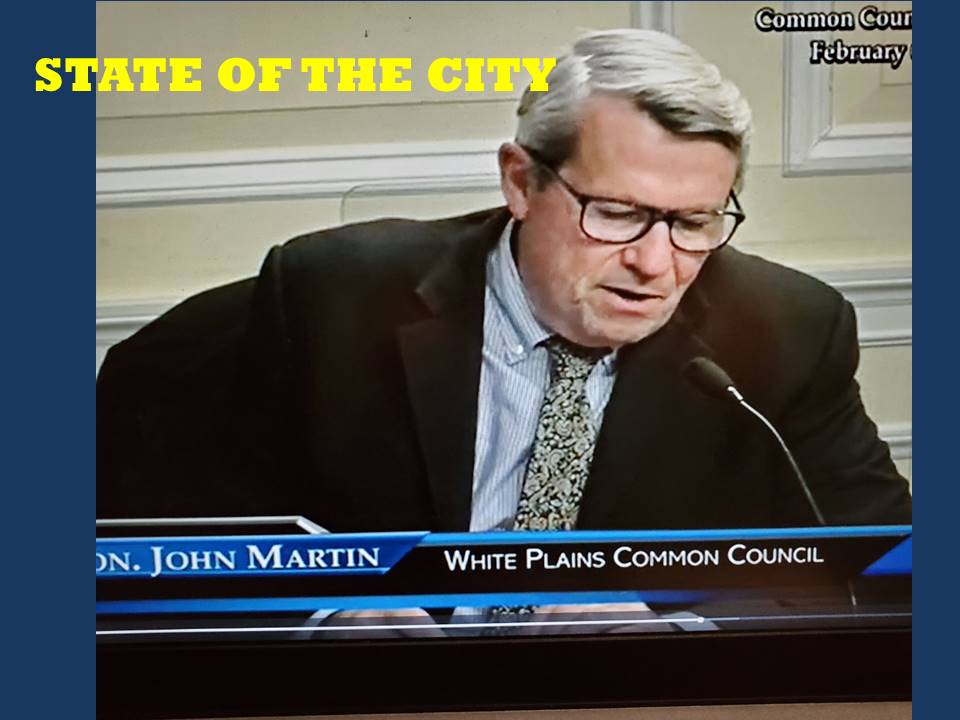
Gov Unveils Budget: $2.7 Billion Cut; Ed Aid Down 2.9% AIM Trimmed

Hits: 0

WPCNR ALBANY ROUNDS. From the Office of  Governor Andrew M. Cuomo. February 1, 2011:


Governor Andrew M. Cuomo today unveiled a proposed 2011-2012 Executive Budget that transforms the state budget process to conform to fiscal realities and eliminates a $10 billion dollar deficit without raising taxes or borrowing.
 
“New York is at a crossroads, and we must seize this opportunity, make hard choices and set our state on a new path toward prosperity,” Governor Cuomo said. “We simply cannot afford to keep spending at our current rate. Just like New York’s families and businesses have had to do, New York State must face economic reality. This budget achieves real, year-to-year savings while restructuring the way we manage our state government. This is the first step toward building a new New York.”
 
Our state spending has grown at over 5.7 percent per year over the last decade outstripping tax receipts (3.8 percent), personal income (3.7 percent), or inflation (2.4 percent). Not only do we spend too much, but we get too little in return. Our state is number one in spending on education and number 34 in results. We are number one in spending on healthcare and number 21 in results. The goal is to return fiscal responsibility to the state so that we may strengthen the economy and create jobs.
 
A key step in beginning to redesign and realign New York’s government is taking a look at the process used to create the budget.
 
First, we are redesigning how the budget is created. We are rejecting a system of automatic and unrealistic budget increases that, for years, has caused spending to skyrocket to unsustainable levels.


First, we are redesigning how the budget is created. We are rejecting a system of automatic and unrealistic budget increases that, for years, has caused spending to skyrocket to unsustainable levels.
 
Second, the process is not just a budget exercise, it must be a management exercise. That means that we cannot just keep throwing money at the problem. More funds does not mean better healthcare, or better schools or better programs. The changes must start with a look at the programs: do they work for the patient, the student, or the New Yorker.
 
Third, we must work together to fix the dismal financial situation we are in. That means bringing stakeholders to the table, making everyone part of the solution. From Medicaid to education to government reform to mandate relief, government cannot do this alone. That’s why the Governor appointed key working teams in Medicaid redesign and local mandate reform. He also created the SAGE commission on government efficiency to revamp the state government structure.
 
Fourth, in order to lead by example, we have made the largest percentage cuts in state operations reducing general fund spending by 10 percent. Though there is much pain to go around, this decision spares local governments the worst of the budget cuts.


$9 BILLION GAP CLOSED


Governor Cuomo’s Executive Budget proposal eliminates the projected 2011-12 gap with $8.9 billion in recurring spending actions, or nearly 90 percent of the total plan. The remainder of the gap is eliminated through $340 million of revenue enhancements, such as tax modernization to improve collections and lottery proposals; one new fee; and $805 million in non-recurring actions. This budget proposes gap-closing actions in almost every area of state spending and includes year-to-year reductions in the two largest drivers of State expenditures, Medicaid and School Aid.
 
State Operating Funds spending increases by 1 percent while all governmental funds spending declines by 2.7 percent. As the Governor has made clear, closing the gap means cutting growth in projected spending. Without actions, spending was projected to grow by 12 percent, due largely to provisions in state law mandating higher spending. This has become an unsustainable process. This budget is designed to reduce or eliminate the impact of many of these provisions and recalibrate spending to sustainable levels to help repair New York’s fiscal condition.
 
With these actions, the Executive Budget proposes


  • All Funds spending of $132.9 billion in the fiscal year that begins April 1, 2011, a decrease of 2.7 percent or $3.7 billion from 2010-11.
  • State Operating Funds spending of $88.1 billion, an increase of $900 million, or 1 percent. State Operating Funds exclude federal funds and long-term capital spending.
  • State Operating Funds is adjusted to reflect the loss of significant one-time federal funding received in 2010-11 to cover Medicaid costs normally paid from State funds and other actions, as well as other extraordinary expenses, the Executive Budget would increase State Operating Funds by 1 percent.


The actions proposed in the Executive Budget reduce the projected four-year deficit by 86 percent, from $64.6 billion to $9.2 billion. Following the Executive Budget, the projected budget gaps drop to $2.3 billion for 2012-13, $2.5 billion for 2013-14, and $4.4 billion for 2014-15.
 
Redesigning and Rightsizing State Government
 
Reducing the Cost of State Government. The Governor’s budget proposal reduces General Fund State Operations spending by 10 percent at State agencies. Commissioners and agency heads will be instructed to maximize savings in non-personal services. To achieve the rest of the savings, the Governor intends to seek a partnership with the State employee labor unions to seek savings in personal service spending in a way that causes the least disruption to State employees while ensuring the continued provision of necessary services for the citizens of New York. Management employees would also contribute to these savings.


If workforce saving cannot be accomplished jointly, as a last resort up to 9,800 layoffs would be necessary. Contracts covering the vast majority of State employees are up for renewal at the outset of the 2011-12 State fiscal year.
 
Merging and Consolidating State Agencies. The Executive Budget proposes to merge or consolidate 11 separate State entities into four agencies to streamline and eliminate duplicative bureaucracy, better align State responsibilities with need and improve services through superior coordination.


Proposals include merging the Banking and Insurance departments and the Consumer Protection Board into a new Department of Financial Regulation; merging the Department of Correctional Services and the Division of Parole into the new Department of Corrections and Community Supervision; consolidating the Office for the Prevention of Domestic Violence, the Office of Victim Services and the State Commission of Correction into the Division of Criminal Justice Services; and consolidating the New York State Foundation for Science, Technology and Innovation into the Empire State Development Corporation.
 
Reducing the Size of State Government. To help redesign and transform government, Governor Cuomo has created the Spending and Government Efficiency (SAGE) Commission. As part of this effort, Governor Cuomo has directed the Commission to make recommendations to reduce the number of agencies, authorities, and commissions by 20 percent over the long term. The SAGE Commission is directed to submit to the Governor a rightsizing plan to reduce the number of agencies by May 1, 2011. Under legislation proposed by the Governor, the Governor would then submit the rightsizing plan to the Legislature for action with the plan going into effect pursuant to a resolution of the Legislature.
 
Reducing Excess Capacity. The Governor’s Executive Budget proposes to reduce excess capacity in prisons, youth detention and mental hygiene facilities. Governor Cuomo will reduce excess capacity using rational processes and will propose to eliminate the statutory 12-month notification prior to closures.


Actions for youth and mental hygiene facilities will be taken following careful analysis of vacancy rates, service utilization, and other factors. For prisons, actions will be implemented pursuant to recommendations of a task force created by Executive Order to examine excess capacity and recommend specific prison closures of the enactment of the bill appropriating funds for State operations. If the task force does not recommend a sufficient plan of action, the Commissioner of Correctional Services would implement facility closures. Recognizing the impact of facility closures on host communities, the Executive Budget directs $100 million in economic development aid for affected areas.
 
Medicaid
 
With the Executive Budget, Governor Cuomo is advancing a new and inclusive approach that will bring New Yorkers into the process of developing proposals to provide critical health care services at lower costs. Following years of unsustainable growth, the Executive Budget reflects a year-to-year All Funds decrease of nearly $1 billion ($982 million), or two percent, in Medicaid spending in 2011-12.
 
Gap closing actions totaling $2.85 billion for 2011-12 will be advanced by the Medicaid Redesign Team. Established pursuant to Executive Order No. 5, the Medicaid Redesign Team’s 27 members will bring vast experience as health care providers, consumers and industry experts to address the challenge of refocusing our health care system to provide quality health care at lower costs.


The team, which also includes State legislators, is conducting a comprehensive review of New York’s Medicaid Program and is to report its findings and recommendations for cost reductions to the Governor by March 1, 2011 for consideration in the budget negotiation process.
 
In addition, these proposals will limit future Medicaid Program State Funds growth to the 10-year rolling average of the medical care component of the Consumer Price Index (currently four percent).
 
Education

 
Education in New York is financed primarily through a combination of State and local funding. Under current law, school aid was slated to grow at a rate of 13 percent in 2011-12. The Executive Budget proposes School Aid of $19.4 billion for the 2011-12 school year, a year-to-year reduction of $1.5 billion.


This represents a reduction of only 2.9 percent of the total operating expenditures projected to be made by school districts statewide during the 2010-11 school year, and 7.3 percent in State support. After these reductions, which represent $2.85 billion of gap-closing benefit for the State Fiscal Year, School Aid will continue to represent the largest State-supported program, accounting for 29 percent of General Fund spending.
 
To help achieve the Governor’s goal of encouraging efficiency and results, the Executive Budget allocates $250 million to be awarded on a competitive basis to school districts that demonstrate significant improvement in their student performance outcomes and another $250 million to be awarded on a competitive basis to school districts that undertake long-term structural changes which reduce costs and improve efficiency.
 
The Executive Budget’s School Aid proposal includes a $2.8 billion Gap Elimination Adjustment (GEA) for the 2011-12 school year that would help achieve a balanced budget through reductions in school aid on a progressive basis, accounting for each school district’s wealth, student need, administrative efficiency and residential property tax burden. The size of the GEA in part reflects the loss of $1.3 billion in one-time Federal funding provided by the American Recovery and Reinvestment Act of 2009 and the Education Jobs Fund of 2010. The GEA is partially offset by $305 million of growth in existing expense-based aids such as Building Aid, Transportation Aid and BOCES Aid.
 
The budget modifies transportation aid to encourage shared services and other cost-effective practices, and includes $696 million available from the Federal Race to the Top program, which is also designed to reward student performance. To limit school aid growth in future years, the budget proposes a new Gap Elimination Adjustment formula in permanent law that limits growth in the out-years based on the growth in personal income.
 
Regional Approach to Economic Development
 
The Executive Budget establishes 10 Regional Economic Development Councils, which will be chaired by Lieutenant Governor Robert Duffy, to create a more regionally-based approach to allocating economic development funding and to act as one-stop shops for all State-supported economic development and business assistance programs in each region.


Recognizing that strategies to revitalize different parts of the State depend upon numerous factors unique to each region and that the best ideas come from the people who live in those regions, Governor Cuomo is proposing a process that will include and engage local stakeholders in developing and executing sustainable long-term, regional economic development strategies.
 
The Executive Budget reprograms more than $340 million in existing economic development capital resources for major regional initiatives. Besides assisting communities affected by state facility closures, these funds will be used to provide more than $130 million for competitively determined economic development projects put forward by the Regional Councils, $100 million for the Metropolitan Transportation Authority’s capital program and $10 million towards the State’s existing commitment for the New York City Empowerment Zone. The Executive Budget also strengthens the Excelsior Jobs Program, which was created in 2010 to provide job creation and investment tax credit incentives to businesses in targeted industries.
 
Restructuring Aid to Encourage Results and Efficiency
 
One of the guiding principles of Governor Cuomo’s Executive Budget is that government must become more efficient and demand results. The budget proposal redirects formula and reimbursement aid into competitive grants in a number of areas and encourages community solutions rather than State mandates. These include:


  • Funding of $79 million for programs designed to encourage and reward local governments that consolidate or achieve efficiencies and performance improvements. That includes $35 million for Citizen Empowerment Tax Credits and Citizens Re-Organization Empowerment Grants and $40 million for the Local Government Performance and Efficiency Program. Of the Citizen Empowerment Tax Credit, at least half of the bonus the program provides to governments that consolidate – 15 percent of the combined entities’ tax levy – would have to be used toward local property tax relief.
  • Redirecting a portion of mental hygiene funding from State-operated services to community-based programs to improve the quality of care for this vulnerable population.
  • Converting a portion of current formula-based funding for agriculture and markets research, economic development, local government and juvenile detention programs into competitive, performance-based funding program.


Juvenile Justice Reform
 
Governor Cuomo is proposing significant reform of the State’s juvenile justice system and greater use of preventive services to generate better outcomes for children and family as well as significant savings. These reforms will redirect savings achieved by right-sizing State facilities and reducing unnecessary juvenile detention into more effective and lower cost community-based alternatives.
 
The budget invests savings achieved through the right-sizing of State youth facilities and local detention operations into community-based programs that better meet the needs of troubled youth.
 
Higher Education
 
To address the state’s fiscal challenges, the Executive Budget proposes reductions in the State University and City University systems. The Executive Budget reduces base per-student operating aid for community colleges by 10 percent and SUNY and CUNY operating aid by 10 percent, and eliminates the subsidy for SUNY’s three teaching hospitals in Syracuse, New York City and Long Island, which accounts for approximately eight percent of overall hospital revenue. The budget keeps TAP benefits at current year levels.
 
To help the State University of New York (SUNY) more efficiently manage, the Executive Budget includes legislation that would enable SUNY to streamline its procurement processes and provide SUNY greater flexibility to engage in public-private partnerships – flexibility the City University of New York already has.
 
The Executive Budget extends the Physician Loan Forgiveness Program, the McGee Nursing Faculty Scholarship Program and the Nursing Faculty Loan Forgiveness Program, which provide benefits to physicians who agree to practice in areas with physician shortages and to nurses who agree to serve as educators in nursing programs, respectively.
 
Comparable to reductions for SUNY and CUNY, the Executive Budget reduces unrestricted financial assistance to New York’s independent colleges and universities (Bundy Aid) by 10 percent, comparable to reductions proposed for SUNY and CUNY.
 
Assistance to Local Governments
 
New York has the highest local property tax rates in the country. Recognizing that reducing State mandates is critical to helping local governments lower their property tax rates, Governor Cuomo created the Mandate Relief Redesign Team by Executive Order. This team, made up of representatives of the Legislature, local government, education and private industry, will conduct a rigorous and comprehensive review of mandates imposed on school districts and other local taxing districts to identify mandates that are ineffective, unnecessary, outdated and duplicative in order to develop the best and most cost-effective ways to deliver mandated programs and services. The Team will report to the Governor on March 1, 2011.
 
The Executive Budget reduces Aid and Incentives for Municipalities (AIM) by two percent for cities, towns and villages outside New York City, which does not receive AIM in recognition of the city’s numerous alternative funding sources such as a local income tax. But the budget encourages efficiency and innovation through the competitive award of $79 million for local government consolidation and performance improvements that will help jump-start the Governor’s vision of partnering with local governments to deliver smarter and more effective services to New Yorkers at lower cost.
 
Environment
 
The Budget maintains the current year funding level of $134 million for programs supported by the Environmental Protection Fund. Appropriations include $10.8 million for solid waste programs, $52.7 million for parks and recreation and $70.5 million for open space programs.
 
Transportation
 
Despite the current fiscal crisis, Governor Cuomo’s Executive Budget continues prior year funding levels for the core transportation capital programs supported by the Dedicated Highway and Bridge Trust Fund, providing $501 million for highway and bridge construction, $363.1 million for the Consolidated Highway Improvement Program (CHIPS) and $39.7 million for the Marchiselli program for local governments, and $16.9 million for Amtrak service subsidies and additional rail capital investments.
 
The Executive Budget also provides a modest increase in cash operating support for the Metropolitan Transportation Authority (MTA) of $43 million, bringing total cash operating support to $3.8 billion, and for other transit systems of $2 million, bringing their combined total to $401 million.
 
Although the budget also provides $100 million to the MTA’s capital program from redirected economic development funds, it also proposes using $165 million of Metropolitan Mass Transportation Operating Assistance Account funds to pay debt services on State bonds previously issued for the MTA capital program that otherwise would be paid from the General Fund and transferring $35 million in MMTOA funds to the General Fund.

Posted in Uncategorized

3 Brokers Convicted of $140 Million Stock Fraud

Hits: 0

WPCNR POLICE GAZETTE. Specialto WPCNR from The Federal Bureau of Investigation. February 1, 2011:


PREET BHARARA, the United States Attorney for the Southern District of New York, and JANICE K. FEDARCYK, the Assistant Director-in-Charge of the New York Office of the Federal Bureau of Investigation (“FBI”), announced today that ARN WILSON, MICHAEL PASSARO, and ROBERT GRABOWSKI, three former senior brokers at Sky Capital, LLC, have pled guilty in Manhattan federal court in connection with a scheme to defraud investors through two successive securities broker-dealers—The Thornwater Company, L.P. (“Thornwater”), and Sky Capital, LLC. WILSON, 46, of Concord, North Carolina, and PASSARO, 47, of Delray Beach, Florida, pled guilty earlier Friday. GRABOWSKI, 43, of Staten Island, New York, who also served as President of Thornwater, previously pled guilty on January 25, 2011.


According to the four-count Superseding Indictment to which WILSON, PASSARO, and GRABOWSKI each pled guilty, and statements made during the guilty plea proceedings before U.S. District Judge PAUL A. CROTTY:


 |


From 1998 through 2006, GRABOWSKI, WILSON, and PASSARO participated in a scheme with ROSS MANDELL, STEPHEN SHEA, ADAM HARRINGTON, and others to defraud investors through material misrepresentations and omissions that induced people to invest in private placements and other purported securities investment opportunities.


In fact, investor funds were substantially used to enrich the defendants and others; to pay excessive, undisclosed commissions to brokers; and to pay off victims who had lost money through prior purported investment opportunities.


In connection with the scheme, the defendants, acting primarily from the offices of Thornwater and Sky Capital, LLC, in New York, New York, raised a total of approximately $140 million from investors. MANDELL allegedly controlled the operations of both broker-dealers.


As part of the scheme, brokers at Sky Capital, LLC, manipulated the market price of the stock of two affiliated entities, Sky Capital Holdings Ltd., and Sky Capital Enterprises Inc. (collectively “Sky Capital”). MANDELL, SHEA, and HARRINGTON allegedly made undisclosed payments to Sky Capital brokers, including WILSON, GRABOWSKI, and PASSARO, in exchange for their assistance with this aspect of the scheme.


* * *


GRABOWSKI, WILSON, and PASSARO each pled guilty to all four counts of the Superseding Indictment, which charged them with conspiracy and substantive securities, wire, and mail fraud crimes. They each face a maximum term of 65 years in prison, a fine of $5 million or twice the gross pecuniary gain or loss on each count, and a maximum of three years of supervised release.


The charges against MANDELL, SHEA, and HARRINGTON remain pending and are merely accusations. They are presumed innocent unless and until proven guilty.


* * *


Mr. BHARARA praised the investigative work of the Federal Bureau of Investigation. He thanked the U.S. Securities and Exchange Commission for its assistance in this matter.


This case was brought in coordination with President BARACK OBAMA’s Financial Fraud Enforcement Task Force, on which Mr. BHARARA serves as a Co-Chair of the Securities and Commodities Fraud Working Group. President OBAMA established the interagency Financial Fraud Enforcement Task Force to wage an aggressive, coordinated, and proactive effort to investigate and prosecute financial crimes. The task force includes representatives from a broad range of federal agencies, regulatory authorities, inspectors general, and state and local law enforcement who, working together, bring to bear a powerful array of criminal and civil enforcement resources. The task force is working to improve efforts across the federal executive branch, and with state and local partners, to investigate and prosecute significant financial crimes, ensure just and effective punishment for those who perpetrate financial crimes, combat discrimination in the lending and financial markets, and recover proceeds for victims of financial crimes.


Assistant U.S. Attorneys PABLO QUIÑONES and KATHERINE GOLDSTEIN are in charge of the prosecution.


Posted in Uncategorized

3 CONVICTED OF MURDER,ROBBERY, DRUG CONSPIRACY IN U.S. COURT IN WP

Hits: 0

WPCNR POLICE GAZETTE.  Special to WPCNR from the Federal Bureau of Investigation. January 31, 2011:


DAVON YOUNG, a/k/a “Burners,” THOMAS CHAMBLISS, a/k/a “TC,” and GREGORY FULLER, a/k/a “Murder,” a/k/a “Julio,” were all found guilty on Friday night following a four-week jury trial in White Plains federal court of murder, robbery, narcotics conspiracy, robbery conspiracy, firearms possession, and witness tampering offenses.


PREET BHARARA of the U.S. Attorney’s office announced today:  “These three defendants terrorized the citizens of Yonkers. They spread drugs and fear in their Yonkers neighborhood, and ultimately committed a brutal murder to further their drug trafficking business. With this conviction, a community can feel safer knowing that the defendants were held responsible for their crimes. This investigation and prosecution was a model of professionalism and cooperation among federal and local law enforcement.”


According to the evidence at trial before United States District Judge CATHY SEIBEL:


Between 2002 and 2008, the Elm Street Wolves, a violent drug trafficking crew, operated in the Nodine Hill Section of Southwest Yonkers. YOUNG, CHAMBLISS, and FULLER were all members of the Elm Street Wolves and sold copious amounts of crack to drug users in the vicinity of Elm Street.


In 2008, YOUNG, CHAMBLISS, and FULLER also committed a series of gun-point robberies of drug dealers in Yonkers, New York. First, on January 4, 2008, YOUNG and FULLER robbed a crack cocaine dealer with a shotgun inside an apartment at 16 Orchard Place in Yonkers and stole approximately $600 in drug proceeds. Second, on January 14, 2008, CHAMBLISS, FULLER, and a co-conspirator robbed another crack cocaine dealer using a semi-automatic handgun in a hallway inside 34 Prospect Street in Yonkers.


Finally, on January 14, 2008, YOUNG, CHAMBLISS, and FULLER robbed Tyrone Bergmann in the vicinity of 177 Helena Avenue, Yonkers, and in the course of that robbery, YOUNG shot and killed Bergmann. Subsequent to the murder, CHAMBLISS contacted an eyewitness to the murder from prison and attempted to persuade the witness not to speak to the Yonkers Police Department about the witness’s knowledge of Bergmann’s robbery and murder.


The defendants face maximum sentences of life imprisonment on the narcotics conspiracy count. YOUNG and CHAMBLISS both face a mandatory minimum sentence of 10 years’ imprisonment, while FULLER faces a mandatory minimum of 20 years’ imprisonment, on the narcotics conspiracy count.


In addition, FULLER faces a mandatory minimum sentence of 80 years’ imprisonment on the firearms charges, which must run consecutively to the narcotics conspiracy sentence, for a total mandatory minimum sentence of 100 years’ imprisonment. YOUNG faces a mandatory minimum consecutive sentence of 55 years’ imprisonment on the firearms charges, for a total mandatory minimum sentence of 65 years’ imprisonment. CHAMBLISS faces a mandatory minimum consecutive sentence of 30 years’ imprisonment on the firearms charges, for a total mandatory minimum sentence of 40 years’ imprisonment. YOUNG, CHAMBLISS, and FULLER are all scheduled to be sentenced in front of Judge SEIBEL on June 24, 2011 at 2:00 p.m.


U.S. Attorney BHARARA commended the FBI and the Yonkers Police Department for their outstanding efforts in this case.


Assistant United States Attorneys NICHOLAS L. McQUAID and MICHAEL Q. ENGLISH are in charge of the prosecution.

Posted in Uncategorized

Cuomo: Budget Process A Sham: Ed & Med Budgets Rise 13% By Formula

Hits: 0

WPCNR ALBANY ROUNDS. News & Comment By Governor Andrew M.Cuomo. Fromthe Governor’s Website. January 31, 2011:


As Attorney General, I uncovered schemes by lenders to exploit students, plots by insurance companies to defraud patients and attempts by Wall Street to deceive homebuyers.  In the past 30 days, as I have prepared the state’s budget, I was shocked to learn that the state’s budget process is a sham that mirrors the deceptive practices I fought to change in the private sector.
 
The budget process is a metaphor of Albany dysfunction:  special interests dominate the process with little transparency; programs continue with no accountability and the taxpayers get the exorbitant bills.  The greatest challenge – and opportunity – in this year’s difficult budget is to expose this chronic problem and reform it once and for all.  Here’s how it works.


This year it is widely accepted and often reported that the state has a $10 billion “deficit” (I myself have often repeated this number).  What does that mean?  It is the difference between state revenues and the state’s growth in spending in next year’s budget.  The next question is:  who is responsible for setting the growth in the state’s budget?  The answer is shockingly, no one. 


It is dictated by hundreds of rates and formulas that are marbleized throughout New York State laws that govern different programs – formulas that have been built into the law over decades, without regard to fiscal realities, performance or accountability.  The formulas operate year after year, generating liabilities that when totaled define the state’s budget growth.  The one thing the rates do well is increase year after year.  These formulas (predominantly in education and Medicaid funding) are often inserted into the law by pressure from well-connected special interests and lobbyists.  When a governor takes office, in many ways the die has already been cast.
 
Unbelievably, this year these rates and formulas in total call for a 13 percent increase in Medicaid and a 13 percent increase in education funding next year.  A 13 percent increase, in this economic climate, is wholly unrealistic.  Wouldn’t you like your salary or savings account to be based on a formula that gave you a 13 percent increase even though inflation was under 2 percent? The world doesn’t work that way – except in Albany.
 
Besides dictating numbers, this process frames the dialogue around the budget and biases the political discourse.  First, the rate of increase is rarely discussed.  The 13 percent increase this year is close to a state secret.  I spoke with numerous experienced Albany hands who had no idea the programs increased 13 percent.  In Albany speak, “deficit” means the amount needed to fund the 13 percent increase (as opposed to a normal rate of increase).  


For example, if one assumed these programs would increase at the rate of inflation (instead of 13 percent) the 10 billion dollar deficit is really a 1 billion dollar deficit.  A “cut” is then defined as anything less than a 13 percent increase.  By forcing the debate to start with such a large hike — the final budget ends up spending much more than the year before — even after the Governor attempts “cuts.”  For example, what is called a 7 percent cut in spending is actually a 6 percent increase over the prior year.
 
The expression used to explain this budget process is that the rates are in “permanent law,” and thus, cannot be changed.  “Permanent law” is a term to suggest differentiation from the state’s annual budget bills which are “temporary” as they only exist for one year.  This “permanent law” is really the way the “permanent government” of lobbyists, special interests and political friends manipulates the entire system and misleads the public in the process.
 
This is the system that has brought New York to the brink, and it is why we are the highest “spending-and-taxing” state in the nation with programs that fail to perform for the people.
 
This all must end. We need fundamental reform in the budget system that allows us to recalibrate spending this year to a sustainable level and replace “the special interest protection program” of automatic, unrealistic increases.   There is no such thing as “permanent” laws and they must all be reviewed and replaced or modified when necessary.  The state budget should increase based on objective, fair criteria such as the rate of inflation, enrollment, the Consumer Price Index (CPI) or personal income growth.  Programs should be reviewed for effectiveness and terminated if they are not working well.  Reimbursement rates should be negotiated to get the best bargain.  Performance should be measured.
 
Albany must give up its insistence on pleasing the special interests rather than serving the people. This is the real budget battle that I will wage this year. We must balance this year’s budget but we must also reform the process so that the cycle finally stops.  This year’s budget is not merely about the numbers. It’s about our values and our future.

Posted in Uncategorized

French School Consolidates new Schools Around Clubhouse. Unveils Plan

Hits: 0


WPCNR SOUTH END TIMES.By John F. Bailey. January 29, 2011 UPDATED WITH NEW PIX, DETAILS MIDNIGHT EST:


Over 200 persons (and counting as 2:30 P.M.) had toured a state-of-the-art, thorough presentation of the proposed new campus for the French American School of  New York at the former clubhouse of the Ridgway Country Club, purchased by the school one week ago.


The new French American School of New York Campus seen from Ridgway & Hathaway Lane


OVERVIEW of the Ridgeway Country Club Property,showing proposed school campus to the south side on Ridgeway Avenue and scool fields along Hotel Drive. The campus portion is shown enlarged below.


The Overhead View of Proposed FASNY Campus


Ridgeway Avenue is at top RIGHT–Street at LOWER RIGHT is Murchison Place. Propsed Buildings (in tan)to  be built are,top left is the ELEMENTARY SCHOOL; BUILDING in Center is the Middle Scool. The High Scool is to be housed in a renovated Ridgeway Clubhouse on Ridgeway. The building at bottomis a proposed gymnasium and theatre.


Attendees learned the school has changed its original plan where a school was to be placed on Bryant Avenue. The new plan, as reported first on White Plains Week, WPCNR’s weekly news roundup show Friday evening calls for 2 schools to be built behind the clubhouse, with the only entrance to the new campus on Ridgeway Avenue.


Three-quarters of the club grounds (darker gray and dark green shading), are planned to be given over to the city in an arrangement to be determined,as open space.


Mischa Zabotin,the school Chairman of the Board of Trustees fo the French American School of New York told WPCNR today the School planned on giving the property over to the city with no strings attached, and would not retain the rights to it for future expansion. Zabotin confirmed the school would pay no property taxes. He told WPCNR  the turning over the land to the city was a value in and of itself.


 Presentations through continuous video displays showed an analysis of how property values have increased near two private schools in White Plains, (Solomon-Schecter and the German School),and a unique traffic drive through video.


The striking series of traffic videos, shot during a school day between 7:30 AM and 8 AM showed a drive through shot through the windshield of an actual car showing real traffic on the key points around the property: Mamaroneck Avenue and Ridgeway; Ridgeway itself; North Street and Ridgeway.


This reporter noted moderate traffic especially on Ridgeway itself. This sequence appeared aimed at answering some critics of the proposal protests that traffic on Ridgeway is too heavy at the present time to handle the additional drop-offs planned between 7:30 AM and 8 AM.


No numbers were provided by the traffic expert attending videos, for how many buses and private cars would be dropping off at the school netween 7:30-8:A.M.  Dropoffs are planned to be contained entirely behind the clubhouse, avoiding backup out onto Ridgeway, and avoiding cut-throughs on Hotel Drive and Hathaway Lane.


A third lane on Ridgeway is planned to handle queing to be added to Ridgeway on the club property(paid-for by FASNY)on the club frontage out to the North South boundary of the club property approaching Murchison Place.


TIMETABLE:


Site Plan and SEQRA Scoping planned for this spring; Draft DEIS projected for this summer; decision on Special Permit Targeted for Summer 2012


THE OPEN HOUSE SCENE 12:15 PM SATURDAY


Posted in Uncategorized

Stealth Hike: NY Kills BASIC STAR EXEMPTION for the Rich

Hits: 0


WPCNR ALBANY ROUNDS By John F. Bailey. January 27, 2011: 


While President Barack Obama and congress argue over tax cuts for the wealthy expiring, New York State has already raised taxes on the wealthy beginning in July  before Governor Andrew Cuomo’s 2011-12 State Budget has even been presented. And,the state did last year.


Property owners in White Plains with Adjusted Gross Incomes topping $500,000 a year are receiving letters from the White Plains City Assessors Office this week telling them they will no longer be eligible for the BASIC STAR EXEMPTION that they have in previous been to deduct from their assessed value.


The letters are notifying these homeowners they are no longer will be able to deduct the BASIC STAR EXEMPTION from their assessments beginning in July, the start of the 2011-12 city fiscal year and their July tax bill will reflect it. The Assessors Office reports that residents have until February 24, to provide Federal and State tax documents proving they earn an adjusted gross income of  under $500,000.


This year the BASIC EXEMPTION was worth about $1,400 for each taxpayer “in real dollars,” City Assessor, Lloyd Tasch told WPCNR. Tasch said he, (and assessors across the state) were  notified one week ago by the New York State Department of Taxation and Finance of names of taxpayers in the city earning over $500,000 a year and his department has scrambled to get letters out to White Plains residents..  


The change removing $500,000-and-up taxpayers from the BASIC STAR EXEMPTION was made in the 2010-11 State Budget,passed by both houses of state legislature and signed by Governor David Paterson, Geoff Gloak, spokesman for the Office of Real Property Services, told WPCNR. Asked why this was not widely publicized when the budget was passed, Gloak said that taxpayers would not have had the opportunity to protest their tax bill until this year anyway.


Gloak told WPCNR, the change would mean some $40Million additional revenue to school districts across the state.


Tasch, the  White Plains City Assessor said the change would reduce the White Plains Tax Levy by 1%–and provide an additional $1.5 Million in property tax revenue to the district.

Posted in Uncategorized

Area Still Discriminates—But is Making Progress–Housing agency says

Hits: 0


WPCNR THE HOUSING NEWS. FROM WESTCHESTER RESIDENTIAL OPPORTUNITIES. JANUARY 25,2011:


Westchester Residential Opportnities has announced the results of undercover fair housing tests to find out what levels of discrimination exist in housing in the lower Hudson Valley. The conclusion: Racial discrimination still exists.


The report released Tuesday found that Westchester County has made significant improvements since the last round of testing in 2005. At that time, 46.5 percent of test conducted found discrimination in rental housing. In the current round of testing, the percentage was 17.54 percent. For Rockland County discrimination was found in 34.6 percent of the tests and in Putnam 14.3 percent.


The details of these findings were unveiled in a study released today by WRO, at a news conference with County Executive Robert P. Astorino.


WRO credited the improvements in Westchester to a strong partnership with Westchester Putnam Association of Realtors, Westchester County Department of Planning and the Westchester Human Rights Commissions’ shared focus on the education of Fair Housing laws.


WRO Executive Director Geoffrey Anderson stated, “We have a moral imperative to service people who are underserved and treated differently because of what they might look like, who they are married to, or their bilities.”


Astorino said, “Any discrimination is unacceptable. However, this report shows that through education we can significantly decrease the instances. Westchester County will continue to support efforts by WRO and other housing agencies to educate realtors, management companies and the public about these important issues.”


County Legislator Bill Burton, chair, Housing, Planning, & Operations Committee stated, “Education and eternal vigilance are the two interlocked components of combating discrimination. It’s great to have this report, and I commend WRO not only for producing it but for setting many of the conditions that led to it.”


The report, WRO Fair Housing Testing: Equal Housing in the Lower Hudson Valley, is based on an 18-month Fair Housing testing program funded by the U.S. Department of Housing and Urban Development (HUD). WRO conducted 111 “paired” audit tests in which minorities and whites presented themselves to various real estate offices, management companies and apartment complexes throughout 5 focus areas: Sound Shore, Peekskill and Mount Kisco in Westchester County and throughout Rockland and Putnam Counties. Any inferior or unequal treatment of the minority tester was assumed to be based on racial or ethnic discrimination.


Based on the test results, WRO has filed 4 complaints with HUD-certified agencies: three with the Rockland County Commission on Human Rights and one with the Westchester County Human Rights Commission. These included one real estate company in New City, two real estate companies in Pearl River and one management company in New Rochelle. Nine other real estate offices or management companies have received consultations and/or Fair Housing trainings from WRO staff regarding possible violations.

Posted in Uncategorized

Waiting for a Puff of Smoke from the Board of Ethics

Hits: 0

WPCNR BACKROOM BULLETIN. News & Comment By John F.Bailey. January 22, 2011: 


The City Board of Ethics apparently continues its review of  city Mayor Adam Bradley’s intercession on behalf of Walter C. Gabriele, owner of 19 Hall Avenue, to schedule a city meeting with Commissioners to discuss Mr. Gabriele’s purchase of property at the 19 Hall Avenue site.  Mr. Bradley lived in the 19 Hall Avenue location at the time.


Efforts by WPCNR to find out from City Hall and Mayor Bradley’s spokesperson, how  the eight-month investigation is going have so far not produced a “feel” for how close the Board of Ethics is to wrapping up the inquiry


Timing is critical. I’ll tell you why:


If a decision on whether the Mayor acted inappropriately in any aspect of the Gabriele matter is imminent,(and there is no indication that it is), the timing could be very timely for White Plains Mayoral possibilities like Benjamin Boykin,Tom Roach,(who would take over as Mayor until the Special election is held), and County Legislator Bill Ryan.


If the Board finds no misconduct or unethical behavior in the Gabriele matter, the investigation and its cost are moot.


If the Board decides the Mayor has committed an ethics breach in his dealings with Gabriele, AND that decision comes out in the next four weeks, the Common Council is handed a key weapon to remove the Mayor on a silver platter themselves through Section 30 of the City Charter.


They wouldn’t have to wait for Governor Andrew Cuomo.


Presently, the Council does not have that sixth vote (of Councilman Dennis Power), to remove the Mayor on the five convictions involving his wife.


Removal for Official Misconduct (that could be found by the Board of Ethics), neutralizes the embarrassment to the Common Council if the  Mayor’s appeal on the Attempted Assault Conviction and four other charges is eventually successful.


If the Official Misconduct is the grounds for dismissing, the domestic abuse matter is moot. The Mayor cannot sue the city for lost income, damages to reputation, or whatever.


The Board of Ethics is facing a very historic decision on this Gabriele matter.


Section 30 reads “The common council…may punish or expel a member for disorderly conduct…but no expulsion shall take place and no vacancy on account of absence be declared except by the vote of three-fourths(3/4) of all members of the council, or until the delinquent member has had an opportunity to be heard in his defense.”


The 6th vote of Councilman Dennis Power would have to be cast in favor of removing the Mayor. District Leader Zelle Andrews, a member of the City Democratic Party Nominating Committee has been reported by Ben Rubin in The Journal News  as saying Power should be denied an opportunity to run for reelection this fall if he does not swing his vote in line with his  other five Democratic Councilmen.


The timely combination of a Board of Ethics finding of a Mayoral ethical breach in the next 4 weeks and a Dennis Power vote change  would grease the skids allowing a swift ouster of the Mayor.


Such an ouster  would most likely be challenged in court, unless the Council furloughed him with pay, or one of the 42 District Leaders who called on the Mayor to step down, offered the Mayor a job, or Congesswoman Nita Lowey or Governor Andrew Cuomo offered the Mayor a job on a task force. The Mayor would probably challenge in court anyway.


If there is an ethics violation found by Feb 1 (or at the latest February 15) that finding could clear the way for the council to remove the Mayor under Section 30 of the Charter in the Feb 7 Common Council Meeting). They could give the Mayor his hearing in the week  of February 22 to 25, toss him, and declare the election in April.


Any Special Election for Mayor would have to be held in April because May 1 is six months before the next general election, which is November 1, (first Tuesday in November). If the toss is nade in May, the Special Election will be held in July.


Section 46-c of the White Plains City Charter, specifies that :


“If a vacancy shall occur in the officeof the Mayor, the Common Council shall initiate the proceedings available to it for the purpose of ordering a special election to be held witin 60 days of the occurrence of the (mayor’s) vacancy, unless such vacancy arises within six months of a general election…”


Of course, the Board of Ethics could decide well after February 15, that there has been an ethics violaton, and the Council could remove the Mayor in May giving Tom Roach, who would become interim Mayor, 5 months of incumbency to shore up his campaign for nomination to run in November, and prevent Boykin and Ryan from seizing the nomination.


An early decision for an ethics breach if that is the way the Board of Ethics is going to go,appears to favor candidates other than the interim Mayor (Roach), who would only  be Mayor for two months, instead of eight if the Board of Ethics decision is made within the next 4 weeks.


Of course, the judge sentencing Mr.Bradley could make this moot, by giving the Mayor jail time, which is unlikely, but you never know.


The timing of the Board of Ethicss finding is key—the way I figure it—they have to make it in favor of an ethics violation, in next month to call an election sometime in April, and the Council would be spared the downside risk of the appeal being overturned and the ousted Mayor suing the city.


Posted in Uncategorized

Move on Mayor Now? Or wait for Appeal(s) to Complete?

Hits: 0

WPCNR MR & MRS. & MS. WHITE PLAINS POLL. JANUARY 22, 2011:


The Common Council asked the Governor this week to act to remove its Mayor. The Democratic City Committee echoed the request by a  42-19-4 vote Tuesday evening. However Mayor Adam Bradley has vowed to appeal his conviction on attempted assault, Contempt, and three  charges of harassment against his wife.


If the Mayor is removed by the Common Councilby use of City Charter Section 30 (a possibility if the City Board of Ethics finds he acted inappropriately in setting a meeting for a property owner who became his(Bradley’s) landlord last June), or if the Governor removes him, the city may leave itself open for substantial monetary damages if Bradley’s appeal, or possible further appeal is successful.


Should the city and Governor wait launch? Or act  now to remove the Mayor, despite possible future liability? It should noted the governor may launch the state’s own investigation in determining whether to remove the Mayor. Vote in the poll at the right.

Posted in Uncategorized

COUNTY SALUTES THE UNDEFEATED STEPINAC CRUSADERS

Hits: 0

WPCNR PRESS BOX. From Archbishop Stepinac High School January 22, 2011:


Westchester County Executive Robert P. Astorino recently congratulated members of Archbishop Stepinac High School’s Crusaders football team for their 2010 undefeated, 12-0 championship season, a first in the school’s history.  They won both the Catholic High School League AA League title and the annual Turkey Bowl game against White Plains High School. Astorino presented the Crusaders with a proclamation, noting the achievement “brings pride not only to Stepinac but to all of Westchester County.” 


Left to right are Westchester Deputy County Executive Kevin J. Plunkett, a Stepinac alum (class of ’67); Stepinac quarterback Tyrell Goodman, named co-state player of the year by the NY State Sportswriters Association; Westchester County Executive Rob Astorino; NFL great Bob Hyland, also a Stepinac alum (class of ’63) and Coach Mike O’Donnell.


Posted in Uncategorized