Short Board Can Only Approve Resolutions for new $48 Million in Maintenance.

Hits: 0


WPCNR SCHOOL DAYS. By John F. Bailey. August 14, 2012:


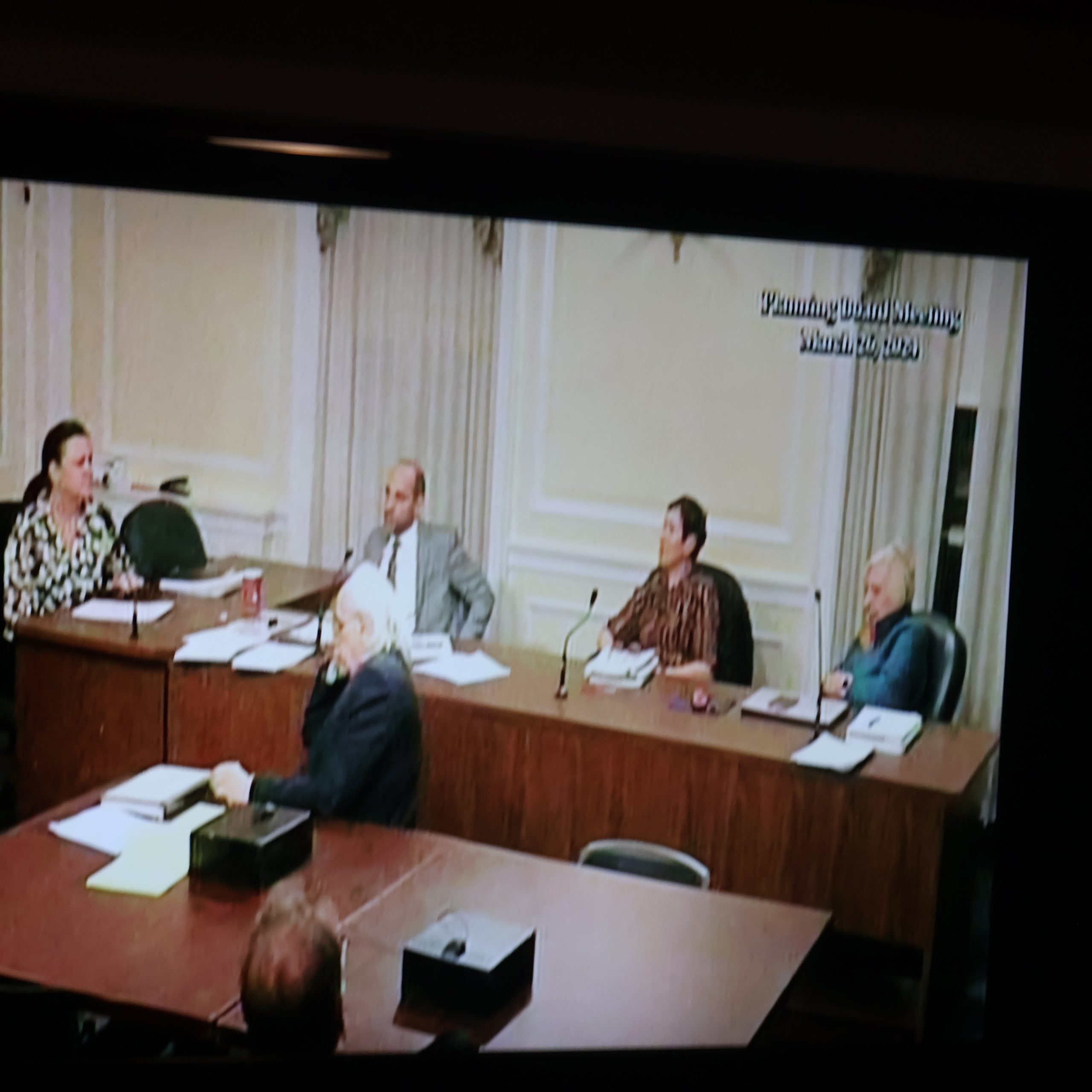
Only 4 members of the Board of Education were available for Monday evening’s meeting and a vote for financing $48 million in preventive and preservative maintenance on  9  district buildings could not be taken.  A super majority of 5 members needed to be present. Three Preliminary Resolutions showing the board was behind the new bonding, the second in 5 years were passed.


The vote for the Board to approve the financing will take place August 28. Should the board approve it as expected, a referendum will be held October 23 for the voters of the district to approve $48 million in financing.


The $48 Million bond, according to Assistant Superintendent for Business, Fred Seiler, would result in a .72% property tax increase, a $65 a year increase in the debt service.


The funds from the bonding, if approved will execute maintenance on Eastview School ($8.4 M including roof,masonry,windows, pipes, wi-fi); Ridgeway School ($3.3 Million for roof and Wi-Fi) George Washington School ( $3.2.M, for windows, wall repair and Wi-Fi); Mamaroneck Avenue School ($1.3 Million  for windows, media center and Wi-Fi)), Church Street School ($809,000 for air conditioning, Wi-Fi) Post Road School ($257,000 for Wi-Fi); Rochambeau ($2.9 Million, for HVAC, doors, electric, Wi-Fi) Education House ($492,000 for exterior, Wi-Fi) and the high school ($5.4 Million, $757,000 for corridor windows, HVAC/Gym $488,000, HVAC auditor, little theatre, $1.6 Million), Highlands ($7.2 Million, $2.1M for the roof, $1 M for restrooms, $1 M for Wi-Fi, $578,000 for fire alarms, clocks, Public addresss, security, $575,000, stage, $204,000,  electric, $520,000).


Seiler said work would begin on Eastview next summer, with the rest of the schools completed by the beginning of the 2015-16 school year.


He said it has not been decided yet whether to finance the full amount next year, or break it up into three offerings. He said that once the resolution was passed August 28, the project had to be sent to the State Education Department for approval.


Seiler said that this should hold the district for about 5 to 6 years before any more major maintenance expenditures requiring another capital project is required.


Seiler said all buildings would be equipped with Wi-Fi capability, but the cost of that had been whittled down to $4.2 Million from $6 Million, by paying for some of the equipment of operating budgets.

Posted in Uncategorized

City Starts Fiscal Year With 3% Sales Tax $$ Increase Slightly Ahead of Inflatio

Hits: 0

WPCNR QUILL & EYESHADE. From the New York State Department of Taxation and Finance. August 13, 2012:


White Plains experienced its highest July sales tax collection in a decade with sales tax receipts reaching $4,027,853.05 in July,  the first month of the city’s new fiscal year.


This is a gain of 3%  over last July, double the year to year inflation rate of 1.6% for all items in the New York-New Jersey metropolitan area.


Westchester County with 7 months gone by on its fiscal year is enjoying a modest 2.6% gain over last year’s sales tax collections, about $7 Million ahead of last year’s handle at $264,259,277,71.


The July inflation figures are due out tomorrow.

Posted in Uncategorized

Westchester’s Empire Casino in County Generates More Tax $$ Than Las Vegas and A

Hits: 0


WPCNR QUILL & EYESHADE. From Westchester County’s Empire City Casino. (Edited) August 8, 2012


Legalizing “anything goes” gambling houses across the state could ease New York revenue woes considerably, according figures released by the Empire City Casino this week.


The New York Gaming Association is a bigger winner with a bigger handle than Las Vegas and Atlantic City combined without the big time games Nevada and New Jersey have.


NYGA members generated $620 million in tax revenue for New York during the first six months of 2012. By comparison, the Las Vegas Strip and Atlantic City, despite having full-fledged casinos and more combined gaming activity than New York, only generated $329 million for Nevada and New Jersey. That’s approximately $291 million fewer dollars than New York Gaming Association members.


Westchester County’s Casino is doing very well, too. The Yonkers-based casino at Yonkers Raceway generates one third of all education dollars raised through New York State gaming in July.


Empire City Casino had another winning month in July according to recently released data available on the Division of Lottery’s website. Of the nine racetrack casinos statewide, Empire City Casino was responsible for generating $23 Million, nearly one-third of the $71 Million raised for education this month through gaming, in partnership with the New York State Lottery.


In addition to directly funding New York’s public schools, the monthly revenues continue to help keep property taxes down for all New Yorkers by offsetting the cost of education.


“One of every three dollars generated for education this month in gaming was done so right here at Empire City Casino,” said Tim Rooney, Jr. of Empire City. “We have produced well over $1.5 billion dollars for education since opening and we look forward to increasing that support for schools in Yonkers and across this state.”


With seven million visitors a year, Empire City Casino has become a favorite entertainment destination in the tri-state area.


In addition to more than 5,300 slot machines and electronic table games offering roulette, craps, baccarat and sic bo, Empire City has year-round live harness racing, two restaurants, and live entertainment six days a week which includes everything from karaoke, comedy nights, jazz & blues, salsa and great party bands. Their first ever summer concert series, which continues through August, has brought in top tier talent such as Spin Doctors, The Marshall Tucker Band, Pat Benatar & Neil Giraldo, and the Village People.


Currently undergoing a $50 Million expansion slated to open this fall, Empire City will be adding 30,000 square feet of additional gaming space, two new restaurants featuring nearly one hundred beers brewed right here in New York, dueling piano entertainment, antique bowling lanes, and much more.


“Empire City Casino continues to prove its worth and contribution to Yonkers and New York State,” said Mike Spano, Mayor, City of Yonkers. “These dollars generated by Empire City provide one of the greatest sources of educational funding for our students and their future, and we support the Casino’s ongoing development which will serve our schools and our City.”


To put these July revenues for education into perspective: Empire City Casino supported the equivalent of 1,977 teaching jobs in the month of July alone. New York State Department of Labor data indicates that the average monthly salary for elementary and secondary school teachers in New York is approximately $5, 800.


In addition, over $4.5 million was generated to support businesses connected to the racing industry, including family farms, the preservation of open space and over 35,000 jobs in the racing and breeding industry such as veterinarians, breeders, barn managers, trainers etc.


Statewide, the nine racetrack casinos that comprise the New York Gaming Association (NYGA) generated significant funding for education, contributing over $71 million in education aid and supporting over 12,000 teachers’ jobs in July alone.


Last month, NYGA announced that its members have generated nearly double the amount of tax revenue for their home state than Las Vegas Strip and Atlantic City casinos combined, according to statistics covering the first six months of 2012.

Posted in Uncategorized

Titan Air Selected to Sell Advertising at Westchester County Airport

Hits: 0


WPCNR AIR NEWS. From Titan Air. August 9, 2012:


Titan Air has won exclusive rights to represent Westchester County Airport.


The new contract, won competitively, began August 1, 2012. The advertising agreement covers all advertising within the airport, including state-of-the-art digital displays, which will provide news, weather and travel information as well as advertising. Titan will also be marketing new media in the airport, including a Digital Visitor Information Center that will allow passengers to reserve hotels, rent cars and make dinner reservations.


Other new initiatives that Titan will bring to the airport include work spaces designed to provide comfortable seating for passengers and charging stations for multiple electronic devices. These stations will feature high impact advertising and will be distributed throughout the airport.


This partnership marks the return of industry leaders, Michael Riley and Sam Hart, into the Airport advertising business. Messrs. Riley and Hart spent over a decade at the helm of Clear Channel’s Airport division, where they created and managed Airport and advertiser relationships with great results for all involved.


Titan will utilize its full sales team to sell local and national advertising into the airport. Local sales and marketing will be run from Titan’s New York headquarters, as well as from a new office in Westchester County.

“We look forward to working with Titan as it brings its technology savvy and innovative approaches to serving the traveling public at Westchester County Airport,” said County Executive Robert P. Astorino.


“We are delighted to begin our first Airport partnership,” said Don Allman, Titan’s President and CEO. “Titan’s proposition is centered around the ‘People in Transit’ philosophy, and Airports are a logical fit within our core competency. We have the best team in place to make a great success of this partnership.”


“Westchester County Airport delivers high-end consumers and the opportunity for high-end, high-impact media,” said Mike Riley, Senior Vice President and General Manager, Titan Air. “We’re looking forward to growing revenue for the Airport and delivering new ways of reaching consumers for our advertising partners.”


Westchester County Airport is served by seven airlines to 15 destinations in the United States. The airport has approximately 1.5 million passenger arrival and departures per year.

Posted in Uncategorized

Man Convicted of Assaults on Westchester Community College Grounds Sentenced

Hits: 0


WPCNR POLICE GAZETTE. From the Westchester County District Attorney’s Office. August 8, 2012:


Westchester County District Attorney Janet DiFiore announced Wednesday that Lawrence J. Bottone aka “Dr. Hunter” (DOB 05/21/58) of 64 Howard Avenue, Norwalk, Connecticut was sentenced today to 10 years in state prison on his May 2012 guilty plea to:


·        six counts of Assault in the Second Degree, class “D” Violent Felonies,


relating to his actions involving six victims.


The assaults occurred on the Westchester Community College campus in Valhalla.


The defendant lured his young victims posing as a professor and claiming to be “Dr. Hunter,” who falsely pretended to work at Westchester Community College (“WCC”) and the University of Bridgeport in Connecticut.


He offered his victims the opportunity to join a training program to prepare for employment with international security firms. If successfully completed the defendant promised that they would obtain high paying jobs.


Once they agreed to sign up and joined the program —which required them to sign a multiple-page contract and to give their oath of silence as to what would take place in the program—each of the victims were subjected to physical abuse. Some of the defendant’s methods included whippings and beatings while the victims were naked and covered with vegetable oil, and the painful insertion of pins and in one case a scalpel under fingernails.


In May of 2010 one of the defendant’s victims reported the defendant’s criminal conduct to police and an investigation was commenced by the Westchester County Police Department and the Westchester County District Attorney’s Office.


During the investigation Westchester County Police recovered documents related to the crimes and a duffel bag that contained a scalpel, needles, rope, strapping tape, vegetable oil, and dental instruments among other items.


The defendant admitted to whipping 2 victims with ropes, to placing pins underneath another victim’s fingernails, removing another victim’s fingernail with a cuticle cutter and inserting a scalpel underneath a fingernail of another victim.


The defendant was previously convicted of assault in the State of Connecticut in 1997 and as a result was sentenced as a second felony offender.


Second Deputy District Attorney Audrey Stone, Chief of the Special Prosecutions Division, and Assistant District Attorney Kenneth Borden of the Special Prosecutions Division prosecuted the case.

Posted in Uncategorized

County: Avoid Contact with Hudson River from Croton to NYC

Hits: 0

FLASH!


The Westchester County Department of Health is advising people who use the Hudson River waters for recreational purposes, namely swimmers, boaters, kayakers and windsurfers to avoid direct contact with the water from Croton Point Park and points south until further notice. 


Due to a break in a sewer line in Tarrytown, there is expected to be a controlled discharge of several million gallons of chlorinated raw sewage into the Hudson River at Sleepy Hollow overnight. The treated sewage bypass is needed so that repairs can be made to the sewer line. The sewer line break is also expected to result in chlorinated raw sewage being discharged into the Hudson River at Yonkers.


As a precautionary measure the Health Department is alerting people who use the waters of the Hudson River of the potential that there may be sewage effluent in the river from Croton Point Park and points south during the discharge period.  Be advised to curtail your activities, including swimming, boating, kayaking, windsurfing and bathing in these waters until further notice. Notifications are being made to marinas located on the Hudson River as well as to affected municipalities.

Posted in Uncategorized

Feiner: Upstaters Should Help Pay for TZB, to Lower Toll

Hits: 0

WPCNR TAPPAN ZEE NEWS & COMMENT From Paul Feiner, Greenburgh Town Supervisor. August 9, 2012:


During the past week I have expressed some concern about the projected toll hike on the TZ bridge. Many residents of Greenburgh, especially those on fixed incomes, have complained to me about the possibility of a $14 toll. I believe that the toll hikes will hurt local businesses/ restaurants  in Greenburgh (especially the river villages).  


I support the construction of a new bridge but think that the toll hike could be reduced if the costs were spread state-wide.  Almost $1 billion dollars in capital projects are listed on the NY State Thruway Authority website for the past seven years (under construction/completed) in the 3 upstate divisions—Albany, Syracuse and Buffalo. A few examples are listed below:


If the Thruway Authority is planning to only increase the tolls on the TZ bridge for the TZ bridge work, Westchester and Rockland residents who use the TZ bridge, Yonkers, New Rochelle barriers should  not be paying for upstate projects.


Albany;


(1) $1.5 Million: Thruway Bridge over Catskill Creek- Emergency Repairs


(2) $8.9 Million: Bridge Painting- 13 Bridges


(3) $99.7 Million: Exit 23-24- Pavement Repairs & Bridge Painting


Syracuse:


(1)  $127.9 Million: I-690 (Exit 39-40) including 4 Bridges- Pavement Reconstruction


(2) $8.3 Million: Thruway Bridge over Mohawk River and over Barge Canal


Buffalo:


(1) $6.0 Million: Grand Island Bridges- Steel Repairs


(2) $91.2 Million: Hamburg to Silver Creek- Pavement Repairs & Rehabilitation of 4 Bridges


(3) $9.3 Million: Pembroke to Depew- Pavement Resurfacing


(4) $3.0 Million: State Police Headquarters


To again emphasize that this only represents the most recent 7 years- the Thruway has been around since the mid 1950’s!


Note that every time residents of Westchester and Rockland Counties go thru the Tappan Zee Bridge, Yonkers and New Rochelle Toll Barriers, we are paying for these upstate projects!

Posted in Uncategorized

More Officials Buy In to the New Tappan Zee Bridge

Hits: 0

WPCNR TAPPAN ZEE NEWS. From the Office of Governor Andrew M. Cuomo. August 8, 2012: 


 Governor Andrew Cuomo announced additional support from state legislators  Rohert Castelli and Sandy Galef and town supervisors in Rockland and Westchester Counties for current plans to build a new bridge to replace the Tappan Zee, including Assemblyman Robert J. Castelli (R, C – Goldens Bridge). This is in addition to support earlier this week from former Westchester County Executives Andy Spano and Alfred Delbello.


“Support for a new bridge to replace the obsolete Tappan Zee continues to grow as we meet with Hudson Valley residents to discuss why building a new crossing is the smartest option,” Governor Cuomo said. “The new bridge will be safer, less congested and ready to handle mass transit, and the project will create much-needed jobs in the region.”


“The facts are clear regarding the Tappan Zee: It makes no sense to continue to spend hundreds of millions of tollpayer dollars on a bridge that does not meet our needs now or in the future,” Castelli said. “Instead, it is time to proceed with Governor Cuomo’s plan to build a new bridge that will serve our region’s transportation needs into the next century. “We have talked about this for fifteen years; the time for talking is over, it’s time to build the bridge.”


“There is no simple solution to our region’s ‘Tappan Zee problem.’ Either we spend billions to refurbish the existing bridge, or spend a little more to build a new, transit-ready crossing designed to handle more vehicles in a safer driving environment. The smart choice is obvious, and I support the plan to build a new bridge now,” said Assemblywoman Sandy Galef.


“The best way to provide relief to Tappan Zee commuters is to move forward now with Governor’s Cuomo plan to build a new bridge that will have commuter bus lanes from the day it opens and will be built to accommodate whatever mass transit options our communities decide to pursue in future years. This project will also create 45,000 much needed local jobs that would have great positive impact on our regional economy,” said Assemblywoman Shelley Mayer.


“The smart and responsible option is to make a long-term investment by building a new, transit-ready bridge that will offer better service for bus commuters right away. Continuing to invest in the existing, obsolete bridge will be almost as costly and will not address the problems that Rockland County commuters face every day,” said Ramapo Town Supervisor Christopher St. Lawrence.


“Governor Cuomo’s plan to replace the Tappan Zee will give drivers a less congested and safer way to cross the Hudson, and will support an estimated 45,000 much-needed jobs in our region. No other alternative offers these benefits for our communities,” said Clarkstown Town Supervisor Alex Gromack.


“A thoughtful look at the options for the Tappan Zee makes it obvious that Governor’s Cuomo’s plan is the best way to proceed. It would be irresponsible to continue to spend hundreds of millions to maintain an obsolete bridge when we can make a wise long-term investment in a new, safer, transit-ready crossing,” said Haverstraw Town Supervisor Howard T. Phillips.


New Yorkers can see toll options and submit questions and concerns about the project by visiting www.NewNYBridge.com or calling the toll free number, 855-TZBRIDGE. The website also features videos of the community meetings and a database of all documents created over the last 10 years on the Tappan Zee Bridge. A Twitter account has been set up for the Tappan Zee project, and New Yorkers can receive updates by following @NewNYBridge.


Posted in Uncategorized

Hearings Set 4 Rec Zone; FASNY. Campus Office Mix Use OK’d. Habel May Return

Hits: 0

WPCNR COMMON COUNCIL CHRONICLE EXAMINER. By John F. Bailey. August6, 2012. UPDATED AUGUST 8, 2012 UPDATED AUGUST 8, 2012 11:20 A.M. E.D.T.UPDATED AUGUST 8, 5 P.M. E.D.T.:


Viewers observing the Monday evening Common Council meeting saw the city take key steps forward into the development  (or lack thereof)  for some of the last remaining private tracts to develop in White Plains.


Viewers also saw Councilman David Buchwald thank former Commissioner of Planning Susan Habel for her service,(who retired Friday without a successor being named), indicating that the city may be calling on Ms. Habel’s  expertise in the future without elaborating.


Mr. Buchwald took the time, at the end of the consent agenda  segment to praise Ms. Habel’s service to the city:


“I want to note that in our agenda .this is the last item in our agenda before we get to the public hearings, and it is the last item to which the signature of our just-retired Commissioner of Planning,Susan Habel, has put her name. And, I want to thank her for her work on this particular issue (solar energy) and for her contributions over a very distinguished career here in the city of White Plains. She’s a resident of the city,dedicated to it, in many ways she will continue to enjoy the fruits of her labor on behalf of the city. On behalf  of the entire Common Council, I want to extend our gratitude to  her and I wish her best of luck in her continued enjoyment of her semi-retirement. We’re not letting her completely go because we all hope that she’ll continue to provide some institutional knowledge and perspective on things that are going on in the city. But I did want to thank her again for her years in the Planning Department and prior to that.”


The Council set the stage for opening up the office campuses along Westchester Avenue for new development to supplement the campuns office properties  currently suffering from a high vacancy rate.


They approved a Campus Office District mixed-use zoning change allowing housing, scientific uses, research and limited retail use. Each property owner would be required to submit a unique “overlay” master plan for their properties subject to approval by the Common Council. Mayor Thomas Roach told the public “we already have committals,” without elaborating.


The Common Council approved hearings to receive public input on the Open Space Recreational Ordinance  setting requirements for privately owned golf course properties in the city for September 4. Councilpersons urged residents to come out and make their views known on the ordinance.  Gwo consecuive public hearings on the French American School of New York project to build a school campus  on the former Ridgeway Country Club were also approved for September 19, 7 PM and October 17, also at 7 PM.


Councilman Benjamin Boykin said the setting of the public hearing was merely accepting the Draft Environmental Impact Statement as complete, and “didn’t necessarily mean we (the council) agreed with them.” Boykin said now it was the public’s turn to comment and that the council would hear input on the project “for as long as it takes,” and would be thorough.


The council also approved the first step in the ongoing Winbrook Revitalization Project, approving a 10-story building,housing an Educ ation Center , which will be built first, however funding is only available for the first floor housing the education center on the first floor. The city is funding $1.5 Million of the project and the Housing and Urban Development, $3,500,000 as of this spring.


Wednesday after the Housing and Urban Development press office in New York confirmed to WPCNR, HUD is still funding the $3.5 Million “only for the education facility,” the spokesman explained.


During the hearing on the Winbrook project, William Null, the attorney for the enterprise said in response to a question by Council President Beth Smayda that plans for subsequent buildings in the project would be submitted on a project-by-project basis and built individually according to the individual’s financial model, and not as part of a connected project. Design, Null said would depend on whom the Housing Authority was working with to develop each building in the future, so, Null suggested that it was somewhat impossible to present the kind of comprehensive plan that Smayda suggested.


Smayda asked about the amount key finding agencies the Housing Authority was providing. The architect for the project stepped up to say that the Authority had not applied for the financing yet, because it needed tonight’s approval to do so and would be applying to state agencies for tax credit financing after approval.


The Housing and Urban Development agency in Washington told the authority in the spring of this year, its funds were no longer available for financing the entire project.TO read that story click on http://whiteplainscnr.com/article9115.html


Smayda expressed concern about a future environmental review of the effect on the infrastructure of the city since the Environmental Officer of the City had requested one. Null said that since the entire project was replacing what was already there, it was the Housing Authority position that a new environmental review was not necessary, but the Authority was willing to consider it.


It also became clear that the first building setting the tone for the project would be made up exclusively of present Winbrook residents. Milagros Lecuona, the Councilwoman, emphasized that she wanted the  project (as it was originally envisioned) to be mixed income. Mack Carter, Executive Director of the Housing Authority stepped up and said that the first building is now being financed hopefully as a tax credit project which required that the building be low and moderate income housing only similar to present Winbrook Housing tenant income levels and that mixed income levels could not be accommodated, though incomes would vary in the building based on Winbrook tenants moving in (when the residential portion of  the building is completed, which still has to be financed).


Smayda asked if co-op or condominium ownership would be available. Null said that they are not prohibited from that, but it is not being considered at this time.


Outdoor dining was approved for Esposito’s Restaurant on a rooftop deck, and outdoor patio dining was approved for Noodles Restaurant.


The Council authorized the purchase of a third one-man garbage truck for $250,000 and 100,000 containers to go with the truck. Councilman John Martin and Council President Beth Smayda lauded the one-arm, one-man truck system of collecting garbage as a money-saving long-term move.


However to date the Common Council and the Department of Public Works have not said how much savings the new truck system in effect with the first in-service truck have achieved in dollars or how long it will be before the trucks payout in savings long-term. There has been talk about saving costs on labor but how that saving is achieved (other than reassignment of personnel) has not been defined. The truck in service has mainly been a “neat” thing.


The Council also voted to purchase 200 Westchester Avenue  for $500,000.

Posted in Uncategorized

The Bombing of Hirosima Took Place 67 Years ago Today

Hits: 0


WPCNR MILESTONES. August 6, 2012:


Sixty-seven years ago, the Enola Gay, a single American bomber dropped an Atomic bomb on the city of Hiroshima, Japan. The terrible effects of that single bomb are a horror that has never been repeated


A second bomber, Bock’s Car on August 9, dropped a similar bomb on Nagasaki. Unknown thousands of Japanese citizens’ lives were vaporized, burned,  and maimed and two cities leveled to the ground in an instant in both bombings.


To grasp what one atomic bomb did to Nagasaki. Readers may see the photographs Japanese photographer Yosuki Yamato took of the aftermath of Nagasaki the day it happened at http://www.exploratorium.edu/nagasaki/photos.html#journey/63.jpg


The decision to drop the bombs was made after the United States, Great Britain and the Republic of China demanded Japan  surrender in the Potsdam Declaration on July 26 or face  “prompt and utter destruction”. The Japanese government did not.


The United States deployed two nuclear weapons  dropping one on Hiroshimi today, 67 years ago and one on Nagasaki on August 9.


Over four months the bombs resulted in the deaths of   90,000–166,000 people in Hiroshima and 60,000–80,000 in Nagasaki, half dying the day the bombs fell.


The Hiroshima prefecture health department estimated that, of the people who died on the day of the explosion, 60% died from flash or flame burns, 30% from falling debris and 10% from other causes. During the following months, large numbers died from the effect of burns, radiation sickness, and other injuries, compounded by illness. In a US estimate of the total immediate and short term cause of death, 15–20% died from radiation sickness, 20–30% from burns, and 50–60% from other injuries, compounded by illness. In both cities, most of the dead were civilians, although Hiroshima had a sizeable garrison.


The horror of those two bombings and the aftermath, the injuries have created  an effort and reluctance on the part of nuclear-armed powers to avoid any nuclear attacks since that date.


Within a few days of those bombings, Japan surrendered unconditionally, officially ending World War II.


The decision to use the bombs by the United States has long been debated. A dialogue on what the bombs did, why the decision was made was collected in 1995, the fiftieth year since the bombings. It is available at http://www.exploratorium.edu/nagasaki/commentary/decision.html

Posted in Uncategorized