BNP PARIBAS — WORLD’S 4TH LARGEST FINANCIAL INSTITUTION — SENTENCED FOR CONSIPIRING TO VIOLATE INTERNATIONAL EMERGENCY ECONOMIC POWERS ACT AND TRADING WITH THE ENEMY ACT

Hits: 132

WPCNR FBI WIRE. From the U.S. Department of Justice. May 3, 2015:

BNP Paribas S.A. (BNPP), a global financial institution headquartered in Paris, was sentenced today for conspiring to violate the International Emergency Economic Powers Act (IEEPA) and the Trading with the Enemy Act (TWEA) by processing billions of dollars of transactions through the U.S. financial system on behalf of Sudanese, Iranian and Cuban entities subject to U.S. economic sanctions.

BNPP was sentenced to a five-year term of probation, and ordered to forfeit $8,833,600,000 to the United States and to pay a $140,000,000 fine.  Friday’s sentencing is the first time a financial institution has been convicted and sentenced for violations of U.S. economic sanctions, and the total financial penalty—including the forfeiture and criminal fine—is the largest financial penalty ever imposed in a criminal case.

(Editor’s Note: This is the same institution that paid a $5 Billion fine to New York State in a related New York-prosecuted case that was paid into the New York State General Fund, and allowed the state to dedicate about $1.5 Billion in increased school, aid,  and additional money for New York State infrastructure aid, New York State Thruway aid to keep tolls down.)

Assistant Attorney General Leslie R. Caldwell of the Justice Department’s Criminal Division, U.S. Attorney Preet Bharara of the Southern District of New York, Assistant Director in Charge Diego Rodriguez of the FBI’s New York Field Office and Chief Richard Weber of the Internal Revenue Service-Criminal Investigation (IRS-CI) made the announcement.  U.S. District Court Judge Lorna G. Schofield of the Southern District of New York imposed the sentence.

“BNP Paribas flouted U.S. sanctions laws to an unprecedented extreme, concealed its tracks, and then chose not to fully cooperate with U.S. law enforcement, leading to a criminal guilty plea and nearly $9 billion penalty” said Assistant Attorney General Caldwell.

“BNPP deliberately disregarded the law and provided rogue nations, and Sudan in particular, with vital access to the global financial system, helping that country’s lawless government to harbor and support terrorists and to persecute its own people.  Today’s sentence demonstrates that financial institutions will be punished severely but appropriately for violating sanctions laws and risking our national security interests.”

“BNPP, the world’s fourth largest bank, has now been sentenced to pay a record penalty of almost $9 billion for sanctions violations that unlawfully opened the U.S. financial markets to Sudan, Iran, and Cuba,” said U.S. Attorney Bharara.  “BNPP provided access to billions of dollars to these sanctioned countries, and did so deliberately and secretly, in ways designed to evade detection by the U.S. authorities.  The sentence imposed today is appropriate for BNPP’s years-long and wide-ranging criminal conduct.”

“The sentencing of BNP Paribas Bank and the $9 Billion monetary penalty should sound the alarm to international financial institutions thinking of perpetrating these crimes,” said Chief Weber.  “The ability of IRS-CI and our partners to expose blatant violations of U.S. embargos and sanctions has changed the way financial matters are handled worldwide. We will continue to use our financial expertise to uncover these types of violations, as well as methodical and deliberate actions to conceal prohibited transactions from U.S. regulators and law enforcement.”

In connection with its guilty plea on July 9, 2014, BNPP admitted that from at least 2004 through 2012, it knowingly and willfully moved over $8.8 billion through the U.S. financial system on behalf of Sudanese, Iranian and Cuban sanctioned entities, in violation of U.S. economic sanctions.

The majority of illegal payments were made on behalf of sanctioned entities in Sudan, which was subject to U.S. embargo based on the Sudanese government’s role in facilitating terrorism and committing human rights abuses.

BNPP processed approximately $6.4 billion through the United States on behalf of Sudanese sanctioned entities from July 2006 through June 2007, including approximately $4 billion on behalf of a financial institution owned by the government of Sudan, even as internal emails showed BNPP employees expressing concern about the bank’s assisting the Sudanese government in light of its role in supporting international terrorism and committing human rights abuses during the same time period.  Indeed, in March 2007, a senior compliance officer at BNPP wrote to other high-level BNPP compliance and legal employees reminding them that certain Sudanese banks with which BNPP dealt “play a pivotal part in the support of the Sudanese government which . . . has hosted Osama Bin Laden and refuses the United Nations intervention in Darfur.”

Similarly, from October 2004 through early 2010, BNPP knowingly and willfully processed approximately $1.74 billion on behalf of Cuban sanctioned entities.  BNPP admitted that it continued to do U.S. dollar business with Cuba long after it was clear that such business was illegal.  BNPP further admitted that its conduct with regard to the Cuban embargo was both “cavalier” and “criminal.”

BNPP also engaged in more than $650 million of transactions involving entities tied to Iran, and this conduct continued into 2012—nearly two years after the bank had commenced an internal investigation into its sanctions compliance and pledged to cooperate with the government.  The illicit Iranian transactions included transactions for a petroleum company based in Dubai that was effectively a front for an Iranian petroleum company and an Iranian oil company.

In accepting BNPP’s guilty plea, Judge Schofield stated that BNPP’s actions “not only flouted U.S. foreign policy but also provided support to governments that threaten both our regional and national security and, in the case of Sudan, a government that has committed flagrant human rights abuses and has known links to terrorism.”  Judge Schofield further stated that the forfeiture of over $8 billion will “surely have a deterrent effect on others that may be tempted to engage in similar conduct, all of whom should be aware that no financial institution is immune from the rule of law.”

The Justice Department is exploring ways to use the forfeited funds to compensate individuals who may have been harmed by the sanctioned regimes of Sudan, Iran and Cuba.  As a preliminary step in this process, the Justice Department is inviting such individuals or their representatives to provide information describing the nature and value of the harm they suffered.  Beginning today (May 1, 2015), interested persons can learn more about this process and submit their information at www.usvbnpp.com, or call 888-272-5632 (within North America) or 317-324-0382 (internationally).

In addition to its federal criminal conviction, BNPP pleaded guilty in New York State Supreme Court to falsifying business records and conspiring to falsify business records.  BNPP also agreed to a cease and desist order and to pay a civil monetary penalty of $508 million to the Board of Governors of the Federal Reserve System.  The New York State Department of Financial Services announced that BNPP agreed to, among other things, terminate or separate from the bank 13 employees, including the Group Chief Operating Officer and other senior executives; suspend U.S. dollar clearing operations through its New York Branch and other affiliates for one year for business lines on which the misconduct centered; extend for two years a monitorship put in place in 2013; and pay a monetary penalty of $2.24 billion.  In satisfying its criminal forfeiture penalty, BNPP will receive credit for payments it made in connection with its resolution of these related state and regulatory matters.  The Treasury Department’s Office of Foreign Assets Control also levied a fine of $963 million, which will be satisfied by payments made to the Justice Department.

This case was investigated by the IRS-CI’s Washington Field Office and FBI’s New York Field Office.  This case was prosecuted by Deputy Chief Craig Timm and Trial Attorney Jennifer E. Ambuehl of the Criminal Division’s Asset Forfeiture and Money Laundering Section and Assistant U.S. Attorneys Andrew D. Goldstein, Martin S. Bell, Christine I. Magdo and Micah W.J. Smith of the Southern District of New York.

The New York County District Attorney’s Office conducted its own investigation alongside the Justice Department in this case.  The Justice Department expressed its gratitude to the Board of Governors of the Federal Reserve, the Federal Reserve Bank of New York, the New York State Department of Financial Services and the Treasury Department’s Office of Foreign Assets Control for their assistance with this matter.

Posted in Uncategorized

Manhattan U.S. Attorney Announces $60 Million Civil Fraud Settlement with Accredo Health Group Over Drug Kickback Arrrangement

Hits: 89

WPCNR FBI WIRE. From the United States Attorney, Southern District of New York. May 2, 10015

 U.S. Also Elects to Intervene Against Novartis Pharmaceuticals Corporation in Claims that Novartis Gave Kickbacks to Accredo in Exchange for Increased Refills of Exjade Drug, and Understated Exjade’s Serious and Potentially Life-Threatening Side Effects to Patients

Accredo Admits to Conduct Regarding Its Distribution of Exjade

Preet Bharara, the United States Attorney for the Southern District of New York, Diego Rodriguez, the Assistant Director-in-Charge of the New York Office of the Federal Bureau of Investigation (“FBI”), and Scott J. Lampert, Special Agent in Charge of the U.S. Department of Health and Human Services, Office of Inspector General’s New York Regional Office (“HHS-OIG”) announced yesterday a $60 million settlement of a civil fraud lawsuit against ACCREDO HEALTH GROUP (“ACCREDO”) concerning a kickback scheme with NOVARTIS Pharmaceuticals Corp. (“NOVARTIS”) involving the prescription drug Exjade. In addition to filing a Notice of Intervention against and Stipulation and Order of Settlement and Dismissal with ACCREDO, the Government has elected to intervene against NOVARTIS over the same conduct previously filed by a whistleblower.

As alleged in the lawsuit, NOVARTIS provided kickbacks, in the form of patient referrals and related benefits, to ACCREDO in exchange for ACCREDO’s recommending refills to Exjade patients. In connection with the scheme, the defendants understated the serious and potentially life-threatening side effects of Exjade when promoting the drug’s benefits to patients.

Simultaneous with the filing of the Notice of Intervention against ACCREDO, U.S. District Judge Colleen McMahon approved a settlement to resolve the United States’ claims against ACCREDO.

Under that settlement, ACCREDO (i) agrees to pay $45,060,598.87 to the United States; (ii) admits numerous facts concerning its relationship with NOVARTIS; and (iii) agrees to cooperate with the United States in the prosecution of the claims against NOVARTIS.

ACCREDO has also agreed in principle to pay $14,939,401.13 to a group of states to settle the states’ claims based on the same alleged conduct. In January 2014, the Government entered into a multimillion dollar settlement with another codefendant, Bioscrip Pharmacy, for similar conduct.

Manhattan U.S. Attorney Preet Bharara said: “This is the second substantial settlement with an alleged co-conspirator of Novartis in connection with a scheme that used the lure of kickbacks to co-opt a healthcare provider’s independence. As alleged in our intervention papers, Novartis used Accredo to promote refills under the guise of purported ‘counseling’ and ‘education,’ and in doing so, Novartis caused patients to receive one-sided advice that did not discuss Exjade’s serious, potentially life-threatening, side effects. This settlement with Accredo restores to the public fisc tens of millions of dollars paid out for kickback-tainted drugs.”

FBI Assistant Director-in-Charge Diego Rodriguez said: “Drug companies are required by law to provide safe and effective medications for the sole purpose of healing the ailments of their patients. Likewise, pharmaceutical companies are prohibited from employing tactics that could improperly influence a provider’s decisions. Through its relationship with Novartis, Accredo Health Group acted in its own best interest. It set aside the needs of its patients and intentionally adjusted its practices in order to conceal information from consumers. This scheme also placed a hefty price tag on our Medicare and Medicaid programs, causing more than tens of millions of dollars to be spent on Exjade shipments. Today’s settlement demonstrates the government’s commitment to protect our citizens from this type of fraud and ensure everyone receives the quality medical care they need.”

HHS-OIG Special Agent in Charge Scott J. Lampert said: “The conduct displayed by Accredo compromised patient care and undermined the integrity of our nation’s health care programs. This settlement should serve as a warning to all providers that choose to let financial inducements cloud their medical judgment.”

As alleged in the Government’s second amended Complaint and in the relator’s third amended Complaint, NOVARTIS markets and manufactures Exjade, an iron chelation drug approved for use by patients who have iron overload resulting from blood transfusions. For approximately five years until 2012, NOVARTIS orchestrated a scheme whereby it offered kickbacks, in the form of patient referrals and other benefits to certain specialty pharmacies, including ACCREDO and Bioscrip, in exchange for increasing their Exjade refills through biased recommendations to patients. ACCREDO and Bioscrip were part of a NOVARTIS-created exclusive distribution network for Exjade called the Exjade Patient Assistance and Support Services (“EPASS”), and through this network NOVARTIS was able to refer Exjade patients to particular pharmacies within the network.

In particular, the Government has elected to intervene in the relator’s third amended Complaint with respect to its allegations concerning NOVARTIS and ACCREDO’s participation in an Exjade patient referral allocation scheme through which NOVARTIS gave ACCREDO additional patient referrals and related benefits in return for ACCREDO achieving the highest refill percentage for Exjade patients as compared to the refill percentages among Exjade patients at the other two pharmacies in the closed distribution network that NOVARTIS had established for Exjade.

As part of its settlement with the United States, ACCREDO made extensive factual admissions, including that:

  • ACCREDO was one of three specialty pharmacies permitted to dispense Exjade as part of EPASS, NOVARTIS’s distribution network for Exjade.
  • NOVARTIS controlled how many of the patient prescriptions received by EPASS were distributed among ACCREDO and the other two EPASS pharmacies.
  • In June 2007, NOVARTIS began issuing monthly “Exjade Scorecards” to the EPASS pharmacies that measured, among other things, the pharmacies’ “adherence” scores. Based on discussions with NOVARTIS, ACCREDO knew that the “adherence” scores in the Exjade Scorecards were designed to show how long ACCREDO’s Exjade patients continued to order refills. ACCREDO also knew that, in calculating the adherence scores, NOVARTIS did not exclude patients who stopped ordering refills due to side effects or patients who were directed to stop therapy by their physicians.
  • In late 2007 and early 2008, NOVARTIS indicated to ACCREDO that NOVARTIS was dissatisfied with ACCREDO’s performance in terms of its “adherence” scores in the Exjade Scorecards. NOVARTIS executives asked ACCREDO executives to implement an Exjade adherence improvement plan that involved additional nurse intervention. NOVARTIS executives also told ACCREDO that ACCREDO could lose undesignated patient referrals from EPASS if it continued to lag behind other EPASS pharmacies in the Exjade Scorecards.
  • At a meeting in March 2008 with ACCREDO, a NOVARTIS executive made statements emphasizing the importance to NOVARTIS of ACCREDO’s adherence performance. Later that month, NOVARTIS told ACCREDO that NOVARTIS was formulating a plan to allocate undesignated patient referrals to the EPASS pharmacies based on their rankings in the Exjade Scorecards. Specifically, the EPASS pharmacy with the top adherence score in the Exjade Scorecards would receive a larger share of the undesignated patient referrals as compared to the other EPASS pharmacies. In addition, between April and June 2008, NOVARTIS managers told ACCREDO that ACCREDO’s performance in the Exjade Scorecards was below NOVARTIS’s expectation and this affected NOVARTIS’s ability to meet its sales targets for Exjade.
  • In July 2008, NOVARTIS executives reiterated in statements to ACCREDO that NOVARTIS was dissatisfied with ACCREDO’s performance in relation to Exjade. Later that month, ACCREDO hired a new nurse for Exjade and assigned that nurse to make a sequence of calls to each Exjade patient.
  • In making calls to Exjade patients, the nurse at ACCREDO was supposed to follow a set of call protocols that ACCREDO had developed. ACCREDO’s 2008 call protocols directed the nurse to tell patients that compliance with Exjade therapy regimen is extremely important and that, if untreated, iron overload could result in arthritis, liver or heart problems, high blood sugar, persistent abdominal pain, severe fatigue, and skin discoloration. With regard to adverse reactions, ACCREDO’s 2008 Exjade call protocols directed the nurse to advise patients about Exjade’s common adverse reactions, including diarrhea, abdominal pain, fever, and rash, but not the less common, but more severe, adverse reactions like renal or hepatic impairment.
  • In October 2008, NOVARTIS informed ACCREDO about, and ACCREDO agreed to, a new patient referral allocation plan that NOVARTIS had formulated. Under that plan, NOVARTIS would allocate 60 percent of all undesignated patient referrals to the EPASS pharmacy with the top “adherence” scores in the Exjade Scorecards and allocate 20 percent of the undesignated patient referrals to each of the other two EPASS pharmacies.
  • In February 2009, an Exjade executive from NOVARTIS visited ACCREDO and met with the Exjade nurse at ACCREDO. During that meeting with the NOVARTIS executive, the Exjade nurse at ACCREDO described how she handled calls with Exjade patients.
  • In January 2010, the FDA required NOVARTIS to add a “black box warning” to the Exjade label to highlight that Exjade may cause renal impairment (including renal failure), hepatic impairment (including hepatic failure), and gastrointestinal hemorrhage. The FDA-mandated warning also stated that these reactions were fatal in some reported cases.
  • After January 2010, no representative of NOVARTIS asked or suggested to ACCREDO that its Exjade call protocols should be revised to require the Exjade nurses to discuss the serious risks listed in Exjade’s “black box warning” when they called patients to discuss Exjade therapy.
  • In February 2010, ACCREDO updated its Exjade call protocols. In terms of the adverse reactions for Exjade, the February 2010 ACCREDO Exjade call protocols continued to direct the Exjade nurses to advise patients about the common adverse reactions, such as diarrhea and rash, but not the less common, but more severe, adverse reactions discussed in the “black box warning,” such as renal or hepatic failure. As revised, the February 2010 Exjade call protocols directed the nurses to tell Exjade patients that “compliance with Exjade is very important in order to prevent the following complications that result from untreated iron overload: arthritis, high blood sugar, persistent abdominal pain, severe fatigue, skin discoloration, stroke, or death.”
  • In early 2010, NOVARTIS notified ACCREDO that, under the plan they agreed on in 2008, ACCREDO would receive additional undesignated patients because ACCREDO had obtained the top adherence score in the Exjade Scorecards in the fourth quarter of 2009. Specifically, based on communications with NOVARTIS, it was ACCREDO’s understanding that it was entitled to receive 60 percent of all undesignated patients in the second, third, and fourth quarters in 2010, and for all four quarters in 2011.
  • In late March 2012, NOVARTIS notified ACCREDO that, starting in April 2012, it would stop allocating additional Exjade patient referrals to the EPASS pharmacy with the highest Exjade Scorecard ranking, as NOVARTIS and ACCREDO had agreed to in October 2008.
  • One month later, in April 2012, ACCREDO stopped assigning nurses to call Exjade patients to discuss their Exjade therapy.

The Government seeks treble damages and penalties under the False Claims Act for the tens of millions of dollars in reimbursements that Medicare and Medicaid paid for Exjade shipments that resulted from the kickback scheme involving NOVARTIS and ACCREDO.

The allegations of fraud stated in the Complaint were first brought to the attention of federal law enforcement by David Kester, the whistle-blower who filed a lawsuit under the False Claims Act. The False Claims Act permits the Government to recover up to three times the amount of damages incurred by the United States, plus civil penalties ranging from $5,500 to $11,000 per violation. Private parties who have knowledge of fraud committed against the Government may file suit on behalf of the Government and share in any recovery. The United States may then intervene and file its own lawsuit for treble damages and penalties, as it did in this case.

Mr. Bharara praised the investigative work of the, HHS-OIG, and the Medicaid Fraud Control Units for New York, Washington, California, and Ohio. He also thanked the Commercial Litigation Branch of the U.S. Department of Justice’s Civil Division in Washington, D.C., for its assistance in this case.

The case is being handled by the Office’s Civil Frauds Unit. Mr. Bharara established the Civil Frauds Unit in March 2010 to bring renewed focus and additional resources to combating healthcare and other types of frauds. Assistant U.S. Attorneys Li Yu, Rebecca C. Martin, David J. Kennedy, Jeffrey K. Powell, and Peter Aronoff are in charge of the case.


F

Posted in Uncategorized

Second Circuit Ruling Stops HUD from Reallocating $10 M Designated for Westchester

Hits: 118

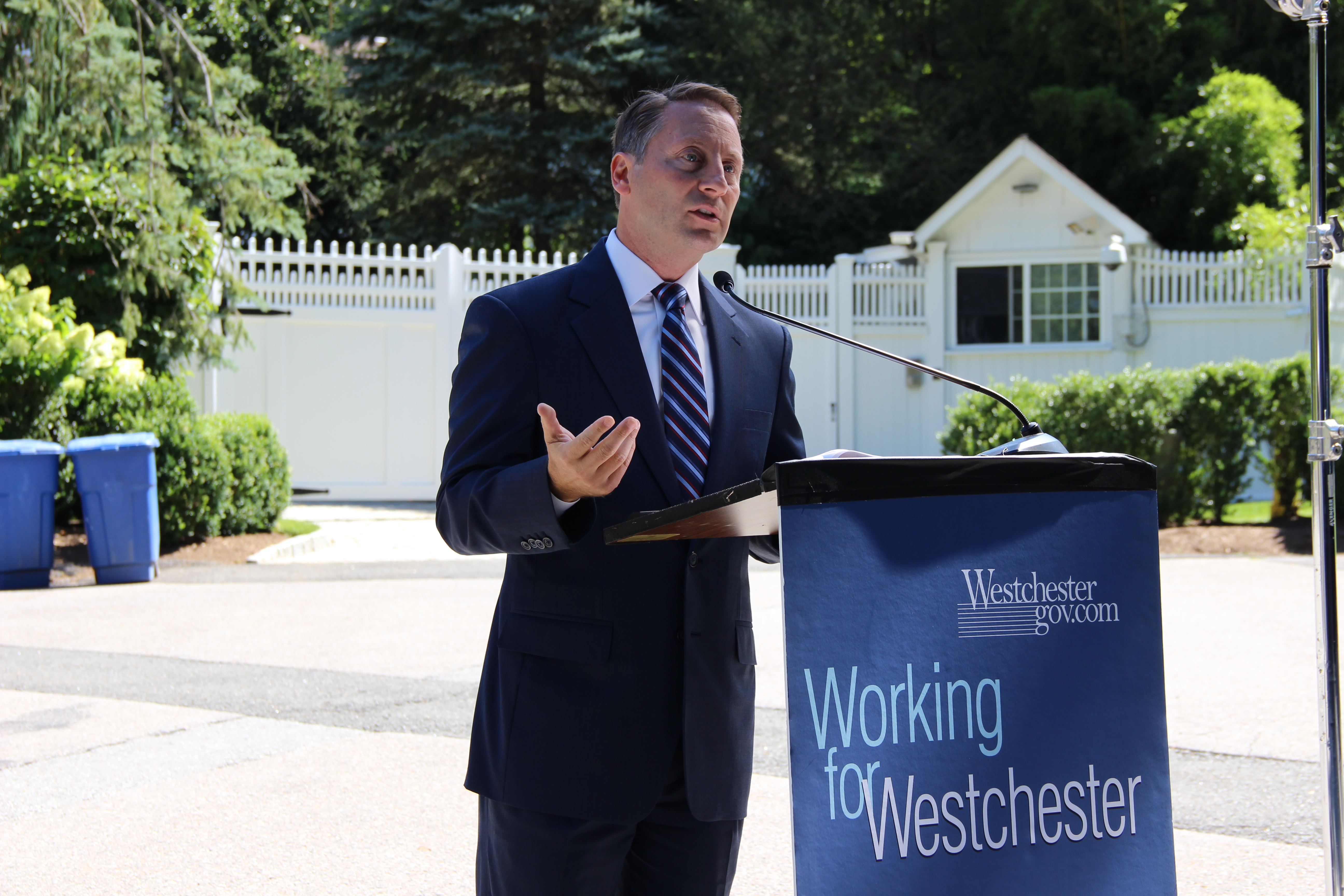
WPCNR WESTCHESTER LAW JOURNAL. From Westchester County Department of Communications. May 1, 2015:

 Westchester County won a legal victory Friday in its battle with the Department of Housing and Urban Development when the U.S. Court of Appeals for the Second Circuit granted the county an injunction that prohibits the federal agency from reallocating to other communities approximately $10 million in grants that had been designated for Westchester.

Friday’s ruling follows a prior Second Circuit victory for the county in February. County Executive Robert P. Astorino went to court challenging HUD’s decision to withhold funds from the county simply on the agency’s assertion that the county was not in compliance with the 2009 federal housing settlement, approved by Astorino’s predecessor,  which calls for developing 750 units of affordable housing in 31 communities by the end of next year.

Astorino contended that the county was in compliance with the settlement and that any contention that it was not is for the courts to decide. The Second Circuit unanimously agreed with Westchester County, saying HUD’s actions were subject to “judicial review.”

Over the course of the dispute, HUD has reallocated roughly $10 million designated for Westchester for the years 2011 and 2012 to other communities. Today’s decision prohibits HUD from reallocating another $10 million for 2013 and 2014 that it is currently withholding from the county.

“In February, the court said HUD was subject to the law just like everyone else,” said Astorino. “Today it’s saying HUD has no right to give away the money at the heart of the court case. Both decisions are victories for Westchester and for the country against an aggressive and overreaching federal government.”

The case now continues for a decision on the merits.

Posted in Uncategorized

Susan Fox Takes Over At White Plains Hospital as Jon Schandler..Hospital Architect of Success Retires

Hits: 141


Susan FoxWPCNR HEALTH CARES From White Plains Hospital Center (May 1, 2015) – White Plains Hospital President Susan Fox is now both the Hospital’s President and Chief Executive Officer (CEO), effective today, announced Laurence Smith, Chairman of the Hospital’s Board of Directors. Fox succeeds Jon B. Schandler, who retired as CEO on April 30, after 38 years of service to the institution.

“Susan has been an exceptional leader at White Plains Hospital and will be an extraordinary CEO,” Smith said. “Since 2010, she has worked closely with Jon to transform White Plains Hospital into the ‘Hospital of the Future,’ with the clinical capabilities, services, and facilities that allow us to manage patient health both inside and outside our walls. Susan has the skills, leadership and vision to lead us to continued success.”

Smith added that Schandler has left an impressive and lasting legacy at the Hospital. “Under Jon’s leadership, a wonderful community hospital has evolved into an exceptional health care institution capable of meeting the community’s needs for complex care, close to home,” Smith said.

“Susan has proven herself to be an outstanding, progressive leader with an uncompromising dedication to excellence in patient care. I applaud her appointment as President and CEO,” said Steven M. Safyer, M.D., President and CEO of Montefiore Health System, of which White Plains Hospital is a member.

Susan Fox: The Right Leader at the Right Time

Fox began her career as a pediatric intensive care nurse, and went on to distinguish herself in several leadership positions after earning an MBA in Healthcare Administration from Baruch College-Mount Sinai School of Medicine. She first served as Senior Manager of Health Care Consulting at Ernst & Young and then spent 14 years at North Shore-LIJ as Senior Vice President, Physician and Ambulatory Network Services. She joined White Plains Hospital in 2010 as Senior Vice President of Administration and was named President in January, 2013. It was announced last year that she would assume the role of CEO upon Schandler’s retirement, thus ensuring a smooth transition.

“From the moment she joined the Hospital, it became evident that Susan understood how healthcare services were changing, and the unique role that White Plains Hospital played in delivering more advanced care to the region that no other Westchester hospital could,” Schandler explained. “Susan has played an important role in recruiting the best and the brightest physicians to take our clinical services to the next level, and expanding our geography beyond the borders of White Plains into other areas of Westchester.

“But excellent clinical services aren’t enough,” Schandler continued. “She focused everyone’s attention on the patient experience, and got everyone involved in making that experience as good as possible. As a result, our Hospital became one of only 5% of hospitals in the nation to receive the Healthgrades’ 2014 Outstanding Patient Experience Award.”

“Susan is a one-of-a-kind leader,” added Robert Small, M.D., Orthopedic Surgeon and President of the White Plains Hospital Medical Staff.  “She has more than demonstrated that she is a highly intelligent, strategic thinker, and few others could match her capabilities and drive.”

Fox said she would ensure that White Plains Hospital continues to deliver excellent patient-centered care to the community. She also will seek ways to leverage the Hospital’s alliance with Montefiore to improve care for patients in White Plains. She faces a busy first year on the job. This fall, the Hospital is opening three new facilities: a new six-story building that will be the center of the Hospital’s expanded and renovated campus; a new cancer center that will nearly double the size of the Hospital’s cancer program; and a 24,000 square-foot multispecialty outpatient medical facility in Armonk that will offer urgent care, primary care, pediatrics, imaging, and a wide range of medical specialties.

“The Hospital’s future is bright, and that is good for White Plains, Westchester County, and the region, as well as our patients, physicians, and staff,” Fox said. “I am so pleased to have an opportunity to continue to move our Hospital forward and keep us focused on what we do best: meeting our patients’ needs and expectations, and providing them with exceptional healthcare.”


Posted in Uncategorized

Bellantoni and Letizia Challenge Incumbents Rose Lovitch and James Hricay for seats on the Board of Education.

Hits: 327

WPCNR SCHOOL DAYS. From the White Plains City School District. April 30, 2015:

Cayne Letizia of Gedney Way and Michael Bellantoni of 2 Hotel Drive have filed petitions to run for two seats on the White Plains School Board. Incumbents Rose Lovitch and James Hricay have filed petitions to run for reelection.

If a resident has voted in a General Election in the past four years, he/she is automatically registered 

The election will take place on Tuesday, May 19th, from Noon to 9 P.M.

For your polling place and further information, please call 422-2000.


Posted in Uncategorized

Standard Amusements Covers Playland Debt Service for first year of agreement as Financials Are Disclosed. Won’t Pick Debt Service Until 8th Year if Predicted Profit Sharing Materializes

Hits: 343

WPCNR PLAYLAND GO ROUND. From The Westchester County Board of Legislators. April 30, 2015:

Wednesday, the Board of Legislators (BOL) Labor, Parks, Planning and Housing (LPPH) Committee met jointly with the Budget and Appropriations Committee to continue the BOL review process for Standard Amusement’s management agreement to operate Playland Amusement park.  Appearing on behalf of Standard Amusements was Nick Singer who runs Standard Amusements, Jack Falfas, an amusement park industry management expert who would be the onsite manager at Playland and Andy Maniglia, an advisor to Standard.

Wednesday’s committee meeting dealt with Standard’s financials.  (all documents associated with today’s meeting can be found on the BOL website at WestchesterLegislators.com)  Mr. Singer presented projections for the full fifteen year term of the management agreement, including; revenue, employee salaries, marketing expenses, operating costs, overhead and more.

A major discussion point in today’s meeting was how Standard’s financial projections would impact the County’s ongoing debt service associated with the park.

According to Standard’s projections, in the first year of the operating agreement, the county would realize revenue from Playland that would approximate the amount of debt service.  This is attributable to the one time, upfront payment of $2.25 million dollars from Standard.  In years 2-7, revenues from Playland operations are not expected to cover the debt service.

Through the 7.5% share of Playland’s profits and the $300,000 annual payment to the county, Standard’s projections shows that the debt service will be covered through those revenues for years 8-15.

BOL Chairman Michael Kaplowitz (D) Somers, who is a Certified Financial Planner in his professional career said, “Based on our experience and discussions with Standard to this point, I expect that they will continue to provide the financial detail and clear vision for Playland that Legislators will need in order to approve this agreement.”  Kaplowitz added, “Today’s meeting laid out Standard’s projections for revenue and expenses, I’m looking forward to hearing their plans for how we achieve that success.”

Legislator Sheila Marcotte (R) Eastchester, Chair of the Budget and Appropriations Committee said, “The Standard Amusements team and the County Executive have done a good job of striking a deal that is fair for Standard, fair for the County and above all else, protects taxpayers by laying out a plan that will immediately begin to mitigate Playland’s drain on our tax levy.”  Marcotte added, “I look forward to continuing this vetting process and I am hopeful that at long last we have found the right operator with the necessary resources to return Playland to its, ‘tax-neutral’,  former glory.”

Legislator Peter Harckham (D) North Salem,  Chairman of the LPPH Committee which is the lead committee reviewing the Standard proposal said,  “A lot of important information came out of today’s Committee meeting and some additional questions have arisen from as well.  I’m looking forward to continuing our review of Standard’s proposal especially regarding their capital plan.  For the past six or eight years, the park has not been maintained as well as it should have been and I hope that Mr. Singer’s team is prepared to detail how they will remediate the state of disrepair that currently exists.”  Harckham added, “The LPPH Committee will be touring Playland with Mr. Singer and his team on May 7th.  I expect many of our questions about the physical condition of Playland to be answered at that time.”

Attached is a schedule of the remaining BOL Committee meetings to review the Playland proposal.  Today’s meeting as well as all the Playland Committee review meetings can be seen on the BOL website at WestchesterLegislators.com.

Posted in Uncategorized

Downtown Music at Noon in White Plains Announces May Lineup of Classic Greats to Grace Grace Church

Hits: 368

May Concerts

Wednesdays: Free 45-minute programs at 12:10 PM, contributions welcome
Evenings and Weekends: as indicated
                           

http://r20.rs6.net/tn.jsp?f=001d3OjPVyKtF5bPaIlgkn28edly8_AiFjuyrGcfqcrfXGNXopQ4HATlls_Z7VrqpNc0INybApl77kxACNZLkDmrJwGZXZqIT4JgbSJEIi56fRks7xhCfeznFfuLEO9Tn2uQE-3QoNxz5Yv6_GR6z4mSkCGY8wQZJFujOxg4nNPNoE=&c=MRa8LghUCC6f2sblwtvPZrNzAlstfnBKJjc3BTY0FCCQ8SsnlP9FcQ==&ch=WqPYtRLBgPIMLL14tfTkRY6RiEVRi4i3kzCi1TKr_6R0cMnjjNxjng==Wednesday, May 6, 12:10 PMAllen Yueh, 2008 First Prize Winner of the New York International Piano Competition, returns to Downtown Music with a program of virtuoso works.


http://r20.rs6.net/tn.jsp?f=001d3OjPVyKtF5bPaIlgkn28edly8_AiFjuyrGcfqcrfXGNXopQ4HATlls_Z7VrqpNc0INybApl77kxACNZLkDmrJwGZXZqIT4JgbSJEIi56fRks7xhCfeznFfuLEO9Tn2uQE-3QoNxz5Yv6_GR6z4mSkCGY8wQZJFujOxg4nNPNoE=&c=MRa8LghUCC6f2sblwtvPZrNzAlstfnBKJjc3BTY0FCCQ8SsnlP9FcQ==&ch=WqPYtRLBgPIMLL14tfTkRY6RiEVRi4i3kzCi1TKr_6R0cMnjjNxjng==

Wednesday, May 13, 12:10 PM

The Klezmer Tradition – Best known to Downtown Music audiences for his stellar recitals of the classical repertoire, clarinetist Pavel Vinnitsky has appeared at some of the world’s major klezmer music festivals, and toured Israel and Europe with a klezmer trio and toured Israel and Europe with a Klezmer Trio. A founding member of the Jewish Arts Ensemble of New York, he is joined at the piano by Anna Vinnitsky, who has appeared at the Gewandhaus in Leipzig and Orchestra Hall in Chicago.

http://r20.rs6.net/tn.jsp?f=001d3OjPVyKtF5bPaIlgkn28edly8_AiFjuyrGcfqcrfXGNXopQ4HATlls_Z7VrqpNc0INybApl77kxACNZLkDmrJwGZXZqIT4JgbSJEIi56fRks7xhCfeznFfuLEO9Tn2uQE-3QoNxz5Yv6_GR6z4mSkCGY8wQZJFujOxg4nNPNoE=&c=MRa8LghUCC6f2sblwtvPZrNzAlstfnBKJjc3BTY0FCCQ8SsnlP9FcQ==&ch=WqPYtRLBgPIMLL14tfTkRY6RiEVRi4i3kzCi1TKr_6R0cMnjjNxjng==

Wednesday, May 20, 12:10 PM

REBEL Plays Mozart: JörgMichael Schwarz, violin; Karen Marie Marmer, viola; John Moran, cello and Dongsok Shin, fortepiano, principals of the celebrated REBEL Ensemble for Baroque Music, play works of W.A. Mozart for strings and fortepiano.


http://r20.rs6.net/tn.jsp?f=001d3OjPVyKtF5bPaIlgkn28edly8_AiFjuyrGcfqcrfXGNXopQ4HATlls_Z7VrqpNc0INybApl77kxACNZLkDmrJwGZXZqIT4JgbSJEIi56fRks7xhCfeznFfuLEO9Tn2uQE-3QoNxz5Yv6_GR6z4mSkCGY8wQZJFujOxg4nNPNoE=&c=MRa8LghUCC6f2sblwtvPZrNzAlstfnBKJjc3BTY0FCCQ8SsnlP9FcQ==&ch=WqPYtRLBgPIMLL14tfTkRY6RiEVRi4i3kzCi1TKr_6R0cMnjjNxjng==

Wednesday, May 27, 12:10 PM

Gilda Lyons, a composer and vocalist who is a fierce advocate of contemporary music, has commissioned and premiered new works by dozens of composers. Of her performance in Daron Hagen’s “Shining Brow” (Buffalo Philharmonic/Falletta) (Naxos), David Shengold of Opera, UK writes “Gilda Lyons’s clear soprano compels admiration.” She is joined at the piano by Daron Hagen, one of America’s most prominent, prolific, and respected composers. All eight of his major operas are currently in production or revival throughout the U.S., Europe, or Asia. The program includes music of Blitzstein, Brel, Hagen, Lyons, Sondheim and Weill. A Downtown Music debut.

Posted in Uncategorized

Numbers Game: New Telephone Credit Card Scam Coming to You–Beware–Do Not Reveal 3 digit Back of Card Number

Hits: 316


WPCNR THE LETTER TICKER. From a Scam Victim. April 29, 2015:

I don’t usually pass these scams along, but this is one I think I would have been caught on if I had received a call like this.

This is scary, it’s so simple…..

This is a heads up for everyone regarding the latest in Visa fraud.  .  This is happening in the Midwest right now and moving across the country

 This one is pretty slick, since they provide YOU with all the information, except the one piece they want.

Note, the callers do not ask for your card number; they already have it.

The scam works like this:

Person calling says – ‘This is (name) and I’m calling from the Security and Fraud Department at VISA.  My Badge number is 12460, your card has been flagged for an unusual purchase pattern, and I’m calling to verify.  This would be on your VISA card which was issued by (name of bank).  Did you purchase an Anti-Telemarketing Device for $497.99 from a marketing company based in Arizona?’  When you say ‘No’, the caller continues with, ‘Then we will be issuing a credit to your account.  This is a company we have been watching, and the charges range from $297 to $497, just under the $500 purchase pattern that flags most cards.  Before your next statement, the credit will be sent to (gives you your address).  Is that correct?’  You say ‘yes’.

The caller continues – ‘I will be starting a Fraud Investigation.  If you have any questions, you should call the 1- 800 number listed on the back of your card (1-800-VISA) and ask for Security.  You will need to refer to this Control Number.  The caller then gives you a 6 digit number.  ‘Do you need me to read it again?’

Here’s the IMPORTANT part on how the scam works – The caller then says, ‘I need to verify you are in possession of your card’.  He’ll ask you to ‘turn your card over and look for some numbers’.  There are 7 numbers; the first 4 are part of your card number, the last 3 are the Security Numbers that verify you are the possessor of the card.  These are the numbers you sometimes use to make Internet purchases to prove you have the card.  The caller will ask you to read the last 3 numbers to him.  After you tell the caller the 3 numbers, he’ll say, ‘That is correct, I just needed to verify that the card has not been lost or stolen, and that you still have your card.  Do you have any other questions?’

After you say no, the caller then thanks you and states, ‘Don’t hesitate to call back if you do’, and hangs up.  You actually say very little, and they never ask for or tell you the card number.  But after we were called on Wednesday, we called back within 20 minutes to ask a question.  We were glad we did!  The REAL VISA Security Department told us it was a scam and in the last 15 minutes a new purchase of $497.99 was charged to our card.  We made a real fraud report and closed the VISA account.  VISA is reissuing us a new number.  What the Scammer wants is the 3-digit PIN number on the back of the card.  Don’t give it to them.  Instead, tell them you’ll call VISA or Master Card directly for verification of their conversation.

The real VISA told us that they will never ask for anything on the card, as they already know the information, since they issued the card!   If you give the Scammer your 3 Digit PIN Number, you think you’re receiving a credit.  However, by the time you get your statement you’ll see charges for purchases you didn’t make, and by then it’s almost too late and/or more difficult to actually file a fraud report.

What makes this more remarkable is that on Thursday, I got a call from a ‘Jason Richardson of MasterCard’ with a word-for-word repeat of the VISA Scam.  This time I didn’t let him finish.  I hung up!  We filed a police report, as instructed by VISA.  The police said they are taking several of these reports daily!  They also urged us to tell everybody we know that this scam is happening.  I dealt with a similar situation this morning, with the caller telling me that $3,097 had been charged to my account for plane tickets to Spain, and so on through the above routine.

It appears that this is a very active scam, and evidently quite successful…

Pass this on to all your family and friends.

Posted in Uncategorized

Easing of Regs, Relaxed Zoning, Gov-Sharing Needed to Grow Westchester. Urged by Biz Leaders. 20-30 Somethings We Are Counting on You

Hits: 381

WPCNR Quill & Eyeshade. From the Westchester Business Council. April 29, 2015:

Westchester County has many great assets and challenging obstacles for economic development, yet leaders from real estate, government and business remain optimistic about its future and ability to remain competitive.

A sell-out crowd of nearly 200 people packed the room at Tappan Hill Mansion in Tarrytown on Tuesday to hear from experts who took part in The Business Council of Westchester’s provocative panel discussion entitled Navigating Westchester: Threading the Needle for Economic Growth, where leaders said that the county is going through important shifts that will reshape its economy and landscape for generations to come.

image003

From left standing: Geoff Thompson, Managing Partner of Thompson & Bender; Harrison Mayor Ron Belmont, Robert Weisz, Chairman and Chief Executive Officer of RPW Group and Tim Jones, Partner and Managing Member of Robert Martin Company.
Seated: Wilson Kimball, Commissioner of Planning & Development for the City of Yonkers; Bronxville Mayor Mary Marvin, William Mooney III, Director of Westchester’s Office of Economic Development and Marsha Gordon, President and CEO of The Business Council of Westchester.

“We’re at a point where we are transforming Westchester,” said Robert Weisz, Chairman and Chief Executive Officer of RPW Group, citing the massive growth in the health care sector, the repurposing of antiquated office parks and residential communities and revitalization of many downtowns and urban centers. “Over the next 20 years, we are going to see a major transformation from what is happening today … The next 20 years are going to be critical for Westchester.”

County Executive Robert P. Astorino opened up the breakfast, which was part of The Business Council’s KeyBank Speaker Series, with an address that highlighted Westchester’s assets including its highly educated workforce, access to transportation, its excellent schools and great quality of life. But he also pointed to problems including its many layers of government, burdensome state and local regulations, and high property taxes, which drives up the cost of living.

“High taxes are the No. 1 reason people are leaving,” Astorino said, highlighting a greater need to share services, consolidate government and control spending. “Does concierge government still make sense? … We have to find the right balance.”

As part of the event, a panel made up of the region’s thought leaders and decision-makers followed the county executive. In addition to Weisz, it included Tim Jones, Partner and Managing Member of Robert Martin Company; William Mooney III, Director of Westchester’s Office of Economic Development; Marsha Gordon, President and CEO of The Business Council of Westchester; Wilson Kimball,  Commissioner of Planning & Development for the City of Yonkers; Harrison Mayor Ron Belmont and Bronxville Mayor Mary Marvin. Geoff Thompson, Managing Partner of Thompson & Bender, who has more than 30 years of personal experience with many of Westchester’s major development projects, moderated the discussion.

In addition to facing certain challenges, such as high taxes, layers of government and extensive and costly reviews that in some cases can take years, the panelists agreed that Westchester’s future relied heavily on maintaining its excellent schools and quality of life; investing in its infrastructure and transportation; providing appropriate housing for a younger workforce (the millennials or GenY); reforming state regulations such as SEQRA and outdated local zoning laws, and supporting local businesses. They also said local leaders must have the political will to make tough choices on development while promoting their own communities as good places to do business.

“We have to be out there selling our communities,” Bronxville Mayor Mary Marvin said. “We have to be the greatest salespeople for our communities that we can be.”

Wearing a GenerationYonkers T-shirt, Yonkers Planning Commissioner Kimball highlighted the city’s marketing and advertising campaign that is targeting high-tech companies, start-ups and medical facilities as well as younger workers looking for an urban environment. She said many cities such as Yonkers have great industrial spaces conducive for such companies and that Yonkers is forging ahead with thousands of apartments and housing units in its downtown and waterfront area.

“If you have the political will, things can happen,” Kimball said.

Belmont said Harrison is developing its downtown and transforming the I-287 corridor by adaptively reusing office parks – all with an eye on its long-term success.  While the downtown looks the same as it did in 1965, 1995 and 2005, Belmont said by “2025, I believe we are going to be looking different.”

Jones, of Robert Martin Company, agreed. “The future is bright,” he said. “Twenty years from now, the millennials will be moving to the suburbs … Westchester is a mature market, and it will continue to re-invent itself.”

Mooney said many of Westchester’s towns and cities have a “millennial urban feel” and Westchester has all of the cultural, social and economic amenities offered in Manhattan, Jersey City and Brooklyn — without the high real estate costs.

“Our commercial rents are half the cost of New York City and we’re less than 30 miles from mid-town,” he said. “We’re on the rise. We’re perfectly positioned to grow and thrive.”

Gordon said Westchester is great place to live, work and entertain because of its rich cultural venues, vast parklands, and diverse population. She said the forum was a great success. “We’re delighted to have brought together such an impressive and knowledgeable group of professionals,” said Gordon, President and CEO of The Business Council. “I’m optimistic that the vision for Westchester County is right and its economy will remain strong — now and for generations to come.”


Posted in Uncategorized

Media Questioned on Judgment of Television Station

Hits: 374

Please call this number. Ask operator hard questions about why a demonstration of hundreds of people in WP was not covered this am at WPHS.  Escalate it – Ask to talk to the News Director  . I got a 30 sec in length weird audio clip of a news 12 segment followed by long hold…was very close to hanging up when her voice mail clicked on.  She got an earful from me. But I left my contact number. So who knows but let’s get the media to hear us.
Today was great. More demonstrations to come.
Many Thanks to Gedney Neighborhood Association board members and president, John Sheehan for organizing such a successful day.
Check out the North Street German School expansion devastation which is orders of magnitude smaller than what FASNY would be. Maybe this will wake people up …maybe sleepwalkers like the common council.
Anne Casey
Posted in Uncategorized