EPIDEMIOLOGIST: THE JURY IS OUT ON THE B.A.-5 COVID VARIANT, SHOULD START EFFECTS ABOUT NOW. MEANWHILE, WESTCHESTER RECORDS 757 NEW CASES OF COVID (252 A DAY) FIRST 3 DAYS OF THIS WEEK- IF CASES NEXT 4 DAYS MATCH LAST WEEK’S COUNTY WILL AGAIN EXCEED 2,000 CASES A WEEK.
| WPCNR COVID REPORT. From Dr. Katelyn Jetelina, of www.yourlocalepidiologist.coim. July 7, 2022: Driven by Omicron sub-variants, country-level hotspots are now peppered across the globe. Yesterday, the WHO reported cases are on the rise in 110 countries, causing overall global cases to increase by 30% over the past two weeks. Of course, these numbers and country-level comparisons are only as accurate as testing and reporting.(WHO)In Europe, BA.4/5 is driving a case surge. Hospitalizations in Portugal finally peaked and are well on their way down. Hospitalizations in other European countries continue to rise, though. In the U.K., it’s clear that hospitalizations rising are both with and for COVID19. The distribution seems to be stubbornly consistent since a switch during the first Omicron wave last winter, when hospitalizations for COVID19 took the lead. In India, all eyes are on a new variant: BA.2.75. After first being discovered at the end of May, it quickly took hold and now accounts for 25% of cases, with most samples reported from Maharashtra (Mumbai). There is sparse testing data in India but BA.2.75 appears to be outcompeting BA.5 and BA.2 (with a growth advantage of 17% thus far). This means it has the potential to cause a wave and is important to follow. BA.2.75 cases have been identified in other countries, like Australia, New Zealand, U.K., and Germany, but remain low at this time. BA.2.75 carries eight additional mutations on the spike protein compared to BA.2. There are two mutations in particular that are cause for concern: G446S and R493Q. G446S is at one of the most potent sites of escape from antibodies. As the Bloom Lab interestingly pointed out in the figure below, BA.2.75’s impact will be dependent on infection history. Among those with a previous BA.1 infection, the probability of immune escape at spot 446 (and thus infection) is lower than those with a previous BA.2 infection.(Bloom Lab Twitter)A few more thoughts on this sub-variant:Let’s be glad the mutation G446S isn’t on BA.5. If it was, this subvariant could make an even bigger impact. If BA.2.75 does take off, it will be co-circulating with BA.5, so keeping a close eye on recombinants will be important.This makes the fall booster conversation interesting. Last week, the FDA authorized a BA.4/5 vaccine formula. However, one could make the argument that the original BA.1 vaccine formula would be better with this BA.2.75 news. But, chasing variants is never going to work. Our goal should be broaden protection. An Omicron vaccine will do that, regardless of the sub-variant circulating.United StatesIn four short months, four Omicron sub-lineages have come and gone in the U.S. Currently, BA.4/5 made a fast entrance and now accounts for more than 70% of tests. Interestingly, BA.4 stopped (or substantially slowed) growth, so this is really now a story about BA.5. It’s not clear whether BA.5 will result in a wave in the U.S. given our BA.2.12.1 history that other countries did not experience. If we do get a BA.5 wave, it would start about now, so all eyes are on epidemiological trends.(CDC) The U.S. holds a steady state of ~100,000 reported cases per day. This equates to about 1M “true” cases per day, using back of the napkin math. (Editor’s Note: The first three days of this week Westchester County was reported by the New York Covid Tracker with 246 new infections Sunday, 259 Monday, and 252 Tuesday an average of 252 a day, heading into the days of the week when new infections increase dramatically. Last week Westchester experienced 1,168 new cases of covid on Wednesday, Thursday and Friday, if that level continues the county will see another week of 2,000 plus infections..) (At the height of the first Omicron wave, we (USA) experienced ~3.9M true cases per day). The steady state is reflected in national wastewater with plateauing trends across every region.Regional wastewater trends, past 6 weeks Source: Biobot Analytics Interestingly, our national test positivity rate (TPR) continues to increase and is at a high rate of 17%. Editor’s Note Westchester’s Postive Rate now is 11-1/2 % positive on testings of just 2,000 persons a day the last 4 days, meaning if you tested more people you would get an untold number of positives out there passing the disease. Anecdotally, it feels like more and more people are testing positive, too.(CDC) The disagreeing patterns between cases/wastewater and TPR could mean that a wave is about to come (historically, TPR trends upwards first). Or it’s a reflection that cases are just a terrible measure of community transmission. Lack of testing, lack of reporting antigen tests, and biased testing (some groups are more likely to get tested than others) are creating really weird trends in metrics. This begs the question: How do we detect a wave at this point in the pandemic? Hospitalizations continue to creep up and, on average, 389 Americans are dying each day. Severe disease will continue to occur. As the Kaiser Family Foundation reported, in some states, 3 in 4 people are not up to date on their COVID-19 vaccines (this figure does not include the 4th dose). Also, as we just saw in Portugal, vulnerable groups like the elderly are at risk from high transmission, even if vaccinated. While incredibly tragic, hospitalizations and deaths do remain below any previous peaks, which is progress.(News nodes) Bottom line BA.5 is impacting countries across the globe. Its story in the U.S. is yet to be determined. It’s important to note, though, that we already have a very high, steady level of transmission. In addition, SARS-CoV-2 continues to mutate so quickly that we start talking about the next variant (BA.2.75) before the current wave peaked. |
WESTCHESTER COUNTY HOME SALES DECLINE 14.2 % IN April May June–Where We Are
WPCNR REALTY REALITY. From the Hudson Gateway Association of Realtors. July 7, 2022:
While the perfect storm of low inventory, rising interest rates and persistent inflation have certainly had their impact, the lower Hudson River Valley and greater New York City Suburban real estate markets have continued to show remarkable resiliency in the 2nd quarter of 2022.
And while the market has, in some instances, slowed compared to the over-heated market conditions of 2021, comparisons to the pre-pandemic market of 2019 show very stable conditions. Median sales numbers in the entire area continued to rise in the second quarter, still fueled by low inventory.
In Westchester County second quarter single-family home sales of 1,583 declined 14.2% compared to the second quarter of 2021. However, when compared to the second quarter of 2019, single-family home sales in Westchester were up 5 percent.
Condo sales in Westchester for the second quarter of 2022 were ahead of 2021 by 4.7 percent and co-op sales were even more robust, coming in 14.8% higher than the 2021 second quarter numbers. The single-family median sale price of $885,000 posted a 6% increase over last year, the condo median sale price of $450,000 was 11.1% higher than 2021, and the co-op median sale price of $203,000 was 6.8% higher than the previous year.
In Putnam County single-family home sales of 243 were down 19.8% compared to the second quarter of 2021, but when compared to 2019, the number of sales were identical. The median sales price of $480,000 was 8.6% higher than the second quarter of 2021.
Rockland County experienced a steeper dip, with single family home sales down 22.8% and condo sales down 31.3%, however, when continuing the comparison to the second quarter of 2019, the 2022 quarter numbers are slightly ahead. The single-family median sales price of $645,000 for the second quarter of 2022 in Rockland County was 17.3% higher than 2021.
In Orange County the 2nd quarter single-family home sales number of 846 was down 12.3% over the 2021 second quarter, and the condo sales number of 119 was off 4.9%. The single-family home median sales price was up 15.3% at $415,000 and the median condo sales price of $275,000 for the second quarter was a 25% increase over the 2021 second quarter.
In Sullivan County the single-family sales number of 273 was off 19% over the previous year but was up more than 25% percent when compared to the 2nd quarter of 2019.
Focusing closer to the city, the Bronx market continued to impress in the 2nd quarter of 2022, with single-family home sales ahead 19.7% over the 2nd quarter of 2021. The median sales price of $617,500 was 9.3% ahead of last year.
There will continue to be challenges in comparing sales numbers to the pandemic year of 2020, when the market came to a grinding halt in the second quarter, and the post pandemic market of 2021, when pent up demand drastically sped up typical buying cycles.
In conclusion, one has to believe that the significant head winds of a declining stock market, rising inflation, rising interest rates, and the threat of a recession will continue to take their toll on the housing market.
However, continued strong buyer demand, low inventory, and a strong labor market appear to be mitigating factors. Also, there have not been any significant price corrections given the current economic headwinds.
Depending upon the length and depth of a recession (if there is one), the lower Hudson River Valley and greater New York City Suburban real estate markets should continue to demonstrate stability going forward into 2022. So far, the housing market appears to be rising above the perfect storm.
BACK TO BABYLON
WPCNR DAYLIGHT RAMBLER. Aesthetics & Comment by John F. Bailey. July 5, 2022:
I went back to the Museum of Modern Art in gloriously alive New York City, USA yesterday with Brenda Starr my cultural attache’ to see the Henri Matisse exhibition.
It was a glorious day in the Greatest City in the World as WABC’S Ron Lundy used to call it (when WABC 77 was MusicRadio and made you happy).
Parking on 51st Street we walked crosstown in the “lived in” chaos- glory rolling in front of us and soaring around us of New York City where the vain the profane and the gets-into-you humanity in all its one-and-many-and-all kinds amazes the senses. New York makes you alive and makes your heart beat.
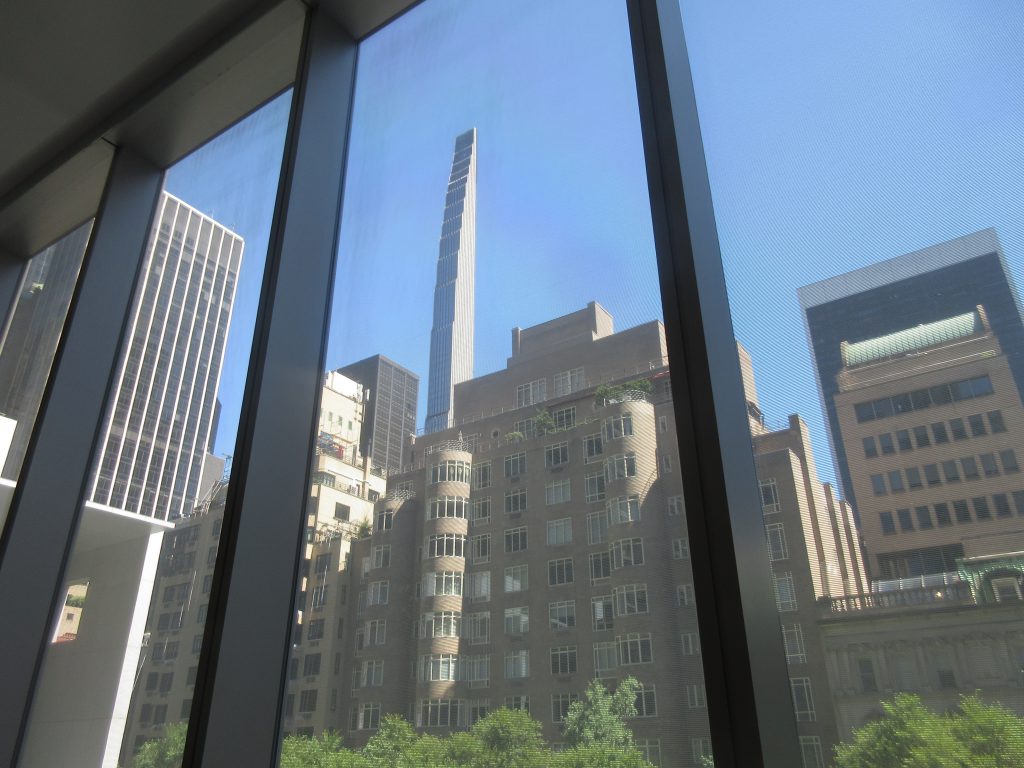
Entering MOMA now overlooked by a “supertall” ascending into the sky overlooking a art deco residence with circular terraces which is amazing to see, we entered the echoing big white entrance and ascended to the third floor where the Matisse exhibition is. It is there until September.
Henri Matisse is the Post-Impressionist pioneer of 1911 in which from his Red Studio in Montparnesse he created in-your-face jagged color shapes projecting jarring assaulting the observer with images that jump out at you, new art for his time, yet still as new as it was when he painted them.
The original paintings you see here in the painting below took art from the realism and dreamlike beauty of the Impressionists to visuals that that assault and draw you in to the humanity of the individual, the vibrance of the real persons he painted in “The Red Studio.”
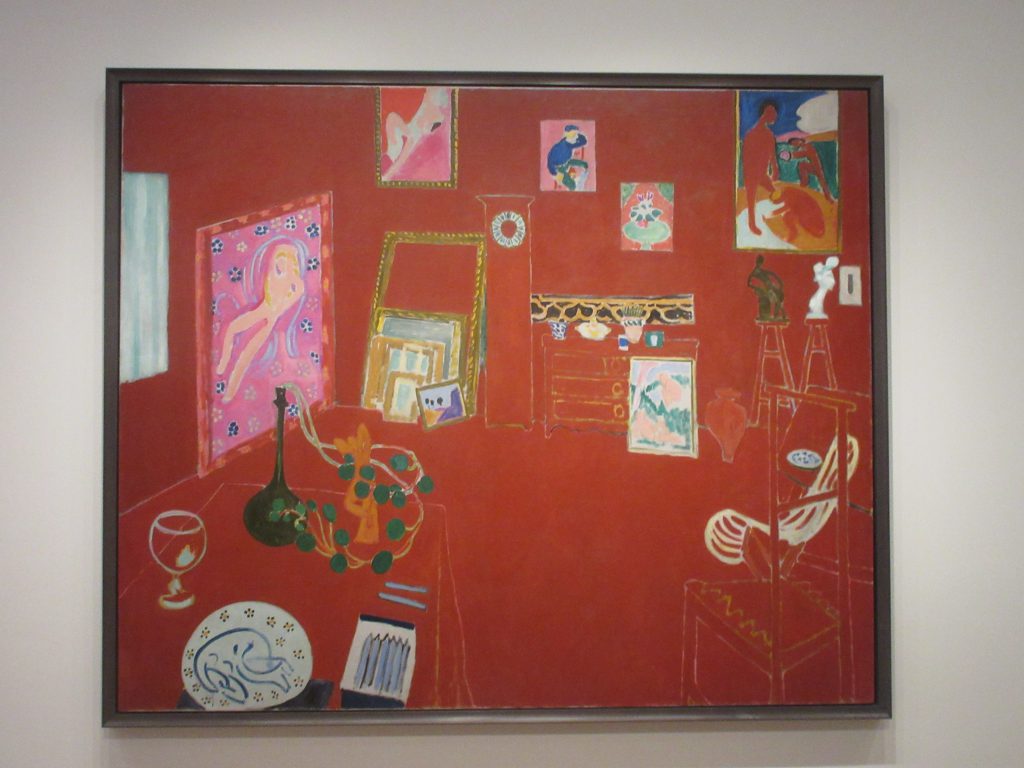
His most famous painting is on display in an interactive gallery. Mr. Matisse felt it was his best work, but his Russian patron, Sergei Shchukin, whom he presented it to, did not like it. You can read the correspondence with the patron in the MOMA exhibit. Reading between the lines, Matisse who felt it was his best work, eventually sold the painting to the Gargoyale Club in London, where it hung in the bar.
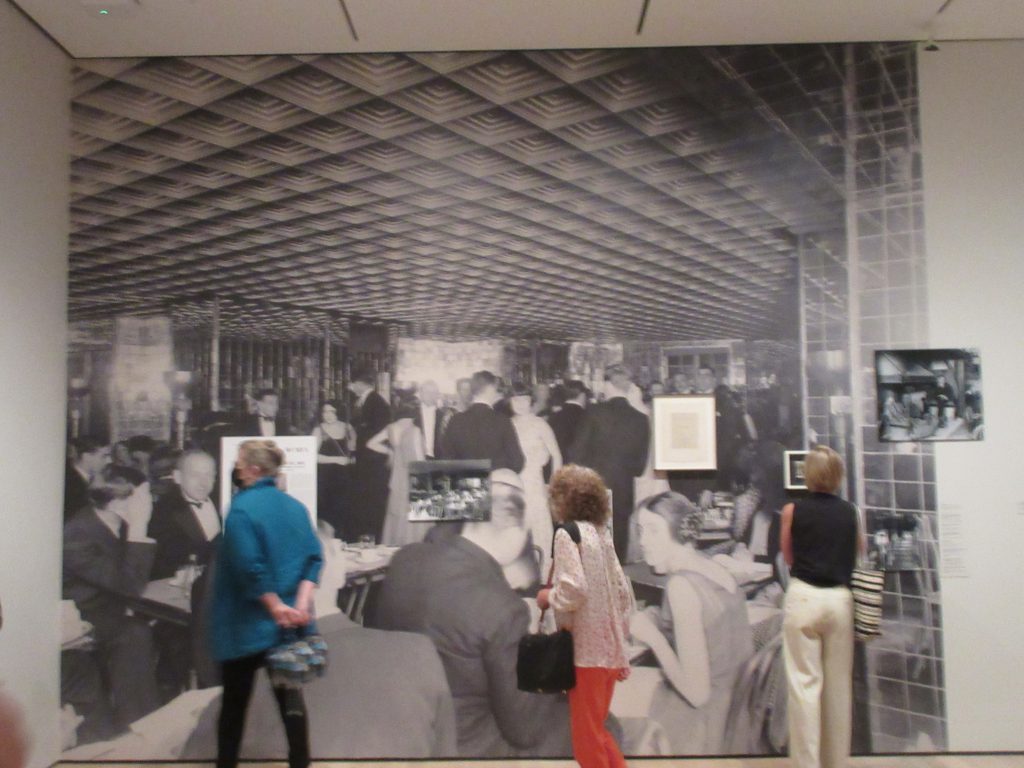
The Gargoyle Club was the “City Limits” of London, the “21 Club” of the upper class London crowd at the time. Eventually the owner of the Gargoyle Club wanted to sell the painting back to Mr. Matisse, but the painting, a heartbreak for Matisse, he did not want back. The work when displayed in New York with other of his paintings became the sensation of the art world in New York. Even then, if could make it in New York you could make it anywhere.
When I saw “The Red Studio” painting yesterday it drew me into itself and radiated the creative life, the atmosphere which so inspired Mr. Matisse.
Every work of art does that to you if you let it , and “The Red Studio” lights up this tastefully displayed exhibition of Mr. Matisse’s works in a distanced way from the “Red Studio” where Mr. Matisse created them so they like so many different children of the artist’s brush strokes stood apart on their own.
I do not know if this was the studio’s intent, but the curator/designers of this exhibit have not crowded the works but set them apart but together reminiscent of a “cocktail party of paintings” holding court and working the effervescent essence of these forerunners of realism.
“The Red Studio” will work on you the viewer with a magic “reach out” visual, emotion rush of what a creative space does for the artist. The painting includes pictures in it of works Matisse painted in the studio of red walls. It is an amazing creative concept.
What MOMA has done is they have analyzed the painting and discovered an amazing thing about how the painting was created. Through the magic of electronic devices that can “see” into a painting MOMA’s curators and analysts and painting reseachers explain in a video how “The Red Studio” was created.
Analysis done when the painting was reframed showed it originally had not been red. It had been green, yellow and sundry shades, essentially a painting of the room Matisse worked. The video showing the analysts telling what their analytical technology revealed to them was that Matisse considered his finished work, then in a sense the painting inspired him to make a drastic change.
The analysts said Matisse painted around the original paintings and objects in the painting with red.
They said the brush strokes applying the red were firm, broad, splashed and what can be described as quick saturating strokes.
What I drew from this is the power of the creativity within Mr. Matisse took over, gave him the idea to add the power “red” to the painting which actually was the color of his real studio.
That revelation revealed by not an autopsy but an examination of the “living painting” that delivered the spirit of the artist, the audacity, adding a major change to the painting not knowing whether or not it would be great or would ruin his work.
That filled me with wonder.
“The Red Studio” exhibition of this audacity of the artist, (and every artist has this), delivered to me the value of art we sometimes forget.
The last painting Matisse ever did was another portrait of his studio. This is it below. I felt this showed how much Mr. Matisse realized what the original “Red Studio” meant to him.
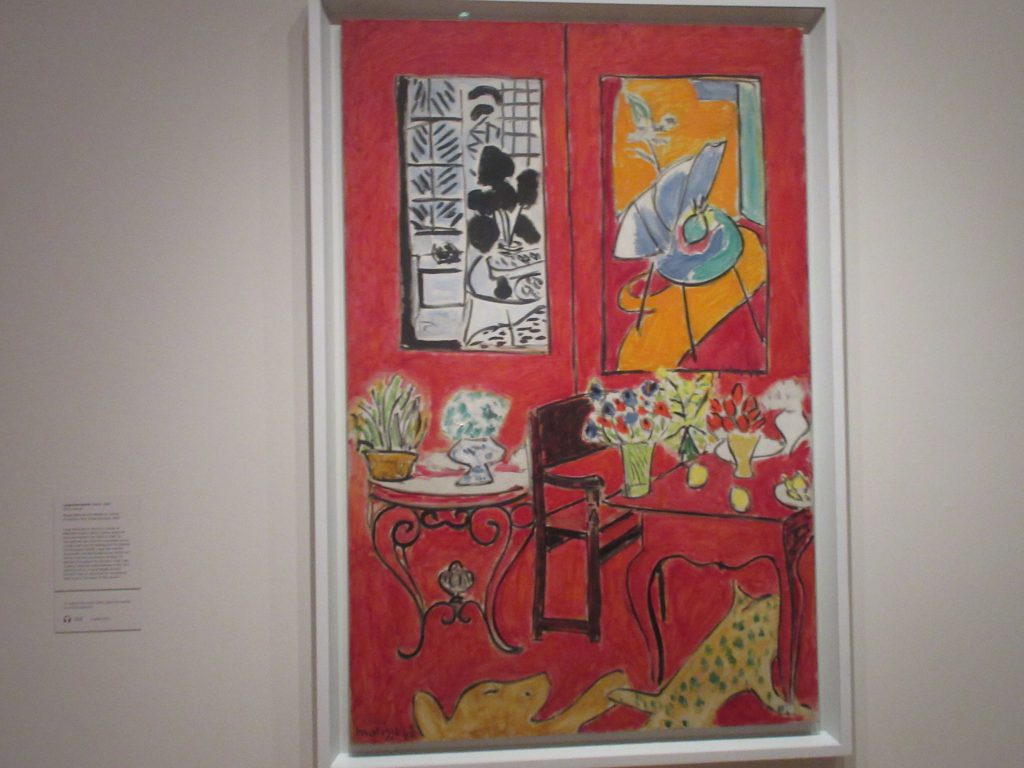
Art is there to remind us of the unlimited capacity for creativity, and higher judgment we possess whether we paint, write build.
“The Red Studio” became famous in New York.
New York critics were just awed by it.
And modern art was born about a century ago.
I love old pictures of ruins of the past. I mourn the destruction civilizations of the past wrecked on cities of the past they had conquered, only to be discovered by future generations.
We learn from the past.
We learn from the artists of the past, people like us who tried and those who dared like Henri Matisse, as doubtful as any of us, came up with at once a painting that embodies the essence of creativity of listening to what your talent tells you to do and having confidence in it.
We learn from the past.
F. Scott Fiztgerald’s character, Nick Carraway was right at the end of The Great Gatsby, when he wrote, “So we beat on, boats against the current, borne back ceaselessly into the past.”
Henri Matisse will be at MOMA through the summer.
He is a must see.
His story, his art, so embodies the spirit of hope and faith in ourselves that sustains us.