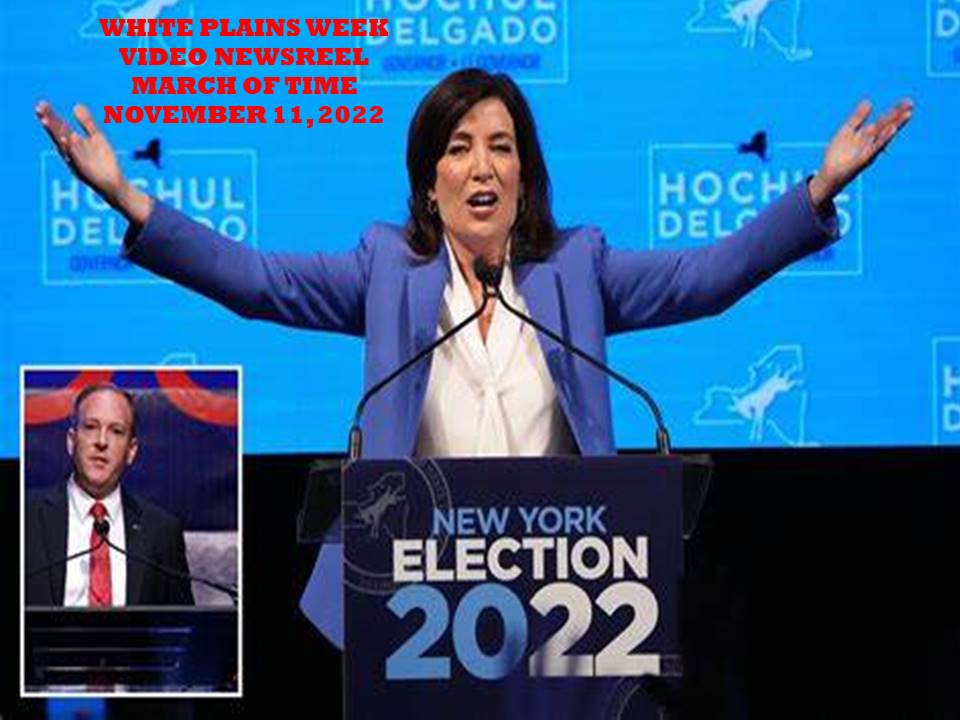
Governor Kathy Hochul today directed the New York State Department of Environmental Conservation to issue an updated drought watch after consulting with the State Drought Management Task Force and federal partner agencies.
New York State drought region IIA, which includes New York City and Westchester, remains in normal status due to the satisfactory storage levels and refill probability of the New York City reservoirs.
According to the New York City Department of Environmental Protection (DEP), the City’s reservoirs are approximately nine percent below normal for this time of year, with 422 billion gallons currently in storage, compared to 469 billion gallons normally. DEC continues to work closely with DEP to monitor reservoir conditions and encourage responsible water use, especially outdoors, regardless of the hydrological conditions or season.
The watch now includes most New York counties except those located in the Adirondack, Eastern Great Lakes, and New York Metropolitan regions. New York State is encouraging residents in affected counties, particularly those dependent on private groundwater wells, to conserve water whenever possible during the coming weeks.
“While recent rains have helped, severe dry conditions continue to persist across the state,” Governor Hochul said. “New Yorkers should take steps to conserve water whenever possible in the areas now under a designated drought watch. Simple steps to reduce water consumption will be crucial to our efforts to help prevent any increased drought levels.”
The counties under drought watch are available here. A watch is the first of four levels of State drought advisories, which are watch, warning, emergency, and disaster. No mandatory restrictions are in place under a state drought watch.
Department of Environmental Conservation Commissioner Basil Seggos said, “This year’s below normal precipitation and above-normal temperatures continue to combine to exacerbate low stream flows, reduced groundwater levels, and ongoing wildfire risk. DEC will continue to monitor water levels and the environmental impacts of the dry conditions and encourage residents throughout the state to monitor usage and avoid wasting water.”
An increasing number of water supply challenges are being reported due to dry conditions. Below-normal precipitation during the last three months, low stream flows and low groundwater levels prompt the need for the expansion of the watch status to ensure adequate public water supplies. Local public water suppliers are urged to assess the current situation, promote voluntary conservation, and take appropriate actions to manage risk.
The drought watch is triggered by the State Drought Index, which reflects precipitation levels, reservoir/lake levels, and stream flow and groundwater levels in the nine drought regions of the state. Each of these indicators is assigned a weighted value based on its significance to various uses in a region. The State Drought Index is attuned to the specific attributes of New York and may differ moderately from some national technical drought assessments.
DEC and U.S. Geological Survey are partners in evaluating hydrologic conditions across New York State. In addition, DEC supports efforts by local governments and stakeholders to undertake water conservation measures based on specific local circumstances. Observed precipitation has been less than normal with shortfalls of two to six inches common over the last 90 days. The dry weather began in the spring and is beginning to significantly affect other metrics. Stream flows and groundwater levels are well below normal throughout much of the affected regions. Groundwater levels have been declining over the past few months and they are not expected to improve in the immediate future due to the existing precipitation deficit.
The National Weather Service outlook for the remainder of the summer predicts above-normal temperatures and below-normal precipitation. By voluntarily reducing water usage, and being extra careful with fire and outdoor flames, New Yorkers can help conserve our natural resources during these dry days of summer.
To protect water resources, homeowners are encouraged to voluntarily reduce outdoor water use and follow these tips:
• Water lawns only when necessary, choose watering methods that avoid waste, and water in the early morning to reduce evaporation and maximize soil hydration;
• Reuse water collected in rain barrels, dehumidifiers, or air conditioners to water plants;
• Raise lawn mower cutting heights. Longer grass is healthier with stronger roots and needs less water;
• Use a broom, not a hose, to clean driveways and sidewalks; and
• Fix leaking pipes, hoses, and faucets.
For more water saving tips, visit DEC’s webpage at http://www.dec.ny.gov/lands/5009.html. For more information about drought in New York, go to: https://www.dec.ny.gov/lands/5011.html
Wildlife Risk
In addition to the drought watch expansion, New York State continues to encourage New Yorkers and visitors to follow the recommendations below to reduce the risk of wildfires. The majority of New York State is currently at a high risk for fires – see map here: https://www.dec.ny.gov/lands/68329.html. Any outdoor fire can spread quickly, especially if the wind picks up. Campfires are among the top five causes of wildfires.
While camping in the backcountry, New Yorkers are advised to:
- Use existing campfire rings where possible;
- Build campfires away from overhanging branches, steep slopes, rotten stumps, logs, dry grass, and leaves. Pile extra wood away from the fire;
- Clear the area around the ring of leaves, twigs, and other flammable materials;
- Never leave a campfire unattended. Even a small breeze could cause the fire to spread quickly; and
- Drown the fire with water. Make sure all embers, coals, and sticks are wet. Move rocks as there may be burning embers underneath.