CITY PUBLIC MEETING ON TRANSIT CENTER FUTURE TROUBLED START–“NO MEANINGFUL PUBLIC FEEDBACK AT ALL” “LIP SERVICE TO PUBLIC ENGAGEMENT.”

Hits: 103

WPCNR THE LETTER TICKER. FEBRUARY 19,  2016:
To the editor of White Plains CitizenNetReporter:
As a White Plains environmental group concerned with sustainability issues in all White Plains development, EcoNeighbors was shocked that the supposed public feedback at the Feb. 11, 2016, White Plains Transit District “Public Engagement Meeting was a sum total of literally 2 texted words per person.
  And the sum total of the “public learning” was a series of stand-up boards around the periphery of a room so packed that no one could see the boards, with only an occasional, haphazard one-on-one introduction of a Stakeholder Task Force member, depending on who an attendee happened to bump into in the crowd.
There was no signage as to who was responsible for the displays or any explanation about their significance.  It was not clear how the exercise at a couple of the boards, asking people to indicate where they live, work, or get to the train, would be used.  Nor was it clear how the auditorium texted responses would be used.  If this use of technology was designed to impress the attendees, we doubt it had that effect.
During the sit-down auditorium presentation, neither the Mayor nor the Planning Commissioner had the courtesy or professionalism to introduce anyone from Parsons Brinckerhoff, the consultancy the group the city hired four months ago at a cost of $794,000 out of the $1 million NYSERDA grant from the State of NY.  Nor was Parsons Brinkerhoff given an opportunity to speak or answer questions from the audience. 
The Mayor mentioned the existence of a Task Force Advisory Committee, but – twice – he said he could not state their names!
Here is what true public engagement must be:
From the podium before the large sit-down audience in the auditorium, all Stakeholder Task Force appointees should have introduced themselves to everyone, and given their qualifications or reasons for having been appointed by the Mayor (e. g., the Stakeholder Task Force includes no one from BID — despite the Mayor’s stated goal of creating a walkable connection between the train station and Mamaroneck Avenue businesses!)

Representatives from Parsons Brinckerhoff, hired four months ago, should have been introduced to everyone in the auditorium, and their qualifications provided.

Parsons Brinckerhoff should have given a visual and oral presentation about past projects they will use as concepts for the White Plains project, and of various options they’re exploring for our Transit District.
There should have been a presentation of exciting, great models of the various project components that White Plains residents might consider from cities around the US and the world.

There should have been an opportunity for citizens to ask questions and voice their concerns from a microphone so that the entire audience could hear and learn from each other. 
If the city is truly serious about public engagement with this process, they must have more than 3 public meetings of the Feb. 11 type.  And these citizen meetings must take place before the decisions have been made.  The City cannot wait for its next public meeting until June, 9 months after Parsons Brinckerhoff was hired, and 4 months before the end of the NYSERDA-funded project!
White Plains can be tremendously proud of the level of knowledge, skill, and learning/research capacity of our citizens.  Residents separately sending in feedback via website forms (or texting single words in a public meeting) does not allow us to learn from each other and develop our ideas togetherWe should have meetings which bring together residents and design professionals in focus groups, workshops, and presentations.  The City must provide genuine opportunities for citizen-group input.
The Feb. 11 “Public Engagement” meeting seemed designed to keep residents atomized and confused about the Transit District redevelopment project, not to truly bring residents together to learn and provide citizen-group ideas.  It enabled the city to take photos of the huge attendance to “prove” to NYSERDA that they had the required public engagement, when in fact they had no meaningful public feedback at all.
The City must truly use its outstanding citizens’ skills and experiences, not just give lip service to public engagement.
Sincerely,

Deb Von Glahn
Ann Ladd
Al Gassman
Yvonne Gumowitz
Carry Kyzivat

Anne Bobroff-Hajal

White Plains, NY
Posted in Uncategorized

THIS WEEK’S WHITE PLAINS WEEK ON NOW AT www.whiteplainsweek.com

Hits: 104

2015327wpw 010

PETER KATZ AND JOHN BAILEY

ON

THE WHITE PLAINS TRANSIT CENTER PUBLIC MEETING–EXCLUSIVE REPORT WITH VIDEO

THE COLD WAVE

THE WHITE PLAINS MONSOON

WHITE PLAINS BRUCE BENDISH RUNS FOR DISTRICT ATTORNEY

THE WESTCHESTER AND 42 RENOVATE

IF YOU’RE PREGNANT DO NOT GO TO MEXICO, CENTRAL OR SOUTH AMERICA OR THE CARIBBEAN SAYS COUNTY HEALTH COMMISSIONER

AVAILABLE RIGHT NOW ON  www.whiteplainsweek.com

 WHITE PLAINS TV TONIGHT AT 7:00 PM ON FIOS CH. 45 COUNTYWIDE AND IN WHITE PLAINS ON CABLEVISION CH. 76

or on YOUTUBE AT

https://youtu.be/KzigJ8uiGjA

AND ON THE TRISTATE AREA’S MOST RELEVANT INTERVIEW PROGRAM

PEOPLE TO BE HEARD

hosted by JOHN BAILEY AND PETER KATZ

YOU’VE GOT

DSC00640

SEAN PICA

OF WHITE PLAINS

EXECUTIVE DIRECTOR

OF

HUDSON LINK FOR ADVANCED EDUCATION IN PRISON

WHY IT’S WORKING

WHO IT HAS HELPED

THE HOPE IT HOLDS FOR AMERICA’S INCARCERATED

YOU CAN SEE THIS ENLIGHTENING REPORT 

ON

www.whiteplainsweek.com

OR ON 

YOUTUBE

AT

 PEOPLE TO BE HEARD: THE PROGRAM WHERE PEOPLE WITH SOMETHING TO SAY HAVE THEIR SAY 

Posted in Uncategorized

Mexico, Puerto Rico, U.S. Virgin Islands, Central, South America, Caribbean Should be Off Limits for Pregnant Women HealthDepartment Says Due to Zika Threat. Heading to the Olympics and other Zika Zones? How to Protect against Zika Threat.

Hits: 0

WPCNR HEALTHY TRAVELER. Special to WPCNR From the Westchester County Department of Health. February 17, 2016:

HEALTH DEPARTMENT ADVISES PREGNANT TRAVELERS TO AVOID

REGIONS WHERE ZIKA VIRUS IS SPREADING

 Use Repellents While Visiting Places Where Zika, Dengue and Chikungunya are Common

            To avoid Zika and other mosquito-borne viruses, the Westchester County Health Department advises pregnant women to postpone travel to regions where these are common – including Mexico, Puerto Rico, the U.S. Virgin Island, Central and South America and the Caribbean.

All international travelers are also advised to bring and consistently use repellents that contain DEET or another insecticide proven to help prevent mosquito bites.

            “This virus is a concern for international travelers and their families,” said Westchester County Health Commissioner Sherlita Amler, MD. “While the symptoms of Zika in most people are mild, Zika has been linked to birth defects, so it is safest for pregnant women to avoid travel to regions where Zika is prevalent.”

Zika is of concern now in many countries south of the United States with warmer weather and active mosquitoes.

Zika is primarily spread through the bite of an infected Aedes aegypti mosquito, which is not found in Westchester. This mosquito also spreads Dengue and Chikungunya, two viruses that are common in the same regions.

The symptoms of these mosquito-borne viruses include fever, joint and muscle pain, and headache. Zika symptoms also include a rash and pink eye (conjunctivitis).  Chikungunya symptoms may also include joint pain that can persist for months. Dengue symptoms may include mild bleeding.

“Using repellents with DEET and staying in places that have secure screens or air conditioning when you travel will reduce your exposure,” Amler said.

People with Zika usually don’t get sick enough to go to the hospital. Travelers who visit places with Zika should see a healthcare provider if they are pregnant or if they develop a fever, rash, joint pain or red eyes during a trip or within two weeks after they return.

There is no specific treatment or vaccine. Supportive care includes pain relievers with acetaminophen (Tylenol®). Until Dengue is ruled out, avoid aspirin and non-steroidal anti-inflammatory drugs such as ibuprofen. (Travel tips follow below.)                                    


     Mosquitoes are not active in Westchester during cold weather. Once Westchester thaws out and warmer, wet spring weather begins, using repellents locally can help residents avoid tick borne diseases and West Nile Virus, which also is spread by mosquitoes.

“Residents should also be vigilant about removing standing water from their property since mosquitoes can breed in the rainwater that collects in an overturned garbage can lid or a flower pot saucer,” Amler said. “The health department has a robust mosquito monitoring system in place. Throughout the spring and summer, the health department collects, sorts and identifies the kinds of mosquitoes found in Westchester. These mosquitoes are sent to the state lab for testing, where the viruses they carry are identified. Should there be any public health concern about this or any other topic, we would alert residents and take appropriate action.”

Here’s how to protect yourself and your family when you travel:

  • Use air conditioning or window/door screens to keep mosquitoes outside. If your bedroom lacks screens or air conditioning, sleep under a mosquito bed net.
  • Empty standing water from containers, such as flowerpots or buckets on your patio or balcony.
  • When weather permits, wear long-sleeved shirts and long pants.
  • Buy repellents before you travel. Apply repellents containing DEET to exposed skin, over your sunscreen, and to clothing whenever you go outdoors. Also effective are repellents that contain picaridin, IR3535 or oil of lemon eucalyptus. Always follow the label directions.
  • DEET is not recommended for use on infants under two months of age. Oil of lemon eucalyptus products should not be used on children under 3 years of age.
  • Do not apply to eyes or mouth, and apply sparingly around ears. When using repellent sprays, do not spray directly on your face—spray on your hands first and then apply to your face.
  • When applying insect repellents to children, avoid their hands, around the eyes, and cut or irritated skin. Do not allow children to handle insect repellents. When using on children, apply to your own hands and then pat it onto the child.
  • After returning indoors, wash your and your child’s treated skin. Clothes exposed to insect repellants should be washed with soap and water.
Posted in Uncategorized

GOVERNOR CUOMO LAUNCHES FAIR HOUSING ENFORCEMENT PROGRAM TO ROOT OUT DISCRIMINATION IN RENTAL AND HOME SALES. 123 Complaints Detailed, Resolved. Undercover Investigators “Testers” Will Seek Out Discriminating Owners, Agents.

Hits: 109

WPCNR ALBANY ROUNDS. From Governor Cuomo’s Press Office. February 17, 2016:

Governor Andrew M. Cuomo has announced the launch of a Fair Housing Enforcement Program – a groundbreaking initiative to uncover discrimination in rental and home sale transactions.

Additionally, the Governor has directed the Division of Human Rights and the Department of State to propose new regulations to strengthen the state’s housing enforcement efforts on behalf of all New Yorkers. These initiatives are the latest aggressive actions to protect the state’s most vulnerable individuals from illegal housing practices.

The Governor also released findings from 123 housing complaints that resulted in settlements for individuals who allegedly experienced housing discrimination based on race, color, national origin, disability and familial status.

“The simple, painful truth is that for all our progress in creating a better society, discrimination is still alive and well in America today. We will not stand for it in New York,”said Governor Cuomo. “These actions will hold housing providers accountable – we will not hesitate to crack down on those who break the law. We will do everything we can to root out discrimination where it shows its ugly presence in order to create stronger and more inclusive communities statewide.”

Fair Housing Enforcement Program

To uncover discrimination in home rental and sale transactions and ensure housing providers comply with these laws, the Governor today launched the Fair Housing Enforcement Program. Three fair housing agencies have been hired to partner with the state to complete the enforcement program: Housing Opportunities Made Equal (HOME) in Buffalo, CNY Fair Housing in Syracuse, and Westchester Residential Opportunities in Westchester, Rockland and Putnam counties.

“Testers” to Go Undercover.

Under this new program, the Division of Homes and Community Renewal will work to safeguard the rights of all New Yorkers using trained fair housing “testers” with diverse racial, gender, and economic backgrounds, who also represent parents, and persons with disabilities. These testers will act as potential renters or home seekers and will test for discriminatory bias amongst sellers and landlords.

Testers will work in teams and will present similar incomes and career profiles to real estate agents and owners in an effort to obtain housing. The treatment the testers receive will be documented and the results analyzed. When possible discrimination is uncovered it will be investigated and prosecuted. The fair housing enforcement will also include investigations of real estate agents, owners and landlords who are all prohibited from discriminating in the rental or sale of housing in New York State.

Under both the Federal Fair Housing Act and New York’s Human Rights Law, it is illegal to discriminate in the sale, rental, or leasing of housing based on disability, race, color, national origin, or familial status. The law applies to housing providers, landlords and managing agents, as well as real estate agents and brokers.

Housing providers must also make reasonable modifications and accommodations to allow people with disabilities the full use and enjoyment of their homes. When housing providers fail to comply with federal and state civil rights laws, protected classes such as racial minorities and people with disabilities face trying to find shelter within an even smaller pool of possible places to live.

“Denying access to housing, whether it is through discrimination or harassment driven by greed, is unconscionable and illegal,” said HCR Commissioner James S. Rubin. “HCR, through this new Fair Housing Enforcement Program and the ongoing activities of the Governor’s Tenant Protection Unit, is moving proactively to uphold the law. To make it crystal clear: discriminatory practices are always abhorrent and will be investigated and prosecuted.”

“Westchester Residential Opportunities works on behalf of communities and individuals to expand access to non-discriminatory housing,” said Geoffrey Anderson, Executive Director, Westchester Residential Opportunities, Inc. “We are delighted that this partnership with Governor Cuomo and the State of New York will further our shared mission to eliminate illegal housing discrimination. Individuals and families in need of housing should be welcome wherever they choose to live.”

“HOME has been at work since 1963, helping people gain access to housing opportunities that work for them,” said Scott Gehl, Executive Director, Housing Opportunities Made Equal (HOMENY). “We share the Governor’s commitment to fair and equitable housing access – a landlord’s prejudices or initial perception of a tenant are no basis for denying housing.”

“CNY Fair Housing’s central goal is to create and sustain diverse neighborhoods,” said Sally Santangelo, Executive Director, CNY Fair Housing. “We do this is through advocacy, education and enforcement efforts, and careful and thorough testing of the residential real estate market. The housing sector is as susceptible to the practice of discrimination as any other – wittingly or unwittingly. We are proud to work with the Governor on this concerted effort to identify and break down barriers to fair housing.”

Regulations to Strengthen Enforcement against Housing Discrimination

The proposed regulations from the New York State Division of Human Rights will clarify that it is an unlawful practice under the State Human Rights Law to discriminate against individuals because of their relationship or association with members of a protected class. These regulations will ensure that all New Yorkers know that they have the right to rent or buy residential or commercial space, or patronize such places as stores, restaurants or theaters, regardless of the race, color, creed, national origin, sexual orientation, disability or other protected characteristic of their family members, associates, or clients.

For example, a mother seeking housing may not be denied an apartment because of the race or disability of her child. A renter may not be evicted or denied equal terms because of the race, creed, national origin or sexual orientation, of the renter’s friends who visit the apartment. An individual who provides services to immigrants may not be discriminated against because of the creed or national origin of his or her clients, with regard to renting a residential apartment, or renting office space for providing those services.

A medical practice providing health care services specializing in HIV/AIDS-related medical conditions cannot be denied commercial space, or given unequal terms or condition of a lease, because of the nature of the clients’ disabilities.

These regulations will apply beyond seeking housing and commercial properties, to all protected areas under the Human Rights law, including public accommodations, employment, and credit. With regard to public accommodations, such as restaurants, stores or movie theaters, if a group of patrons experience discrimination because of the race or other protected characteristic of some member of the group, then all members of the group will have a viable claim for discrimination.

Also, at the Governor’s direction, the Department of State will promulgate regulations to specify that discriminatory conduct is prohibited by law and the Department will move to revoke the license of any real estate broker or salesperson that has been found to have engaged in discriminatory conduct by any city, state or federal agency or court of competent jurisdiction.  The Department of State will also advise the real estate industry of the new regulations and develop detailed guidance informing real estate brokers and salespeople of their obligations under law. In 2015, according to the New York State Association of Realtors, New York realtors closed more than 116,000 residential real estate sales and maintained more than 100,000 active listings at the end of the year.

Division of Human Rights Commissioner Helen Diane Foster said: “Access to housing is a basic human right and we want all New Yorkers to know that if they have been victimized, the Division will use every means at its disposal to ensure they are afforded their rights and that housing providers understand their obligations under the State’s Human Rights Law.”

Complaints Resolved on Behalf of Victims of Housing Discrimination

The New York State Division of Human Rights recently reached settlements on 123 cases filed with the state alleging housing discrimination in 2015, resulting in damages for victims, as well as additional non-monetary benefits such as rent abatements, rent payment reductions, improved housing conditions and reasonable modifications such as ramps and accessible entrances for individuals with disabilities. These resolutions are informing the Governor’s efforts to crack down on violations and protect individuals against illegal housing practices. The scope of claims and trends in the regions will inform the state-wide enforcement program. On average more than 500 housing discrimination cases are filed with federal, state and local authorities.

A regional breakdown of these 123 cases is below – note that some cases had complaints involving more than one basis of discrimination.

Housing discrimination based on race

DHR resolved 41 housing discrimination complaints based on race, color or national origin. Of those, 17 cases were from New York City, nine were from the Hudson Valley, seven were from Long Island, three were from Finger Lakes Region, three were from the Capital Region, one was from Central NY, and one was from Western NY.

These settlements include:

  • A potential tenant in Rochester filed a complaint alleging that a broker at a real estate firm denied her the opportunity to view and apply for an apartment because of her race, and made false assertions of unavailability to dissuade her from pursuing the unit. The broker was required to pay money damages.
  • An African-American mother of three alleged in her complaint that the management of the apartment building where she resides in Suffolk County refused to place her on a three-bedroom waiting list, while other Caucasian residents received immediate transfers to those units. As part of the settlement, management returned her security deposit and paid for moving expenses.

Housing discrimination against persons with disabilities

DHR resolved 91 housing discrimination complaints filed by individuals with disabilities statewide. Of those, 34 cases originated from New York City, 16 from the Hudson Valley, 15 from Long Island, nine were from the Capital Region, five were from Western NY, four were from the Finger Lakes, four were from the Southern Tier, two were from the Mohawk Valley, one was from Central NY, and one was from the North Country.

Among the most notable cases are:

  • A woman from Ossining received monetary damages to settle a complaint that alleged her building management denied her request to put a ramp in the building which would make it accessible for her daughter who uses a wheelchair due to her disability.
  • A tenant in Saratoga Springs alleged that her landlord refused to renew her lease because she uses a cane and has multiple physical disabilities. She also alleged that the landlord refused to provide her with a handicap-accessible parking space. The landlord was required to pay money damages and excused a prior judgment it had taken against the tenant.

Housing discrimination against women

DHR resolved 26 complaints based on discrimination against families with children and pregnant women. Of those, eleven cases were from New York City, six were from the Hudson Valley, four were from Long Island, two were from the Finger Lakes Region, two were from Western New York, and one was from Central NY.

Among the most notable cases are:

  • A couple alleged that they were denied the opportunity to purchase an apartment in a Rye co-op because they had three minor children. During the course of the investigation evidence was found indicating that no children lived in the co-op.  The couple received a monetary settlement to resolve the matter.
  • A woman alleged that she was denied the opportunity to rent an apartment in Suffolk County because the landlord and realtor thought her infant child’s crying would disturb the upstairs neighbors.  The landlord paid monetary damages to resolve the case.

New York has the proud distinction of being the first state in the nation to enact a Human Rights Law, which affords every citizen “an equal opportunity to enjoy a full and productive life.” The Division of Human Rights is the agency in charge of enforcing this law, which prohibits discrimination in employment, housing, places of public accommodation, credit, and other jurisdictions, based on age, race, national origin, sex, sexual orientation, marital status, disability, military status, and other specified classes. For more information about the law and the work of the agency, please visit the Division of Human Rights’ we

Posted in Uncategorized

“Always Patsy Cline” at Westchester Broadway Theatre

Hits: 776

patsyopry(1664x2080)


Erin McCracken is Patsy Cline, the country music legend, displaying a level of vocal quality and energy which would bring applause from Patsy Cline herself

WPCNR STAGE DOOR. Theatrical Review Special to WPCNR by Peter Katz. February 13, 2016:

You don’t have to be a fan of country & western music to thoroughly enjoy the Westchester Broadway Theatre’s 194th production, “Always…Patsy Cline.” Far more than just a compilation of c&w legend Patsy Cline’s greatest hits, it tells the sometimes poignant, sometimes hilarious, always engaging true story of how Cline was embraced by a fan and began a long-lasting friendship.

It all began in 1961 when Decca Records sent out Cline all by herself on a public appearance tour. There were no support people to help her while she was on the road, not even a low level assistant to carry her bags. The relationship of fan and rising star began when, at a dive located in Houston, Texas, a lady named Louise Seger jumped in and became Cline’s volunteer manager to negotiate better conditions for the singer, who was being pressured by the club’s owner to perform continuously for more than four hours.

Seger even invited Cline to stay at her home instead of overnighting alone at the hotel where Decca usually booked its touring performers. This was the beginning of a relationship which lasted until Cline was killed in a plane crash in March, 1963. Seger and Cline had stayed in touch through a series of letters, some excerpts of which are used in the show. Seger had been a long-time fan of Cline from when she started recording in the mid-1950’s and appeared on radio and television with Arthur Godfrey.

patsybandcloseup(2080x1664)

Patsy Cline is played by Erin McCracken, who displays a level of vocal quality and energy which would bring applause from Patsy Cline herself. She previously appeared at the Westchester Broadway Theatre in “Hairspray,” and has made her mark in New York City appearances ranging from Carnegie Hall to her NYC cabaret debut in the show “Thank God I’m A Country Girl.”

The twenty-seven songs she either belts-out or sweetly embraces include many familiar titles which had the audience clapping, tapping toes, and even discreetly singing along. These included,  “Anytime,” “I Fall To Pieces,” “Your Cheatin’ Heart,” “If You’ve Got Leavin’ On Your Mind,” and many more.

patsylouiseblue(2080x1664)

Louise Seger is played by Susann Fletcher (above front and center), a Broadway veteran whose credits include, among others, “The Full Monty,” “How to Succeed in Business Without Really Trying,” and “Jerome Robbins’ Broadway.” Her comedic timing and physicality keep the show moving at a rapid pace, pausing only long enough for lots of laughter.

 patsyband(2080x1664)

The on-stage “Bodacious Bobcat Band” is led by Ken Lundie on piano, and includes drummer Ken Ross, Geoff Marrow on bass, and Guy Fischetti playing steel guitar and fiddle. Their own antics and interaction with the principal players contribute to the evening’s enjoyment. Actress Jeremy Parker is the standby for both the Patsy Cline and Louise Seger characters.

“Always…Patsy Cline” is at the Westchester Broadway Theatre in Elmsford, NY, until the end of the month. The ticket price includes a complete served dinner, as well as free parking. Their web site is: www.broadwaytheatre.com and the box office is (914) 592-2222.

Posted in Uncategorized

STOPPING ZIKA VIRUS–HOMELAND SECURITY EFFORTS

Hits: 131

WPCNR HEALTH MONITOR. From the Department of Homeland Security. February 13, 2016:

The Department of Health and Human Services (HHS), which includes the Centers for Disease Control and Prevention (CDC), is the U.S. Government’s lead for efforts to respond to the Zika virus. As the White House announced on Monday, the President is also seeking more than $1.8 billion in supplemental funding from Congress to address the virus and our government’s response efforts.

As part of the overall federal response, and in close coordination with HHS and CDC, the Department of Homeland Security (DHS) is doing the following:

  • Continued monitoring at and between ports of entry: As part of standard operations, U.S. Customs and Border Protection (CBP) personnel observe all travelers entering the United States for general overt signs of illness at all U.S. ports of entry. This includes all federal inspection services areas at U.S. airports that service international flights, sea ports, and land border ports of entry. CBP officers also observe migrants for overt signs of illness when they are apprehended at U.S. borders while attempting to enter the United States unlawfully.

Based on our current understanding of the virus, enhanced public health entry screening for Zika would not be effective because most people who are infected with Zika are asymptomatic and therefore could not be identified during the screening process. Accordingly, CDC is not conducting, or recommending that CBP conduct, enhanced entry screening for Zika, such as active symptom monitoring and temperature checks at ports of entry for arriving travelers. CDC and CBP will continue to coordinate on appropriate measures.

  • Close coordination with HHS and CDC. If a traveler entering the United States exhibits signs of illness or a CBP officer has another concern, the traveler is referred to a secondary CBP inspection and may potentially be referred to CDC for additional medical evaluation. Migrants who exhibit signs of illness when apprehended by CBP attempting to cross the border illegally are separated from healthy people to limit the potential spread of infection. Sick migrants are referred, transported, and escorted for appropriate medical attention as needed.
  • Enhanced precautions at detention facilities. We are deploying mosquito control measures at facilities housing individuals in DHS custody in the limited areas of the country where mosquitoes have transmitted the virus. Preparations are also underway in areas where mosquitoes of the same type are present, but where transmission is not known to have occurred. In addition, pregnant women in U.S. Immigration and Customs Enforcement (ICE) custody who originate from areas determined by CDC to have high incidence of Zika virus will be screened for symptoms of Zika virus by ICE medical providers, receive blood testing for Zika virus based on CDC guidance, and be provided prenatal care while in custody.
  • Workforce education. We have issued advisories to inform the DHS workforce about the virus and the risks associated with it, and are ensuring appropriate protective measures such as mosquito abatement are in place for DHS employees in affected areas in line with CDC guidance.

We are closely monitoring the Zika virus and its impact, and as we continue to learn more about the virus, the Department’s actions and communications with the public and DHS workforce will continue to evolve in line with the overall Federal response.

For more information on the Zika virus, what the Federal government is doing to respond, and how Americans can protect themselves, visit http://www.cdc.gov/zika.


Posted in Uncategorized

Lincoln: Perhaps America’s Best President

Hits: 142

WPCNR’s News & Comment By John F. Bailey. February 12, 2016 From the WPCNR ARCHIVES  UPDATED.

Today marks the birthday of Abraham Lincoln, whose Presidential performance during the Civil War (1861-1865) was perhaps the most admirable of any American President.

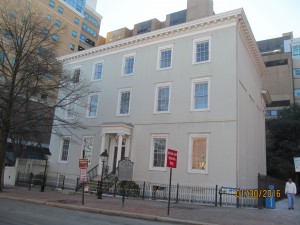
When I strode through the official “White House of the Confederacy” in Richmond, Virginia two weeks ago today
2016131richmondeasterns 039

The “White House of the Confederacy,” Richmond, Virginia. President Abraham Lincoln met with one of his Generals in the Library (lighted window)within hours after Union troops had secured Richmond. In being in that room two weeks ago, I was awe struck by the spirit of the President and also by the spirits of the Confederate opposition that discussed strategy with Jefferson Davis the President of the Confederacy in the room on the second floor…a conference room: Lee, Jackson, the Confederate Generals. That room is on the second floor of this house. The ghosts in this historic home speak to us today.

Lincoln had to create things as he went, dealing with a complex political issue: slavery, while deciding to fight a war to preserve a divided nation.

How did Abraham Lincoln handle pressure and political opportunists? He did not have press agents and spinmasters and talk show hosts and superior punditry critiquing his every move and loading him up with advice.

Though he did have the “crusading editors” and “editorial boards” of his day. Let’s take a look at the Big Guy from Illinois

In the days of Lincoln, media coverage was simply print media. However, the amount of reporting on the burning issues of the day was far more detailed than today with dozens of newspapers presenting the chronicles of burning issues. For Lincoln’s presidency was the presidency of the nation’s greatest crisis in its eighty-five year history:

The Civil War.

It is interesting to note how President Lincoln conducted himself in dealing with America’s interests, its factions, pulling him to free the slaves.

When Lincoln was running for the Presidency in 1860 at the Republican Convention in riproaring Chicago, he was up against James Seward, a powerful New York politician. However, the western states at the time were highly distrustful of the New York political machine. (Has anything really changed? They are still distrustful today!)

Lincoln won over support by taking a position of what was good for the nation as a whole.

Taking a Position and Working To it

Lincoln first gave notice of his potential for the Presidency when he impressed Horace Greeley, influential editor of the New York Tribune with a fiery speech at the Cooper Union in February, 1860, delivering a sharp criticism of the South, hard on the heels of South Carolina’s secession from the Union. The speech included these words,

You say you will not abide the election of a Republican President. In that supposed event, you say, you will destroy the Union; and then, you say, the great crime of having destroyed it will be upon us! (The northern states) That is cool. A highwayman holds a pistol to my ear, and mutters through his teeth, “Stand and deliver, or I shall kill you, and then you will be a murderer!”

Greeley printed the speech in his Tribune the next day, scooping the other New York papers, by simply asking Lincoln for a copy of the speech. The subsequent printing in the popular Trib, sent Mr. Lincoln on his way. As William Harlan Hale’s biography of Mr. Greeley (Horace Greeley: Voice of the People)describes the scene at “The original Trib’s” offices, as remembered by Amos Cummings, a young proofreader:

Amos Cummings, then a young proofreader, remembered the lanky westerner appearing over his shoulder amid the noise of the pressroom late at midnight, drawing up a chair, adjusting his spectacles, and in the glare of the gaslight reading each galley (of the Cooper Union speech) with scrupulous care and then rechecking his corrections, oblivious to his surroundings.

A Comeback President

Lincoln had been a highly successful politician from Illinois in the 1830s and 1840s. He was three times elected to the state legislature, and The Kunhardts’ The American Presidency reports he was “a recognized expert at forming coalitions…he learned how to keep secrets, how to trade favors, how to use the press to his advantage. And he cultivated his relationship with the party hierarchy.”

Graff’s book writes that Lincoln was described as “ruthless,” that he “handled men remotely like pieces on a chessboard.” Humor and frankness were character traits.

Lincoln was elected a congressman, only to serve just one term.

Lincoln had been practicing corporate law privately and had lost interest in politics by 1854, until the repeal of The Missouri Compromise, which had restricted slavery to the southern states. Lincoln felt stirred to come back. He spoke out against the spread of slavery, running for the senate in 1858 against William Douglas, unsuccessfully.

Saving the Union His Mantra

As the furor over slavery and the South’s threats to secede grew, a crisis of spirit and purpose in this nation which makes today’s concerns about terrorism as a threat to America, pale in comparison, Lincoln realized that the Union was the larger issue.

He expressed this in response to Horace Greeley, editor of the New York Tribune, an influential figure at the Republican (Whig) Convention in Chicago in 1860. Greeley was the kingmaker at the 1860 Chicago convention who eventually swung the western states for Lincoln, giving the man from Illinois the nomination on the third ballot over William Seward, the candidate of the Thurlow Weed “New York Machine.”

Greeley then tried to influence the President-Elect to free the slaves. (Lincoln was being lobbied by the still-powerful Weed-Seward faction to compromise with the southern states on the issue of slavery).

Standing Tall Against Pressure.

Lincoln refused to free the slaves as one of the first acts of his presidency, standing firm to hold the union together, when he announced his attention not to do so, on his way to Washington after being elected. His words in this time of international tension, are worth remembering as America considers starting a war for the first time. Lincoln said:

I have often inquired of myself what great principle or idea it was that kept this Confederacy (the Union, he means), so long together. It was not the mere matter of separation of the colonies from the motherland, but that sentiment in the Declaration of Independence which gave liberty not alone to the single people of this country, but hope to all the world, for all future time. It was that which gave promise that in due time the weights would be lifted from the shoulders of all men, and that all should have an equal chance.

Seeing the Big Picture.

After Fort Sumter was fired upon, Lincoln was pressured harder to free the slaves. Still, Lincoln held firm. Mr. Greeley published a blistering open letter to the President, he called “The Letter of Twenty Millions,” meaning his readers (slightly exaggerated)in The New York Tribune.

Greeley’s letter took the President to task for not freeing the slaves now that the Civil War was on, writing, “all attempts to put down the rebellion and at the same time uphold its inciting cause are preposterous and futile.”

President Lincoln responded with an open letter which Greeley published in The Tribune. President Lincoln’s letter is instructive as to how a President moves in crisis, when a nation is ripped apart to calm and state his position. He begins with a conciliatory tone, calming Greeley’s bombast:

…If there be perceptible in it (Greeley’s letter) an impatient and dictatorial tone, I waive it in deference to an old friend whose heart I have always supposed to be right.

As to the policy I “seem to be pursuing,” as you say, I have not meant to leave any one in doubt. I would save the Union. I would save it in the shortest way under the Constitution.

The sooner the national authority can be restored the nearer the Union will be – the Union as it was.

If there be those who would not save the Union unless they could at the same time save slavery, I do not agree with them.

If there be those who would not save the Union unless they could at the same time destroy slavery, I do not agree with them.

If I could save the Union without freeing any slaves, I would do it – if I could save it by freeing all the slaves, I would do it – and if I could do it by freeing some and leaving others alone, I would also do that.

What I do about slavery and the colored race, I do because I believe it helps to save this Union, and what I forbear, I forbear because I do not believe it would help to save the Union.

I shall do less whenever I shall believe what I am doing hurts the cause, and I shall do more whenever I believe doing more will help the cause.

I shall try to correct errors when shown to be errors, and I shall adopt new views so fast as they shall appear to be new views.

I have here stated my purpose according to my views of official duty, and I intend no modification of my oft-expressed personal wish that all men everywhere could be free, Yours

A. Lincoln

(Editor’s Note:That is Presidential! It leaves no doubt as to who is in charge and who is responsible and why. How refreshing!)

Wearied by War

Horace Greeley described the toll the Civil War had taken on Mr. Lincoln, seeing him in person shortly before General Robert E. Lee surrendered. Greeley wrote:

Lincoln’s face had nothing in it of the sunny, gladsome countenance he first brought from Illinois. It is now a face haggard with care and seamed with thought and trouble…tempest-tossed and weatherbeaten, as if he were some tough old mariner who had for years been beating up against the wind and tide, unable to make his port or find safe anchorage…The sunset of life was plainly looking out of his kindly eyes.”

Posted in Uncategorized

FULL HOUSE FOR TRANSIT DISTRICT MEETING–EXCLUSIVE!

Hits: 127

WPCNR MAIN STREET JOURNAL. Special to WPCNR by Peter Katz. February 11, 2016:

About 130 people filled the auditorium at the White Plains Public Library Thursday evening for the first in a series of three public meetings on redevelopment of the White Plains transportation center and portions of the downtown and Battle Hill.

The announced purpose of the meeting was to collect ideas and comments from the public about the redevelopment concept. Several employees of the consulting firm Parsons Brinckerhoff, which was hired by the city to coordinate the study, were stationed in the lobby area outside of the auditorium to chat with residents and listen to their ideas. Paper forms were available on which people could express themselves.

About a dozen different poster displays covered various aspects of the train station’s history, and its place as the third busiest station in the Metro-North system. The meeting itself consisted of remarks by Mayor Tom Roach and a presentation by Planning Commissioner Chris Gomez.

Mayor Roach said that the goal was to add more life and excitement to the train station area, while enhancing the connection between the train station and the rest of the downtown. The Mayor was critical of some planning concepts which led to the growth of the city during urban renewal in the 70’s and 80’s.

He said some pedestrian routes through the downtown are not inviting, and singled-out the Verizon building on Main Street  and the Galleria mall as being too imposing.

“Streets are not designed for people,” he said, adding that they needed to “…have more life, more ground level retail.”

Mayor Roach noted that people on Metro-North trains coming into White Plains from the south see a vista of tall buildings in a bustling urban setting, but enter a wasteland once they’re off the train. He called for better integration of various modes of transportation to make it easier to make connections when arriving in town. With reference to the downtown’s one-way boulevards which enable the city to handle the traffic which made it an office and shopping mecca, he suggested that the study examine “…how many of these roads can go back to two way.”

Gomez said the study will look at what could be added in the way of public space and various types of development in the train station area. Some possibilities: a permanent farmer’s market; an outdoor performance space; new parks; storefront retail; increased amenities to serve train travelers and pedestrians.

Members of the audience were not invited to speak, either to comment on what they had heard or express to the assemblage their ideas for a redeveloped White Plains Transit District.

There were two opportunities for public input during the meeting when audience members were asked to send one-word text messages to a special number, to tell what they’d like to see happen and what they felt most needed improvement. There did not seem to be a consensus on the first point, but parking was the clear winner among needed improvements.

After the meeting, Mayor Roach told WPNCR that the $1-million grant which pays for this study provided a unique opportunity for the city to develop a complete conceptual plan for the train station and adjacent areas without being at the mercy of developers. When it is completed, the city would be in the position of being able to tell developers what the city needs built, rather than the other way around.  The Mayor added that he’s confident developers will be waiting in line to get a piece of the action.

Posted in Uncategorized

WHITE PLAINS WEEK FOR FRIDAY FEB 12–ONLINE NOW–www.whiteplainsweek.com or see it on TV AT 7:30 PM-CHANNEL 45 FIOS COUNTYWIDE, CHANNEAL 76 ON CABLEVISION IN WHITE PLAINS…7:30 PM

Hits: 141

2015710WPW 037

WHITE PLAINS WEEK  FOR FEBRUARY 12 HEATS UP

HOT NEWS TO KEEP YOU WARM ON A COLD NIGHT!

SEE THE NEWS COMMENTATORS THAT TRANSFIX THE CITY ON

www.whiteplainsweek.com

OR ON YOUTUBE AT

PETER KATZ JOHN BAILEY JIM BENEROFE ON

MS. DISTRICT ATTORNEY JANET DIFIORE MOVES ON UP TO THE BIG COURT–WE HAVE VIDEO.

COMMENTARY ON THE EFFORTS TO SEEK PUBLIC INPUT AT TONIGHT’S TRANSCENTER MEETING–

THE MYSTERIOUS COMMISSIONER ADVERTISEMENT

THE LACK OF OUTREACH TO THE PEOPLE ABOUT THE TRANSCENTER MEETING.

PETER KATZ REVIEWS

ALWAYS PATSY CLINE

AT WESTCHESTER BROADWAY THEATRE

WHO WILL SELL THE WHITE PLAINS SCHOOL BUDGET? BUDGET MASTER FRED SEILER IS RETIRING.

PUBLIC RESTROOMS COME TO LOUCKS FIELD…NO MORE PORTOSANS

THE DECLINE AND FALL OF THE HOLY CLINTON EMPIRE

20151001bombers 012

PETER KATZ WITH A B-24 AT WESTCHESTER AIRPORT

2015313panero 009

TALKIN’ WHITE PLAINS–JOHN BAILEY AND JIM BENEROFE AT “THE LIMITS” AFTER THE SHOW

YOU CAN SEE WHITE PLAINS WEEK

 ON OLD-TIME TV AT 7:30 PM

ON

VERIZON FIOS CHANNEL 45 (THROUGHOUT WESTCHESTER COUNTY

OR

IN WHITE PLAINS, CABLEVISION CHANNEL 76


Posted in Uncategorized

TARGET TRANS CENTER: PUBLIC HAS ITS FIRST SAY IN HOW TO DEVELOP HUGE AREA AROUND WHITE PLAINS TRANSCENTER TONIGHT AT 6:30 P.M. WHITE PLAINS LIBRARY. HAVE YOUR SAY TONIGHT!

Hits: 122

2015803 050

TARGET TRANSCENTER DEVELOPMENT MEETING TONIGHT AT WHITE PLAINS LIBRARY–6:30 PM. DO YOU LIVE IN BATTLE HILL, FERRIS AVENUE, FISHER HILL, OWN A BUSINESS ON MAIN STREET, HAMILTON AVENUE? YOU NEED TO BE THERE TO TELL THE CITY CONSULTANT WHAT ANY NEW TRANSCENTER TO BE BUILT IN THIS AREA NEEDS, WHAT COMMERICAL PROPERTIES MIGHT BE AN IMPROVEMENT, PARKLAND, TO-AND-FROM STATION SERVICES, PICKUP AND DROPOFF, BRONX PARKWAY IMPROVEMENTS, PARKING REORGANIZATION, ATTRACTIONS AND AMENITIES THE AREA NEEDS TO REINVENT ITSELF. — TONIGHT IS YOUR FIRST CHANCE TO TELL THE CONSULTANTS AND CITY OFFICIALS WHAT YOU WANT.

CITY OFFICIALS AND PARSONS BRINKERHOFF, THE CONSULTING FIRM SELECTED BY THE CITY TO FORMULATE AND DECIDE THE BEST POSSIBLE WAY TO REDEVELOP, REDESIGN AND REPURPOSE THE WHITE PLAINS RAILROAD STATION, PLAZA, AND A VAST CIRCULAR AREA SURROUNDING THE CITY’S WESTERN MAIN STREET GATEWAY INVITES THE PUBLIC TO THE FIRST MEETING TO SOLICIT RESIDENTS’, COMMERICAL INTERESTS AND CONCERNED PERSONS COMMENTARY ON HOW THAT WESTERN GATEWAY WILL BE DEVELOPED IS THIS EVENING AT THE LIBRARY.

THE CITY HAS NOT GIVEN INDICATIONS OF WHAT PROGRAM FORMAT WILL BE USED –FREE WHEELING DISCUSSION OR A STRUCTURED FORMAT.

THE MEETING BEGINS AT 6:30 P.M IN THE SECOND FLOOR AUDITORIUM OF THE WHITE PLAINS LIBRARY. ALL ARE WELCOME.

NO WRITTEN INVITATIONS WERE SENT TO ALL RESIDENTS OF THE CITY TO THIS REPORTER’S KNOWLEDGE AND CITIZENS HAVE NO IDEA OF WHAT TO EXPECT.

THE MEETING WILL NOT BE TELEVISED LIVE BUT WILL BE VIDEO TAPED FOR FUTURE BROADCAST ON WHITE PLAINS TV.

Posted in Uncategorized