Con ED VARIABLE RATES CREEP UP TO WESTCHESTER POWER FIXED RATES IN JANUARY


WPCNR THE POWER STORY. Special to WPCNR from Greenburgh Town Supervisor Paul Feiner. February 3, 2023:

This is a comparison of the Con Ed and ESCO rate for the month of January prepared by sustainable Westchester. I try to post the comparison monthly -around the 5th of every month. The comparison shows that Con Ed rates are still lower than the ESCOs but residents should be aware that the ESCO rates can’t go up or down till October, 2024 and Con Ed rates can fluctuate each month.  The comparison is prepared by Sustainable Westchester.

Anyone who wishes to opt out can easily opt out of the program. Many villages in Greenburgh and other localities in Westchester participate in the Sustainable Westchester initiative which uses green energy.

Greenburgh Residential Electricity Supply Rate Comparison –

January 2023 Westchester Power vs. Con Edison Westchester Power Program

 Background

The Town of Greenburgh participates in a Community Energy Program known as Westchester Power. This electricity supply program is managed by the local nonprofit Sustainable Westchester on behalf of the 29 participating municipalities in Westchester County. The program empowers the county and its residents to actively work towards a vision for a healthy and sustainable future by supporting renewable energy. Residents benefit from the fixed price program model that provides cost control assurance on their electric supply charges.

Westchester Power Contract – January 2023 Rate Comparison The Westchester Power program offers two supply options for 100% Renewable and Standard. These rates are fixed until 10/31/2022.

January 2023 Residential Rates Average WP = WESTCHESTER POWER)

Con Edison Standard Rate WP 100%Renewable Fixed Rate      WP Standard Supply

                                   12.97¢/kWh                        15.28¢/kWh               13.36¢/kWh

 Below is an approximate electricity cost comparison for a hypothetical Greenburgh resident in January who consumed 500 kWh of electricity for the month –

For a Greenburgh resident on the ConEd supply, that customer would have been charged roughly $64.85 electricity supply –

For customers enrolled in Westchester Power under the 100% Renewable fixed rate, the charge would have been roughly $76.40 – ($11.55 CENTS MORE)

 A Westchester Power Standard user’s charge would have been $66.80 Energy Market Prices Going (Forward) (only $1.95 cents more per kilowatt hour).

The market forecasts for this Winter expect prices for electricity to go substantially higher for customers.

 Con Edison has warned customers of surging prices for this Winter and has already seen their rates climb.

 Again, Westchester Power rates remained fixed month-to-month regardless of market prices.

For insight into electricity price rises in New York and the reasons for them, refer to these useful statements from official sources:

Con Edison Offering Assistance As Energy Market Prices Surge New York Independent System Operator Press Release – Global Economic Factors Continue to Drive the Cost of Energy up in New York Governor Hochul Announces Actions to Prepare New Yorkers for Rising Global Energy Costs

This Winter Options for Greenburgh Residents

 Residents who want to enroll, change their supply, or opt out can visit the Westchester Power web page and fill out the applicable online form on the Sustainable Westchester website at

sustainablewestchester.org/wp/conedenergychoices/, email [email protected], or call Sustainable Westchester at (914) 242-4725 ext. 111 for live assistance.

● Want to enroll?

 Greenburgh residents who are not currently enrolled in the program (including those who have previously opted-out of the Westchester Power electricity supply in the past) still have the ability to opt-in and participate, as the current contract price is locked in until October 31, 2024. ● Want to change supply options? ○ For residents already participating in the program at either the 100% Renewable or Standard Supply fixed rates, you can change your supply option at any time. Whether you want to move into the 100% Renewable supply to maximize your clean energy impact, or switch to the Standard Supply for a better financial option, the choice is yours. ● Want to opt-out of Westchester Power altogether? ○ Residents participating in the program can opt-out at any point they wish with no hassle, penalty, or fees

Posted in Uncategorized

SATURDAY WHITE PLAINS WEEK THE FRIDAY FEBRUARY 3 REPORT — THE 22ND ANNIVERSARY OF WPW-FOUNDED FEBRUARY 2001. SEE IT on WWW.WPCOMMUNITYMEDIA.ORG

A MOST ASTONISHING VISITOR FROM OUTER SPACE.
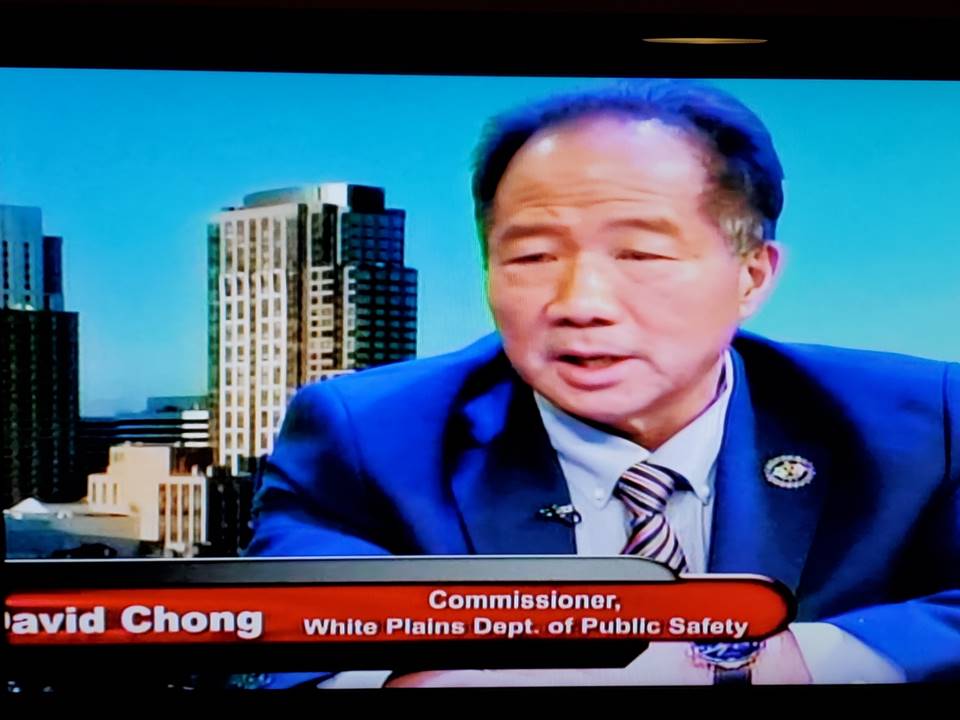
DAVID CHONG WITH ADVICE TO PARENTS, FAMILIES, AND YOUNG ADULTS ON HOW TO GUARD AGAINST FALLING VICTIM TO FENTANYL-ENHANCED SUBSTANCES.
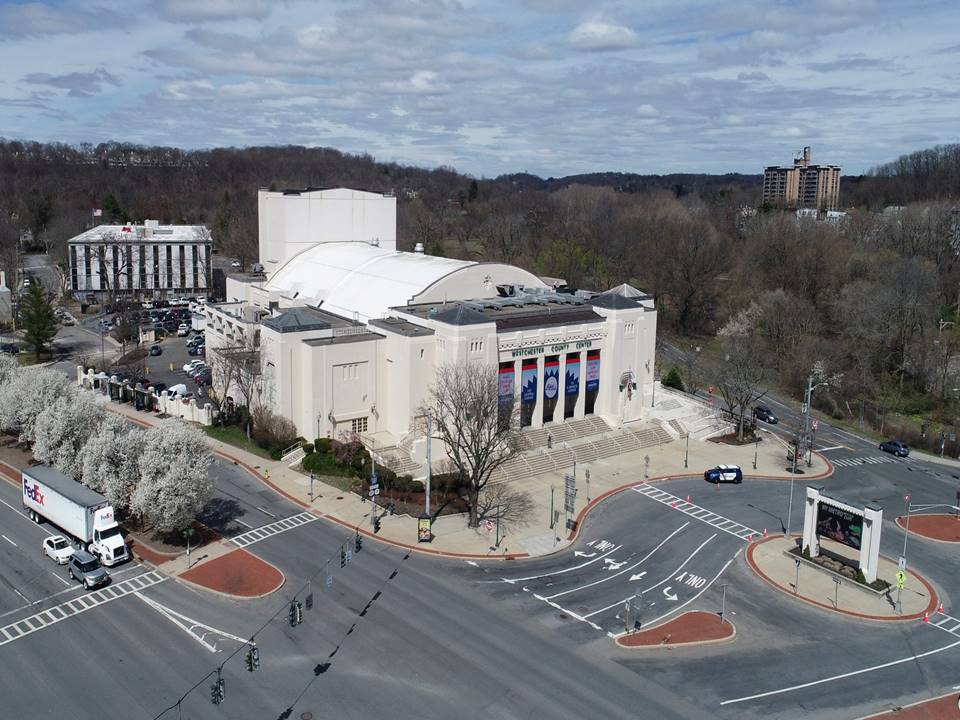
THE COUNTY CENTER IS COMING BACK- COUNTY EXECUTIVE LATIMER ON THE CENTER PLANS
SERVICE EMPLOYEES INTERNATIONAL 32BJ IS TARGETED AGAIN FOR REPLACEMENT. UNION SUES NEW CONTRACTOR FOR VIOLATING NATIONAL LABOR RELATIONS BOARD RULE. 50 FACE LOSS OF JOB, HEALTH BENEFITS AT ONE OF WESTCHESTER’S BIGGEST COMPANIES $39 BILLION IN NET REVENUE IN 2022. WILL COUNTY STEP UP AND STEP IN?
HOW DR. KATELYN JETTELINA “YOUR LOCAL EPIDEMIOLOGIST” FEELS ABOUT ENDING THE COVID STATE OF EMERGENCY: SOBERING REALITY ABOUT WHAT LIES AHEAD
HOSPITALIZATIONS FOR COVID CONTINUE AT 46% OF NEW ADMISSIONS IN 7 COUNTY MID-HUDSON REGION , 42% OF NEW ADMITTEES ON LONG ISLAND, 40% OF NEWLY ADMITTED PATIENTS IN NEW YORK CITY
WESTCHESTER SEES 5TH WEEK OF CONTAINMENT OF COVID NEW CASES.
JOHN BAILEY AND THE NEWS

THIS WEEK EVERY WEEK

ON WHITE PLAINS WEEK

FOR 22 YEARS.

Posted in Uncategorized

SATURDAY NIGHT AT 7 — WHITE PLAINS TV -A FENTANYL SPECIAL ON WPTV’S “PEOPLE TO BE HEARD” POLICE COMMISSIONER DAVID CHONG ON THE FENTANYL SITUATION IN WHITE PLAINS AND WESTCHESTER ON FIOS 45 COUNTYWIDE AND IN WHITE PLAINS OPTIMUM CH 76 AND ON THE INTERNET www.wpcommunitymedia.org

WHO’S OVERDOSING? WHAT A FENTANYL-LACED DRUG CAN DO TO YOU? WHAT PARENTS AND YOUNG ADULTS HAVE TO KNOW ABOUT FENTANYL; HOW A NARCAN ANTI-OVERDOSE TREATMENT WORKS; THE PENETRATION OF FENTANYL IN THE WESTCHESTER-WHITE PLAINS COMMUNITIES; THE EXTENT OF THE DANGER. WHY IT CAN KILL YOU OR YOUR CHILD. EVERYTHING YOU NEED TO KNOW ABOUT THE FENTANYL THREAT AND WHAT YOU NEED TO TELL YOUR CHILD ABOUT IT. HOW CAN PARENTS INTERCEDE TO SAVE THEIR CHILD
Posted in Uncategorized

ARE WE STILL IN AN EMERGENCY?

Your Local Epidemiologist

Gift a subscription

By Dr. Katelyn Jetelina

On Monday WHO’s Emergency Committee gave official word that they voted to renew the Public Health Emergency of International Concern. They are likely teeing up for “the end” in 2023.

The U.S. is far more confident in “the end” of the national emergency. On Monday, the White House announced that they are ending it in mid-May.

An inflection point is clearly on the horizon, albeit with uncertainty. This leads to legitimate questions: Are we still in an emergency? What will the future hold? What happens next?

Are we still in an emergency?

There is no “level of disease” that defines a pandemic or emergency. Even if there was an objective metric, the reality is that this isn’t determined through epidemiology alone. Where we, as a society, place SARS-CoV-2 in our repertoire of threats is a collective decision—a psychological, cultural, and political decision.

Every day we consciously (or subconsciously) decide how much risk and suffering we are willing to accept: How many people get the booster? How many people wear a mask? How many people order free antigen tests? How many deaths, and among whom, are we willing to accept?

This has sparked an intense tug-of-war among scientists, leaders, and the public throughout the pandemic: a push towards “normalcy” from some and push back towards “urgency” from others. All individuals and societies fit somewhere on this spectrum. And one’s position may (and perhaps should) change with time.

How did winter play out?

How we fared this winter gives us a good idea as to whether we are still in “emergency” phase in the U.S. We essentially had two tests:

  1. How well did our immunity hold up against a constantly changing Omicron? According to varying hospitalization models from early fall, the 2022-2023 winter played out as a best case scenario for COVID-19. Even the best case scenario, though, led to a peak of 48,000 hospitalizations.National projection of hospitalizations. Slide from ACIP meeting on Sept 1, 2022
  2. Could our hospital systems handle the stress of a novel virus on top of the “normal” respiratory viruses? We hadn’t previously seen the impact of all of them at the same time. In addition, health care workers are increasingly burnt out, and hospitals are increasingly understaffed.
  3. Given all of this, hospitals did okay this winter. Pediatricians were drowning, particularly because of a massive RSV wave. Emergency rooms were overcrowded with sickness. But a COVID-19 emergency declaration wouldn’t necessarily help with either of these. Hospitals were not overwhelmed with adults because of our immunity wall, and I’m increasingly convinced there was viral to viral interaction—in other words, we didn’t see all three viruses peak at the same time.

Given this, I agree that we are not in an emergency phase in the U.S. An emergency declaration was appropriate when we had rational hope that transmission could be interrupted on a population level and when we needed extreme measures to prevent collapse of healthcare systems.

We are past this. Continuing the emergency would not be constructive given public sentiment and lack of funding anyway.

As one epidemiologist told me, “If it’s always an emergency, nothing’s an emergency.”

What will the future hold?

If we end the emergency, it begs the question: What phase are we in?

I don’t believe we are in an endemic phase— a state of predictability. I think we are on our way, and COVID-19 will eventually fall into seasonal patterns. But this will likely take years.

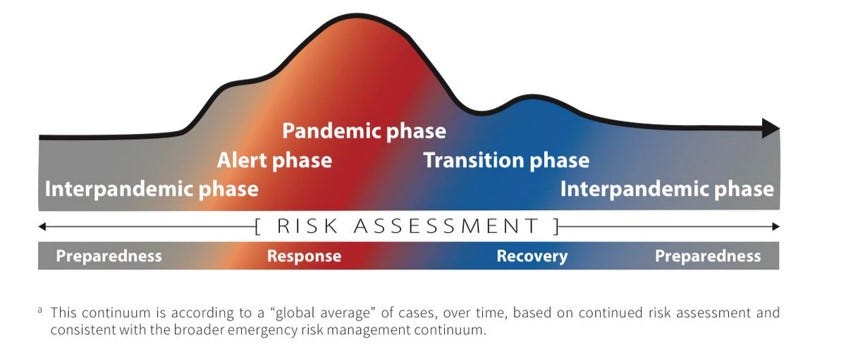
Until then, we will be in an awkward space between pandemic and endemic. Epidemiologists don’t have an official word for this phase. WHO flu risk management people would probably call this the “transition” phase.

Source for Figure Here

We will continue to see the virus ebb and flow—it will mutate, we will get waves, people will continue to miss work and daycare, and people will continue to be hospitalized and die, particularly those over 65 years and immunocompromised. The end of an emergency does not mean the end of disruption or suffering.

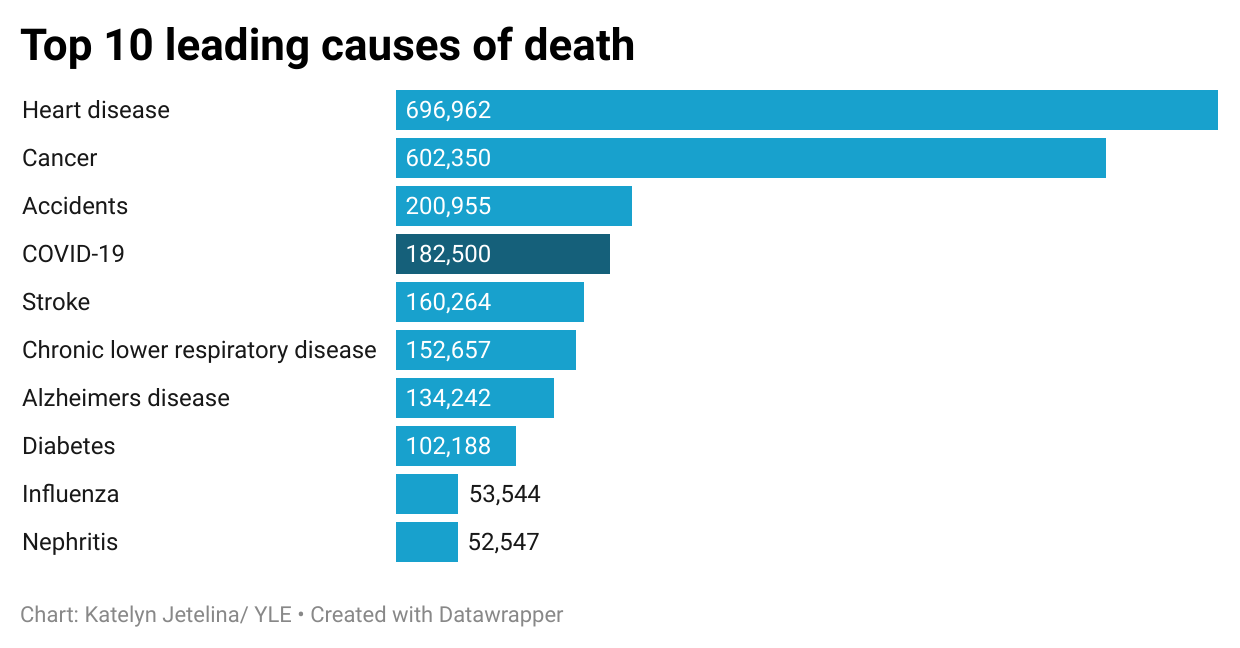
Today, roughly 500 Americans are dying each day from COVID-19. At this rate, SARS-CoV-2 will be the fourth leading cause of death in the U.S. in 2023—about triple the threat of influenza.

(Data for other causes of death was pulled using 2020 data from CDC here; COVID-19 deaths are projected for 2023 given average rate as of February 1, 2023.)

What happens next?

Unraveling the public health emergency may get messy.

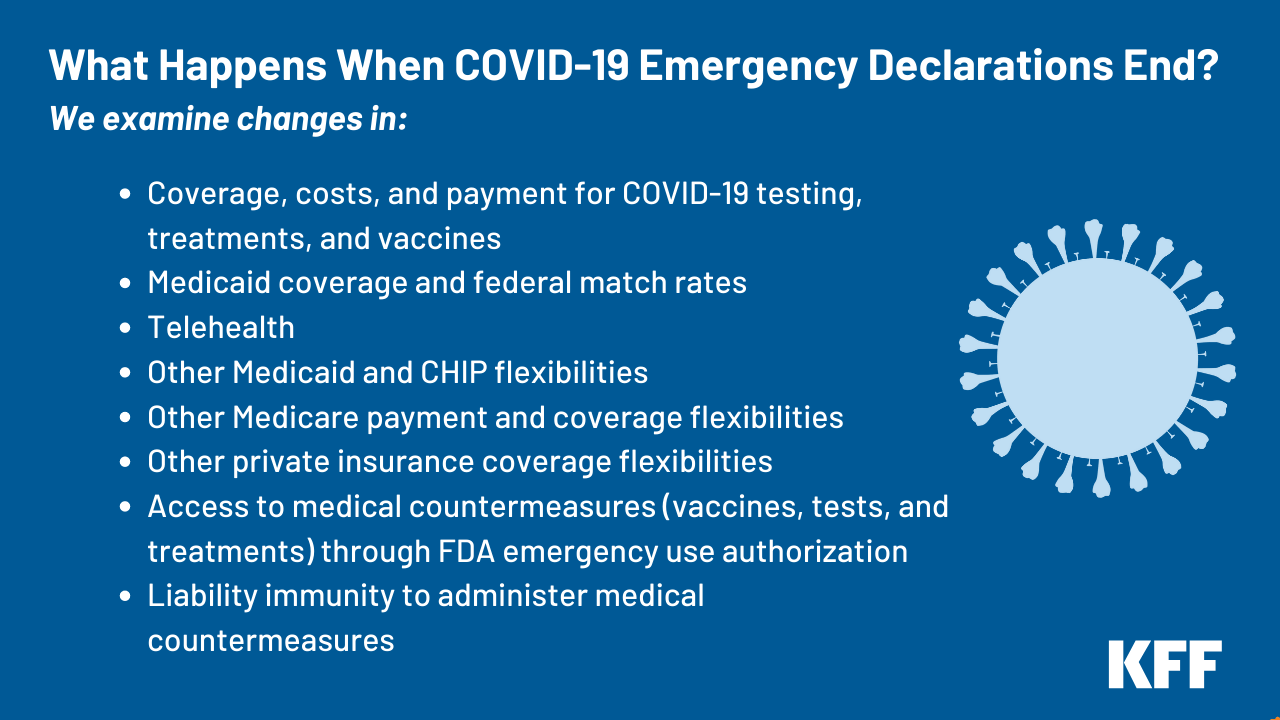
It will certainly take time (hence the 3 month lag time). The Kaiser Family Foundation outlined the implications nicely:

What Happens When COVID-19 Emergency Declarations End? Implications for  Coverage, Costs, and Access | KFF

In addition:

  • This does not impact the Emergency Use Authorization of vaccines and therapeutics from the FDA. In other words, these will still be available.
  • HOWEVER, the ending of funding for testing and vaccines is a real cause for concern.
  • Once our free supply is out, everything will be privatized. Pfizer announced its vaccine will cost $130 per dose. Insurance will have to cover it, like the flu vaccine. This will, no doubt, fuel deep inequities in the U.S.
  • And it is part of a much larger, deeply flawed system of pharmaceutical profiteering that this country hasn’t got the ethical fortitude to address yet.

Our work is not done

Most importantly, the end of the emergency doesn’t mean our work is done. There is no infectious disease more insidious or with greater impact on global mortality, morbidity, and health care systems than COVID-19.

  • As individuals, we still need to get vaccinated. We still need to leverage antigen tests. We need to invest in better filtration and ventilation. We still need to protect the most vulnerable.
  • As public health officials, we must decide the minimum structure needed moving forward. Invest in wastewater monitoring. Continue to report hospitalizations (and get better at it). Commit to transparent and effective communication. Vaccine innovation is needed.
  • As a society, we MUST put real energy, innovation, and investment into repairing and strengthening our health and public health systems. The new normal cannot fall back to a pre-COVID normal. We must be bigger, better, and smarter. This means the very notion of for-profit healthcare needs to be fixed. In public health, we must figure out how to get out of the cycle of panic and neglect through preparation. We are LESS prepared for the next pandemic, given loss of trust, polarization, changing information echo-systems, and mis/disinformation.

Sadly, I’m starting to see denial and wishful thinking.

I hope this changes as it will definitely not be another 100 years before the next pandemic emerges to grip the globe in a choke hold.

Bottom line

In the U.S., the end of the emergency is coming. I agree with this decision, but this certainly isn’t the end of COVID-19 or public health threats.

In fact, this end is the beginning. We have our work cut out for us.

Love, YLE


“Your Local Epidemiologist (YLE)” is written by Dr. Katelyn Jetelina, MPH PhD—an epidemiologist, data scientist, wife, and mom of two little girls. During the day she works at a nonpartisan health policy think tank and is a senior scientific consultant to a number of organizations, including the CDC. At night she writes this newsletter. Her main goal is to “translate” the ever-evolving public health science so that people will be well equipped to make evidence-based decisions. This newsletter is free thanks to the generous support of fellow YLE community members

Editor’s Note: Your Local Epidemiologist is reprinted by WPCNR with permission.

Posted in Uncategorized