
 |
District 92 | News You Can Use Westchester County Senior Law Day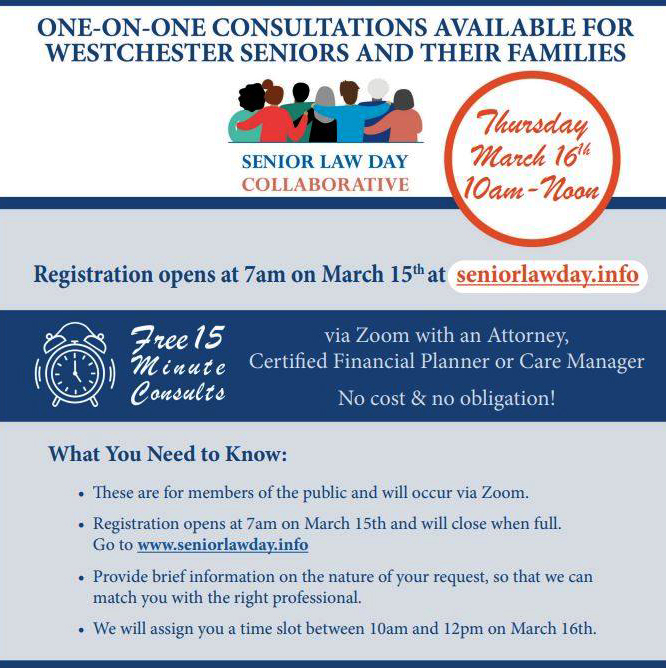 Westchester County is offering senior citizens the opportunity to have a private, 15-minute Zoom consultation with a lawyer or other professional, at no cost and no obligation. These sessions will be held from 10 a.m. to 12 p.m. on Thursday, March 16. Sign-up opens at 7 a.m. on Wednesday, March 15, at www.seniorlawday.info. |
COVID HOSPITALIZATIONS GROW DAILY IN MID-HUDSON REGION — PROJECT TO 1,000 COVID PATIENTS ADMITTED A WEEK
Hits: 12
White Plains Hospital sees 25 new hospitalized for covid Monday, Tuesday Wednesday Projecting to 42 a week
WPCNR COVID SURVEILLANCE. Statistics from NY Hospitalization Tracker. Observations & Analysis by John F. Bailey. March 9, 2003 UPDATED 11:59 PM:
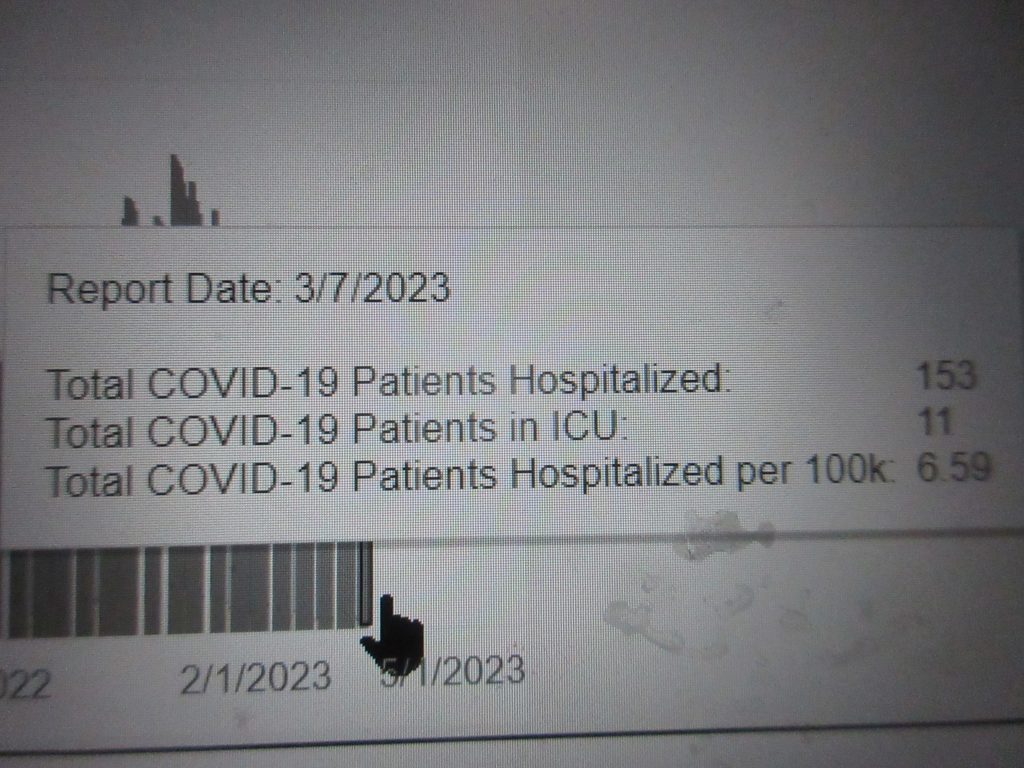
Hospitalizations analysis by the NY State Health Department reports the Mid-Hudson Region of Westchester, Orange, Rockland, Dutchess, Ulster, Putnam and Sullivan Counties ( a total 7 county population of 2,363,622) continued at the rate of 6.59 of new persons hospitalized for covid in 100,000 people per day Tuesday March 7 for covid. That 6.59 is 5 times the previous rate of less than two persons per 100,000 of a county population
The number of persons in the hospitalized Tuesday in the 7 county region was 155 on March 7. If that continues you would see 1,000 a week hospitalized for covid across the 7 counties.
Meanwhile, locally in White Plains Hospital Medical Center, on March 6, Monday there were 11 new hospitalizations, 7 of whom were admitted for treatment of Covid. On Tuesday, March 7, there were 12 new admissions, and 10 of them were admitted for covid. These hospitalizations were for treatment of covid due to covid specifically.
On Wednesday, March 8, White Plains Hospital admitted 11 persons and 8 were hospitalized with covid, bringing the covid hospitalizations total since February 15 (22 days) to 129 of 251 admitted to the hospital, a percentage 51% of admissions being specifically for covid, an average of 6 a day admitted for covid, that at that rate would result in 42 new covid patients admitted a week White Plains Hospital.
YOUR LOCAL EPIDEMIOLOGIST ON COVID REVISIONISM
Reprinted with permission. March 8, 2023
The House Select Subcommittee on the Coronavirus Pandemic has started to convene on everything from COVID-19 origins to vaccines. Last week, they called in four scientists to discuss policies, including lockdowns.
COVID-19 control measures are important to discuss. We still don’t know what policies worked best and why.
Pandemic health protections had benefits AND harms. There were trade-offs, just like with any health policy. Governments around the world used a wide variety of policies before vaccines were developed.
However, a nuanced discussion of the trade-offs inherent in pandemic control measures was not achieved last week. The Great Barrington Declaration (GBD), for example, dominated the conversation.
It looks like we are entering a new phase of the pandemic—revisionism.
Great Barrington Declaration
In October 2020, the GBD advocated for a distinct approach: isolate the vulnerable while allowing infections to spread among lower-risk members of the population. It claimed this would ultimately achieve herd immunity without the economic and social toll of lockdowns.
The authors of the GBD didn’t include any scientific evidence or models, and it was never peer-reviewed.
The idea went viral. A few influential people listened. Trump met with the GBD authors in the Oval Office. Trump’s coronavirus czar, Scott Atlas, embraced and adopted the GBD—for example, he successfully curbed federal testing programs. Florida governor Ron DeSantis was advised by the GBD. But scientific consensus rejected the idea.
Two of the GBD authors were invited to testify last week. One congresswoman said: “History is proving [them] to be right.” But were they right?
The committee would have benefited from looking into the scientific evidence against the GBD and why, ultimately, public health dismissed their ideas.
Epidemiological problems with GBD
Last year mathematicians published epidemiological models to answer the question: What would it have looked like if we had actually deployed the GBD?
They found that in a town of 1 million people in England:
- Doing nothing (i.e. no shielding of the vulnerable) would have resulted in 415 deaths per 100,000—equivalent to 230,795 total deaths in England.
- This is likely a conservative measure, given that the model didn’t take into account the collapse of healthcare.
- “Perfect shielding” (i.e. the GBD approach) would have resulted in 87.6 deaths per 100,000—equivalent to 50,000 total deaths among younger populations.
So, in theory, perfect shielding would save lives compared with no shielding. But theory is very different from practice. There are three major issues:
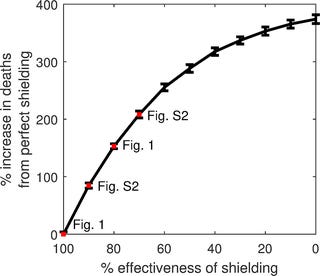
- It is impossible to 100% shield vulnerable adults. In England, 3 in 4 vulnerable people live with other people. There is no “them,” there is only “us,” so shielding them would not be perfect. If shielding had been 80% effective (instead of 100%), the researchers found that there would be massive outbreaks among the vulnerable, resulting in 221.7 per 100,000 deaths. Shielding entire populations worked in some countries in the short term (averting mass death, hospitalization, and orphanhood). It also worked in some Alaskan villages in the 1918 flu pandemic. But trying to shield sub-populations would spark superspreader events. Research shows that infection in younger people led to infections and deaths in older people.
- The GBD relied on large numbers of lower-risk individuals becoming infected to build up immunity in the population, yet many people would have likely still changed their behavior to avoid getting infected and sick. Even before England’s first lockdown, there were dramatic changes in behavior—people voluntarily reduced their contact with others. And if health services had been under strain, people would probably have reduced their contacts even further. This would make it even harder to reach herd immunity.
- Herd immunity from infection would only have conferred indirect, temporary protection to the shielded vulnerable people. We see this today—although a large proportion of the population has immunity, older adults are still vulnerable to death.
Ethical and logistical problems with GBD
The modeling above assumes that it is actually logistically possible in the U.S. to somehow isolate tens of millions of Americans. This assumption has problems:
- How would we have rapidly and accurately identified “the vulnerable”? The U.S. doesn’t have a universal healthcare system or registry.
- How would we have cared for so many isolated people for such a long time? This would have been a LOT of people. Where exactly would they have gone? The GBD made some vague suggestions about “empty hotel rooms.” Did we really have enough rooms for around 100-130 million people?
- What about long COVID-19 among the population with infections?
The need for better discussion
Many countries regrouped after the 2003 SARS pandemic, and it was incredibly helpful for their future preparedness and response. We do need to reflect on what went right during the pandemic, what went wrong, and how to do better in the future, like:
- Did some states do better than others? What does “better” mean?
- What steps should states have taken to mitigate the harms of shelter-in-place orders? Why didn’t all states provide generous food, social, and financial support to those living under such orders?
- What is the decision framework for closing and reopening schools in future pandemics?
The discussion has to be serious, genuine, and balanced.
Thus far, this has not been the case.
It’s clear that achieving a healthier and smarter future isn’t the goal of this Subcommittee.
We should be very wary of those trying to rewrite history. As Zeynep Tufecki said:
“There’s an attempt to relitigate 2020 under the comfort of 2023 vaccines, treatments, [and] population immunity by people… whose policy suggestions were catastrophically wrong. They’re pretending 2023 exonerates the deaths they would cause (did cause). I find that awful.”
This Subcommittee is a huge use of resources, which, thus far, has not helped move the conversation forward. The outcome of these rabbit holes do not get us to a better place.
Bottom line
We need to learn lessons from the pandemic to be better and smarter next time.
But discussions need to be balanced and informed. For example, recognizing the trade-offs must include recognizing the horrors of uncontrolled transmission. Epidemiological, ethical, and logistical details can’t be left out.
Can we please have a serious conversation about the COVID-19 pandemic and how to prepare for the future? Our lives depend on it.
Love,
YLE and GMY
Dr. Gavin Yamey is a Professor of Global Health & Public Policy at Duke University and Director of the Center for Policy Impact in Global Health.
“Your Local Epidemiologist (YLE)” is written by Dr. Katelyn Jetelina, MPH PhD—an epidemiologist, data scientist. During the day she works at a nonpartisan health policy think tank and is a senior scientific consultant to a number of organizations, including the CDC. At night she writes this newsletter. Her main goal is to “translate” the ever-evolving public health science so that people will be well equipped to make evidence-based decisions. This newsletter is free thanks to the generous support of fellow YLE community members. To support this effort, subscribe below:
Subscribed
SAVING WESTCHESTER WASTE CONTINUES: SINGLE USE UTENSILS ONLY BY REQUEST IN WESTCHESTER COUNTY DEBUTS. $7 MILLION IN RECYCLED REVENUE IN 2022
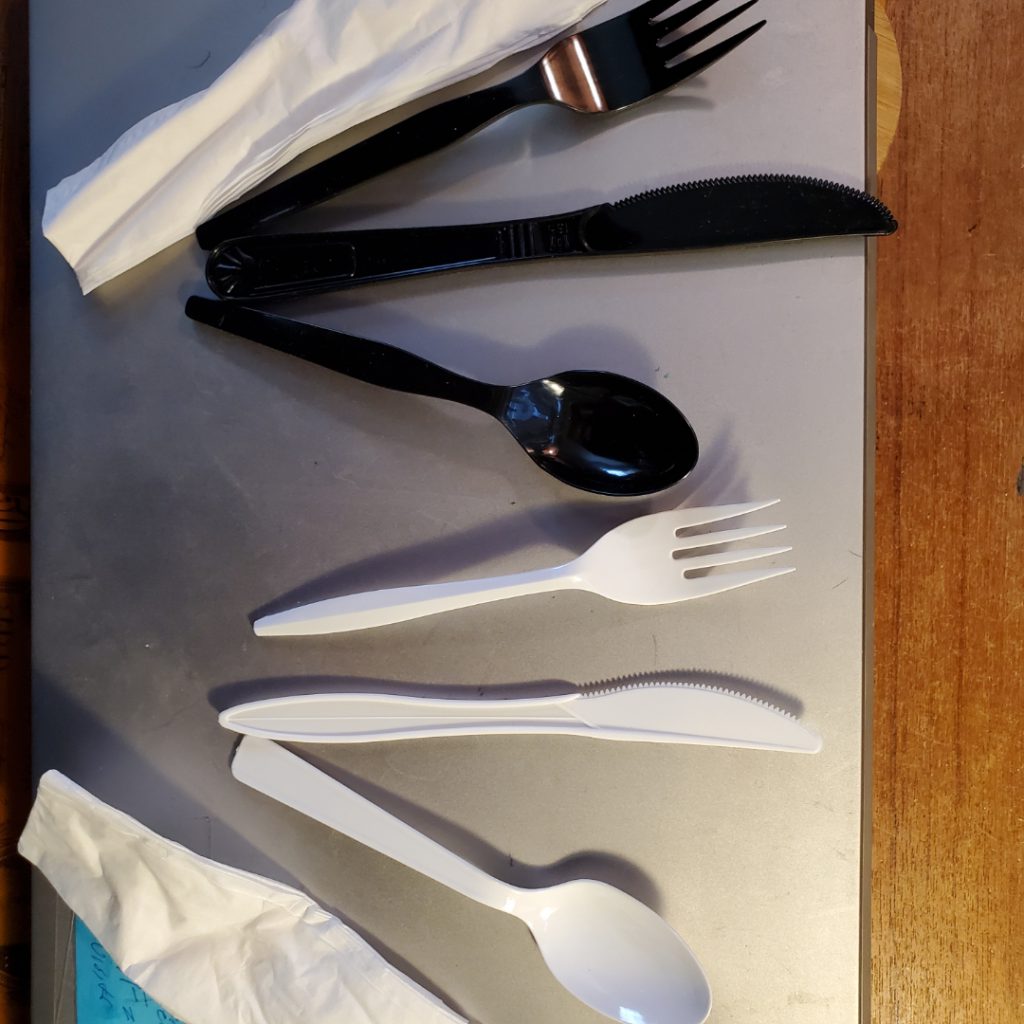
Following the Westchester County Board of Legislators unanimous passage on Monday, March 6, County Executive George Latimer is immediately signing into law a measure aimed at further reducing the amount of plastics in the County’s waste stream.
In addition to this new law, Westchester is increasing recycling and reducing waste – and while the environmental benefits of waste reduction and recycling are well known, it also makes good sense economically.
In 2022, 74,456 tons of curbside recyclables collected by municipalities within the County’s Refuse Disposal District were delivered to the Daniel P. Thomas Material Recovery Facility (MRF). Revenue from the sale of these recyclables totaled $7,006,704.59, an increase of over 95% from 2020.
Over the past 20 years, the amount of residential solid waste disposed in Refuse Disposal District No. 1 in Westchester has decreased by 21%. After peaking at 495,659 tons in 2003, the amount of residential trash was reduced to 390,243 tons in 2021, a reduction of 105,416 tons. Over this same period, Westchester’s population grew by about 6.8%, adding more than 64,000 additional residents. During that time span, the County consistently posted an annual recycling rate of at least 50%, far outpacing the national average of 32%.
The new measure limiting plastic utensils will be signed into law at a ceremony hosted outside of the Board of Legislators Chambers with the main sponsors of the legislation Legislator Erika Pierce and Chairwoman Catherine Borgia.
The law states that:
· No food service establishment shall provide single-use foodware or condiment packets to any dine-in or take-away customer unless specifically requested;
· Any single-use plastic beverage stirrers or single-use plastic beverage “splash sticks” are no longer permitted. Retail food stores may sell packages or boxes of single-use plastic beverage stirrers or single-use plastic beverage splash sticks to their customers;
· Lastly, when requested, single-use foodware items or condiment packets must be provided individually and not in a package containing multiple items.
Latimer said: “As we have highlighted time and time again, Westchester County is reducing what we are putting into our waste stream. Through commonsense measures like this, or the myriad of programs undertaken by our County’s Department of Environmental Facilities (DEF), Westchester County is leading the way on reducing waste and I am proud to sign this measure into law. I commend the work done by the Board of Legislators and Legislator Erika Pierce notably on this important yet simple measure.”
Borgia said: “Our Board is hyper-focused on making Westchester a zero-waste County, and this bill puts us in the right direction. “Upon Request” will not only reduce our carbon footprint, but it gives the added benefits of saving food service businesses money during a time of financial uncertainty. I applaud Legislator Pierce for her steadfast leadership in getting this sensible piece of legislation passed that positively affects us all and the environment around us.”
Pierce said:
“We are drowning in unnecessary single-use items, most of which are made of plastic and all of which are being paid for by our local businesses. Nationwide, billions of these food accessories are thrown away annually, many of which were only used once, and the vast majority cannot be recycled. They add to the plastic pollution crisis, litter our neighborhoods, rivers, and ocean, add to overflowing landfills, and feed incinerators. Local business owners pay for them; we pay to dispose of them, and those who live near the areas where they have been disposed of pay again. This common-sense law is a simple but bold step for Westchester: ‘Upon Request’ we will reduce waste and save our local businesses money, all while providing customers with what they need.”
Board of Legislators Vice-Chairwoman & BoL Environmental Committee Chair Nancy Barr said: “Today, Westchester is taking a firm stand to combat climate change by decreasing unwanted single-use items from the waste stream. Single-use items, mostly made from the fossil fuel byproduct plastic, account for nearly half of all discarded items. Depending on the type of plastic, those items might not even be recyclable making source reduction the most effective way to improve the environment.”