
Those autumn leaves turning to Gold Peekskill on the Hudson Sunday

See the Big Trains!Hear the Lonesome Whistle! “The Montrealer” Rolls Up The Shoreline Sunday

AND KEEPS ON MOVIN’ UP THE LINE.
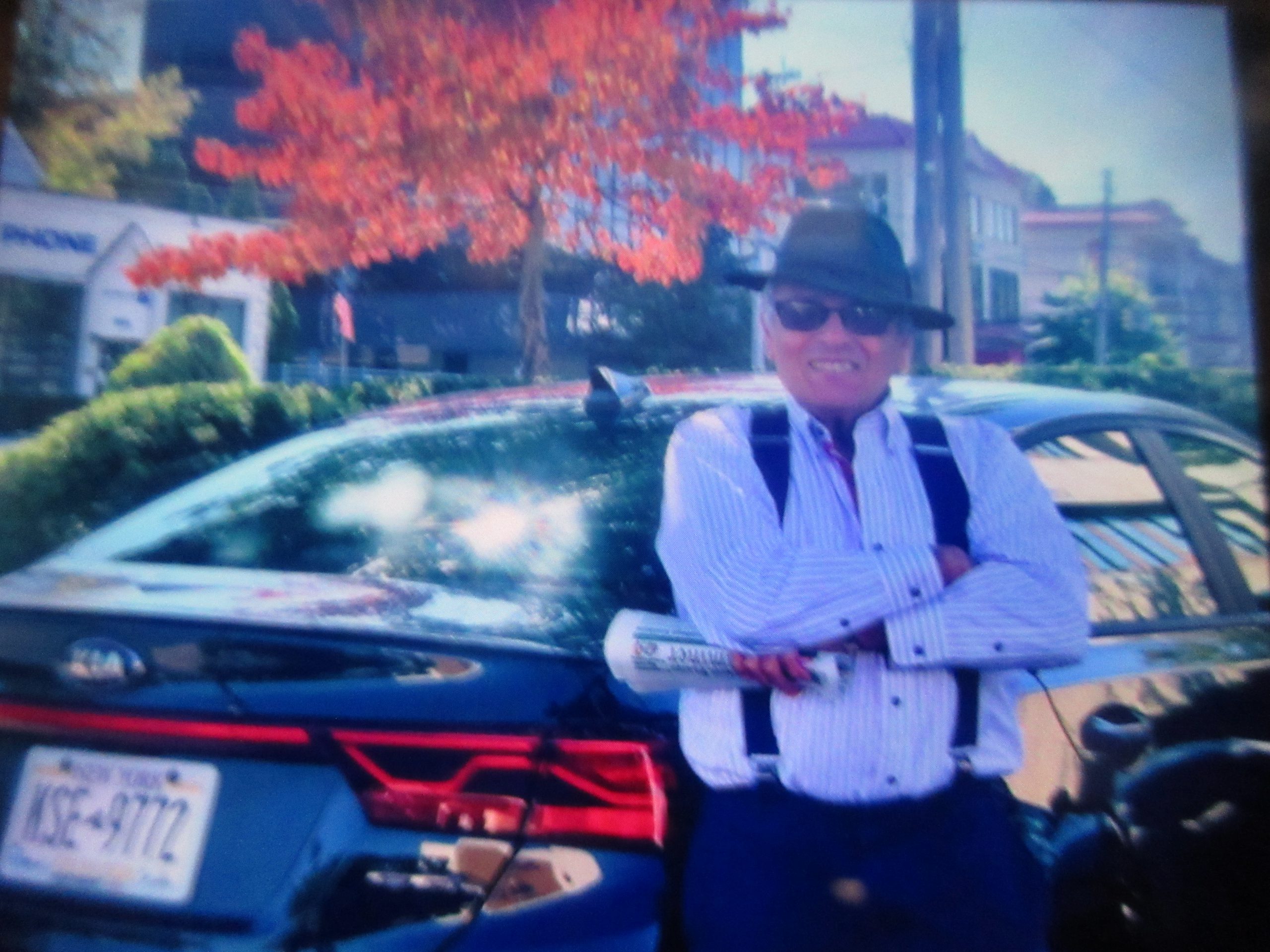
Those autumn leaves turning to Gold Peekskill on the Hudson Sunday
See the Big Trains!Hear the Lonesome Whistle! “The Montrealer” Rolls Up The Shoreline Sunday
AND KEEPS ON MOVIN’ UP THE LINE.
Welcome to the Northeast edition of Outbreak Outlook, formerly called This Week in Outbreaks! This content is only available to paid subscribers. Thanks for reading! -Caitlin
Influenza-like illness (ILI) remained about the same in the Northeast during the week ending October 7. Although the Northeast is the second-highest region for ILI in the country, with around 2.3% of visits to the doctor for ILI symptoms, levels are still considered low. I would say flu season has not begun one earnest in the Northeast yet.
After a few unexpected weeks in the “high” category, New York City is now back in the “low” category for ILI activity. Other states in the region are also “low” or “minimal.”
At the national level, ILI in the youngest children rose again this week to 7.7%, up from 7.1% the week prior. For the 5-24 age group, the rate rose slightly from 3.3% to 3.5%. Older age groups remain below 2%.
Covid-19 activity continues to persist at a higher level in the Northeast compared to other parts of the country. The number of new hospitalizations in this region has stayed roughly the same this week, contrasting with the significant decreases observed in other regions. However, test positivity and ED visits are both improving, which are encouraging signs. Currently, wastewater data, which could provide additional insights, is unavailable.
I hope that the trends in the Northeast are just a week or two delayed compared to other areas, and a decline will be seen soon.
RSV activity is still increasing very slowly in New England states. PCR test positivity is still around 2%, up from a recent low of less than 1%. Still, during the height of RSV season, test positivity can reach 20%, so overall activity is low. I don’t see any signs yet that the RSV surge in the Southern region has reached the Northeast.
The following foods are being recalled because they are contaminated. Please check your cupboards and throw out any of these items:
New this week:
Previously reported:

JOHN BAILEY’S STATE OF HEALTH REPORT IN WESTCHESTER COUNTY
COUNTY STARTS COUNTY WIDE TRANSPORTATION & FOOD ACCESS SURVEY

FEEDING WESTCHESTER REPORTS 200,000 20 PER CENT OF COUNTY POPULATION EXPERIENCE HUNGER PROBLEMS, WHITE PLAINS SALVATION ARMY REPORTS HIGHEST SIGNUPS FOR FOOD AND MEALS IN FIRST WEEK OF REGISTRATION

COVID DOWN SECOND WEEK IN ROW IN WESTCHESTER. COVID HOSPITALIZATIONS TOPS NATIONALLY AND COVID CASES FOUND IN WHITE PLAINS HOSPITAL ADMISSIONS ARE UPUP

JOHN BAILEY AND THE NEWS
EVERY WEEK ON WHITE PLAINS WEEK
FOR 22 YEARS
WPCNR COUNTY CLARION-LEDGER. By John F. Bailey. October 13, 2023:
Westchesterr County Commissioner of Planning, Blanca Lopez gave WPCNR some clarifications on how the Westchester Transportation and Food Access Study came about and how it will be used in these responses to questions WPCNR has about the survey introduced Thursday.
WPCNR: Has the Department of Planning in process of starting this study before the hunger situation has amplified the past year?
PLANNING COMMISSIONER LOPEZ: The study was first included as part of the New York Metropolitan Transportation Council’s (NYMTC) Unified Planning Work Program (UPWP) for the 2022-2023 year, which began on April 1st 2022. The idea for the study has been discussed within the Department of Planning for some time before that.
The NYMTC’s UPWP is an annual program that includes all federally funded transportation-related planning activities in the NYMTC region, which includes Westchester and 9 other counties. As part of the UPWP the study is funded 80% with federal funds with the other 20% coming from the County
WPCNR: What motivated the Planning Department to do this?
COMMISSIONER LOPEZ: The County and the Department of Planning are aware of the prevalence of hunger and food insecurity throughout Westchester County and are working on taking concrete action to fight it. This is done through a number of approaches and by supporting multiple programs, in particular Feeding Westchester and the many foodbanks throughout Westchester that are part of Feeding Westchester’s network.
One of the factors impacting hunger and food insecurity is challenges getting to and from grocery stores and other food sources with affordable, quality food. The planning department thought it would be worthwhile to include a study in the UPWP to look into these issues.
WPCNR: Was this in response to hunger situation in Westchester?
COMMISSIONER LOPEZ: A major goal of the study is to reduce the number of food insecure in the County. In that sense the answer to your question is yes. However, the study is limited in scope in that it is primarily focused on ‘access’ in the transportation sense in terms of looking at how to make it easier for individuals to travel to get affordable, quality food. For example, someone may have sources of food that they can easily access, but are these affordable and/or good quality? In this case improving access to more affordable, quality food may directly decrease levels of food insecurity.
In discussions with Feeding Westchester, it has come up that one of the challenges they face in distributing free food through food banks is that some of the recipients are not able to travel to the service locations. One of the issues this study intends to look into is how to improve travel to food banks/soup kitchens and what options exist for delivery services. In this case, improving travel and ‘access’ will directly support the goal of reducing hunger and food insecurity.
WPCNR: Will the results of responses to the survey be incrementally assessed so trends can be immediately responded too?
COMMISSIONER LOPEZ: The survey is part of the broader Transportation and Food Access Study. The consultant and County staff involved with the study will be looking at survey responses as they come in. However, the main goal of the survey is to inform the overall study by providing information on how Westchester residents access food and what challenges they face. This combined with stakeholder outreach, data analysis, etc. will form the foundation for developing strategies to improve food access. There won’t be any direct actions happening in response to the survey while it is live. The hope is that it can inform implementable actions that will occur once the study is complete.
WPCNR: Will the survey look at the costs of food, related to rents going up? (Key factor in cutting down food consumption)
COMMISSIONER LOPEZ: There are questions about the costs of different types of groceries as well as how much of a barrier food affordability is to obtaining groceries. There are no specific questions about how this relates to other costs.