AUGUST 6– GOVERNOR HOCHUL SIGNS CANNABIS LAW ALLOWING CANNABIS SALE AT APPROVED EVENTS

New Law Advances Equity, Supports Small Businesses and Strengthens Market Opportunities

Governor Hochul today signed legislation designed to strengthen New York’s regulated cannabis market. S.10113/A.11217 supports small businesses and advances one of the state’s fastest-growing industries, marking an important step forward for business owners, consumers and the continued growth of New York’s cannabis marketplace.

“This new law gives licensed microbusinesses and dispensaries a real chance to succeed in New York’s legal cannabis market,” Governor Hochul said. “By opening the door for legal operators to sell at approved community events and farmer’s markets we are putting small entrepreneurs on a level playing field, expanding consumer access to safer, regulated products and strengthening one of New York’s fastest growing industries.”

Office of Cannabis Management Executive Director John Kagia said, “Regulated cannabis has proven to be an economic engine for New York, but the strength of this market lies in the businesses operating across the supply chain. The Governor signing this bill secures a critical opportunity for the microbusinesses building New York’s craft cannabis ecosystem to showcase their products at events across the state. This bill advances equitable, inclusive opportunity for our small businesses, and we thank the Governor, Senate and Assembly for their continued commitment to strengthening New York’s cannabis market.”

Posted in Uncategorized

AUGUST 6–CHERNOBYL TODAY 40 YEARS AFTER THE NUCLEAR ACCIDENT

WPCNR AFTERMATH.

Author: Oriol Planas – Technical Industrial Engineer

Publication Date: May 25, 2017
Last Revision: September 25, 2020

Editor’s Note: My previous article observed the significance of today, August 6 the day the United States dropped the first atomic bomb on Hiroshima. I speculated what the effects might be given the strength of today’s heavy megaton bombs in possession of nuclear-armed nations today. The follow article by  Oriol Pranas, Technical Engineer is reprinted  because it examines the Chernobyl nuclear accident and its effects on the surrounding area. It is sobering.

Chernobyl today is an abandoned place since the worst nuclear disaster happened, more than 30 years ago. Now it’s known only as of the Chernobyl exclusion zone.

The Chernobyl nuclear accident took place in the Soviet Union, currently in northern Ukraine.

It is the worst accident in the history of nuclear energy. Millions of people were affected by the high levels of radiation emitted by the Chernobyl nuclear power plant. Evacuations of Pripyat commenced about 36 hours after the accident had occurred.

The Chernobyl accident took place on April 26, 1986. To this day, after more than 30 years (now 40  years), the current situation in Chernobyl remains delicate.

The sarcophagus and the proliferation of waste storage sites have been assessed as a dangerous source of radioactivity in nearby areas. Some NEA experts feared that the collapse of the crashed reactor could seriously damage the only reactor in operation (num. 3).

A decade after the nuclear catastrophe, the case was studied at the Vienna International Conference. The conclusion was that in Chernobyl human errors were concatenated with the technical and material fragility of the reactor. Finally, they agreed that the total rehabilitation of the area was not possible.

It was pointed out that it was necessary to establish a secure confinement system from an ecological point of view. The new confinement of the plant should prevent the infiltration of rainwater into its interior. Plus, it should prevent the collapse of the existing sarcophagus.

Chernobyl today pictures and video

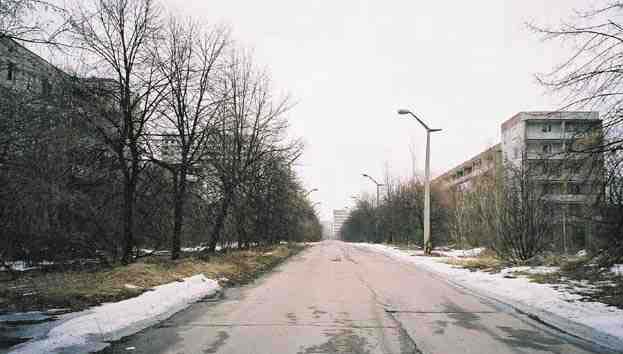
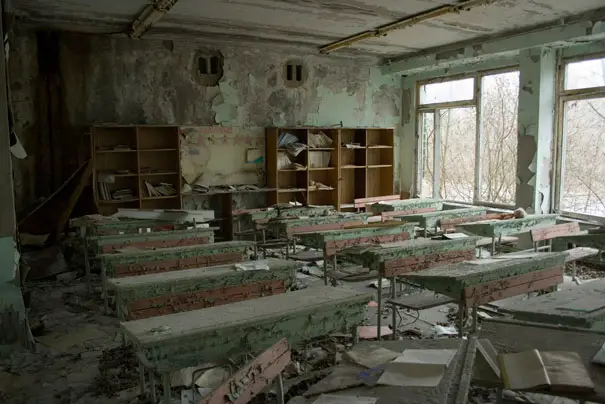
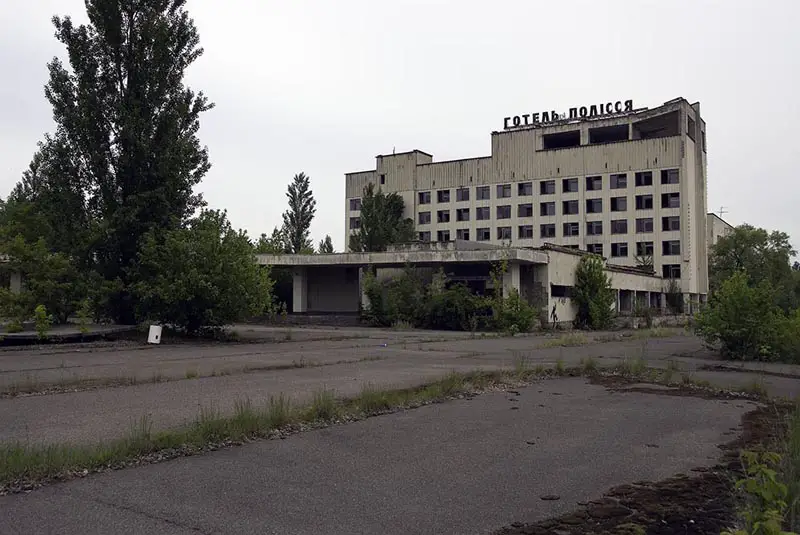
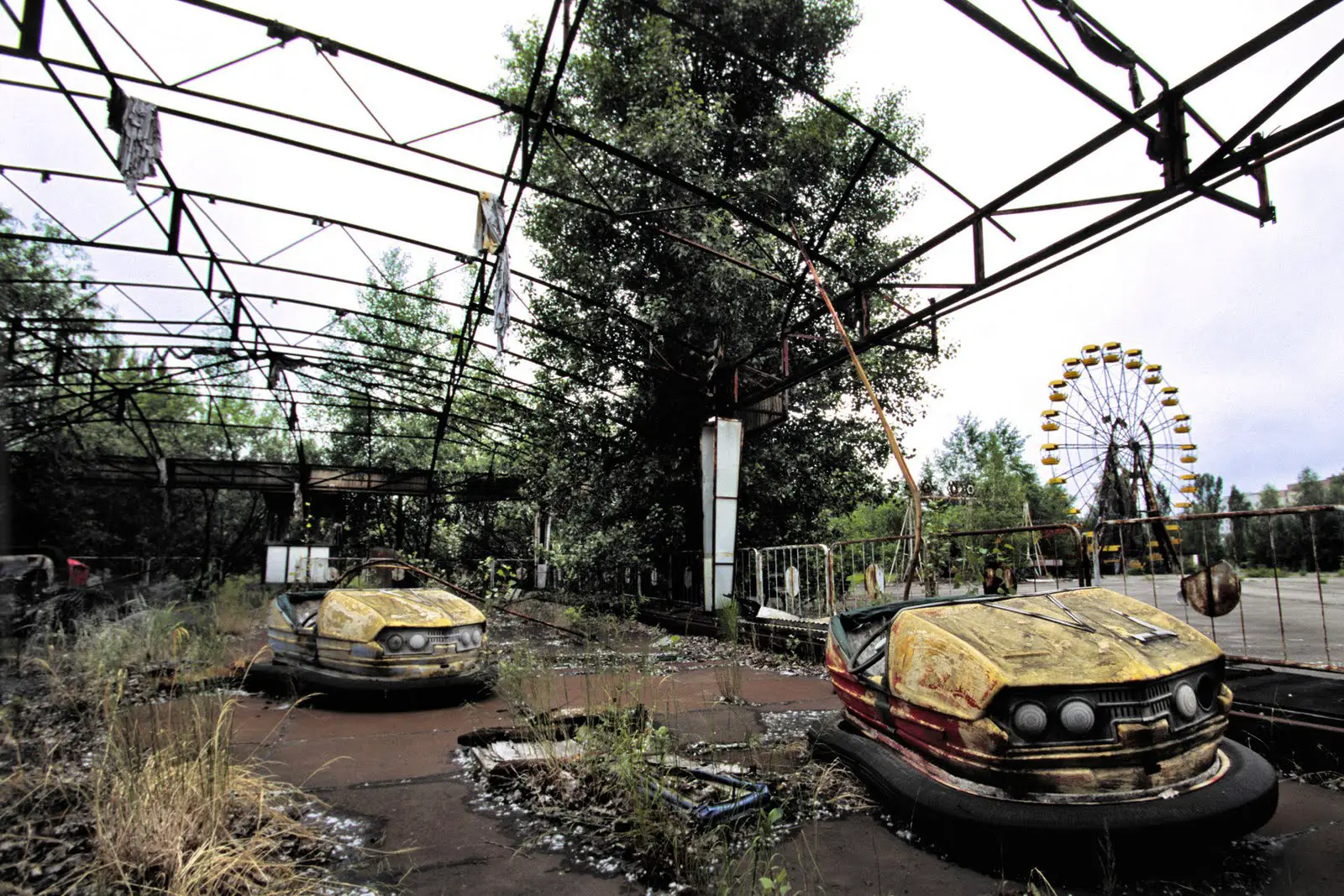
The following images correspond to the appearance of abandonment that the city of Pripyat, Ukraine. Many people died and others were forced to evacuate their homes in the nuclear exclusion zone.

{youtube:UeZtlFeEcNg}

These images correspond to the abandoned buildings in Pripyat. Because of the height radiation levels, the town remains empty.

What does Chernobyl look like now?What does Chernobyl look like now?What does Chernobyl look like now?What does Chernobyl look like now?

What is the current radiation from Chernobyl?

Currently, the generated nuclear waste is stored in about 800 different sites inside and outside the 30-kilometer exclusion zone around.

These nuclear wastes are partially stored in containers or buried in trenches and may cause a risk of contamination of groundwater.

Greenpeace technicians reported that radioactivity readings in towns 225 kilometers away exceed between 5 and 12 times the official limit.

According to this study, the forecast was that this excess radiation would remain above this level beyond 2040.

Much of the radioactive material released in the Chernobyl disaster disintegrated and no longer poses a threat. The main danger now comes from an isotope, cesium-137, which persists longer. This isotope accumulates in vegetation and can enter the food chain.

Reconstruction of the Chernobyl sarcophagus

At first, Chernobyl reactor 4 was covered with a huge sarcophagus. This first sarcophagus was to last 30 years. With the passage of time, this sarcophagus deteriorated very quickly due to the strong radiation to which it was subjected.

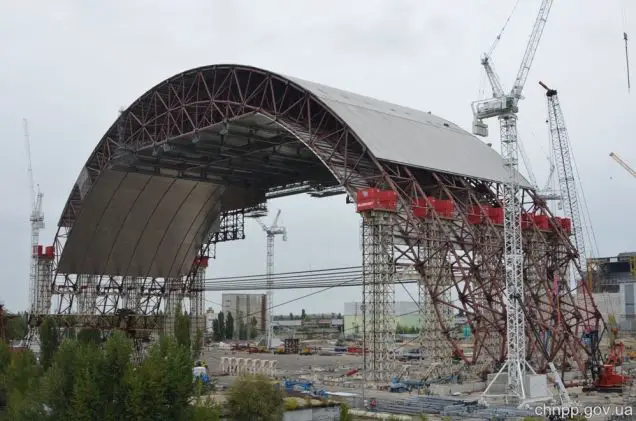
What does Chernobyl look like now?In 2016, a second gigantic sarcophagus was completed. It prevents more than 200 tons of radioactive material from escaping to the outside in the long term. It is expected it can work for a century.

The construction cost 1,426 million euros, too much for Ukraine. However, the risk of Chernobyl was real for everyone. As consequence, the funding came mainly from the European Investment Bank and European governments.

The European Commission paid for almost a third of the construction.

The sacrum was mounted next to the damaged reactor. Once finished, it moved along some rails until it reached its final location.

What is the new Chernobyl sarcophagus like today?

The sarcophagus is shaped like an arch. Its dimensions are 108 meters high, 162 meters long, 275 meters of arc and weighs 36,000 tons.

The current Chernobyl sarcophagus was built by the Novarka consortium, under whose umbrella the French companies BTP Vinci and Bouygues appear. The metal plates that make up the arch were built in Italy.

The sarcophagus will house the nuclear reactor units 3 and 4 of the Chernobyl nuclear power plant. It will have an internally pressurized double-walled waterproof wall and with a 27-meter-deep foundation.

The arches are constructed of tubular steel members and are clad externally with three-layer panels. A vacuum was created between the roof sections kept warmer than the outside air to prevent corrosion. Condensation is prevented by maintaining a temperature difference.

Author: Oriol Planas – Technical Industrial Engineer

Publication Date: May 25, 2017
Last Revision: September 25, 2020

Posted in Uncategorized

AUGUST 6–81 YEARS AGO TODAY, HIROSHIMA WAS DESTROYED BY THE FIRST ATOMIC BOMB

WPCNR OBSERVATIONS. By John F. Bailey. Reprinted from the WPCNR Archives. August 6, 2026 

In view of Russia’s Vladimir Putin being reported by The New York Times Monday as saying he would retaliate with nuclear weapons in the event of a nuclear attack by the United States, it is sobering to note that Mr. Putin has taken this policy gambit.

I would like to point out what an atomic attack does. We have scientific evidence.

Eignty-one  years ago on Sunday 1945, the Enola Gay, a single American bomber dropped an Atomic bomb on the city of Hiroshima, Japan.

The terrible effects of that single bomb are a horror that has never been repeated

A second bomber, Bock’s Car on August 9, dropped another atomic bomb on Nagasaki.

Unknown thousands of Japanese citizens’ lives were vaporized, burned, maimed and two cities leveled to the ground in an instant in both bombings.

To grasp what one atomic bomb did to Nagasaki, readers may see the photographs Japanese photographer Yosuki Yamato took of the aftermath of Nagasaki the day it happened August 9, 1945 at http://www.exploratorium.edu/nagasaki/photos.html#journey/63.jpg

The decision to drop the bombs was made after the United States, Great Britain and the Republic of China demanded Japan  surrender in the Potsdam Declaration on July 26 or face  “prompt and utter destruction”.

The Japanese government did not surrender.

The United States deployed two nuclear weapons  dropping one on Hiroshimi, 81 years ago today and one on Nagasaki on August 9.

Over four months the bombs resulted in the deaths of   90,000–166,000 people in Hiroshima and 60,000–80,000 in Nagasaki, half dying the day the bombs fell.

The Hiroshima prefecture health department estimated that, of the people who died on the day of the explosion, 60% died from flash or flame burns, 30% from falling debris and 10% from other causes. During the following months, large numbers died from the effect of burns, radiation sickness, and other injuries, compounded by illness.

In a US estimate of the total immediate and short term cause of death, 15–20% died from radiation sickness, 20–30% from burns, and 50–60% from other injuries, compounded by illness. In both cities, most of the dead were civilians, although Hiroshima had a sizable garrison.

The horror of those two bombings and the aftermath, the injuries created have resulted in an effort and reluctance on the part of nuclear-armed powers to avoid any nuclear attacks since that date.

Within a few days of those bombings, Japan surrendered unconditionally, officially ending World War II.

The decision to use the bombs by the United States has long been debated. A dialogue on what the bombs did, why the decision was made was collected in 1995, the fiftieth year since the bombings. It is available at http://www.exploratorium.edu/nagasaki/commentary/decision.html

It is important that leaders with nuclear capabilities get a grasp on the reality of the nuclear devastation.

Trying to justify a first strike nuclear attack as a deterrent to a perceived possible attack will destroy the country attacked, their economy, millions of people.

If two little bombs like the ones dropped on Hiroshima and Nagasaki can level and annihilate  the population of a city, a series of nuclear strikes in a first strike or a retaliatory strike with today’s super bombs the world may suffer from prolonged radiation clouds.

One thing is certain, you cannot “undrop” a nuclear strike. The massive megaton strength of today bombs assures a death of an area and  region where it is dropped.

Any area attacked with a nuclear bomb will destroy the nation attacked  ability to function and grow for a time we cannot imagine.

it is not an option.
Posted in Uncategorized

AUGUST 5– GOVERNOR HOCHUL ANNOUNCES EMPIRE AT BETA FULLY ONLINE. FED GOVERNMENT LAUNCHES STATEE REGIONAL AI INFRASTRUCTURE HUBS

Governor Kathy Hochul today announced that Empire AI Beta is officially online, giving researchers at New York’s leading public and private universities access to the most powerful academic research computer in the country and marking a major milestone in New York’s effort to lead the nation in responsible artificial intelligence for the public good.

As convened by Governor Hochul and consortium partners, the Empire AI initiative is already serving as a national model for public-interest AI use.

As the federal National Science Foundation has announced a major investment to support regional AI infrastructure and shared research capacity through their new State and Regional AI Infrastructure Hubs initiative, Empire AI is already powering world-class research and serving academics, students and communities across the state.

“New York State built Empire AI to show that artificial intelligence can be developed for the public good and with Empire AI Beta officially online, New York is giving our researchers the most powerful academic AI research computer in the country,” Governor Hochul said. “The National Science Foundation’s new hubs embrace the same core principle behind Empire AI — when government, universities, philanthropy and industry come together, they can deliver outstanding results.”

Empire AI Board Chairman Tom Secunda said, “Empire AI is showing the nation what dedicated partners across government, research institutions, and philanthropy can build together: a scientific asset no institution could create on its own, advancing the public good. Thanks to Governor Hochul’s leadership and vision, New York is setting the standard for how the United States can build and maintain AI infrastructure by researchers and for researchers.”

Housed at the State University of New York at Buffalo, Empire AI Beta is a $40 million NVIDIA-powered supercomputer that dramatically expands the computing power available to academic researchers across New York State.

The system delivers an 11-fold increase in AI training capacity, a 40-fold boost in AI inference and an 8-fold expansion in data storage compared to Empire AI Alpha, the consortium’s initial system launched in 2024. With over 300 research projects already queued up to use the system, Beta will accelerate work across fields including health care, climate science, advanced manufacturing, education, cybersecurity, public safety and other areas that directly benefit New Yorkers.

The launch of Beta represents the next major step in Empire AI’s phased buildout.


Alpha, the consortium’s initial system made possible by philanthropic support from the Simons Foundation, has already supported more than 130 research projects and hundreds of researchers across New York. Beta now brings a transformative increase in capacity, while construction continues on Empire AI’s permanent, full-scale Gamma facility at the University at Buffalo, which is expected to be completed by the end of 2027.

Once complete, the Gamma facility will also be the most efficient high-powered computing center in the nation. By integrating into University at Buffalo’s buildout of a thermal energy network in a closed loop system, process heat from Empire AI will be used to heat buildings on campus, dramatically improving the school’s ability to meet net zero goals.

Empire AI member institutions include the State University of New York, the City University of New York, Columbia University, Cornell University, New York University, Rensselaer Polytechnic Institute, the University of Rochester, Rochester Institute of Technology, the Icahn School of Medicine at Mount Sinai and the Flatiron Institute at the Simons Foundation.

Posted in Uncategorized