Hits: 152
|

|
|

|
|
|
|
|

|

Hits: 152
|
|
|
|
|
|
|
|
|
Hits: 175

Yonkers Police Department Deploys Citywide Drone as a First Responder Program
In collaboration with Motorola Solutions, dock-based drones operated from the AWARE Crime Control Center to provide aerial intelligence anywhere in the city within three minutes
Yonkers, NY – Friday, the Yonkers Police Department announced the launch of the City’s permanent Drone as First Responder (DFR) program, representing a significant investment in advanced public safety technology in collaboration with Motorola Solutions.
DFR operations provide a vital layer of real-time intelligence, accelerating response to emergency calls and giving officers a real-time aerial perspective of incidents as they unfold.
The Yonkers Police Department first explored this technology during the summer of 2024 through a 60-day pilot program, the first of its kind in the region, to evaluate the effectiveness of DFR operations in Yonkers’ complex urban public safety environment. Following the pilot’s success and a comprehensive program assessment, the City, under the leadership of Mayor Mike Spano, determined that expanding the initiative into a permanent operational program would further enhance the City’s emergency response capabilities and officer safety.
The program deploys two temperature-controlled dock-based “Drone-in-a-Box” systems, manufactured by Nokia and flown by trained pilots using Motorola Solutions’ CAPE drone software, on opposite sides of the city. The drones can arrive anywhere in Yonkers in under three minutes to provide a rapid aerial response. They integrate into the City’s AWARE Crime Control Center, which unifies multiple sources of incident intelligence – including 911 call audio, radio traffic, and video cameras – to help officers verify information and decisively act.
The drones provide a live aerial view to the smartphones and laptops of responding officers and supervisors on the ground, helping them assess evolving situations, determine appropriate resources, and coordinate a safer, more effective response.
The hexacopter aircraft is designed to operate in harsh Northeast weather conditions and is capable of flying at up to 45 miles per hour. Each drone is equipped with high-resolution, zoom-capable, and thermal-imaging cameras, allowing officers to view incidents in low-light or limited-visibility environments.
For operational safety, the drones can detect air traffic within a three-mile radius and use built-in geofences and safety measures in Motorola Solutions’ CAPE drone software to help them avoid collisions. The platform operates over 5G cellular networks, extending connectivity across the city.
“Yonkers continues to lead when it comes to embracing innovative technology that strengthens public safety,” said Mayor Mike Spano. “The Drone as a First Responder program builds on the success of our pilot initiative and strengthens our ability to respond quickly, protect our neighborhoods, and support the men and women of the Yonkers Police Department.”
Police Commissioner Christopher Sapienza said, “This program represents the next evolution of public safety technology here in Yonkers. We spent countless hours evaluating the results from our 2024 trial and worked to refine a Drone as First Responder model that works for our city and the unique operational challenges that come with it. Ultimately, this technology strengthens our ability to protect the public while providing an added layer of safety for the men and women of this department.”
MSSSI VP of Real-Time Intelligence for Motorola Solutions Jim Wolfinbarger said, “In an emergency, every second matters. Motorola Solutions is proud to support the Yonkers Police Department’s new Drone as First Responder program, which brings another layer of real-time intelligence into their AWARE Crime Control Center to speed and inform officer decision-making. This technology can help to inform first responders and commanders alike to refine and fine-tune their approach to any high-risk event, thereby reducing risk and strengthening decision-making.”
The Yonkers Police Department remains committed to community trust and transparency. Drone flight logs will be publicly available on the Yonkers Police Department website, allowing residents to see how and when the drones are used. The platform will include the flight date and time, flight path, deployment duration, and the general call type or flight purpose. The drone cameras will also face the horizon when not on the scene of a call to protect community privacy.
The DFR program will initially operate on a 40-hour weekly schedule, with deployment days and hours adjusted for major events and operational needs. As the program develops, the department will evaluate opportunities for expansion to further enhance coverage and response capabilities.
The launch of the permanent DFR program underscores Yonkers’ continued investment in innovative technologies that support modern policing while maintaining transparency and accountability to the community.
Hits: 307
THE WESTCHESTER EARTHQUAKE
WHOLE LOTTA SHAKIN’ GOIN ON
LATE CENSUS TESTS; CITIZENSHIP QUERY, LONG FORM
THREATEN WESTCHESTER MINORITIES, RENTERS’ RIGHTS TO VOTE
COUNTY EXECUTIVE JENKINS WARNS
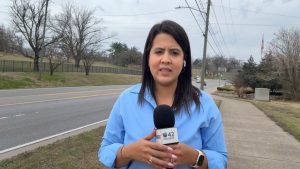
SPANISH TV REPORTER COVERING ANTI ICE DEMONSRATIONS IN NASHVILLE SURVEILED, ARRESTED FOR ALLEGED FAILURE TO REPORT TO VISA MEETING– CURRENTLY INCARCERATED– RISK OF REPORTING IN AMERICA TODAY

THE GAMBLING EXPLOSION IS IT CORRUPTING COLLEGE SPORTS?
AMERICANS THINK IT IS
SACRED HEART UNIVERSITY NATIONAL SURVEY SHOCKER!

YOUR LOCAL EDPIDEMIOLOGISTS DR. KATYLIN JETTELINA AND DR. MELISA DONNELLEY ON THE STATE OF VACCINES TODAY AND THE STATE OF ILLNESSES IN THE NEW YORK METRI AREA
PLUS JOHN BAILEY’S PERSPECTIVE 26 COMMENTARY
THE NEWS YOU NEED TO KNOW THIS WEEK EVERY WEEK
ON WHITE PLAINS WEEK WITH
JOHN BAILEY AND THE NEWS
25TH YEAR ON THE AIR

Hits: 153
April 9, 2026, at Westchester Hills Golf Club


TOM ROACH BENJAMIN BOYKIN
The Friends of White Plains Public Schools will honor Ben Boykin and Tom Roach, two dedicated and effective government leaders in White Plains for the past quarter century, at the 2026 Spring Fling from 5:30 pm – 8:00 pm on Thursday, April 9, 2026, at Westchester Hills Golf Club.
All proceeds from the Spring Fling will go directly to fund academic and cultural enrichment programs for students in White Plains Public Schools.
School, city, county and community leaders, as well as residents and supporters, will be on hand to celebrate the honorees, who have been advocates of the White Plains Public Schools for decades. White Plains students will provide music at the event.
Ben Boykin, a finance executive, started his public service career in the mid-1990s on the White Plains School Board, served 14 years on the White Plains Common Council and has just concluded 11 years as our County Legislator.
Tom Roach, a public interest lawyer, was elected to the White Plains Common Council in 2001, became White Plains mayor in 2011 and led the fast-changing city for 15 years. He now serves as Westchester County Clerk.
The Friends of White Plains Public Schools, founded in 1997 and run entirely by volunteers, has raised and donated $650,000 to fund more than 250 academic and cultural enrichment projects and activities not covered by the District’s budget. Programs such as Broadway Dancing, science assemblies, and artists-in-residence have enriched the educational experiences of thousands of White Plains Public School students each year.
Information about the Friends and reservations for the 2026 Spring Fling is available at www.FriendsofWPPS.org.
Hits: 164
WPCNR ACTION NEWS. MARCH 12, 2028:
WPCNR has learned United Way of Westchester and Putnam Counties in White Plains is welcoming organizations, businesses, and community facilities in the county that could be considered in order able to help house some of a hundred or more family members.
They have been left homeless by a sequence of fires in Mamaroneck(this week), two buildings in Yonkers, and “hundreds” left homeless in Mt. Vernon.
Does your organization have vacant clean space that could provide a family a new start?
You may be able to help with badly needed space for people dazed by this devastating loss of home belongings and most of all their community.
Call United Way at 914-688-1723 or dial United Way’s 211 Service line — if you have any thoughts of facilities to provide for housing or services.
This is your chance to help to help your neighbors there for the grace of God could be you.
When you call explain what you might be able to provide for parents, children who have lost their place to live.
Detail cacilities that would be considered for any length of time, a church building, hotels or motels with vacancies. privately owned homes with living space.
If you have space that’s empty clean, safe, call United Way and describe size, location, number rooms bedrooms, transportation locally available. All areas of the county considered.
914-688-1723. Or 211,any time
Hits: 195
|
|
Hits: 179
Update to New York’s infectious disease weather report: RSV is finally going down 🙌
Figure from the NYC Respiratory Illness Dashboard, annotations by YLE.

Hits: 141
ACRED HEART UNIVERSITY NEWS
Contacts: Kim Swartz, 203-396-8047, swartzk2@sacredheart.edu
For Immediate Release
March 11, 2026
MAJORITY OF AMERICANS SAY SPORTS BETTING THREATENS COLLEGE BASKETBALL INTEGRITY, NEW NATIONAL POLL FINDS
Latest Sacred Heart and GreatBlue Research poll says 63% concerned college athletes may feel pressure from gambling activity
FAIRFIELD, Conn.—As March Madness approaches, a new, annual national poll from Sacred Heart University in partnership with GreatBlue Research finds widespread concern about the expanding influence of sports gambling on college athletics. A majority of Americans believe sports betting is affecting the integrity of college basketball, and nearly two-thirds worry college athletes may face pressure tied to betting activity surrounding their games.
According to the 2026 Sacred Heart University Nationwide Sports Gambling Poll:
· 56.9% of Americans say sports gambling affects the integrity of college basketball either “significantly” or “somewhat”
· 63.2% say they are at least “somewhat concerned” that college athletes may be pressured by gambling activity
· 51.2% believe college students are at higher risk for problematic gambling behavior compared to the general population
The findings highlight deepening public unease at the intersection of legalized sports betting and amateur athletics, particularly during high-visibility tournaments such as the NCAA men’s and women’s basketball championships.
“College athletics occupy a unique place in American sports culture,” said Andrew Miller, director of SHU’s sports communication & media graduate program. “Americans may accept legalized sports betting overall, but they clearly feel differently when the pressures associated with gambling reach student-athletes.”
Concerns Strongest Among Older Americans
Concern about athlete pressure increases with age. Nearly seven in ten Americans age 55 and older (69.0%) say they are concerned that college athletes may face gambling-related pressure, compared to roughly six in ten adults under 55.
Similarly, belief that college students face elevated risk for problematic gambling behavior is highest among older respondents, suggesting a generational divide over the speed at which sports gambling has expanded around college campuses.
Acceptance of Betting Does Not Eliminate Integrity Concerns
The college findings come amid broader normalization of sports gambling nationwide. A majority of Americans believe sports gambling is becoming more socially acceptable, and more than half support legalization nationwide.
Yet the poll suggests Americans draw distinctions between professional sports and college athletics, particularly when student well-being and competitive integrity are involved.
“Americans increasingly accept legalized sports betting, but this poll shows they remain uneasy when gambling intersects with college athletics,” said Josh Shuart, program director and professor for SHU’s sport management program. “The concern isn’t just about the games themselves, it’s also about the pressure that betting activity could place on student-athletes and the potential impact on the integrity of competition.”
About the Poll
The Sacred Heart University 2026 Nationwide Sports Gambling Poll was conducted February 2–5, 2026, among 1,500 U.S. adults. The survey has a margin of error of +/- 2.43% at a 95% confidence level. The sample was weighted according to age, gender, and U.S. Census region.
Hits: 175
 |
Enjoying this newsletter? Why not share it with a friend?
The most effective vaccine program in American history doesn’t require a single new drug, clinical trial, or breakthrough. It requires a form for school enrollment.
But that’s changing. School vaccination requirements are being threatened from multiple angles: rhetoric from the highest offices of the nation is trickling down to state legislatures, and more people are having questions at kitchen tables and in pediatricians’ offices.
We asked for your questions. We have answers.
School and childcare vaccine requirements have always lived at the state level. For most of modern history, that didn’t matter much. All 50 states landed roughly in the same place: protect kids from measles, polio, chickenpox, and hepatitis B. Every state also has medical exemptions (a doctor confirms the vaccine isn’t safe for a specific child). The majority of states have non-medical exemptions (religious, philosophical, or personal belief).
But things are shifting.
The strictest states may be becoming more lenient. Five states—California, New York, Maine, Connecticut, and West Virginia—allow only medical exemptions. And this is fairly new. That’s now under legal pressure, including a Supreme Court case expected this summer and active debates in West Virginia.
On the other hand, states that were already lenient are looking to become more so. More than 200 bills are being introduced about vaccines, including school requirements:
Our read: this debate will largely stay at the margins. Three out of four Americans still support school vaccination requirements, including two-thirds of Republicans. But the pressure is real and worth watching.
Yes, but the reason might surprise you. Most people assume the logic is simple: you have to vaccinate to enroll, so you do. But the evidence points to something more interesting.
Requirements work in part by creating a structured moment of connection to health care, which is often a catch-up opportunity for overdue preventive care. They remove the friction that keeps well-meaning families from staying up to date. That mechanism has real implications for what’s lost when requirements are removed.
Several findings support this:
This health care connection matters far beyond vaccines. Developmental delays, lead exposure, vision problems, food insecurity, and signs of abuse are all routinely caught at these same visits. Weakening requirements doesn’t just lower vaccination rates but also cuts off one of the few reliable ways for children to connect with a doctor.
That said, requirements are only as equitable as the system behind them. In a 2024 survey, almost 1 in 4 parents who sought an exemption cited logistics, not philosophy, as the barrier. That’s an argument for pairing requirements with robust access.
It depends on the disease we are talking about. Vaccines do not all work the same way. Some, like measles, are extraordinarily effective at preventing infection, while others are meant to protect from severe illness, and many have protection that wanes over time.
For measles, the MMR vaccine is insanely effective (97% effective after two doses). But a few nuances matter:
For diseases like whooping cough or mumps, the concern is different. The vaccines work well at preventing serious illness, but they’re not as effective at stopping the spread of disease. This means even vaccinated people can sometimes transmit these diseases without realizing it.
High vaccination rates in your community protect everyone, including the small percentage of vaccinated people whose immunity didn’t fully take.
Yes. Several countries have already gone through versions of this debate, and their experiences reveal a few consistent patterns worth understanding.
Italy’s story is possibly the most instructive. Italy had requirements on the books for decades, but rarely enforced them. A 2012 court ruling falsely linking MMR to autism went viral, and coverage collapsed. A 2017 outbreak with 5,000 measles cases and four deaths led to stricter requirements. However, the hard mandates also triggered fierce public backlash, giving the incoming populist government the political opening to weaken it almost immediately. Measles surged again. Italy has since reinstated stronger requirements, but the cycle illustrates two lessons: rollbacks will cause outbreaks, and how you implement requirements may shape whether they survive the next election.
How you talk about this matters just as much as what you say. The right approach also depends on who you’re talking to.
Don’t lead with science and data. When people feel like their values are being challenged, facts alone rarely change minds. Start with shared values, then let the evidence support the conversation.
Begin with common ground. Most parents, regardless of their politics, want their kids to be safe at school and for school to run normally. Saying “I just want to make sure schools aren’t shut down for weeks because of a preventable outbreak” is something almost everyone can agree with. Start there.
If someone brings up studies or claims that seem to contradict the evidence, resist the urge to debate every detail. Instead, acknowledge the concern and emphasize that what matters most is the totality of the evidence.
Words matter. Avoid the word “mandate.” It tends to put people on the defensive immediately. Try “school immunization requirements” instead, and use “immunizations” rather than “vaccines” to sidestep some of the charged associations from COVID-19 debates. This framing also helps because school immunization requirements are just one part of standard enrollment paperwork, like getting a vision screening or a physical. Framing it that way makes it feel less like a political battle and more like a routine part of keeping kids healthy.
For policymakers, the financial argument is often the most persuasive when other arguments stall. The 2019 measles outbreak in New York cost over $8 million to contain. Requirements are cheap, and outbreaks are expensive.
It’s also worth emphasizing that there’s a range of middle-ground options that don’t require choosing between eliminating requirements entirely and keeping them exactly as they are. Policymakers can make exemptions harder to obtain without eliminating them, require families to complete vaccine education before receiving an exemption, or restrict exemptions on a disease-by-disease basis rather than all at once. As Italy showed, going too far too fast can turn supporters into opponents. The goal is durable policy, not just bold policy.
School vaccine requirements do important, quiet work: they keep preventable outbreaks out of classrooms, keep kids in school, and create reliable moments for families to access health care they might not otherwise get. Three out of four Americans support keeping these requirements. The challenge now is to make sure the majority is heard.
Love, YLE and DH
David Higgins, MD, MPH, is a practicing pediatrician and public health physician whose work focuses on vaccine delivery, health policy, and communication. He publishes the newsletter Community Immunity, where he writes about vaccines and public health. When he’s not seeing patients or writing, he’s coaching youth soccer or exploring the outdoors with his family. Find him on LinkedIn and Instagram.
Your Local Epidemiologist (YLE) is founded and operated by Dr. Katelyn Jetelina, MPH PhD—an epidemiologist, wife. YLE reaches more than 425,000 people in over 132 countries with one goal: “Translate” the ever-evolving public health science so that people will be well-equipped to make evidence-based decisions. This newsletter is free to everyone, thanks to the generous support of fellow YLE community members. To support the effort, subscribe or upgrade below:
 |
A guest post by
|
Hits: 186
PLAYLAND PARK SCHEDULED TO OPEN IN MAY
Meet us at the Dragon Coaster!
[Rye, NY] – The countdown is on! Playland Park is preparing to welcome guests back for another unforgettable summer filled with classic thrills, family fun and the unmistakable magic that has defined generations of Westchester memories. Visitors can once again soar above the shoreline on the iconic Gondola Wheel, take a spin on the historic Grand Carousel, and enjoy the timeless charm of Kiddyland rides – while savoring favorite park treats and new food offerings throughout the grounds.
• Preseason Opening Saturday, May 16 and Sunday, May 17
• Grand Opening Saturday, May 23

This year marks Playland’s 98th season, and with it comes the highly anticipated return of the beloved Dragon Coaster. The reopening of this historic landmark signals a major milestone and underscores the County’s continued commitment to preserving and revitalizing one of Westchester’s most treasured attractions.
Westchester County Executive Ken Jenkins said: “Playland is one of Westchester’s most cherished destinations and a place where many fond childhood memories are made. As we welcome the 2026 season, I’m excited for visitors to experience everything Playland has to offer, including rides and games, treats, and Friday night fireworks. It is sure to be a memorable summer for all. I’ll meet you at the Dragon Coaster!”
Commissioner of the Westchester County Department of Parks, Recreation and Conservation, Kathy O’Connor said: “Playland is synonymous with summer in Westchester and has been a source of pride for our community for nearly a century. Opening the park every year is special, but this year guests will experience the full Playland tradition they know and love.”
Fourth of July Fireworks will return this year, along with weekly Friday night fireworks thereafter.
Following Memorial Day Weekend from Saturday, May 23 through Monday, May 25, the park will follow a Wednesday through Sunday schedule for the remainder of the season, through Labor Day, Monday, Sept. 7. The park will also be open Saturday and Sunday Sept. 12 and 13. The beach will open on a preseason basis beginning Saturday, May 23 at 11 a.m., then will open on a full-summer schedule with the pool on Friday, June 26 and will be open daily, weather permitting, through Labor Day, Monday, Sept. 7. The park’s full schedule and operating hours are available here. Parking is $15 per car and $20 on holidays, park admission is always free, and rider wristbands are available and listed on the website.
For group sales, please call: (914) 813-7021. Season pass information will be announced soon.
Follow us on Facebook and Instagram to say up-to-date on all information as it becomes available.


