Enjoying this newsletter? Why not share it with a friend? Six years ago today, I put my baby in a camping carrier, strapped her on, opened my laptop on my dining room table, and started typing as fast as I could. I couldn’t believe how little communication existed that was timely, understandable, and actionable, with the humility and honesty the public deserved. So I tried to fill that gap, bringing my fellow faculty, staff, and students along for the Covid-19 journey in real time, signing every email the same way: Love, Your Local Epidemiologist. I told my husband I would only have to do this for six weeks. Surely someone would fill this gap… The rest is a blur (with many lessons learned along the way.)
March 22, 2020 during the lockdown. Strapped the baby in order to work from home. The start of YLE. A lot has changed since then. I don’t do many deep dives on Covid-19 anymore because the landscape has dramatically changed for the better, but also because, honestly, it brings back some overwhelming emotions. But this anniversary matters not only so you can protect yourself from this virus that is still circulating, and not only to honor the 1.5 million people who died, but also because this moment deserves serious reflection. So, six years later, this is where we stand. A lot has changed, and continues to do so.Covid-19 is no longer the third leading cause of death. In fact, it now carries roughly the same severity as the flu. While flu is nothing to brush off, this virus not being a top killer is genuine relief.
Data from CDC; Annotated by Your Local Epidemiologist. Even better news: Peaks are getting smaller and smaller. Each successive wave has been lower than the last, a pattern reflected in almost every metric, including hospitalizations (see below). This isn’t surprising: as our collective immunity builds, the virus has a harder time breaking through. SARS-CoV-2 continues to evolve along the same narrow path, which is unusual but very helpful in reducing the number of people with the disease. The Covid-19 cousins we call coronaviruses are now responsible for the common cold, and there’s a hypothesis that this virus may eventually follow the same path. We are clearly not there yet, as hospitalization rates tell us, but the trajectory is meaningful.
Covid-19 Hospitalizations per 100,000. Source: CDC; Annotated by Your Local Epidemiologist. Interestingly, seasonality has recently shifted. We now reliably see two waves each year: one in winter, one in summer. But nationally over the past two years, the summer wave has been larger than the winter wave (see above). We don’t know why. Unfortunately, vaccination rates continue to fall. Roughly 3.5 million fewer older Americans were vaccinated this year compared to last year. That means 3.5 million people in the highest-risk group are now less protected from a largely preventable disease. With all the federal vaccine confusion, I expect this to continue to decline. Some patterns haven’t changed, though.For example, those most at risk for severe disease remain the same:
Also, the vaccines continue to provide additional protection—about 50% against emergency room visits and hospitalization. Protection does still wane, dropping to roughly 18% at around four months. The decline is slower than before, particularly for hospitalization among adults aged 65 and older.
Data: CDC; Annotated by Your Local Epidemiologist. There’s still a lot we don’t know.It’s striking how much remains unknown about this virus six years in. Long Covid is still poorly understood, with millions of people living with fatigue, cognitive impairment, and cardiovascular effects that medicine is only slowly grappling with. We know risk has decreased alongside the decline in severe acute disease, but we still lack reliable data on the extent of that decline, and we still have no effective treatments. Vaccine dosing for older adults is another gap. Current guidance recommends two updated vaccine doses per year for older adults: one in the fall and one in the spring. But robust data on whether two annual doses offer better protection than one is still extremely limited. In fact, I couldn’t find any data that are actually useful for guiding people, like my grandfather, to make evidence-based decisions about getting a second dose and when. (I’m still telling him to get two doses because the benefits outweigh the risks, but man, we need evidence.) We also still don’t have a clear, honest accounting of which interventions worked, which didn’t, and why during the biggest health emergency this country has faced in more than 100 years. For example, we still don’t know what works best to slow the spread of Covid-19. This is mind-boggling, given all we sacrificed as a society, let alone indicating how ill-prepared we are for next time. Today, what worries me most is deeper than the science.When researchers compared countries that fared well during Covid-19 to those that didn’t, they looked at health care infrastructure, population density, universal health care, age distribution, how many vaccines they got, and a ton of other factors. But the strongest predictors of Covid-19 infections weren’t any of these. It was trust: trust in government, trust in institutions, trust in each other. Countries where people broadly believed their neighbors and leaders were acting in good faith did measurably better. The United States ranked among the lowest among high-income countries. Six years later, it’s getting worse. Federal leadership has promised to restore trust. But the latest data show record-low levels of trust in government overall, and specifically in health agencies; trust is eroding further day by day. Lack of transparency, full-on destruction of systems and capabilities, partisan attacks, lack of accountability, performative acts without real change, and a failure to listen to the public are all contributing to it.
First graph source: Pew; Second graph source: Annenberg Public Policy Institute Public health, on the outside, though, isn’t providing an alternative path forward either. Many institutions and leaders are stuck in defense mode, circling the wagons to preserve the status quo, or paralyzed, afraid to take even one step forward. Wishing we could return to 2019 is not a plan. Public health systems saved many people, but they also failed many. I’m finally starting to see some appetite for change peppered here and there, and it’s giving me hope that things might improve, but not at the pace that meets the urgency of the moment. The health of Americans and biosecurity depend on it. Bottom lineSix years! Six years with a complicated data story of real progress alongside real stubbornness. This anniversary is striking to me for two reasons. The first is the virus itself: it continues to surprise us, and we remain humbled by how much we still don’t understand. The second is what has happened to us in its wake. Six years ago, I sat down at my dining room table because I deeply believed things needed to be done differently. I still believe that today. The question now is whether this country has the wherewithal to do it. I think we do (we need to), but it’s going to take all of us. Love, YLE P.S. A lot of you have Covid-19-related questions. My team pulled the top 7. Here are some answers for you!
Your Local Epidemiologist (YLE) is founded and operated by Dr. Katelyn Jetelina, MPH PhD—an epidemiologist, wife. YLE reaches over 320,000 people in over 132 countries with one goal: “Translate” the ever-evolving public health science so that people will be well-equipped to make evidence-based decisions. This newsletter is free to everyone, thanks to the generous support of fellow YLE community members. To support the effort, subscribe or upgrade below: |


MARCH 17–PLAYLAND TOWER DAMAGED BY HIGH WINDS LAST NIGHT
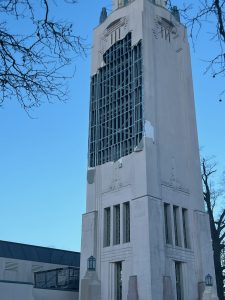
Area behind the Music Tower is closed. (Courtesy, Westchester County Photo)
[Rye, NY] – Due to high winds overnight, the Music Tower at Playland has sustained external damage. Sections of stucco and underlying foam detached, and the area behind the structure has been closed to cars and pedestrians as a precautionary measure until a full assessment can take place. Clean up of the area is underway.
(Editor’s Note: From The Weather Channel: Winds Monday night were blowing West Southwest at speeds of 20 to 30 miles per hour.
Peter Tartaglia, First Deputy Commissioner of Parks told WPCNR this afternoon the tower has been checked and said there is “no structural danage” to the tower. He estimated winds last night to be about 50 miles an hour. He said the the tower is located in the northern section of the park and the wind when it is out of the north it comes cross the Sound right into the section where the park is located. He said the park is looking into repairs needed to restore the tower. He said the damage to the tower would not affect the opening of Playland Park scheduled opening May 16.
Currently this afternoon, winds in Westchester are out of the west at 17–20 miles per hour and expected to gust up to 25 miles per hour. There is a small craft advisory in effect for Long Island Sound, New York Harbor, Peconic andand Gardiners Bays , south shore Bays from Jones Inlet through Shinnecock Bay. Seas running 3 to 5 feet.)
The Music Tower was built in 1928 as part of the park’s original construction and was most recently restored nearly 20 years ago.
Access to Edith G. Read Wildlife Sanctuary remains available by parking in the Playland lot and walking via the boardwalk past the Ice Casino to the seaside walk and north boardwalk
MARCH 17 — PRESIDENT HALTS NEW YORK 2ND AVE SUBWAY CONSTRUCTION MONEY AGAIN. GOVERNOR HOCHUL SAYS SEE YOU IN COURT
| For Immediate Release: 3/17/2026 |
GOVERNOR KATHY HOCHUL
|
STATEMENT FROM GOVERNOR KATHY HOCHUL
“Once again, New York has been forced to sue the Trump Administration to stop them from erratically shutting off billions of dollars in previously committed infrastructure funding. For nearly a century, leaders have made big promises to the people of East Harlem about the expansion of the Second Avenue Subway. For nearly a century, those promises have been broken. When I took office, I pledged to be the Governor who kept her promise to this neighborhood and finally got this subway built.
“We have already made enormous progress — work is underway and the project is moving on schedule and on budget. But Donald Trump’s unlawful funding pause has put this entire project at risk. His actions alone have jeopardized the commutes of over 100,000 New Yorkers and the jobs of thousands of union workers, but New York will not back down. We told Donald Trump that if he did not restore the funding for this project, we’d see him in court. Today, we are doing just that. Just like Gateway, Donald Trump has two options: restore the money now, or wait for a judge to force him to.”
MARCH 17 — JUDGE HALTS RFK JR.’S VACCINE RESTRICTIONS, ANTI-VACCINE APPOINTEES
Enjoying this newsletter? Why not share it with a friend? HERE. WE. GO. After a year of chaos around vaccines in the United States, a federal judge just slammed the brakes. In a lawsuit brought by the American Academy of Pediatrics against RFK Jr., a federal court ruled that the CDC’s vaccine advisory committee cannot move forward under the changes he imposed and reversed every action the committee had taken since summer 2025. This is an incredible victory for kids who deserve barrier-free access to vaccines, for clinicians who need clear guidance and the autonomy to do what’s best for their patients, and for a country that deserves leadership capable of making both possible. What happened?ACIP is an external advisory committee to the CDC. It has an enormous influence on who should get which vaccines and when. Its recommendations shape what insurance covers, what physicians can routinely offer, and how easily families can access vaccines if they choose them. Because of that influence, ACIP has traditionally relied on a few core principles:
This process isn’t perfect, and there’s real room for improvement. But it works when evidence is weighed carefully, openly, and fairly. That same influence also made ACIP a powerful lever. And RFK Jr., who has spent more than two decades publicly questioning vaccines and amplifying falsehoods about their safety and value, was well positioned to pull it. Last June, after becoming HHS Secretary, he removed the entire existing committee and replaced it with new members whose expertise and interpretation of evidence raised serious concerns. The meetings that followed reflected those concerns:
Science should include disagreement and hard questions, which is healthy. The concern is that a process designed to rigorously evaluate evidence instead becomes a platform for ideological beliefs. Then, in January 2026, RFK Jr. bypassed his own ACIP committee, the CDC Director, and every scientific and clinical process we have, including rejecting public comment, to unilaterally make sweeping changes to the routine vaccination schedule for children in the United States. This change wasn’t based on new data or new evidence, but rather on political and ideological reasons. What did the judge say?The judge temporarily ruled that the decisions made over the past year are invalid, because the process itself broke the law in three ways:
The judge had some pretty incredible remarks in his ruling:
What’s next?This ruling is a temporary hold on ACIP while the case moves through the courts. A much-anticipated ACIP meeting this week was expected to include several votes, including on Covid-19 vaccines. ACIP meetings cannot proceed with the current members, so the meeting is cancelled. Now, technically, this group of advisors handpicked by RFK Jr. could still gather informally. Anyone can meet anytime. They could hold a book club, a coffee chat, or a knitting circle. And they could find ways to megaphone their ideologies and cherry-pick studies. Many of them have very big online platforms. But what they can’t do is operate as an official federal advisory committee: using government meeting rooms, staff support, travel funding, and government levers to shape your access to vaccines, like through insurance coverage or physician liability threats. The real question now is what comes next:
While this pause is important, the medical decisions Americans make every day do not stop. Neither does the accumulation of new evidence, nor the development of innovative vaccines that are hopefully coming down the pipeline. It’s time to figure out what that next step is before this is clogged up too long. What does this mean for you right now?You can get the vaccines you want, for free, based on the best available evidence, and with the same trusted conversations with your doctor. All of the vaccine policy changes RFK Jr. put in place have now been reversed to their pre-June 2025 state.
The past year of shifting vaccine policy has left many people with questions and concerns. This ruling does not erase that confusion or immediately reach every family that fell through the cracks and remains unprotected against diseases. We have our work cut out for us. It also cannot undo the enormous cost of countless hours spent responding to sudden policy changes, correcting falsehoods, and stabilizing guidance for patients and clinicians. This time, energy, and taxpayer dollars could have been used to solve real health problems. Bottom lineThis is a huge win. It restores access to vaccines (for now) and puts the process that determines who can access them back on track. That accountability matters. It protects Americans’ ability to make informed medical decisions and gives people a fair shot at the best possible health, even when so much in this country works against it. It’s a principle countless people have been fighting for, again and again, over the past year. And now, the federal court has confirmed that cutting corners and carelessly removing protections for Americans is not just bad public health policy. It’s illegal. Love, YLE Your Local Epidemiologist (YLE) is founded and operated by Dr. Katelyn Jetelina, MPH PhD—an epidemiologist, wife. YLE reaches more than 425,000 people in over 132 countries with one goal: “Translate” ever-evolving public health science so that people are well-equipped to make evidence-based decisions. This newsletter is free to everyone, thanks to the generous support of fellow YLE community members. To support the effort, subscribe or upgrade below: |


