CONGRESSMAN LATIMER ANNOUNCES HIS COMMITTEE ASSIGNMENTS IN THE HOUSE OF REPRESENTATIVES

Hits: 313

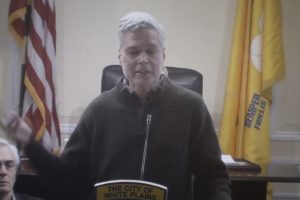
GEORGE LATIMER IN HIS FINAL ADDRESS TO THE WESTCHESTER BOARD OF LEGISLATORS IN JANUARY.

MR. LATIMER ANNOUNCED  TO WPCNR SUNDAY NIGHT THE HOUSE HAS APPOINTED HIM TO TWO HOUSE COMMITTEES :  FOREIGN AFFAIRS AND SMALL BUSINESS, TWO AREAS HE IS VERY INTERESTED IN.

I asked him about who his press contacts would be:

“We are in the process of staffing up but we’re pleased  to have Ellen Hendrickx heading our White Plains Office and Tremaine O’Garro leading our Bronx Office.

Ellen is a Greenburgh Town Councilwoman and is experienced in Town and County government.

Tremaine is prominent in the CoOp City community, previously having worked for Assemblyman Mike Benedetto.

We have also brought Rob Hoch , a White Plains resident and activist on board to handle major issues as Senior Advisor, his assignment will involve frequent travel to Washington to coordinate our policy efforts.

“More appointments will be announced in the future.”

Posted in Uncategorized

JAN 18 : THE FRONT PAGE: HOMELESS ADVISORY: WESTCHESTER COUNTY HOMELESS SHELTERS AND SERVICES FOR HOMELESS ON EVE OF FRIGID WEATHER ARRIVAL

Hits: 547

Homeless Services

(EDITOR’S NOTE: The following is reprinted from the Westchester County  website for those in need of shelter overnight in the  following deep drop in freezing temperatures forecast the next week beginning tomorrow.

Sunday night temperature will plunge to 15 degrees, through the week Monday through Friday each night will see 9 degree temperatures think ahead.

The resources below are available through the Westchester County Department of Social Services. These include shelters, homeless programs and links to related online information.

Emergency Overnight Drop-In Shelter. Westchester County operates a 43-bed facility between the hours of 11 p.m. and 7 a.m. Singles’ Homeless Assessment Center at 

Westchester County operates a 43-bed facility between the hours of 11 p.m. and 7 a.m.

Singles’ Homeless Assessment Center

Designed to assess newly homeless individuals to identify any health, mental health or substance abuse issues which may have contributed to homelessness. The Singles’ Homeless Assessment Center recommends an appropriate level of placement and treatment.

Family Shelters

There are four homeless family shelters in Westchester County which contain approximately 260 units.

Singles’ Emergency and Transitional Residences

There are approximately 430 units in single adult shelters and transitional residences in Westchester.

Emergency Apartments

Under the Emergency Housing Apartment Program, there are over 170 emergency apartments scattered throughout Westchester County.

Domestic Violence Shelters

There are three shelters for women who are victims of domestic violence, having a total of 49 beds. 

Though many homeless may not have a computer or access to one, WPCNR  reprints this vital hard-to-find information. So far the County has not issued advisories on the upcoming cold wave. Here is the information provided on the county website at this time. No new  locations for temporary new overflow shelters have been set up or announced at this time. White Plains had not issued any procedures in the face of the cold wave at this time. if you are homeless and have access to a phone there are numbers to call. it is not clear if the offices are open this weekend in face of the climate threat.)


The Office of Temporary Housing Assistance (OTHA) of the Westchester County DSS provides temporary shelter to homeless families, singles and childless couples.

The office partners with not-for-profit agencies who provide case management services in shelter facilities, transitional residences and emergency apartments.

Homeless programs are designed to lead the homeless population toward permanent housing and independence.

The WCDSS Office of Temporary Housing Assistance provides the following services:

  • Placement and Payment – The office handles the placement of homeless in Westchester County and payment to agencies who provide services.
  • Housing Resources Development – The office has oversight of homeless units and facilities as well as construction and renovation projects and other building-related issues of homeless facilities.
  • Case Management Services – The office oversees casework services to the homeless provided by the not-for-profit agencies and provides direct casework services to the hard to serve population.

Applying for services


Eligibility for temporary shelter and services is determined at the social services district offices, depending on where you last lived in the county of Westchester. They are open Monday – Friday, 8:30 a.m. – 5 p.m.

Warming/Drop-in centers located throughout Westchester


The following warming/drop-in centers for single individuals seeking shelter from the cold are open and may be contacted directly. Families seeking shelter after hours or during weekends should contact DSS Emergency Services at (914) 995-2099.

Click on a facility’s street address for a location map and link to create directions.

Peekskill Area

Jan Peek Shelter
(Co-ed facility)
200 North Water St.
Peekskill
(914) 736-2636
Accessible by Bee-Line bus route #14,15,16,17

Yonkers Area

YWCA of Yonkers
(Male Only)
10 St. Casimir Avenue
Yonkers
(914) 963-0640


New Rochelle Area

Oasis Shelter
(Co-ed facility)
19 Washington Ave.
New Rochelle
(914) 633-0101
Accessible by Bee-Line bus route # 7,42,45,60,66

YWCA of Yonkers
(Female Only)
87 S. Broadway
Yonkers
(914) 963-0640
White Plains Area

Samaritan House Shelter
(Female only facility)
33 Church St.
White Plains
(914) 948-3075
Accessible by Bee-Line bus route # 1,5,6,13,14,15,40,41

Manor House
(Male Only)
101 N. Broadway
Yonkers
(914) 476-4864
Open Arms Shelter
(Male only facility)
86 East Post Rd.
White Plains
(914) 948-5044
Accessible by Bee-Line bus route # 1,5,6,13,14,15,40,41
Mount Vernon Area

Oasis Women’s Annex
(Female Only)
22 E. 1st Street
Mount Vernon
(914) 840-9539


Posted in Uncategorized

JAN 18– WHITE PLAINS WEEK THE JANUARY 17 REPORT– HOMELESS REPORT & THE MARTIN LUTHER KING JR RETROSPECTIVE WITH JOHN BAILEY AND THE NEWS SEE NOW AT www.wpcommunitymedia.com

Hits: 189

THE HOMELESS FACE COLDNESS NO ROOM AT THE SHELTERS IN WESTCHESTER WHAT IS THE TREND? MORE HOMELESS THAN EVER, KEY PROVIDERS SAY IN THE JANUARY DEEP  FREEZE

CONGESTION PRICING REVENUES WAY BELOW EXPECTED


FIGHTING FOR THE HOMELESS AT BOX CITY AT MARIA REGINA 40 DRAMATIZE WHAT THE HOMELESS FACE EVERY NIGHT

IT’S BACK BIGTIME. INFLATION CONTINUES TO AFFLICT THE AFFLICTED

GOVERNOR HOCHUL EYES INFLATION RELIEF FOR STATE

DR. MARTIN LUTHER KING JR.’S ADDRESS  TO AMERICA’S NEW LEADERS TAKING THE REINS


ON IT! WITH JOHN BAILEY AND THE NEWS

THIS WEEK EVERY WEEK ON WHITE PLAINS WEEK

FOR 24 YEARS


Posted in Uncategorized

JAN 15: COUNTY EXECUTIVE KEN JENKINS COMMITTED TO THE MIDDLE CLASS– STAYS THE COURSE ON FISCAL RESPONSIBILITY

Hits: 178

WESTCHESTER COUNTY EXECUTIVE KEN JENKINS SHOWCASES COMMITMENT TO MIDDLE-CLASS SUPPORT AND FISCAL RESPONSIBILITY IN NEW VIDEO

WATCH VIDEO HERE:

https://www.youtube.com/watch?v=N8p6aRLzoBc

(White Plains, NY) – Westchester County Executive Ken Jenkins released a new video emphasizing the administration’s ongoing efforts to keep taxes low, ensure the efficient use of resources, and prioritize the needs of the middle class.

Jenkins said: “As County Executive, I’m committed to ensuring that Westchester remains a place where families can thrive. By having a 0% tax increase for the operating budget for the last 6 years and working with all stakeholders, we have been maximizing every dollar to support vital services, foster economic growth and protect the middle class. Westchester is one of the few communities that shares sales tax revenue with local municipalities to keep taxes low. This isn’t just about balancing budgets—it’s about security and investing in the future of our communities to ensure that government works for everyone.”

The video outlines the County’s dedication to fiscal responsibility over the last seven years, including collaborating with the Board of Legislators, local departments, and agency partners to maximize the value of property and sales tax dollars. It also highlights some of the County’s initiatives to support the business community, particularly in the life sciences sector and how this sector is a strategic driver of economic growth.

Director of Economic Development Bridget Gibbons said: “Westchester’s thriving business community is a cornerstone of our economic success. By fostering growth in the life sciences, we’re attracting investments and creating opportunities that benefit residents and businesses alike—which will continue to have long-term positive impacts as these sectors evolve and establish themselves. This is just one part of the successful strategic approach to economic development we began putting into action in 2018. It’s a perfect example of how our driving focus has always been about building partnerships that fuel innovation and keep Westchester competitive, while delivering tangible benefits like job creation and increased revenue to support essential services. We’re always thoughtful about how all the pieces fit together.”

Recently, Westchester County earned a AAA bond rating from S&P Global Ratings while also maintaining its AAA credit rating from Fitch Ratings, reaffirming the County’s financial health, fiscal responsibility, conservative budgeting, and strong sales tax revenue over recent years. Westchester County is the only county in New York State to receive a AAA bond rating from S&P Global Ratings. The AAA credit rating from Fitch Ratings is its highest possible credit rating.

Posted in Uncategorized

JAN 14 — JENKINS NAMES SUSAN SPEAR COMMISSIONER OF DEPARTMENT OF EMERGENCY SERVICES

Hits: 190

Hits: 0


SUSAN SPEAR NAMED COMMISSIONER OF THE DEPARTMENT OF EMERGENCY SERVICES

First woman to head DES in its history


(White Plains, NY) — Susan Spear has been appointed commissioner of the Department of Emergency Services, becoming the first woman to hold that post in DES history, County Executive Kenneth W. Jenkins announced.


Spear, who served as deputy commissioner at DES since November 2020, replaces Richard G. Wishnie. He was named by Jenkins as his Deputy County Executive last week.


“Susan Spear has done a tremendous job as deputy commissioner, and she is the right person to lead the Department of Emergency Services into the future. I am grateful for her leadership at DES and for her exemplary service to our County during the Covid-19 pandemic and other major events in Westchester.”


Spear said, “I am thankful to County Executive Jenkins for the trust he has placed in me and for his longtime support of this Department. I am proud to lead the outstanding men and women at DES who play such a vital role in keeping Westchester safe. On behalf of all of us at DES, I would also like to thank Richard Wishnie for his leadership and significant contributions to DES during his tenure as commissioner.”


The Department of Emergency Services, which just celebrated the 25th anniversary of its creation, consists of four divisions: Fire Services, Communications (60 Control), Emergency Management (OEM) and Emergency Medical Services (EMS).


The Fire Services Division is comprised of four units: fire training, fire inspection, special operations, and fire prevention and protection. The division administers, coordinates and maintains the fire training program that is available to Westchester County’s 59 fire departments. It also oversees specialized units, including the Hazardous Materials Response Team and the Technical Rescue Team.


The Emergency Communications Center, commonly referred to as 60 Control, provides primary dispatch service for 54 fire departments and 34 EMS agencies in Westchester. The center is staffed by communications specialists 24 hours each day and also handles all fire and EMS mutual aid requests going in and out of the County.


OEM provides planning, preparedness training and emergency response to major events. It works collaboratively with local, state and federal agencies to prepare Westchester for disasters and related response. During a major emergency and significant weather events, OEM may activate the County’s Emergency Operations Center, a state-of-the-art facility where the County, local municipalities, hospitals, utilities and other agencies work together to keep Westchester safe. The division also maintains a stockpile of critical supplies that can be dispensed to local communities during an emergency.


The EMS Division collaborates with local, regional and state agencies to enhance the effectiveness of the County’s Emergency Medical Services system. It provides medical training to County employees, EMS providers, firefighters, police agencies and other organizations. It also assigns EMS personnel to County events and facilities, and provides mutual aid coordination and incident management assistance during large-scale events.


“The next few years will bring new challenges, which DES is well-prepared to address with the support of County leadership. We plan to continue making progress on important capital projects and facilities improvements that will further enhance our training programs and resource capabilities,” Spear said.


Spear’s appointment as commissioner must be confirmed by the Westchester County Board of Legislators.

Posted in Uncategorized

JAN 14—YONKERS ANTI- ROOMMATE BILL WILL ESCALATE YONKERS HOUSING SHORTAGE BY ELIMINATING SHARED HOUSING. MUST BE STOPPED HEARING JAN 28

Hits: 257

WPCNR THE LETTER TICKER. JANUARY 14, 2024

Yonkers Anti-Roommate Bill: A Threat to

Affordable Housing and Community Stability


From Virginia Perez (The writer is a former Member of the Westchester County Board of Legislators)

The Yonkers City Council didn’t get the memo.

New York families are hurting. We can barely pay our bills. Rising costs have affected everything from the quality of food we serve our children — fresh produce is for rich people now — to home thermostat settings which seem to drop another degree or two with every passing year.


But of all our rising expenses, housing is the worst.

Ask the Governor. Ask the State Legislature. Or just look at the data. New York is suffering a massive housing crisis, so why would the Yonkers City Council do anything to make it worse?

The Council is bizarrely considering an ill-conceived “anti-roommate” bill that would devastate hardworking residents in single-family and two-family homes across the city, particularly on the west-side of Yonkers where I grew up. As written, the proposed law would presume that more than three unrelated people living in a home do not constitute a “family.” This arbitrary definition targets individuals sharing homes with friends, coworkers, or others, subjecting them to fines and even eviction at the sole discretion of the building commissioner.

This legislation is not just impractical—it’s dangerous. A similar law passed in Austin, Texas, a decade ago led to skyrocketing rents and an affordability crisis there.

Recognizing the harm caused, the Austin City Council reversed course in 2023, dismantling the restrictive policy. As Austin council member Zo Qadri aptly put it,

“At a time when the state [legislature] is doing the most to police marginalized people’s lives, and a time when rents continue to go up over $200 a month upon renewal, the city of Austin must stop policing people’s relationships they choose in order to afford housing in this city.”

Beyond the devastating impact on residents, this bill could also jeopardize Yonkers’ future funding.

The city receives grant funds from the U.S. Department of Housing and Urban Development and Westchester County, and one of the stipulations of this funding is that Yonkers must not enact legislation that makes housing less affordable, which is exactly what this legislation would do.

By driving up housing costs and limiting shared housing options, this bill directly contradicts that requirement, potentially putting critical grant funding at risk.  This action leaves the City at risk of litigation, a potential loss of millions of dollars in funding, and a consequent increase in taxes to make up any shortfall. No one wants that.

Many single, hardworking residents rely on shared housing to make ends meet.

It’s how people get by in inflationary times like these. If this law passes, the city risks creating a cascade of evictions, further reducing affordable housing options and punishing those who are simply trying to live within their means. Instead of policing personal relationships, Yonkers must prioritize policies that expand access to affordable housing and protect residents from displacement.

Everyone knows that working- and middle-class New Yorkers are feeling the pinch. “Affordability” is the new buzzword for politicians on both sides of the aisle. Whether they do or don’t, our elected leaders want us to believe they’re feeling our pain.

Except in Yonkers. Here, evidently, the message hasn’t arrived.

Please contact your local council members to express your opposition to these harmful policies, and show your support by attending the public hearing at Yonkers City Hall on Tuesday, January 28th at 6:45pm!

Yonkers City Council must reject this proposal. Housing is a fundamental need, and people should have the freedom to choose how and with whom they live. Let’s learn from Austin’s mistakes and ensure Yonkers remains a place where all residents can find—and afford—a home.


Virginia Perez was born in the Dominican Republic and came to the United States with her family as a young girl. A Yonkers resident, she attended Yonkers Public Schools and graduated from Saunders Trade and Technical High School.  Virginia served as a Westchester County Legislator for the 17th District from 2012 to 2019, making her the highest-ranking Latina in Westchester County history. 

Posted in Uncategorized

JAN 14– BOX CITY HOMELESS FOR A NIGHT. MARIA REGINA HIGH SCHOOL STUDENTS DRAMATIZE PLIGHT OF HOMELESS

Hits: 259

Isabella Bendick, Emily Kronforst and Grace Cicchiello (all freshmen) AT BOX CITY Left to Right: at Maria Regina High dramatizing the plight of Westchester Homeless Friday night in  Maria Regina Courtyard.(Photo Courtesy Maria Regina High School)

WPCNR HOMELESS FOR A NIGHT. Special to WPCNR From Maria Regina High School, from Pagani Communications. January 14, 2024:

Maria Regina High School’s annual Box City initiative was held in the school’s courtyard Friday evening, January 10. More than 40 students slept in boxes in below freezing temperatures to support the region’s unsheltered homeless including children.
During the 12 hours of solidarity with the homeless, the students participated in hourly prayers for the highly at-risk population who have been especially challenged during one of the coldest winters. In addition, Rudyard Whyte, board president of Midnight Run based in Dobbs Ferry, addressed the students and gave them an overview about the region’s homeless population.
BUNDLED UP FOR A FROZEN NIGHT: Diellza Kukaj, Albina Dreshaj and Francesa Nallas (all freshmen)
The students raised funds that will be used for future breakfast runs and to make a donation to Midnight Run. In the 21 prior BOX City campaigns that the renowned all-girls Catholic high school held, a total of about $50,000 was raised to help the homeless in Westchester communities and New York City.
Posted in Uncategorized

WHITE PLAINS WEEK BLACK COFFEE 8:30 A.M. SATURDAY THE JANUARY 10 REPORT–STATE OF THE CITY STATE OF THE COUNTY ANALYSIS ON FIOS CH 45 AND OPTIMUM CH 76 AND WWW.WPCOMMUNITYMEDIA.ORG

Hits: 201

KEN JENKINS SELECTED  COUNTY EXECUTIVE–ELECTION IN MARCH TO FILL OUT LATIMER TERM.

MAYOR ROACH ANNOUNCES HE WILL NOT RUN FOR MAYOR

GEORGE LATIMER GOES TO CONGRESS


CONGESTION PRICING  TOLL AT 60TH STREET GOOD TO GO AND IT GOES! WILL IT LAST?

THE LINE FORMS AT THE RIGHT OR LEFT TO REPLACE MAYOR ROACH

JENN’S THE ONE FOR THE 5TH DISTRICT BOARD OF LEGISLATORS SEAT.  BEN BOYKIN ENDORSES HER 

JOHN BAILEY ON THE STATE OF THE CITY FOR THE NEW 2026  MAYOR FACES IN 2026

J

 JOHN BAILEY ON THE STATE OF THE COUNTY NEW COUNTY EXECUTIVE KEN JENKINS FACES


BREAK OUT NORTHEAST FLU, COVID, NOROVIRUS  SWEEPING THE NORTHEAST

JOHN BAILEY AND THE NEWS

EVERY WEEK ON THE WHITE PLAINS WEEK

IN THE 24TH YEAR ON THE AIR ON

WHITE PLAINS TV

TO MR. AND MRS. MS. WHITE PLAINS, NY USA, WESTCHESTER, THE WORLD 

THE VOICE OF AMERICA TO INFNITY AND BEYOND

Posted in Uncategorized

TONIGHT AT 8: PEOPLE TO BE HEARD–JOHN BAILEY’S STORIES OF THE YEAR 2024 ON FIOS CH 45 AND OPTIMUM CH. 76 AND www.wpcommunitymedia.org

Hits: 189

GEORGE LATIMER GOES TO CONGRESS STORY OF THE YEAR

JOHN BAILEY RUNS DOWN THE 30 TOP WHITE PLAINS WESTCHESTER STORIES IN 30 MINUTES

LATIMER’S SUCCESSFUL RUN FOR CONGRESS

CONGESTION PRICING

THE EARTHQUAKE

THE RISE AND FALL OF COVID THANKS TO VACCINES

THE HIGH PRICE OF REAL ESTATE NO END IN SIGHT

THE ONE WHITE PLAINS COMPREHENSIVE PLAN

THE FUTURE

AND MORE.

HISTORY AS IT WAS MADE.


Posted in Uncategorized

JANUARY 9– HOMELAND SECURITY ISSUES ARTIFICIAL INTELLIGENCE PLAYBOOK FOR MUNICIPALITIES FOR SECURITY/ INVESTIGATIVE/ INFRASTRUCTURE MANAGEMENT

Hits: 179


DHS Unveils Playbook for the Deployment of Artificial Intelligence by the Public Sector

New Resource for Federal, State, and Local Officials Provides Best Practices for Responsible AI Development in the Public Sector

WASHINGTON – Today, the Department of Homeland Security (DHS) released the “Playbook for Public Sector Artificial Intelligence Deployment,” an innovative guide designed to help government officials improve the delivery of services through the responsible and effective deployment of generative artificial intelligence (GenAI) technologies. The playbook offers actionable steps state, local and federal officials can take and examples of how DHS applied and learned these principles in its own GenAI journey. By implementing the recommended actions and best practices, organizations can build a robust foundation for AI deployment, enhance internal capabilities, and ensure responsible and effective use of AI technologies.

“The rapid evolution of GenAI presents tremendous opportunities for public sector organizations. DHS is at the forefront of federal efforts to responsibly harness the potential of AI technology,” said Secretary of Homeland Security Alejandro N. Mayorkas. “This new resource draws from our own experiences to help state and local leaders adopt AI technologies in their own work. Safely harnessing the potential of GenAI requires collaboration across government, industry, academia, and civil society, and we hope state and local leaders join our effort to foster a responsible, mission-focused culture of innovation.”

“The release of this playbook marks a significant step forward in our efforts to integrate safe and secure AI use responsibly and effectively within the public sector,” said DHS Chief Information Officer Eric Hysen. “By sharing our experiences and best practices, we aim to empower other government agencies to leverage AI in a way that enhances their missions while safeguarding the rights and privacy of the individuals they serve.”

Over the past several years, DHS has been at the forefront of integrating AI into its operations. The Department has developed and implemented numerous AI and machine learning (ML) initiatives to enhance its capabilities in areas such as cybersecurity, border security, disaster response, and immigration services. These efforts include the creation of the DHS Artificial Intelligence Task Force, the publication of the DHS Artificial Intelligence Roadmap, and the establishment of the AI Corps to attract top AI talent. DHS remains committed to advancing AI technologies in a manner that upholds the highest standards of privacy, civil rights, and civil liberties.

The playbook features detailed case studies from DHS’s own pilots, which tested GenAI applications that enhanced investigative leads, assisted local governments with hazard mitigation planning, and created innovative training opportunities for immigration officers. The cutting-edge guide makes recommendations to state and local leaders based on lessons learned from these pilots and is designed to be an accessible resource for public sector organizations at any stage of their AI journey.

The Playbook traces the steps that DHS took in our own development of GenAI applications:

  • Develop Mission-Enhancing GenAI Use Cases: Approaches for aligning AI projects with organizational priorities and mission needs.
  • Build Coalitions and Foster Effective Governance: Strategies for gaining buy-in within your organization from senior leadership and building cross-organizational coalitions.
  • Leverage Tools and Infrastructure: Recommendations for taking advantage of existing technical tools and infrastructure to support AI development.
  • Use AI Responsibly and Safely: Principles for minimizing potential harm and ensuring ethical AI use.
  • Measure Progress and Defining Success: Methods for tracking the effectiveness of AI deployments through key performance indicators.
  • Train Employees and Hiring Technical Talent: Approaches for upskilling current employees and attracting technical talent.
  • Seek User Feedback: Best practices for engaging users and stakeholders throughout the AI development lifecycle.

This playbook is a product of the Department’s ongoing commitment to transparency and harnessing the transformative potential of AI while ensuring the safety, security, and privacy of the American people. Most recently, DHS published its updated AI Use Case Inventory, providing public visibility into non-classified and non-sensitive uses of AI across the Department. Additionally, the Department has implemented robust training programs to educate employees on responsible AI use and has engaged with external stakeholders, including Congress and the public, to build trust and demonstrate accountability. In November 2024, DHS launched the Roles and Responsibilities Framework for Artificial Intelligence in Critical Infrastructure, a set of actionable recommendations to help promote safe and secure development and deployment of artificial intelligence across all U.S. critical infrastructure, which was written in consultation with DHS’s AI Safety and Security Board, a public-private advisory committee composed of AI leaders representing industry, academia, civil society, and the public sector.

DHS will continue to share further lessons learned and updates as it advances its AI initiatives. To read the Playbook, visit DHS Generative AI Public Sector Playbook | Homeland Security.

To learn more about the ways DHS is safely and responsibly leveraging AI to protect the homeland, visit the Artificial Intelligence at DHS webpage.

Posted in Uncategorized