2,905,611 VISITORS VISIT 8,324,077 TIMES 3 TIMES EVERY DAY IN ONE YEAR. HIGHEST ACTIVITY IN WPCNR HISTORY.White PlainsCitizeNetReporter lifted its worldwide visits from unique visitors to wpcnr.com to 8,324,077,a 1,306,419 increase in visits in one year from 7,017,658 visits to the site last year which covers White Plains and Westchester County. The 8,324,077 visits were made by 2,005,611 unique visitors who visited wpcnr an average of 3 visits a day. ON JULY 20- -2026 visitors have accessed wpcnr and made 3,072 visits an average of 1.6 visits. In the last week 33,495 individual vistors made 54,458 visits, averaging 1.6 visits. In the last month, 152,940 visitors recorded 229,338 visits (1.5 visits)
Good morning from White Plains New York USA where it is 50 degrees on spring break week for White Plains schools and just so they do not get out of the back to school routine the 9th and 12th grades started last week and to give our happy schoolers preparing to go back to school April 5 the academic mood—-
The White Plains Democratic City Committee is sponsoring a $500 essay contest for White Plains High Schoolers from public, private and religious schools.
The top three winners will get to have lunch with District 17 Congressman Mondaire Jones. First prize is $500, Second prize, $250, Third Prize $100.
The topic of the essay: Write your own Inaugural Address.
What would your Inauguration Address be like if you were elected President of the United States?
You have just been elected President of the United States. Write your own Inaugural Address setting forth your vision of America and your goals for the country. Include any specific proposals you want to make.
Your address should be no more than 1,000 words.
The essay should be emailed no later than midnight April 26 to:
Include your student name address and email, school and telephone number.
The first week of five day a week in person classes for 12th and 9th grades kindergarten at 5 elementary grades wet wonderfully according to Superintendent of Schools, Dr. Joseph Ricca.
On the streets,
White plains has installed the HAWK warning system suspended above Main Street where it is two way traffic at at Lexington Avenue. The lights are for motorists entering the intersection to be warned to stop when a pedestrian is in the pedestrian cross walk. it is for the motorist, not the pedestrian. This is another effort in the White Plains Share the Streets policy. it is not clear whether this will be extended to other two ways in the city like Post road, Hamilton, Maple or the worst intersection for pedestrians Mamaroneck and Bryant Avenues.
Last week, the question was whether covid infections were plateauing or flattening.
The numbers on covid infections through Sunday the last two weeks provided by the state leave no doubt.
Covid infections are going up at a 4.1% rate of infection in Westchester County which leads the Mid-Hudson region in new cases, and more persons are getting covid more often around the county the last month.
You can tell by the number of infections daily the last two weeks centered of course in the most populated areas but also with cause for concern– spreading to the lesser populated towns.
People are relaxing their guard against covid and perhaps socializing irresponsibly.
Yonkers had 327 new cases each day the last two weeks through March 28.
New Rochelle 140 a day
Mount Vernon 126 a day
White plains 68 a day
Port Chester up to 63 new cases a day
Mamaroneck, Mamaroneck Township and Larchmont, 48 new daily cases a day combined.
Yorktown, 47 a day
Mount Pleasant, 42 a day
Cortlandt, 38 a day
Somers, 37 a day
The Ossinings, 36 a day combined
Rye City and Rye Brook, 36 a day combined
Tarrytown and Sleepy Hollow, 32 New cases a day combined
In total the last two weeks, these areas experienced 1,040 new cases of covid in Westchester County the last two weeks.
This is showing the effects of the 400 new positive cases a week the county has been experiencing the last month. In the last two weeks. Westchester has seen 1,045 new cases of Covid, and Westchester leads by far the other seven counties in the Mid Hudson Region.
The 1,045 new positives in the last two weeks, at a hospitalization rate of 4.3% may yield 45 new hospitalizations in Westchester in two weeks.
The rate of covid spread is not plateauing or flattening. It is growing. Please socialize responsibly.
See you next week.
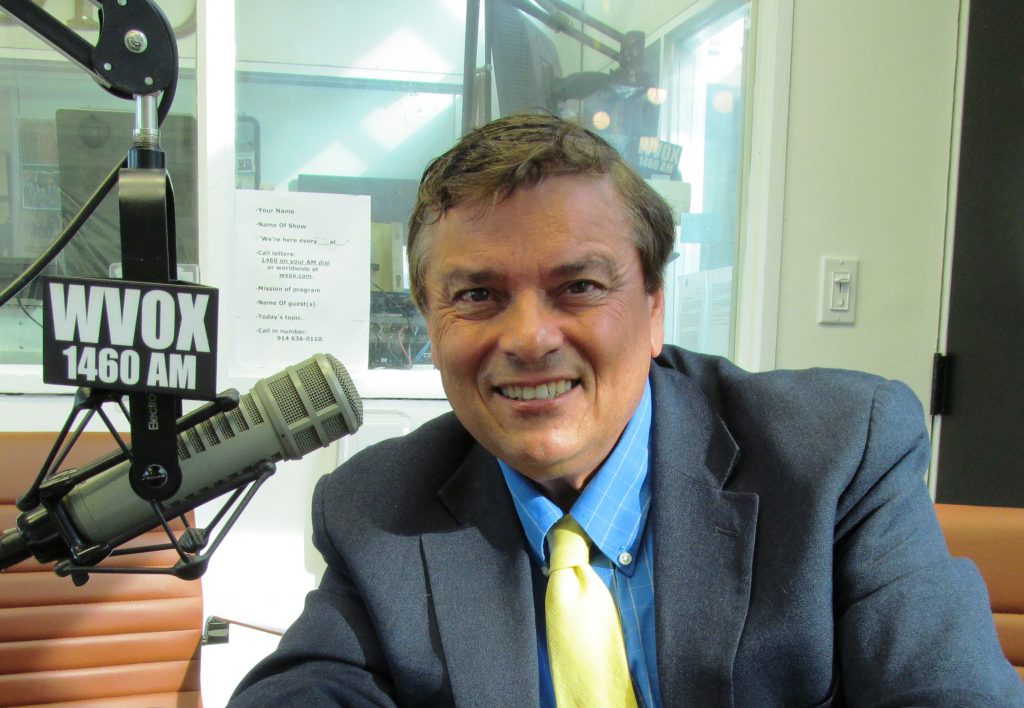
JOHN BAILEY THE CITIZENETREPORTER IS HEARD TUESDAYS AT 7:50 A.M. ON WVOX 1450 AM AND WVOX.COM WORLDWIDE WITH DENNIS AND TONNY, “THE NICEST TWO PEOPLE ON THE RADIO” GOOD MORNING WESTCHESTER
WPCNR CORONAVIRUS REPORT. From NY Covid Tracker. Westchester Covid Tracker and NY Vaccine Tracker. News and Comment by John F. Bailey. March 29, 2021:
As testing of Westchesterites stepped up above the 12,000
tests administered a day level, the number of positives rose breaching the 500
new cases a day, highest since mid-February.
On Saturday, March 27, Westchester County tested 12,893 persons
for Coronavirus and 504 tested positive. The 504 new cases on Saturday was the
highest total since February 11 (520 positives) and February 12 (511)
The number of total tests conducted from March 27 back to
last Sunday March 21 was 72,300, with 2,942 persons testing positive, putting
Westchester County at an average infection rate of 4.1%..
When you test more, more cases are found and that is what
happened March 24, last Wednesday, Thursday, Friday and Saturday with 1,841
testing positive of 49,667 testing positive. 3.7%.
The number of new Covid cases per day increased by 100 in four days of over 12,000
tests.
The Covid Week in Numbers:
Saturday, March 27:
12,893 Tested, 504 Positive, 3.9% Infection Rate.
Friday, March 26: 12,247
Tested. 492 Positive, 4% Infection Rate
Thursday, March 25: 12,196
Tested. 441 Positive. 3.6% Infection Rate
Tuesday, March 23:
8,543 Tested. 375 Positive. 4.4% Infection Rate
Monday, March 22:6,727 Tested. 354 Positive. 5.3% Infection
Rate
Sunday, March 21:
7,363 Tested. 372 Positive. 5.1% Infection Rate
As I observed on the White Plains Week television report Friday evening which you can see tonight at 7 PM on Fios Channel 45 and Optimum Ch. 76 in White Plains:
“The only Covidbarometer is the NY State Covid Tracker, AND THE WESTCHESTER COVID DASHBORD which has a double-edged sword: when it shows lower percentage of new covid cases, the covid cases are usually in much higher numbers of tested persons, so you get a false sense that infection rate is dropping.That is not the case. Watching this barometer for weeks, I note that the Westchester County new infections daily continue to approach 400 new infections a day, ( hitting 504 on Saturday)The more infections, the more possibility of spreading the virus, and sabotaging the “recovery.”See the wild swings of infections positives per day. The orange curve shows the number of tests over the last 2-1/2 months and the little blue lines, the number of covid positives.The blue bar curve shows the new infections for the beginning of the pandemic and the other blue wave graph shows the last 2-1/2months, you can click on each bar to see infections in the number of tests.Look at the largest areas of the county and how they lead in infections the last two weeks:White plains has 293 new cases the last 2 weeks, 40 new cases. highest we’ve been in a while. Yonkers 99 new cases a day, Mount Vernon, 27 new cases a day, New Rochelle 33 new cases
a day, Greenburgh, 12 new cases daily, Harrison, 12… the Tarrytowns, Mamaroneck
and Larchmont, New and North Castles, Rye and Port Chester continue to show growth. Are they flattening or plateauing?On this chart you can see how the blow of the blue line of positives is gaining since February 1.This is particularly ominous because we are experiencing “Reopening Virus.”Everyone wants to get out and socialize. Go to religious services again. Go to restaurants, movies, concerts, and get back to work. Even schools where the least infections have
occurred are reopening.With the family get-togethers over the religious holidays coming up and the mid-March infections turning into hospitalizations, What Dr. Anthony Fauci is seeing nationally MAY now happen here. The latest numbers out yesterday on Westchester County show it:On Monday, the 22nd 6,727 tests were administered in Westchester County, and 354 tested positive, an infectionrate of 5.3% the highest in a week.But-but, there were only 6,727 tests administered. You test 12,000, and the infection rate goes
down to perhaps 3.5% but, that means you get 420 infections, 65 more with a lower infection rate.The more you test, the more you see how good or how bad a job the local cities and towns are doing in encouraging masking, and social distancing. The more you see the egregious
negligence of not masking and social distancing, and socializing responsibly.VACINATIONS catching up to the
irresponsible infection rate.The rapid rate of vacinations in Westchesters 3 vaccination centers and pop-up locations and pharmaceutical outlets is the key factor in Westchester recovery. It is going well. On Friday
County Executive George Latimer said in his Covid Briefing that 22,000 arebeing vaccinated each day.At this rate of 22,000 a day getting vaccines, 154,000 may get their second shot and may be fully vaccinated in 3 weeks receiving second shots,which would bring the county up to 35% fully
vaccinated, on target for perhaps 52% fully vaccinated by the end of April.According to the New York State Vaccine Tracker this morning, 181,893 Westchester persons
have been fully vaccinated, 19% of the total County population with 320,926
awaiting their second shot. So, if all got their second shot by the end of
April or by early May, the county could have more than half its population,
502,819 (52%) fully vaccinated.
MAGGIE’S FARM AND EMERALD FIELDS COLORADO SPRINGS, CO. TWO LEADING RETAIL MARIJUANA STORE CHAINS
WPCNR ALBANY ROUNDS.From the Governor’s Press Office. March 27, 11:56 P.M.:
Governor Andrew M. Cuomo, Senate Majority Leader Andrea Stewart-Cousins and Assembly Speaker Carl Heastie late Saturday night announced an agreement on legislation (S.854-A/A.1248-A) to legalize adult-use cannabis.
The bill would establish the Office of Cannabis Management to implement a comprehensive regulatory framework that would cover medical, adult-use and cannabinoid hemp.
The bill would also expand New York State’s existing medical marijuana and cannabinoid hemp programs.
The legislation provides licensing for marijuana producers, distributors, retailers, and other actors in the cannabis market, and creates a social and economic equity program to assist individuals disproportionately impacted by cannabis enforcement that want to participate in the industry.
The development of an adult-use cannabis industry in New York State under this legislation has the potential to create significant economic opportunities for New Yorkers and the State. Tax collections from the adult-use cannabis program are projected to reach $350 million annually. Additionally, there is the potential for this new industry to create 30,000 to 60,000 new jobs across the State.
“For generations, too many New Yorkers have been unfairly penalized for the use and sale of adult-use cannabis, arbitrarily arrested and jailed with harsh mandatory minimum sentences. After years of tireless advocacy and extraordinarily hard work, that time is coming to an end in New York State,” Governor Cuomo said. “Legalizing adult-use cannabis isn’t just about creating a new market that will provide jobs and benefit the economy — it’s also about justice for long-marginalized communities and ensuring those who’ve been unfairly penalized in the past will now get a chance to benefit. I look forward to signing this legislation into law.”
“There were many important aspects of this legislation that needed to be addressed correctly — especially the racial disparities that have plagued our state’s response to marijuana use and distribution as well as ensuring public safety — and I am proud we have reached the finish line,” Senate Majority Leader Andrea Stewart-Cousins said. “Thank you to the Senate sponsor, Senator Liz Krueger, for her tireless efforts to get this legislation advanced and done right. I am glad we are stepping up to give New Yorkers the fair and equitable adult-use marijuana market they deserve.”
“When we decriminalized adult use of marijuana in 2019, the Assembly Majority knew that legalization had to be done the right way – in a way that would help not harm our communities that have been devastated by the state’s drug laws,” Assembly Speaker Carl Heastie said. “This bill will do that and I thank Majority Leader Crystal Peoples-Stokes for her tireless efforts. The MRTA does not just legalize the adult use of marijuana, but it rights decades of disproportionately targeting people of color, ensures they are included in the legal marijuana industry and reinvests in education and in communities that have been harmed.”
“For years I have been working toward legalizing marijuana in a way that ensured a safe product, that we would be able to invest in the lives of people who suffered as a result of mass incarcerations, and to allow us to invest in our communities,” Assembly Majority Leader Crystal Peoples-Stokes said. “I have been committed to getting this done correctly and justly. I believe that the MRTA does all of those things.”
The New York State Cannabis/Marijuana Regulation & Taxation Act contains the following provisions:
Establish the Office of Cannabis Management
The Office of Cannabis Management would be charged with enforcing a comprehensive regulatory framework governing medical, adult-use cannabinoid hemp. It would be governed by a five-member board, with three members appointed by the Governor and one appointment by each house. OCM would be an independent office operating as part of the New York State Liquor Authority.
Medical Cannabis
The agreement would allow people with a larger list of medical conditions to access medical marijuana, increase the number of caregivers allowed per patient, and permit home cultivation of medical cannabis for patients.
Adult-Use Cannabis
The agreement would create a two-tier licensing structure that would allow for a large range of producers by separating those growers and processors from also owning retail stores. The legislation creates licenses for producers and distributors, among other entities, and the legislation will implement strict quality control, public health and consumer protections.
Interior of a major marijuana retail establishment
A social and economic equity program would facilitate individuals disproportionally impacted by cannabis enforcement, including creating a goal of 50% of licenses to go to a minority or woman owned business enterprise, or distressed farmers or service-disabled veterans to encourage participation in the industry.
OTC MARIJUANA DISPLAY
The Bill proposes a new cannabis tax structure that would replace a weight-based tax with a tax per mg of THC at the distributor level with different rates depending on final product type.
The wholesale excise tax would be moved to the retail level with a 9 percent state excise tax. The local excise tax rate would be 4 percent of the retail price. Counties would receive 25% of the local retail tax revenue and 75 percent would go to the municipality.
Cannabinoid Hemp
The agreement would permit the sale of hemp flower in the cannabinoid hemp program, and allow for smokeable forms only when adult use retail stores are operational.
Adult-Use Cannabis Tax Revenue
All cannabis taxes would be deposited in the New York state cannabis revenue fund. Revenue covers reasonable costs to administer the program and implement the law. The remaining funding would be split three ways:
40 Percent to Education
40 Percent to Community Grants Reinvestment Fund
20 Percent to Drug Treatment and Public Education Fund
Municipal Opt-Out
Cities, towns, and villages may opt-out of allowing adult-use cannabis retail dispensaries or on-site consumption licenses by passing a local law by December 31, 2021 or nine months after the effective date of the legislation. They cannot opt-out of adult-use legalization.
Traffic Safety
The New York State Department of Health will work with institutions of higher education to conduct a controlled research study designed to evaluate methodologies and technologies for the detection of cannabis-impaired driving. After completion of the research study, DOH may create and implement rules and regulations to approve and certify a test for the presence of cannabis in drivers.
The legislation includes additional funding for drug recognition experts and law enforcement to ensure safe roadways.
The use of cannabis by drivers will remain prohibited.
Personal Possession and Home Cultivation
The following conditions apply to growing cannabis at home and personal possession of cannabis outside the home:
Personal possession outside of the home: up to 3 ounces cannabis and 24 grams of cannabis concentrate
Home possession: Amending limits of what is permitted in the home, which must be kept in a secure location away from children
Home grow: permitted under the bill subject to possession limits in 18 months for adult recreational use and subject to regulations of the Medical Program being promulgated no sooner than 6 months:
3 mature plants and 3 immature plants for adults over 21
6 mature plants and 6 immature plants maximum per household
Criminal Justice and Record Expungement
The cannabis penalty framework would be restructured to avoid the criminalization seen in prohibition. Reduced penalties would be implemented for possession and sale.
Creates automatic expungement or resentencing for anyone with a previous marijuana conviction that would now be legal under the law and provides necessary funding
Adds cannabis to the clean indoor air act which establishes a baseline on where cannabis can be smoked or vaped
Municipalities and local governments are permitted to make laws that are more restrictive than the CIAA. Contains various provisions to ensure that cannabis is treated as a lawful substance and to prevent discriminatory enforcement
Protections for the Use of Cannabis and Workplace Safety
Unlawful discrimination would be prohibited and workplace safety protections would be implemented.
Public Health and Education Campaign
OCM will establish a robust public health and education campaign and work with neighboring states and associations to coordinate actions and policies to protect regional health and safety.
(Editor’s Note: To WPCNR knowledge, no news conference was held to announce the agreement and take questions about the details behind these details not mentioned: such as the cost of licenses for producer and retail stores; whether marijuana entrepreneurs could assemble a chain of marijuana store outlets would be permitted’ existence or no existence of price controls; enforcement of black market marijuana sales and enforcement prohibited from youth under 21; whether persons with long history of black market drug sales (drug dealers) are prohibited from owning retail outlets; IF liquor stores could also be licensed to sell marijuana in the same store; whether existing Vape and tobacco outlets would be granted licenses under certain circumstances; whether legalization of other illegal drugs is being considered in the future by legislators and the governor; whether advertising on television, radio, would be permitted, promoting the sale of adult use marijuana outlets; whether the legislature is perhaps considering legalizing prostitution, for example. )
Governor Andrew M. Cuomo today announced more than 8.5 million total COVID vaccine doses have been administered across New York. 219,554 doses have been administered across the state’s vast distribution network in the last 24 hours, and more than 1 million doses have been administered over the past seven days. The week 15 allocation from the federal government is in the process of being delivered to providers.
“As we fortify our capacity, we are reaching new milestones more and more frequently. This is a testament to the dedication of our providers across the state, and to our ongoing efforts to reach every eligible New Yorker and bring the vaccine to every community,” Governor Cuomo said. “We must also remember that in spite of our remarkable progress, we cannot afford to slow down. There are still millions of people who need to be vaccinated, and we will continue to work with local leaders to make sure the distribution is equitable and that no community is left behind.”
New York’s vast distribution network and large population of eligible individuals still far exceed the supply coming from the federal government. Due to limited supply, New Yorkers are encouraged to remain patient and are advised not to show up at vaccination sites without an appointment.
The ‘Am I Eligible’ screening tool has been updated for individuals with comorbidities and underlying conditions with new appointments released on a rolling basis over the next weeks. New Yorkers can use the following to show they are eligible:
· Doctor’s letter, or
· Medical information evidencing comorbidity, or
· Signed certification
Vaccination program numbers below are for doses distributed and delivered to New York for the state’s vaccination program, and do not include those reserved for the federal government’s Long Term Care Facility program. A breakdown of the data based on numbers reported to New York State as of 11 AM today is as follows.
STATEWIDE BREAKDOWN
Total doses administered – 8,690,714
Total doses administered over past 24 hours – 219,554
Total doses administered over past 7 days – 1,196,118
Percent of New Yorkers with at least one vaccine dose – 28.7%
Percent of New Yorkers with completed vaccine series – 15.8%
People with at least one vaccine dose
People with complete vaccine series
Region
CumulativeTotal
Increase over past24 hours
CumulativeTotal
Increase over past24 hours
Capital Region
349,886
6,203
185,125
6,875
Central New York
303,487
5,044
181,702
7,230
Finger Lakes
362,131
5,893
189,796
8,549
Long Island
671,890
16,509
365,350
8,934
Mid-Hudson
573,916
12,292
281,215
11,273
Mohawk Valley
153,104
1,940
87,630
4,025
New York City
2,575,640
44,389
1,454,519
56,752
North Country
163,414
2,025
104,985
4,894
Southern Tier
195,715
2,618
104,485
4,812
Western New York
382,228
6,895
200,606
7,269
Statewide
5,731,411
103,808
3,155,413
120,613
1st doses fully delivered to New York Providers
2nd doses fully delivered to New York Providers
TOTAL
CUMULATIVE
Week 1Doses arriving 12/14 – 12/20
163,650
0
163,650
163,650
Week 2Doses arriving 12/21 – 12/27
452,125
0
452,125
615,775
Week 3Doses arriving 12/28 – 01/03
227,395
0
227,395
843,170
Week 4Doses arriving 01/04 – 01/10
239,025
165,150
404,175
1,247,345
Week 5Doses arriving 01/11 – 01/17
221,315
119,925
341,240
1,588,585
Week 6Doses arriving01/18- 01/24
250,400
462,395
712,795
2,301,380
Week 7Doses arriving01/25 – 01/31
260,150
239,525
499,675
2,801,055
Week 8Doses arriving02/01 – 02/07
321,850
220,720
542,570
3,343,625
Week 9Doses arriving02/8 – 02/14
320,000
244,500
564,500
3,908,125
Week 10Doses arriving2/15 – 2/21
356,990
265,525
622,515
4,530,640
Week 11Doses arriving2/22 – 2/28
393,530
305,780
699,310
5,229,950
Week 12Doses arriving03/01 – 03/07
1,020,660
290,500
1,311,160
6,541,110
Week 13 Doses arriving 03/08 – 03/14
618,880
526,415
1,145,295
7,686,405
Week 14 Doses arriving 03/15 – 3/21
699,790
584,775
1,284,565
8,970,970
New Yorkers seeking to determine eligibility and schedule an appointment at a state-run mass vaccination site, can visit the ‘Am I Eligible’ website. New Yorkers may also call their local health department, pharmacy, doctor, or hospital for additional information and to schedule appointments where vaccines are available.
The COVID-19 Vaccine Tracker Dashboard is available to update New Yorkers on the distribution of the COVID-19 vaccine. The New York State Department of Health requires vaccinating facilities to report all COVID-19 vaccine administration data within 24 hours; the vaccine administration data on the dashboard is updated daily to reflect the most up-to-date metrics in the state’s vaccination effort.
New Yorkers who suspect fraud in the vaccine distribution process can now call 833-VAX-SCAM (833-829-7226) toll-free or email the state Department of Health at [email protected]. Hotline staff will route complaints to the appropriate investigative agencies to ensure New Yorkers are not being taken advantage of as the State works to vaccinate the entire eligible population.



 “