
MARCH 25– ALLOWING CONTINUED USE OF GLYPHOSATE (ROUNDUP INGREDIENT)– YOUR LOCAL EPIDEMIOLOGIST’S ANALYSIS

Enjoying this newsletter? Why not share it with a friend?


In the summer of 2014, a California groundskeeper named Dewayne Johnson started noticing patches of raw, weeping skin spreading across his body. He had spent years applying Roundup, Monsanto’s glyphosate-based herbicide, for a school district, sometimes drenched in it when equipment malfunctioned. By 2014, he had a diagnosis: non-Hodgkin’s lymphoma. In 2018, a jury awarded him $289 million in damages, later reduced on appeal. Tens of thousands of lawsuits followed.

The story hasn’t quieted down. It’s all over the internet, swinging between “this will kill you, buy organic” and “relax, you’re fear-mongering.”

Some of that recent chatter stems from an Executive Order protecting glyphosate and its production, which set off intense infighting within the MAHA movement. Some of it reflects a deeper truth: Americans genuinely care about harmful chemicals in their environment (see poll below). And the conversation isn’t going anywhere, with a Supreme Court case involving Monsanto set for this April.
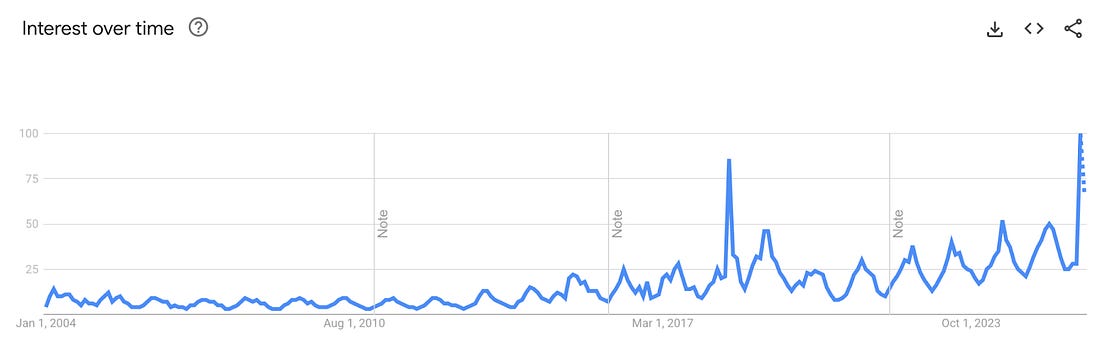
Americans googling “glyphosate” in the past 20 years, with a slow increase over time and, most recently, a large spike
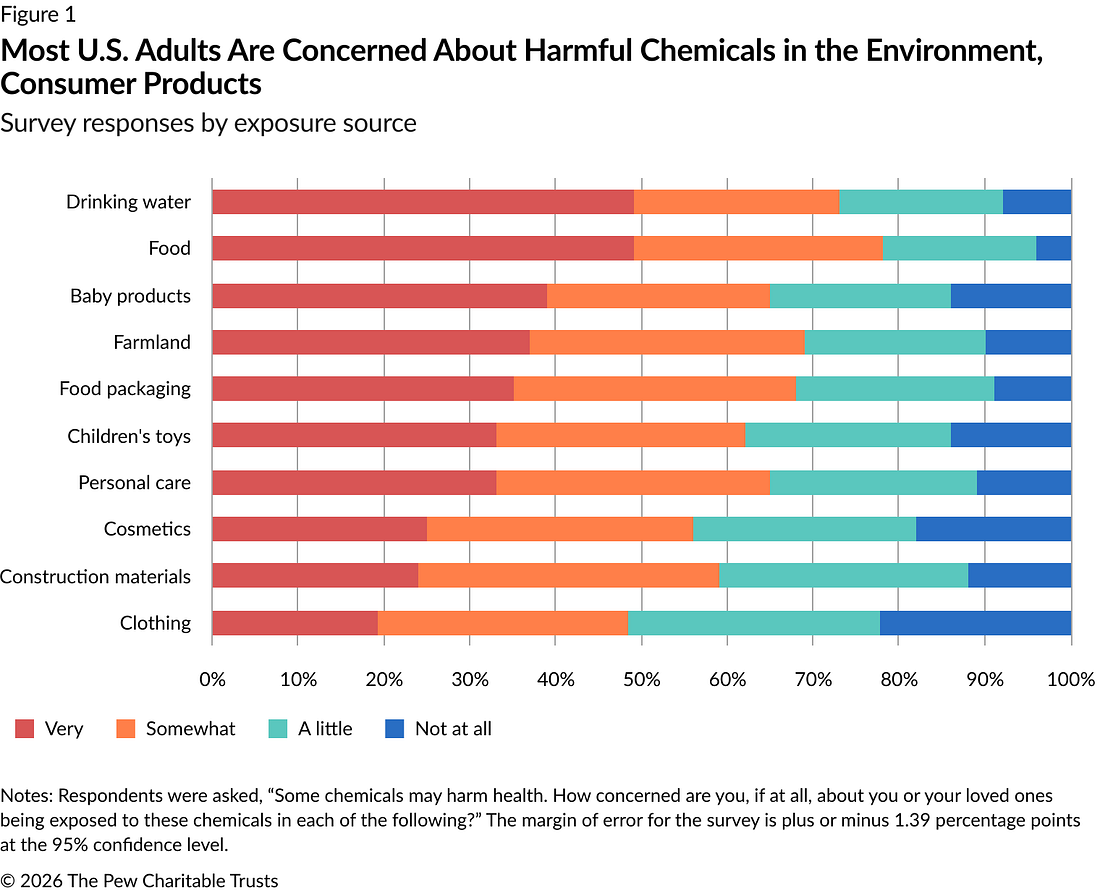
Source: Pew

Glyphosate (the active ingredient in Roundup) is one of the most widely used herbicides in the world. But does glyphosate cause cancer? And how much exposure is actually risky?

With so much mistrust in institutions and corporations (and some genuine conflicts of interest), making sense of the actual scientific evidence is genuinely hard. Here is a translation of what the scientific evidence actually says.

Does glyphosate cause harm?

Glyphosate is an herbicide that kills most plants it contacts rather than targeting specific species. It works by blocking an enzyme pathway (EPSPS) that plants and many microorganisms need to produce essential amino acids. Without those amino acids, the plant can’t grow and dies.

Glyphosate was first developed by Monsanto in the 1970s and became ubiquitous after the company introduced “Roundup Ready” crops in the 1990s. In 2024, Bayer removed glyphosate from residential Roundup-branded products due to litigation pressure. But today it is still the most widely used herbicide in the world. Farmers also discovered they could spray it directly on crops like oats, lentils, beans, and peas just before harvest to dry them out faster and make harvesting easier.

Because of its widespread use, it’s obviously really important to understand if it’s harmful to humans.

The key principle: The dose makes the poison

The most important concept in toxicology is that “the dose makes the poison.” Sixteenth-century physician Paracelsus articulated what remains the foundational principle of toxicology: sola dosis facit venenum. Water will kill you if you drink enough of it. Aspirin saves lives at 81 milligrams and causes internal bleeding at higher chronic doses.

So, at what dose is glyphosate poisonous? The LD50 in rats (the dose that kills half the test animals) is around 5,600 mg/kg body weight. Table salt is roughly 3,000 mg/kg. By that classic measure, glyphosate is less acutely toxic than salt.

But some people are exposed to a lot of glyphosate through their work. And among the general public, there are many questions about low-dose, cumulative exposure from multiple sources over long periods.

Does glyphosate cause health problems?

Cancer

Correlation maps are striking, with one analysis finding that 60% of counties that spray the most glyphosate have non-Hodgkin’s lymphoma rates above the national average. But correlation alone doesn’t establish cause, which is why animal and human studies matter.
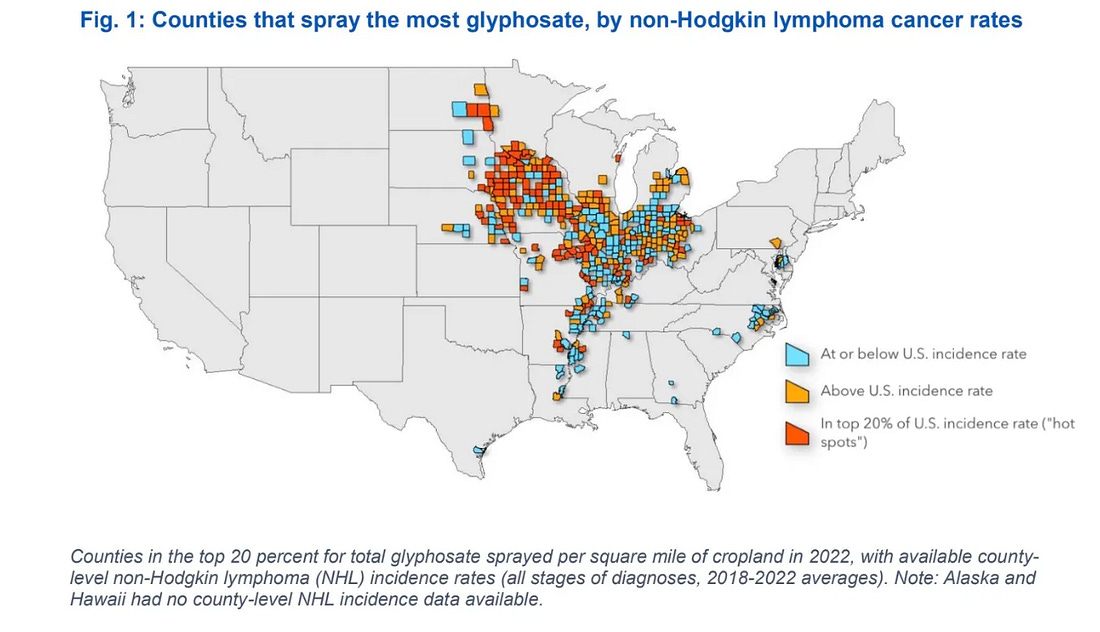
Map showing U.S. counties with high glyphosate application overlaid with county-level non-Hodgkin lymphoma incidence rates. Source: https://www.foodandwaterwatch.org/wp-content/uploads/2026/03/2603_RB_GlyphosateCancerClusters.pdf

  • In animals: Rat studies are typically what most fear is rooted in, but most people don’t know the study details on the dosage given to rats. A pooled analysis of the 13 most rigorous rat studies found evidence that very high doses, around 55,000 times greater than typical food residue exposure, can cause certain cancers.
  • In humans: One of the strongest studies followed 55,000 herbicide users over 20 years and found no overall increased cancer risk. There was one signal: among those with the highest use, rates of acute myeloid leukemia (AML) appeared elevated. A broader meta-analysis of 18 human studies also found no overall cancer risk, though a separate meta-analysis focused specifically on non-Hodgkin lymphoma found that people with high cumulative glyphosate exposure faced a 41% higher relative risk compared to those with low or no exposure.

These human studies are observational studies (randomized controlled trials would be unethical), and meta-analyses are only as reliable as the studies they pool. But the story seems consistent: at very high exposure levels, there may be some cancer risk. But that’s about as far as the science currently takes us.

Emerging research: gut and reproductive health

Gut: Because glyphosate targets a pathway that exists in some gut bacteria, scientists have questioned whether it could affect the microbiome. In mice, a 2023 University of Iowa study found that glyphosate altered gut bacterial composition and raised markers of intestinal inflammation. A 2024 systematic review found similar patterns: disrupted gut bacteria and problems with the mucus layer that protects the intestinal wall in mice. Whether this translates to humans is an open question. The human gut is highly variable and resistant, and we don’t yet have strong studies confirming the same effects in people.

Reproductive health: Animal studies have found that glyphosate-based herbicides can interfere with reproductive hormones, including disrupting egg cell development in mice and reducing the number of eggs available in sheep’s ovaries. However, the doses used in these experiments were high, so it’s not yet clear whether the same effects would occur in humans.

On the human side, a 2021 pilot study led by Mount Sinai researchers tested urine samples from pregnant women across the U.S. and found glyphosate in 95% of them. The study also found a possible connection between higher glyphosate exposure during pregnancy and a subtle physical difference measured in female newborns. That said, some connections weren’t statistically reliable and this was a small study. The researchers themselves said more and larger studies are needed before drawing firm conclusions.

What do regulators say about glyphosate safety?

In 2015, the International Agency for Research on Cancer (IARC), part of the World Health Organization, classified glyphosate as “probably carcinogenic to humans” (Group 2A). The classification is worth taking seriously.

But, there’s an important distinction: IARC classifies hazard, meaning the potential to cause harm under some conditions. It does not assess risk, which accounts for actual exposure levels and the real-world probability of harm.

The U.S. EPA, the European Food Safety Authority, Health Canada, and regulatory agencies in Australia and Japan have all concluded that glyphosate is “unlikely to be carcinogenic to humans” at realistic exposure levels. They’re asking a different question: given how much of this people actually encounter, what is the probability of harm?

Your actual exposure is what determines your actual risk.

What does glyphosate mean for your daily life?

At the grocery store: Food residues are small. The EPA’s acceptable daily intake is 1.75 mg/kg of body weight per day. To hit that threshold from oatmeal alone, a 150-pound adult would need to eat roughly 50 pounds of oats every day. But this calculation addresses only one pathway (food), and we don’t yet have robust tools to measure people’s actual total exposure. If reducing exposure matters to you, organic certification prohibits synthetic herbicides, and organic oat products generally test at lower or undetectable levels. Either way, a diet rich in whole grains, conventional or organic, is far better for your health than one that omits them out of fear of residues.

On the farm: Occupational exposure is orders of magnitude higher than consumer exposure. Farmers and farm workers who mix, load, and apply glyphosate-based herbicides, especially without protective equipment, face meaningfully different risk profiles. Proper PPE isn’t optional. Integrated weed management strategies that rotate chemical modes of action are also worth taking seriously, both for health and for long-term effectiveness.

If you live near a farm: Spray drift is real. Concentrations near field edges can spike during and after application, particularly on windy days. This is an area where I think public health could really step up and empower rural communities with buffer zones, rather than placing the onus on individuals. But for now, knowing your local agricultural calendar and keeping windows closed during application are the first steps.

Bottom line

Dewayne Johnson was exposed to glyphosate at levels most people will never encounter, and a jury decided he deserved compensation. That outcome is not evidence that the oatmeal in your pantry is dangerous. But it is a reminder that the dose, the context, and the person doing the exposing all matter enormously.

Glyphosate is a chemical tool with benefits, trade-offs, and genuine open scientific questions. Learning to hold that complexity without collapsing into panic or dismissal is, honestly, one of the most useful and hardest things to do in navigating modern health science.

Love, YLE


Your Local Epidemiologist (YLE) is founded and operated by Dr. Katelyn Jetelina, MPH PhD—an epidemiologist, wife, and mom of two little girls. Hannah Totte, MPH, is an epidemiologist and YLE Community Manager. YLE reaches more than 425,000 people in over 132 countries with one goal: “Translate” the ever-evolving public health science so that people will be well-equipped to make evidence-based decisions. This newsletter is free to everyone, thanks to the generous support of fellow YLE community members. To support the effort, subscribe or upgrade below:

Posted in Uncategorized

MARCH 25–AMERICANS CONCERNED ABOUT GROWTH OF SPORTS GAMBLING, SURVEY FINDS

ACCEPTED BUT ANXIOUS: AMERICANS EMBRACE SPORTS BETTING WHILE FEARING RISING CORRUPTION

 
Nearly two-thirds of Americans worry about the broader impact on players and the games themselves

FAIRFIELD, Conn.—As sports betting continues its rapid expansion across the United States, a new wave of findings from Sacred Heart University’s annual 2026 Nationwide Sports Gambling Poll reveals a growing national tension: Americans increasingly accept sports betting as normal, yet feel more uneasy about its impact on fairness and trust in sports.

Conducted in partnership with GreatBlue Research, the latest data show that nearly three‑quarters of Americans now view sports betting as socially acceptable, but roughly two‑thirds also are concerned corruption in sports is rising alongside the growth of legalized wagering.

This tension underscores a defining paradox in the evolving sports landscape: Americans are embracing betting as a mainstream activity but remain deeply concerned about its long‑term consequences for competition, athlete pressure and the credibility of the games they watch.

“Sports gambling has clearly entered the cultural mainstream,” said Andrew Miller, director of Sacred Heart’s sports communication & media graduate program. “But acceptance does not equal comfort. Many Americans are questioning what this expansion means for fairness, transparency and trust in sports.”

The findings suggest that while legalization and normalization efforts have succeeded, they have also introduced heightened fears about game manipulation, insider influence and undue pressure on athletes and officials—concerns that cut across both professional and collegiate sports.

Public anxiety appears to extend beyond professional leagues, reinforcing concerns about the vulnerability of college athletics, according to the findings. Respondents continue to express deep discomfort with the idea that increased betting activity may heighten risks to competitive integrity and intensify external pressures felt by student‑athletes.

“Americans are drawing a line between participation and principle,” said Josh Shuart, director and professor of SHU’s sport management program. “They may engage with or accept sports betting, but they remain wary of its potential to undermine the very foundation of competition.”

The data also points to a broader cultural shift: sports betting is no longer viewed as a fringe or taboo activity, but as a normalized part of the fan experience. However, this normalization has not erased concerns. Instead, it has made them more urgent, more visible and more tied to the high‑stakes environment of major sporting events.

As events like March Madness and upcoming professional championships draw betting activity, these findings underscore the need for ongoing public conversation around regulation, guardrails and protections for athletes at all levels.

View the full poll results 

About the Poll 
The Sacred Heart University and GreatBlue Research 2026 Nationwide Sports Gambling Poll was conducted February 2–5, 2026, among 1,500 U.S. adults. The survey carries a margin of error of +/- 2.43% at a 95% confidence level. The final sample was weighted according to age, gender and U.S. Census region.

Posted in Uncategorized

MARCH 23– IT’S A BRAND-NEW BALL GAME: SEASON OF THE 4TH STRIKE– PRIMER TO THE 2026 MAJOR LEAGUE BASEBALL SEASON YOU CAN’T TELL WHAT’S HAPPENING UNLESS YOU KNOW THE NEW RULES FANS

WPCNR VIEW FROM THE UPPER DECK, WITH “BULL” ALLEN,THE VOICE OF BASEBALL PAST. MARCH 23, 2026:


Hello there, everybody, this is “Bull” Allen from the mezzanine press box in the old big ball park 161st Street and River Avenue in  “Da Bronx” where the grounds crews are working overtime preparing for next week’s Yankee Opening Day.

I am joining you for a review of what’s new in baseball.

Old-timers like me used to say it’s a brand-new season, but there is something very different  now.

Every new season produces a brand-new ballgame because players managers, umpires have to adjust to new rules making this 2026 season different from any other.

For 73 years the rule that fans never seemed to understand was the infield fly rule.

I used to when an arbiter called infield fly by pointing their finger high in the air on an infield pop with runners on and less than two out go into an explanation of the rule for fans listening or watching.

I’d say into the WPIX mike, “And it’s a high pop, and the infield fly rule is called,”  and go into an explanation of rule. Baseball rules had not changed for almost 60 years until the Designated Hitter rule was entered into in 1973 by the American League.

Now, friends, as my colleague, the Old Redhead, Red Barber would say, it is literally “a brand-new ball game” every year.

Enter “Dr. Frankenstein”

The Commissioner of Baseball, Rob Manfred  the “Dr. Frankenstein” of Baseball Commissioners”  is recreating the game to his own vision in the name of speeding up the game which of course it has not done last year the average game was 3 minutes longer. He is playing God.

This season the mad baseball scientist Mr. Manfred has tinkered with the game again.

To prepare you for the major league opener and the Frankensteinian variances on the new rules, Let me take you through the new Manfred effects:

First, the pitching clock set up has not changed. It is still 20 seconds to pitch and the batter has to be locked cocked and loaded in the batter’s box within 9 seconds.  The position of infielders in the infield on either side of second base and outfielders can only shade to the alleys. (left center and right center.

Now heads up, baseball fans,  Here come Dr. Frankenstein’s changes of pace this year:


THE ROBO UMPIRE: The new  Ball Strike System Allow ball strike challenges.

Major League Baseball describes its new ball strike calling system:

“The ABS Challenge System monitors the exact location of each pitch, relative to the specific batter’s zone. Players can request a challenge of a ball or strike call they feel the umpire got wrong, and, when they do, a graphic displaying the result is then transmitted over a 5G network from T-Mobile’s Advanced Network Solutions and nearly instantaneously shown to those in attendance via the videoboard and to home viewers via the broadcast.”

Each team starts the game with only two challenges,


If the homeplate umpire’s call is upheld, the team loses one challenge. If the ump is overruled by Robo Ump the team retains the challenge. though it will retain a challenge if successful.


If a  team is out of challenges at the start of an extra inning, it will gain an additional challenge after that inning.

Who gets to call a challenge?

Not the managers coaches, Only a batter, a pitcher or the catcher.


How do they call it and when?

The call has to be challenged as soon as the ump calls it by batter, pitcher or catcher by tapping their cap. The batter pitcher or catcher cannot lollygag and at insistence of his teammates in the dugout or manager then call the challenge late.

Only the pitcher, batter or catcher can call it instantly after the offending pitch. Going to be some arguments on that.


The official signal is tapping cap or helmet.


. Players are “encouraged” to vocalize their intent to challenge,


ABS challenges will not be permitted following replay reviews or when a position player is pitching.


Personally the major league baseball organization is insulting their umpires by putting in this system. Are they admitting the umpires last year were not consistent? I know there were a consistent trend in more ball and strike arguments and  ejections last year than I can ever recall.


It is my opinion the league has hired a number of new umpires who have trained using such new devices as the pitch clock and no shift rules as well as the ballstrike system. This is why there are so many arguments, in my opinion.


Possible effects of the ABS system?


With only 2 challenges per team,  you can almost bet that they will be saved to the “Innings of Decision” the 8ths and 9ths .


Be prepared for 2 challenges  offense and defense in the 1 run innings or where the score is tied with possible 2 more in the 10th inning.

The effect of this long ninths and long tenth innings adding easily a half hour to the length of the game.


Using challenges early to “train” the umpire behind the plate is a waste of a strategic weapon. Bases loaded the 10th and the count is 3-2, you get called out on strike but it is close, if the pitch is close challenge and a run is walked in if you win the challenge. This is a fundamental change in the game you are creating a 4th strike and you’re out. No fan likes to see a run walked in.


Pitchers will challenge a third strike they think was right in there on the outside corner. And the Robo cop calls it a strike. That is going to create a real problem…particularly in the playoffs and World Series.


How will it affect the hitter?  He will either swing at the first pitch if it is a meatball or fastball. Force the pitcher to pitch to him for two pitches and be prepared to swing on the strike 3 pitch because it’s RBI situation;


The catcher is another factor. He could challenge for his pitcher if the umpire is inconsistent and squeezing his pitcher the whole game.


Also how will the Robo Umpire be set. It supposedly will adjust the strike zone from the height of the batter


Catchers already are being bomparded with strike zone charts on each batter indicating how the pitch selection should be varied from batter to the next.


Sign Stealing by Coaches in the coaches box


Base coaches on first and third will now be required to stay within designated box. From MLB.com:

“Umpires will be instructed to ensure base coaches are within the parameters of the box while the pitcher is on the rubber. …The base coach positioning guidance is MLB’s answer to an increasingly prevalent trend in which coaches would move out of their designated boxes to get better angles to steal signs by reading pitchers’ grips.”


Those shufflin’ coaches will be warned once. But can be ejected for continuing incursions,


Created “Obstructions” and Interfence Enforcement


Maruading Base runners can no longer create  obstructiom.  They cannot initiate  “contact” with infielders in the baseline “with the intent to draw an obstruction meanwhile, will be prohibited from initiating contact with infielders “with the intent to draw an obstruction call.”


Base runners who violate the rule will be called out. All other base runners will return to their previous bases.


My observation is this will also eliminate attempting to break up double plays. This was very evident in the seventh game of the World Series. Had the Tigers broken up one double play they would have won the World Series.


There, got that fans?


Well on Wednesday, drop down into you easy chair and catch the brand new ball game.


I will be particularly interested in Yankee hitters dealing with the Robo Ump. They were nortorious for striking out in the clutch. They could lead the league in challenges of balls and strikes this year.


Play Ball!

Posted in Uncategorized

MARCH 23 —-DA CACACE AND HOMELAND SECURITY ANNOUNCE INTERCEPTION OF 12 KILOS OF COCAINE, WORTH $1MM, DESTINED FOR WHITE PLAINS

tttt
Susan Cacace

DISTRICT ATTORNEY

WHITE PLAINS, N.Y. – Westchester County District Attorney Susan Cacace and Homeland Security Investigations (HSI) New York Acting Special Agent in Charge Michael Alfonso announced today the interception of a package containing 12 kilograms of cocaine, with a street value of approximately $1 million, that was en route to a White Plains address.

Reported overdoses are up in Westchester County, rising from 639 in 2024 to 652 in 2025. While overdose fatalities have decreased during this time period, this is largely attributable to the increased adoption of naloxone, commonly known as Narcan.

Increasingly, new, synthetic drugs, such as K2, are being distributed which threaten to undo the downward trend in fatalities.

DA Cacace said: “Westchester has managed to bring down the number of overdose fatalities, even with the number of overdoses rising overall. Nevertheless, interceptions like the one announced today offer a glimpse at how persistent this problem remains. Investigators in our office work around the clock with our federal partners to detect and intercept illicit substances bound for Westchester. These anti-trafficking partnerships are essential in helping to drive overdose numbers back down.”

Acting SAC Alfonso said: “The introduction of cocaine and other illegal narcotics into our neighborhoods fuels addiction and the potential for violence and instability that places every family in Westchester County, and New York State at-large, at risk. HSI New York will continue to stand shoulder-to-shoulder with the Westchester County District Attorney’s Office and our local law enforcement partners to disrupt these networks and safeguard the communities we serve.”

###

Posted in Uncategorized