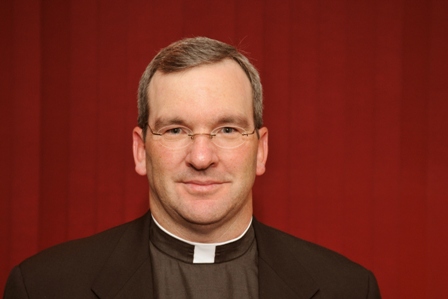
O’Shaugnessy of VOX Says Stay the Course with Bradley

Hits: 0

WPCNR Main Street Journal. Special to WPCNR from William O’Shaugnessy, President, WVOX Radio. January 10, 2011:


 White Plains  Mayor Adam Bradley, under pressure to resign as Mayor from five members of  the city Common Council and district leaders of the city Democratic Committee for conviction on a charge of Attempted Assault, Contempt and 3 charges of Harassment against his wife,  received a vote of confidence from the longtime politically active owner of WVOX Radio, New Rochelle, New York today in an editorial distributed to selected media. The commentary is signed by William O’Shaugnessy, the radio station owner:


The commentary:


Embattled White Plains Mayor Adam Bradley has been pilloried andcastigated in the public press. And much of it is fed by the personally ambitious Democrats on the White Plains City Council, many of whom see a “future mayor” when they look in the mirror in the morning. Despite his well-publicized matrimonial woes, Adam Bradley has not given any indication whatsoever that he is not up to the task of governing his important Westchester city.


The highly regarded and greatly revered retired Supreme Court Justice Samuel George Fredman, himself a former chairman of the Democratic City Committee who also served as Democratic County chairman, has spoken passionately in defense of Mayor Bradley’s absolute right to remain at his post until his personal domestic issues are behind him.


This whole contretemps is a perfect example of our theory of long standing that men and women of ability and quality will not submit to the rigors of public service. And this issue, however unpleasant and contentious it may be, would be treated as a “garden variety” matrimonial matter if Mayor Bradley were in any other kind of endeavor or career.


No one knows the absolute truth of what happened in the Bradley household. No one the Judge included (albeit a very good jurist she is) – knows who is lying. And Mayor Bradley certainly deserves the opportunity to have his case play out via the appellate process. Indeed with all the carping and backstabbing which has been visited on Adam Bradley by members of his own political tribe, he has diligently and sincerely and effectively – applied himself to the Peoples Business without any noticeable let up.


We don’t believe a man’s political career should be destroyed by the self-serving ambition of the Democratic members of the City Council(or by our own colleagues in the public press!).


And everyone else should just stay the hell out of this mess until it can be proven beyond a reasonable doubt that Mayor Adam Bradley is unable to govern.


So far we havent seen that. In fact, he has applied himself to his municipal duties with vigor, determination and an optimistic demeanor as well as a good heart.


We certainly agree with Mr. Justice Fredman, a man of great probity who, at 86, is, in every telling, a grey eminence and statesman of our Westchester community, that the attempted “public hanging” of Adam Bradley tarnishes and diminishes the image of the entire city as well as a political party.


The Mayor is entitled to all the legal remedies available to him, even in the face of the character assassination to which he has been subjected.


Indeed, our own Republican “leanings and inclinations” are well known to one and all. But the vitriol being heaped on Mayor Bradley by those bearing a political agenda should concern everyone interested in fair play.


The whole, unhappy matter is in the courts where it should play out and remain.


And the Mayor should remain in City Hall where he is doing an exemplary job.


William O’Shaugnessy


WVOX, WVIP RADIO

Posted in Uncategorized

WP Plans Security Beef-UP for Future Contests after Mount Vernon Shooting

Hits: 0


WPCNR SCHOOL DAYS, By John F. Bailey. January 9, 2011:


 White Plains Commissioner of Public Safety David Chong and City School District Athletic Director Chip Salvestrini are collaborating on “security for future (White Plains BOYS  Basketball) contests,” White Plains Superintendent of Schools Dr. Christopher Clouet reported in a written statement to The CitizeNetReporter Sunday.


The security review comes in the wake of the Thursday evening shooting of a Mount Vernon student on California Road outside Mount Vernon High School, as the Mount Vernon-White Plains game was ending.


Commissioner Chong, (formerly Public Safety Commissioner in Mount Vernon as recently as 14 months ago),  wrote WPCNR Saturday,that it would be in appropriate for him to comment on the incident in another jurisdiction.


Clouet, though was able to provide details,  describing the incident to WPCNR:


The shooting took place off school grounds after the game. No WP students, staff or parents were involved or even nearby, thankfully.

It was a matter of rival groups in MV.

I have been in touch with the MV superintendent. In addition the WP police and our AD have started planning and are working on security for future (WP) contests.”


Mount Vernon High is scheduled to play White Plains again in basketball in White Plains February 1 at 4:15 P.M. at the White Plains High School.


According to the Gannett organization account of the incident, a 16-year old boy was shot before 6 P.M. as spectators were leaving the game. The article  by reporter Danielle De Souza reprted 10 bullet casings were marked by Yonkers police at the scene of the shooting on California Road.

Posted in Uncategorized

Ged Says NO to French School Ridgeway Plan. School:We Will Fix Drainage Problem

Hits: 0

WPCNR SOUTH END TIMES. By John F. Bailey. January 8,2011:


Members of the Gedney Association in an informal “show of hands” vote indicated by about 290 to 3 they opposed the French American School of New York relocating their private school operations to Ridgeway Country Club Thursday night.  A Gedney Association “fact sheet” distributed at the Ridgeway School Thursday night,said they will be closing the purchase for $8.5 Million on January 20.


As first reported by WPCNR weeks ago, WPCNR confirmed again the school secured the bid with the $2.5 Million “Approval Bonus” it will pay the present owners if the Common Council approves the project. This “take out bid” sweetener beat out the offer of a country club operator which had been bid $8.5 Million, a person familiar with the club bid, with knowledge of the mystery club,and working with the club told WPCNR.


Undaunted, the French American School of New York has scheduled an Open House at the Ridgeway Country Club January 29, for neighbors and citizens “where you can learn more about our project and voice your concerns,” according to a letter news release from the Chairman of the School, Mischa Zabotin. handed out by  a representative of Thompson & Bender, the school’s media representative to persons entering the meeting.


Zabotin promised in the release to address the longterm drainage problems that flood neighboring homes with “state-of-the-art” storm drain and retention ponds, which for 58 years the city has not required the Ridgeway Country Club to address. The drainage problems on the property were cited throughout the evening as reasons the school should not be allowed to build on the property.


Gary Klein, Treasurer of the Gedney Association,  speaking at the end of the meeting, called on the Common Council to decline to even review the proposal, and to deny it if they do review it. Terence Guerriere, President of the Association said he “respected the school’s dream, but he’d prefer they build their dream someplace else.”


The meeting featured Robert Stackpole, a newly appointed member of the City of White Plains Planning Board, painting a dire picture of heavy traffic, construction of buildings “double the size of White Plains Stepinac High School,” destroying the tranquil golf course off Ridgeway Avenue, and creating additional drainage problems. John Sheehand, a local realtor, said a school operation there would have the long term effect oflowering neighborhood property values.


The City Assessor, Lloyd Tasch, said in a WPCNR interview this week, that it is not possible to predict that property values would go down if the school complex would be built. Tasch said only actual sales at the time the school would be operating would be the measure


War of Approval Attrition


Stackpole visualized a long approval process, by which the school would tire of spending money on the approval process and eventually withdraw plans.


Angels Will Bail Out School


Guerriere told the audience in his discussions with the officers of the club that the officers had told him that they had wealthy supporters of the school who would step in and possibly relieve the school of the property if the school abandoned the projection, interjecting another area of doubt.


Mystery Golf Operator Bid Trumped by Bonus.


Stackpole, who heads a Gedney Association committee exploring and formulating solutions  to the troubled country club for the last year, was interviewed by WPCNR after the meeting. He said there had been a country club operator, poised to purchase the club for $8.5 Million that had submitted a bid.


After the Common Council had voted not to authorize $15 Million to buy and run the club as a public course for the Club, for a guaranteed purchase price of $8.9 Milion, the club acceptable to the Gedney committee would have most likely been the winning bidder,


Stackpole said the $2.5 Million “on city approval” additional payment attached to the French American School Bid,  apparently swung the deal the French American School side.


Asked to name the country club operator that bid on the club, Stackpole said he would not because “they’re still in the game,” possibly to pick up the club if the French American School grows tired of spending the dollars to pay for the environmental review procecdure the school is required to undertake to acquire the Special Permit to run an academic operation on the property, as well as “maintain” the country club property.


How Will Property Be Maintained


Stackpole in one of his many comments to the throng said it cost Ridgeway $1 Million a year to maintain the club. Terence Gurrriere, President of the Gedney Association, said after Gedney Association officials had met with the school, that they were “undecided” as to whether they would continue to run the club as a place for golf.


Roach: No Regrets


Tom Roach, Common Council President, was asked by WPCNR if he now regretted voting to deny city purchase of the 120 acres for $8.9 Million. Roach said, “Absolutely not. It would have been a money-losing proposition for the city.” He said the Mayor’s office did not study the project thoroughly, and it was the Council decision to bring in another consultant who demonstrated then financially pitfalls.


Mayor Adam Bradley has defended the proposed purchase as a recreational asset to the city that could have made money for the city in a future sale if the project numbers were not realized.


Roach said  that as an owner,the French School has to maintain the property.


Asked Thursday afternoon by WPCNR what the city would expect of the school in terms of “maintaining the property,” Bradley  said that was undecided.


Chairman’s Letter


A public release distributed by Thompson & Bender, stated in contrast to Mr. Stackpole’s comments on how development would devastate the property because of environmental conditions, especially drainage wrote that the school would:


* Preserve 60 acres of permanent open space that would be available to residents.


* Improve existing stormwater and drainage conditions with porous surface materials, retention ponds and state-of-the-art managemen practices.


(To date the city has not compelled to this reporter’s knowledge the present country club owners to execute remdiation of such problems, despite drainage problems there known for years, even mentioned at Thursday evening’s meeting. If the city has directed club remediation efforts in the past, they have not solved the problem.)


*  Minimize traffic impacts through staggered school sessions, sharing buses with other area schools, handle all traffic drop-off on-site and avoid local roads.


  • Provide White Plains residents with the school gymnasiums and cultural facilities for community use during off-hours.


The release said the school is “still in the very early stages of creating a formal plan.”


Gurriere asked if French American School of New York personnel had been invited to participate in the meeting,said they had been invited, but declined.


After the meeting, two cars in the lot were discovered broken into with computer cases a  camera, and a GPS device stolen. One car belonged to Councilman Tom Roach. WPCNR reminds motorists not to leave objects that may look valuable in plain sight.

Posted in Uncategorized

School Budget Process Begins Wednesday– $8 M Gap Seen at This Time

Hits: 0

WPCNR SCHOOL DAYS. From The City School District.(EDITED) January 7,2011:  


The White Plains Board of Education has announced the district’s 2011-12 budget planning  process, continuing the successful community-wide forums held last year.  Responding to the difficult economic situation, Board President Rosemarie Eller stated, 


“Next year’s budget will be even more difficult to develop than the current year’s, with a potential property tax cap, a possible cut of 10-20% in State Aid, and contracted increases in salaries and employee benefits.  This adds up to a potential  increase of almost $8 million in expenditures for next year, without considering tax certioraris.  It is clear that we need to consider all options in order to hold this budget to an acceptable level.”


The $8 Million gap(predicted on the television program WHITE PLAINS WEEK)  comes from the approximate 5% increase in staff salaries, agreed to last year by the district, pension fund contribution increases and expected health care cost increases, even before the tax roll is out, which is expected to continue its decline.


            The district is seeking broad input from the community at various meetings scheduled for this purpose.  Following the suggestion of participants last year, two sessions will be held following release  of the district’s preliminary proposed budget.


The first Budget hearing takes place this Wednesday:


The first two Budget Forums will take place on January 12th, 7:30 P.M., at White Plains High School (B-1 Room) and January 19th, 7:30 P.M., at Church Street School (Cafeteria).  Then, following  distribution of the preliminary proposed budget on March 14th, two additional Budget Forums will be  held, for community response.  These will take place on March 16th, 7:30 P.M., at Post Road School (Auditorium), and March 23rd, 7:30 P.M., at White Plains High School (B-1 Room).


Additional meetings will take place in the community and any group or organization wishing to  host such a meeting may contact the  Superintendent’s Office at 422-2033.   Discussions have also been  held with staff  to solicit their input.


All residents are invited to attend these sessions, to participate in focused dialogue on spending efficiencies, areas of concern, budget priorities and creative ways to increase revenues.  A review of the  district’s financial situation, the state’s and city’s financial constraints, and other issues relating to  development of the budget will be presented.


            The district will also hold two Public Hearings:  the first on March 14th, on the Preliminary Proposed Budget, and the second on May 9th, on the Board of Education’s Adopted Proposed Budget. Both hearings will take place at Education House, 5 Homeside Lane, at 7:30 P.M.


            Superintendent of Schools Dr. Christopher P. Clouet said, “We hope to work together with the  community to develop a budget that maintains the high quality of education in White Plains and that is  fiscally responsible and can be supported by the taxpayers in the May 17th vote.”


            The community is encouraged to visit the district’s website, www.whiteplainspublicschools.org   information on the budget.


Posted in Uncategorized

Governor Andrew Cuomo’s State of State Address to the Legislature on NYS $$

Hits: 0

WPCNR FOR THE RECORD. From The Governor’s Press Office. January 6, 2011:


Wednesday afternoon, Governor Andrew Cuomo delivered his first State of the State address, detailing his plan for fixing the New York State financial crisis to the state senate and assembly. For the record: here is the text of his speech.


Governor Andrew Cuomo delvering his State of the State Address in Albany Wednesday. (Photo, The Governor’s Press Office)


Well, good afternoon New York. Oh, it is a better afternoon than that, 2,200 people are here today to talk about their government in a way they never have before, Good afternoon New York!


Let me first begin by acknowledging a truly extraordinary public servant, he was a great mayor of Rochester, that’s Rochester, he is going to be a phenomenal Lieutenant Governor, Lieutenant Governor Bob Duffy.


To my colleague and congratulations to the re-elected comptroller, Thomas DiNapoli. To our brand new, right out of the box Attorney General, Eric Schneiderman. To Majority Leader Dean Skelos thank you very much Dean. Assembly Speaker Sheldon Silver. Senate Minority Leader John Sampson. Assembly Minority Leader Brian Kolb. To the judges of our great court of appeals it’s an honor to be with you, Chief Judge.


And a special thank you to the young people behind me, these are high school students who represent New York’s 62 counties, they are the future, and the state that we are talking about preparing today is the state we will leave them. We hope we do a good job and we thank them for being with us. Thank you


My friends I believe this state is at a crossroads and I believe there are two very different paths this state may down. Certain factors are pushing us down one path – the national economic pressure; the costs of state government that we’re currently expending; the dysfunction that the state government has been manifesting and the fact that the people have lost trust in our government. They would dictate this state follow one course. But there’s an alternative, when you look at the assets of this state; when you look at the legacy of this state; when you look at the tenacity of our people and when you look at the quality of our people – you have the very real sense that we can turn this crisis into an opportunity.


What is the state of the state? This is a time of crisis for our state, a time when we must transform our government to once again become the progressive capital of our nation, and to seize the moment of opportunity that is before us.


What we do today, January 5, 2011, will determine the course of this state for decades to come. For New York, it is time to change my friends and that’s what today is all about. This convening itself is a metaphor for change. This convening itself says that change is possible in Albany, believe it or not, and I say ‘Amen,’ because we need change in Albany.


This is the first time, since Governor Al Smith, that the State of the State is not being given in the Capitol. It’s the first time that the Legislative Leaders were asked to participate in the presentation. It’s the first time that technology is actually going to be used in the presentation and it’s the first time that the most important participants have actually been invited to participate, the people of the State of New York.


And we say welcome New Yorkers to being here today, because this is your government and no one is better suited to be here to hear this message than you. Thank you all for coming.


The State of the State begins with an honest analysis of the crisis that we face. In government, as in life, you can never solve a problem if you refuse to acknowledge it. The economic recession has taken an especially hard hit on the State of New York. In 2009, we had a twenty-six year high in unemployment, roughly 800,000 New Yorkers are now unemployed, hundreds of thousands more are under-employed. We have the worst business tax climate in the nation, period. Our taxes are 66% higher than the national average. Upstate is truly an economic crisis. In real GDP, from 2001-2006, upstate New York grew about 1.7% per year while the average in the nation was 2.7%. The costs of pensions are exploding, 1.3 billion in 1998-1999, projected for 2013, 6.2 billion – a 476% increase and its only getting worse.


The State of New York spends too much money, it is that blunt and it is that simple. Our spending has far exceeded the rate of inflation. From 1994-2009, inflation was about 2.7% per year; medicaid when up over 5% per year and education went up over 6% per year. We just can’t afford those rates of increase. State spending actually outpaced income growth. State spending increased just under 6%, personal income growth was only 3.8%.


And most damaging, our expenses in this state far exceed revenue. We’ve been focusing on this year and the deficit this year, which is a very large deficit about $10 billion, and that is a problem and it is a major problem; what’s worse, is it’s not just about this year. Next year, the problem goes to $14 billion. The year after, the deficit goes to $17 billion. This is not a one year problem my friends. This is a fundamental economic realignment for the State of New York. You look at the chart, you look at the arrows and this is an unsustainable rate of growth and it has been for a long time.


Not only to we spend too much, but we get too little in return. We spend more money on education than any state in the nation and we are number 34 in terms of results. We spend more money on Medicaid than any other state in the nation and we are number 21 in results. We spend about $1.6 billion per year in economic development and we are number 50 in terms of results. We are spending more, and government is growing more. We now have more than 600 Executive branch agencies.


And it’s not just State government – the proliferation of local government and special districts all across the State now over 10,500 driving that property tax rate up all across the State. And the large government we have is all too often responsive to the special interests, over the people of the State of New York. The proof is in the pudding. And New Yorkers are voting with their feet. Two million New Yorkers have left the State over the past decade. What does this say? It says we need radical reform, it says we need a new approach, we need a new perspective and we need it now. We must use this moment to transform our government. We currently have a government of dysfunction, gridlock and corruption – we have to transform it into a government of performance, integrity and pride. It is time that we speak to these issues and actually get results for the people of the State and stop offering rhetorical solutions.


And I am going to present the budget in several weeks – but this year’s budget discussion is not just about a budget exercise. That’s what those numbers are saying. This is a fundamental realignment for the state. You can’t make up these kinds of savings over this long of period of time through a budget cutting or trimming exercise. We are going to have to reinvent government. We are going to have to reorganize the agencies. We are going to redesign our approach because the old way wasn’t working anyway, let’s be honest.


We need literally a transformation plan for a new New York and we have four principles that will guide our new government. Number one, we want a government that pays for performance. No more blank checks. Number two, we want a government that actually gets results in real time. Number three, we want a government that puts the people first and not the special interests first. And number four, we want a government that is an icon for integrity where New Yorkers can be proud of their government once again.


We are going to start by transforming New York’s economy. Because what made New York the Empire State was a not a large government complex, it was a vibrant private sector that was creating great jobs in the State of New York that’s what made us the Empire State once and that’s what’s going to make us the Empire State again.


When you look at the beautiful State seal, at the heart of the seal in the middle of the shield are two ships in the Hudson River those two ships were put there when the seal was designed to symbolize intercostals and international commerce. That at the heart of his State is business. And we have to relearn the lesson our founders knew and we have to put up a sign that says New York is open for business. We get it. And this is going to be a business friendly State.


We are going to establish economic regional councils. Ten economic regional councils all across the State. They are going to be chaired by Lieutenant Governor Bob Duffy. These will be public private sector partnerships the focus of which is to create jobs, jobs, jobs in those regions. It starts with the premise that there is no top down template to create jobs. You have different regions in this State with different assets and different abilities and these plans are going to have to come from the bottom up and let’s empower the local communities to plan their future and help themselves.


Higher education will be the key economic driver. We look to partner with our great SUNY system, especially across upstate New York in making this a reality. They will provide both intergovernmental and intra-governmental coordination and be one stop shops. State government, county government, local government will all be on one board and all the State agencies will be on that one board. If you need to get something done in that region, it’s a one stop shop and the government will actually cooperate with each other rather than conflict with each other.


These councils will have two main functions. First they will coordinate all the existing economic development money that goes into that region, primarily through ESDC. But second, they will be able to come up with job development plans and then compete against the other councils – to compete for up to $200 million in funding. Competition works. Let them come up with their best plans, compete against the other regions and we will fund the most creative plans.


Next, we are going to have to confront the tax situation in our State. The property taxes in New York are killing New Yorkers. Thirteen of the sixteen highest tax counties are in New York when asset by home value. In absolute dollars, Westchester County the highest property taxes in the United States of America. Nassau County the second highest property taxes in the United State of America. It has to end, it has to end this year. We have to hold the line on taxes for now and reduce taxes in the future. New York has no future as the tax capital of the nation. Our young people will not stay. Our business will not come. This has to change.


Put it simply the people of this state simply cannot afford to pay any more taxes, period. I would now like to introduce you to Ms. Geraldine Sullivan. Ms. Geraldine Sullivan is a resident of Monroe County. She is 81 years young. She has been retired after 28 years at Bausch and Laumb. Geraldine lives alone on social security and owns her own home. Her home value, property value has gone down and her taxes have gone up. Geraldine could no longer afford to make ends meet. What did Geraldine do, so at 81 years old she went back to work as a lunch monitor at the local high school just to be able to stay in her home and just to be able to stay in the State of New York. Geraldine we understand your problems, help is on the way we will pass a property tax cap Geraldine once and for all and we, and Geraldine we applaud your spirit and your strength and your tenacity; let’s give Geraldine a big New York round of applause.


We must transform our state government. The last time the state government was reorganized was 1927 under Gov. Al Smith. 1938 a reform was passed, a constitutional amendment, that said there could be only 20 executive departments – 20 – so what has happened since then. Well we couldn’t create any more departments but the law didn’t say anything about creating councils, advisory panels, working groups, facilities, offices, task forces, institutes, boards and committees. So what do we now have? The Department of Health, only one department in compliance with the law, however there are 87 other organizations that have been added to the Department of Health, 46 councils, 6 committees, 17 boards, 6 institutes, 2 task forces, 5 facilities; it’s time to organize the government make it professional make it efficient make it effective. To undergo a comprehensive review lets eliminate transfer and consolidate the funds. I propose setting up SAGE, a spending in government efficiency commission, it would be styled like a Berger Commission where the commission would come up with a reorganization report that is submitted to the Legislature and the Legislature has 30 days to reject it otherwise its passed. The charge to the commission would be operational improvements metrics and targets a reorganization plan due in 6 months and it would consist of private sector experts who could come in and advise us on how to do it and incorporate members of the Legislature.


We need to transform our budget. We have to start with an emergency financial plan to stabilize our finances we need to hold the line and we need to institute a wage freeze in the State of New York. We need to hold the line on taxes, we need a state spending cap and we need to close this $10 billion gap without any borrowing.


We need to transform the budget process that we use in this state. The Legislature is very familiar with the budget process and we need to transform this process from partisan political theater, which is what it is today, to productive debate and compromise. Right now the budget process is like ships passing in the night; hold on a second. Bring those ships back, I think I recognized someone. Is that, zoom in on that man on that battleship, yes it is, Senate Majority Leader Dean Skelos. And look, it’s Commander Sheldon Silver, oh, and there I am. And here are the special interest groups. You notice Dean how all of the missiles from the special interest groups went into my battleship. I would humbly suggest as the new governor that maybe, just maybe we try doing it a different way this year, what do you say?


We need to try a different approach. And think of it this way, there are basically three flashpoints when it comes to the budget: it’s the education funding, medicaid and state and local mandates. We want to try a new approach. The State of Wisconsin actually used an interesting model. The governor had announced across the board cuts on the medicaid program, the industry said they couldn’t live with the cuts, and what Wisconsin actually did was basically brought everyone in. It was a hybrid alternative dispute resolution meets binding arbitration process and it actually worked fairly well in Wisconsin. The industry came in, they worked with the government, they accepted the budget target and then redesigned the program to meet those targets. Remember, this is not going to be a budget cutting or trimming exercise. We need to redesign the medicaid program. I can also tell you this. As the Attorney General, I audited the medicaid program for four years, even without this budget problem, the medicaid program needs a desperate overhaul. It is dysfunctional on many levels, so this process has to be done anyway. Our suggestion is to take a crisis management approach and put together a Medicaid Redesign team.


The Medicaid Redesign team will start on January 7, it will commit to reinventing a time for the April 1st deadline, it will assume the Governor’s budget target for the Medicaid cut, and the exercise will be to find alternative ways to reach that cut. If we institute a cut in the normal budget process it is basically through reducing the reimbursement rate. Let’s see if we can’t actually find efficiencies in the program so we actually provide a better service for less money.


The committee will include legislative, executive and the stakeholders. Dennis Rivera from SEIU, George Gresham from 1199, Mike Dowling (sp?) from LIJ, Ken Raske, Dan Sisto (sp?), members of the Legislature have agreed to participate in this process. We also have Jason Helgerson who is the former Medicaid director, who did this in Wisconsin, who is responsible for designing the exercise, we have seduced him to come join us in the State of New York, which was not a difficult sell obviously; and Jim Introne (sp?) who is a great veteran of State government and has done extraordinary work in health care, we’ve asked to come back. They’re with us today, let’s welcome Jason and Jim. Thank you very much welcome aboard and welcome back Jim.


We’ll use the same approach when it comes to mandate relief – putting together a group that will start January 7, and will commit to have actions by the April 1 deadline, and will propose eliminating any unnecessary state mandates. Again we’ll include all our partners: legislative, executive and stakeholders, labor groups; and that group will be run by Larry Schwartz, who is now a senior advisor to me, but many of you worked with him when he was Secretary to Governor Paterson. He’s done extraordinary work and he’ll be excellent heading up this group. Thank you very much Larry Schwartz.


When it comes to Education funding, as I mentioned earlier we’re number one in spending but thirty-four in terms of results, that has to change. The current education funding goes out by formula grants, meaning there are no performance incentives in the grant process. A school district gets their numerical formula and that’s what they’re going to get, whether they do a good job, a bad job, it doesn’t matter; they get the same level of funding every year. The federal government is actually more innovative in this area. They’re doing it now in the area of education where they run competitions, and for example, when they fund a state government, if the state government wants to qualify for the federal money they have to win the competition. We know in New York how effective those competitions were in making the state government actually move and pass a piece of legislation authorizing charter schools so we could qualify for the Race to the Top money. Competition works. When I was in the federal government ten years ago, we moved from block grants to competitive grants. Everything was performance grants, because when you just give people cash with no results, you take the incentives out of the system.


Our suggestion is when it comes to education, have two competitive funds that reward performance. One is a school performance fund which would have a $250 million competition fund for districts that increase performance in the classroom. For example, improving grades of historically underperforming children. If there is a school district that does stellar work, let them compete, let them be rewarded and let them be emulated. We would have a second competition for administration efficiency. A $250 million competition for districts that can find administrative savings through efficiencies, shared services, etc. Run those two competitions and actually incentive performance and change the behavior through the funding mechanism.


For those of you who are skeptical about performance and the ability to turn around a school, let me introduce Brian Rosenbloom. Brian is now the principal of Chelsea Technical Career High School in Manhattan. Brian has been there for two years and he’s already made a difference. In that time, student attendance has gone from 73% to 85% percent and listen to this, the pass rate on the regents went from 31% to 89%. That performance is what we want to incentivize, that performance is what we want to model and that performance is what we want to applaud. Congratulations principal, thank you for being with us today.


I would also propose a consolidation bonus. We’ve been talking about consolidating local government for a long period of time and we’re seeing some progress. I think if we add financial incentives to the governments that actually consolidate, you would see an acceleration in the consolidation process, and have a bonus fund for local governments that consolidate and merge or share services with 50% of the bonus money going to direct property tax payer relief for the people of that government.


My friends we have to transform the ethical environment and we have to clean up Albany. We all have seen the headlines, headline after headline, month after month, year after year with no change. Every time there’s another headline, there’s another cut on the body politic, and a little more trust has bled out. And this has gone on, and on, and on. I’m familiar with the situation because many of the cases that were in the headlines, I was involved in. Sometimes, even in Albany, there is a black and white issue and this issue is black and white, there is no gray. The people of this state have lost trust in state government; this government has lost credibility with the people of this state. It’s time to pass ethics reform and it is time to pass ethics reform now.


We will propose a clean up Albany plan with real reform. This is not going to be a situation where the people of the state will have suffered for years and lost trust and now were going to give them a watered down or half baked ethics reform bill. They’re going to have real ethics reform. Were going to end pay to play. We’re going to have full disclosure of outside income. We’re going to have an independent monitor. We’re going to listen to Ed Koch’s warnings. Mayor Ed Koch has been going all over this state and we and we applaud him for it talking about independent redistricting. Congratulations Mr. Mayor.


And we need public financing of campaigns. We must also at the same time once again become the progressive capitol of the nation. Yes, we must deal with these fiscal realities and they are difficult and they will be time consuming. But at the same time we also have to continue to achieve social progress that made this state famous. You should applaud! I spent four years fighting Wall Street corruption and I saw thousands and thousands of consumers victimized by the Wall Street corruption. And the question was where was Washington, where was Washington, where was Washington. Where were all the federal regulators. Where was the SEC and OFHEO that whole alphabet soup of federal regulators. Where are they. It was a good question. There was another question. Where was Albany? Where was our banking department? Where was our Insurance Department? Where was our Consumer Protection Agency. And yes, I believe Washington was primarily responsible but I also believe New York could have done a better job, frankly. I believe our organization, I believe our current organization is not effective because it is not organized the way Wall Street works any more.


These divisions of insurance and banking and consumer protection don’t exist in the marketplace and much of the activity is falling between the cracks of our regulatory entities. We can have a win win. We can consolidate them into a department of financial regulation that better protects the consumer and the consolation will save the taxpayer money by reducing the cost of three separate organizations. We’ve been talking about green jobs and I believe New York has a great future in green jobs. We proposed a $100 million competitive grant program that will go to local private sector partnerships that come up with the best plans to create green jobs, reduce pollution and further environmental justice. Let the private marketplace come in, let them work with the local governments and the local community groups to come up with the best plans. Let’s reward performance. Lets incentivize performance Let competition run, and let us fund the best. That’s the green jobs proposal. We believe in economic opportunity for all New Yorkers, the Minority and Women Owned Business Enterprise endeavor, is a good one, it has a current goal of 10% of state business, I want to double that goal to 20% of state business. For those of us who are old enough to remember Willowbrook, it brings back very bad memories. When we think about our current juvenile justice facilities, I believe there are echoes of what we dealt with in Willowbrook. You have juvenile justice facilities today where we have young people who are incarcerated in these state programs who are receiving help assistance program treatment that has already been proven to be ineffective; Recidivism rate in the 90 percentile. The cost to the taxpayer is exorbitant.


For one child over $200,000 per year. The reason we continue to keep these children in these programs that aren’t serving them but are bilking the taxpayers is that we don’t want to lose the state jobs that we would lose if we closed the facilities. I understand, I understand, the importance of keeping jobs. I understand the importance of keeping jobs especially in upstate New York. I also understand that that does not justify the burden on the taxpayer and the violation of civil rights of the young person who is in a program that they don’t need where they’re not being treated hundreds of miles from their home just to save state jobs. An incarceration program is not an employment program. If people need jobs, let’s get people jobs. Don’t put other people in prison to give some people jobs. Don’t put other people in juvenile justice facilities to give some people jobs. That’s not what this state is all about and that has to end this session.


We believe in justice for all, then let’s pass marriage equality this year once and for all.


We’re going to propose a program called the urban green markets program which will be a win win. We’re going to set up green markets in urban areas all across the state to get good food to inner city communities and these markets will be a host for the New York agricultural products. Last point, we must seize this moment of opportunity. New York is not alone in this situation. As a matter of fact there, are eight states with fiscal conditions that are worse than New York. This is going to be a time of national transition. This is really an economic recalibration for states all across the nation. And that’s what’s really happening as the economy has retrenched, states now have to recalibrate.


There have been other times in our history where there have been transition periods, the agricultural transition, the industrial transition, high tech transitions. In all those transitions, New York led the way and New York came out first. Why? Because we were faster. We were more facile, we were more sophisticated, and we won in the transition. We can win in the transition again. And we can make, we can make January 5, 2011 the day that we seize the opportunity and the State of New York strikes back. I want to leave you with one personal point if I may as the new Governor. To my colleagues in the Legislature, one point in my life, I went and joined the Clinton administration. I was a lifelong New Yorker and Bill Clinton took office and I had the opportunity to join the Federal government and I did and it was a good experience. I needed it. I was one of those people who thought the New Yorker cartoon was the accurate depiction that the west coast was really New Jersey.


You know, I was a real New Yorker. So I went down at the beginning of the Clinton administration, assistant secretary at department of housing and urban development and I became a member of President Clinton’s cabinet and it was a fascinating experience and I got to work literally in every state in the nation. Many times when you’re in the President’s cabinet, your main utility is the President can’t make an event, they scramble for a surrogate and they send someone from the Cabinet to be a surrogate. That was actually a very tough duty, by the way. Can you imagine, having to go out to Kansas to substitute for President Bill Clinton and get before a group that was expecting to see the President of the United States, Bill Clinton and instead they get the HUD Secretary Andrew “Cucamo.”


But it was, it was a learning experience for me and literally every state I would be talking about every topic and almost invariably, somehow they would figure out that I was from New York, I’m not really sure how because I never told them but they would figure out I was from New York and at the end of the event they would come up to me and almost without exception whatever the topic they would say what are you doing about this in New York? It could be healthcare it could be immigration it could be taxation what do you do in New York and their eyes would be open wide. What do you do about this in New York? Why? Because we are New York and because our history our legacy was we took these difficult problems and we solved them first and the rest of the nation learned from us.


The other state governments looked to New York and they learned from us. I was running HUD, the housing economic development, most of the federal programs were modeled on state programs. Why, because the New York government was the best. We were the most sophisticated the most complex the problems developed here first we resolved them here first we had the most caliber in our government we were just the best and we were the model for the nation. That’s the history and the legacy of New York this has been an aberration this recent past. The dysfunction of Albany, the gridlock of Albany, the corruption of Albany, this is not the true story of the New York State legislature. It’s not who we are, it’s not what we do, it’s not why we’re here. The New York State Legislature is the best legislature historically in the nation the most talented people, that’s, that’s who we are.


That is who we are and that’s who we can be again. When I hear your leaders speaking about your cooperation in a positive vision and change and doing things differently, I am so excited. Because the people of this state desperately, desperately need it. They need the government to work in a way they haven’t needed the government to work in 20 years. They’ve seen the ugly, they’ve seen the gridlock, they’ve seen the corruption. Let them see how beautiful the government can be when it cooperates and it’s enlightened and it’s functioning and it’s performing and it’s putting the people above the special interest. Let this legislature be the legislature that stands up and says yes we’re democrats but we’re New Yorkers first, yes we’re republicans but we’re New Yorkers first, yes we’re from downstate but we’re New Yorkers first, yes we’re from upstate but we’re New Yorkers first, and that matters most. And we’re here as New Yorkers not as democrats not as republicans not as independents we’re here as New Yorkers to serve the people of the state of New York and help this state through this crisis.


Let this 234th legislature stand up and write a new page in the history book of New York State government. Let this 234th legislature solve these problems at a time of crisis and bring this state to a place that it’s never been. We’re not just going to build back we’re going to build back bigger stronger than ever before. That’s what we’re going to do together. Thank you and God bless you.

Posted in Uncategorized

Buchwald Promises Letter to Gov for Bradley Exit to be sent Before sentence Date

Hits: 0

WPCNR WHITE PLAINS LAW JOURNAL. By John F. Bailey. January 5, 2011UPDATED 10:45 A.M E.S.T.:


Councilman David Buchwald told WPCNR tonight that neither he nor an entourage of councilpersons would not be physically traveling to the Governor’s Office in Albany to request Governor Andrew Cuomo to remove Adam Bradley as Mayor of White Plains from office. 


Instead, Councilman Buchwald said a letter would be drafted calling for Governor Cuomo to start the procedure through the Office of the Attorney General before March 17, the day when Judge Susan Capeci is scheduled to sentence Mr. Bradley for his conviction on Attempted Assault, Contempt and three charges of Harassment.


Buchwald, and Councilpersons Benjamin Boykin, Milagros Lecouna, Tom Roach, and Beth Smayda voted 5-2 (with the Mayor and Councilperson Dennis Power) demanding the Mayor resign because the council had “no confidence” in him in December.


At the time Buchwald sent out a personal newsletter saying he would go to Albany to ask the new Governor to set in motion the Attorney General’s Office to proceed with the Mayor’s removal, the only way at this time Mr. Bradley can be removed. Mr. Buchwald wrote:


“My preference is for the Mayor to resign. If Mayor Bradley does not step aside, the Governor has an ability under state law to remove him, and I am willing to ask our incoming Governor to use that authority.”


If Mr. Power were to change his vote to “Yes,” the council may remove the Mayor by a vote of 6 to 1 under the charge of having “disorderly conduct,” or “official misconduct.” (The Mayor is considered by the Charter to be part of the Common Council.)


Tonight, given that the Governor is now in office. WPCNR asked Mr. Buchwald when White Plains could expect a letter to be sent asking Governor Cuomo to take action.


Buchwald said he never said he would physically go to Albany and that the request would be made in the form of a letter. He said it would probably be sent to Governor Cuomo before the Mayor’s sentencing date of March 17.


Asked if the letter would be signed by all five members who voted in favor of the resolution, including himself, Buchwald said he could not speak for the other four (Boykin, Lecuona, Roach, and Smayda) whether they would sign it or not. Asked if they were going to work on the letter that they would sign together to be sure all were comfortable with it, Buchwald did not spell out a procedure for drafting the letter.


Asked why the councilmembers would not make a personal presentation to the Governor in person to make a strong case for the Governor to take the case for removal to the Attorney General, Buchwald did not comment.


Buchwald said there was “overwhelming” sentiment that the Mayor should resign in the city. Asked how many letters Buchwald had personally received supporting the Mayor’s resignation, Buchwald said he could not give an estimate to WPCNR, that he did not know the number.


Buchwald said the letter calling for the Governor to remove Mayor Bradley through the Attorney General’s office would be made public to WPCNR and the media when it is sent to the Governor.

Posted in Uncategorized

Gov Creates Medicaid. Agency Reduction Task Forces. Schwartz Plays Key Role

Hits: 0

WPCNR ALBANY ROUNDS. From Governor Andrew Cuomo’s Press Office (Edited)January 5, 2011:


Governor Andrew Cuomo established by executive order two commissions today, the Spending and Government Efficiency Commission to reduce the number of agencies,authorities and commissions by 20%, and the Medicaid Redesign Team to “find ways to save money within the Medicaid Program in fiscal year 2011-12. The governor also outlined a fiscal plan to close the $10 Billion deficit.


In a local note of interest,Larry Schwartz, former Deputy County Executive to former Westchester County Executive,Andrew Spano will chair the “Mandate Relief Redesign Team” to “review unfunded mandates imposed” by the state. Schwartz will be running a team that will include representatives from private industry, education, labor, and government to identify ways to reduce costs.


The Details:


Declaring New York State at a crucial crossroads, Governor Andrew M. Cuomo today outlined during his first State of the State Address an action plan to fundamentally transform New York State’s government and economy by getting the state’s fiscal house in order, radically redesigning our governmental structures and operations, and restoring integrity and performance to state government. Governor Cuomo noted that the decisions we make now will impact our State for decades to come.
 
“We must turn this crisis into an opportunity to fundamentally remake our state into the progressive capital of the nation,” Governor Cuomo said in his message to the legislature. “We must seize this moment to build a new New York for future generations.”
 
In the first State of the State message open to the public and the first using internet-age technology to deliver the presentation, Governor Cuomo said he would open up government to the public and work in partnership with all stakeholders to address the serious fiscal challenges facing New York State and its local governments.
 
“We must transform the State of New York from a government of dysfunction, gridlock and corruption to a government of performance, integrity, and pride,” Governor Cuomo said. “This is not about budget trimming or cutting, it’s about looking at how we can fix government and make it work for the people. Together, we must take the significant steps needed to reinvent, reorganize and redesign government to restore credibility and to rebuild our economy by creating jobs all across this State.”
 
In light of the enormous fiscal challenges facing New York, Governor Cuomo’s agenda relies on rethinking core government operations and economic development strategies to provide better results and to maximize resources.


“We must begin by confronting honestly the challenges we face. Change is not easy, but we must change to return to prosperity,” Governor Cuomo said.
 
Governor Cuomo outlined the following initiatives as part of his State of the State message:


  • Emergency Fiscal Plan: Governor Cuomo today outlined an Emergency Financial Plan that closes the $10 billion deficit in the 2011-12 budget without raising taxes or borrowing. The plan called for imposing a one-year salary freeze on the vast majority of public employees whose contracts are up for renegotiation as of April 1; holding the line on taxes; and imposing a State spending cap limiting spending growth to the rate of inflation.

  • Rightsizing Government: Saying that redesigning New York State government is essential to rebuilding the state’s economy, Governor Cuomo today issued an Executive Order creating the Spending and Government Efficiency (SAGE) Commission to make state government more accountable and efficient by reducing the number of agencies, authorities, and commissions by 20 percent.

  • The SAGE Commission is directed to submit to the Governor a rightsizing plan to reduce the number of agencies by May 1st of this year. Under additional legislation proposed by the Governor today, the Governor would then submit the rightsizing plan to the legislature for action with the plan going in to effect, unless the legislature acted within 30 days to reject it. Director of Agency Redesign and Efficiency Paul Francis will serve as Co-Chair with the Governor appointing one or more additional Co-Chairs.


  • Redesigning the Medicaid program: Governor Cuomo today issued an Executive Order aimed at redesigning New York State’s costly Medicaid program. The order calls for the creation of a new Medicaid Redesign Team to find ways to save money within the Medicaid program for the Governor’s upcoming state budget proposal for the 2011-12 Fiscal Year.

  • Based on the nationally recognized model used in Wisconsin that involved bringing stakeholders together to find efficiencies and cost savings within the Medicaid program, the team will be comprised of leaders from the healthcare industry, the Governor’s office, the legislative bodies, and other business, labor and consumer advocates. Jason Helgerson, whom the Governor appointed today to serve as New York State Medicaid Director and created the Wisconsin model, will be the Team’s Executive Director.


Under the Governor’s order, the Team is to begin work no later than Friday, Jan. 7, and must submit its first report with findings and recommendations to the Governor by March 1 for consideration in the budget process.


  • Providing Mandate Relief: Governor Cuomo today issued an Executive Order creating The “Mandate Relief Redesign Team” (“Team”) to review unfunded and underfunded mandates imposed by the New York State government on school districts, local governments, and other local taxing districts.

  • The Team, chaired by Senior Advisor to the Governor Larry Schwartz, will include representatives from private industry, education, labor, and government and look for ways to reduce the costs of mandated programs, identify mandates that are ineffective and outdated, and determine how school districts and local governments can have greater ability to control expenses. The Team will begin working by January 7, 2011 and will submit a first set of recommendations to the Governor by March 1, 2011 for consideration in the Fiscal Year 2011-12 budget process. The Team will continue its review until the end of Fiscal Year 2011-12.

  • Redesigning Local Governments: Governor Cuomo is creating a program to reward local governments that save money by rightsizing. The Citizen Re-Organization Empowerment Grants will provide up to $100,000 to cover all or part of the costs of merger and dissolutions studies.

  • Redesigning Education: Noting that New York is first in spending but 34th in results, Governor Cuomo proposed restructuring a portion of our education aid to create incentives that reward school districts for improving student performance and implementing management efficiency policies.
  • Transforming the ethical environment in Government. Governor Cuomo’s “Clean Up Albany” agenda includes instituting campaign finance reform to include a system of public financing for elections, limiting contribution levels, creating an independent redistricting commission, create independent monitoring and enforcement of ethics laws; and requiring full disclosure of outside income and clients. Governor Cuomo also proposed to outlaw “pay to play” to limit the impact of special interests, strip pensions for public officials convicted of a felony for abusing the public trust; and improving government performance and transparency through technology.


Transforming New York’s Economy:

Governor Cuomo said, “Business built New York, and we are declaring that New York is once again open for business.”
 
Governor Cuomo said that restoring the State’s historically thriving private sector will require holding the line on taxes and working to lower taxes in the future. His economic development agenda seeks to help government to be job facilitators and not frustrating job creation through the following initiatives:


  • Creating regional Economic Development Councils: Noting that those working at the local level know their area economies best, he will create regional economic development councils to work with state agencies to allocate resources. To ensure that state agencies and the councils are working to create jobs, Governor Robert Duffy will lead these councils, which will be drawn from the private sector, local governments, state agencies and academic institutions.

  • Fixing the recently-enacted Excelsior Tax Credit Program: Governor Cuomo proposed to revise the recently enacted Excelsior Tax Credit Program to produce better results for New Yorkers. His proposals would restructure the value and length of the tax credit to provide greater incentives for job creation; restructure incentives for improving properties; pay credits as job-creation milestones are met rather than at the end of the proposal; expand research and development tax credits; and streamline the application and approval process.

  • Create a permanent Power for Jobs Program: To help keep manufacturers in New York State, Governor Cuomo introduced a permanent Power for Jobs program to provide predictability and stability of supply with long-term contracts, and incorporate efficiency incentives to reward improvements.

  • Enacting Property Tax Relief: Governor Cuomo’s property tax cap will set the cap at the rate of inflation or two percent, whichever is less; prohibit any property tax levy above the cap unless endorsed by both by the local governing board and a 60 percent majority of the people during an election; and provide only limited exceptions such as extraordinary legal or capital expenditures.


Making New York the Progressive Capital of the Nation

Governor Cuomo seeks to reclaim its status as the progressive leader in the nation in the following ways:


  • Better protecting consumers and investors: A newly-formed Department of Financial Regulation will merge the Insurance Department, Banking Department and the Consumer Protection Board to better regulate modern financial services organizations. A primary mission will be to stand up for consumers, protect them from predatory lending and unlawful foreclosure practices, and provide access to good, honest and capable financial services at competitive rates.

  • A cleaner, greener environment: Governor Cuomo will create the “NY Cleaner, Greener Communities Program” to provide competitive grants that will encourage communities to develop regional sustainable growth strategies in housing, transportation, emissions control, energy efficiency. The program will emphasize revitalizing urban areas through smart growth, creating green jobs, building green infrastructure including roof and rain gardens, and strengthening environmental justice and protection.

  • Expanding Minority and Women-Owned Business Enterprises (MWBE) support: Of the 1.9 million business entities operating in New York State, more than 50 percent are owned by women or minorities. The vast majority of these companies are small businesses and a critical driver of the New York State economy.

  • To ensure that MWBE’s have the opportunity to earn their fair share of the State’s business, Governor Cuomo directed State agencies to double the current MWBE participation goal from 10 to 20 percent and ease bonding restrictions that they will face and expand the Owner-Controlled Insurance Program model to expand opportunities for small businesses.


  • Juvenile Justice Reorganization: With a goal of reducing wasteful spending, Governor Cuomo will undertake an immediate reorganization of the State’s youth detention facilities with the goal of consolidation, while providing current staff the priority for relocation to other facilities, retraining and/or reemployment opportunities. He proposed a repeal of the requirement mandating a 12-month notice requirement to close facilities to avoid keeping facilities open that have few or no children.


  • Expanding fresh food into urban centers: To help revitalize urban areas and develop markets for New York farmers, Governor Cuomo will seek ways to expand the presence of locally-grown food markets in urban areas. This will include working to revitalize the Hunts Point terminal Produce Market in the Bronx, which supplies a large portion of the produce for New York City’s and the region’s food consumption, and creating a “Share NY Food” Community Supported Agriculture (CSA) program that develops partnerships with farmers and residents to expand access and resources and make fresh food available to consumers in urban areas.


  • Providing for marriage equality for all New Yorkers: To end discrimination against same–sex couples who wish to get married, Governor Cuomo called for the passage of legislation legalizing marriage for same-sex couples as has been done in many states and other countries.


  • Protect Reproductive Rights: To protect a woman’s right to choose options in the face of an unplanned or problem pregnancy, Governor Cuomo will fight for passage of reproductive rights legislation to protect the fundamental right of reproductive freedom and a woman’s right to make private health care decisions.

Posted in Uncategorized

Forum on French American School Development of Ridgeway Country Club Thursday

Hits: 0

WPCNR SOUTHEND TIMES. January 3, 2011: 


The Gedney Neighborhood Association will hold a forum on the proposed development of Ridgeway Country Club by the French American School of New York on Thursday evening at 7:30 P.M. at Ridgeway School.


MYSTERY PLAN FOR RIDGEWAY EMERGES! A Flyer circulated promoting the forum contained this drawing of alleged plans for the Ridgeway Country Club by the French American School of New York. A source for the drawing was not disclosed.


The Numbers on the country club property above indicate supposed locations for 1. Proposed Middle School; 2. Proposed High School; 3. Proposed Nursery/Elementary School (off Bryant Avenue) and 4. Proposed Track and Ballfield.


The flyer advertising the forum shows the school plans 4 buildings on the property plus athletic fields. The source of the drawing was not disclosed.


According to a message from Terence Gurriere, the President of the Gedney  Association:


Dear Neighbors,


We have heard from many of you concerning the French American School ‘s pending acquisition of the Ridgeway Country Club property and the School’s proposal to construct three school buildings plus athletic facilities accommodating up to 1,200 students.  However, we feel it is very important to hold a forum to give everyone an opportunity to hear about the proposal, voice their opinions and listen to their neighbors’ opinions concerning the proposal. 


The Forum will be held:


Thursday, January 6 at the Ridgeway School auditorium at 7:30 PM


A flyer is attached.  Please make plans to attend and tell your friends and neighbors.  It is important that we have as many people from the community there as possible.


Thank you.


Terence


Terence Guerriere


President


Posted in Uncategorized

Abinanti Seat Will Hold Special Election February 15

Hits: 0

WPCNR COUNTY CLARION-LEDGER. From County Board of Legislators. January 3,2011:


The Westchester County Board of Legislators today announced that the special election to fill a seat vacated in the 12th County Legislative District will be held Tuesday, February 15, 2011.


The seat was vacated when Assemblyman Tom Abinanti was elected to serve in the New York State Assembly and resigned his seat within the Legislature.

The 12th district in central Westchester includes Irvington, Dobbs Ferry, Hastings on Hudson, Ardsley and Greenburgh.


Posted in Uncategorized

Council Approves 1st Phase of Rotondi Mall Hotel on Main Street.

Hits: 0

WPCNR COMMON COUNCIL CHRONICLE-EXAMINER. By John F. Bailey January 3, 2011:


The Common Council approved the first phase of A.J. Rotondi’s Main Street Mall and possible hotel Monday evening. It took great pains to explain to a city wide television audience that the hotel portion of the project was not approved at this time. Councilmembers Lecouna and Buchwald questions about access to parking for the hotel, and Councilman Boykin pointed out that any sky way connections from the Rotondi mall to the City Center Garage would require a variance which had to be approved by the Cappelli organization which owns the City Center.


First Phase of Rotondi Mall on Main Street Approved.The hotel below…anywhere from 120 to 150 rooms was not approved yet.


The council did not ask how close Mr. Rotondi was to acquiring financing for the project. Spokespersons for the Rotondi organization said during the hearing that they expected to be coming back to the council within 30 days with more information on the hotel possibilities. During the work session two weeks ago, Mr.Rotondi said the hotel was a key selling point to get retailers to rent up the mall.


180-Bed Rehabilation Facility at Church and Barker. Approval Looks Very Good at this time. Back of building is show below


Mark Weingarten, of DelBello, Donnellan & Weingarten, in his first appearance before the council in a long time,  presented a meticulous review of the 180-bed Rehabilitation facility planned for thge corner of Church and Barker Streets, and the hearing was adjourned to February 7, the next Council meeting. Weingarten said the project would cost $50 Million to construct and $60 Million in total. He said it would take 12 months to acquire the government insured financing, and two years more to construct.


The Council also approved $500,000 in new capital projects to rehap a series of city garages. Councilman Buchwald expressed annoyance that this was not presented in early capital project reviews. Commissioner of Public Works Joseph Nicoletti had no answer for why the council was not informed earlier of the need for the garage rehabs. Councilperson Milagro Lecouna said the first time she had heard of the $500,000 in bonding was last Friday morning when she received her agenda packet.


At the beginning of the Council meeting, Mayor Adam Bradley publicly honored Joshua Colas of White Plains for his outstanding performance and achieving Grand Master status in chess.


Mayor Adam Bradley announced that Shoprite was having its grand opening in the City Center on Wednesday at 9 A.M. and that Dick’s Sporting Goods was moving into the Fortunoff vacated space.


Mr. Bradley, Mr. Boykin, Ms. Smayda, Mr. Power and Ms.Lecouna and Mr. Buchwald all praised the Department of Public Works for their great job of snow removal in the Christmas blizzard. Smayda congratulated the police on their cracking two high profile cases in the last month — the Walmart robbery and the Palisades Mall robbery.

Posted in Uncategorized