2,905,611 VISITORS VISIT 8,324,077 TIMES 3 TIMES EVERY DAY IN ONE YEAR. HIGHEST ACTIVITY IN WPCNR HISTORY.White PlainsCitizeNetReporter lifted its worldwide visits from unique visitors to wpcnr.com to 8,324,077,a 1,306,419 increase in visits in one year from 7,017,658 visits to the site last year which covers White Plains and Westchester County. The 8,324,077 visits were made by 2,005,611 unique visitors who visited wpcnr an average of 3 visits a day. ON JULY 20- -2026 visitors have accessed wpcnr and made 3,072 visits an average of 1.6 visits. In the last week 33,495 individual vistors made 54,458 visits, averaging 1.6 visits. In the last month, 152,940 visitors recorded 229,338 visits (1.5 visits)
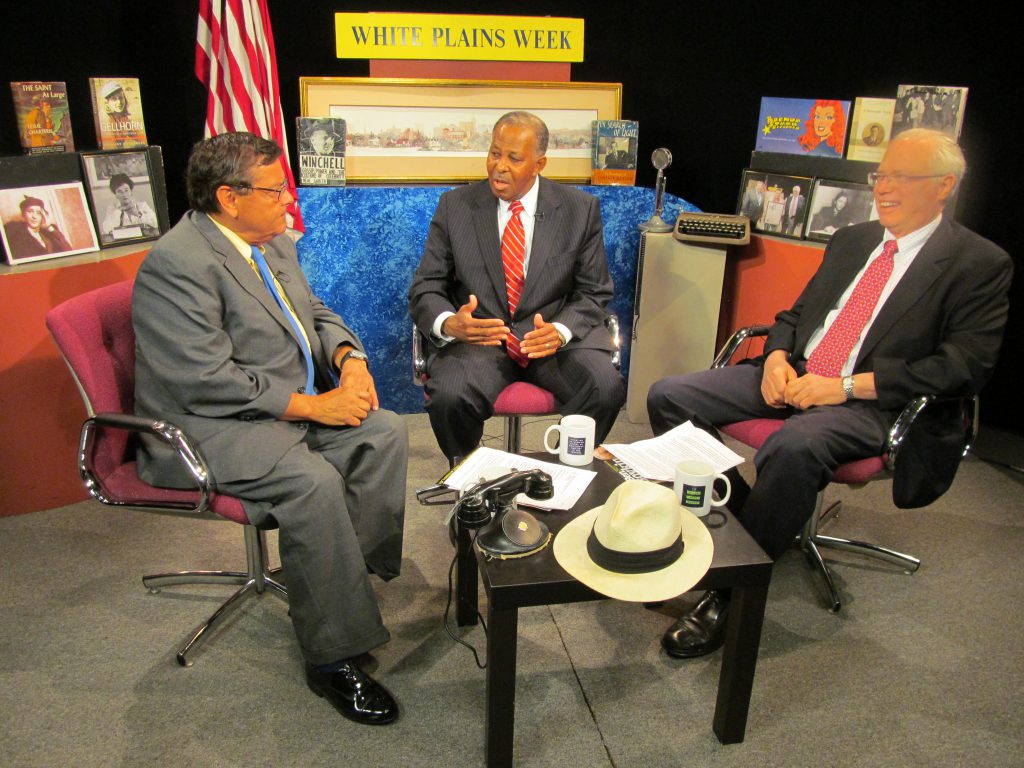
Benjamin Boykin (center), County Legislator for White Plains on a White Plains Week appearance with John Bailey and Jim Benerofe.
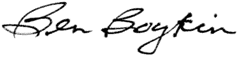
WPCNR THE LETTER TICKER. From County Legislator Benjamin Boykin. January 12, 2022:
At the Westchester County Board of Legislators, we do our work through a committee system.Every decision we make — about budgets, parks, roads, new laws, and more — begins with consideration in our committees.
And each of our 14 committees has a particular area of oversight over the rest of County government.I’m excited that in the 2022-2023 legislative term I will be chairing the Boards’ Economic Development Committee.Economic Development is crucial to the County’s recovery from the COVID-19 pandemic.
The committee will be working to address COVID recovery for our businesses.
We will be examining macroeconomic issues like how the changing nature of the workforce is impacting hiring, development and retention of workers and what policy responses are needed to respond to this social change.
The committee will also provide oversight of the County’s economic development programs as we work together to solidify and grow the County’s economic base.
I want to thank Chairwoman Catherine Borgia for the opportunity to Chair this committee, and I want to stress how seriously I, our committee members, and staff, take our duties and responsibilities.Committee meetings are expected to begin the week of January 24.
As always, committee meetings will be streamed live on our website. You can check the “Meeting Calendar” section at www.westchesterlegislators.com
For a list of upcoming meetings, links to agendas and other documents, as well as live streaming and archived video.I look forward to keeping you informed about the committee’s upcoming work, and invite you to reach out to me with any thoughts about matters you think our committee should be considering.For more about this year’s BOL committee assignments, please visit: https://bit.ly/3zN3tbUA complete list of this term’s committee assignments is available at https://www.westchesterlegislators.com/images/PDF/2022-23-BOL-Committees.pdf
Those who have had a recent COVID infection are eligible to receive a booster shot as long as they are fully recovered from their illness and have completed their primary vaccination series as follows:
For Pfizer, those 12 and older are eligible for a booster 5 months after completion of their primary series
For Moderna, those 18 and older are eligible for a booster 5 months after completion of their primary series
For Johnson & Johnson, those 18 and older are eligible for a booster 2 months after their original J&J vaccine.
Those with underlying medical conditions should speak with their health care provider about if/when a booster shot is appropriate for them.
Free testing is available at the Westchester County Center in White Plains for symptomatic members of the community or those with a known exposure to a confirmed positive case.The CDC recommends being tested 5 to 7 days after an exposure. This testing is not for travel. Appointments are required. Keep checking back, as appointments will be added every three days.
Contact your health care provider to find out if they offer testing.
Call (914) 202-4530 to make an appointment at the COVID-19 testing site at Westchester Medical Center in Valhalla.
CVS Pharmacies are offering testing at select locations. Visit the CVS COVID-19 Testing webpage for more information.
COVID-19 Home Test Kits
COVID-19 home tests or over-the-counter (OTC) tests are one of many measures that you can take to protect yourself and others by reducing the chances of spreading COVID-19.
Follow the manufacturer’s instructions on the packet information insert for performing the test.
Home tests produce rapid results, usually within 15 minutes. They can be used regardless of vaccination status, or whether or not you have symptoms. The vaccine cannot give you a false positive test result.
A positive self-administered (parent assisted) test result means that the test has detected the virus and that you should stay home and isolate from others for 10 days. You should notify your employer or school, as well as any close contacts such as household members, relatives or friends, that you have tested positive. A person with COVID-19 can begin spreading it starting two days before having any symptoms or the day that the specimen was collected.
A negative self-test result means that the test did not detect the virus and you may not have an infection. However, a negative result does not rule out infection. Home or self-test kits generally require a second test at least 24 hours following the first test if the first test is negative to ensure the most accurate result. For this reason, test kits are usually sold in sets of two. If you have COVID-19 symptoms and a self-test indicates that you are negative, it is recommended that you have a healthcare provider or a lab perform a molecular test to confirm.
*Please be advised that if you test positive for COVID-19 using a self-test only, the Westchester County Department of Health is unable to provide you with an isolation order and a release from isolation letter to return to work and/or school and will not be calling you for contact tracing.
Interim Updated Isolation & Quarantine Guidance Per New York State and CDC for the General Population **This Guidance Does Not Apply to Health Care Settings, Congregate Settings and Schools at the time of posting**
If you have tested positive for COVID-19:
Isolate for 5 days, where day 0 is the day of symptom onset or (if asymptomatic) the day of collection of the first positive specimen.
If asymptomatic at the end of 5 days or if symptoms are resolving, isolation ends and the individual should wear a well-fitting mask while around others for an additional 5 days.
Individuals who are moderately-severely immunocompromised should continue to follow standard (i.e., not shortened) Isolation Guidance.
Individuals who are unable to wear a well-fitting mask for 5 days after a 5-day isolation should also follow standard (i.e., not shortened) Isolation Guidance.
WPCNR COVID MONITOR. From the New York Presbyterian Hospital. (Unedited) January 11, 2021:
Columbia researchers found that babies born during the pandemic’s first year scored slightly lower on a developmental screening test of social and motor skills at 6 months—regardless of whether their mothers had COVID during pregnancy—compared to babies born just before the pandemic.
The study, which included 255 babies born at NewYork-Presbyterian’s Morgan Stanley Children’s Hospital and Allen Hospital between March and December 2020, was published in the journal JAMA Pediatrics.
“Infants born to mothers who have viral infections during pregnancy have a higher risk of neurodevelopmental deficits, so we thought we would find some changes in the neurodevelopment of babies whose mothers had COVID during pregnancy,” says Dani Dumitriu, MD, PhD, assistant professor of pediatrics and psychiatry at Columbia University Vagelos College of Physicians and Surgeons and lead investigator of the study.
( FROM THE STUDY: Cohort studies of the generation born during the 1918 influenza A virus subtype H1N1 pandemic found lower child educational level attainment and adult socioeconomic status.24 The 1964 rubella pandemic led to a 10- to 15-fold increase in autism spectrum disorder or schizophrenia in offspring.25,26 There is a need to determine the associations between fetal exposure to maternal SARS-CoV-2 infection and child neurodevelopmental status,27–31 especially given the well-established benefits of early identification of at-risk children.32–34)
“We were surprised to find absolutely no signal suggesting that exposure to COVID while in utero was linked to neurodevelopmental deficits. Rather, being in the womb of a mother experiencing the pandemic was associated with slightly lower scores in areas such as motor and social skills, though not in others, such as communication or problem-solving skills. The results suggest that the huge amount of stress felt by pregnant mothers during these unprecedented times may have played a role.
“These were not large differences, meaning we did not see a higher rate of actual developmental delays in our sample of a few hundred babies, just small shifts in average scores between the groups,” Dumitriu says. “But these small shifts warrant careful attention because at the population level, they can have a significant public health impact. We know this from other pandemics and natural disasters.”
Developmental trajectory of infants begins early
When the first wave of COVID hit New York City in early 2020, Dumitriu led a group of pediatric researchers at Columbia University Irving Medical Center and NewYork-Presbyterian in organizing studies investigating the impact of the virus on infants through the COVID-19 Mother Baby Outcomes (COMBO) Initiative.
In one early study, the researchers discovered that mothers do not pass the COVID virus to their fetus.
However, it is known that viral illnesses during pregnancy increase the risk of neurodevelopmental delays in children through activation of the mother’s immune system, which in turn affects fetal brain development.
“The developmental trajectory of an infant begins before birth,” says Dumitriu, who is a pediatrician in the Well Baby Nursery at NewYork-Presbyterian Morgan Stanley Children’s Hospital. “With potentially millions of infants who may have been exposed to COVID in utero, and even more mothers just living through the stress of the pandemic, there is a critical need to understand the neurodevelopmental effects of the pandemic on future generations.”
In the current study, the researchers analyzed responses from a questionnaire that pediatricians give to parents to evaluate aspects of infant development, such as communication and fine and gross motor, problem-solving, and social skills.
Nearly half of the mothers in the study had COVID at some point during their pregnancies, though most of the illnesses were mild or asymptomatic.
No differences were found in scores between infants who were exposed to COVID in utero and those born during the pandemic whose mothers did not contract COVID during pregnancy.
However, average scores among infants born during the pandemic—whether their mothers had COVID during pregnancy or not—were lower than the gross motor, fine motor, and social skills of 62 pre-pandemic infants born at the same hospitals.
“We want parents to know that the findings in our small study do not necessarily mean that this generation will be impaired later in life,” Dumitriu says. “This is still a very early developmental stage with lots of opportunities to intervene and get these babies onto the right developmental trajectory.”
Could COVID-related stress affect brain development?
Though the study did not measure maternal stress during pregnancy, Dumitriu says it’s possible that the stress caused by the pandemic and experienced by the mothers during pregnancy explains the drop in motor and social skills found in babies born during the pandemic.
Previous studies have shown that maternal stress in the earliest stages of pregnancy has a bigger effect on socioemotional functioning in infants than stress later in pregnancy, and a similar trend was found in the new study: Infants whose mothers were in the first trimester of pregnancy at the height of the pandemic had the lowest neurodevelopment scores.
Other factors, including fewer play dates and altered interactions with stressed caregivers, may help explain why babies born during the pandemic have weaker social and motor skills than babies born before the pandemic.
The researchers will continue to follow these infants in long-term studies.