WESTCHESTER TO THE RESCUE: $10 MILLION. 400 UNITS MAY BE REHABILITATED BY LANDLORDS BY TENANTS IF RENTS STAY THE SAME

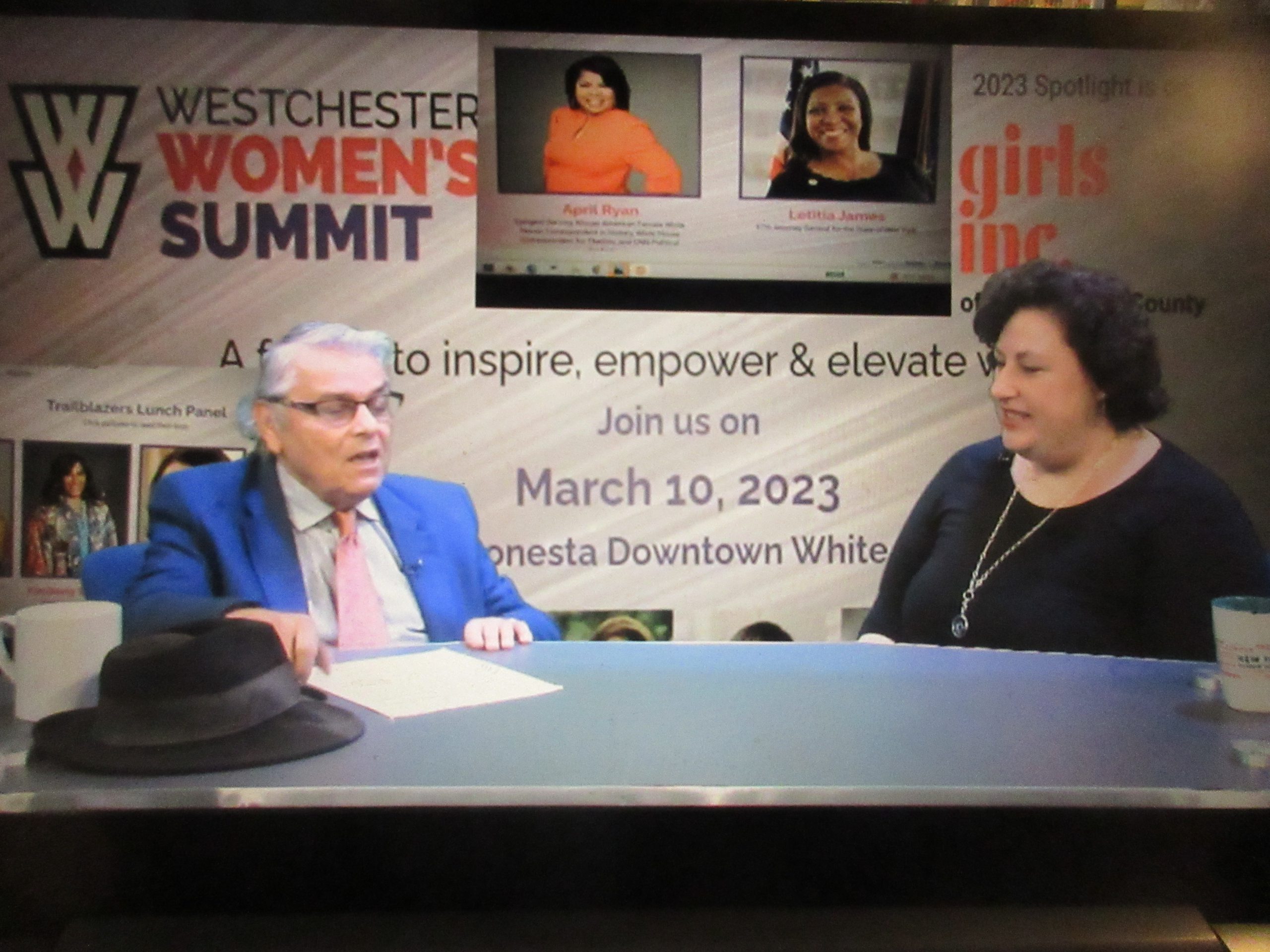
Landlord-Tenant Housing Assistance Program Press Conference Image

Funds May Be Used For Needed Repairs To Rental Properties In Exchange For Landlords Maintaining Affordable Rents

WPCNR County Clarion-Ledger. From Westchester County Department of Communications. August 11, 2022:

County Executive George Latimer and the Westchester County Board of Legislators announced the Landlord Tenant Assistance Program (LTAP) on Tuesday, furthering their commitment to preserving affordable housing in communities across Westchester.

LTAP will allow small landlords who own eight units or less and who maintain rent levels that are affordable to residents, to apply for up to $25,000 per unit for repairs to their rental properties.

To be eligible, landlords/owners must charge rents that are affordable to households earning between 60% and 100% of the Area Median Income (AMI), and home improvements may include, but are not limited to, roof replacement, or upgrades to electrical, windows, accessibility ramps, plumbing and heating systems. With $10M available in funds, 400 units can be rehabilitated.

Rent levels, with utilities included, must adhere to the following 2022 HUD Guidelines:

Bedroom Size60% AMI Rent Levels80% AMI Rent Levels100% AMI Rent Levels
Studio$1,457$1,942$2,427
1 Bedroom$1,665$2,219$2,773
2 Bedroom$1,873$2,497$3,119
3 Bedroom$2,080$2,773$3,465

Westchester County Executive Latimer said: “The COVID-19 pandemic, and its aftermath, have greatly impacted our small landlords who have not been able to receive rent increases to make improvements to their properties in years. My administration stands committed to preserving affordable housing in all of our communities, and this funding will help our landlords make upgrades that will ultimately preserve the life of these units. We hope the prospect of receiving up to $25,000 per unit will incentivize our landlords to maintain their rental properties at a price point that everyone can afford.”

Commissioner of the Department of Planning Norma Drummond said: “The Planning Department is excited to launch this program that particularly assists small landlords who need to make much needed repairs to their rental units.  By offering this program, we know that we will help small landlords and renters alike, who were hit hard by the pandemic.  LTAP funds will preserve and enhance smaller multi-family housing stock in the County that will improve the living conditions of many county residents and maintain its affordability.”

Chairwoman of the Westchester County Board of Legislators Catherine Borgia said: “I am grateful for our partnership with County Executive Latimer in negotiating this funding into the 2022 budget. This will have a positive effect for both landlords and tenants.”

Board of Legislators Majority Leader Chris Johnson said: “In Westchester, we are not only committed to keeping people in their homes, we are committed to making sure those homes are safe and healthy places to reside. As renters and landlords are working to get back on their feet from the pandemic, I am happy to partner with the County Executive to provide the funding for programs that not only keep a roof over people’s heads, but to make sure those roofs aren’t leaking as well.”

Legislator Tyrae Woodson-Samuels said: “Landlords are struggling to get back on their feet as rents were frozen during the COVID-19 pandemic. It is my hope that they will take advantage of this program which will help them pay for needed building repairs for their tenants. We have to work together on the entire picture to make sure we have safe apartments for our residents to live in.”

PROCESS

A Westchester County Rehabilitation Specialist will inspect the property after an application has been submitted to the Department of Planning. If the property qualifies, a three-party contract will be signed between the County, the landlord/owner and the contractor, for work to be completed by contractors that are licensed and insured to work in Westchester County. Funds will be disbursed directly to the contractor from the County after a progress inspection has been completed.  

CALL NOW LANDLORDS 914-995-2429

Interested landlords/owners should call or email Gaitre Rambharose in the Westchester County Department of Planning at 914-995-2429 or [email protected]

Watch the full news conference here: https://www.youtube.com/watch?v=KI-wwhWxKgk

View the Landlord-Tenant Housing Assistance Program Brochure (in English and Spanish) here: https://adobe.ly/3pa5wlz
Posted in Uncategorized

AN EPIDEMIOLOGIST’S PLAN FOR THE SCHOOL YEAR

By Dr. Katelyn Jetelina.

Your Local Epidemiologist. August 10, 2022. Reprinted with permission.

School is starting. And, with it, the contentious debate on what schools should and should not do. While the pandemic ravages on, the landscape continues to morph, and because of that, every subsequent school year has looked very different (hopefully for the better).

Unfortunately, student absences continue. As seen in London, (BELOW) students’ absences continue to be higher than before the pandemic. They were especially high at the end of this school year when BA.5 took hold. (Editor’s note: this was true of the White Plains City School District, too).

We know this is partially driven by reinfections, as children have the highest reinfection rate compared to any other age group.

(Source Kit Yates)

It’s imperative that schools remain open, but they continue to seem stuck between “do everything” and “do nothing.” 

How many layers can a school feasibly implement given pandemic fatigue, limited resources, strong opinions, and differing risk calibrations?

The answer is multi-level; it requires a balance of tradeoffs from students, parents, teachers, schools, and the community. Our primary goal should be to maximize the number of days children are present. This can be accomplished many ways, but I think there are three buckets schools should really focus on.

Back-to-school vaccination campaign

We need strong, universal vaccine campaigns at schools.

Parents report that schools, pediatricians, and health departments are the most trusted sources of information about vaccines. Schools can also significantly improve access to vaccines, as 38% of parents say they do not have enough info on where their kid can get vaccinated. A fall back-to-school campaign could really help move the needle for vaccinations, and thus school absences. And not just for COVID, but other vaccine preventable diseases.

  • COVID-19: The number of children vaccinated against COVID-19 remains abysmally low. (Only 10% of 5-11 year olds and 27% of 12-17 years olds are up to date.) Vaccines are safe, they prevent infections (especially within a few months of vaccination), prevent severe disease, and reduce risk of long COVID. But parents have a lot of great questions; we need to anticipate concerns.
  • Flu. The flu season in Australia just wrapped up, and it wasn’t pretty.This is notable because, historically, Southern Hemisphere patterns predict what is to come in the Northern hemisphere. (We’ve been worried about a “twin-demic” since COVID-19 began, but it hasn’t happened yet. We are not sure why.) We should heed Australia’s warning and prepare for the worst.
  • Other routine vaccines. New York is strongly warning parents about a dip in routine vaccinations. For example, 13.8% of children have not been vaccinated against polio. This reflects patterns we’ve seen nationally and internationally with other routine vaccinations, too. We cannot lose decades-long progress towards eliminating vaccine-preventable diseases.

We can reimagine how vaccines and information reach students and parents.

For example, the Teens for Vaccines campaign in Detroit was highly successful by empowering student ambassadors.

A school district in Florida recognized that active communication and education promoted vaccine confidence and uptake, so they sent text reminders, posted on social media, and provided credible information. Los Angeles School District even had a TikTok campaign.

Ventilation and filtration

Schools need to upgrade their ventilation and filtration systems.

This is one of the most powerful tools we have to curb COVID-19 and other viruses because it happens in the background—it’s an institutional-level intervention that doesn’t require the teachers, parents, or students to do anything. Unfortunately, a small proportion of schools report using these strategies, especially in rural and mid-poverty schools. Many administrators aren’t aware that federal funding is available for ventilation improvements.

Layman wording on how to improve ventilation and filtration is difficult to find. I worked with Dr. Whitney Robinson and Katie Harper, fellow epidemiologists, on a one pager that outlines available strategies and how to test effectiveness. This may help.

Testing and isolating

Now that everyone is eligible for vaccines, and treatments (monoclonal antibodies, antivirals and Evusheild) are available for high risk family members, a more targeted approach to testing, isolating, and masking in the upcoming school year is reasonable:

  • Testing. Sick, symptomatic kids should stay home. At-home or at-school antigen tests would be a great tool to use for this. (Do not use PCR tests, as these could stay positive for weeks).
  • Quarantining. Attending school far outweighs benefits of quarantining for a respiratory virus that is out of control in the community. It’s reasonable (and overdue) to remove quarantine requirements.
  • Isolation. The ideal scenario is that a child tests-to-exit isolation using antigen tests. But this can mean a lot of school missed (and a lot of work missed for parents), with the average infection lasting 8-10 days.
  • The CDC says people can leave isolation after 5 days if they remain positive as long as they mask. If children need to go back to school at that time, it’s certainly reasonable and should be expected that kids mask if they are still positive.
  • Masks.
  • Masks are effective to the wearer. They are even more effective if everyone is masking.
  • If a school is in an area of high transmission, it’s certainly reasonable to mask to reduce transmission and, thus, reduce missing school.
  • However, for that strategy to work, the wearer must mask everywhere else in the community. I don’t think it makes sense for a school to mandate masks if the larger community does not do so either. We shouldn’t ask students to hold down the fort if the larger community hasn’t also committed either.

Other random thoughts

Preparedness needs to be the name of the game. Schools need a plan in case we do get another Omicron-like event or if there’s is a big superspreader event, like a homecoming dance.

There need to be very important conversations about normalizing decisions around masking, even if not required. Very important conversations may also need to ensue if a child is high risk in a classroom, so they, too, can attend in person learning.

Bottom line

This pandemic landscape continues to change and, with it, we should adapt. But if we continue to fail to act, children will continue to have their education disrupted by COVID19. There are a number of measures schools can put in place to maximize the number of days children are in school so they can have a safe and successful school year.

Posted in Uncategorized

KILLERWATTS! 22-1/2 CENTS EACH KWH

90 PLUS TEMPERATURES THROUGH JULY RAMPS UP KILLERWATT HOURS. DOUBLES THE ELECTRIC BILL TOTAL JULY COST PER KILOWATTHOUR: 22-1/2 CENTS

 CON EDISON HOLDS SUSTAINABLE WESTCHESTER SUPPLY RATE FOR MOST CUSTOMERS IN JULY GOES UP NOW IN AUGUST

DELIVERY WIRES HUM KILLERWATTS AT 15 CENTS PER KILOWATT HOUR.

AC AT 80 DEGREES DOUBLES POWER BILL IN 90-IN-THE-SHADE-SUMMER

NO NEW SUSTAINABLE RATE YET FROM SUSTAINABLE WESTCHESTER.

GRID REWARDS PROGRAM INTRODUCED TO HELP CUSTOMERS SAVE POWER COSTS

WPCNR THE POWER STORY. By John F. Bailey. August 9, 2022

Power consumption hit an all-time high in the month of July  in Westchester County.

Inflation  forced customers to purchase less for necessities like gas and food who are now Buck-smacked with doubling power bills in soon to double once more if the heat keeps on coming.

Power bills doubled this past month of July for a Sustainable Customer directly attributable to 95 degree in the shade-plus average temperatures which have scorched Westchester for 9 days.

The air conditioning has been humming non stop and the Con Ed Delivery charges delivering the juice 24/7 at 15 cents a kilowatt hour purchased.

HIGH COULD THE NEW CON ED RATE GO OR SUSTAINABLE WESTCHESTER RATE GO? YOU DO NOT WANT TO THINK ABOUT!

The Con Edison Media Relations Department confirmed to WPCNR today that the Sustainable Westchester Green Energy Rate of 7.48 cents per kilowatt hour was kept in effect on Sustainable Westchester customers, as well as I believe the Sustainable basic rate (non green exclusive sources).

 WPCNR asked Con Edison Media Relations why Con Edison did not charge a higher rate than 7.48 cents for Green Energy for Sustainable Westchester Customers (not matching the market rate for July, which in mid July a Con Edison consumer representative said was averaging 9 to 10 cents kilowatt hour.

A Con Edison spokesperson in a written state answered:

My question is: on my Con Ed bill the 7.48 cents green rate charged by Constellation Energy the previous Constellation supply charge is still in effect. — is this because Con Edison was able to supply electricity at a rate very close to the 7.48 rate and chose to honor the 7.48 cent an hour charged in June as a good will courtesy to Sustainable customers?  

Constellation New Energy was the supplier on the bill provided in your email. You will be a Con Edison full service customer on your next bill.

My second question is why is the “Delivery Charge” up to 14.9 cents?

The delivery rate reflects higher delivery charges in the summer months. Delivery rates are set by the New York Public Service Commission.

Sustainable Westchester asked to explain why the 7.48 cents/rate was still charged in July saving about $60, wrote in a statement:

“ The current contract expired on June 30th and as such depending upon folks billing cycle (meter reads) many (to most) will still see the Westchester Power rates (and Constellation) on their bills in July.

That said, most (to all participants) will see their August bills reflect Con Edison isupply and supply rates.

We cannot speak to the intel you received from ConEd that the kWh rate (once switched to them) will reflect and increase vs.the Westchester Power prior contract fixed-rate.

While that would be our educated guess, we cannot confirm that nor predict where their rates might go.

We do hope to be able to have something to share (and a contracted rate by September as you suggest). That said, we are not in a position to confirm that today.”

That being said, we do have news to share about our GridRewards program. The residential demand response program executed with our partners Logical Buildings has been particularly this summer with unprecedented high temperatures and the resulting demand on the grid.

Currently the approximate 2500 Westchester County Con Ed utility area enrolled residents are experiencing a 4-day streak of demand response events. The events provide an opportunity to reduce electricity demand, save energy and money and earn cash rewards for actions taken and overall performance. It surely has newsworthy potential — its environmental impact, ability to reduce usage and earn participants savings and cash is potentially important messaging for your viewers.

GridRewards is the first-of-its-kind residential demand response program in the NorthEast and was piloted in 2020 in partnership with us in Westchester County. You can learn a bit more here https://sustainablewestchester.org/gridrewards/ (on our website) as well as https://www.gridrewards.com/ (Logical Buildings website for the program).

Background:

That rate to create electricity for customers who are not members of the Sustainable Westchester power cooperative (White Plains is a member), is set based on an average of a month of Con Ed costs to buy or create the electricity. The delivery rate is dependent on the demand running through the system.

  Sustainable paused for a time to  resubmit Requests for Proposals for a new  flat rate going out perhaps one, two, or three years and hired the national leader in energy auctions to find Sustainable a rate that works to keep green energy competitive.

The electric supply companies Sustainable had gone to (apparently on their own not using again Transparent Energy Systems the negotiator of the previous contract), came back with rates that all were higher than last year regardless of the markets they were serving from the very small to the very large.

The pause was still going on , just  when Sustainable Westchester turned over its customers temporarily to Con Edison while it searched for a sustainable Kilowatthour price it could live with (and is still in the process of negotiating).

Meanwhile the cost of Con Edison delivering electricity through its systems soared to 15 cents a kilowatt hour. If you  have an airconditioning system or an window unit, keeping that full house zonal system on will still double your consumption of kilowatt hours in this relentless heat wave, even killing certain zones in your house you do not use.

Posted in Uncategorized