WHITE PLAINS WESTCHESTER DAILY NEWS SERVICE VISITS SINCE 2000 A.D. 25TH YEARl REPORTING THE NEWS YOU NEED TO KNOW News Service Since 2000 A.D. 2026 WILL BE OUR 26TH YEAR OF COVERING WHITE PLAINS NEW YORK USA . John F. Bailey, Editor (914) 997-1607 wpcnr@aol.com Cell: 914-673-4054. News Politics Personalities Neighborhoods Schools Finance Real Estate Commentary Reviews Policy Correspondence Poetry Philosophy Photojournalism Arts. The WHITE PLAINS CITIZENETREPORTER. TELEVISION: "White Plains Week" News Roundup, 7:30 EDT FRI, 7 EDT MON & the incisive "People to Be Heard" Interview Program 8PM EDT THURS, 7 PM EDT SAT on FIOS CH 45 THROUGHOUT WESTCHESTER AND, ALTICE OPTIMUM WHITE PLAINS CH 1300 Fighting for Truth, Justice and the American Way. TOP 10 VISITORS FROM AROUND THE WORLD :1. USA. 2.BRAZIL3.VIET NAM 4. CHINA 5. JAPAN 6.UK. 7.CANADA. 8.INDIA. 9.AUSTRALIA 10.IRELAND 11.GERMANY 12..ARGENTINA 13.BANGLADESH 14.RUSSIA. 15.NEWZEALAND. 16. FRANCE. 17.MEXICO. 18.UKRAINE. 19.SOUTH AFVRICA. 20. IRAQ.
FASNY APPEAL HEADS FOR A SHOW DOWN. GEDNEY LAWYER TELLS WHAT’S HAPPENING
WP COMMISSIONER OF PLANNING PASSIONATELY SELLS THE NEED FOR A BUSY BUSTLING DOWNTOWN
DEFICIT SPENDING: ASTORINO DEFICITS OF 2016 REVISITED AS COUNTY ESTIMATES SKY HIGH SALES TAX REVENUES IN 2020 BUDGET WITH NO JUSTIFICATION FOR THE BUDGETED REVENUE
COUNTY ISSUES PUBLIC SERVICE ANNOUNCEMENTS TO EDUCATE PARENTS ABOUT VAPING
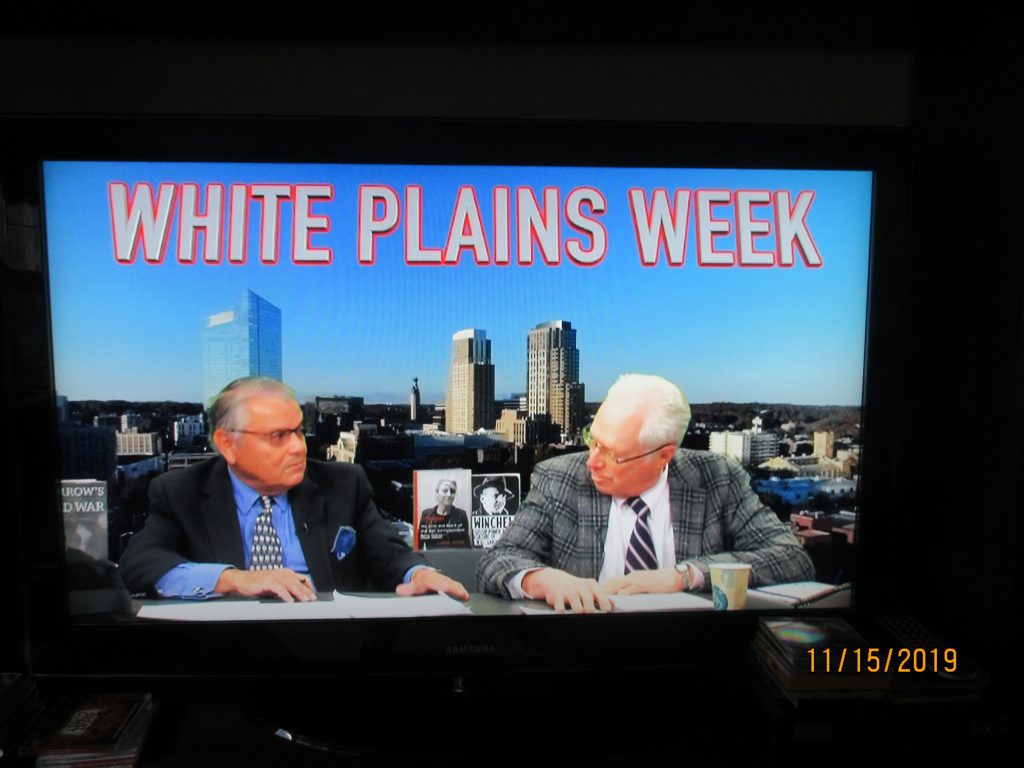
T ALL OVER THE COUNTY ON CH 45 AND www.wpcommunitymedia.org
STOP! THE RED LIGHT’S ON! NEW RED LIGHT CAMERA ON POST IN CENTER OF THIS SHOT TAKEN TODAY, SHOWING RED LIGHT CAMERA ON DUTY AS CITY SURVEILLANCE GROWS====
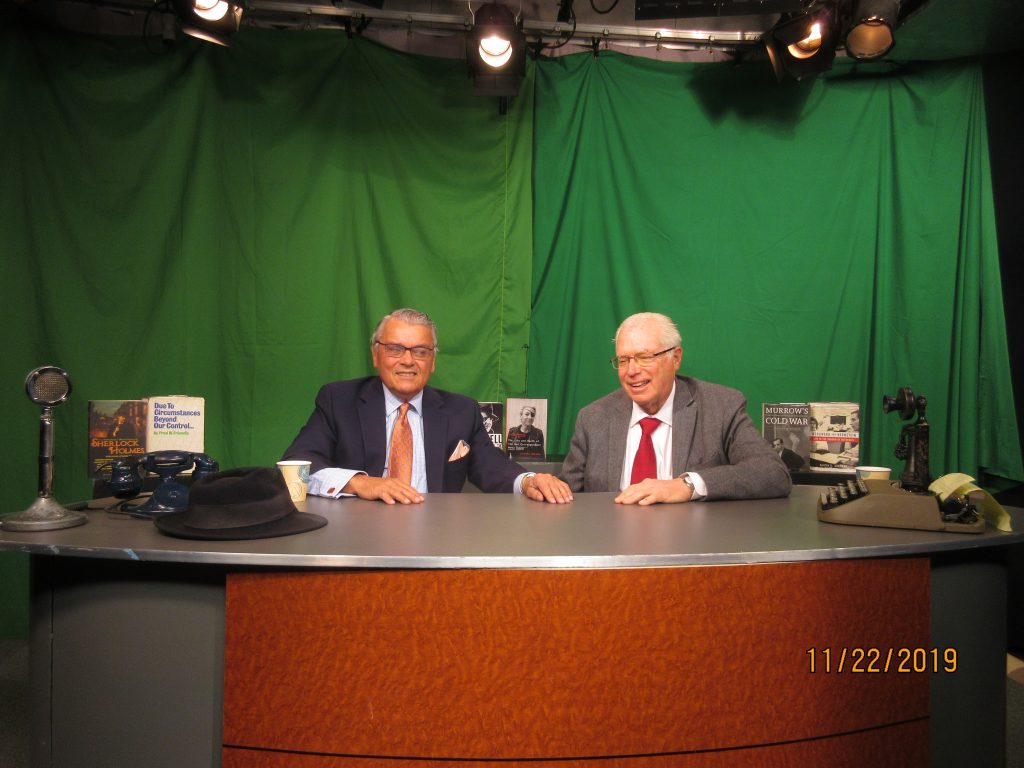
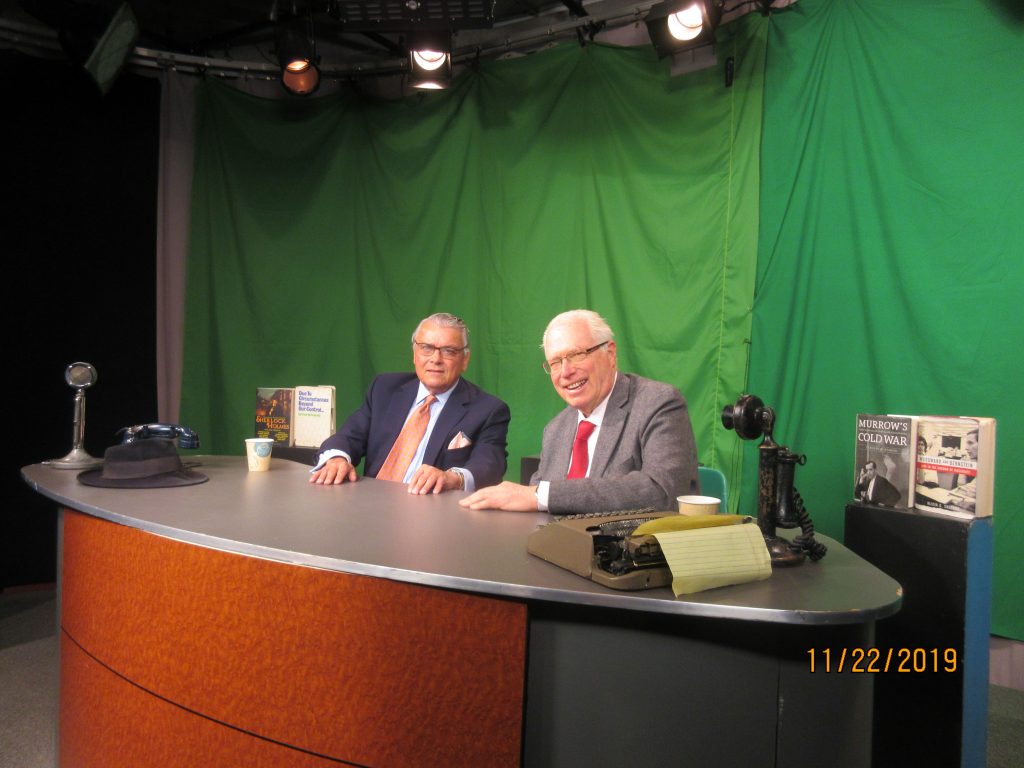
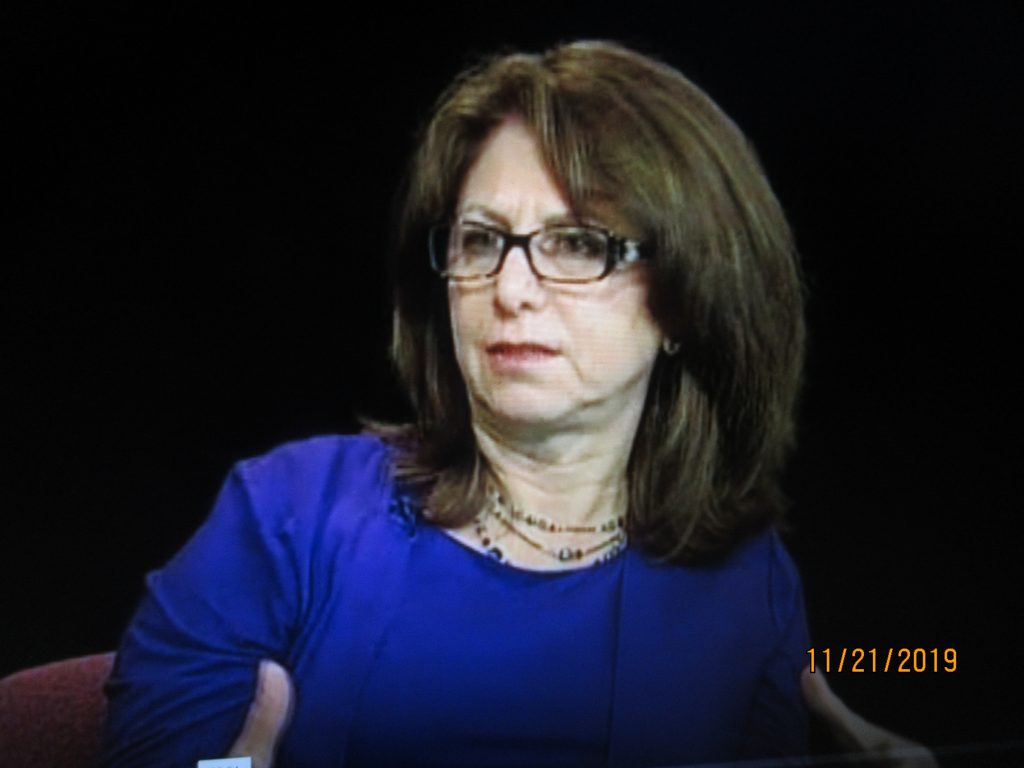
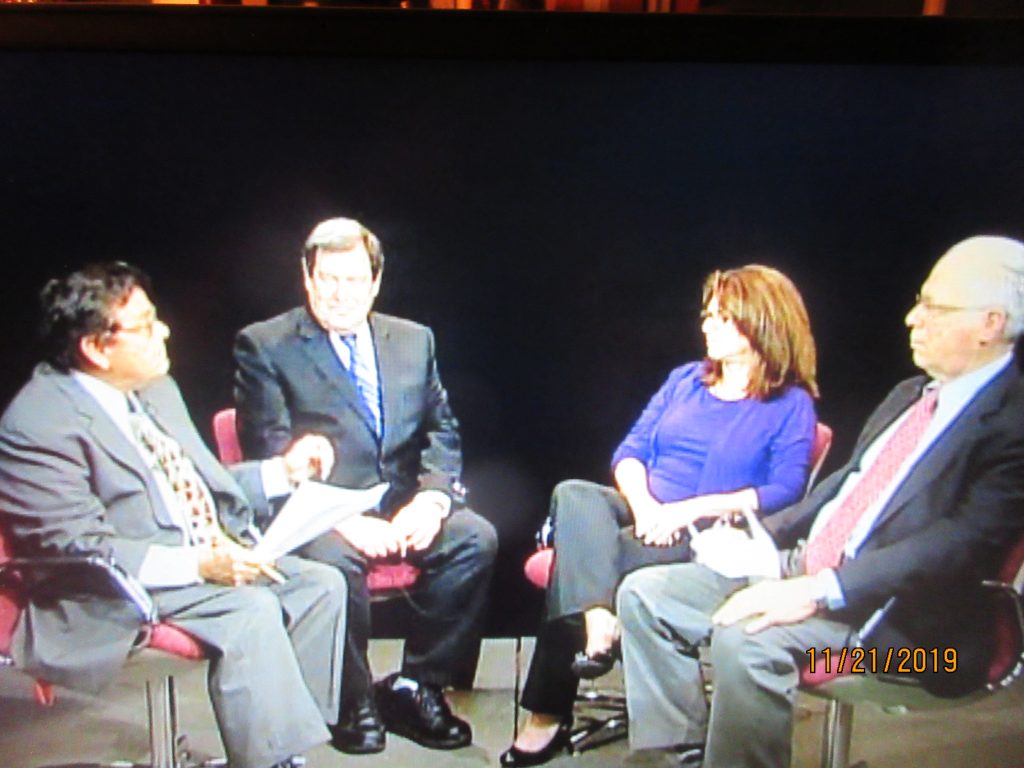
A SPECIAL REPEAT PROGRAM ON SUICIDE– JOHN BAILEY, PETER KATZ AND JIM BENEROFE INTERVIEW THE DIRECTOR OF RESEARCH OF THE AMERICAN SOCIETY FOR SUICIDE PREVENTION.
8 PM THURSDAY AND 7 PM SATURDAY ON FIOS CH. 45 AND CABLEVISION, CHANNEL 76 AND THE INTERNET AT www.wpcommunitymedia.org
Westchester County Department of Health Focuses on Prevention Dr. Sherlita Amler fills you in on the Vaping Epidemic
WPCNR WESTCHESTER COUNTY CLARION-LEDGERFrom the Westchester County DEpartment of Communications. November 21, 2019:
Westchester County Executive George Latimer, the Department of Health and several community partners launched a Vaping Prevention and Awareness Campaign today. The campaign includes a series of three public service announcements (PSAs), released in the days leading up to the Great American Smokeout, today. The videos were created to help inform Westchester County residents about the dangers of vaping
Carolyn D’Agostino tells how to Recognize Vaping Devices
Amy Brown, MD, MBe and Shetal Shah, MD. Expain the risks to children in teens and younger from trying Vaping and its potential for starting a lifelong addiction
Westchester County Executive George Latimer said: “For more than 40 years, the American Cancer Society has hosted the Great American Smokeout on the third Thursday in November. Today, we are facing a new challenge with vaping becoming more prevalent with our youth. This Public Awareness Campaign is designed to help educate our parents on the dangers and health risks associated with vaping, so they can hopefully stop the problem before it starts.”
Health Commissioner Sherlita Amler, MD said: “Quitting vaping can be just as difficult as quitting smoking because nicotine in vapes and tobacco is highly addictive. Watch these videos, get the facts and if you smoke or vape, make a plan to quit.”
Help is available to you in Westchester County:
· NY Smoke Free – 1-866-697-8487
· Centers for Disease Control – 1-800-QUIT-NOW
· American Cancer Society support groups – 1-800-277-2345
· American Lung Association – find a clinic near you, call 1-800-LUNGUSA
The third Westchester County PSA focuses on The Health Risks of Vaping in Children. It features Amy Brown, MD, MBe and Shetal Shah, MD. Dr. Brown is an attending Pediatric Pulmonologist at Maria Fareri Children’s Hospital at Westchester Medical Center and Assistant Professor of Pediatrics at New York Medical College. Dr. Shah is a neonatologist and researcher and a Professor of Pediatrics in the Division of Neonatology at New York Medical College.
The second PSA focuses on How to Recognize Vape Devices. It features Carolyn D’Agostino, a Licensed Clinical Social Worker, Credentialed Alcoholism and Substance Abuser Counselor and Credentialed Prevention Professional who is a Student Assistance Counselor for Student Assistance Services, a not-for-profit agency whose focus is substance abuse prevention.
The First PSA focuses on How to Talk to Kids about Vaping. It features advice from Sherlita Amler, MD, Commissioner of Health, and Daniel A. Cohen, MD, a pediatrician at WestMed in Purchase.
Dr. Amler is a Clinical Associate Professor of Pediatrics at New York Medical College School of Medicine; and a Distinguished Lecturer at the College’s School of Public Health, as well as a Senior Fellow at its Center for Disaster Medicine. Dr. Cohen is Assistant Professor of Clinical Pediatrics at Columbia University College of Physicians and Surgeons.
For more information, call the New York State Vaping Hotline at 1-888-364-3046.
WPCNR WHITE PLAINS LAW JOURNAL. By John F. Bailey November
21, 2019:
Dan Seidel and Claudia Jaffe the White Plains attorneys working pro bono to file the Appellate Court appeal OF the New York Judge Joan Lefkowitz decision throwing out the Gedney Association challenge on 1925 Gedney Farms covenant (forbidding institutional use of the property) and City of White Plains procedure in approving the FASNY school construction on the former country club, delivered a status report to the Gedney Association Board last night after the annual Association Board Meeting at the Westchester Hills Country Club
The situation: the case may have or or two outcomes after amended papers requested by the Appellate Court, were filed within the last 48 hours by Mr. Seidel, are ruled upon by the court.
WHITE PLAINS’ DAN SEIDEL, IN A RAPID FIRE TOUR DE FORCE OF THE LABYRINTHINE PROCEDURES HE FILED YESTERDAY TO KEEP THE APPEAL ALIVE. IN A WPCNR EXCLUSIVE INTERVIEW
Seidel in an interview with WPCNR says the court my decide to
accept the Seidel-Jaffe amendents in the next weeks. If it goes ahead, the
Judges could remand the case to Judge Lefkowitz to rethink her original
decision , or hear arguments themselves. In which case the action would either
be sent back to Lefkowitz or heard in Brooklyn before the court. Seidel said
this meant the appeal that has gone on for a year may take three years to be
decided.
The Seidel-Jaffee appeal could have been thrown out as incomplete
but the Appellate Divison in a CORRECTION issued Monday directed Seidel and Jaffee to refile the
documents with “Refile Document links”
(essentially footnotes) under each document.
The controversy over the filing format was as a result of he French
American School motion that the original appeal papers should be rejected
(and hence thrown out) since Seidel and Jaffe has not included some
10,000 copies of previous procedings, (they referenced them instead as part of
the court records.
In the following exclusive WPCNR interview Mr. Seidel goes into the “Inside
Baseball” of this possible culmination of the FASNY-Gedney Association battle
over the school plan to build a new school on the grounds of the Ridgeway
Country Club
Comprehensive Report Reveals. County Executive outlines Plan of Action.
UNTOLD Billions in Financing Needed
Unclear.
County Plans Approaching Communities
in January to Identify Possible Sites.
WPCNR COUNTY CLARION-LEDGER. By John
F. Bailey. November 19, 2019:
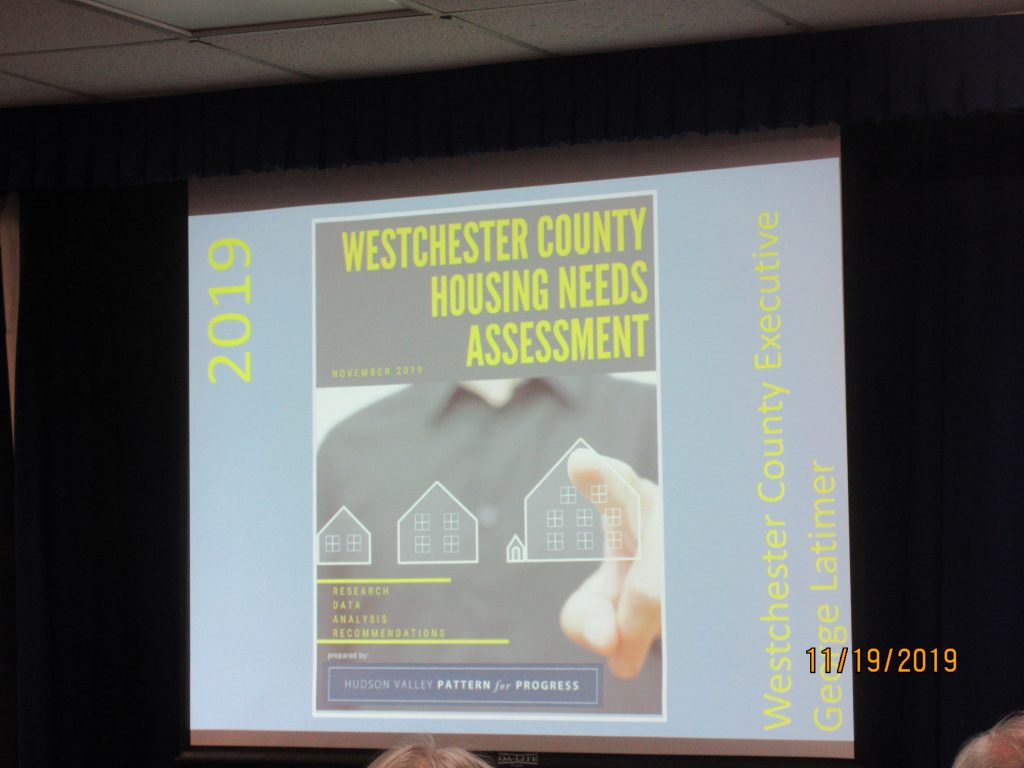
County Executive George Latimer stunned a news conference this afternoon with a 175-page Report , “The Westchester County Housing Needs Assessment,” prepared by Hudson Valley Plan for Progress that stated the county needs 82,451 units to fill a gap in affordable housing– make the county attractive to firms considering relocating to Westchester –bring in a viable workforce that can afford to live in the county.
WESTCHESTER COUNTY EXECUTIVE GEORGE LATIMER, (LEFT) AND cOUNTY cOMMISSIONER OF PLANNING, NORMA DRUMMOND, WRAPPING UP THE NEWS CONFERENCE TODAY
To put that figure into perspective, over the last 6 years approximately 900 affordable units have been built by the County. A White Plains Affordable Housing Effort the mixed-use public-private partnership has been ongoing for 11 years and only one building of 5 has been completed, primarily due to financing difficulties and the third has just broken ground.
County Executive Latimer and
Commissioner of Planning, Norma Drummond outlined the County Executive’s plan
for action which will begin in January with a reaching out to communities in
the county.
The County Executive emphasized there
have been no quotas for each community established determining which
communities need affordable housing and
how much. The effort to isolate possible potentialities for affordable
housing, units, buildings and sites will be undertaken in January working
cooperatively with individual cities and communities.
The Assessment described a sweeping
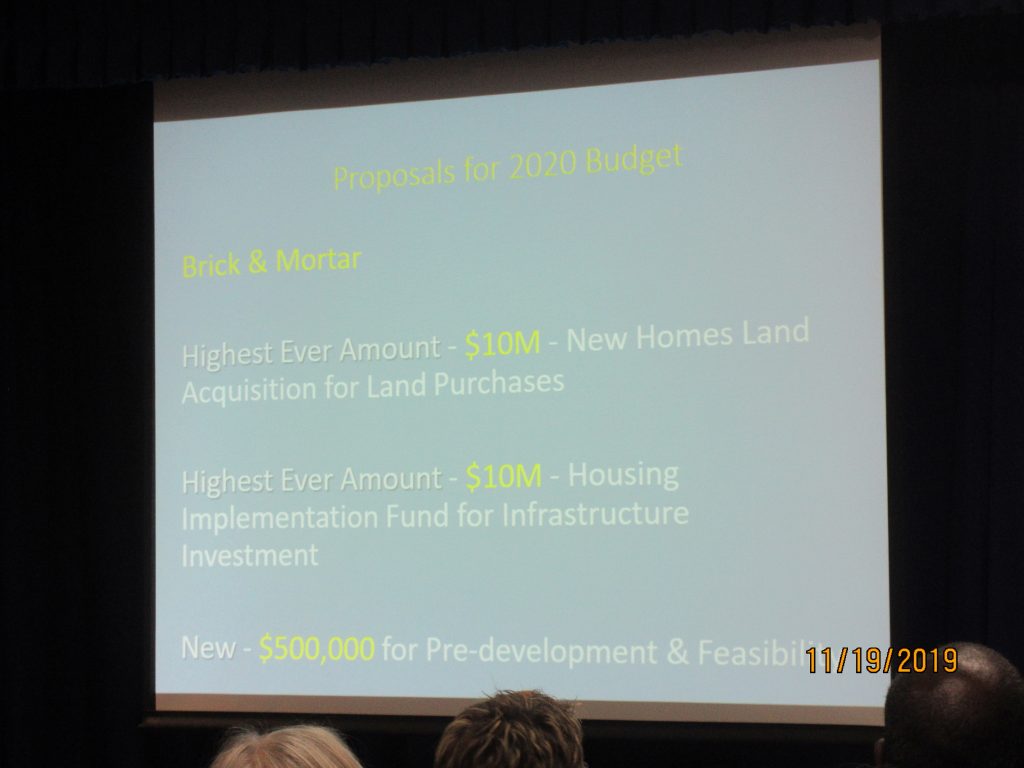
commitment of funds by the county in the proposed 2020 Budget to facilitate the
affordable housing initiative.
In response to a question by WPCNR,
Mr. Latimer said it was unclear whether the Housing and Urban Development department
was going to be willing to finance such projects, (though the New York State
HUD as given the Count $4 Million, or whether New York State would providing
funding for the units needed to be built.
Latimer said the New York delegation in Washington in the Senate and the House of Representatives could be expect to work hard for the by WPCNR estimate billions to put up the bricks and mortar for new units; rehabilitation of substandard housing; anti-foreclosure efforts, and identification of potential sites city by city.
Latimer at the conclusion of the news conference said the primary focus would have to be more Section 8 funding to increase rapidly the availability of existing buildings at affordable rents.
The report is available on the Westchester County website, Latimer said, and he welcome community comments on the report which is chock full of alarming demographics of who rents what, what they pay, who owns their homes, which WPCNR will delve into in this developing story.
According to the County Press Release just published, these statistics are intriguing:
· There are 345,885 housing units in Westchester; 81% of the housing units in the county were built before 1979;
· The City of Yonkers has the most housing units with 82,562; the Village of Buchanan has the fewest with only 864;
· 62% of the County’s units are ownership – slightly lower than the 63% national average; while 38% are rental units;
· There are 2,476 Public Housing Units and 13,092 Section 8 Housing Choice Vouchers units;
· There are 34,221 ETPA (Emergency Tenant Protection Act) units in 1,773 buildings in the county;
· 141,570 households (41.4% of the total number in the county) are living in homes and apartments that are paying more than 50% of their income toward their housing costs;
· There is a significant shortage of housing for extremely low income renters, people with disabilities, seniors, large families and the homeless; In particular, families and individuals who face intellectual and developmental disabilities, who need specialized housing with services, are not being adequately served;
· There are 89,839 people living in poverty in Westchester (9.4% of the total population);
· The greatest growth in population is in the 85 and over cohort (e.g. the Towns of Lewisboro and Pound Ridge with 232% and 202% increases respectively), between 2000 and 2017, demonstrating the need for senior housing;
· The combined population of the five largest cities represent 46% of the total population in the county;
· The 30-44 age cohort shows decline, which may mean there aren’t enough affordable housing options for young families;
· More people commute into Westchester to work than those who live and work in the county; the majority of commuters (58%) drive alone to work;
· There is no municipality where the market rate rent for a 2-BR unit is affordable to households earning the local hourly renter wage; the greatest monthly gap, at $1,823, is in the Village of Pleasantville; municipalities with gaps over $1,700 are in the City of Peekskill, the Town of Bedford and the Village of Port Chester;
· There are only three municipalities where the HUD FMR is affordable to households earning the local hourly renter wage – the Town of New Castle, and the villages of Bronxville and Pelham Manor;
· The Housing Action Council found that 68.6% of households seeking housing under the Housing Settlement were already living in Westchester; there were 9,260 applicants for 395 affordable rental units in development – a ratio of 23 applicants for every unit of rental housing; and
· The combined population of persons with disabilities in the cities of Peekskill, Yonkers and Mount Vernon account for 42% of the county’s population with a disability.
In this report, the three major components of the data analysis: Housing Cost Burden, Housing Conditions and a Projection of Current Housing Need are provided at the County level and for each municipality.
· The finding that 50.7% of all owner households earning between 30% and 50% of the County’s Area Median Income (AMI) are severely cost burdened should not be a surprise, but the conclusion that 22.9% of households earning between 80% and 100% of AMI might be (when one considers that a family of 4 at 100% AMI earns approximately $117,100 in Westchester County). It is important to note that these households have housing; but they cannot comfortably afford it.
· Similarly, the Assessment concludes that 2,556 households in the county live in substandard housing.
· The Assessment also concludes that 4,523 households are severely overcrowded.
Data compiled under these three components of housing need document the county’s existing housing stock with one or more problems as 75,271 units(22% of all units in the county). This is the greatest portion of the need for affordable housing in Westchester County, but does not reflect the entire need.
Collectively, all these data sources tell us that the need for affordable housing in Westchester County totals 82,451 units; however the greatest portion of these units are not substandard, so addressing the affordability of some portion of these units could be through rental assistance programs like the federal Housing Choice Voucher (Section 8) program.
The total number of new affordable housing units needed is 11,703. This represents the total number of Westchester households that are severely overcrowded or Homeless, as well as the non-Westchester Homeseeker registrants.
In response to the data found and the analysis conducted, this Assessment includes 12 Recommendations for the County to consider for implementation to start to address the identified need. Many of these recommendations are included in the Latimer’ proposed 2020 budget. The 12 Recommendations are:
1:Affordable Housing Education Workshop Series: Contract with an organization with a focus on housing policy, education, technical assistance and municipal engagement to establish a series of workshops to facilitate educational sessions regarding affordable housing.
2: Increase the Community Based Organization Capacity: Establish an annual funding allocation to cover the tuition associated with professional certification programs in housing and community development through NeighborWorks America®.
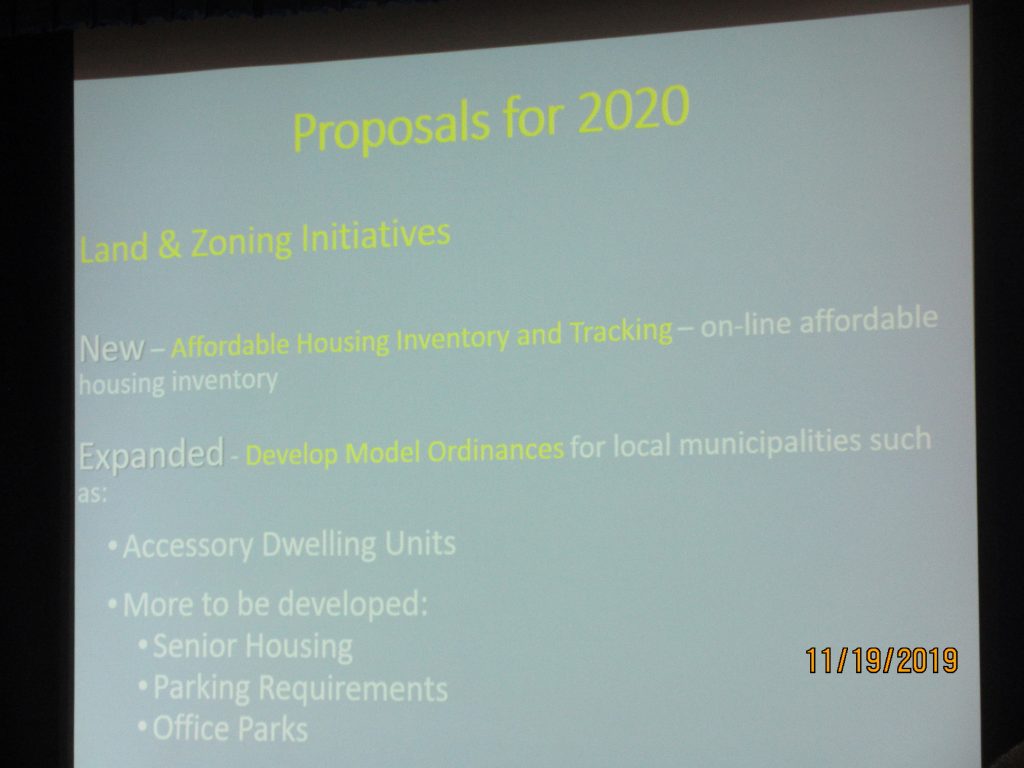
3: Housing Inventory & Tracking System: Conduct a bi-annual update of the existing affordable housing inventory – utilizing the existing housing inventory database. Establish a permanent tracking and monitoring system of all housing developments over 10 units. Share with economic development entities and Industrial Development Agencies to ensure housing and wages are in alignment.
4: Community Land Trust: Create a countywide community land trust and focus on capturing housing headed into foreclosure as an eviction prevention strategy, but keeping it flexible to address a multitude of development concerns.
5: Municipal Ordinances: Design a formal program to provide technical assistance to municipalities to draft model ordinances for example, Accessory Dwelling Units, specifically targeted for affordable housing.
6: Adaptive Reuse of Under-Utilized Property: Design a property disposition program for the adaptive re-use of land and buildings, including older office park campuses, for the purpose of developing new affordable housing.
7: Housing Compact between County and Municipalities: Gather support from the local businesses, municipalities and community based organizations to work together to meet the needs of affordable housing in the County.
8: Neighborhood Revitalization Opportunities: Utilize the Affordable Housing Needs Assessment data in addition to existing web-based systems to explore the specific needs of individual neighborhoods and establish a data rich system to analyze community conditions.
9: Eviction and Foreclosure Prevention Services: Expand existing eviction and foreclosure prevention programs.
10: Employer Assisted Housing Program: Establish an Employer Assisted Housing program by creating public-private partnerships with major employers, hospitals, county staff and large-scale not-for-profit housing providers and healthcare agencies.
11: Pre-development and Preservation Options: Create and provide funding for not-for-profit housing agencies for pre-development costs associated with the construction and preservation of affordable housing.
12: Funding Opportunities: Offers a couple of examples of options to provide a source of funding to undertake the recommendations above and increase the funding stream for the County’s affordable housing programs.
The County’s next steps will shape the conversation on affordable housing for the foreseeable future.
Westchester County Executive George Latimer Americans has submitted legislation to the County Board of Legislators to reduce the existing three term limit (12 years) for County Executives enacted in 2011 in Westchester, down to two terms (eight years).
Latimer said: “All of our local governments follow that Revolutionary Era philosophy; restricting the reach of government. I have been a student of government as well as a practitioner these many years, serving on three different levels: city, county and state. Now, as I complete my second year as County Executive, I see the authority granted this position – and I strongly believe it should be further limited to ensure a balance of interests are better served.”
From committee report attached to local law amending Chapter 110 of the Laws of Westchester County to impose a limitation on service by a Westchester County Executive, the report outlines:
“[…] term limits prevent government officials from serving for more than a specified number of terms to bring fresh perspectives to government and ensure responsiveness to voter demands. […] Longtime office holders can often become more interested in serving their own reelection interests than serving the interests of the people they represent and challengers with new ideas are at an unfair advantage when running against incumbents with higher name recognition. Your Committee believes that restricting the service of lawmakers through term limits prevents politicians from amassing too much power and removes the intense focus on politics and places it back on policy. Term limits encourage younger, minority and other aspirants to run for office as the hurdle to defeat a well-entrenched and senior incumbent is lowered. In addition, term limits result in greater voter turnout particularly in local elections if people feel there is a real race going on and their votes can count. Your Committee believes that implementation of term limits keeps a steady, fresh supply of leaders to serve in elected offices. Many talented potential leaders will simply not run for a particular office because of the challenges and battles of running against an incumbent.”
While Latimer wants to limit the term County Executive,he proposes no change in legislative term limits, which currently allow a maximum of service of 12 years (six terms). The new term limit, if passed, would reduce Latimer’s available to run for future terms from three terms to two.
Latimer said: “I have included my tenure as covered within the law. Oftentimes, incumbents are “grandfathered” in, meaning the restrictions apply to the next occupant of the seat. But, they will apply to me as well. Eight years is a period of time most common where Executive term limits apply, and I think it is a defensible change.”
Latimer said: “The length of my tenure is up to the voters, but to limit the total years to eight makes good sense, and ensures the proper check and balance.”
BOROUGH PRESIDENT DIAZ ISSUES REPORTCALLING FOR NEW YORK STATE LOTTERY REFORM
WPCNR ALBANY ROUNDS. From the Office of the Bronx Borough President Ruben Diaz Jr. November 18, 2019:
Bronx Borough President Ruben Diaz Jr. has issued a new report outlining a set of recommendations aimed at reforming the New York State Lottery to minimize its adverse effects on low-income communities.
The report, titled “Re-Orienting the Lottery: A Better Lotto for the Poor,” provides four recommendations that aim to prevent the lottery from further disadvantaging the poor and to instead help these communities see the most benefit from the state’s lottery system.
“The lottery has grown exponentially since its establishment and the state regulations overseeing that sector must be adapted to how it exists today. We can’t turn a blind eye to state lotteries targeting low-income and minority communities, and the systems should be changed to help limit the harm that vulnerable people experience because of them,” said Bronx Borough President Ruben Diaz Jr.
The full report can be read at https://on.nyc.gov/330OJF5. Recommendations discussed in the report include : 1. Changing the allocation of lottery funds to further support students living in or near poverty.
2. Banning check cashers from selling lottery games.
3. Requiring the state to collect information about check cashers’ sales of lottery games.
4. Educating the public about the benefits of engaging with the traditional banking system.
Nationally, lower income individuals are more likely to play the lottery than higher income individuals, with some statistics finding that 28% of individuals earning under $30,000 per year play the lottery at least weekly as compared with 18 percent of those earning over $75,000.
Additionally, low-income individuals spend a disproportionate proportion of their incomes on the lottery.
“Low income communities generate much of the lottery’s revenue but they don’t receive benefits proportionate to their patronage of the system,” said Bronx Borough President Ruben Diaz Jr.
“That money should be spent to support low-income students with specific programs in schools that are aimed at the alleviation of poverty in both the short and long terms.”
WPCNR THE SUNDAY BAILEY. By John F. Bailey. Republished from The CitizeNetReporter of June 17, 2007:
Today celebrates the birthday of a great American
Charles F. Bailey.
He is my father. He was born November 17, 2018.
My father gave me four pieces of advice in life: Always drive an air-conditioned car. Always centrally air-condition your home. Stay out of court.
And don’t sit in traffic.
Always take the service road on the Long Island Expressway. (He would have loved a Garmin.)
In retrospect, his advice has served me well. I am always comfortable. I sit out traffic delays in comfort. I have not made lawyers rich.
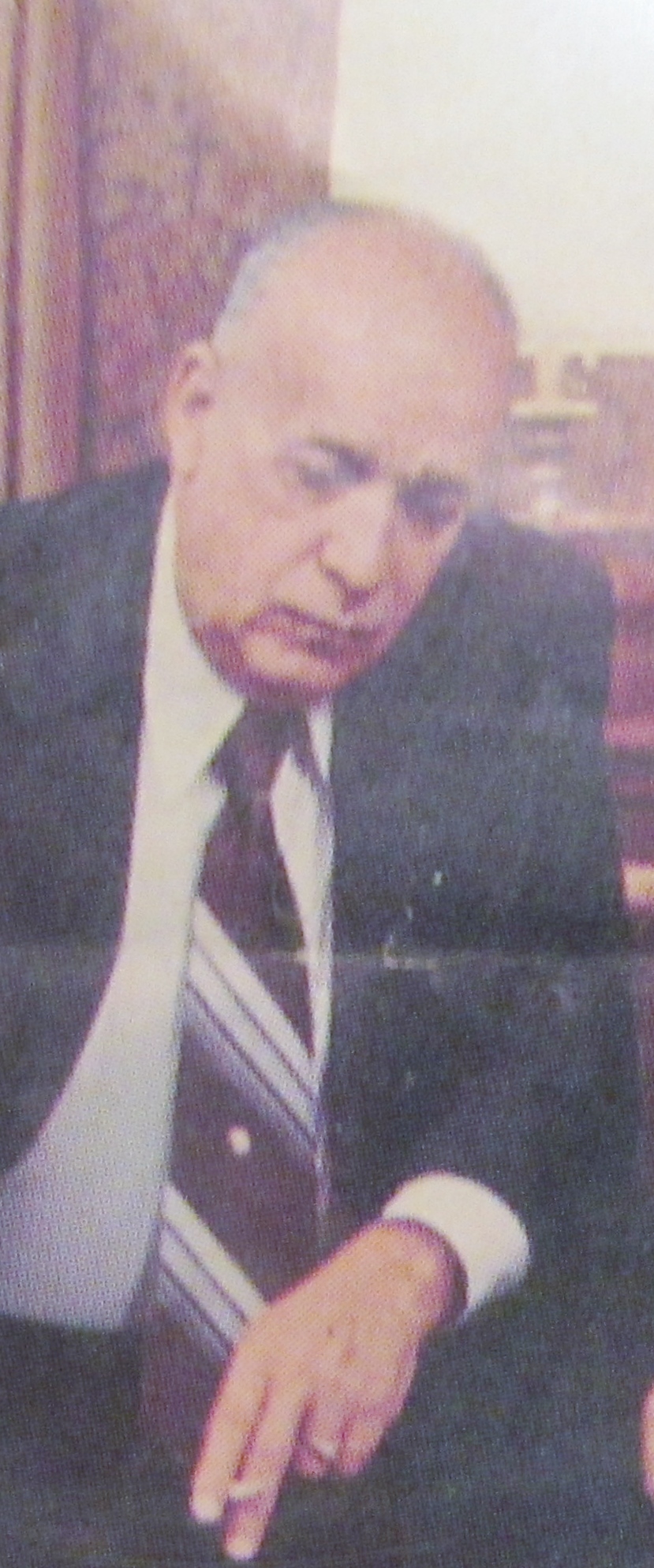
Charles F. Bailey
My Dad
Pleasantville, NY
1918-1986
He was not an emotional man. He was a banker and always wore suits to work. I have fond memories of going to meet him when he go Stean Engine train in Pleasantville – when the train tracks were at grade with Manville Road.
I was most impressed as a young child by how he always smelled of coal cinders when he got off the train – like commuter’s cologne.
Sadly on today’s electric trains you do not get that. And you always heard those steam engines coming. You could see them: Clouds of very busy and inspiring industrious black smoke streaming at the horizon down the line. He’d get off the train.
My mother would move over and he’d drive the old Hudson Hornet home. He always spoke quietly. Never raised his voice. Drank scotch and soda in the winter. Gin and Tonics in the summer and he smoked Philip Morris’s, Marlboros, then Kents.
He set up a Lionel train set in our basement – perhaps our unspoken connection. When I was sent in by train for the first time to meet him at the office during Christmas time, He’d have his secretary greet me at Grand Central Terminal which still is a very big and scary place.
He would take me to lunch at Jack’s Monte Rosa restaurant on 49th Street – which I thought was a very great place. When I first went to it with him, I was a little disappointed that it was not more glamorous but I was really impressed that Jack the owner greeted him by name. I thought that was great that my Dad was greeted with respect.
When I first started working in Washington, D.C. in 1968 I ate regularly at a restaurant below the television station WMAL-TV where I worked, it was called Marty’s Italian Village. Marty, the owner (who looked like Humphrey Bogart, the only thing missing was the white sport coat) started calling me when I came in around 7 PM, ‘Hi John, how are you?” People would look at me. They thought I was big. I liked that. Feeling big in my small world.
When my father came to visit me in Washington where I worked. I took him around town. I told him when he got off the plane. “Hi, Dad, welcome to my town.” I wanted to impress him. We’re always trying to impress our fathers.
Another Father time was when my Dad came out for Dad’s Day at college. I mean this was a big thing to me. He watched me do play-by-play of a football game from atop the press box in 15 degree weather. It was cold. But he watched. Acted impressed. He hated cold weather.
Another time he impressed when I lost a job where I was working at the television station that I had been being considered for. And I told him how unfair it was, he put things in perspective: “Puggy, he said, “The film manager wasn’t going to put you in as his Assistant if you were going to be bucking him all the time.” It put things in perspective. No false sentiment. No making me feel better, he was tough enough to teach by being realistic while telling me not to feel sorry for myself.
Then later in my careerI was fired out of a job completely blindsided. He again intervened, saying to me he thought what the agency head had done was a terrible thing. I needed that at the time.
He also, in a very supportive move, told me if I could make $1,000 a night writing a free lance direct mail package, I should keep trying to do that.
Dads are there to say the right things to you at the right time. Sometimes it is not always the right thing, but they try. Often, if you’re lucky, as I was, they say the right thing. And not the wrong thing.
With my father, who was not really my father, since I was an adopted child, it was never all about him, it was all about you. Making me better, even when it hurt him to say things that were the truth.
When I bought my first house in White Plains. He never criticized the house. But when I sold it, he complimented me, “I think it’s great how you came out of it (the crummy first house).” He was a personal trainer.
The good ones train you to run a race. If you stumble, no one hurts more than they do. When you succeed, no one is prouder. The good ones push you in front of the cameras, they say interview her or him. They did it.
They know what you should do, but they can’t tell you, because you won’t do it if you’re a kid.
But the more subtler of them tell you any way in hopes it will sink in to the rebellious offspring mind. My dad was subtle.
Another fond memory: My father took me camping once at a friend’s cabin in Pennsylvania. Funny thing was there was such a great comic collection we wound up sleeping in sleeping bags on the porch of the cabin. That was funny.
Another time when I was being threatened in college over a position at the radio station, I asked him if I should just abdicate and assign a play-by-play position to the person who was being forced on me. He advised me to “stick to your guns,” so I reported the threat to the Dean.
The position was compromised, but I was never threatened again. He never shared my love for baseball and sports. In fact he never played catch with me all that well.
I mean I could have made the big leagues (pipe dream) if he played catch with me more. But that’s a small criticism. I wish I had more of his financial acumen. But I do not.
As you grow into your 30s and 40s, little things they say to you you begin to understand. My father never struck me, but always disciplined me with quiet words. I have not always been that way as a parent myself, being somewhat volatile. I wish I had his even temperament. He always asked me to take care of my mother. And the only time he really got mad at me was when I had made my mother upset with me.
He was a little like Humphrey Bogart in movie roles in the way he disciplined, I remember he would say admonitions quietly. Such as when I got an F in an English course at college. He told me, that was the last F I would get at Ohio Wesleyan, because the next one he would stop paying my tuition.
That had an effect. And that was when tuition was only $3,000 a year.
I have taken to after my children have grown, telling them always “Be careful,” “Don’t do anything stupid because someone suggests it,” “Do not go anywhere alone without telling people where you are going,” “Don’t lose your temper,” “Don’t tailgate.” In hopes that when I am not with them, they will remember it when they need it.
I think of him every day of my life. I become more like him every day. He is always lingering in the background of my thoughts. I do not know what he would think of what I am doing now. But, he’d say — “If that’s what you want to do. Do it.” He also would say, “You have to make yourself happy.”
I also think, even today of what advice (laconic as always) he’d give me in a situation. And I wish I could discuss property taxes with him. Banking today and how it has become a predator system.
I especially have to salute him, because I am an adopted child.
That alone makes me appreciate his love and acceptance with a sense of awe to this day. He loved me like his own son.
You never outgrow your need for Dad. The good ones are immortal, alive and with you in your head when you need them.