
CHICKEN POX IN MASSACHUSETTS–TRACED TO MIGRANT SHELTER–STATE IMMEDIATELY OPENS VACCINATION CLINICS NO NEW CASES AFTER MARCH 1. RESPIRATORY CASES DECLINING, EXCEPT NYC (UP 6%) COVID IN START OF DECLINE.

View in browser

Welcome to the Northeastern edition of Outbreak Outlook! It is only available to paid subscribers. If you wish to become a paid subscriber and access region-specific information, please click the Subscribe now button below. Thanks for reading! -Caitlin

Respiratory Diseases

ILI

Influenza-like illness fell again in the Northeast, dropping from 4.2% to 3.9% of visits to the doctor for fever and cough or sore throat. However, the regional number is being pushed up by New Jersey, which has a high level of activity at 5.5%. We’re still well above the threshold that marks the end of flu season, though. All in all, we are still on track for a gradual exit from flu season.
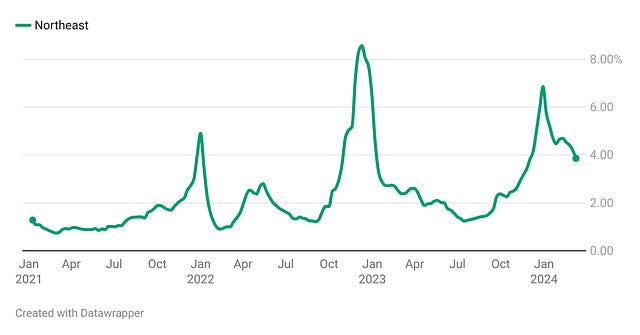
Northeast Region: ILI Activity
Percent of doctors visits for ILI symptoms

Only two states in the region saw increases. Connecticut saw a small rise of 0.1 points to 3.0%. However, hospitalization rates slightly decreased, so that is good. Activity in Rhode Island rose by almost a full point to 4.0%. However, hospitalization rates for influenza decreased there, too.

The other states in the region are all seeing improvements. New Hampshire had the largest decrease, dropping by more than 0.7 points. Massachusetts followed with a significant decrease of 0.5 points. Vermont and Maine also saw declines, with drops of about 0.4 and 0.25 points, respectively. Pennsylvania and New Jersey had more modest decreases, with each state’s visits declining by approximately 0.3 and 0.2 points, respectively.

New York is also improving. Activity in the state is low at 2.0% and falling. However, New York City remains high at 6%. Activity is falling there too, but verrrrrry slowly.
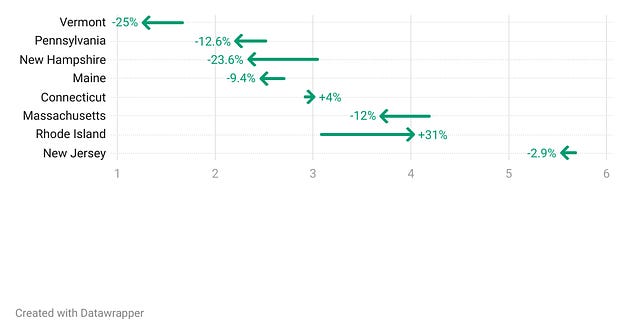
Northeast Region: Change in ILI Activity
Percent of doctors visits for ILI symptoms

COVID-19

Covid-19 activity is looking pretty good. Wastewater concentration for SARS-CoV-2 has declined steadily for weeks, and it’s now fairly low. Hospitalizations are falling in most states in the region, too, with some exceptions.

Rhode Island experienced the largest increase in new Covid-19 admissions per 100,000, rising by 1.1 points. New Hampshire saw a moderate increase in admissions, going up by 0.6. However, these hospitalization levels are moderate, and emergency department metrics look okay, so I’m not worried.

The rest of the states in the region saw decreases in weekly hospitalization rates. New Jersey had the most significant decline, dropping by 1.5. Massachusetts followed closely with a decrease of 1.4.

New York and Maine both decreased by 0.8. Connecticut‘s admissions decreased by 0.4, while Vermont remained relatively stable with a slight decrease of 0.1.
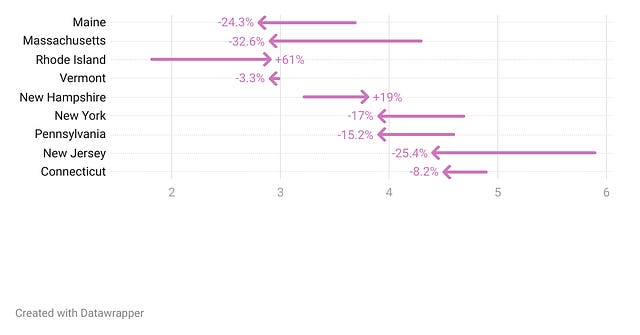
Northeast Region: Change in New COVID-19 Hospitalizations
Weekly new hospitalizations per 100,000

Stomach Bugs

The Northeast saw some relief from norovirus activity this week, with test positivity for the second week in a row to 13.9%. It’s possible we have past peaked season in the region because the timing is about right, but there’s no way to be certain until a few more weeks of data come in.
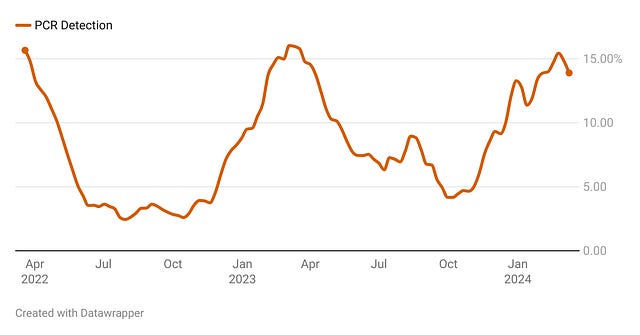
Northeast Region: Norovirus Activity
Test Positivity, Percentage

Other Bugs

  • Seasonal coronavirus activity remains very high but may be coming down. This is likely peak season for this set of viruses, which cause cold-like symptoms. Distinguishing cold symptoms from allergy symptoms is tough this time of year. Itchy eyes are more common with allergies, whereas a sore throat is more common for a cold.
  • Metapneumovirus activity may be ticking up. Symptoms range from mild cold-like symptoms, including cough, fever, and nasal congestion, to severe respiratory distress such as bronchiolitis and pneumonia in more vulnerable populations. If you get a bad infection this time of year, metapneumovirus and influenza B both come to mind as possibilities.

Food recalls

The following foods are being recalled because they are contaminated. Please check your cupboards and throw out any of these items:

New

  • None

Previously reported:

  • A big recall of Queso Fresco and Cotija Cheese is affecting numerous consumer products (more info)
  • Multiple brands of cinnamon sold at discount stores, for lead contamination. The best resource I found to quickly survey affected products is here.
  • Raw Farm brand cheddar cheese (more info)
  • Sargento Foods shredded cheese. This recall affects food service customers and does not include Sargento-branded retail products. (more info)
  • Robitussin Honey CF Max cough syrup products (more info)
  • If you have food allergies, you may wish to review these FDA safety alerts and USDA alerts for foods with undeclared allergens.

In other news

  • In response to an outbreak of varicella (chickenpox) at a migrant shelter, Massachusetts health officials organized two vaccination clinics to prevent further transmission. Several cases of chickenpox were identified at the site, prompting isolation of affected individuals and their families until they were no longer contagious. No new cases have been reported since March 1st.

white and pink flower in macro shot

Photo by Daniel Seßler on Unsplash

Posted in Uncategorized

MEASLES INCREASING–CDC BEHIND ON SPREAD– NOROVIRUS SURGES– “POLITICAL VACCINE GAP” APPEARS

State of Affairs: March 16

Flu, measles, norovirus, and interesting Pew results

This year’s respiratory season is slowly fizzling out. But with that, new players have entered the scene. Here is your state of affairs.

Measles: Increasing

Measles continues to come in hot. A few things jumping out at me:

  • CDC reports we have had 45 cases across 17 states so far, which almost surpasses last year’s total of 58 cases across 20 states.
  • Cases are driven by lots of little sparks across the nation, opposed to one big outbreak like in 2019. The more embers, the more likely it is that they find unvaccinated pockets and spread like wildfire.
  • We don’t know much else, as the CDC website desperately needs a refresh. For example, the hospitalization rate, vaccination status, or age bracket of the cases is not publicly known. CDC does now include an epi graph, as shown below.
(Source: CDC, Annotated by YLE)

Some recent outbreaks making the news:

  • An outbreak which started at a Chicago migrant center includes several so far. Chicago Public Health Department has advised all families staying at the shelter keep their children in place. Unfortunately, this population has a lot of trauma, is very hesitant to vaccines, and distrusts institutions. CDC has sent a team to support the local response.
  • A measles case (child who just returned from international travel) arrived at a Sacramento Hospital last week, exposing about 300 people. No additional cases have been reported yet.
  • The Florida elementary school outbreak is holding strong at 9 kids. The outbreak is declared over once two incubation periods have passed (45 days), which is set to occur in the beginning of April.

The increase in measles is not exclusive to the U.S.. For example, the U.K. is having a very bad year, marking a 10-year high. Since February, 239 new cases were reported, with the majority (63%) of cases among children under 10 years old.

Same with Canada: In the first two months of 2024, there are 20 cases, with several community-acquired. There were 12 measles cases in total last year, which were all travel-related.

Why is this a problem? While the raw number of cases remain low (we aren’t seeing even close to pre-vaccine era numbers), each outbreak takes a ridiculous amount of resources. For example, a small outbreak in Tucson in 2011 cost close to $800,000.

Moreover, the increase in measles is happening within a concerning context: vaccination rates declining due to a rapidly changing information landscape, decline in trust, and continued individualism. There are very few signs that this will be changing anytime soon.

Norovirus: Surging

Norovirus—a virus that causes stomach cramping, intense episodes of vomiting and diarrhea, and sometimes fevers—is taking off in the Northern Hemisphere. If we had a storm system for viruses, this might be deemed a shi… you get it.

(Source: CDC)

Ten percent of the population should expect to get sick. It’s very tough to protect yourself against this virus, but not impossible. Here are some pointers from a previous YLE post. For example, wash hands (rather than using hand sanitizer) and be sure to use bleach-based products on surfaces.

Influenza-like illnesses: Moderate and finally declining?

Within the last few weeks, the percentage of people going to the doctor for fever or cough has slightly declined after remaining stagnant for weeks. Unfortunately, it looks like respiratory seasons are back to “pre-pandemic” patterns, stretching out into March and April.

Outpatient Respiratory Illness Visits (Source: CDC, Annotated by YLE)

Flu: Moderate and staggering

The respiratory season stretching out is mostly due to flu strain B taking over (which is typical). Below is wastewater for flu, with B clearly surging, particularly in the Midwest and Northeast. (Notice the y-axis is different though, with Flu A still responsible for majority of cases.)

Source: Biobot; Annotated by YLE

Regardless, we’ve had a pretty “normal” flu season, as hospitalizations this year are about in the middle of the pack compared to previous years.

(Source: CDC, Annotated by YLE)

The most concerning thing about flu is how politicization from Covid-19 has spilled over to these vaccines. The latest Pew poll shows the gap between flu vaccine coverage is widening between political parties.

Source: Pew; Annotated by YLE

Covid-19: Moderate and declining

Covid-19 wastewater levels, for the first time this season, have reached “moderate” levels. While it remains highest in the South, levels there are falling too.

(Source: CDC, Annotated by YLE)

The biggest concern I have is the suboptimal uptake of Covid-19 vaccines. A new Pew survey showed a sharp decline for Republicans over the age of 65 years old—an extremely serious problem, and I have yet to hear that the U.S. has a solution for it.

Source: Pew

The partisan gap on Covid-19 is narrowing as public interest in Covid-19 overall is waning. Most interesting, though, is bipartisian consensus for long Covid treatment. This is refreshing and should absolutely be translated into research dollars.

Source: Pew; Annotated by YLE

Bottom Line

Respiratory season is slowly waning, but measles and norovirus are ramping up. And an underlying tragedy is unfolding that is impossible to ignore: loss of trust spilling into all vaccine-preventable diseases.

Spring break is right around the corner, and there is still a considerable amount of respiratory disease out there right now. If you don’t want your travel plans interrupted, the best thing you can do is keep up with vaccines, wash those hands, and wear a mask, especially while traveling.

Love, YLE

Posted in Uncategorized

WESTCHESTER COUNTY CONDUCTS “COMMUNITY NEEDS ASSESSMENT” OF THE STATE OF AFFORDABLE HOUSING in 31 communities

Community Feedback Needed to Assess Affordable Housing Needs and Community Development Goals within the Urban County Consortium

WPCNR COUNTY CLARION LEDGER. From the Westchester County Department of Communications. March 16, 2024:

The Westchester County Department of Planning is asking for the public’s help in crafting its Consolidated Plan, a five-year plan to assess affordable housing needs and development goals in the 31 municipalities that make up the Urban County Consortium.

Once completed, the plan helps to inform the U.S. Department of Housing and Urban Development (HUD) on how federal funding should be allocated through the CDBG, HOME and ESG programs over the next five years.

To ensure the success of the County’s next Consolidated Plan, the Planning Department is asking for community feedback from residents, business owners, nonprofits and public housing authorities through online surveys.

Commissioner of the Westchester County Planning Department Blanca Lopez said: “The County receives $5 million annually from HUD to invest in communities that belong to the Urban County Consortium.  Participation from the public is extremely important as it will help us shape our priorities around housing, public services, public improvements and economic development for the next five years. We look forward to receiving community feedback as to how the County should direct its federal funding.”

Every five years, Westchester County develops a new Consolidated Plan. The Plan defines strategies to address housing, community development needs and current market conditions for all of the municipalities in the Urban County Consortium. Residents can participate the following ways:

·         Complete a survey as a community resident

·         Complete a survey as a stakeholder (nonprofit organization, business owner or public housing authority)

Below are the communities that make up the Westchester Urban County Consortium:

Ardsley

Bedford

Briarcliff Manor

Bronxville

Cortlandt

Croton on Hudson

Dobbs Ferry

Elmsford

Greenburgh

Hasting on Hudson

Irvington

Larchmont

Lewisboro

Mamaroneck Town

Mamaroneck Village

Mount Kisco

New Castle

North Salem

Ossining Town

Ossining Village

Peekskill

Pelham Village
Pleasantville

Port Chester

Rye Brook

Rye Town

Scarsdale

Sleepy Hollow

Tarrytown

Tuckahoe

Yorktown

The Westchester County Planning Department is working with Civitas, LLC, a community development firm to develop its Consolidated Plan.

Visit the Planning Department’s website for more information.


(Editor’s Note: In the first year of County Executive George Latimer’s ascending to the County Executive position, in 2018  the County coed a snducted a study, the Westchester County Affordable Housing Needs Assessment in the entire county that concluded there was a need for over 11,703 Affordable Housing residences in the county.

In his 2024 State of the County Address Thursday evening, 

Latimer said: “Since our administration first took office in 2018, affordable housing – and the availability of affordable housing throughout the County – has remained a top priority.”

Since 2018, nearly six thousand units of affordable housing have been built, gone under construction, or are in the pipeline for the future. Additionally, Latimer highlighted the Affordable Housing Investment Flex Fund, a new, affordable housing production tool which was created to help increase the number of units across Westchester.)


Posted in Uncategorized