BOMBERS AND METROPOLITANS CAN PLAY WITH 20% OF FANS IN STANDS IN PERSON..ON OPENING DAY, MASKED UP, SOCIAL-DISTANCED WITH PROOF OF AT LEAST 1 VACINATION.

Hits: 555

The Big Ball Park April 2014. From da Bleachas

WPCNR GOVERNOR ANDREW CUOMO CORONAVIRUS REPORT. MARCH 18, 2021:

New Yorkers loves to root for the home team, and it was especially difficult to see great professional sports teams close to fans in stands as we implemented restrictions necessary to protect public health.

Today I am pleased to announce that baseball is coming back to New York and fans will be able to attend games in-person. On April 1, the New York Mets and New York Yankees can resume playing with spectators in the stadiums.

Professional sports in large outdoor stadiums that hold 10,000 people or more will be allowed to reopen at 20 percent capacity.

Attendees must show proof of a recent negative test or completed vaccination series prior to entry and are subject to strict state guidance on face coverings, social distancing and health screenings. Vaccination efforts at both Yankee Stadium and Citi Field will still continue during the MLB season. 

Photo of the Day: New York baseball is coming back in April (Photos by Don Pollard) Here’s what else you need to know tonight: 

1. COVID hospitalizations dropped to 4,536. Of the 271,463 tests reported yesterday, 7,796, or 2.87 percent, were positive. There were 934 patients in ICU yesterday, down 20 from the previous day. Of them, 590 are intubated. Sadly, we lost 57 New Yorkers to the virus.  

2. As of 1pm THURSDAY morning, 24.0 percent of New Yorkers have completed at least one vaccine dose. Over the past 24 hours, 146,518 total doses have been administered. To date, New York administered 7,150,352 total doses with 12.4 percent of New Yorkers completing their vaccine series. See data by region and county on the State’s Vaccine Tracker: ny.gov/vaccinetracker.  

3. Smaller, regional sports venues can also reopen beginning April 1. These are venues that hold 1,500 people indoors or 2,500 people outdoors and initial capacity will be limited to 10 percent indoors and 20 percent outdoors.

Attendees must show proof of a recent negative test or completed vaccination series prior to entry and are subject to strict state guidance on face coverings, social distancing and health screenings. 

4. Beginning March 29, statewide travel for sports and recreational activities will be permitted. Currently, travel for sports and recreation is limited to contiguous counties and regions in accordance with New York State Department of Health guidance.  

5. Large outdoor performing arts venues, including stadiums, that hold more than 2,500 people can reopen at 20 percent capacity beginning April 1. 

Venue capacity for concerts and other performing arts events will continue to increase as the public health situation improves with more New Yorkers receiving vaccinations and fewer COVID-19 cases in the community.

Attendees must show proof of a recent negative test or completed vaccination series prior to entry and are subject to strict state guidance on face coverings, social distancing and health screenings.   

 Ever Upward, Governor Andrew M. Cuomo

Posted in Uncategorized

White Plains Schools Will Open Kindergarten, 9th grade and 12th Grades for 5-day a week Classroom Learning at their schools Monday, March 22. Other grades to follow in next two weeks.

Hits: 112

SUPERINTENDENT OF SCHOOLS SPECIAL 12 NOON FRIDAY

WPCNR SCHOOL DAYS. By John F. Bailey. March 18, 2021:

White Plains schools as previously reported will open for three grades of nine for full-time in school learning Monday.

Back to school will be Kinderegarteners at all five elementay Schools. Ninth graders and 12th Graders at the high school.

.

Parents, guardians should all have received detailed instructions from their school principals on how the reopenings, busing details will work. If they have any questions parents should contract their childrens’ schools tomorrow to double check any concerns.

Posted in Uncategorized

Urban Renewal Agency GREENLIGHTS first 3 acquisitions of East Post Road properties beginning major redevelopment for possible White Plains Hospital or other uses makeover of the area

Hits: 391

WPCNR URBAN RENEWAL REPORT. By John F. Bailey. March 18, 2021:

The Urban Renewal Agency approved the acquistion of 60 East Post road (the Firestone store) 42 East Post Road ( string of stores , and the former abandoned gas station, 26-28 East Post Road this morning, as discussed .in December, 2019.

The agency also approved $9,800,000 in Bond Anticipation notes to finance the three acquistions .

60 East Post Road, currently site of Firestone.
42 East Post Road
26-28 East Post Road

The other 10 properties spotlighted for possible development by the Urban Renewal Agency in December, 2019 were:

23-225 Dr. Martin Luther King Boulevard

1-3 East Post Road

2-4 East Post Road

34 East Post Road

22-24 East Post Road

18-20 East Post Road

14-16 East Post Road

12 East Poad Road

188-188 South Lexington Avenue

190-192 South Lexington Avenue

It is not determined at this time if all the remaining 10 properties named in 2019 are still under consideration.

In December of 2019, WPCNR wrote:

“The White Plains Urban Renewal Agency voted unanimously in city hall to consider eminent domain being used to acquire the 13 following properties on the North side of East Post Road from Dr. Martin Luther King Jr. Boulevard to South Lexington Avenue for future unspecified projects yet to be determined. “

The future unspecified projects yet to be determined are still “undetermined.”

Posted in Uncategorized

Water Declared Unsafe in 2 South Salem Schools

Hits: 951

WPCNR HEALTH ALERT. From the New York State Department of Health. March 18, 2021:


State and County Health Departments Issue “DO NOT DRINK” Water Advisories for 
Two Westchester County Schools
 

New York State Departments of Health and Environmental Conservation Launch Investigation to Identify Potential Sources of Contamination
 

ALBANY, N.Y. (March 17, 2021) 

The New York State Department of Health, in coordination with the Westchester County Health Department, recommended Wednesday “Do Not Drink” advisories for the Pequenakonck Elementary School in North Salem, New York and Meadow Pond Elementary in South Salem, NY.

 The advisories, issued out of an abundance of caution, direct the school communities to stop using water for drinking, cooking and food preparation. 

Bottled water is being provided by both schools and the State stands ready to assist the schools and the county where needed. Water continues to be acceptable for uses such as handwashing and various cleaning activities including washing dishes. 

The “Do Not Drink” advisories were issued following the very recent discovery of perfluorooctanoic acid (PFOA) and perfluorooctane sulfonate (PFOS) in the schools’ water systems at levels above New York’s recently adopted, and highly protective, Maximum Contaminant Levels (MCLs) of 10 parts per trillion, each, for PFOA and PFOS.  

The standards require water systems of all sizes to test for these previously unregulated contaminants, notify consumers if the results exceed the standards, and take the appropriate actions to bring the water systems back into compliance.  

The affected school districts are working closely with Westchester County Health Department and New York State agencies to collect additional samples and discuss long-term solutions to improve water quality. Additionally, the State Departments of Environmental Conservation (DEC) and Health (DOH) are working to identify and address potential sources of contamination.  

New York State agencies are also working with Westchester County and school administrators to provide additional information, answer questions, and conduct outreach to these school communities to ensure school families are notified.  

Potential Health Effects of PFOA and PFOS 

PFOA and PFOS are part of a group of man-made, per- and polyfluoroalkyl substances found in a wide range of consumer products such as cookware, cleaning products, food packaging, stain repellants, and firefighting foam, among others.  The available information on the health effects associated with PFOA and PFOS, like many chemicals, comes mostly from studies of high-level exposure in animals.

Less is known about the chances of health effects occurring from lower levels of exposure, such as from drinking the schools’ water.  As a result, finding lower levels of chemicals in drinking water prompts water suppliers and regulators to take precautions that include notifying consumers and taking steps to reduce exposure. 

High dose studies in animals indicate that PFOA and PFOS can cause a wide range of health effects with the most consistent findings being effects on the liver and immune system and impaired fetal growth and development.

The United States Environmental Protection Agency considers PFOA and PFOS as having suggestive evidence for causing cancer based on studies of animals exposed to high levels of this chemical over their lifetimes. The NYS MCLs for these chemicals are highly protective against these health effects, but at levels well above the MCLs it is prudent to take interim “Do Not Drink” measures to reduce exposure at these schools.  

In February 2016, Governor Andrew M. Cuomo created a Water Quality Rapid Response Team, led by DEC and DOH, to quickly investigate water contamination reports across New York and take corrective action to address these contamination issues. 

This Water Quality Rapid Response Team has taken unprecedented action to investigate and clean up PFAS contamination and to ensure New Yorkers have access to clean water. To support this effort, DEC works with DOH and numerous entities, including local health departments, drinking water providers and authorities, and federal, state, county, and municipal governments to protect and clean up groundwater.  

Additional Resources 

The school community will be informed on progress to reduce the PFOA and PFOS levels and when the water is deemed acceptable for all uses. 

·         General information is available at Westchester County at 914-813-5000     

·         More information about public water and NYS drinking water standards 

for PFOA, PFOS and 1,4-Dioxane  

·         For information about drinking water and health effects contact NYS DOH Bureau of Toxic Substance Assessment at 518-402-7800

·         For more information about drinking water quality contact NYS DOH Bureau of Water Supply Protection at 518-402-7650

·         General information on PFAS can also be found at: https://www.epa.gov/pfas/basic-information-pfas.  

Posted in Uncategorized

23.5% of NYERS Have First Shot. Governor Cuomo Receives His First.

Hits: 769

WPCNR GOVERNOR CUOMO CORONAVIRUS REPORT. March 17, 2021:

 As of today, New York has administered seven million vaccine shots to eligible New Yorkers, which is great progress.

Earlier today, I got the Johnson & Johnson vaccine at the Mount Neboh Baptist Church vaccination site to help spread a key message that all the vaccines work, all of them are safe and New Yorkers should take whatever vaccine they can as soon as they can.

We will continue to move our vaccination progress forward as fast as supply allows but as soon as you are eligible, get any of the three vaccines—they are safe and effective. Protect yourself and your family.  

Photo of the Day: Today I got my shot of the Johnson & Johnson COVID vaccine Here’s what else you need to know tonight: 

1. COVID hospitalizations dropped to 4,624. Of the 263,401 tests reported yesterday, 8,976, or 3.41 percent, were positive. There were 954 patients in ICU yesterday, up 11 from the previous day. Of them, 601 are intubated. Sadly, we lost 54 New Yorkers to the virus. 

(Editor’s Note: In Westchester County , 422 new persons tested positive for Covid out of 10,960 tested, an infection rate of 3.9%.

In 8 days since last Tuesday 3,029 Westchester residents tested positive for covid, an average of 378 a Day.

If the last hospitalization rate given by County officials (4.3%) has not gone down substantially, this means that the hospitals in Westchester will face 240 person of those 3,029 new infections being sick enough to be hospitalized for Covid within the next 15 days. )

(More Editor’s Note: The towns and cities with the most new covid cases IN WESTCHESTER in the two weeks since March 2, through March 15 are:

1-YONKERS–1,312, 93 A DAY

2-MOUNT VERNON– 476, 34 A DAY

3- NEW ROCHELLE — 450, 32 A DAY

4–WHITE PLAINS– 288, 20 A DAY

5-TOWN OF GREENBURGH– 196, 14 A DAY

6- TARRYTOWN & SLEEPY HOLLOW) 140, 10 A DAY

7. HARRISON–176, 13 A DAY

8,CORTLANDT–163, 12 A DAY

9. YORKTOWN– 162, 12 A DAY

10. PORT CHESTER–144, 10 A DAY

11. THE OSSININGS– 126, 9 A DAY

12–PEEKSKILL– 109, 8 A DAY

 2. As of 11am this morning, 23.5 percent of New Yorkers have completed at least one vaccine dose. Over the past 24 hours, 148,564 total doses have been administered. To date, New York administered 7,003,834 total doses with 12.2 percent of New Yorkers completing their vaccine series. See data by region and county on the State’s Vaccine Tracker: ny.gov/vaccinetracker

 3. Appointments are now available at ten new state-run mass vaccination sites across the state.

 All ten sites will open on Friday, March 19, and will operate from 8:00am to 7:00pm daily. Each site will have the ability to vaccinate more than one thousand New Yorkers daily dependent on supply from the federal government. Appointments at the sites located in New York City, Long Island, Hudson Valley, Capital Region, Southern Tier, Mohawk Valley and Western New York regions available for booking today at ny.gov/GetVaccinated or by calling the NYS COVID-19 Vaccine Hotline at 1-833-NYS-4-VAX (1-833-697-4829). 

 4. Indoor fitness classes can resume at limited capacity on March 22. Indoor fitness classes can begin reopening statewide at 33 percent capacity with health screening and contact information required at sign-in. Classes should be scheduled to allow additional time for cleaning and disinfection between sessions. Local health departments shall inspect before or within 2 weeks of the fitness center opening to ensure compliance.

 5. Beginning April 5, the 11pm curfew currently in place for casinos, movie theaters, bowling alleys, billiards halls, gyms and fitness centers will be lifted. The 11pm curfew for food and beverage establishments and the midnight curfew for catered events will remain in effect. Both curfews will be re-evaluated in late April. 

Posted in Uncategorized

County Executive Latimer and District Attorney Rocah Start Anti-Hate Crime Drive. TO REPORT A HATE INCIDENT: CALL THE D.A. AT at 914-995-TIPS (914-995-8477)

Hits: 326

WPCNR WESTCHESTER LAW JOURNAL. From the Westchester County Department of Communications. March 17, 2021:

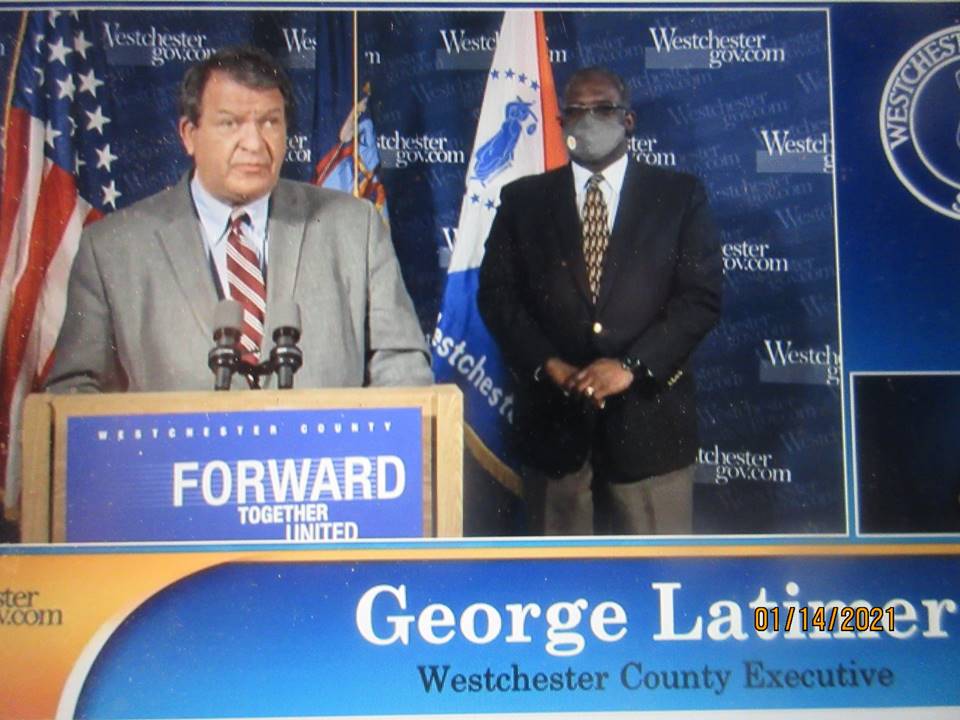
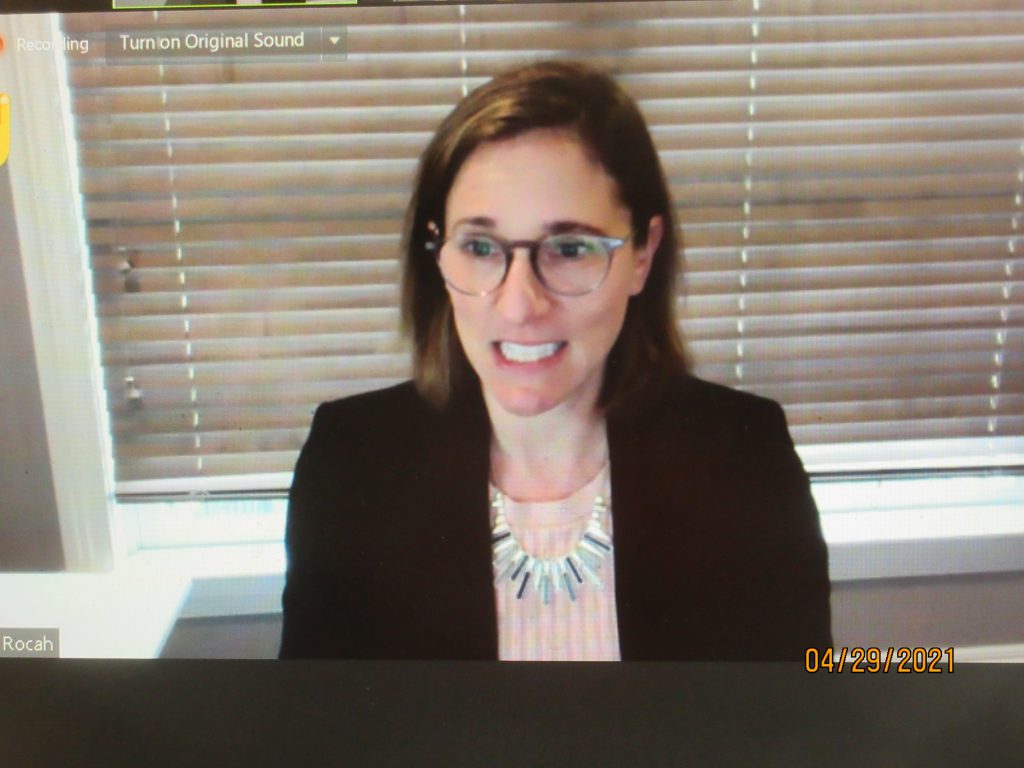
With hate crimes on the rise in the region and bias incidents occurring in local communities, Westchester County Executive George Latimer and Westchester District Attorney Miriam E. Rocah are urging Westchester County residents to speak up. 

The two are together launching the #SpeakUpWestchester campaign, and encouraging those who are the victim or witness a hate crime, bias or hate incident to report it.

To encourage more reporting the Westchester County Human Rights Commission has launched a new webpage to report incidents of bias hate or discrimination anonymously (or with your contact information) at www.westchestergov.com/biasreporting

Additionally, Rocah has launched a new hotline where a victim or witnesses of a hate crime or bias incident can report it to the Westchester County District Attorney at 914-995-TIPS (914-995-8477) or through their website at www.WestchesterDA.net.  Experienced Assistant District Attorneys will follow up all tips and complaints received.

Latimer said: “Westchester County takes all incidents of violence and hate seriously. We condemn any act that targets a person or group of people because of their actual or perceived race, color, national origin, ethnicity, ancestry, gender identity and expression, sexual orientation, religion, age, disability or other protected category. Recently, Asian Americans have been targeted around the country- and it must stop.” 

Rocah: “Hate crimes and bias incidents impact all of us, because they create an atmosphere of fear and intimidation that keeps us from feeling safe and secure in our homes and communities. The District Attorney’s office is committed to working in close coordination with law enforcement, the County Human Rights Commission and community groups to fight hate and bias in Westchester. Reporting hate crimes and bias incidents helps us in that fight, and our new hotline is another way to let us know quickly and easily if you have been a victim of a crime or have witnessed a crime.”

While hate incidents do not always violate the law, they should always be reported by those targeted and bystanders.

  • If you need emergency assistance call 911
  • If you were the victim of a violent attack, call your local police department.
  • If you were the victim of an incident of bias, hate or discrimination, call the Westchester County Human Rights Commission (914) 995-7710 or email at HumanRights@westchestergov.com.  
  • If you are a victim or witnesses of a hate crime or bias incident call (914) 995-TIPS or visit www.WestchesterDA.net

Latimer said: “We applaud the leadership of the District Attorney on this important topic.  Westchester County is a striking tapestry of people from all different walks-of-life, who hold different values, who love different people and who have ancestors from different countries – we must never forget that these differences are what make us the Westchester we call home.”

Posted in Uncategorized

American Rescue Plan Bails Out White Plains Deficit and Plenty of other Westchester Town and School Money Losses.

Hits: 497

WPCNR COUNTY CLARION LEDGER, From Chairman of the Westchester County Board of Legislators Benjamin Boykin. March 16, 2021:


The $1.9 trillion American Rescue Plan, which was signed into law by President Biden earlier this month, includes nearly $440 million in direct funding for Westchester County and our municipalities, to help our recovery from the COVID-19 pandemic.

Separately, the plan also includes money for local school districts; transportation, including our buses and airport; businesses; individuals; and COVID testing and vaccination; as well as for New York State.

Westchester County will receive $187.64 million. 

Westchester’s cities and towns together will receive more than $250 million. 

District 5 municipalities will receive:

White Plains – $21.98 million

Scarsdale – $1.96 million

Harrison – $3.17 million

Towns will distribute a portion of the money allocated to them to their villages according to a formula still being finalized by the federal government.To see a list of the funding for Westchester and its municipalities
visit: https://www.westchesterlegislators.com/images/PDF/2021-American-Rescue-Plan-Funding-for-Municipalities.pdf.

Regulations are still being determined, but generally the money for municipalities can be used:

Regulations are still being determined, but generally the money for municipalities can be used:
for costs associated with responding to the pandemic,
to support essential workers,
to cover revenue losses caused by COVID-19, and
to make necessary infrastructure investments.


In addition, the Small Business Administration also has information about the relief for the nation’s small businesses and hard-hit industries under the American Rescue Plan. 

This includes additional money for the Paycheck Protection Program, Shuttered Venue Operators Grants, Targeted Economic Injury Disaster Loan Advance payments, a new Restaurant Revitalization Fund and more.
For information on these programs visit:  https://www.sba.gov/article/2021/mar/11/american-rescue-plan-act-elevates-small-business-support-response-covid-19-pandemic
Posted in Uncategorized

Cuomo on Coronavirus Takes Initiative on Long Island Vaccinations: 3 New Ones–as Nassau Suffolk positive Rates run 5.1%.

Hits: 2753

WPCNR GOVERNOR ANDREW CUOMO CORONAVIRUS REPORT. March 16, 2021:

Today I was happy to announce three new mass vaccination sites are coming to Long Island. The sites, located in Brentwood, Old Westbury and Southampton, will open this Friday, March 19.

Editor’s Note: According to the NY Workbook Covid Tracker, For the period March 8 through March 14, Nassau County tested positive at an average 617 new cases of coronavirus a day (4,373 total. Suffolk County for the same period, averaged 606 new cases a day (4,250 total).

More Editor’s Note: IN Westchester County, by contrast, through the 7 days through March 14, 372 new cases of coronavirus were reported a day, a positive rate of 3.9%, 2,604 Westchester residents testing positive of 66,430 tested.

Neither the state nor Westchester County has reported the specific hospitalization rate of positives for about two weeks. Last rate County Executive George Latimer reported as Westchester positive cases being hospitalized was 4.3%. Assuming that is the same, in about 15 days, we may see hospitalizations of 16 persons a day or 320 persons at the current infections of 372 a day. Without knowledge of what the current infection rates in Westchester are, the continued relentless impact on hospitals’ perhaps covid-fatigued staffs in the county can only be a guess.

Still More Editor’s Note: The New York City area continues to be a contributor to high coronavirus spread. Kings County (Brooklyn) is averaging 900 new infections a day; Queens, 900 a day, Manhattan 500 a day, The Bronx, 500 a Day and Richmond (Staten Island), 200 a Day.

All three (new) Long Island sites will have the ability to vaccinate more than one thousand New Yorkers daily dependent on supply from the federal government. Appointments become available for booking Wednesday, March 17, at 8:00am and can be made through the Am I Eligible Tool or by calling the NYS COVID-19 Vaccine Hotline at 1-833-NYS-4-VAX (1-833-697-4829). New York will continue to expand our distribution network and vaccinate more New Yorkers as supply ramps up further.   

Photo of the Day: At the new SUNY Old Westbury mass vaccination site opening on Friday, I presented members of the National Guard with NYS Challenge Coins (Photo by Kevin Coughlin) Here’s what else you need to know tonight: 

1. COVID hospitalizations rose slightly to 4,517. Of the 127,005 tests reported yesterday, 5,807, or 4.57 percent, were positive. There were 923 patients in ICU yesterday, down four from the previous day. Of them, 614 are intubated. Sadly, we lost 58 New Yorkers to the virus.

  2. As of 11am Monday morning, 22.5 percent of New Yorkers have completed at least one vaccine dose. Over the past 24 hours, 122,778 total doses have been administered. To date, New York administered 6,699,848 total doses with 11.6 percent of New Yorkers completing their vaccine series.

 See data by region and county on the State’s Vaccine Tracker: ny.gov/vaccinetracker.  

3. The Bethpage Air Show at Jones Beach will return this year on Memorial Day weekend. The outdoor show, sponsored by Bethpage Federal Credit Union, features a range of military and civilian aerial performers. This year’s show will be a ticketed event, with reduced capacity and social distancing measures in place to ensure a safe return of the patriotic Long Island tradition.

 4. Wedding receptions and catered events can now resume statewide at limited capacity. All venues hosting weddings and catered events must follow the State’s health and safety protocols. More information on the industry guidelines can be found here.  

5. Excelsior Pass is coming soon. Earlier this month, New York announced a pilot program with Madison Square Garden and the Barclays Center to test Excelsior Pass—a free, fast and secure way to present digital proof of COVID-19 vaccination or negative test results at businesses or venues. New York is now testing Excelsior Pass with select “Beta” participants. If you are interested in being a “Beta” tester and helping New York safely reopen, fill out this screening form and you may be selected to be among the first to get a look at Excelsior Pass.  

Posted in Uncategorized

State Senate Budget: Addresses Covid-19 Losses.

Hits: 536


Senate Majority One-house Budget Resolution:

Leading New York Through COVID-19 & Beyond

WPCNR ALBANY ROUNDS. From the New York State Senate. March 15, 2021:

Today, the Senate Majority will pass its one-house budget resolution that delivers emergency aid to help New York recover from the COVID-19 pandemic and invests in a brighter, more equitable future by fully funding essential services and putting more money in the pockets of working and middle-class families. The Senate resolution increases total school aid by $5.7 billion, provides billions in residential and commercial rental and foreclosure assistance, restores critical funding to our health care system, and jumpstarts our economy with investments in transportation and small businesses. The Senate Majority’s proposal asks the wealthiest New Yorkers to pay their fair share rather than balancing the budget on the backs of working families.

The Senate Majority’s one-house budget resolution also protects against AIM cuts to struggling municipalities, advances the $3 billion Clean Water, Green Jobs, Green New York Environmental Bond Act, and authorizes mobile sports wagering. Together with the Assembly one-house resolution, this resolution takes a principled approach to address New York State’s hardships brought upon by COVID-19 and building the foundation for a healthier economic future for the entire state. 

“This budget process is a major opportunity to help lead New York through the ongoing dark days of the COVID-19 pandemic and lay the foundation to grow stronger in the future,” Senate Majority Leader Andrea Stewart-Cousins said. “The proposals in this resolution put forth fairness, fiscal responsibility, and smart investments to ensure economic stability and the delivering of services so many of our neighbors depend on. This resolution is also a testament to our commitment to establishing fiscal equity and investing in the long-term success of New York State. The Senate Majority will continue to work diligently in the coming weeks to pass a timely, balanced and ethical budget.”

Senate Deputy Majority Leader Michael Gianaris said, “Despite unprecedented challenges, the state Senate remains focused on helping New Yorkers recover from the health and economic suffering wrought by COVID-19. In addition to restoring billions in misguided cuts, our budget proposal delivers much needed relief for renters, small businesses, immigrants, the homeless and housing vulnerable, and transit riders. There’s much work that remains to rebuild our state and restore public trust in its government, and the State Senate’s budget proposal is a downpayment on a brighter future.”

Senate Finance Chair Liz Krueger said, “Throughout the last several months, our conference has engaged in a thorough, thoughtful, and collaborative process to create a one-house budget that responsibly addresses the needs of the people of this state. Our proposal embraces a robust progressive tax system, in which those who have benefited the most pitch in their fair share. This much-needed revenue allows us to make the kind of investments in infrastructure, education, healthcare access, and expanded opportunity that will allow our economy to come back faster and stronger, with the circle of shared prosperity encompassing an ever-growing number of New Yorkers.”

REBUILDING OUR ECONOMY
As we work to rebuild our economy, the Senate Majority will continue supporting small businesses who have suffered throughout this pandemic to create jobs and economic growth across New York State. The Senate Majority will continue to support the growth of Minority and Women Owned businesses. The Senate Majority one-house State Budget proposal includes:

  • Investing $1 billion for small businesses (Adding $500 million for Small Business Assistance Grants and $500 million for Commercial Rent Relief). 
  • Adding $1,365,000 for the Minority and Women-Owned Business Development and Lending Program, for a total of $2 million.
  • Restoring $1.4 million for additional economic development initiatives.
  • Expanding the amount available for the new New York City Musical and Theatrical Production Tax Credit through the Pandemic Recovery and Restart Program.
  • Modifying language for a new and elective State Pass-Through Entity Tax that will shield companies from the double taxation associated with the federal government’s State and Local Tax (SALT) cap (S.2915).
  • Requiring the Public Service Commission to study the availability, affordability, and reliability of high-speed internet services and to publish a detailed internet access map of the State (S.4878-A). 
  • Accepting the Executive’s proposal to extend the brownfields tax credit for two years to continue revitalization of blighted spaces into productive use.
  • Providing an additional $100 million to New York State Council on the Arts for grants to non-profit cultural organizations.
    • Providing $10 million for the Arts and Cultural Facilities Improvement Program to provide facility enhancement grants to arts and cultural organizations, administered by the New York State Council on the Arts.
    • Restoring $100,000 for cultural institutions.
    • The Senate also supports the use of federal funds for grants to arts institutions and arts-related businesses to cover operating expenses, including labor and benefits, and make physical improvements necessary to meet COVID-related health and safety standards.
  • Advancing language to accelerate the three remaining casino licenses for the downstate region.
  • Modifying the Executive proposal regarding alcoholic beverages in movie theaters by replacing it with a proposal that would authorize the sale of wine and beer in movie theaters (S.4136).

BOOSTING HOUSING 

Providing resources to avoid homelessness and keep New Yorkers in their homes builds on the New York Senate Majority’s efforts to address the housing needs of New Yorkers.  The Senate Majority one-house State Budget proposal includes:

  • $750 million for the New York City Housing Authority and $200 million for statewide public housing authorities. 
  • $250 million to support the Housing Our Neighbors with Dignity Program. 
  • Adding $200 million for homeowner assistance.
  • Advancing language creating the Housing Access Voucher Program (S.2804-A), to provide a cash subsidy to eligible low income individuals and families that are homeless or facing imminent loss of housing.
  • Providing $400 million for additional rental assistance, in addition to available federal funds.
    • Establishing a federally funded COVID-19 Emergency Rental Assistance Program (S.2742-C), to provide rent arrears vouchers to landlords on behalf of tenants experiencing financial hardship due, directly or indirectly, to the COVID-19 Pandemic.
  • Increasing Mortgage Insurance Fund (MIF) support for the Neighborhood Preservation program to $14.7 million, a $1.9 million increase over the Executive proposal, and including a $200,000 carve out for the New York State Neighborhood Preservation Coalition for technical assistance. 
  • Increasing the Rural Preservation Program to $6.3 million, a $940,000 increase over the Executive proposal, and including a $200,000 carve out from Rural Preservation Program funds for the New York State Rural Housing Coalition for technical assistance. 
  • Creating the Housing Our Neighbors with Dignity Act (S.5257), allowing the Division of Housing and Community Renewal (DHCR) to acquire vacant commercial properties and distressed hotel properties with fewer than 150 rooms in New York City and convert them into permanently affordable residential housing.
  • Providing $2.3 million in additional funding for Safety Net Assistance to address Family Homelessness Eviction Prevention Supplement (FHEPS) changes, for a total of $627.3 million.   

PRIORITIZING EDUCATION
New York students and educators have navigated tough times adapting to remote learning, and safely reopening our schools. The Senate Majority is moving forward with a transformational increase in state and federal resources ensuring that students receive a high quality education and teachers can ensure no one is left behind and are adequately supported. The Senate Majority one-house State Budget proposal includes:

  • Providing a total School Aid increase of $5.7 billion (20.5 percent), including a $1.37 billion (7.4 percent) Foundation Aid increase and $3.85 billion in federal Coronavirus Response and Relief Supplemental Appropriations (CRRSA) Act funding. 
    • The Senate provides $3.5 billion more School Aid than the Executive proposal, and utilizes federal aid to supplement, not supplant, State funding. State-funded school aid would increase to a total of $29.5 billion (a year-to-year increase of 6.6 percent).
  • Providing a three-year phase-in of Foundation Aid to ensure that all districts receive full Foundation Aid by the 2023-24 school year. Every school district is guaranteed a minimum 2.0% increase in Foundation Aid and every district is allocated at least 60% of their full Foundation Aid funding for the 2021-22 school year. 
  • Providing $500 million to fully-fund four-year-old full-day prekindergarten statewide.
  • Restoring Executive’s proposed $1.35 billion cut to STAR reimbursement to school districts through the proposed Local District Funding Adjustment. 
  • Providing an additional $174 million in the 2021-22 academic year for reforms to the Tuition Assistance Program by raising the maximum award by $1,000 from $5,165 to $6,165 recommitting public support to both our public and private sector of education.
  • Closing the $148 million TAP Gap at SUNY and CUNY, providing a much needed infusion of operating support to support our public colleges.
  • Providing an additional $30 million for community college base aid at SUNY and $13.6 million at CUNY, a $250 per FTE increase from $2,947 to $3,197, with each campus guaranteed to receive 98 percent of the prior year based aid amount.
  • Provides $4 million to CUNY and $4 million to SUNY for student mental health supports.
  • Providing a 20 percent increase to all opportunity programs and establishing a new Diversity in Medicine opportunity program at SUNY and CUNY. 
  • Providing $300,000 in new funding to the State Education Department to develop racially and culturally inclusive curriculum.
  • Providing free broadband access to every student and school in the State to ensure that all children have access to education for the duration of the pandemic (S.3184). 
  • Providing $1 million for implicit bias training for teachers.
  • Providing additional education aid to Yonkers and Rochester school districts in order to completely close projected deficits in each school district in the next school year. 

ENSURING THE ULTRA-WEALTHY PAY THEIR FAIR SHARE
We can not financially burden our already struggling working and middle class families. As New York State works to address the impacts of the COVID-19 pandemic, ultra-wealthy New Yorkers need to pay their fair share. This new revenue will help equitably fund crucial services such as public education, infrastructure and assistance for small businesses. The Senate Majority one-house State Budget proposal includes:

  • Modifying the Executive proposal to impose a surcharge on high income earners for tax years 2021, 2022, and 2023, which if enacted would have increased All Funds revenue by $1.5 billion in SFY 2021-22.  The Senate increases the top state personal income tax rate on the highest earners and raises All Funds revenue by $4.15 billion in SFY 2021-22.
    • Single filers earning more than $1.078 million but below $5 million would see their rates on income above $1.078 million increase by 1.03 percentage points, from 8.82% to 9.85%.
    • Similarly, married joint filers earning more than $2.155 million but less than $10 million would see their tax rates on income between $2.155 million and $10 million increase by 1.03 percentage points, from 8.82% to 9.85%.
    • Above $5 million and $25 million (or $10 million and $50 million for joint filers), two new brackets would be created, with marginal rates of 10.85% and 11.85%, respectively.
  • Increasing the corporate franchise tax rate by three percentage points, which would increase All Funds revenue by $813 million in SFY 2021-22.  
    • Additionally, the Senate advances language to reintroduce the capital base test to the corporate franchise tax, which would increase All Funds revenue by $151 million in SFY 2021-22.
  • Imposing a 1% surcharge on income from capital gains for taxpayers subject to the top State personal income tax rate, which would increase All Funds revenue by $614 million in SFY 2021-22.
  • Increasing the estate tax rate by two percent, which would increase All Funds revenue by $162 million in SFY 2021-22.
  • Requiring the recording of mezzanine debt and preferred equity investments in New York City and includes mezzanine debt in the mortgage recording tax, which would increase All Funds revenue by $199 million in SFY 2021-22, and dedicating the revenue for the New York City Housing Authority (NYCHA).
  • The total revenue raised by the Senate’s tax proposals is $8.2 billion in SFY 2021-22.

RELIEF FOR WORKING AND MIDDLE-CLASS TAXPAYERS

In addition to the many crucial services protected by ensuring the ultra-wealthy pay their fair share, the Senate Majority is committed to providing long-needed equity and tax relief for working and middle-class taxpayers. The Senate Majority one-house State Budget proposal includes:

  • Creating a personal income tax credit to reduce the net cost of property taxes for overburdened middle-class homeowners that will reduce taxes by approximately $400 million annually. 
  • Rejecting the Executive proposal to delay the implementation of the ongoing middle-class tax cut for one year, which will save taxpayers $394 million this year.
  • Establishing a task force to study and make recommendations on education funding and property tax reform because the current funding system leaves an economic burden on middle-class property taxpayers, while leaving high-needs districts underfunded, especially in light of the federal cap on the State and Local Tax (SALT) deduction.
  • Capping the interest rate on delinquent property taxes for owner occupied residential properties to a maximum of 7.5% per annum.

NATION LEADING ENVIRONMENT AND CONSERVATION EFFORTS
The Senate Majority has decisively changed the direction of Environmental Conservation in New York State. The Senate has prioritized climate change, environmental justice, energy efficiency, renewable energy, environmental restoration, reducing pollution and has returned New York State to being a  national leader in all facets of environmental protection. The Senate Majority one-house State Budget proposal includes:

  • Authorizing the creation of state debt in the amount of $3 billion for the Environmental Bond Act of 2021, “Clean Water, Green Jobs, Green New York,” for the purposes of environmental improvements that preserve, enhance, and restore New York’s natural resources and reduce the impact of climate change, and providing for inclusion of the proposal on the ballot to be voted upon at the general election to be held in November, 2021.
    • Proposing to amend the Environmental Conservation Law and the State Finance Law, to implement the Environmental Bond Act of 2021 “Clean Water, Green Jobs, Green New York” by funding projects related to restoration and flood risk reduction, open space land preservation and recreation, climate change mitigation, and water quality improvement and resilient infrastructure.
  • Continuing $300 million for the Environmental Protection Fund and restoring funding for zoos, botanical gardens, and aquaria and farmland preservation.
  • Advancing a proposal to impose product stewardship requirements on producers of paper and packaging (S.1185-B).

PROTECTING NEW YORKERS’ HEALTH & SAFEGUARDING MEDICAID
The pandemic highlighted gaps in our healthcare system. The Senate Majority is committed to ensuring that New Yorkers receive quality and affordable healthcare. Our healthcare workers have been at the frontlines of this pandemic, and cuts to Medicaid and health services would harm our healthcare system and impact New Yorkers who need support. The Senate Majority one-house State Budget proposal includes:

  • Restoring $180.5 million in Medicaid cuts to hospitals, $74.25 million to long term care, $60 million to mainstream managed care, and millions more to various other Medicaid-supported programs.
  • Restoring cuts to dozens of essential Public Health programs.
  • Rejecting the extension of the Medicaid Global Cap through State Fiscal Year 2022-23.
    • The Senate calls on the Department of Health to develop alternatives to the current Medicaid Global Cap. 
    • As currently constructed, the cap does not account for enrollment increases, decreases in federal reimbursement rates, or utilization changes.  
  • Creating an Opioid Settlement Fund that will consist of state monies received through settlements of litigation related to prescription opioids and to establish an Advisory Board to make recommendations for distribution of the funds. 
    • Monies from the fund will be available solely for opioid and overdose public health education and prevention campaigns, treatment programs, harm reduction counseling services, housing services, and medication assisted treatment in state and local correctional facilities.
  • Providing $200 million for acute care facilities and nursing homes to increase nurse staffing levels to provide better quality of care for nursing home patients.
  • Providing $328.5 million for residential health care for medically fragile children and young adults (S.1029).
  • Requiring the Commissioner of Health to reoffer contracts for fiscal intermediaries for the Consumer Directed Personal Assistance Program in order to ensure fiscal intermediaries are physically located in the counties they serve, and to ensure fiscal intermediaries have experience serving individuals with developmental disabilities and serving racial and ethnic minorities (S.5458). 
  • Prohibiting prior authorization for medication assisted treatment for substance use disorders in Medicaid (S.649-A).
  • Allowing individuals with confirmed cases of COVID-19 to be eligible for the Essential Plan if they would otherwise be ineligible due to their immigration status (S.2549).
  • Providing $624 million to increase the minimum wages for the lowest paid home health care workers, who have not seen raises in years and have kept working through the pandemic at great personal risk.

BUILDING A STRONGER TRANSPORTATION SYSTEM
Improvements are required to sustain the State’s transportation system that many rely on every day and is crucial to keeping our economy moving. The Senate Majority one-house State Budget proposal includes:

  • Restoring $568 million in Statewide Mass Transportation Operating Assistance cuts and providing $385 million in additional Statewide Mass Transportation Operating Assistance.
  • Providing $150 million to be added to the base amount for the Consolidated Local Street and Highway Improvement Program (CHIPS), for a total of $588 million in CHIPS funding. 
  • Restoring $65 million for Extreme Winter Recovery and increases this critical funding by an additional $35 million for a total of $100 million.
  • Providing $100 million for an Urban Road Revitalization initiative to prioritize road repair in urbanized areas of the State. 
  • Protecting public transit workers by expanding the class of workers covered by enhanced penalties for assault and aggravated harassment of public employees, ensuring that these frontline essential workers are protected.
  • Incorporating various highway safety measures, including protecting transportation workers, increasing penalties for dangerous driving behaviors like failing to yield for pedestrians, and providing additional work zone enforcement and education programs. This includes authorization for a work zone camera enforcement pilot program. 
  • Updating the reimbursement rate for cities that provide maintenance on State-owned roads, which has been stagnant for more than 30 years. 

PROVIDING CRUCIAL HUMAN SERVICES & SUPPORT FOR WORKERS
The hardworking people of New York have faced economic hardships and challenges in employment opportunities. The labor force deserves safer and fairer working conditions and New Yorkers deserve critical services. The Senate Majority one-house State Budget proposal includes: 

  • Adding $2.1 billion for a new Excluded Worker Fund to provide unemployment benefits to workers who lost their jobs during the COVID-19 pandemic but were ineligible for Unemployment Insurance. 
  • Providing for $175 million in additional funding in order to pay for scheduled salary increases to the State Workforce that have been withheld throughout SFY 2020-21. 
  • Providing $100 million for the Nonprofit Infrastructure Capital Investment Program to provide capital investments in human services organizations. 
  • Providing $40 million in hazard pay for frontline workers in SUNY hospitals.
  • Providing $15 million for various non-profit health, human services, labor and veterans organizations.
  • Restoring $9.9 million to various non-profit human services organizations.
  • Restoring $845,000 to various Veteran organizations.
  • Providing $950,000 in additional funding for the Kinship Navigator program, for a total of $1.3 million.  
  • Modifying the Executive’s proposal to implement a statewide parental copay cap of 20% of a family’s income above federal poverty level, by lowering the copay cap to 10% of a family’s income above federal poverty level. 
  • Prohibiting local social services districts from placing a lien on the homes of public assistance recipients (S.787A). 
  • Modifying the Executive proposal to extend prevailing wage to covered renewable energy projects by adding new provisions to ensure the creation of good jobs and protection of workers in the green economy sector.
  • Advancing language to provide for an early retirement incentive at local option for public employees.

ASSISTING LOCAL GOVERNMENTS ACROSS NEW YORK STATE
Local governments are facing many challenges as a result of this pandemic and they deserve adequate funding and support. The Senate Majority one-house State Budget proposal includes:

  • Restoring $39 million of Aid and Incentives for Municipalities (AIM). 
  • Adding $59 million of AIM funding to fund the repeal of the county share of AIM payments. 
  • Adding $23.5 million in support for community safety and restorative justice grant programs including but not limited to, support for survivors of sexual assault, domestic violence, gun violence prevention, criminal and/or civil legal services, alternatives to incarceration, community supervision and re-entry initiatives, gang and crime reduction strategies managed by local governments, and/or community-based not-for-profits service providers. This includes the following;
    • $16 million to restore prior year legislative grants. 
    • $7.5 million for additional funding to support new legislative grants.
  • Supporting $206,435 for Small Government Assistance.
  • Providing $2 million in funding for Refugee Resettlement.

EXPANDING AGRICULTURAL OPPORTUNITIES:
New York has a robust and expansive agriculture industry that is crucial to the State’s economy. The Senate Majority one-house State Budget proposal includes:

  • Restoring $7.3 million for statewide agricultural programs.
  • Adding an additional $5 million competitive grant program to assist with infrastructure improvements at animal shelters.
  • Extends the eligibility for a farm employee tax credit from January 1, 2022 to January 1, 2025.
  • Making the Nourish New York program permanent, which provides surplus agricultural products to food relief organizations at competitive wholesale prices (S.4892-A).

CONTINUING TO IMPROVE NEW YORK’S JUSTICE SYSTEM AND MAKING COMMUNITIES MORE SAFE

The Senate majority is committed to improving the New York State corrections system and to ensure facilities work as intended to rehabilitate and resolve issues this population has encountered. Additionally, the Senate Majority prioritizes supporting crime victims and preventing gun violence. The Senate Majority one-house State Budget proposal includes:

  • Advancing an All Funds appropriation of $100 million for Jails and Prisons assistance programs to support services and expenses or reimbursement of expenses incurred by State and local government agencies providing alternative therapeutic and rehabilitative programs related to segregated confinement and medication assisted treatment reforms.
  • Requiring state and local correctional facilities to establish a medication assisted treatment program for individuals with a substance use disorder (S.1795).
  • Restoring $1.9 million for Jail-Based Treatment Funding.
  • Adding $6 million in  new funding for upstate Civil or Criminal Legal Services,  including legal services for survivors of Domestic Violence or Veterans.
  • Restoring $600,000 for the Indigent Parolee Program.
  • Dedicating at least $10 million from the Victim of Crime Act funding to establish a statewide hospital and community-based gun violence prevention program.
  • Advancing language to establish the Community Violence Intervention and Prevention Act (C-VIPA) to create a funding source for gun and community-based violence intervention programs (S.1049).

IMPROVING NEW YORK’S ELECTIONS
The New York Senate Majority is dedicated to alleviating barriers in the election process and empowering more eligible New Yorkers to exercise their right to vote. The Senate Majority one-house State Budget proposal includes: 

●   Funding the Independent Redistricting Commission with $4 million for operating expenses.

  • Adding $2 million for additional State Board of Elections for additional personal services and non-personal service expenses. 
  • Providing $4 million for reimbursement to Local Boards of Election for expansion of early voting initiatives.

To review the full Senate Majority One-house State Budget Resolution, please visit:
https://www.nysenate.gov/ legislation/resolutions/2021/ r504

Stephen J. Acquario, executive director of the New York State Association of Counties (NYSAC), said, “Senate Majority Leader Andrea Stewart-Cousins has been there for local governments throughout the pandemic and most recently through this year’s budget negotiations. The Senate’s one house budget proposal reflects that. The Senate’s spending plan properly eliminates the county responsibility of funding the AIM program, restores VLT aid cuts, makes local sales tax authority permanent, adds $150 million to CHIPS and another $100 for extreme weather funds, and restores vital funding for public health services. These funding and policy proposals are the responsibility of the state, and if included in the final budget, will help counties continue to work to end the pandemic, repair our aging infrastructure, improve local services, and find efficiencies that reduce the tax burden on our residents.”

Peter A. Baynes, Executive Director, New York State Conference of Mayors (NYCOM), said, “NYCOM commends the Senate Majority for not only acknowledging the harm that significant AIM cuts would impose upon cities, villages and towns, but also for recognizing the irresponsible and inequitable approach the state has engaged in by using local sales tax revenues to pay for state programs and, in turn, balance the state’s budget. The AIM restorations along with the increases in highway funding included in the Senate’s one-house plan will go a long way toward helping our communities address the fiscal challenges they face due to COVID-19 and its related economic slowdown.”

Mario Cilento, President, New York State AFL-CIO said,  “The Senate’s budget priorities put our state on a clear path to social and economic recovery.  We need a comprehensive approach to deal with the needs of workers in our fight to overcome this pandemic, and the Senate’s proposal does just that.”

Jim Clyne, President, Leading Age New York, said, “By restoring Medicaid cuts, rejecting onerous regulations and investing in long term care services, the Senate recognizes the true heroism of the long term care community.” 

Charles S. Dedrick, Ed.D., Executive Director, The New York State Council of School Superintendents (NYSCOSS), said, “The Senate Majority’s budget addresses concerns raised by superintendents all across New York. It rejects cuts proposed in the Governor’s budget, sets a timetable for fully phasing in Foundation Aid, assures that federal aid will supplement and not supplant state funding, and gives school districts tools to manage the transition that will come when that federal aid ends. We thank Majority Leader Andrea Stewart-Cousins and Education Committee Chair Shelley Mayer for their work on behalf of our public and the students and taxpayers we all serve.”

John R. Durso, President of Local 338 RWDSU/UFCW, said, “The New York State Senate Majority, under the leadership of Senator Andrea Stewart-Cousins, is committed to our State’s working families and ensuring they have the support they need to succeed, which is more critical than ever. They have presented a budget that affirms their commitment to ensuring critical services and training programs are funded that working New Yorkers rely on every year. We’re looking forward to working with our Senators to get the Budget passed and implemented to help our State and our workers recover and thrive.” 

Adrienne Esposito, Executive Director of Citizens Campaign for the Environment, said, “Protecting water resources, reducing solid waste and creating jobs are all necessities not luxury items, and this budget delivers on these needs.  Critical measures including an environmental bond act, $500 million for waste water and drinking water upgrades and an innovative new plan to reduce solid waste and increase recycling, are all programs that will build our economy, create green jobs and meet the compelling needs of New Yorkers.  As we recover from the pandemic and an ailing economy we need to continue a vision of New York that is cleaner, greener and healthier for all of us.  We are delighted and hopeful that the Senate has a vision of the future that includes protecting our natural resources and shared environment.”

David Fisher, President, New York Farm Bureau, said, “The New York Senate’s budget bill highlights a number of New York Farm Bureau’s priorities including support for key funding that addresses significant research, marketing, and conservation funding that our farms depend on for future growth. In addition, Nourish NY has proven to be a valuable program for not only farms but people in need throughout the state, and we are pleased that it will become permanent. Finally, the extension of the workforce retention tax credit will continue to offset rising labor costs on farms across the state.  We thank Senate Majority Leader Andrea Stewart-Cousins and the Agriculture Committee Chair, Senator Michelle Hinchey, for their support during this challenging time.”

Bea Grause, RN, JD., President HANYS, said, “I am tremendously grateful to the Senate for protecting healthcare funding and making further investments. It is always critically important to support New York’s healthcare system, but never more so than while in the midst of this ongoing pandemic. I thank Senate Majority Leader Andrea Stewart-Cousins for her leadership and continued dedication to preserving and increasing access to quality healthcare in New York.”  

Benjamin Z. Houlton, Ronald P. Lynch Dean, Cornell University College of Agriculture and Life Sciences, said, “Cornell’s College of Agriculture and Life Sciences is committed to meeting the food and nutritional needs of New York state through our world-leading science, which provides economic and environmental solutions for farmers.  I am thankful that Senator Stewart-Cousins and Senator Hinchey’s commitment to science and education has led to full restorations of important agriculturally based research programs.  I’m particularly enthusiastic about the creation of a new Cornell Small Farms program working towards greater equity in the food system by expanding new farmer programming, with a focus on BIPOC education and training, to help our farm families succeed in meeting their goals,”

Pat Kane, RN, Executive Director, NYSNA, said, “NYSNA is pleased to see the Senate propose a budget that truly centers patients, caregivers, and communities during such a critical time. For New York to heal, we need investment in our healthcare infrastructure, not cuts. It is imperative the state rejects harmful cuts like the proposed extension of the Global Medicaid Cap that puts undue pressure on our public system which is already bearing the brunt of COVID’s impact. We look forward to continuing to work with the Senate to make sure we invest in healthcare and support our frontline caregivers.”

Michael Kink, ESQ., Executive Director, Strong Economy For All Coalition, said, “The Senate one-house budget makes solid progress towards addressing New York’s worst-in-the-nation inequality by simultaneously raising income, corporate, and wealth taxes on the richest New Yorkers to fund needed investments in our communities with recurring revenue. We’ll keep working with advocates, community organizing groups and labor unions to fight for fairness and make sure these important initiatives are included in the final state budget.” 

Frederick E. Kowal, Ph.D., President, United University Professions, said, “United University Professions applauds the Senate for offering a one-house budget bill that serves to expand access to SUNY by eliminating the TAP gap, increasing funding for opportunity programs, aiding SUNY’s public teaching hospitals and, at long last, providing funding for hazard pay for our essential health care workers on the frontlines of the coronavirus pandemic. Further, the Senate’s inclusion of a number of progressive revenue raiser proposals shows true leadership, offering a path forward for stable long-term funding and a strong future for all New Yorkers. It is evident that with its proposal, the Senate understands the need to place the responsibility of funding SUNY back where it belongs—with the state.”

Kate Kurera, Deputy Director, Environmental Advocates NY, said, “The Senate’s budget proposal succeeds in making the environment a priority. We commend them for rejecting the Governor’s $23 million raid of community clean energy funds from the Regional Greenhouse Gas Initiative (RGGI). These funds support projects that help communities fight climate change, reduce air pollution, and create good green jobs. Every bit of funding is necessary for meeting our climate goals and protecting communities across New York State, especially those most vulnerable. The Senate’s inclusion of a $3 billion environmental bond act and a proposal for extended producer responsibility for paper and packaging are also welcome additions that should be included in a final budget agreement.”

New York State Building & Construction Trades Council President Gary LaBarbera said, “The Building Trades are proud to support the New York State Senate Majority’s budget proposal on renewable energy job standards.  This language encompasses a number of labor and wage protections which, if enacted, will ensure that New York’s workforce is not left behind in the State’s push towards a green economy.  We thank Senate Leader Andrea Stewart-Cousins and her Democratic conference for this encouraging proposal and look forward to working with them and our other allies in making renewable energy job standards a reality.” 

Jose Lopez, incoming Co-Executive Director of Make the Road New York, said, “The Senate’s one-house budget marks a real step toward responding to the needs of immigrant, Black, and brown communities who have been hit hardest by the crisis. We appreciate the Senate’s inclusion of progressive revenue raisers and the allocation of $2.1 billion for a fund for excluded workers—while we believe the state must go further in taxing the wealthiest and the funding does not yet meet the full needs of excluded workers, these resources would make a substantial impact in the lives of undocumented and recently incarcerated people excluded from federal relief. As we continue to analyze the proposals, we also note and appreciate the inclusion of $20 Million to provide health insurance to immigrant New Yorkers who had COVID-19 and otherwise lack access to insurance and care. We urge the Senate leadership to lean into boldness in this moment of continued crisis and ensure that the needs of all New Yorkers, particularly those excluded from prior relief, are fully met.” 

Sochie Nnaemeka, State Director, NY Working Families Party, said, “Our people were particularly vulnerable to this pandemic, and millions of New Yorkers are now unemployed, uninsured, or facing eviction due to years of underinvestment. We thank our partners in the Senate, led by Majority Leader Andrea Stewart-Cousins for the one-house budget resolution that raises $7 billion in progressive tax revenue to address some of this need. The proposed budget is a huge step in the right direction for working families and New York’s most vulnerable. But in this moment, we have a critical opportunity to transform our tax and budget policies so that we finally fully fund the schools, hospitals, healthcare and more that ensure our people’s security. Now is not the time to take our foot off the gas. Let’s hear the demands of millions of New Yorkers, hold the line and continue to push for a bold and moral budget that fully invests in our New York.”

Lisa Newcomb, Executive Director, Empire State Association of Assisted Living, said, “We applaud the Senate for restoring vital Medicaid and Equal funding for our industry and rejecting excessively punitive penalties.”

Andy Pallotta, President, New York State United Teachers (NYSUT), said, “The Senate has advanced a strong budget proposal that begins addressing chronic underfunding of K-12 schools, provides needed funding to support access to high-quality affordable college opportunities for New Yorkers and shores up the state’s long-term financial footing through new taxes on the ultrawealthy, Funding included to help advance racial justice in education, among our top priorities, also is a major step toward greater equity in our schools. The Senate has presented a bold vision, and we will continue to advocate that the critical public school, college and hospital funding they propose here is part of the final budget deal.”

Mark C. Poloncarz, Erie County Executive, said, “This proposal addresses the reality of the economic climate that currently exists during this global pandemic while at the same time acknowledges the fiscal needs of the state. This plan restores AIM funding and eliminates the county share, provides additional CHIPS funding that is desperately needed and offers numerous opportunities for Erie County to address necessary infrastructure improvements.”

Jennifer K. Pyle, Executive Director of The Conference of Big 5 School Districts, said, “The Conference of Big 5 School Districts is pleased that the Senate has advanced a one-house budget proposal increasing State Aid for education and ensuring federal funds will not be utilized to supplant State support. We also applaud the Senate’s rejection of the Executive’s proposed consolidation of expense-based aids and the STAR payment reduction.  Our school districts will not have the capacity to survive the inevitable funding cliff over reliance on the non-recurring federal dollars will result in. These revenues were intended to support pandemic related expenses that school districts have taken on and continue to incur.  School districts are working to provide a plethora of enhanced academic opportunities for students, including expanded summer school offerings, and to meet the documented need for additional social and emotional support. The Senate plan would ensure that the State’s neediest school districts have the fiscal support necessary to serve all students during these extraordinarily challenging times.”  

Kenneth E. Raske, GNYHA President, said,“Greater New York Hospital Association thanks the Senate Majority for releasing a one-house budget that rejects hospital cuts. With hospital ICUs still filled with COVID-19 patients, there couldn’t be a worse time to cut financially struggling hospitals. We are grateful to Majority Leader Andrea Stewart-Cousins and her conference for standing with New York’s hospital community.”

Andrew Rigie, Executive Director, NYC Hospitality Alliance, said, “New York’s restaurants, bars and nightclubs have been decimated by Covid-19, and if our state’s budget is a moral document, then grants and commercial rent relief for these struggling small businesses must be a priority. We commend Majority Leader Stewart-Cousins and the Senate for proposing to invest $1 billion in our state’s small business community which will save countless beloved businesses and livelihoods, while addressing our state’s economic crisis in a serious and meaningful way.” 

Robert Schneider, Executive Director, New York State School Boards Association, said, “We commend the Senate budget resolution for proposing a significant increase in state aid to our schools, ensuring that federal stimulus funds do not replace state education funding, and beginning, at long last, a three-year process of fully funding of Foundation Aid. The single most important thing state lawmakers can do is to properly fund our schools so that school boards can offer top-notch educational opportunities to their students, who have endured so much hardship throughout the pandemic.”

Milly Silva, Executive Vice President, 1199SEIU United Healthcare Workers East, said, “The New York State Senate Majority, under the leadership of Majority Leader Andrea Stewart-Cousins, is advancing vital proposals to protect the most vulnerable New Yorkers and ensure that they receive the care they need.  This includes restoring unjustified cuts to Medicaid during a pandemic, an addition of $200 million for increasing staffing levels in hospitals and nursing homes and providing $624 million to raise wages for home care aides.   The bill also delays the carve out of pharmacy benefits from Medicaid managed care, which would impose cuts on safety net clinics and other providers just when their services are most needed.   We look forward to working with the Senate Majority and all parties to ensure that these proposals, as well as the comprehensive nursing home reform proposals already passed through the Legislature, are enacted into law.”

Ricky Silver, Co-lead Organizer of Empire State Indivisible, said, “Indivisible groups from across New York State organized to help deliver a Senate supermajority with the promise of transforming Albany’s approach to budgeting. For far too long, our state budgets have been built with a scarcity mindset and balanced on the backs of working families with disproportionate impacts on Black and brown New Yorkers. The 2021-2022 one house budget resolution set forth by the Senate is a sign that change is possible. We are encouraged to see the Senate step up to fund critical needs for the most vulnerable New Yorkers: investments in the Housing Access Voucher Program (HAVP) and the creation of an Excluded Workers Fund will have a real, immediate impact for New Yorkers struggling in the wake of COVID-19. However, there is more work to be done. As the K-shaped recovery continues to exacerbate income and wealth inequality, the need to end tax breaks on the wealthiest must remain a top priority if we are to fully invest in our New York. The policies set forth by the Senate to adjust income, capital gains, corporate, and estate taxes are a good start but won’t be sufficient for the long term. We expect the Senate to fight to deliver a state where all can prosper.”

Wayne Spence, President, NYS Public Employees Federation, said, “PEF members are grateful for the common sense and compassion shown by the Senate Majorities’ support in protecting the services our members provide to at-risk youth and New Yorkers with mental illness. We look forward to also partnering with the NY Senate Majority to ensure that any right-sizing of the state prison system is done with an actual plan that protects our members and the services they provide. The plan must also provide support to the communities where these facilities are located and maintain the services and supports necessary to help currently incarcerated individuals return to their communities and lead productive lives.”

Julie Tighe, President of the New York League of Conservation Voters, said, “New York is on a path to a green recovery. With a $3 billion Environmental Bond Act, a fully funded Environmental Protection Fund, a $500 million investment in clean water infrastructure, and legislation to reduce packaging waste, it is clear the environment is a priority for the State Senate. They know we can fight our climate crisis while creating green jobs with family-sustaining wages. We thank Majority Leader Stewart-Cousins, Senator Kaminsky, and their Senate colleagues for investing in a green future.”

Dennis Trainor, Vice President of CWA D1, said, “We applaud Majority Leader Stewart-Cousins and the New York State Senate for a bold budget proposal that would create a more progressive tax structure and generate recurring revenue by requiring the highest earners and corporations to pay their fair share.  Additionally, this budget proposal includes numerous other proposals to improve the lives of working New Yorkers, including a plan to more accurately map broadband access, which will better ensure that every New Yorker has access to high-speed, high-quality, and affordable internet, and a proposal to waive mandatory fees for graduate student workers who are the backbone of the SUNY system. We are grateful to the New York State Senate for a budget that will better address the needs of all New Yorkers.”

Cea Weaver, Campaign Coordinator, Housing Justice For All, said, It is thanks to the tireless organizing of tenants and homeless New Yorkers that the State Senate one-house budget includes billions of dollars in aid for renters who have fallen behind during the pandemic and key components of what we have been calling for for over a year. In particular, we are pleased to see explicit support for undocumented immigrants in the proposed rent relief program; $400 million in State funding for rent relief beyond the federal stimulus support; and eviction protections/protections against rent increases that will last beyond the immediate pandemic period. The State Senate has taken meaningful steps towards ending homelessness with the inclusion of $200 Million for the Housing Access Voucher Program (HAVP) and $250 Million for the Housing Our Neighbors with Dignity Program. 

Jonathan Westin, New York Communities for Change, Executive Director, said, “For over a decade we have been fighting for Albany to raise desperately needed revenue for our communities. We are heartened to see the State Senate, under the leadership of Andrea Stewart-Cousins, supporting our call to tax the rich, as our are communities are recovering from the pandemic. We urge the State Senate to keep pushing and fighting so that we can keep housed all those at risk of eviction and secure the resources necessary for excluded workers to fully recover.” 

Jess Wisneski, Co-Executive Director, Citizen Action of New York, said, People in every corner of the state stood up to demand that state legislators match the gravity of this moment with massive investments in housing, health care, public schools and all the resources that help our communities thrive. The Senate Democratic Majority’s budget proposal shows that they’re listening. From the significant increase in Foundation Aid funding for Black, Brown and low-income school districts, to meaningful steps toward ending homelessness and additional tenant protections, the State Senate is leading the way. The final state budget passed at the end of this month must reflect this commitment to taxing the wealthy and prioritizing everyday New Yorkers.”

Posted in Uncategorized