WHITE PLAINS WESTCHESTER DAILY NEWS SERVICE VISITS SINCE 2000 A.D. 25TH YEARl REPORTING THE NEWS YOU NEED TO KNOW News Service Since 2000 A.D. 2026 WILL BE OUR 26TH YEAR OF COVERING WHITE PLAINS NEW YORK USA . John F. Bailey, Editor (914) 997-1607 wpcnr@aol.com Cell: 914-673-4054. News Politics Personalities Neighborhoods Schools Finance Real Estate Commentary Reviews Policy Correspondence Poetry Philosophy Photojournalism Arts. The WHITE PLAINS CITIZENETREPORTER. TELEVISION: "White Plains Week" News Roundup, 7:30 EDT FRI, 7 EDT MON & the incisive "People to Be Heard" Interview Program 8PM EDT THURS, 7 PM EDT SAT on FIOS CH 45 THROUGHOUT WESTCHESTER AND, ALTICE OPTIMUM WHITE PLAINS CH 1300 Fighting for Truth, Justice and the American Way. TOP 10 VISITORS FROM AROUND THE WORLD :1. USA. 2.BRAZIL3.VIET NAM 4. CHINA 5. JAPAN 6.UK. 7.CANADA. 8.INDIA. 9.AUSTRALIA 10.IRELAND 11.GERMANY 12..ARGENTINA 13.BANGLADESH 14.RUSSIA. 15.NEWZEALAND. 16. FRANCE. 17.MEXICO. 18.UKRAINE. 19.SOUTH AFVRICA. 20. IRAQ.
WPCNR CORONAVIRUS REPORT.By John F. Bailey based on New York State Vaccine and Covid 19 Workbook Statistics. April 5, 2021 UPDATED FROM THE GOVERNOR 1:30 PM EDT:
Through Saturday, Westchester County continued to average 428 New Covid Cases a day, and continued at a 4% rate of new positives a day.
Westchester averaged the lowest rate of new Covid cases of the seven counties in the Mid-Hudson region the last seven days from March 28 to through Saturday, the day before Easter, April 3. The Sunday figures should be out today after 2 PM
Vaccinations in Dutchess, Orange, Rockland, Putnam, Ulster, Sullivan and Westchester Counties (making up the Mid-Hudson Region),according to the New York State Vaccination Tracker), are approximately on target to have their populations (totaling 2,321,972 people) 50% completely vaccinated with the Covid vaccine by the end of April.
Governor Andrew M. Cuomo today announced the start of the statewide “Roll Up Your Sleeve” ad campaign to encourage all New Yorkers, especially those from neighborhoods where COVID was most devastating, to get vaccinated.
This effort comes as universal eligibility for the COVID-19 vaccine goes into effect and all New Yorkers 16-years-of-age and older are eligible to receive the vaccine starting April 6. This comes nearly a month earlier than President Biden’s May 1 deadline for states to enact universal eligibility.
“The vaccine is the weapon that will win the war, but only if we all take it, and starting April 6, all New Yorkers age 16 and older will be able to get vaccinated,” Governor Cuomo said. “Since the start of this critical phase of our fight against COVID, we have made it our top priority to bring the vaccine to the communities that were hit the hardest by the virus, and with the ‘Roll Up Your Sleeve’ campaign, we are helping ensure that no community gets left behind in the vaccine distribution process. As universal eligibility going into effect, we will continue to work with local leaders to make sure all New Yorkers have access to our vaccination sites.
I also want to remind everyone that universal eligibility for the vaccine does not mean we are back to business as usual. The truth is millions of our neighbors still need to get their shot, and we are still in a footrace against the infection rate, so it is imperative that we do not let down our guard and we continue exercising safety protocols.”
New York’s vast distribution network and large population of eligible individuals still far exceed the supply coming from the federal government. Due to limited supply, New Yorkers are encouraged to remain patient and are advised not to show up at vaccination sites without an appointment. As of right now, people 16 and 17 years of age can only receive the Pfizer vaccine.
New Yorkers can schedule an appointment at a state-run mass vaccination site on the ‘Am I Eligible’ website. New Yorkers may also call their local health department, pharmacy, doctor, or hospital for additional information and to schedule appointments where vaccines are available.
Westchester County from March 28 through Saturday, April 3, had the lowest percentage of number of new positives a day 4 % in the 7 counties. Westchester, the state reported had 3,002 new positives (4%) in 75,715 persons tested.
Two weeks from now at a 4.3% hospitalization rate, (the hospitalization rate has had no change in Westchester that has been reported) the county has been using for a month, would result in 129 Hospitalizations in 2 weeks.
The other 6 Mid Hudson counties averaged 6% new infections a day Dutchess, 4.5% new infections a day (128 a day); Orange, 6.7% (128), Putnam,6% (48/day), Rockland, 5.0%(145/day), Ulster, 4.4%(69/day), Sullivan 7.4%(39/Day).
The PERCENTAGE of PEOPLE who have completed vaccinations are roughly the same in all 7 counties (20%)
Westchester leads in residents with completed vaccinations as of this morning’s NY State covid vaccination tracker, with 24% of eligible citizens vaccinated (228,763 people) and 38% residents with one shot (363,783). If we assume Westchester vaccinates 22,000 persons a day for 26 days, that would vaccinate all those 363,783 by the end of April plus another 208,000 first shots or second shots the county should be at 62% completely vaccinated by the first week in May. There is potential for 771,217 Count Residents to be completely vaccinated by the middle of May,hitting 80% vaccinations.
It should be noted that with the high rate of infections in the other six counties in the mid-Hudson region that the areas of all seven counties would need an abundance of caution, strict observation of masking and social distancing.
All 7 Counties at the present positive covid infection rate, are generating 1,073 new positive infections a day in a population of 2,321,972. Though that percentage of positives is 1/3 of a percent; it still could mean 7,511 new infections a week across all 7 counties, which if the 4.3% hospitalization rate is holding up, means possibly 322 new hospitalizations in 10 days.
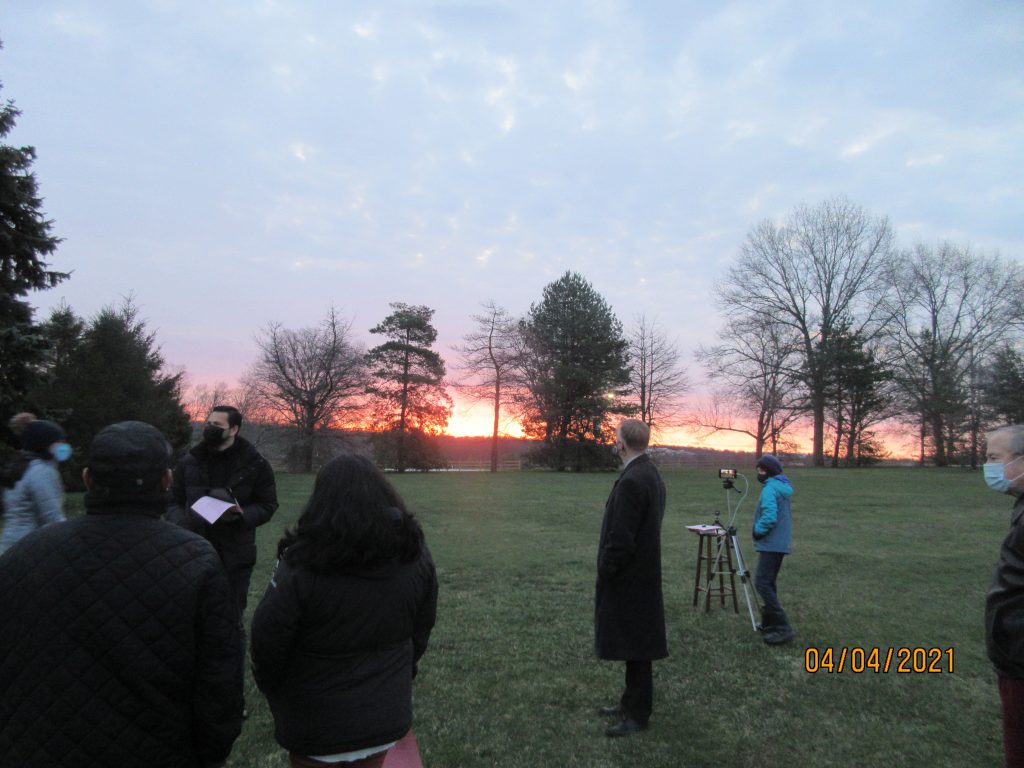
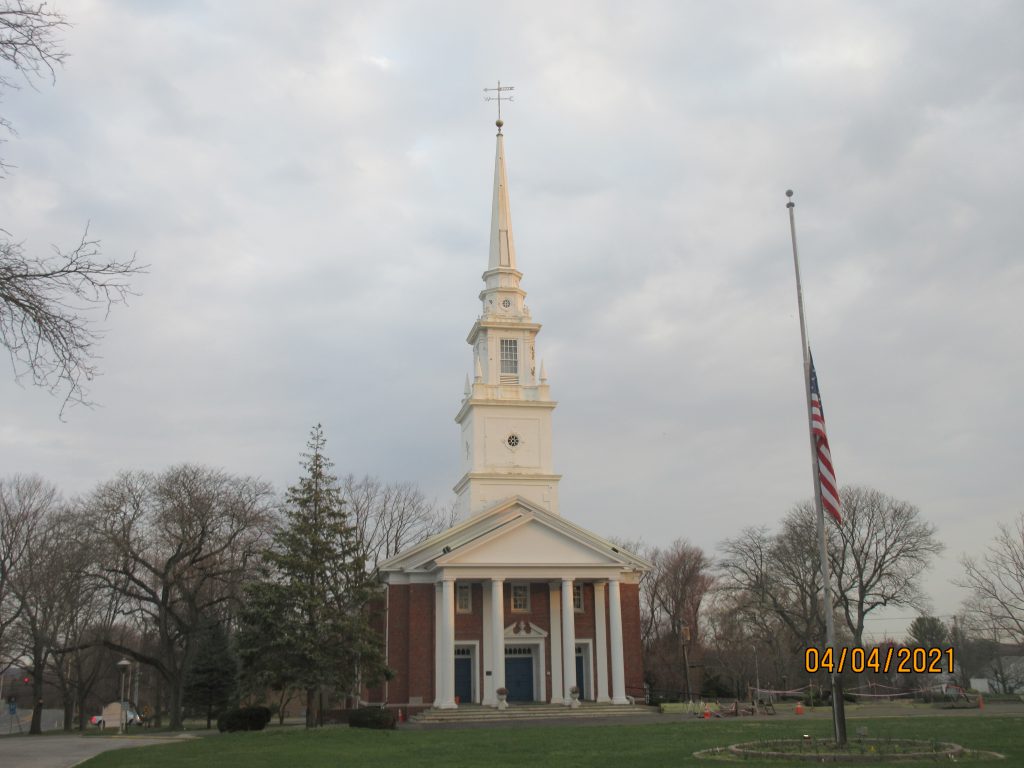
Sunrise, White Plains New York USA 6:OO AM.Reverend Timothy Dalton First Baptist Church awaits for arrivals at the resumption the congregation’s traditional sunrise service and welcomes them in the video below in English
https://youtu.be/Hku435R9Z8M
https://youtu.be/wjSWWRvhaBE
Pastor Matthew Perez welcomes the observers in Spanish
https://youtu.be/1IfKfnmcMT8
As sun rises Al-le-lu-ias! right out
https://youtu.be/eqQkLsz7oHk
First Pastor Dalton delivers the Easter Message “New Day” in English followed by Pastor Perez (above) delievering the message in Spanish
https://youtu.be/RBICriu4zCg
A final chorus of Christ the Lord is Risen Today followed the Easter Message
https://youtu.be/f4icauVhFL8
Pastor Dalton bid the little congregation to enjoy their New Day and Pastor Perez delivers the farewell in Spanish below.
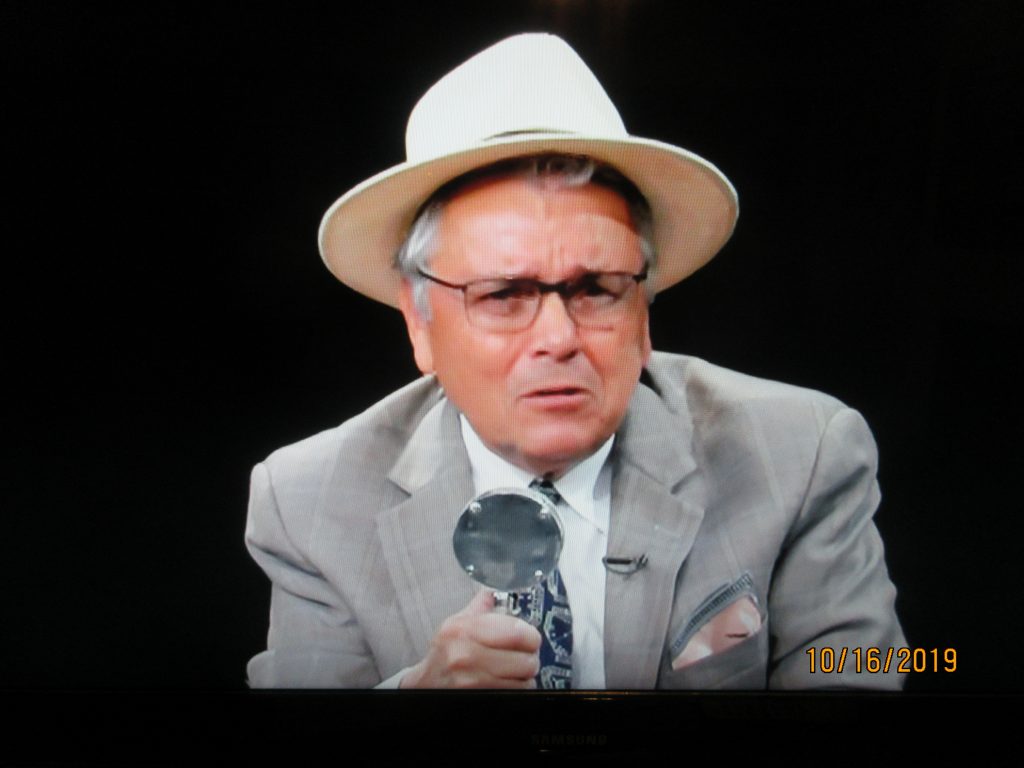
WPCNR VIEW FROM THE UPPER DECKBy “Bull” Allen. April 3, 2021:
BULL ALLEN, VOICE OF THE UPPER DECK
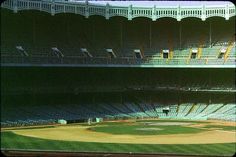
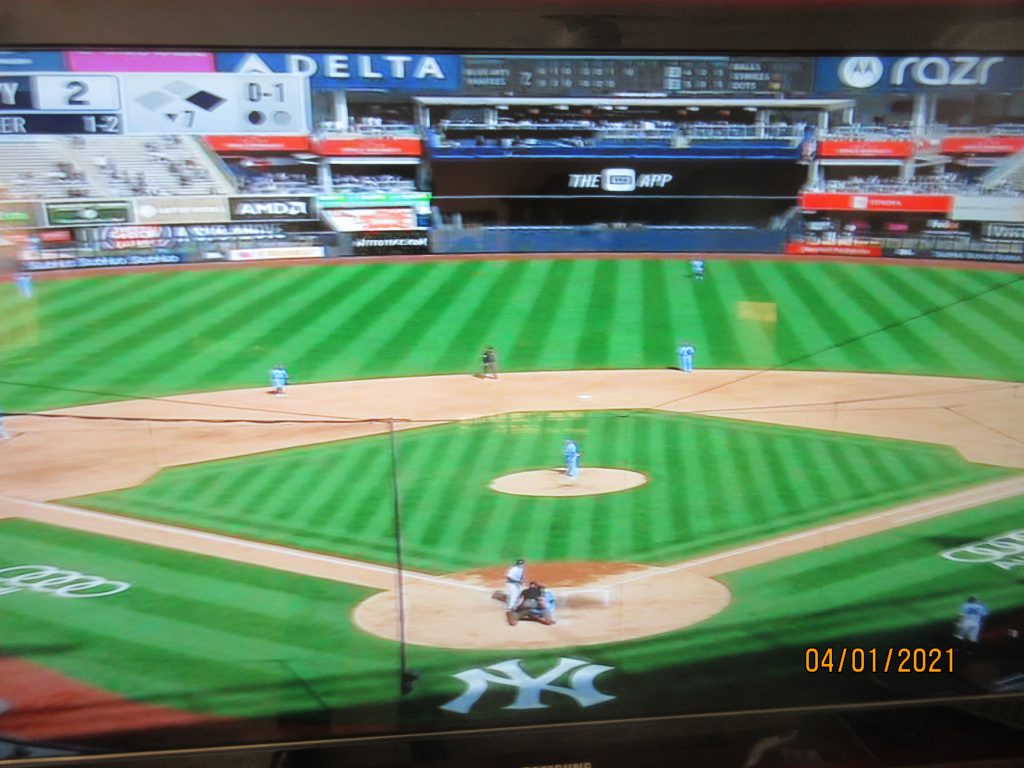
Hello there everybody, this is Bull Allen in the open air mezzanine press box at old Yankee Stadium coming to you on WPIX looking at the unending eternal green of the outfield, the three monuments in play, 301 down the Left field line, 402 to the bullpen in left, the 457 feet to left center, 461 to the monuments in center, 296 down the line in right 344 to dead right, and 407 to right center; the immaculate brown dirt of the infield and the majestic grandeur of America’s Roman Coliseum triple deck: the Big Ball Park, as The Old Redhead used to call it.
I’m happy that baseball is back with fans in attendance in 2020, but the first taste of baseball gets a thumbs-down on baseball’s business geniuses who want shorten the games by instituting the 10th inning tie-breaker: starting the 10th inning of a game tied after nine innings with the visitors starting an inning with a runner on second, and in the bottom of the 10th, giving the home team the same runner on second.
The whole effect is an anti-climactic way to send the fans home in baseball because the game is not timed.
The advantage shifts to the visiting team and gives them a better chance to win.
Baseball relievers today are not good in getting out of jams. When relievers first started being used in the late 1930s and 40s, the pitchers most being starters, were used to pitching out of jams. Today’s relievers are used to start innings mostly and are left in to the point where they blow the game or keep the side scoreless. After the starter goes 5 innings or 6 if he has his stuff, managers go to the middle reliever, the set-up man and the closer. If the closer does not close and allows the game to be tied, the bullpen has been used so you start the 10th with a man on second in the Tie-breaker rule and you use the dreaded second choice middle reliever who is not used to starting with the winning run on second.
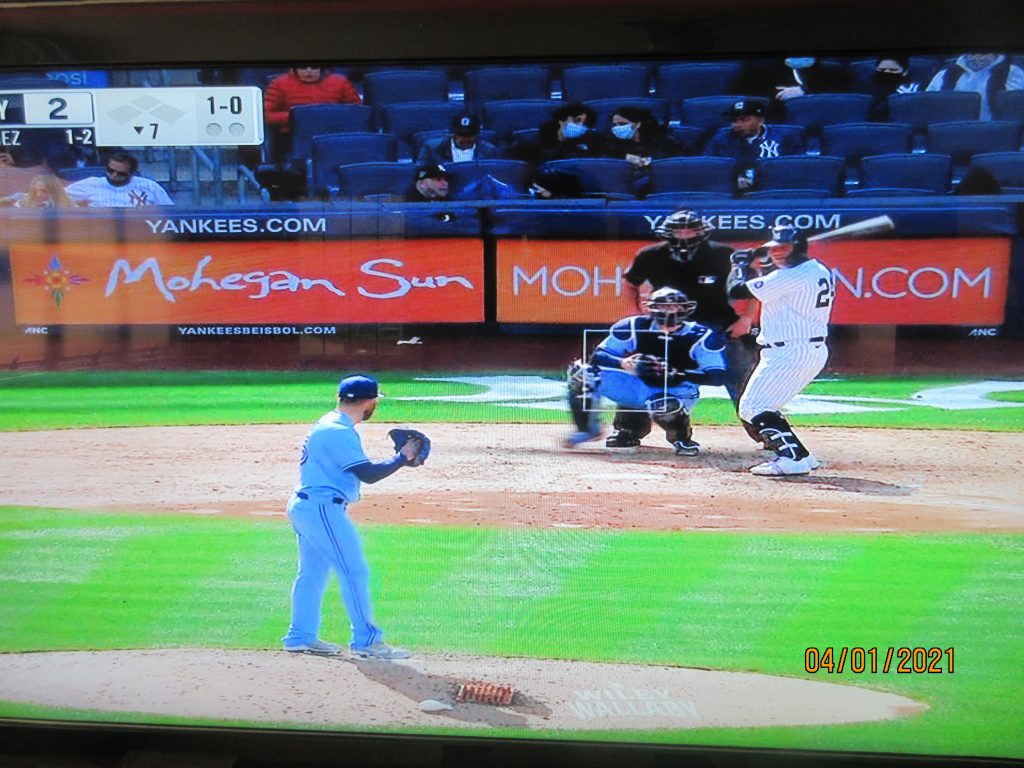
Yesterday, in the Yankee opener there was a 2-2 tie, and they went to the 10th.
First person up with a runner on second, hits a long fly to right center, slightly misjudged by the Yankee rightfielder. Double run scores. We go to bottom of the 10th, and the Yanks with a runner on second, go down swinging trying for the 2-run homer.
What is needed here is to bring very fast pitchers—starters groomed to a warmup pitch who can throw over a 100 to get the free swingers out and prevent the sacrifice to third.
In fact, the strategy for the home team especially the homer-or-nothing hitters that have always been favored by Yankee management, has to be tweaked. Hitters have to be disciplined to situation hitting. When you have the runner on second, the hitter cannot try and pull the ball. The Yankees might have won the game in the ninth had Judge not tried to pull the pitch with the winning run on third and 1 out. He hits right to third with the runner taking off for home. The shortstop got the ball to the plate in plenty of time. If Judge had shortened up and hit to the right side there is a much longer throw and the catcher would have had to come away from blocking the plate to get the throw to the plate if the second baseman had to field it. I rarely see disciplined situation hitting today in the game. Everyone is trying jack it.
In the 10th inning Tie Breaker, situation hitting is imperative. The first batter should sacrifice the runner on second to third. But noooooooooooo. No manager does that. They want to win the game with a base hit. If you sacrifice the runner to third, you have two shots to get the run in. In Toronto Yankee top of the 10th the pitcher left one up and in and the Blue Jay lined it over Judge’s head. Pitching mistake of course. But the last thing you want in there is a pitcher that cannot throw HARD. You can’t risk hanging a slider that does not slide. Hence you have to groom a Dick Raditz, a Ryne Duren, a no nonsense flame thrower with control to give you a better chance to get out of the inning and foil the sacrifice bunt or the steal from a pinch runner. You have to be able to pinch run for the runner on second (baseball has not made clear if you can do that, in fact try and find all the changes for this season).
But I beg your pardon. I was distracted by the beerman.
If you watch Fast Pitch Softball where the Tie-Breaker rule comes from, you can defense the runner on second. You do not want him to advance to third. To do this you have force the second base runner in the top of the 10th to run on any hit. (If the slugger meekly grounds to third, the runner will not advance if the slugger grounds to second, the runner might try and advance and if they do can zing a throw over for a tag play at third and choke off the run.
(The Yankees might add the great Softball pitcher, Michelle Smith to their staff to help Aaron Boone with strategy here to defend third base)
Also if you are the home team, you walk the first batter to first in the top of the 10th to set up the double play around the horn or get the runner on second at third on an easy force.
The strategy in You defend third base.
Call for pitchouts to defense the steal. Say a ball is hit right side. You can zip it to third for an easy force play (no tag required, it’s a force). You are now back to first and second 1 out and can go for the double play clean on a double play ball or go to third for a force, for 2 out. The advantage here is with two the batter is eager to blast one and when you are trying to hit homers it is harder to do. It is even harder if the pitcher is firing in the low 100s.
Now say you fail and one run is scored. You now have to prevent seriously the visiting from scoring any more runs. You have to go back to defending third base. (Do not bring the infield. One needs to play close at the corners and double play depth up the middle.) This will be much easier to do if you have a fireballer with control. Who may strike out. Though you probably will not have the liberal strike zone the plate umpire had at the Stadium yesterday on that frigid opener. The Bombers looked at too many called third strikes yesterday a sure sign that the strike zone is too liberal that afternoon.
The catastrophe of the Tie Breaker Rule is it opens flood gates when the first run is scored. You have to avoid that. Milwaukee plated 5 runs in their top of the 10th yesterday effectively destroying the ability of Minnesota to come back in the bottom of the tenth. Since you are using your worst reliever in the top of the 10th, or “fourth” in the relief rotation, that’s what is going to happen
Here’s where the home team is penalized psychologically by the visiting team. You are trailing by one run in the bottom of the 10th and now everybody batting for the home team thinks, “Hey we already have our bloop (starting out with a runner on second, now a blast wins it!”
Or, worse they get picky and look for the perfect pitch, fall behind then have to swing at a bad pitch or take it and get punched out. It is tough to hit a homer when you have to. The pitchers start out with high gas to tempt an early swing at a pitch you cannot hit out.
Now, in fast-pitch softball tie breaker with runner on second, situational hitting is encouraged. The first batter can sacrifice bunt to move the runner on second to third. Or the runner on second can attempt a run and hit with the hitter attempting to make—has to make contact with the pitch. Major league hitters looking to belt it out are not conditioned or adept enough to push/ hit the ball to the right side to execute the hit and run. Worst comes to worse a right hand hitter will block the catcher’s view and the catcher fails to release, or throws slightly late and you have a stolen base and a runner on first. Then the defense walks the next batter and you have bases loaded nobody out and a squeeze play can be attempted, with the bunt to the right side.
(Bunting as the Yankee raconteur my partner for many years, Phil “The Scooter” Rizzuto lamented is a lost art. But far from the strategy-shy managers of today to allow themselves to fail and have to answer sports reporters questions why have Judge bunt or take the bat out of his hands?)
Another hitting strategy is to hit to the right side. Move the back foot away from the plate if you’re a right hand hitter and make the second baseman play hit, a much tougher play at third to get the runner on second, who has to run instantly on a ball hit to the right side. A left hand hitter up with the Tie-breaker runner on second, opens his stance moving the right foot open and moving it to the first base foul line in order to punch/pull the ball into the first and second base hole, forcing the first base man to to throw it left handed (most first baseman are left handed).
It is also inconceivable to me, if the first batter is walked, why would you not hit and run with runners and first and second to avoid a double play? Why because the power lineups do not contain players who can be counted on to make contact with the ball. Today’s big boppers are going for the big bop not the strategic Baltimore Chop ( hit a chop that bounces in front of the right side of the plate using up time, and getting only one out if the chop is fielded cleanly, leaving two on at 2nd and third.) The chop is an art and you rarely see it today.
Pinch running for the lead Tie-Breaker runner has to be allowed and quite frankly we do not know if it is.
Watching the Toronto 10th inning was excruciatingly boring. The defense was not moving. Because every player was expecting the Toronto hitter to be swinging away for long ball. Which is exactly what happened. Nelson fell behind on the first pitch had to throw a strike and made it too good and boom screaming line drive over the rightfielder’s head.
Toronto brings home a flame thrower who strikes out the Yankee side in the bottom of the 10th.
The 10-inning Tie-Breaker takes a tight game with excitement and ends it with essentially a shoot out that hockey has. One of the greatest games I ever saw was the a 14-inning 5 hour ball game in Chicago’s Old Comiskey Park in 1975. Humdinger every inning. Lots of runners on base in every bottom of every extra inning, finally won on a homa by the Scarlett Hose Carl Yaztremski to Comiskey’s deepest part of the park. And the Pale Hose in the bottom of the 14th got the tying runs on. You will not see that this year. You will not hear Nancy Faust the organ playing maestro on the Hammond playing “Rock around the Clock” in the 12th, and a second “Take Me Out to the ballgame in the middle of the 14th.
Because the 10th Inning Tie-Breaker deflates your balloon as a fan. You’re seeing a great game and if there were extra innings…this is more free baseball you are getting more for your money. Every inning fraught with missed chances. And life is suspended for awhile and leaves you with memories you will never forget.
Your girl friend or wife is saying how long can this go on, and you tell her, hours, isn’t that great? And she rolls her eyes. I married my wife because she sat through two games of a doubleheader (9 innings each game). I said there is no other woman in the free world who would do that. So I married her, but she refused me three times. So I went extra proposings.
Baseball decisions are made for television ratings not for real baseball fans in the stands.
I do not like 7-inning doubleheader games, either. But that’s for another rain delay.
This is Bull Allen from the Upper Deck, the ball game is over, and I’ll be back with the totals in just a moment. It’s time for a White Owl Wallop! The Yanks won Saturday, 5-3 in a 3 hour and 50 minute game.
WPCNR NEWS & COMMENT. By John F. Bailey. April 2, 2021 Republished 9:30 A.M. E.D.T. from WPCNR of the Distant Past.:
It is late afternoon now in the Jerusalem of 33 A.D. Jesus of Nazereth has died on the cross in between two thieves. The three crosses can be seen on the distant hill.
He died 1,985 years ago on that cross today. There was no CNN, No Fox News, showing live coverage, no internet, no newspapers,radio or television. No Twitter or Facebook. No Instagram,Skype, or Google.
Nevertheless the message of the man who died on Calvary (The Place of the Skull) spread around the world without mass communication.
His followers, twelve of them were so devoted to His message of love and code of behavior they became the first pacifist activists who spread a message the man they called their Lord had preached to them.
He was Jesus of Nazareth. He had no last name.
Today He is now known all over the world for the message he delivered.
Whether you believe He is the Son of God, or not, He ranks as one of the foremost influences on mankind. More than Plato, more than Socrates, more than any leader or politician, or entertainer whoever lived.
His selfless acts of embracing lepers, the poor, those who sinned were unique.
Such compassion for the downtrodden was unheard of during the time He lived.
It was a time of slavery. No human rights. No care for the sick. When cities were razed and populations slaughtered or enslaved much like the genocides of today.
Jesus of Nazareth introduced a new philosophy that spread throughout the world after His death by crucifixation on this day (maybe, we do not know the exact date), because the community leaders of his own people thought him a threat to their power. And that fear that this simple man was a threat should be a lesson to us all.
If you live by His philosophy of forgiveness you are a person at peace with yourself. If you accept those who are different from you without fear or prejudice, you are a force for spreading His message of peace towards others and good will.
If you help the poor and the sick because you sympathize with them, you are following His way.
If you stand up for truth, point out what is wrong as He did with the Pharisees. You are doing his will.
If you go about doing good for the sake of doing good, you are following His virtue of selflessness.
Jesus of Nazareth’s message whether divine or a code of how we conduct our lives resonated with millions and it spread.
There is no denying He is one of the great philosophers of the human experience, kin to Socrates, the other giant of antiquity thought.
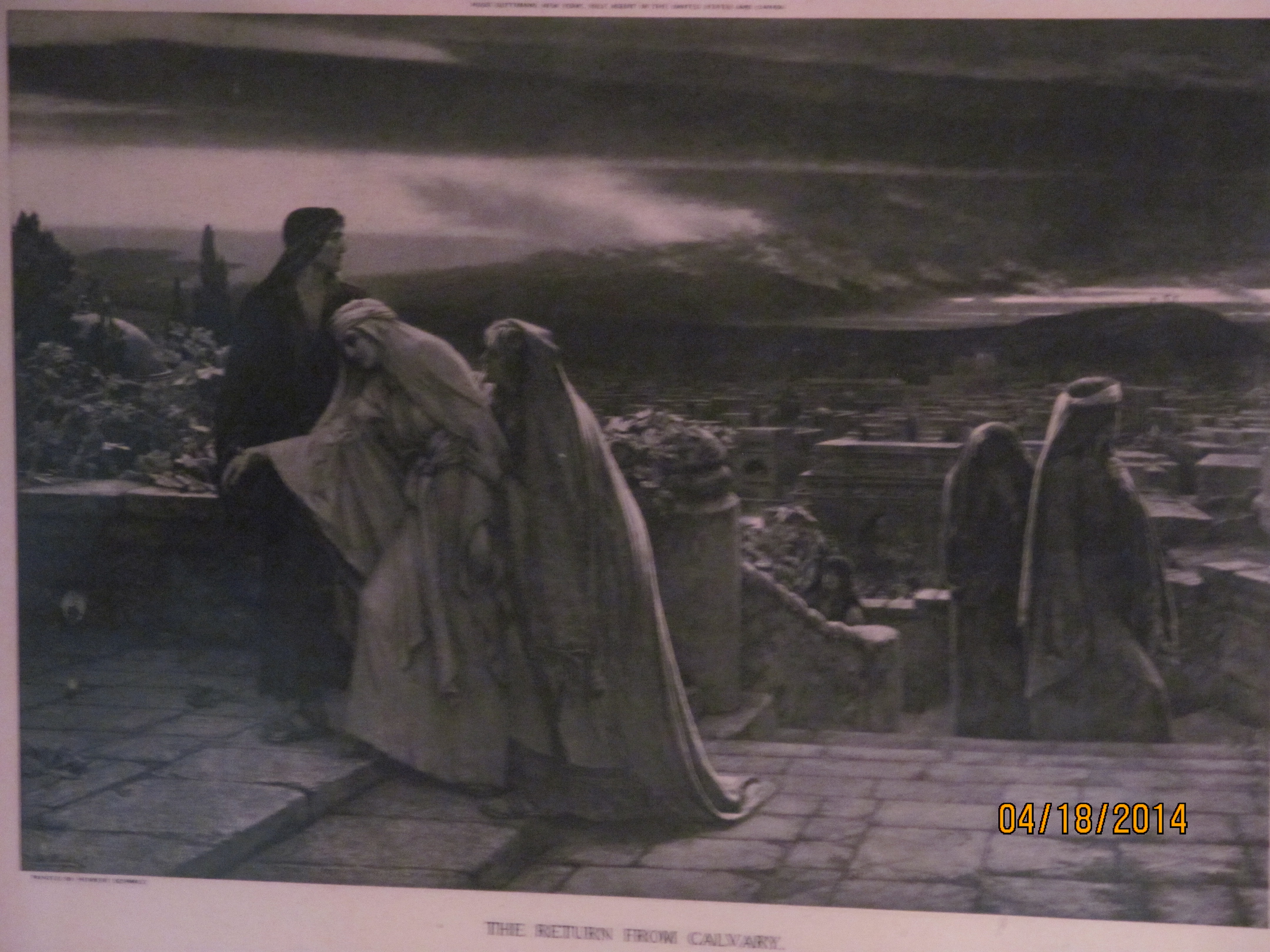
The above print of “The Return from Calvary” painted by Herbert Schmalz shows the last hours of Jesus of Nazareth’s crucifixation around 33 A.D. on Calvary Hill, “the place of the Skull” outside of Jerusalem late in the day He was crucified.
The description on the print describes the somber scene:
The darkness which was on the earth (during His suffering) is clearing away.
One long, dark cloud is hanging over the city like a pall.
The Virgin Mother, weighted down by fatigue and grief, knowing not wither she goes, is being led up some steps, toward “his own” home, by St. John and Mary Magdalene.
In the distance on the top of Cavalry, you can make out the three crosses.
The grief so eloquently captured by this print depicts the very personal loss all of us endure when someone we love passes away, realizing our loss because of all they did for us.
Jesus of Nazareth was a human being who affects us to this day.
One of the great gifts of this man, Jesus of Nazareth, is the celebration of humanity and capacity to care and feel for others that aids persons whether they believe He was the Son of God or not. Or that you will have eternal life if you believe in him.
His philosophies of care, courage, compassion and benevolent action serve their practioners well because they leave a great personal satisfaction in the heart, the mind, and the spirit.
You do not have to second guess yourself, when you do what is right, humane, merciful, and serves the less fortunate without superiority with nothing to gain for yourself. And if you do not do what is right, if you weaken, you always regret it and remember when you failed to do right.
The peace of mind of action is the least of the great gift of Jesus of Nazareth whose death on the cross is marked this day.
If you act as Jesus did, you will be remembered by all you meet fondly and lovingly, and be comforted that you will live in memories of those you have touched with your love and kindness and caring for eternity to the end of the age.
His simple teachings have great power. Use them. Implement them.
They give meaning to our mystery of life.
They give meaning and purpose to anyone’s life.
For 2,000 years they have made a violent world a better place.
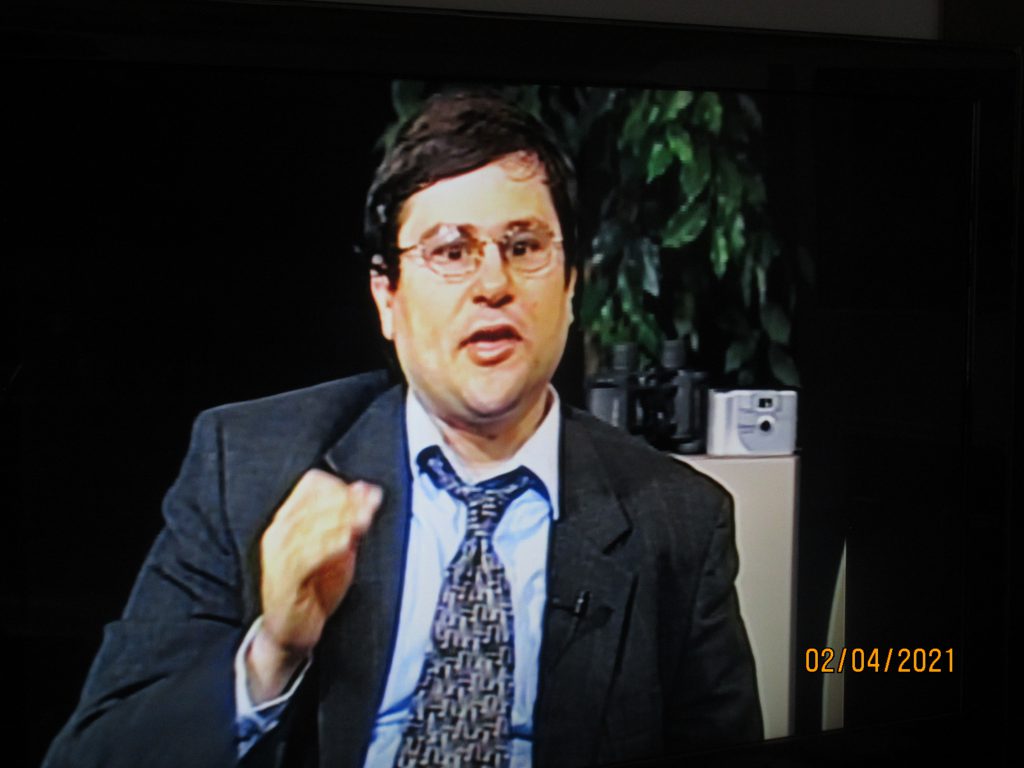
SANTINO THOMAS, spokesperson for the Associated Builders & Contractors of the Empire State clarifies the construction industry issues with the new marijuana law. In an interview with John Bailey, The CitizeNetReporter
Today–Showers, mainly after 3pm. High near 64. South wind 6 to 13 mph. Chance of precipitation is 80%. New precipitation amounts between a tenth and quarter of an inch possible.
Tonight–Showers and possibly a thunderstorm. Some of the storms could produce heavy rainfall. Patchy fog. Low around 41. South wind 6 to 8 mph becoming north after midnight. Winds could gust as high as 20 mph. Chance of precipitation is 100%. New rainfall amounts between a half and three quarters of an inch possible.
Thursday–Showers, mainly before 2pm. High near 46. Northwest wind around 15 mph, with gusts as high as 30 mph. Chance of precipitation is 80%. New precipitation amounts between a tenth and quarter of an inch possible.
Thursday Night–A chance of rain showers, mixing with snow after 7pm,
WPCNR ALBANY ROUNDS. From the New York State Senate & Governor Cuomo’s Press Office. March 30, 2021 UPDATED MARCH 31, 8:10 A.M. E.D.T., and 1:25 P.M EDT
Last night he New York State Senate Majority passed legislation that will end the prohibition on adult-use marijuana in New York State beginning January 1, 2022, the date when all towns and communities must choose whether they will allow medical and adult-use recreational marijuna retail operations.
Governor Andrew M. Cuomo issued this statement on the occasion:
“Tonight, the New York State Legislature took the first step in a major leap forward for the Empire State by passing legislation to legalize adult-use cannabis. I thank Senate Majority Leader Andrea Stewart-Cousins, Assembly Speaker Carl Heastie, and the many legislators who worked tirelessly on this issue for securing passage of this historic legislation.
“For too long the prohibition of cannabis disproportionately targeted communities of color with harsh prison sentences and after years of hard work, this landmark legislation provides justice for long-marginalized communities, embraces a new industry that will grow the economy, and establishes substantial safety guards for the public.
“New York has a storied history of being the progressive capital of the nation, and this important legislation will once again carry on that legacy. I look forward to signing this legislation into law.”
Brian Sampson,President of the Associated Builders and Contractors Empire State Chapter issued this statement:
“It appears that the New York State Legislature has once again adhered to its strict policy of ‘Ready, Fire, Aim.’ Last night, it passed legislation to legalize the recreational use of marijuana while knowing, full well, that there are glaring issues with its policy. ABC brought the valid concerns of hundreds of contractors to the governor and members of the Legislature, but they were ignored.
“Of issue to ABC and its membership is the fact that legalized marijuana usage, combined with outdated absolute liability laws – namely the Scaffold Law – put the livelihood of contractors, and the thousands they employ around the state, at risk. At best, the potential ramifications of this combination of policies were overlooked, but in reality, they were completely ignored. ABC is calling on the Legislature to now repeal the Scaffold Law in the budget or during post-budget session to fix this egregious error.”
The Marijuana Regulation and Taxation Act (MRTA), sponsored by Senator Liz Krueger, will establish a new office for the regulation of cannabis and decriminalizes the use of adult-use marijuana.
“There were many important aspects of this legislation that needed to be addressed correctly — especially the racial disparities that have plagued our state’s response to marijuana use and distribution as well as ensuring public safety — and I am proud that through strong collaboration, we have reached the finish line,” Senate Majority Leader Andrea Stewart-Cousins said. “Thank you to the Senate sponsor, Senator Liz Krueger, for her tireless efforts to get this legislation advanced and done right. The Senate Democratic Majority is stepping up to give New Yorkers the fair and equitable adult-use marijuana market they deserve.”
Bill Sponsor, Senator Liz Krueger,said, “I am very proud to say that we have finally reached a three-way agreement on legalizing adult-use cannabis in a way that foregrounds racial justice, while balancing safety with economic growth, encouraging new small businesses, and significantly diminishing the illegal market. My goal in carrying this legislation has always been to end the racially disparate enforcement of marijuana prohibition that has taken such a toll on communities of color across our state, and to use the economic windfall of legalization to help heal and repair those same communities. I believe we have achieved that in this bill, as well as addressing the concerns and input of stakeholders across the board. When this bill becomes law, New York will be poised to implement a nation-leading model for what marijuana legalization can look like.”
The MRTA creates a new Cannabis Law, and will consolidate the newly-created adult-use cannabis program with the existing medical cannabis program, and the existing cannabinoid hemp program, which will be under the control of the newly created Cannabis Control Board (the Board) and the Office of Cannabis Management (OCM). The Board and OCM will be placed under the State Liquor Authority (SLA), but the SLA has no involvement with the Cannabis program.
The MRTA creates the framework that will build a regulated industry that will replace the illegal market while also preventing large companies from dominating the market. Additionally, this legislation will establish equity programs that will provide loans, grants, and incubator programs to ensure broad opportunities for participation in the new legal industry by people from communities that have been disproportionately impacted by marijuana prohibition as well as by small farmers.
MRTA will automatically expunge records for people with previous convictions for activities that are no longer criminalized.
The penalties for possession start as a violation for three ounces of flower or 24 grams of concentrated cannabis and escalate to a Class D felony for more than 10 pounds of flower or four pounds of concentrated cannabis.
The penalties for sale start as a violation for unlawful sale of any weight of cannabis and escalate to a Class C felony for unlawful sale of over 100 pounds of flower or concentrated cannabis.
The MRTA incorporates impairment by cannabis into the infraction of Driving While Ability Impaired, the lowest degree of Driving While Intoxicated, but otherwise does not change existing law for Driving While Intoxicated.
The MRTA allows the odor of cannabis to be used as reason to suspect that a driver is intoxicated, but prohibits using odor as a justification for searching a car for contraband.
MRTA will establish an Office of Cannabis Management with a board of 5 members – 3 appointed by the Governor and 1 by each legislative house, with the chair subject to Senate confirmation. This legislation will also establish an Executive Director who will be appointed by the Governor and confirmed by the Senate, and a Chief Equity Officer subject to approval by at least 4 members of the board.
There is also an Advisory Board made up of 13 members, 7 appointed by the Executive, 6 by the Legislature, with commissioners of DEC, DOH, OASAS, and the Attorney General as ex-officio non-voting members. The Advisory Board members must have balanced statewide geographic representation and be diverse in its composition. The appointed members are required to have expertise in several fields relating to health, social equity, and the cannabis and agricultural industries.
The Cannabis Advisory Board will represent a broad range of communities of interest, which will be responsible for approving grants from the Community Reinvestment Fund as well as making policy recommendations and reporting on the state of the cannabis program. MRTA grants the Office of Cannabis Management powers to evaluate license applicants using a broad range of metrics, including social equity status, commitment to environmentally sound policies, public health, and fair labor practices. It also expands the medical cannabis program allowing for additional licensees, expanded patient access, and a broader range of product types and allows current Registered Organizations limited access to the adult use market in exchange for licensing fees that will help fund equity programs.
The legislation prohibits vertical integration for all other licensees except micro-businesses, and the Registered Organizations currently operating in the Medical program, to protect the retail sector from being controlled by larger cannabis producers, and establishes a goal of 50% of licenses going to equity applicants. This legislation will allow limited homegrow of three mature and three immature plants for both medical patients and in the adult use program, subject to regulation by the Office of Cannabis Management.
The MRTA provides funding for training drug recognition officers and expands traffic safety protections, including the development of roadside testing technology and is subject to appropriations. Allows for localities to opt out of retail sales at the city, town, and village level. Sets a 9% sales tax on cannabis, plus an additional 4% tax split between the county and city/town/village, plus an additional tax based on THC content as follows: 0.5 cents per milligram for flower, 0.8 cents per milligram for concentrated cannabis, and 3 cents per milligram for edibles.
Powers of the Board and OCM:
The Board is responsible for creating the regulations for each of the cannabis programs and the Office of Cannabis Management is responsible for implementing these regulations.
The Chair approves licensing and permit recommendations made by the OCM staff, and other Board members would have 14 days to object to any such decision.
The Board is also responsible for regulating the packaging and advertising of cannabis products, as well as overseeing the issuance of certain special permits.
The OCM is responsible for managing the licensing of entities wanting to participate in the various Cannabis programs.
Social Equity:
There is a goal of 50% of licenses being issued to social equity applicants involved in the adult-use program. Extra priority is given to applicants impacted by the war on drugs, who are low-income and who have, or a close relative has, a marijuana-related conviction. Preferences for licensing are also granted for licensees that set out a plan for benefiting communities and people disproportionately impacted by enforcement of cannabis laws.
Social Equity Applicants include:
Applicants are from communities that have been impacted by cannabis prohibition;
In evaluating applications from entities with 25 or more employees, the OCM must give priority to applicants that have peace labor agreements in place, or use union labor to construct its licensed facility. The Board will also have the power to review all licensees two years into the program, to determine whether any one licensee has gained a large control of the market and is undermining the aim of providing business opportunities to as many equity licensees as possible
Adult-Use Licenses:
The Adult-use program envisions a number of license types, with the main license types being:
Adult-use cultivator licenses, for those farming cannabis.
Adult-use processor licenses, for those converting raw cannabis into various products, such as tinctures, concentrates, edibles, smokable products, etc. These licensees are also responsible for labelling products, including with the amount of THC present.
Adult-use distributor licenses, for those who would wholesale and distribute products between the processors and the retail licensees. Distributors are also responsible for collecting and remitting the THC based tax..
Adult-use dispensaries, responsible for the direct sale of cannabis products to individuals for personal use. These licensees are also responsible for collecting and remitting the retail taxes.
Adult-use consumption sites, which are retail locations that also allow individuals to use cannabis products at the location.
Additional Licenses:
Adult-cooperative license, which would allow for groups of individuals to form cooperatives that could cultivate and process cannabis products;
Nursery license, which allows someone to grow immature plants and sell them to other cannabis licensees;
A delivery license, which allows a business to make direct at home deliveries from retail locations; and
A microbusiness license. A microbusiness license would allow the holder to cultivate, produce, and retail their own cannabis products but such licensees would be severely limited in their size.
The MRTA attempts to follow the 3-tier model seen in the alcohol market, in which there is meant to be a division between those who create the products, those wholesaling the products, and those retailing products. Someone with a microbusiness license can both cultivate, process, and dispense their own products, but these are meant to be very small licenses. Someone who obtains a cultivator license can also gain a processor license, and a distribution license, but they would only be able to distribute their own products. Additionally, someone with a processor license but does not have a cultivator license can also obtain a distribution license, but they can only self-distribute.
Medical cannabis is currently provided by several registered organizations, referred to as RO’s. To be part of the medical cannabis program, these ROs were required to carry out all three tiers, which is commonly called being “vertically integrated.” MRTA will allow these RO’s to enter the adult-use market in two ways. After paying a special fee set by the Board they would enter with limited vertical interaction and would be allowed to have up to three co-located (adult-use and medical) retail locations of their own, but also have the ability to distribute their own products to all other retail dispensaries. The RO’s can also obtain a license that will grant them the ability to distribute, cultivate and process but they will only be allowed to distribute their own products. The RO’s are required to have a maintenance of effort in manufacturing/dispensing/researching medical cannabis, to ensure they continue operating in the Medical program if they choose to enter into the adult-cannabis program.
Cannabinoid Hemp:
The Cannabinoid hemp program created in 2019 would shift from being under the supervision of the Department of Agriculture and Markets to being under the supervision of the OCM. The only change made to this program is to allow for the sale of cannabis hemp flower products. Sales of these products would be limited to those over 21 years old, and any products meant to be smoked would have to be sold at adult-use cannabis dispensaries.
Medical Cannabis Program:
The administration of the Medical program is being moved from the Department of Health to the OCM.
The program is also being expanded which includes:
Expanding the list of conditions eligible for Medical Cannabis and allows practitioners to prescribe for any other appropriate condition,
Allows for medical cannabis to be grown “outdoors,”
Expands possession limits of Medical Cannabis to a 60-day supply (current law is 30 days),
Creates a new “designated caregiver facility” designation to allow for facilities to administer medical cannabis to patients/residents,
Allows for up to 4 patients per designated caregiver, and removes the restriction on “smoking” medical cannabis and allows for a greater selection of medical cannabis products.
In addition, Medical Patients will be able to begin “home-grow” within 6 months of the enactment of the bill and designated caregivers will be able to grow on behalf of their patients.
Local Opt-Out:
Cities, towns, and villages would be given the option to opt-out from having adult-use dispensaries and/or adult-use social consumption sites located in their communities.
The opt-out would take the form of a vote by the governing body passing a local law opting out. Any such local law would be eligible for a permissive referendum, meaning that those who oppose such a law would have an opportunity to gather enough signatures to require a referendum to be held on the issue.
Any opt out laws would have to be passed by December 31, 2021 or within 9 months of the effective date of this legislation, whichever is later.
Home Grow of Cannabis:
The MRTA allows individuals to conduct home growing of cannabis plants. The current agreement allows each person to grow up to three mature plants and three immature plants, whether it be indoors or outdoors.
There is also a maximum number of plants per household of six mature and six immature plants, for a total of twelve plants. Regardless of the number of plants they have, there is a five pound maximum possession limit at home for individuals.
Localities would be able to create regulations around home grow, though they could not ban it.
The Board will also be able to issue regulations on certain unsafe growing practices that would be banned.
For patients in the medical cannabis program, the ability to home grow would begin six months after the effective date of this legislation.
Adult-use home grow would be authorized eighteen months after the opening of the first adult use dispensaries, in order to give the regulated cannabis market a chance to develop.
Criminal Penalties and Vehicle and Traffic Law Issues:
The MRTA establishes a new range of criminal penalties for unlawful possession and sale of cannabis, which have been agreed to by the Executive.
The penalties for possession start as a violation for three ounces of flower or 24 grams of concentrated cannabis and escalate to a Class D felony for more than 10 pounds of flower or four pounds of concentrated cannabis.
The penalties for sale start as a violation for unlawful sale of any weight of cannabis and escalate to a Class C felony for unlawful sale of over 100 pounds of flower or concentrated cannabis.
The MRTA incorporates impairment by cannabis into the infraction of Driving While Ability Impaired, the lowest degree of Driving While Intoxicated, but otherwise does not change existing law for Driving While Intoxicated.
The MRTA allows the odor of cannabis to be used as reason to suspect that a driver is intoxicated, but prohibits using odor as a justification for searching a car for contraband.
Vehicle and Traffic Law: Drug Recognition Experts (DREs) will be allowed to use enhanced field testing techniques to determine if a driver is operating a vehicle under the influence of marijuana. In addition, the Senate has proposed funding a study to develop accurate saliva testing, which would then be automatically implemented once the Department of Health has certified its accuracy. This would be in addition to the funding included in the MRTA to increase the number of DREs in the state.
Taxation of Adult Use Cannabis:
The MRTA would impose taxes on adult use cannabis as follows: a distributor would pay the following tax based on the per milligram amount of THC (per a lab analysis and as labeled):
0.5 cents ($0.005) for cannabis flower
0.8 cents ($0.008) for cannabis concentrate
3.0 cents ($0.03) for edibles
In addition, a 9% tax is added upon retail sale, which goes to the State, and another 4% tax is added upon retail sales, which goes to the localities (1% goes to the County, and 3% is divided at the local level based on retail sales).
If a village and town both opt in and the retailer is located in the village, then the 3% is split between the town and revenue either per an agreement between the two, or is otherwise split 50-50.
Cannabis Revenues and their Use:
All revenue raised from the sale of adult-use and medical cannabis would go into a new Cannabis Revenue Fund. Cannabis-related expenses of the Department of Taxation and Finance, the Office of Cannabis Management, the Cannabis Control Board, Urban Development Corporation (UDC), DCJS, SUNY, State Police, OCA, would come out of the Cannabis Revenue Fund, subject to appropriation. Other purposes paid for from the Cannabis Revenue Fund include the hiring and training of additional DREs and for an incubator program (through the UDC) to give social equity access applicants the necessary application and business management skills necessary.
Remaining revenues would flow into three funds:
40% to the State Lottery Fund for Education.
20% to the Drug Treatment and Public Education Fund, which would finance additional drug treatment programs,school-based prevention, early intervention, and health care services and programs, as well as public health campaigns to teach the public about responsible cannabis use.
40% to the Community Grants Reinvestment Fund, which would be used to further support the social and economic equity program as established by the Board.
The Community Grants Reinvestment Fund is administered by the Advisory Board. The money in this fund would be used for grants for qualified community-based organizations and approved local government entities to reinvest in communities disproportionately affected by past federal and state drug policies.
The categories of approved uses include:
Job placement;
Job skills services;
Adult education;
Mental Health treatment;
Substance use disorder treatment;
Housing; Financial literacy;
Community banking; Nutrition services;
Services to address adverse childhood experiences;
After School and Child Care services;
System navigation services; and legal services to address barriers to reentry (including for expungement, vacatur and resentencing).
Every February 1, the OCM produces a report detailing how the funds were utilized and must include:
The amount of money disbursed and how;
The recipients that received awards and how much they received;
The purpose of the award; and
A summary financial plan including estimates of all receipts.