WPCNR COMMON COUNCIL CHRONICLE-EXAMINER. February 7, 2006: WPCNR presents Mayor Joseph Delfino’s 2006 State of the City Address delivered to the Common Council Monday evening at the monthly council public meeting which did not appear on television due to a technical failure at the Public Access Studios.

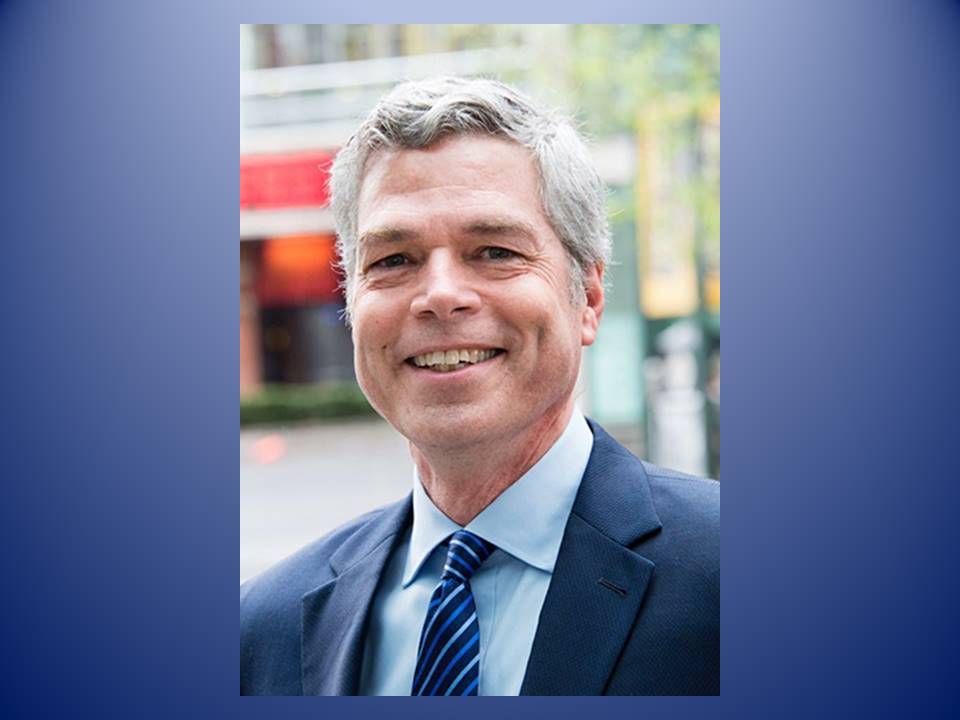
Mayor Joseph Delfino Being Sworn In for his Third Term as Mayor of White Plains January 6. Last night he delivered his State of the City Speech. Photo, WPCNR News Archive.
· The first item on the agenda tonight is the annual State of the City address. Thank you for being here, and thank you for viewing from home. This is the ninth State of the City address that I have delivered as Mayor. Let me start by saying I am honored to be serving another term as Mayor of the City of
· I want to thank my family, especially my wife Ellie for putting up with all the long hours and days away from home.
· I want to thank the members of the Common Council, both past and present, for their hard work and dedication to our City. Together we have forged a tremendous partnership based upon collective action, rather than divided leadership. I would also like to thank our professional staff. Your abilities allow us to think outside of the box because we know you are capable of stepping up and making it happen. For all your dedication I say thanks, we couldn’t do it without you.
· When I took office in 1998, I set lofty goals because I believed in our City. I believed in what the City of
· Much of what was envisioned in Phases I, II, and III of my Economic Development Plan has been completed or is underway. We have come so far in a short period of time. Our accomplishments are truly remarkable! I am proud of what has been done, and I am excited about what we are working on to keep
· Tonight, I will discuss the issues facing the City for 2006 and beyond. Many are issues we have grappled with for years. Others represent new and exciting opportunities for us to enhance the image, reputation, and the quality of life in
· I will begin on the subject of Economic Development and Growth, an area in which
· Since the year 2000, more than 2,285 new units of housing have been approved in
· I will be the first to say that we must do more to assist moderate and low income families in the development of affordable housing.
· Last year, the City of
· The City’s Affordable Program provides that developers of new market rate and luxury housing must make at least 6% of their project affordable for individuals and families at an average of 80% of median income, or pay a substantial buyout fee in lieu of providing the units in their projects.
· It is satisfying that we were able to achieve an average of 7.6% new affordable units from our approved residential projects, and we will continue to review our guidelines on a project by project basis. We should be cautious, however not to arbitrarily select an affordable percentage that could deter new residential development in our City.
· These “buyout” payments allow us to remain flexible, and permit us to help the greatest number of
Currently, we have a series of projects being proposed:
· The Metropolitan and the Hale Avenue Condominium projects. At the January 3rd meeting of the Common Council, both projects were given a hearty endorsement by the Carhart neighborhood association, headed up by President Robert Vogel.
· These projects are a testament of what can be accomplished when City staff, developers, and community leaders work together to design projects that are sensitive to the needs of the neighborhood while remaining economically viable.
· We’re also working on:
· The Pinnacle with its Michael Graves design on
· The 393-unit Avalon Rockledge
· Cappelli’s Renaissance Square at
· The North St. Communities on the former
· At a time when so many communities within
· The current state of our finances is strong, and as a direct result of our recent development, we are receiving increased revenue into our City.
· The cities of
· The administrative fees could have been used to assist the City in funding affordable housing initiatives, making small business loans and grants available, providing economic development initiatives, settle tax certs or to pursue countless other activities.
· In 2006 I will again make a direct appeal to our elected representatives on the state level to gain our own Industrial Development Agency. The success of
· In 2005, the City of
· Tonight, it is my pleasure to announce that within the next four weeks we will set a date for the first meeting concerning the
· The White Plains Business Improvement District continues to be a key engine for economic growth in the Downtown. In the past year, the
· In September, “Restaurant Week” celebrated the rebirth of our city by offering lunch or dinner for $19.16 at 15 different
· In the coming year, I will work with the Business Improvement District to expand its borders and programs to encompass other parts of the Downtown The BID will be a partner as we expand our revitalization efforts throughout the downtown area.
· As we enter operating year three of the
· The Common Council and I were fully aware that it generally takes three years for community theatres to establish themselves.
· We are committed to finding the right formula for the theatre, and the Common Council and I recently renewed our economic commitment to the theater for the 2006 season. The Performing Arts Center provides culturally enriching entertainment which is critical to the success of our Downtown.
· The
· This program will give the City a giant step forward as we work to make White Plains a true Arts Community.
· We recently received $250,000 dollars in federal funds to conduct a study on the viability of a rubber-wheel trolley system in
·
· Valet parking has become essential to the success of many of our small and family-owned businesses in the downtown. We’ve worked hard to integrate this feature in such a way as to determine how it might best operate in our City. I am committed to working with the Common Council in 2006 to create legislation which will regulate this activity.
· Issues such as parking, traffic and valet services keep urban planners in many cities busy. We’re fortunate to have these issues here as well, and they will be addressed as we continue to manage our growth downtown effectively.
· The City of
· Our youth are excited again about
· We take tremendous amount of pride in celebrating our City’s vast and diverse cultures. Last year, we hosted our first Annual Juneteenth Parade, which serves as a celebration of the end of slavery and of African American achievement. I am proud to say that
·
· We’re recognized as a City that cares.
· Our award-winning Recreation and Parks department remains a leader in the County. Our expanded programs are enjoyed by residents of all ages and we maintain the finest facilities anywhere.
· We’re planning an ambitious agenda for the coming year. In 2006 we’ll open new playgrounds at
· Our Open Space Acquisition program has proven to be an enormous success. To date we’ve acquired more than 45 acres to preserve as Open Space. Tonight I am announcing that I’m reconvening our Open Space Acquisition Committee to identify more parcels for possible acquisition, which the City can maintain and preserve for future generations of
· The City of
· They do a marvelous job and this year they will continue to expand their programs. In 2006 the Youth Bureau will be partnering with the March of Dimes to offer Young Women’s Health Groups to promote healthy lifestyles and with the Boy and Girl Scouts of America to encourage scouting activities in our after-school programs.
· Because of their incredible work, we are being honored this year with the National Youth Service
· Our Public Safety Department is one of the best in
· Structure fires are also down 15% over the previous year, which is a direct result of increased fire inspections, a “safety-first” building code, and a strong educational component.
· It is a testament to what effective management, resource allocation and partnership with the community can accomplish. To our men and women of our Public Safety Department, I thank you for a job well done.
· We’ve worked hard to make our government both customer service oriented and accessible. And we’ll take action in 2006 to do even more.
Public Access Laser Dies; Mayor’s Speech Blacked Out.
WPCNR MEDIA RADAR. By John F. Bailey. February 7, 2006: White Plains Public Access Television reports to WPCNR this morning that the three hour black out of White Plains channels 75, 76 and 77 was caused by laser failure in the Cablevision equipment that sends the Public Access signal from their studios at 4 Martine Avenue to Cablevision. Jim Kenny, Executive Director of the White Plains Public Access told WPCNR the laser failure was discovered at about 6 P.M. Monday evening. Cablevision technicians arrived to replace the laser component, and programming was restored by 9 P.M. to all three channels,
The laser outage denied Mayor Joseph Delfino of a prime time audience for his State of the City speech he delivered last night. One effect of this was that City Commissioners and insiders were forced to observe the Common Council proceedings from the Common Council Chamber floor, instead of the poshly appointed Mayor’s Conference Room where they watch the television feed from Channel 76, providing their own running commentary on the course of events.
Kenny had no specific information on why the laser failed. He said the Common Council meeting Monday evening was videotaped and would be shown in its entirety nightly on the White Plains Government Access Channel 75, “The Voice of White Plains,” beginning at 7 P.M.
Maple Avenue Goes to Condos. Council Approves Ker Buildings; Metropolitan.
WPCNR COMMON COUNCIL CHRONICLE-EXAMINER. February 7, 2006: As reported yesterday by WPCNR, the Common Council approved the Metropolitan condominium project for the DeKalb Avenue and Maple Avenue block, and two 11-story condominiums across from each other on Hale Avenue. The Common Council split 4-3, approving the Hale buildings, with Councilpersons Robert Greer, Glen Hockley, Arnold Bernstein and Mayor Delfino carrying the day against Councilpersons Thomas Roach, Rita Malmud and Benjamin Boykin. The Metropolitan carried 5-2 with Ms. Malmud and Mr. Roach opposing the project and Messers Hockley, Bernstein, Boykin, Greer and the Mayor voting for The Metropolitan. The DEIS hearing on the Pinnacle was closed.
Board of Education Announces White Plains “Bond Tour”
WPCNR SCHOOL DAYS. By John F. Bailey. February 6, 2006: The Board of Education will be scheduling a series of meetings over the next month at each of the White Plains city schools to present the $67 Million Capital Projects plan they are considering putting out for a referendum in May on the ballot with the School Budget. Superintendent of Schools Timothy Connors announced the “bond tour” at Monday evening’s Board of Education meeting.
In the discussion of the Capital Projects which followed the consent agenda, Terrence Schruers, Assistant Superintendent of Business and Russell Davidson of Kaeyer, Garment & Davidson, the architects who prepared the $67 Million proposal (trimmed from its original $95 Million program), made cases for the cost savings to be achieved by the two synthetic turf field conversions at Parker Stadium and Loucks Field, and for the wisdom for renovating the present Post Road School, or building a completely new school on the Post Road property.
Superintendent of Schools Connors began the Capital Projects discussion saying it was his plan that the Board of Education hold a series of meetings at each school in the community to get a sense of the community’s feelings about the project, and then for the Board of to make a decision on either executing all of the program or parts of it in March to place a bond referendum on the May ballot.
Connors said the project is timely, and would give the district flexibility “a safety valve” to provide for two cohorts (consisting of 12 classes of 20 students, approximately 250 more students) at the elementary level expected to arrive over the the next five years. A demographer’s projection was passed out at the meeting predicting growth of 300 students in the elementary schools by 2010 (from the 2,750 in 2005 to 3,050 in 1010). Connors also has said city sources expect growth of about another 250 students based on all the new development coming on stream from 2010 to 2015, projecting 3,200 students in White Plains elemenatry schools by 2015.
Pushing for the May School Election Date.
Schruers made the point that if the proposal now being considered by the state to present school project referendums at the same time as school budgets in may, goes through, that postponing the vote from May until May 2007 would delay the project start until 2009. Davidson said an approval of the referendum in May would enable construction to start at Post Road School (either the $34 Million new school or $29 Million renovation) in the summer of 2007. Davidson also noted that the cost of the projects could go up $1.6 Million to $3.2 Million by October, if the referendum for the bond was placed on the ballot in the fall. Davidson also noted the synthetic turf projects at Loucks and Parker Stadiums ould be completed by the Spring of 2007 if approved this spring by the voters.
Davidson says adding on to other schools alters character of elementary school balance.
Mr. Davidson answered questions the Board had presented him with last week on alternatives to refurbishing or building a new Post Road School. He rejected both Rochambeau School and Church Street School and George Washington School on the argument that it would require substantial renovation of the cafeterias, the parking areas, and pickup and dropoff areas, to increase the capacities of those schools. He noted that his firm had rejected building the 12 to 15 extra classrooms at George Washington, because that school already has the highest enrollment among the elementary schools, and would created havoc with the district’s choice program. Parents, he said, would have to choose between two small enrollment schools and three large enrollment schools, and would base their choice on “bricks and mortar” (the physical layout of the schools), if George Washington or Church Street were expanded.
Mr. Schruers answered the Board’s questions on leasing three classrooms to BOCES at Post Road School, noting that it would net the district $1,890,000 profit over the course of the 10 year lease, and they would get the cost of the three classroom construction costs for nothing. BOCES is willing to pay $1,153.000 towards the $1,189,000 cost of constructing the three classrooms at the new Post Road School, and pay $150,000 to lease the rooms for a $1,500,000 rental to the district over 10 years.
Synthetic Turf More Games for the Buck
On the questions pertaining to the synthetic turn conversions of Parker Stadium and Loucks Stadium, Schruers presented a report by Mike Lynch, the district Facilities and Operations Manager comparing the costs of operating synthetic fields over grass fields.
Lynch’s memorandum reported that for one grass field, on a 40-week mowing cycle and 30-week usage cyucle it would cost the district $16,920 a year (with the resodding and crowning of the field every 5 to 7 years figured in). By contrast a Synthetic Turf once installed would cost approximately $21,000 a year, but could be used at a greater rate, and you could get more games in about eight times more games.
A statistical chart in the synthetic turf memo put the cost of a Synthetic Field at $600,000, plus $21,000 maintenance over 10 years, or $621,000. By contrast a grass field would cost $300,000 to install, but with the additional maintance would cost $8004,000 to $904,000 to operate over ten years, hosting only 340 events compared to 2,800 for the synthetic field. The Parker Stadium and Loucks Stadium projects are projected at $3 Million for Parker (plus stand renovation and locker rooms, and press box), and $5.2 Million for Loucks (including press box, locker rooms, stands).
Connors to Meet With Mayor to Discuss “City Contribution.”
Mr. Connors announced he was meeting with Mayor Joseph Delfino Wednesday morning to discuss how the city would contribute to the stadium renovations. When asked by Peter Bassano if the city would contribute to the financing of the projects since they use the district’s fields, Connors said he was going to meet with the Mayor to discuss how the city might help with some contribution. Bassano asked if the school district would know what financial help the city would lend before the vote, Connors said no.
Asked by WPCNR if the school district would require the city to pay fees if they did not contribute to the cost of the new synthetic fields being planned, Connors said he was sure that something could be worked out, otherwise they might have to pay fees like other outside groups do that use the fields. The sense of the “city contribution” involved only contribution towards the playing field synthetic turfing, and that the city was not expected to provide relief for the school upgrades.
Next Problem: Middle School Enrollment.
Connors said that the Middle School enrollment was now at 1,400 and that the school district had the option of expanding the Eastview School to accommodate the increased enrollment the district is expecting in the Middle school in the next decade. However, the cost of renovating Eastview and bringing it into code would be another substantial expense for the district.
Connors also said that the City of White Plains is looking for a new home for its Youth Bureau currently housed at Eastview, and that once that operation left the building space would free up.
McGuire Requests More Financial Modeling. Bassano a Separate Vote.
Board Member Terry McGuire said that prior to going out to present the plan to the schools, that the district should present financially modeling of how the bond (which he pointed out goes out 30 years, not three, as is currently being presented in Board materials), impacted the budget and the individual taxpayer, in perspective with the compounding effect of expanding fixed costs that currently raise the budget automatically 9% every year, as well as the eroding assessment base. Connors reminded Mr. McGuire that the district does model. McGuire held his ground and said he felt the bond had to be presented in relation to the overall budget.
Board Member Peter Bassano expressed the hope that the board could consider the three segments that make up the Bond project individually. He felt the Board should vote on the Infrastructure piece (about $25 Million), the Stadiums piece (About $10 Million), and the Post Road School expansion (about $34 Million) separately. Connors said the board would, but did not specifically say the board would break it up into three different votes when the Board decided on which segments to execute.