Democrats Endorse Boykin, Lecuona, Power by Overwhelming Margin.

WPCNR BACKROOM BULLETIN. By John F. Bailey. April 25, 2007 UPDATED 11:20 P.M.: The nominated slate of Councilmen Benjamin Boykin and Dennis Power and first-time council candidate, Milagros Lecuona carried the evening handily Wednesday evening at the Democratic City Committee meeting of district leaders which voted to go with the Nominating Committee slate. The party-annointed easily trounced challengers Robert Stackpole, Claire Eisenstadt and Don Hughes.


The margin based on a public roll call vote by district leaders present were


Dennis Power, 7,318


Benjamin Boykin, 6,789


Milagros Lecuona, 6,663.5


Robert Stackpole, 1,249


Claire Eisenstadt, 714


Don Hughes, 590.5


City Committee Chair, Liz Schollenberger said 46 of 63 district leaders present voted the Boykin, Lecuona, Power slate.  The votes number in the hundreds because each of the  42 Election Districts is weighted (given a ratio number of votes) according to the number of voters who voted in the last election (November, 2006).


After the six candidates gave 3-minute speeches, the floor was opened and one person got up to speak saying “he could not afford to live in White Plains anymore,” criticising development, taxes and the costs. No one else spoke, and the committee went right to the roll call vote.


Next key date is June 4, when candidates are to begin getting petition signatures for the September 11 primary. Arnold Bernstein is contemplating staging a primary fight against the endorsed slate.


District Leaders Kingmakers Not Representatives


The district leaders vote according to their personal tastes,  WPCNR was told by a former district leader,  the leaders do not sample the voters in their district as to which candidates the voters prefer. Sources tell WPCNR, the District Leaders are not representatives, but are appointed by the Democratic Party leadership, and not elected by voters in their district. (If appointed district leader by the party leadership, they then have to acquire a percentage of the number of registered Democrats in each district to qualify for the post. If the percentage is not met, the district leader will lose their position as a representing district leader, however can be reappointed at a general Democratic district leader meeting.)


One veteran observer explained the power structure to this naive reporter: “The District leaders vote who they want, they do not go to the district go door to door and ask the democratic voters who they want. It is their own personal choice who they pick for the slate. They do not canvas their district and tally up what their district says.   The district leader does not go door to door, and ask who they want their district leader to vote for. It is strictly up to the district leader to choose the potential candidates.”

Posted in Uncategorized

County: Bev Backup Culprit: White Plains Pipe. Illegal Hookups

WPCNR THE SEWER REPORT. By John F. Bailey. April 25, 2007: According to the Commissioner of Environmental Facilities for Westchester County,  the sewage backups in the White Plains Beverly Road/Gedney area were caused by a  20-inch diameter White Plains local sewer pipe draining into a smaller 16-18 inch county sewer trunkline in the vicinity of Beverly Road.  


Anthony Landi told WPCNR the City of White Plains was aware of this condition for some time before the April 15 sewerage backup on Beverly Road and  that White Plains was in the process of looking at the pipe disparity with the county to correct  the step-down in diameter condition prior to the April 15 deluge.  On that day, White Plains  was inundated with 7-1/2 inches of rain in less than 24 hours.   


Landi blamed sewerage backups on illegal cross-connections to the county sanitary sewer  within municipalities jurisdictions. 


Landi said the county Mamaroneck West Branch Sanitary Sewer Trunk Line did not backup sewage into the Beverly area, and blamed the change in diameter from the White Plains sanitary sewer to the county sanitary sewer for causing the condition.  Landi said he did not know definitely, if there was a backup into Beverly homes, because his men said their line was functioning.


Landi said the number one cause of sewerage backups  were  illegal or “cross-connections” to the sanitary sewers within municipalities in the county which he alleged condone illegal connections of catch basins and storm drains.  Connecting storm drains to sanitary sewers is not permitted, Landi, said and he blamed local municipalities for failure to supervise and inspect for illegal storm drain connections.


Landi said the Mamaroneck West Branch county sanitary  sewerage treatment plant experienced double and triple their ordinary rate of flows April 15, which he attributed to illegal connections and broken  pipes within municipalities connecting to the county sanitary sewer line, possibly through municipality-owned sanitary sewer lines.


Here is WPCNR’s interview with Mr. Landi:


WPCNR: Did you have any reports of sewerage backups in communities below White Plains or above White Plains?


Anthony Landi:  No, we haven’t.   We had our guys out there looking at our sanitary sewer lines.  Our lines actually worked out pretty good.


That situation there at Beverly happens to be a unique situation where The city of White Plains has a rather large pipe connecting to ours which is a smaller diameter pipe. So we’re in contact with Bud Nicoletti and his group to see what they are going to do about that. But we didn’t have a backup. We did not.


Our line (in the Beverly Road area)  did not look like it had exceeded its capacity. I think what happened that it was a larger White Plains line coming into a smaller diameter pipe. Someone said they have a 20 inch line going into 16 or 18 inch county sewer. That’s what my men told me was going on out there. He (Commissioner Nicoletti  of White Plains) was looking at that intersection before the storm.  He had contacted my men to see if something could be done about that.


WPCNR: How did the county sewer trunk lines perform? Any backups you know of?


Landi:  We did not overflow any sewage. We did not have backup.  All pump stations and electrical plants all functioned. The only problem we had was in Mamaroneck when we lost purchased power from Con Edison. We went on emergency generation for four days. We were fully operational. “


WPCNR: Did the Mamaroneck (or Yonkers)  treatment plants stop functioning at any time?


 Landi: They ran like clockwork.  We had very high flows.  I don’t want to misrepresent anything.  We doubled and in some places tripled the amount of flow that usually comes in through our facilities.


WPCNR: That was all sewage? That was the sanitary sewer correct?


Landi: Well, yeah It should have been just sewers. But, quite honestly, John, what’s happening, and you can realize there must be cross-connections, there must be broken pipes within the local systems that’s contributory  to our trunk (sanitary) sewers that’s increased the flow.


We know  a lot of it falls back on the local municipalities. They have their catch basins or whatever attached to the sanitary sewer. When you start getting those increased flows (through the  sanitary sewer), it’s coming from other than sewage obviously. 


There’s a lot of ground water runoff  so somehow there are cross connections someplace.


WPCNR:  So you agree with White Plains Commissioner Nicoletti  that there are illegal connections?


Landi:  Or cross connections. That’s when you have a catch basin, a storm drain catch basin tied into the sanitary sewer.


WPCNR: Who would possibly do this?


Landi: We don’t run the storm drain system. That’s not usually county jurisdiction. That’s a local problem.


WPCNR: Will there be any attempts to address this problem on the local level, dictated by the county.


Landi: That’s up to the locals to address  their situation. We’ve made them aware of it. This (storm) was a good wakeup call  for some of these municipalities that maybe they need to take a look at their systems.


WPCNR: Mr. Nicoletti suggested that  there were some connections upstream, a lot of new development up in Harrison, Rye Brook, Valhalla. The county does not inspect the storm drains on new developments?


Landi: The county usually doesn’t get involved with that. That’s usually the local municipalities that issue the building permits. They’re  the ones that check out the design and they should be checking during the building process that the pipes are connected to the right place.”


As far as that Beverly goes, that’s almost the beginning of the line for us, there isn’t much else connected just above that line, it’s called the West Branch, part of the Mamaroneck county sewer district. So there isn’t much above that. It’s a local (White Plains) issue. They issue the building permits and even their sanitary sewers are making connections to the county trunk sewer line.


WPCNR: Were there any reports of sewerage backup out of the county trunk line going to Yonkers?


Landi: No. We handled everything on the trunk line going to Yonkers.


WPCNR: The reports of sewerage backup (not the E Hartdale Avenue area)  in Greenburgh you attribute to the same cross-connection problem?


Landi: It’s probably a local problem, they’ve got some illegal connections. Illegal hookup, soil runoff.”


WPCNR: Do you feel we need to expand the county sanitary sewer system?


Landi: If you are to look at the county sanitary sewer system,  it has ample capacity for handling sewerage. What happens is when you have what we have, where it’s no longer the sewerage coming into it, then that’s when you have your problems with the pipe structure loading up.


But if you just handle sewerage , the pump stations, the sewerage plants, and the trunk sewer lines have ample capacity. Take out the cross connections, our systems have ample capacity to handle it.


WPCNR: This flooding conference, is the county going to address this cross connection problem.


Landi: I can’t answer for the County Executive. In the past we have, back in 1998, we went out to local municipalities and did some studies, found some problems and tried to take those I.I’s out . We did pretty good we were able to handle some of the smaller storms. This was a unique storm. The county has taken  the position we are in favor of reducing I.I. (Infiltration Inflow).


WPCNR: Would you say the illegal connections would be mostly in White Plains or up the line?


Landi: I think if you look at any municipality, you’re  going to find illegal connections, John. It’s just not limited to White Plains or Harrison. You can find them all over.


WPCNR: So you agree with Mr. Nicoletti’s assessment (blaming illegal connections) ?


Landi: Yes, it should be addressed on a local basis.  All municipalities need to go in and check their systems out and take care of business.


WPCNR: Would you say storm drains do not have enough capacity?


Landi: I don’t know about the local storm drain systems.


WPCNR: How close to capacity is the county sanitary sewer system?


Landi: Just handling sanitary, we have ample capacity, even to handle additional development on the sanitary sewer side. The pump stations are designed to handle additional flow. The treatment plants are.  The sewers can certainly handle it. The problem comes when we get involved with the storms. You have any complaints today? No.


Posted in Uncategorized

Photographs of the Day

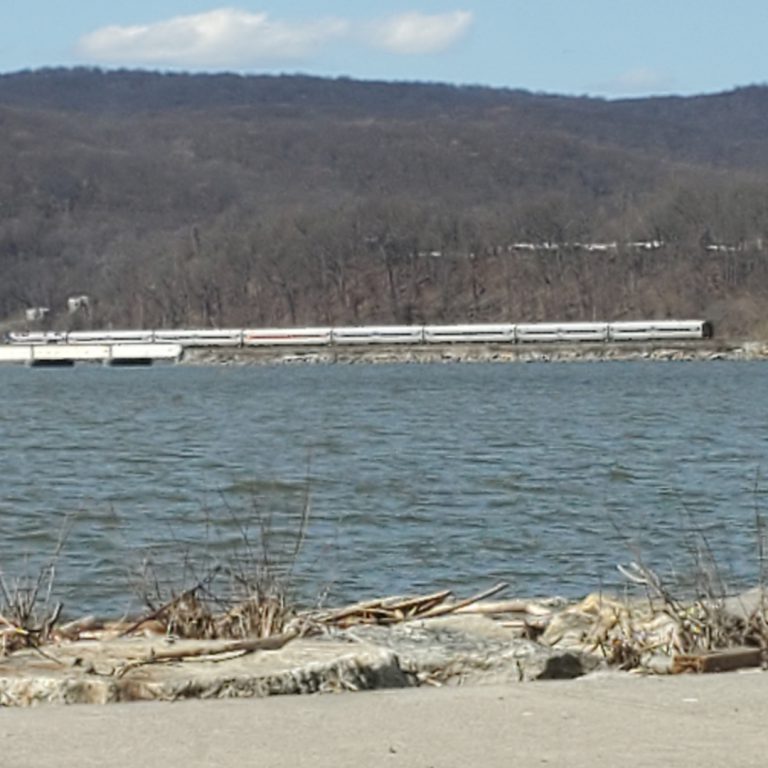
WPCNR PHOTOGRAPH OF THE DAY. By the WPCNR Roving Photographer. April 24, 2007: Today’s shot shows a heavy Chessy System (the old Chesapeake & Ohio) 4-headed freight rolling slow through Hagerstown, Maryland, but moving faster than stalled traffic overflow from I-81. April 3, 2007.


Chessy Freight laboring through Hagerstown, MD.  


By the WPCNR Roving Photographer.

Posted in Uncategorized

President Declares Westchester County a Disaster Area


WPCNR COUNTY CLARION-LEDGER. From Westchester County Department of Communications. April 24, 2007: 


President Bush has declared Westchester County along with Rockland and Orange counties as a federal  disaster area following last week’s storm, meaning that local residents and businesses can start applying for the federal aid that is so badly needed to begin rebuilding.
             The declaration at this point applies to only individuals and businesses that suffered damage from the storm. County officials have been told that the Federal Emergency Management Agency (FEMA) is still reviewing damage to public facilities – including governments and schools — to determine if they qualify for a federal disaster declaration.


             For individuals who have experienced damage from the storm of April 15-16, these are the steps you need to take to apply for aid:


             The declaration at this point applies to only individuals and businesses that suffered damage from the storm. County officials have been told that the Federal Emergency Management Agency (FEMA) is still reviewing damage to public facilities – including governments and schools — to determine if they qualify for a federal disaster declaration.


           “That’s great news,’’ said County Executive Andy Spano. “So many of our residents and businesses are in dire need of immediate help.” He added that he remains very optimistic that a similar declaration will be forthcoming that will cover damage suffered by municipalities and school districts. 


To apply for aid, storm victims will need to take the following steps:


1) Contact your insurance company: If you are NOT covered for the storm damage by your insurance company, you may be eligible for federal aid. You will need to obtain a letter from your insurance company saying you are not covered for damage from the storm.


2) Apply for FEMA aid: As part of the aid process, FEMA will set up Disaster Recovery Centers where victims may apply for aid or get information about disaster assistance programs. Those centers have not been designated as yet, but information will be forthcoming


    Residents can also register for aid online at www.fema.gov or by calling 1-800-621-FEMA (1-800-621-3362) (hearing/speech impaired ONLY- call TTY: 1-800-462-7585).


In addition to having a pen and paper, please have the following information ready to give to the person who takes your call:


• Your Social Security number.


• A description of your losses that were caused by the disaster.


• Insurance information.


• Directions to your damaged property.


• A telephone number where you can be contacted.


After you apply here is what will happen:


               Inspection:  If an inspection is required to process your application, an inspector will contact you to make an appointment to visit your property and assess the damage about 10 days after you have applied for help. 


   Decision. Within about 10 days of the inspector’s visit, you will receive a letter from FEMA informing you of the decision on your request for help.


• If you are eligible for help, the letter will be followed by a U.S. Treasury/State check or there will be a transfer of cash to your bank account. The letter will explain what the money can be used to pay for. You should use the money given to you as explained in the letter.


• If you are not eligible for help, the letter will give the reason for the deci­sion. You will be informed of your appeal rights in the letter from FEMA.


• If you were referred to the Small Business Administration (SBA) for help from the SBA Disaster Assistance Program, you will receive a SBA application.


For the latest update, visit www.westchestergov.com  or visit www.fema.gov for more information about applying for aid.


            Westchester County is working with local non-profit agencies to set up a charitable fund for storm victims as well.  In addition, the county’s Department of Social Services will be in Mamaroneck on Monday, April 30 and Tuesday, May 1 at St. Thomas’ Episcopal Church at 168 W. Boston Post Road between 10 a.m. – 2 p.m. to help families apply for emergency aid.


 The county will also again open three waste transfer stations and its refuse-to-energy plant in Peekskill on Saturday to accommodate more trash pick-ups. 


Five local communities – Mamaroneck (town and village), Larchmont, New Rochelle and Pelham Manor – scheduled extra pick ups on both Saturdays to take advantage of this special opening.  Residents in participating communities put out carpet and base padding, furniture, clothing, bedding including mattresses and regular garbage curbside for removal.  A total of 10,000 tons were picked up during the week in the storm aftermath and 800 tons were picked up last Saturday.


 People affected by the storm who need help should call the following agencies:


Coordinating agency


United Way of Larchmont & Mamaroneck


230 Larchmont Ave


Larchmont, NY 10538
834-7018


Organizations which provide financial assistance to flood victims


Hispanic Resource Center – Emergency Fund (memo)


P.O. Box 312, Mamaroneck, N.Y. 10543
835-1512

HOURS: M-F,  8 a.m. – 6 p.m. Saturdays 9 a.m. – 6 p.m.


Washingtonville Housing Alliance – Flood Relief Fund (Memo)


136 Library Lane, Mamaroneck, N.Y. 10543


698-4299


Assistance with Home Repairs


Habitat for Humanity


529 Main Street


New Rochelle, NY 10801
636-8335


Organizations providing food, furniture and other necessities, such as clothing


Community Action Program


Furniture Sharehouse


To donate or to accept use furniture.


834-1294


Food Pantry


134 Center Avenue


Mamaroneck, NY 10543
698-7140

Posted in Uncategorized