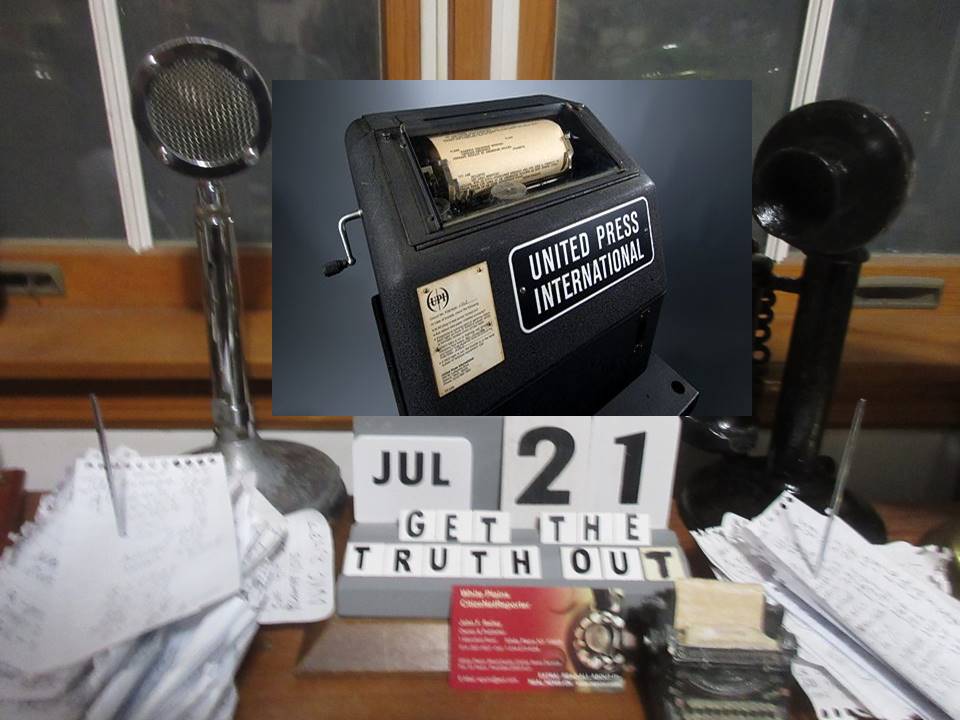
WPCNR SCHOOL DAYS. March 21, 2008: William Pollak, a member of the White Plains Board of Education since 2002, (when he was elected with Marie Valentin, in public response to the Board of Education’s secret ouster of popular Superintendent of Schools Saul Yanofsky, that was not disclosed to the city for six months), has announced to the media he has decided not to run for a third term. Rosemarie Eller whose seat is also expiring has decided to run again for a second three year term. Interested citizens wishing to run for Mr. Pollak’s vacant seat or Ms. Eller’s have until April 30 to file petitions (with 100 signatures) with Michele Schoenfeld, the School District clerk, to get on the May ballot.
Sonny Katz, Beloved City Marshal, Restauranteur, Raconteur, Showman Departs
WPCNR Legacies of White Plains. March 21, 2008: Seymour L. “Sonny” Katz, City Marshal of White Plains for more than 37 years, died March 21, 2008, at his home in

Sonny Katz
1921-2008
Seymour L. “Sonny” Katz, City Marshal of White Plains for more than 37 years, died March 21, 2008, at his home in
Mr. Katz was born on June 11, 1921, in Port Chester , NY Port Chester High School
He served in World War II as a staff sergeant in the Army Air Corps. He was sent to the Pacific Theater of war, including the Philippines and, at the conclusion of the war, Japan
Sonny married Constance of White Plains
With his wife and father-in-law, Sonny operated Harry’s Luncheonette on Main St White Plains
In the time when the cold war still was an international issue, Sonny assumed a position with the Department of Civil Defense and Emergency Planning for the City of White Plains
Sonny previously served on the Board of Directors of the Hebrew Institute.
He was a founding member of the Board of Directors of Westco Productions, the non-profit professional theater company based in White Plains White Plains and Port Chester with their college studies of the performing arts.
Sonny is survived by his wife Constance, all four of his children, six grandchildren and two great grandchildren.
The funeral will be held Monday, March 24 at 10 A.M. at The Hebrew Institute of White Plains, 20 Greenridge Avenue.
Donations may be made in memory of Sonny to Westco Productions’ Sonny Katz Scholarship Fund, or The Hebrew Institute of White Plains.
Covering the Obama/Pastor Story
WPCNR MR. & MRS. & MS. WHITE PLAINS POLL. March 20, 2008: We have had five nights of All-Obama and the Pastor-All the Time coverage on the news networks. Do the viewers of the news feel this story deserves as much coverage as the news networks have been giving it? Indicate your feelings in the new poll at the right.
The Case for Commuter Rail Along the Tappan Zee Bridge
WPCNR GUEST EDITORIAL. By Henry Ferlauto. March 20, 2008: In a few short months, one of the most important infrastructure and public works projects of our lifetime for the New York City tri-state region will be decided by a committee of people; most of whom are people we have never net, and will never know their names. The Tappan Zee Bridge, which directly connects Westchester and Rockland Counties and ties together the entire tri-state area in so many ways, is aging and none too gracefully. Yes, it’s true; our 50 year old bridge doesn’t look a day over 75.


Commuter Rail from Rockland County Across the “New” Tappan Zee from Hudson to Port Chester?
Incredibly, the elected leaders of the region at every level of government, most of whom who have made public statements for reducing foreign energy dependence as well as reducing our collective carbon footprint have been largely silent on this very important issue. I personally find this quite surprising.
Even more surprising is the lack of public enthusiasm from the construction companies and labor unions as this project would be of tremendous direct benefit to both groups of interest. But the needs of these two special interest groups pales in comparison to the needs of the masses that simply need to get from “Point A” to “Point B” on a daily basis so they can put food on their table.

Every municipality that presently has a railroad station in the Mid-Hudson Valley stands to greatly benefit from “Option 4A,” which in short calls for the full replacement of the Tappan Zee Bridge and the construction of approximately 30 miles of commuter railroad from Suffern to Port Chester.
For those municipalities that are cities such as Mount Vernon, New Rochelle, Poughkeepsie, Stamford, White Plains, and Yonkers; a large pool of employees would become newly available to the corporate citizens in those cities that have a presence within them. It also means those same cities can easily attract more companies to them because they can easily attract the required talent on a daily basis.
For the smaller towns in between, their citizens gain new sources of potential employment whereby they can leave their cars at home; and in the process ease the congestion of our over-crowded local streets and major highways as well as reduce our dependency on foreign oil and reduce our emissions of green-house gasses.
Many may say that it is too big in scope and simply too expensive; if not outright crazy. The project is most certainly large by just about any measure. But if we look to our past, we will quickly recognize that we have been at a similar crossroads before.
The Erie Canel Was laughed at, too.
Approximately one hundred ninety years ago, this area, in particular New York City, which was much smaller in terms of the land that was in use at the time; and of course as was its population, was faced with a similar dilemma regarding its future. A New York governor, very early in to his first of four terms, who also was previously a ten term mayor of New York City by the name of DeWitt Clinton pushed forth a 100+ year old proposal that was by all accounts in that day, utter lunacy.
President Thomas Jefferson called the idea, “little short of madness.” He (Clinton) had the audacity to push that the State of New York spend $5,000,000, quite a hefty sum in those days, to essentially dig what amounted to a 363 mile ditch from Albany to Buffalo. That “ditch” became known as the Erie Canal.
Mr. Clinton’s previous claim to fame was the proposal and construction of “the grid” in New York City, which is how the avenues and cross streets were laid out back in 1811. It is a structure that has helped Manhattan maintain order during its enormous periods of growth, even to the present day.
Deja Vu All Over Again
The arguments against the construction of the Erie Canal almost mirror the arguments being made today to not build a full commuter railroad across Rockland and Westchester Counties. It’s too expensive, too massive in scope, and will never yield a return on investment.
“Clinton’s Ditch,” as it was referred to by those against the project, was actually generating revenue before its completion and most importantly saved New York City by retaining its dominance as the major port on the eastern seaboard. It also brought great fortunes to the cities that were dotted along the route. Schenectady, Utica, Rome, Syracuse Rochester and Buffalo all experienced periods of great economic expansion.
Dream Big
If the State of New York had not had the vision and courage to dream big and work hard, we would have ceded our leadership as the premier port in North America to New Orleans. This is because until the construction of the Erie Canal, the only way to easily get goods past the Appalachian Mountains was to sail all way around the tip of Florida and into the Gulf of Mexico to the port of New Orleans to ship goods up the Mississippi River. The investment of our ancestors paid off in spades; and paid off for all New Yorkers.
Fast forward to the present day. Our most valuable resource is now human capital. The literal moving of minds should be our highest priority. Very simply put, the easier it is to transport human beings from one place to the other; the better off the entire tri-state region will be as a whole.
At the risk of using a double-negative, I would argue that the tri-state area cannot afford to not embark on such a construction endeavor. Our roads are overly congested, in particular I-287, I-95 and Route 9A. The cost of widening those roads would pale in comparison to constructing a 30 mile rail line connecting a total of 5 north / south rail arteries to create a “grid” of rail lines for the entire region.
This one project is comprised of the two great ideas from our past brought forth by DeWitt Clinton that laid the groundwork for economic expansion in New York for well over 100 years. It transports our most valuable resources with much greater efficiency and creates a grid of routes for such transport.
The Justification of Cost
From the perspective of pure direct cost to New York State, Option 4A may actually cost New Yorkers less than the others, even though in total it costs more. Here’s why: With Option 4A, the states of New Jersey and Connecticut get pulled directly into the equation. They will have a much greater interest in the project’s success. Both the other states would gain the same way New Yorkers would. The cities would have access to a greater population pool and the smaller towns in between do not need to flood their roads with drivers.
This means there will be far more influence with the United States Congress to allocate Federal funds for the project. Instead of one governor, we would have three. Instead of two senators, we would have six. Our Representatives in The House would also be much greater in number. No one is going to swing for the proverbial fences for extra funding for glorified buses that no one would ever want to take. Rail has proven itself as the preferred method of mass transit for this area and many others over the past 100 years. And its popularity in recent years has been dramatically on the rise.
The Stewart Factor
The full commuter rail option also lays a large portion of the groundwork for an even greater comprehensive regional transportation infrastructure that we so desperately need. There is serious consideration for the construction of a rail link to Stewart Airport in Newburgh, which has seen it usage skyrocket in the past year. 920,000 passengers utilized Stewart in 2007, over triple the figure of 300,000 in 2006. This strategic plan would give a mass transit option to another major airport and ease the congestion at LaGuardia Airport as well as the roadways and bridges to it, which is often the mode of choice because LaGuardia Airport has no rail options whatsoever.
If we as a society are serious about encouraging the use of mass transportation, reducing the congestion of our roadways, reducing our dependency on foreign oil, reducing our carbon footprint and creating an economic foundation to sustain this area for generations to come; then I encourage you to contact all those elected officials whom represent you.
Tell them we need “4A All The Way.”
Mr. Clinton would be quite proud.
Henry Ferlauto